Follow the Teaching in Higher Ed Podcast
About this Episode
From Weeding Out to Belonging with Ana Araya-Anchetta, Mar-Elise Hill, and Flower Darby on episode 292 of the Teaching in Higher Ed podcast.
I pivoted that semester from focusing so much on me giving a lecture to what the students need.
Mar-Elise Hill
On episode 292 of Teaching in Higher Ed
Voices on this Episode


Show Notes + Resources
Recommendations from this Episode

Idea
Put something fun in your purse
Book
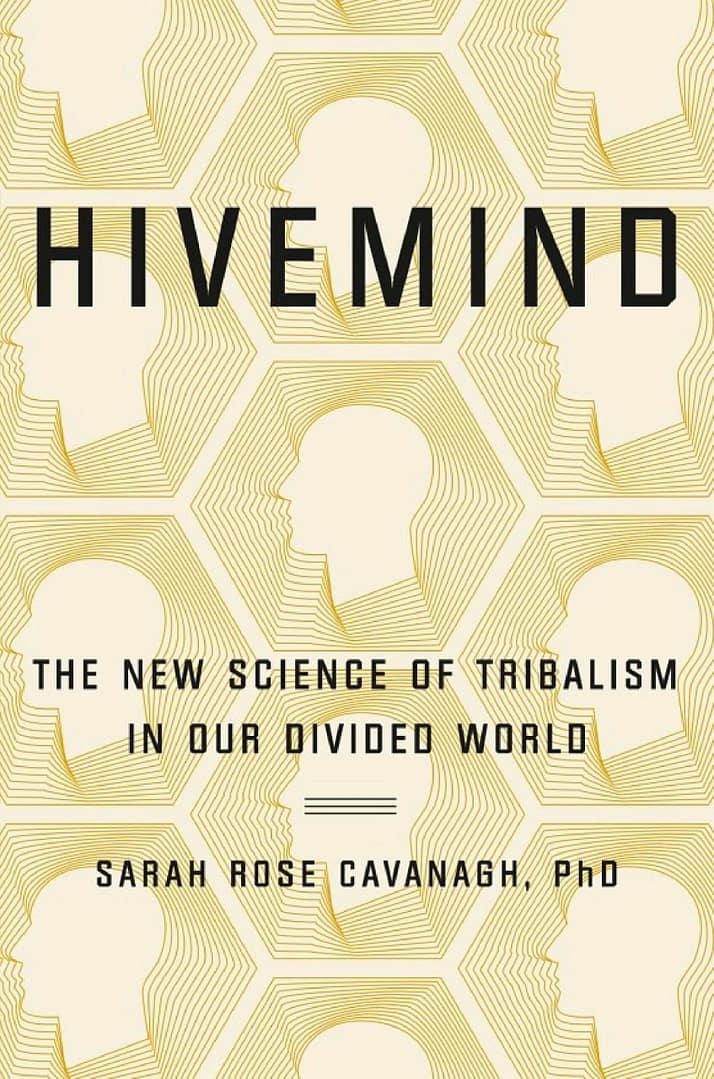
Hivemind by Sarah Rose Cavanagh

Movie/TV
The Marvelous Mrs. Maisel – Season 3

Article
Gochujang by Christina Chaey

Idea
Take email off your phone

Movie/TV
The Righteous Gemstones
Transcript
[00:00:00] Bonni Stachowiak: Today on episode number 292 of the Teaching in Higher Ed podcast, Ana Araya-Anchetta, Mar-Elise Hill, and Flower Darby joined me to talk about From Weeding to Belonging.
[00:00:16] Voiceover: Produced by Innovate Learning, maximizing human potential.
[music]
[00:00:27] Bonni: Hello and welcome to this episode of Teaching in Higher Ed. I’m Bonni Stachowiak and this is the space where we explore the art and science of being more effective at facilitating learning. We also share ways to improve our productivity approaches so we can have more peace in our lives and be even more present for our students. Today’s guests were all introduced to me through my partnership with the Association of College and University Educators or ACUE.
ACUE’s courses and community site feature many of teaching and learning’s top experts, faculty developers, and practitioners to showcase evidence-based teaching practices. For more than three years ACUE has connected me with great guests for the show. Today’s episode features the story of how educators at Northern Arizona University redesigned a gateway course at Northern Arizona University called Bio 181, that’s required for 25 majors.
In doing so, they reimagined what was previously known as a “weed out course” with about 30% of students dropping out into a course that built community and established critical student to student connections, incorporated active learning strategies, and help students improve their metacognition skills. The result has been increased exam scores and fewer DFWs. Today you’ll be hearing from Bio lecturers, Ana Araya-Anchetta, Mar-Elise Hill, and also, from a returning guest, Flower Darby, in her capacity as instructional designer who partnered with Ana and Mar-Elise on the redesign.
For more about these guests and also about today’s topics, please visit the show notes at teachinginhighered.com/292. Welcome to each of you to Teaching in Higher Ed.
[00:02:28] Ana Araya-Anchetta: Hi. Thank you.
[00:02:29] Mar-Elise Hill: Hi.
[00:02:30] Flower Darby: Great to be here. Thank you, Bonni.
[00:02:31] Bonni: Ana, I’d like to start with you. Tell us a little bit about the course that you worked on so much, collaboratively, Bio 181, and what it used to look like in terms of weeding out students.
[00:02:44] Ana: Bio 181 is the first introductory class for biology majors. It’s a class that goes into the cell and looks at all these processes. It’s a class that you don’t have to do anything to make it a hard class. The topic by itself is very hard. Traditionally, it was always a weed-out class. When you bring a hard topic to the class and then if you don’t look at the pedagogy, it’s going to be a weed-out class no matter what. Then you bring to it instructors or faculty who have a lot of training in their biology background but not a lot of training in their teaching and then it becomes more complicated. It was very easy for it to be a weed-out course. The differences between the no background and pedagogy and the difficulty of the class and the students who are different than the way we were raised without the internet especially.
Even at some point during our history, I remember that our class was required by engineering which has nothing to do with our topic. It was essentially because we would weed out students for them. That was not, of course, the intention of the course but from the beginning, from the first time I taught it, I realized that we had a unique opportunity with the class which was that because we are the first course that an incoming student takes and we will very likely be the most difficult class that they’re going to take that we had an opportunity to teach students how to be college students. Even before I ever thought about making the changes that we’ve made to the course, I knew that we had the opportunity to be a very impactful course.
[00:04:34] Bonni: This is one of those changes that I’m just seeing time and time again examples of in higher education where we’re no longer thinking that it’s okay to tell our students, “Look to the left, look to the right, only one of you will be in this class down the road.” That’s not socially acceptable. That used to be really celebrated. Not at any of the institutions I ever attended, thank goodness, but certainly I saw that as a real integral part of the culture of some of our institutions.
I’m sure it’s still there but it’s really nice to just see the preponderance of stories that I hear are ones where we say, “Look to your left, look to your right, I’m going to do everything I can to support that all three of you will be celebrating as you walk across that stage.” Would you talk a little bit more about the significance of this class but, also, why you decided to make a change? I’m so excited for us to get to hear some of these stories. Mar, would you share a little bit about why make a change?
[00:05:28] Mar: Sure. It really started, I would say, and Ana can correct me, is in the spring of 2018 as Ana and I were both students in the ACUE course together. I think we both just have a deep and natural love of teaching. As we went through ACUE, Ana and I did spend quite a few hours talking about good teaching and talking about our classes and talking about our students. I think it really helped us to hone in on practices that we believed in. In a way, I’m saying is that spring Ana and I just developed our teaching philosophy to a much deeper level and we’re exposed to some new ideas through ACUE that helped us, [chuckles] again, deepen how we believed in it.
Then, Ana and I went to a workshop, for a STEM workshop in Las Vegas together. At that workshop, and Ana will share her personal kind of awakening at that workshop, but Ana and I were working on learning outcomes for Bio 181. For me, personally, I had this aha moment that we could actually have four learning outcomes for all of Bio 81. It would be sort of the process of learning the material. For example, first, students need to be able to be competent with the language of biology. The first learning outcome is around helping a student be familiar with the terminology.
Then next, Ana and I identified the eight processes that are covered in Bio 181. We came up with two more learning outcomes that help a student order the steps and those processes, collect the terms of different components that are involved in those processes. Then the final learning outcome was really knitting it all together, doing that big connected piece. How does one process, interact, and feed into another one and just doing the big picture stuff. I think I’ll just throw the microphone over to Ana because, at the same time, Ana was having a pretty deep aha moment when it came to student learning strategies.
[00:07:36] Ana: The ACUE course was very important because in our conversations, also, I realized that we had to bring in a stronger active learning component but then the workshop, the aha moment that Mar refers to, is we were encouraged to not just focus on the material itself but on the student which, of course, is also part of the ACUE course. It was not the first time but it was the first time I understood it. Somebody talked about metacognition and I thought, “Well, this is our opportunity. We can teach biology and teach them how to be college students.” I knew that the metacognition was going to be what was going to link those two things together.
We came out and we had our four learning outcomes. It all had some metacognitive aspect to them. We knew that that was our purpose. We had our active learning and we had our metacognition to add to it.
[00:08:33] Bonni: Yes. One of the things I’m hearing both of you describe is really this transition from focusing so much on the topics to the broader outcomes and those outcomes being very focused on the students that you’re serving. That sounds like a simple transition but it’s not possible without the kind of discussions and deep thinking and rethinking your assumptions about what the role of the teacher is and the role of the student.
[00:09:00] Mar: I have a little piece I want to add to that is, for me, I had that exact transition you’re talking about, Bonni. In that, for about 10 years I taught live, and then, I got a full-time position here at NAU that was solely online. For me, that spring semester was the beginning of moving away from this intense focus on the perfect lecture because I made recorded lecture videos. I transition pivoted that semester from focusing so much on me giving a lecture to what the students need.
Now, I feel like I’m entirely focused on the psychology of the student and motivation and what they need to interact with the content.
[00:09:44] Bonni: I wanted to mention a resource real quick before I go on to hearing more of your story. One of the things I’ve really struggled with, and I know so many colleagues have when we’re going through the kinds of shifts that you’re talking about, one of the signs that we need to rethink things is focused on covering the material. “Oh, I have so much to cover. I need to cover this.” I’ve literally never heard that phrase being used [chuckles] by myself or by colleagues without going, “We better dig a little deeper into this.”
Maria Anderson has been on the show before. She just has a wonderful tool to let us examine this a little bit further and have these kinds of conversations with colleagues that take us to the place you just described. She calls it ESIL: A Learning Lens for the Digital Age. Her premise– I’ll link to this show where she talks about it, and also, to her blog post about it. By the way, her discipline is mathematics, although she’s actually quite interdisciplinary. That’s one of the examples that she uses quite a bit, that do we really have to know, in particular, mathematical principles? Do you have to be able to do that from scratch? Actually, take the clock apart [chuckles] and see what all the pieces are. Do you just need to be able to tell us that a clock exists and that it tells us the time?
To what extent do we need to know, demonstrate, use– It’s just a really, really good lens for introducing the kinds of conversations that you’re telling me that you had. I know that we have looked a little bit about Bio 181, it’s significance and some of the signs around why you wanted to make a change. Ana, tell us a little bit about the changes that you’ve seen. Then I know you have some updates for us as we get to the end of our conversation of what’s happened since then. What were the early results from those changes?
[00:11:31] Ana: Very early on, we started to see a different type of environment in the class. You walk in, fewer students were on their phones, in some of the classes, you would have to walk in and actually quiet them down. That’s very nice energy to start a class with. Usually, our first exam is our worst exam because students still don’t know what to expect and they need a little bit of a shocking moment in order to get them put together. Still, our first exam was about 10 points higher than previous semester of the previous year, and we continue to improve our scores for exams one after the other.
By midterm grades, we knew we were onto something because by then our DFW rate, which stands for percentage of Ds, Fs, and W’s- with the way they measure success in our courses, we had reduced our DFW rate to about 15%. During those days, I had a conversation with my boss, who was ready to make changes to Bio 181, and I said, “No, we don’t need to make changes anymore. I’ve made the changes and then look, I have good results.” I never heard of any more of the suggestions that he had because I have the data to support the process that we were going through.
Again, it was a matter of student motivation. We were giving them tangible results. It was a way for them to stay motivated, stay on task. Then again, our DFW rate was about 15%, which is about half of what it had been historically in the class. It was remarkable. We knew we had hit the mark somehow.
[00:13:17] Bonni: That’s magnificent. Sadly, one of the things that we’re seeing, broadly speaking, is that those DFWs, a disproportionate amount of them in every class I’ve ever heard, maybe yours was different, but are happening with marginalized peoples. That doesn’t live up to our values, hopefully, our values of educators that we don’t want to leave anyone behind. We, especially, don’t want to have teaching approaches that are not supportive of people that haven’t been historically supported very well in their educational endeavors. Was that something that you found or it was really near and dear to your heart as well? Did you do any an equity analysis of the DFWs or just think about these things as you made the changes?
[00:14:02] Ana: We didn’t. We saw that our design had a greater impact on those students who had come in with a low high school GPA. That was the group that we were having a greater impact on. In terms of equity, we had no impact on one particular group or another, but our greatest impact was on students who have come less prepared to school.
[00:14:26] Mar: Sure. I think the summation is, in 181, there is a bio pre-test and a bio post-test to measure knowledge that’s gained over the course. In the 181 redesign, our findings were that everyone benefited so they had a higher score on that post-test when compared to other semesters, but at-risk students had twice the improvement when compared so it impacted them positively more than just even the general population.
[00:14:57] Bonni: There are three areas of change that you looked to do with this course. We’ve got active learning, metacognition, and community building. Mar, would you start us off with talking a little bit about what you considered in terms of active learning?
[00:15:13] Mar: Sure. One of the sayings I hear a lot around my department is I hear my colleagues talk about how they have a problem set or homework piece in their class that they tell the students if this assignment is done, it will improve their scores on the exam. Then the instructor is frustrated because the students don’t do that piece. One of the pivotal pieces to active learning, for me and Ana, was that we had to make it worthy in the student language and the student language, our belief is, is points.
To make students immerse themselves and start to work with the material so that they can learn the material, Ana, mostly, and then I helped too, created over 60 to 80 little tiny assignments that would support student learning. There was a lot of ways for students worth points to work with the material. That was one of the ways we did active learning. Then each week, there’s a group activity in the class that students have to do together in class.
[00:16:20] Ana: Yes, and all of these assignments, there’s a large component that they do online. There’s a few of them that are done in the classroom because we’re still trying to cover the material that we have to cover, which I know we don’t have to cover it at all. Also, every activity that we planned, we had a purpose for it. They were based on the same learning outcomes that Mar described earlier so a lot of– We made sure students read the book because we chose a platform that allows us to give points when they read a book. Then, also, we did things like a vocabulary quiz because we had a learning outcome that was associated with the vocabulary. We did the group working class.
The main thing is that if a student asked me, “Why do I have to do this?” in frustration, we would always have a reason to say, “This is why we do it. This is good for you because–” We always had a reason. That has always been very important to me because I don’t want students to feel like they have to jump through hoops. I want students to know that we have a purpose for everything that they’re doing. When they start to see the improvement in their scores, then they jump in and they buy-in our methods.
[00:17:32] Bonni: That transparency around why we’re doing these activities has been really transformative for me because I used to just assume that it would be obvious that we’re practicing this as an opportunity. Unfortunately, some of it is you have to help them unlearn what they’ve learned in other classes because other classes, maybe the faculty haven’t been as effective at making there be that alignment between the group activities.
Flower, I know you have something to add around active learning as well.
[00:18:00] Flower: Yes, one of the things that I saw Ana and Mar do was to just make students do what we know will help them. I think this is being referred to as high structure now. Before this redesign, students really were not expected to do much besides attend the lecture, do online homework and practice, and take the exams. Ana and Mar embedded a rich set of weekly activities, including concept maps, and these group work and these problems that require students the vocabulary mastery quizzes, that require students to do what we know will help them learn.
It is true that at the beginning of the semester, students were complaining about the busy work as compared to their friends and roommates who were in other sections of Bio 181. By the end of the semester, Ana’s students were thanking her profusely for helping them be successful when their friends and roommates had not been. It was highly interesting to see how the active learning embedded and was seamless in the online and in-class with the transparent reminding of students almost daily of why we’re doing these things. Then for the students to realize for themselves how they had benefited from this work was great.
[00:19:12] Bonni: This reminds me so much of the self-reporting. If you just ask any of us, we need to include ourselves in this or our students, what is it that’s helping you learn? We don’t choose this for ourselves because this is the hard way. This is the part that is challenging. Self-reporting, “Oh, I do much better if I just go back and highlight my notes. I do much better if I just go back and reread the textbook again, [chuckles] or rewatch the videos,” when in actuality, what’s going to help us are those things that are challenging, but they’re challenging with that structure that you mentioned, Flower, and also with the high support that both Mar and Ana have described. Ana, how about you?
[00:19:49] Ana: Yes. I really like that word challenging because we know that the class is challenging by itself but we want it to continue to be be challenging. We don’t want to lower the quality of the class. We want to improve it, but a challenge builds you up. What we decided to do was stop making it a roadblock and make it a challenge. In class, at the beginning especially, I say that I want this to be a challenge and that they should like it for the fact that it is a challenge, and that at the end, they’re going to see how much they have achieved and how well it’s going to make them feel because every point they earn, they have to earn it. We don’t give it up to them.
There’s no curving. There’s all this sense that what they have at the end is because they worked very hard at it, and they do work very hard at it.
[00:20:47] Bonni: Another component that’s really critical in your revisions of this course has to do with community-building. Ana, what can you tell us about chicken noodle soup as it relates to [chuckles] community-building?
[00:20:59] Ana: Community-building is something that we ran into. We didn’t intend to do it right away but it’s something that- it was an opportunity that was presented in front of our eyes and we just jumped in. To support the active learning, we brought some TAs to the classroom. As we were trying to approach what was happening with the TAs, then we started to realize that we could build the community. In the beginning of the class, I said we made groups of students that there were going to be fixed groups throughout the semester so that they could do the active learning component that we were going to do in the classroom.
I said, “Well, these are going to be your groups. Make sure that you exchange numbers, make sure that you do this, make sure that you know how to communicate with them. These are some of the things that you can achieve. This could be the group that could be with you for the rest of your academic career. This could be the group that you could check up on each other and make sure– Wouldn’t it be nice if somebody actually had the notes that you’ve missed because you were sick? Wouldn’t it be nice if somebody would text you and cared about whether you came to class or not?”
We started to propose these ideas of what could these groups achieve? They could be study groups, et cetera. Then I threw it out there and I said, “Well, what if you were sick and a member of your group brought you chicken soup?” It didn’t quite work like that, but I knew of a student who was very ill and another member of her group took her to the supermarket to purchase soup. It didn’t quite work like they delivered the soup, but it was their own version of how to bring soup to a fellow classmate.
[00:22:43] Bonni: I’ve loved that. It was their own way of telling that story of what it’s like to live a life of community inside and outside the classroom. Flower, do you have an example as well?
[00:22:52] Flower: I just wanted to elaborate on what I think was the pure magic of Ana’s approach. That is Ana’s classes have 240 students in them and we hear so much about the challenge of connecting with students from the faculty perspective and the sense of isolation from students. What Ana did is she connected the students with each other and so student to student, and also, student to TA. Ana and Mar were both very intentional with building those communities and those interpersonal connections, understanding that there isn’t a way for Ana to be in close contact with 240 people within that class meeting but they structured it.
Ana’s amazing supportive communication and explicit messaging to the students, almost daily, about- this, “Support your friends, this is your group. You’re there for each other. Reach out to each other. Go see a movie for the weekend.” I just saw an amazing transformation. I know, for a fact, that students felt much more supported and much more connected to NAU as if they belong and they have pure support, in a way, that we can’t accomplish in those large enrollment classes between faculty to students.
[00:23:55] Bonni: Those messages that you’re talking about delivering, I think they could be lost on people in terms of, “That’s so simple.” People would always know they could exchange notes, but I think many of us could’ve gone through our entire educational experience without having that kind of a support system. Especially if we go to an institution that has that large of classes, not really ever knowing how to go beyond “I feel so alone”. Especially if we couple that ‘I feel so alone” with a feeling, we know many of our students have, of “I don’t belong here”, that is not going to help support one’s academic achievement. As you said, Ana, make it even worse by trying to lower the standards. We want to keep really challenging high standards for our students with the support, and then now you’re talking about with the community.
[00:24:42] Ana: Right. I think fear is something that we address regularly in class. It’s very important in the beginning. It was because– I just a card from my student who came in and the card says, “When I sat first into your classroom, I thought I was going to fail, but now I know I have what it takes to succeed in my college career.” I don’t know. I think I’m going to build it up and blow it up and put it somewhere around.
Part of our community-building and our message was. “It’s okay to be scared, but you’re going to see how much you’re going to learn, and all the things that you’re going to achieve.” I think having that positive message in the classroom that supports them than rather confirms their fears– They all come with this exacerbating fear, almost paralyzing fear of failure that you have to have a message that you don’t have to combat the fear, you just have to make it positive. “I believe that you can do this. I care about the outcome. You have what it takes. You’re going to learn so much. You’re going to enjoy this.” It makes a big difference in the students.
As an instructor, every time I met a student in my room, I said, “What is it going to take for you to succeed?” I would look at them, I never asked it, but I would look at them and I said, “Well–” Usually, it was determination. You could see it in their eyes. Then I would see a completely different student of a completely different background. Again, if I got the look in their eyes, I would say, “Okay, you’re going to make it.” I’ve never been able to say, “Okay, this is the kind of student that’s going to make it or this is the kind of student that’s not going to make it.” If they really wanted, that’s what usually determines it.
I walk into the room and I know that everybody sitting in front of me has the ability to succeed in the class and that it’s their own determination and their own willingness to do the work that is going to get them through. That, I think, it’s a very important thing to acknowledge because they are going to challenge that idea, because they are not going to be the student that you were, and they’re not going to behave the way you behaved or they’re not going to behave the way you think a student behaves. They’re going to do it in their own way, but you have to definitely say, “Well, I’ll leave it up to you. Whatever way you choose you’re going to do and you have the right to choose your own path and you’ll be successful in your own way.” Whenever you convey that to them, it’s very important I think.
[00:27:18] Bonni: One last aspect of this transformation that I don’t want us to miss has to do with the vulnerability that you shared, and that was inviting Flower into your classroom to help you as a coach, to help you as a mentor. Flower, would you talk a little bit about that relationship and how it was part of this transformation?
[00:27:39] Flower: Absolutely. The relationship enabled all of this to happen in terms of Ana feeling supported and empowered to do new things in her classes. We formed that relationship through the ACUE course, and in fact, the teaching practices in which we had a sustained opportunity to get to know each other and to develop trust and respect for each other as colleagues. For the instructional designers who are listening, for educational developers, I’m more convinced than ever before that in order to be impactful in helping faculty, we must cultivate trust.
In this case, Ana was very open to receiving feedback on an ongoing basis. She allowed herself to be vulnerable. Ana talked about the vulnerability and the trepidation that accompanied that. Ana was humble and she allowed both me and Mar to come into the class on a frequent basis and just offer ongoing coaching and advice. Early in the semester, students are a little weirded out by having people sitting with them in the rows.
One of them asked me what I was doing, and I said, “Don’t worry about it. I’m a teacher coach.” [chuckles] I said, “I’m here to support Ana. I’m not worried about what you’re doing.”
I think that wording has really stuck with me. Now when I talk to people about what I do, I tell them I’m a teacher coach. It’s just a way of giving the feedback such that coaches do in terms of, “Here’s what you’re doing well. Here’s what you could do a little bit more of.” Again, I think, what was very transformational in this situation was Ana’s receptivity and her willingness to be coached, that I would argue, came as a result of the relationship and the trust that we had previously developed.
[00:29:17] Ana: Flower had given positive reinforcement to everybody who participated in the ACUE course the year before. I knew that she was going to help build me up rather than the whole break you down to build you up. She was not going to come and break me down first. It was all going to be– We really have developed a good relationship.
[00:29:39] Bonni: The other thing that I have experienced in knowing Flower, that I feel this solidarity with her, is that we’re never done. It’s not like [chuckles] any of us that might sit in someone else’s class are coming in said, “I have this all figured out. Let me come in and tell you how this is supposed to work,” but that teaching is becoming and we’re always becoming. Every time we enter a new classroom, it’s a new group of students. It’s a new challenge. It’s something that I don’t ever want to feel like I’m done and I hope that that comes across when I work with other people. I hope it comes across on this podcast as well. Yes, we’re always learning, but every time you learn something new, then there’s going to be a new challenge that comes up that you had never encountered so we don’t ever get to be done. That’s both invigorating and terrifying at the same time. [chuckles]
[00:30:22] Flower: If I could just add, I definitely came into Ana’s classroom knowing that I was going to learn from her approach as well, and that I did learn so much. It’s a very different context for me those large enrollment kinds of classes, but based on my experience, I structured opportunities here at NAU for faculty to engage in more classroom observation, but the focus is not on giving feedback to the instructor. The focus is on what can we learn from what this instructor is doing well. When we can go into those opportunities and celebrate the strengths of the person that we get the privilege of observing, we ourselves take away so much that then enhance our own practice.
[00:31:02] Bonni: This is the time in the show where we each get to share our recommendations. I have two entertainment-related ones. I’m wondering I had to have a tooth pulled the other day [laughs] so I’m needing things to take me off the pain which this conversation is doing and also needing things just to take my mind off of everything. It’s always that you take time away from work and you feel like you have to be caught up on everything. There’s two that are doing a very good job of that. The first one is The Marvelous Mrs. Maisel. This is now season 3.
It just came out and I watched the first couple of episodes. I suspect we’re going to continue such that I could probably recommend the whole season, but I do like to only recommend things that I’ve actually made it all the way through, but I can’t resist in this case. It’s just such a delight. She’s such a wonderful character, such a great actress, and it’s just really fun to see how the show has developed over the course of these three seasons.
This second one, I laugh because my friend and colleague wondered if I should recommend this on the show [laughs] because this next one definitely has some adult themes in it, and it, also, is in the subject of religion which can be very touchy for people. It’s called The Righteous Gemstones. It’s on HBO. I’m reading off of the Internet Movie Database here. It follows a world-famous televangelist family, with a long tradition of deviance, greed, and charitable work which you would probably think, how is that funny but [laughs] you just have to watch it to find the humor and they definitely find the humor.
If one’s religious beliefs are not something that you enjoy laughing at and you don’t like adult themes, definitely this is not the show for you, but if you do have a sense of humor around such things, I just found it to be a delight such that I feel okay risking the fact that I may offend, let’s see, 22.7% of possible listeners. [laughs] We’ll see. I don’t know where I came up with that percentage. Anyway, it’s just a very unique show and, also, has a really fun soundtrack as well.
Ana, I’m going to pass it over to you for your recommendation.
[00:32:59] Ana: This summer I had so much more work than I intended and usually that I get to see over the summer. I worked out of my phone so often that by the end of the summer I decided to take e-mail out of my phone. I have survived for about a few months since and so that’s part of my recommendation, give yourselves some freedom to that. I replaced it with putting my knitting in my purse, which I actually almost never get to it, but I carry my knitting which is now a very important source of joy. That’s my recommendation, don’t have e-mail on your phone and put something fun in your purse. [chuckles]
[00:33:40] Bonni: [laughs] That’s great. Mar, how about you?
[00:33:43] Mar: My recommendation is Korean spice called Gochujang and it comes in a red tab. I have a friend who bought this spice for me and my red tab was sitting in my pantry for months and I finally busted Gochujang out and it is like the Korean sriracha sauce and it is magical. It’s mildly spicy. It is a fermented red chili paste. Some people call it a better ketchup, which I don’t know if that’s going to help win praise from anybody, but it is really delicious. It’s kind of sweet, a little bit spicy, salty too, has a lot of flavor notes in there. You can add it to some broth and it just tastes delicious or mix it in with any source that you’re doing and it’s really fun.
[00:34:34] Bonni: I’m trying to decide which of the bazillions of articles just popped up when I tried to type [unintelligible 00:34:38] link to but, people can google it if they don’t like the link I pasted too, but it looks delicious. Thank you.
[00:34:44] Mar: Sure.
[00:34:45] Bonni: Flower, how about you?
[00:34:47] Flower: My recommendation today is what are the most interesting books that I have read in quite some time. I’m happy to recommend Hive Mind: The New Science of Tribalism in Our Divided World by Sarah Rose Cavanagh, who’s one of my favorite speakers and authors and thinkers in higher education. This book is fascinating. It’s a look at our collective consciousness and specifically how social technologies such as smartphones and social media, are impacting the way that we interact with each other and then shape each other’s views or strengthen and polarize the views that we have. Very interesting, very timely, super-relevant for parents and other people who are concerned about the impact of these things on our youth. I highly, highly recommend this book.
[00:35:32] Bonni: She’s been a guest before on the show as I know you already know and so I’ll put a link to that episode in case anyone missed it. Of course, we’ll be linking to her book in the recommendation segment.
Thanks to all of you for being a part of this show. Thanks for these great recommendations. I just thank you for your heart for teaching and your mind for teaching and just persistence to continue to serve our students.
[00:35:53] Ana: Thank you.
[00:35:54] Mar: Thank you.
[00:35:54] Flower: Thanks so much, Bonni.
[music]
[00:35:59] Bonni: I want to take this time to thank Ana Araya-Anchetta, Mar-Elise Hill, and Flower Darby for being my guests on today’s Teaching in Higher Ed and thanks to ACUE for connecting us and having this opportunity to take a look at how your course has transformed all these experiences for students.
Thanks to all of you for listening as well. I love being a part of this community and getting to learn right along with you. If you have never subscribed to our weekly updates, you might enjoy that as you receive the show notes from the most recent episode along with a blog post about teaching or productivity written by me.
Thanks so much for listening. If you’d like to subscribe, you can do that at teachinginhighered.com/subscribe.
We’ll see you next time on Teaching in Higher Ed.
[music]
[00:36:53] [END OF AUDIO]
The transcript of this episode has been made possible through a financial contribution by the Association of College and University Educators (ACUE). ACUE is on a mission to ensure student success through quality instruction. In partnership with institutions of higher education nationwide, ACUE supports and credentials faculty members in the use of evidence-based teaching practices that drive student engagement, retention, and learning.
Teaching in Higher Ed transcripts are created using a combination of an automated transcription service and human beings. This text likely will not represent the precise, word-for-word conversation that was had. The accuracy of the transcripts will vary. The authoritative record of the Teaching in Higher Ed podcasts is contained in the audio file.