Follow the Teaching in Higher Ed Podcast
About this Episode
INSERT QUOTE GRAPHIC HERE on episode 291 of Teaching in Higher Ed.
We remember more when we think of something in terms of its meaning or its relevance to ourselves.
Michelle Miller
On episode 291 of Teaching in Higher Ed
Voices on this Episode


Show Notes + Resources
- Michelle’s sources and suggested reading
- Reflection questions
- The Pen Is Mightier Than the Keyboard: Advantages of Longhand Over Laptop Note Taking, Pam A. Mueller, Daniel M. Oppenheimer
- How Much Mightier Is the Pen than the Keyboard for Note-Taking? A Replication and Extension of Mueller and Oppenheimer (2014), Kayla Morehead
- Retrieval practice
- Minds Online, by Michelle D. Miller
- ChemVR, Virtual Reality Learning Tool
- Digital natives vs immigrants | Visitors vs residents | David White
- So You’ve Been Publicly Shamed, by Jon Ronson
- Alone Together: Why We Expect More from Technology and Less from Each Other, by Sherry Turkle
- Setting boundaries in your syllabus, by Robert Talbert
- Three things to leave off of your syllabus, by Robert Talbert
- Esme Erdynast and Dejah Yansen
Recommendations from this Episode

Idea
Talk to your students

Idea
Use a scheduling app
Article
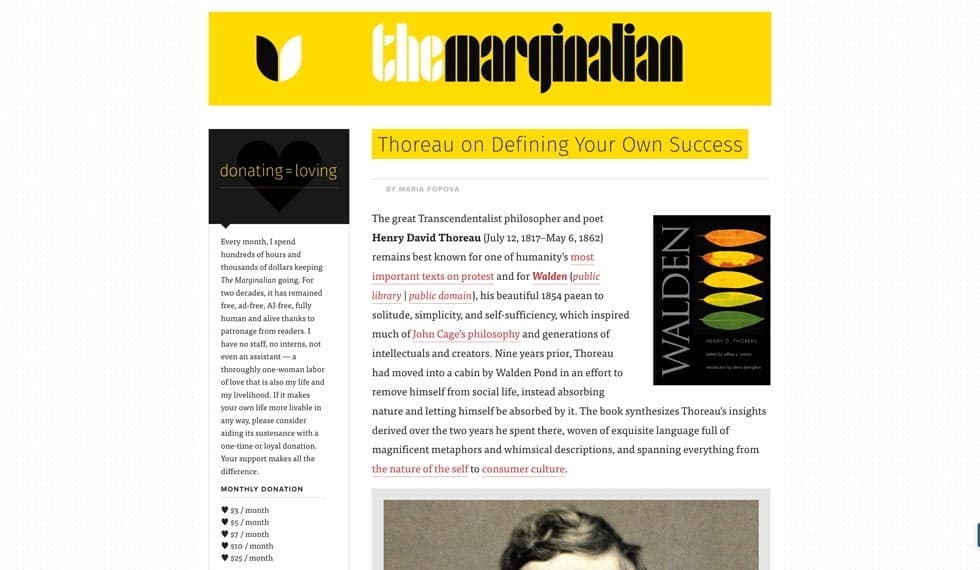
Thoreau on Success by Maria Popova
Article
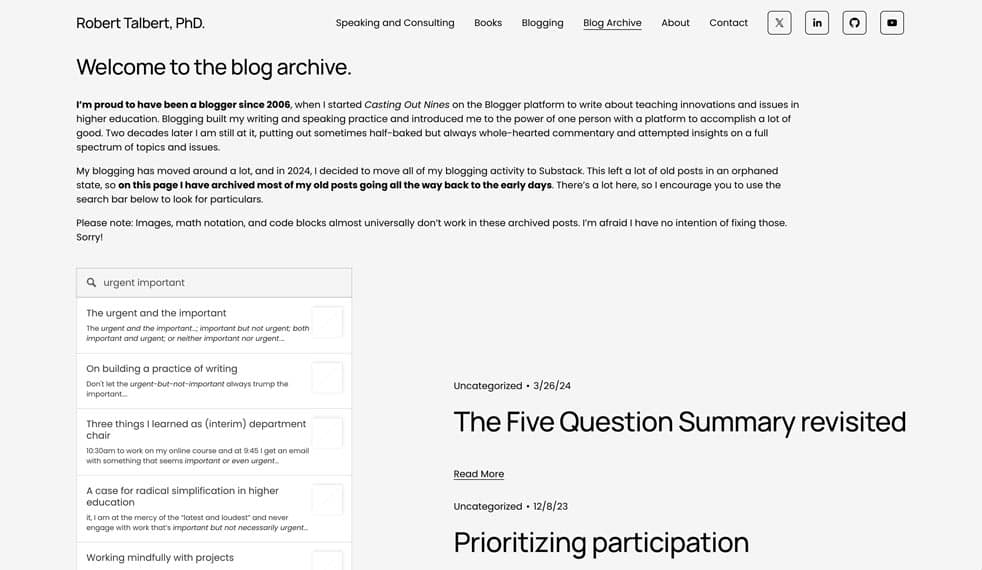
The Urgent and the Important – by Robert Talbert

Technology
Acuity Scheduling
Transcript
[00:00:00] Bonni Stachowiak: On today’s episode of Teaching in Higher Ed, Michelle Miller is back, this time to talk about learning myths and realities for Episode 291.
[00:00:11] Production Credit: Produced by Innovate Learning, maximizing human potential.
[music]
[00:00:21] Bonni: Hello and welcome to this episode of Teaching in Higher Ed. I’m Bonni Stachowiak, and this is the space where we explore the art and science of being more effective at facilitating learning. We also share ways to improve our productivity approaches, so we can have more peace in our lives and be even more present for our students.
Dr. Michelle Miller is a professor of cognitive psychology at Northern Arizona University. Her research focuses on language and memory. Specifically, Michelle has studied how normal aging affects the ability to produce and comprehend language, language production, and brain-injured individuals, and how people produce and comprehend descriptions of interpersonal violence such as crime reports published in the mass media.
Michelle, welcome back to Teaching in Higher Ed.
[00:01:21] Michelle Miller: Thank you. It’s so great to be back here.
[00:01:23] Bonni: I feel like you and I had this conversation so many years ago, but I didn’t realize it had been that long because it just seems like it’s continued. It’s been really wonderful. You’ve recommended some guests for the podcast since then, and I just feel like we’re in correspondence pretty regular, mostly over Twitter. It’s so nice to just have this relationship with you and get to keep learning from you.
[00:01:43] Michelle: Likewise, I so appreciate the opportunity for professional development and forging those connections as well. Yes, it seems like time has flown. In psychology, we have the term of Parallel Play, when kids are next to each other, engage with each other but doing their own thing. Perhaps that’s a bit of what we’re saying here.
[00:02:04] Bonni: One of the things I was excited about talking to you about today, Michelle, it has to do with myths. Every time I talk about these myths and get a chance to talk to an expert like you, I do want to remind people that I think I subscribed to perhaps all of these in my past years. I started out, before I was in academia, I started out in corporate training. There’s still, it’s rather prolific there, some of the myths that are around there. We thought we’d explore some of these things.
Also today, I know you’re excited to share about what’s gone on since your book, Minds Online, was released and some of your newer findings. I’m excited about our conversation, but let’s start out with, I was going to say an easy one, but you and I know it’s not easy.
[laughter]
[00:02:44] Bonni: One of the things that’s floating around there, and I’m going to confess, Michelle, I bought into this, is the idea that we should ask our students to take notes by hand because that’s going to force them to learn better because cognitively it slows me down, I can type really fast and I don’t have to think as hard, if you’re a touch typist, that kind of thing. What can you tell us about this? Is it a myth or is it true, that if we have our students, don’t let them use a device, no laptops, no typing, we force them to handwrite, what does the research say around that?
[00:03:19] Michelle: Well, I’m going to give the modern Facebook inspired answer and say it’s complicated. I know we psychologists, we deserve our bad reputation for this, “Well, on the one hand, this, on the other hand, that,” but this really is the case, where I wouldn’t necessarily put the idea that laptops affect some cognitive processes that have to go on during notetaking. I wouldn’t necessarily chalk that up as a myth. Just when I think things that I have no problem classifying as a myth, things like, “You’re left-brained or right-brained,” or that we have these very set learning styles, visual, auditory, kinesthetic, that kind of thing, those are a little bit easy. This one is complex and it’s really, really fascinating. There’s a couple of really definitive studies on this issue.
One study that has been discussed quite a bit, and rightfully so, it’s a great study, was conducted by Pam Mueller and Daniel Oppenheimer, The Pen Is Mightier Than the Keyboard. That’s part of the title, which is very catchy. In a nutshell, what they did is a head to head test of students taking in, I believe it was a TED talk, so a simulated lecture, and taking notes through different modalities. They then were able to administer a very controlled test of both conceptual knowledge that was retained from what students had seen and also factual knowledge.
They reported that especially in the case of conceptual knowledge, that students using a laptop retained less, and they also noted that students wrote down quite a few more words when they were using the laptop, which led to this, I think very reasonable conclusion or interpretation, that when we are able to take down more, it’s a more is less phenomenon. I’m able to take down a whole lot from what I’m seeing, therefore, I’m not pulling out the important nuggets.
I’m glad that this was out. There’s contribution to the literature. However, it’s really interesting that out of all the Scholarship of Teaching and Learning, out of all the important questions that go on in our pedagogy, this is one that people seized on. There are even op-eds in the New York Times on, “Leave the laptop at the door to my classroom,” and so and so. It really touched a nerve that we can speculate about why, but wow, this led to, I think, of a rollover oversimplification of like, “Well, laptops, kill your knowledge.”
I think too, people also started to run away with or over-interpret the idea that this had to do with distraction. Well, if you’re on your laptop, you got notifications coming in, you’ll get distracted, you’ll learn a lot less. While that mechanism definitely happens and that sound, that’s not what Mueller and Oppenheimer were looking at in this study at all, and I believe they were pretty explicit about saying, “This is not about the distraction,” and go, “This is about what we take away.”
What also complicates this as well, and this is wonderful, this is the way science is supposed to work, is that there was a replication and extension that was published, actually earlier this year, by Kayla Morehead and her colleagues. When I say Replication and Extension, they both did what Mueller and Oppenheimer did, same thing to see if it comes out the same, and also tried a few variations to get to the bottom of, “Okay, so what exactly is going on here with the processes that have to do with note-taking?” That replication, not all of the findings replicated and not exactly.
Now, here again, I hope people don’t run away with this and say, “On the other side, oh my gosh, that whole laptop study was debunked.” That’s not the case either, but they found a different pattern with respect to factual and conceptual questions. There was one condition where laptops actually produced a little bit of a retention advantage. I think that what that, in turn, tells us is perhaps this effect is not as overwhelmingly robust as what we would really need to say, “Hey, let’s change our classroom practice,” and do something that is admittedly, to me, pretty drastic, to say that students can’t have a personal laptop to use as their note-taking modality in class. They also pointed out something as well.
Now they did absolutely replicate the same finding that you do more, you write more when you have a laptop, but they pointed out too that students also captured not just more words but more concepts from what they were watching. That, in and of itself, can be a good predictor of your performance later on the test, especially if you’re able to study. I think that that also gave us a little reality check at the end of their article. They said, “Well, let’s not forget we’re obsessing here about the learning that goes on as you’re taking the notes themselves, the so-called encoding function of notes.”
To me, that’s gravy. If I learn something while I’m taking the notes, that’s wonderful, but really what a note is about, in a practical context, what’s called the storage function, my ability to go back and say, “All right, here’s what I understood, here’s what I need to rehearse,” and so on. That’s also what they pointed us towards. In the end, if it gets us talking about our classroom practices, I say wonderful. I especially think this was a great opportunity to focus people’s ideas on and to get them thinking in a new way about the diversity of learners. We take for granted that everyone can naturally pull out their lovely, beautiful notebook and their pen and go to town and it’ll be fine, but that’s not true.
That’s something good that comes out of it. I say wonderful, but it also does, it tells us that, yes, if we really are going to get into the research, I don’t think everybody who teaches across the disciplines needs to go back to the original or pick through every single thing of every single one of these articles. Let’s be mindful of why we sometimes do get so fascinated with what’s essentially one or two or three findings in an area. We’re ready to totally kick over our policies over one thing that we read about, let alone even just reading the article. Then we should question ourselves?
[00:09:50] Bonni: I know I’m going to ask you to oversimplify, but when you think about your writing and research in Minds Online and then you think about what’s happened since then, what would be one or two things that you could more emphatically say, as researchers, we know this works. I mean, because the example we just started with is really it depends example, and we want to be careful like you said of going too deep on that, and assuming that it would work the same way for all people in all contexts. What are the findings, where you go, “Yes, I mean, pretty much different context, different people, were really finding that this does work?”
[00:10:27] Michelle: Right. Well, to pull out some of the absolute greatest hits where I say, “Yes, that everything we put down before I still stand by.” I mean retrieval practice, that is really the one that floats to the top, both because it’s so highly robust and has replicated time and again and again and again and again. Also, because it is a little bit counter-intuitive to our traditional teaching practices.
I mean, I think there’s some other things that have come out of more cognitively oriented research, things like depth of processing that we remember more when we think of something in terms of its meaning or its relevance to ourselves or perhaps the fact that we remember more when we build on knowledge where you have, those are good. I think we can all stand to be reminded of those principles. I don’t know that experienced teachers necessarily go, “You’re kidding me, that never would have occurred to me.” Retrieval practice is a special one. I think that it does require us to really reorient, how we look at assessment and how students spend their time on different aspects of our courses.
It pushes us to reflect on those in a very good way. I think that we can pretty easily make some of the mindset shifts that take place. I think since Minds Online, I just hear more and more different creative ways that people are bringing these into both face-to-face and online classes. I hear of new ways to live and epidemic class quiz, I hear points like, “You can do the brain dump at the beginning of a class, write down everything you remember from last class, no stakes, don’t worry about it, talk about it with your neighbor.” I mean, that’s retrieval practice, too.
I think, elaborating on that, and also really reinforcing and celebrating these ways in which quizzes and tests don’t have to look like quizzes and tests, they don’t have to have that deadly serious error ritual and fear about them. That’s one that I really, really stand by. I think that multimedia for learning and interactive multimedia, while those also raise some questions of access because there’s going to be the more rich types of multimedia that we build, the more we do have to think about what are the alternatives for those of us who can’t get to them those ways. Those still seem to be a real winner when students can do that.
I think with respect to reinforcing things like thinking skills through practice. That also is not necessarily a surprise factor for experienced teachers. I think that time and again, it’s one that is easy to forget. Many, many incredible luminaries, in the field of teaching and learning had pointed out that we come to this with a bias towards content and coverage. Students almost always need more practice and more substantive practice than we think they do.
Here too, I just keep hearing more and more from faculty of it really challenging, messy assignments that they give their students. Instead of it being this terrible disaster and students ending up in your office complaining, students are grateful. They know that they’re going to need to apply their skills in the real world and they do want the challenge.
[00:13:48] Bonni: Another myth that comes up for me a lot, and the institution where I teach, we had a drastic demographic change specifically around race and ethnicity in a five to seven-year period where we went from being a predominantly white institution to having far more students of color, specifically Hispanics. I think a myth that I see persisting not just at my institution, but in others is that what works in one context with one group of students with a particular demographic is going to work anywhere that you go.
I really do see this becoming a little bit of a myth that we need to challenge ourselves on in terms of how our approaches may need to change in order to serve more diverse students. What have you found around that, Michelle?
[00:14:33] Michelle: There’s a positive side to this. What I would consider a downside to it. Now that you know, starting with the downside, or maybe the caution that I would put out to people is the idea that it’s just a matter of age or generation that, we need to “teach differently,” whatever that means because our students have different experiences with technology, they’ve grown up in a different kind of world or whatever. That idea keeps slipping down on the useful and true meter over time. I would steer people away from that one. Yes, we come to really important and substantive things about students’ backgrounds and perspectives.
For example, being a first-generation college student, since Minds Online, there’s been just such an addition of rich dialogue about this. I think that’s wonderful as well. Being a person of color in our society and in educational context is important. Gender is as well, particularly in some fields where there’s continuously some real issues representation and other kinds of climate issues.
With that, what’s really interesting and what I’m learning as a researcher, myself and some of these areas is that we do, we need to look at differential impacts. For example, there’s some interesting work out there on the impacts of simply bringing in more course structure. That’s a big one for some faculty. Some faculty really have a resistance to say, “Let’s have more formative assessment. Let’s tell students more explicitly what we think they ought to be doing week by week in the class, say when they run-up to an exam or how to do a project. That gives many faculty pause.
I think their intentions are positive, and I respect that view. Here’s the thing is, there’s this interesting research showing that for some student populations, that type of structure can have an outsize positive impact. There’s some work that for students of color that can be very important and can result in measurable impacts in student success and retention and things like foundational STEM courses, which can really make or break a students’ ability to carry out their career plans, what they came to college for in the first place. There’s that.
I’m really learning to look at some of these as well. I can share as well. We have a project that we reported some colleagues and I here at NAU reported out this summer where we brought it in, our case, it was a virtual reality activity that was geared to teaching some concepts in organic chemistry. Really exciting project to me as somebody who’s interested in ed tech for all these reasons.
We did a head-to-head control group intervention group type of study with it, and we found modest, but positive impacts on things like final exam scores and letter grades and organic chemistry. However, when I went back and looked at students by first-generation status, we found that the impacts were actually much greater for first-generation students. Now, I think we have a lot of work to do to sorting out mechanisms, figuring out how to extend and amplify that effect. I mean, what a case in point of the fact that different interventions could have different impacts for different students.
Now, fortunately, it usually is the case that something like bringing in a new technology that’s positive or bringing in some of these supports for students. That can have a net positive effect for all students, and in any case, does not seem to cause harm to any subgroups of students. It’s not like we have to pitch, do we serve this group or support that group? We can all be thankful, that’s not the position we’re in as educators. That’s another area where we need to look at the nuances, we do need to look at, okay, exactly how and for whom are some of these techniques and technologies having a positive impact because sometimes you can find a real hidden gem like we did in our study.
[00:18:52] Bonni: You said this, but I just can’t resist going back and emphasizing it as I have been learning more about culturally responsive teaching. We can adapt our teaching to better serve the needs of, as you mentioned, first-generation students, students of color, women. Yet, what was inherent in your answer is that it can have a positive effect on all of our students, it will just have a disproportionately positive effect on those students who may be at more of a risk of struggling and like you were talking about women and underrepresented fields.
You also mentioned earlier about your caution. I’m so glad that you mentioned this because this is a myth I wouldn’t have thought to have brought up in our conversation today. As one that still comes up is this generational issue. I just wanted to reintroduce to listeners some vocabulary, and I’ll put some links in the show notes if you want to explore this further in and I see this a lot in the K through 12 would be used words like digital natives and digital immigrants. This conversation is persistent where it’s like, “Well, I didn’t grow up this way and so, therefore, I will just forever not be able to acquire digital skills, I’m either technical or I’m not,” this binary thinking but then also the assumption that today’s younger students coming in are 18-year-olds, 19-year-olds, Oh, they grew up with the tablet in their hand and so they know all this stuff and they don’t need any additional skills. Let’s cancel the technology classes and so both of those perspectives are problematic.
David White is a researcher in this area who’s introduced the idea of visitors versus residents and that a lot more of his findings are around things of our comfort level in sharing about ourselves online and that yes, then we do see these generational differences, and of course, it’s not true across the board, but more of these younger 18-year-old, 19-year-olds, they grew up sharing pictures of themselves online and that being a comfortable thing to do versus sometimes the people who have been at this for a while, but not using technology to share about themselves being a little bit more reluctant to share, have an Instagram account or what have you and wanting to be a little bit more private.
I will be linking to those things. I’m really glad that you brought that up because it is definitely one that’s still persisting.
[00:21:09] Michelle: Yes. It’s funny, a big influence on my work, both Minds Online and some of the work I’m doing right now flows from simply having this amazing opportunity every few years to teach a seminar called Technology Mind and Brain. It’s usually taught as a senior seminar. It varies a little bit depending on our needs. I have this opportunity to sit with primarily traditional-age college students first semester. We look at the research, of course, is very research-oriented course, but to get their perspective, which it all of the discussion, the debates and the op-eds and the generational this and digital natives that, how frequently do we sit and have intelligent two-way conversations with whoever the young people, however that’s defined today.
It has been for me just so eye-opening and this latest round, last year, iteration of the course in particular, I was really struck by how many students, when they had negative things to say about impacts of technology. They were talking about their parents. We’re talking gen-Xers and I’m a gen-Xer myself, they will say, “I see how my mom is always on email at home or my dad is only about 50% there because he’s over here and there’s Instagram.” They see us is getting very distracted, at least some of them do. I have found virtually none of them to be just these uncritical technology is just part of life. I never thought about it. They think about it a lot.
Some of them they come up with really clever ways to manage their own technology and the role and impact it has on their own lives. For example, in this last seminar, there’s a group of young women were going on on their big senior trip together. You can picture that. It’s our last hurrahs college students, they were all going up to Colorado and they were going to see the sites. They all made a deal before they went up there that there would be no cell phone pictures, there would be no selfies, there would be no post, no filters, none of that stuff was going to happen. Everybody got a disposable camera and that was it.
They made a pact and they did that for their own reasons, which turned out to actually be echoed by some of the research that we read in that very course. That can in certain ways detract from an experience. That’s the sort of thing I think that more of us ought to be doing whenever we can and keeping in mind as a perspective that these things shade off and there’s a spectrum, and you mentioned comfort online as well. That’s a very important thing that we do have to think about too. Don’t look at it at a sea of 19-year-old faces and just assume that we’re all okay hopping on say Twitter.
I’ve seen some amazing applications of Twitter. When I was writing Minds Online I was like, “No, I don’t think people are going to use Twitter for any educational purposes.” That I have definitely been proven wrong on that. However, again, especially for women and for people of color, being out on that platform does have its risks and so that’s something that we should think about too. What are the alternatives for those of us who don’t, who have some concerns warranted or maybe not so much about being out there. Also to one of the most influential things that I’ve read on that topic was not a research study, but it was a book by Jon Ronson called, So You’ve Been Publicly Shamed. That book scared me to pieces so I’m maybe a little bit more cautious than most. It is a perspective that we should be taking into account.
[00:25:07] Bonni: I haven’t heard of that one. I’m definitely going to link to it in the show notes and thank you for that. As you were describing earlier about this really generational effect that now the parents are old enough to have been doing that to our children and not paying enough attention to them. Sherry Turkle had a wonderful book out called Alone Together: Why We Expect More from Technology and Less from Each Other. I will say that her name came up on Twitter and there were some people that were critical that maybe she went a little bit too far.
To me, well that’s what a book is about being provocative can help us have these conversations but it was very enlightening to me in the sense of having more empathy for my students. That instead of it being that they somehow are being disrespectful to me or to their colleagues that perhaps they’ve never had anyone be able to model for them what it is like to be fully present for either another person, one on one or a group of people in the power that can come from a learning community. It’s really helped me be more patient and more empathetic and then think, “Well, you can be angry at them or you can realize perhaps I might be one of the few people that can model that for them.” Instead of it being a real controlling thing, put those things away to talk about it.
A big thing for us in my class this semester was we decided, we had such amazing guest speaker opportunities. We were getting to go out to different businesses and make visits and stuff that I would talk about. I’m connecting you with these people. I really want to make sure we respect them. Let’s talk about what we might do with our devices. At the same time, if we’re in the class and you’re trying to figure out what you’re going to do that night for dinner or someone’s having some health challenges or whatever there’s some real reasons why we might feel more tied to our phones and we want to respect and realize that our students have so much of a life outside of our classes.
[00:27:00] Michelle: That’s, I think such a great example, a worked example in a way of the compassionate and student-centered place we need to start with to have some really good and productive applications of the research. In a way, doesn’t it remind us of what we were saying about laptops too of instead of having this assuming negative intent of like, “Look at all these students, they’re just trying to mindlessly write things down and why can’t they focus on me?”
Yes. Maybe there’s reasons, which is not to say anything goes. I think that that example of, “Hey, let’s talk about what the norms are going to be on this particular very novel I’m sure experience for them. Let’s talk about that.” That’s how we ought to be handling this in so many realms of teaching, I think.
[00:27:53] Bonni: Before we get to the recommendation segment, I want to take this time to thank today’s sponsor for the episode and that is Text Expander. Text Expander helps us unlock our productivity and it’s one of those tools that’s really easy to get started with. It all starts around what are called snippets. Snippets are little characters that you decide what you want them to be, little abbreviations if you will, that expand into either longer text forms or just something that you have a harder time remembering and this happens all over your computer. It can happen in Slack, Trello, Google Docs, web browsers, and Microsoft Word. It’ll fly over. Yes, it’ll fly right over to your two devices such as your iPhone, your iPad, and Windows and Chrome as well.
By sponsoring today’s episode, they’re also offering us a wonderful deal, which is 20% off your first year with Text Expander. If you go over to the link textexpander.com/podcast, you can access that deal and please let them know that you heard about Text Expander through Teaching in Higher Ed. As soon as I’m done recording today’s episode, I’ll be using my Text Expander snippet to even create the show notes. It’s an integral part of my productivity throughout my day and I’m so grateful for it and hope you’ll give it a try. Thanks so much to Text Expander for sponsoring today’s episode.
This is a perfect time for us to segue over to the recommendations segment because in a guest speaker in my class, probably, I don’t know, six or seven years ago, it’s really stayed with me, a student asked the guest speaker, “How can I be successful?” The person said, “Well, what does success mean to you?” The student came up with any kind of answers so well, I can’t really give you advice on how to be successful if you haven’t identified for yourself what that means. That has just really stuck with me. The importance of cultivating that ability in our students to reflect on what it means to be successful, but also for us to be doing this for ourselves.
You don’t have to go too far into social media to be reading about people’s challenges with the publish or perish promotion in 10 year, are academic disciplines defining what’s important versus how we really want to live our lives, what do we want our legacies to be and what’s really our priorities? Doing that on our own terms. I came across this article, and if you’ve never visited the Brain Pickings website, just in general, it’s a wonderful place. She’s the greatest curator I have ever seen in my life. This is an article about Henry David Thoreau on Defining Your Own Success. I’ll just read a small quote from it. “If the day and night are such that you greet them with joy and life emits a fragrance like flowers and sweet-scented herbs is more elastic, more starry, more immortal, that is your success.”
It’s just an overview of him, a little bit about him as a person, but a whole lot about his writing around defining success, finding your purpose and doing what you love and she just does a lovely job of curating it. I’d suggest that you use this for yourself as you spend time reflecting, about your own success and what that means to you and then also pass it on to your students as well.
The second thing I’d like to recommend, and I’ve mentioned Robert Talbert on this show many times, he’s been a guest, many times he actually wrote the forward for my book. I mean he’s a treasured friend now and a colleague I’ve learned so much from. He wrote a post on his blog called The Urgent and the Important and both Robert and I are really passionate about the subject of productivity and something that comes up often is how we– and it actually started with Eisenhower.
There was the Eisenhower matrix where he defined the difference between urgent and important. Then Stephen Covey really expanded that and made it a very popular thing. Stephen Covey would talk about rather than just responding to the phone that’s ringing or the door, the interruptions, if we spend our entire lives that way, we’re not really getting to what he called The Bigger Rocks, the big rocks in life. The more purposeful stuff that really we have to decide, it’s important and it’s never going to be an alarm bell ringing unless we make it that way.
We decide this is important to us. It’s just a really lovely way because when I describe this to students or to faculty, there is often just this confusion, which is so understandable because we’re so accustomed to living in the urgent, oh, the emails, and I talk about managing your email. Well, no, of course, I have to do that, and it’s like, well, if we don’t take it outside of the email, then you’re just letting other people’s requests run your life. You’re never taking charge of what’s important and adding additional perspective in. It’s often confusing because they go, “Well, no, it’s important, but what I’m saying, well no, that’s more urgent.” We have to look at these things a little bit differently and he just did such a great job of defining it and really challenging us.
He says, “I have two kinds of problems. The urgent and the important. He’s referring by the way to taking on the role of department chair. The urgent are not important and the important are never urgent. It’s really a challenge as a leader, as a teacher, I mean to really think through these things and to set up expectations for ourselves to be spending the time in those places that unless we decide this is crucial, I’m going to make the effort to carve out time to spend on this. It isn’t going to happen. It’s a wonderful article. I’d suggest you take a look at that and I’ll link to both of those in the show notes. and Michelle, now I get to pass it over to you for your recommendations.
[00:33:34] Michelle: Oh thanks. It’s so wonderful that you’re referencing Robert Talbert’s work. As for my own technology policy in classrooms, what now lives in my syllabus, I borrowed it from Robert’s. If you want to know what that is, go read what he had to say on the subject. Echoing that endorsement, a couple of recommendations, I guess first off is talking to your students to [unintelligible 00:34:02] asking their take on this and here I want to give it just a heartfelt thanks and recognition for actually two of my students who are filling this role right now. Esme Erdynast and Dejah Yansen. We’re working together closely this semester.
They’re right now harvesting quotes from the internet, both academic scholarly and pop culture having to do with technology and its impacts on us, especially in the area of memory, which ties into some current writing that I’m doing right now. We have lively conversations every week at my end. My perspectives are really changed all the time. Thanks so much to Dejah and to Esme.
As far as recommendations, here’s another really concrete one that I’m still just loving that I brought in a couple of months ago. This is using a scheduling app, a scheduling program. There are things that human brains do well and there’s things that computer brains do really well and figuring out, how about three o’clock on Tuesday? How about two o’clock on Friday? All that stuff is so much better mediated by an app. I started this– I brought an actually the one that I use is acuity, but I’m sure there’s lots of other options as well. It actually does sync with my in-house calendaring system on my campus, which is fine, but people outside of my campus cannot use it and it’s not very student-friendly.
I don’t think students can access it at all and more on that in a minute, but basically, I was sitting there kicking back and forth what turned into a series of at least eight to 10 emails about scheduling with somebody outside of any age, just for a simple 30-minute phone conversation. We in Arizona have the additional fund that we don’t observe daylight savings time. All summer long where you’re having to bend over backward to say, no, no, this is when it is actually– you’re guaranteed to have something go wrong. I finally said, “Forget it. I can’t do this anymore. This is urgent, but it is not important and not a good use of my time,” but here’s the thing is, after I brought this in and now I just have a leg, it’s like, “If you want to meet up with me, click in and do it here,” I distributed that to students.
Here’s the thing is, I know that our students here, they seem to use email differently, that may be a real generational thing. There’s a lot of friction and kind of hard feelings that go on with students that canceling ahead of time or not picking up emails. Of course, especially for some students who find it intimidating to come up to a professor and say, “Hey, I can’t make your office hours. When are you available?” Introverted students as well. Just having a link to say, “Hey, here’s what you can do.” Acuity, in particular, lets me set up different kinds of appointments, not just length or phone versus in person, but I can set specifically student meetings of different kinds and those have special parameters. Students, I let them schedule and cancel on a shorter timeframe than otherwise.
I even open up some Saturday times only to students, not to other people in certain crunch times of the semester. It lets me do that. What a different way to make myself available to students. Definitely, a win-win-win across the board enough so that also– those, “Hey, we should get together for coffee. I want to pick your brain.” I love those, I love to have those meetings with colleagues and friends to catch up but again the scheduling is a nightmare.
Like it or not, my friends also get those and so if you want to have a coffee date, you can click it and grab a coffee date. A lot of productivity, personal sanity and also a breaking down some barriers with students. This acuity thing has been wonderful.
[00:37:53] Bonni: We now do all of our classes through our Institute for Faculty Development, the registrations take place on acuity. I also did guest speakers, it was like a class, but they could only pick one of them. Then there was only one student allowed, if you will, like using their examples, but then it automatically sends out confirmation messages, but then as you know, you can customize those confirmation messages because students tend to use texting devices more. You can have them give their cell phone and then it can text them a reminder if that’s going to work better than email, as you mentioned.
I mean there’s so much that you can do when I start to feel a little bit out of sorts with trying to balance having a newish job at my institution and new responsibilities. Also trying to keep the podcast going as strong as it’s been. I oftentimes come back to, well if you could just kind of tweak the acuity stuff, it can do so much. You can have intake forms so that you can get exactly the information that you need before having a particular meeting. I mean, it’s amazing they can help model for our students thinking in advance about what would be the best use of our time together. That’s I think really helpful for them to just model it and ask them to provide that information. Not to mention to our faculty [laughs] as well. I appreciate that recommendation so much, and also just like you said, the students should be the center of everything that we do. It’s so nice to hear about Esme and about Dejah. Yes.
After we stop recording, I’ll ask you how to spell [laughs] those names. Yes, this has just been so wonderful to have this conversation with you again, Michelle, and I’m looking forward to because I know it’ll be not too far out until you have another book coming out and I’m looking forward to having you back on the show so you can share more about that then.
[00:39:32] Michelle: No, thanks so much. It’s always a pleasure and I learned so much from your community, so thank you for all you’re doing to provide that.
[00:39:39] Bonni: Thank you. Thanks so much to Michelle Miller for coming back on today’s episode. I always enjoy our conversations, whether they’re over social media or whether they’re on the podcast, it’s just always so great to learn from you. Thanks to all of you for listening to today’s episode. It is just so hard to believe we are at episode 291, inching nearer to 300 episodes. All the way back from June of 2014, when this thing first kicked off.
Thanks so much for listening and if you’d like to connect on Twitter I’d love to be able to correspond with you there. I’m @bonni B-O-N-N-I, there’s no E on that. B-O-N-N-I 208 and I’m also at Teaching in Higher Ed which is T-I-H-I-G-H-E-R-E-D. I’d love to connect with you at either place and we’ll see you next time on Teaching in Higher Ed.
[music]
The transcript of this episode has been made possible through a financial contribution by the Association of College and University Educators (ACUE). ACUE is on a mission to ensure student success through quality instruction. In partnership with institutions of higher education nationwide, ACUE supports and credentials faculty members in the use of evidence-based teaching practices that drive student engagement, retention, and learning.
Teaching in Higher Ed transcripts are created using a combination of an automated transcription service and human beings. This text likely will not represent the precise, word-for-word conversation that was had. The accuracy of the transcripts will vary. The authoritative record of the Teaching in Higher Ed podcasts is contained in the audio file.