Follow the Teaching in Higher Ed Podcast
About this Episode
Bryan Alexander shares about his book Academia Next on episode 288 of the Teaching in Higher Ed podcast.
“I’m happy to be as open as possible because that makes my work better."
Bryan Alexander
On episode 288 of Teaching in Higher Ed
Voices on this Episode

Show Notes + Resources
- Next Generation Digital Learning Environment (NGDLE)
- A Rape in Cyberspace, by Julian Dibbell
- Gamergate
- ‘Ousted’ From Academe, Steven Salaita Says He’s Driving a School Bus to Make Ends Meet, by Emma Pettit for The Chronicle of Higher Education
- SPARC*
- The Nature of the Book: Print and Knowledge in the Making, by Adrian Johns*
- LEGO story AR
- FlipGrid augmented reality
- Google maps augmented reality
- Pokemon GO
- Smithsonian Museum of Natural History
- Bone Hall
- Academia Next, by Bryan Alexander*
- Episode 272 with Viji Sathy and Kelly Hogan
- Episode 270 with Jaime Hannans
- How to Engage Students and Support Learners in Large Classes, by Bonni Stachowiak for EdSurge
- Georgetown Maker Hub
Recommendations from this Episode
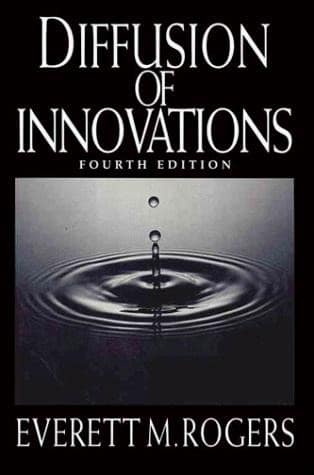
Book
Diffusion of Innovations 5e by Everett M. Rogers
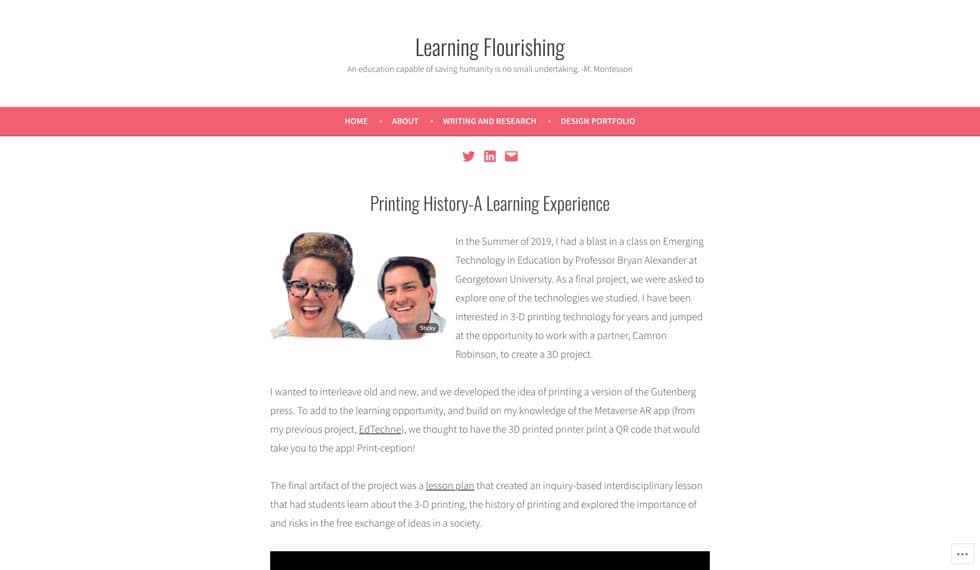
Article
Printing History-A Learning Experience by Rachel Davison Humphries

Idea
10 Tips for Online Teaching by Mike Wesch
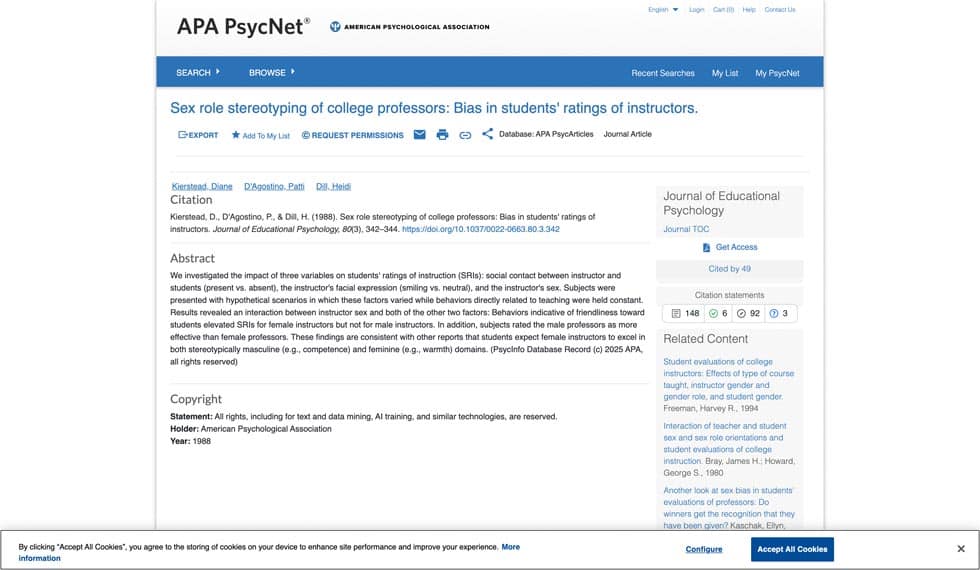
Article
Sex role stereotyping of college professors: Bias in students’ ratings of instructors by Diane Kierstead, Patti D’Agostino, and Heidi Dill
Transcript
[00:00:00] Bonni: Hello, and welcome to this episode of Teaching in Higher Ed number 288, where Bryan Alexander describes his new book, Academia Next.
[00:00:12] Production credit: Produced by Innovate Learning, maximizing human potential.
[music]
[00:00:21] Bonni: Welcome to this episode of Teaching in Higher Ed. I’m Bonni Stachowiak and this is the space where we explore the art and science of being more effective at facilitating learning. We also share ways to improve our productivity approaches so we can have more peace in our lives and be even more present for our students.
[music]
Today I’m excited to be welcoming back to the show, Bryan Alexander, this time to share about his new book, Academia Next. Brian Alexander is an internationally known futurist, researcher, writer, speaker, consultant and teacher working in the field of how technology transforms education. He completed his English Language and Literature PhD at the University of Michigan in 1997 with a dissertation on doppelgangers in Romantic-era fiction and poetry.
Then Bryan taught literature, writing, multimedia and information technology studies at Centenary College of Louisiana. There, he also pioneered multi-campus interdisciplinary classes while organizing an information literacy initiative. Bryan is currently a senior scholar at Georgetown University and teaches graduate seminars in their Learning, Design and Technology program. Bryan Alexander, welcome back to Teaching in Higher Ed.
[00:01:50] Bryan: Thank You, Bonni. It’s great to be back.
[00:01:52] Bonni: I love any time I get to hear your voice but it’s extra special when we’re actually talking to each other and today’s seeing each other.
[00:01:59] Bryan: Well, it’s wonderful to speak with you. I would say it’s wonderful to hear you but I hear you every week and it’s just part of the goodness as part of my life.
[00:02:08] Bonni: Well, thank you so much. I don’t get to quite hear you every week but there are plenty of opportunities and one that’s been so fun to revisit is just your work as a futurist. I thought we would start out with just, what on earth does a futurist do? How does a futurist work?
[00:02:23] Bryan: I’m happy to talk about that. Futurists help people think about the future. We help people plan. We help people imagine. We help open their minds to possibilities and we give them tools for anticipating and grappling with what’s coming up down the pike. Personally, my focus is the future of Higher Education, so I work with mostly American colleges and universities along with colleges and universities in North Africa and Europe.
Some in East Asia along with businesses, governments, nonprofits that work in or adjacent to that space. To do that, I do lots of consulting. I do lots of presentations. I make media from videos to audio. I write books. I host video conferences. Those are all that the servomechanisms behind the machine.
[00:03:09] Bonni: Can you talk about how you keep score, maybe just in general at first, as you’re looking at trends that have been identified, as you’re looking at other futurists work? And then, how have you kept score also on yourself and are those things different at all?
[00:03:24] Bryan: Sure. This is a controversial topic in the futurists’ community because, a lot of futurists, a lot of forecasters like to avoid what they call the P word for prediction. They like to say that they’re not offering a crystal ball, that what they’re offering are possibilities and that’s very fair. As you model the future and the future hurdles on past you, I think it’s a really really useful thing to check how you did and then to apply that to your own method. There are a lot of people who do this and it’s very important to do.
For example, I’m proud of some things and I’m bashful about things I got wrong. From around 2000 to 2007, I walked around telling everybody that mobile devices are going to be huge and they were everywhere in the world except for the US, and then the US people said, “I don’t know, Palm Pilot.” That’s such a big deal. I said, “No. No.” I think mobile phones like, we got the Blackberry. There’s more coming. “No. I don’t know about that.” Then 2007, the iPhone comes out, people were like, “Oh, mobile phones? I got it,” and then they run with it, so that was exciting.
[00:04:22] Bonni: That’s when that you see you’re more bashful about because the timing wasn’t-
[00:04:27] Bryan: No. That’s what I’m very happy.
[00:04:29] Bonni: Oh, I was going to say– I’m confused that sounds like a great success. Absolutely.
[00:04:33] Bryan: It is. There a couple things I’m bashful about. One is college sports because it revealed a blind spot for me. From 2000 and 2010 or so, I thought that college and universities many of them would cut back on college sports, and listeners can start laughing derisively right now. I built my case thinking that first, there was this huge financial hit based on the Great Recession and second, there is the whole slew of terrible terrible scandals ranging from cheating to rape that just rippled across Higher Education, there are lots and lots of publicity about that.
There was the budding fear about head injury for football, but of course, as most of your listeners would know, I was completely wrong that the economic case doesn’t matter for most higher in athletics and we are perfectly willing to bypass, ignore or even celebrate the hideous crimes and errors along the way. That taught me that I was blind to college sports and I spent a lot of time researching to catch up on that.
[00:05:30] Bonni: You have a new book that, as of this recording, either has just come out or will just come out, I’m not sure exactly where we’re going to hit, but tell us about the origins of the book and a little bit about your methodologies.
[00:05:43] Bryan: Sure. The book came up based on research I’ve been doing for almost 10 years. I’ve been tracking major trends as they reshape Higher Education with an eye in technology. I do that in part with a monthly trends analysis that I publish called the Future Trends in technology and Education report, that has a map of almost 90 trends that we’ve been tracking. Because we’re doing this for so long, we’ve got good longitudinal data, we can see which ones have gotten a lot of support and which ones have faded and that’s really interesting.
I wanted to get this in print. I wanted to share these conclusions with people. I’ve been doing that out loud through presentations around the world, but I wanted to prose it and I wanted to really give it the book length explorations so I could ground every trend and evidence and then extrapolate. What happens if these trends in augmented reality and open education and adjunctification, what happens if they unfold further and progress?
One of the methods that I use is trend analysis, taking a look at major change drivers in the present, grounding them with evidence and then seeing how they might play out in the future. The other method I use is what’s called scenarios. A scenario in the futurist sense is a story about the future. It’s based on one or two things usually and you create a vision of the world or the part of the world that you’re interested in. I picked a series of trends that I thought were most interesting and also hardest to predict and I use those to create a bunch of different scenarios.
I have a library of about 40 right now that I’d like to present from and they range everything from what’s it like to have Higher Education at the age of surveillance dystopia to what happens if healthcare becomes leading sector of Higher Education, to how education changes if open education wins versus if open education loses. In the book, I picked a clutch of these scenarios and developed them at length so that readers can really try to imagine what it would be like to be in a campus in the future if certain things come to pass. Those are the two big methods in the book, trends and scenarios.
[00:07:48] Bonni: Your titles, every one of them just grabs me, but let’s pick the first trend because it’s one of my favorites and that is, Objects in Mirror May Be Closer Than They Appear. What can you tell us about this trend?
[00:07:59] Bryan: Well, thank you, by the way. The title of this scenario should grab you and should be memorable. I’ve succeeded in that, so hurrah, that’s very good. The idea was to look into trends that are in and around education that don’t involve technology, that includes, for example, demographics, that includes economics and that includes a whole series of fields. I’ll just touch on a few of these now that are really, I think the most important.
One of them is demographics. Demographics tell you that, right now, we’re experiencing amazing time in human history, an unprecedented completely weird time, where we are reproducing less and less than ever before. In human history, for thousands and thousands and thousands of years, we’ve tried to grow our populations by spawning as many children as possible. The typical couple or normally, the i.e., the typical woman, would have more than three children. The idea would be to try to power through infant mortality, childhood disease and all of that and to grow populations.
It turnabout, the year 1800 to about the year 1970, we did that and the human population swelled enormously. In Higher Education, Higher Education around the world grew as the number of students need to go through Higher Education grew. Starting around 1970, it really depends on where you look at this, we changed our pattern fertility. The average woman has dropped it from say, four children to three children to two and in some countries it’s below two, which means unless those countries enjoy integration, their total population will shrink.
We’ve seen that in countries like Japan, South Korea, lots of Europe. In fact, there was just a news item that said that last year, South Korea’s fertility rate was 0.98, which meant that the average couple would have less than one child, basically. Just less. What does this matter for education? Well, one thing is this is a trend that’s very deep and very large. It’s not something that’s quick like a new piece of hardware. This one is really baked in that we’re going to be experiencing for a long time. Then it has impacts all up and down education, it means a K through 12 is going to be experiencing fewer and fewer kids, which on the plus side could mean reduced teacher student ratios.
On the negative side, it may being laying off teachers or closing schools. When it comes to higher education, we’ve been for a century basically, growing higher education. You go back and you think of the real growth of the land great universities, you think of Sputnik, you think of the baby boom generation, you think of the 1980s, pushing more and more kids through higher education. Well, that’s going to back up now. We no longer have that more and more children to educate.
That has ramifications for everything. That means every university and college that depends on tuition for revenue, i.e., 98% of them is now going to be struggling to try to get more and more students in the door. It means that inter-campus collaboration is going to be harder and harder to do as competition heats up. It means that we’re also going to be looking at the older part of our population. One end of demographics is also having fewer kids. The other end is us living longer and longer.
In the US for the past few years, we’ve had this weird phenomenon of the adult white population starting to live a little less longer, but overall, the big picture is humans living longer and longer time, and that’s due to all kinds of wonderful things, greater public health, wonderful medicine, all kinds of things. That means that we should expect to see more and more higher education addressing and more adult learners, including senior citizens. That really transformed education as we know it.
Just this morning Bonni, this is one for my picks. Just this morning there was a piece and it said higher Ed about how colleges are trying “trying to figure out how to introduce a growing population of older students to their campuses.” The headline is orientation for the adult learner. That’s just going to play in all kinds of ways. Here’s a second way, enrollment for the past 20 years, enrollment patterns and undergraduate education have shifted very, very clearly, certain fields have grown and certain fields have shrunk. In some ways, there aren’t many surprises [unintelligible 00:12:18] following along.
STEM fields continue to grow. Business continues to grow, allied health, so everything from radiology to surgery to hospital administration continues to grow. The humanities, on the other hand, continue to shrink. Foreign languages, literature, history are just dwindling like mad across the country. There are all kinds of reasons for this, which we can go into, but that has implications for, again, everything in higher education. How we structure core curriculum, who we hire, the types of campuses we have, I can go on quite some length, i.e., the length of a book about this. Those are enrollment, the demographics are two of the trends that I find especially powerful.
[00:13:00] Bonni: I’m interested to hear you share. I’m interested in everything you just said, but also about the virtual learning environment and the changes there. I wonder if you could start first with the present because that word is not commonly used in all countries. Can you define that term for us? Tell us where we are now and then tell us where you predict that we are headed?
[00:13:20] Bryan: Oh, sure. VLE is the international term for what in the US we’ll call the LMS, the learning management system. That’s what the Wikipedia page is, so if you’re looking– if you want to learn about Blackboard or something, you go to the VLE page. Learning Management System or VLE is a bit of software that reproduces some aspects of classroom and classroom management online.
They date back to the 1990s. One of the most popular ones include Blackboard in Canvas as well as Moodle, just an open-source one and they have the capacity to do a lot of stuff, including to monitor discussions, to share class work, to have a great book, to have quizzes. Unfortunately, generally speaking, all the research I’ve seen shows that the most common use of LMS or the VLE is for a faculty member to push some documents to the students, i.e a syllabus and some handouts.
Where I see this going, well, right now, the LMS VLE market is pretty mature and pretty stable. We have some well-established players, we have a relative newcomer, Canvas, which is doing very, very well. The changes that are happening in them year by year are largely incremental, tweaking this, improving that, modifying this feature, all of them trying to get their mobile versions better and better, that kind of thing.
This could unfold in one of two ways. We could simply see the LMS VLE world continue along that path for the next 20 years. There’s a lot of precedent for that. Think about PowerPoint, think about Excel, think about Microsoft Word. All those office tools are completely recognizable to someone from 1998. They have new suffixes, they’ve got more bells and whistles and word has the ribbon now, but the basic thing is still there.
It’s possible they keep doing that with the LMS. On the other hand, there’s the idea of what some call Next-Generation Digital Learning Environment. It’s predicated on the idea that you could create an LMS designed for kind of the middle of the 21st century. You think, what technologies do we use now? What’s the digital environment like? You might think about open content, you might think about a lot more hyperlinking, you might think about a far simpler interface.
You think now, how many interfaces are really designed for mobile phones? The interfaces tend to be simpler because you’ve got a smaller screen and a sort of a tiny little arrow pointer, you’ve got a big fingerprint. Imagine a next generation digital learning environment that is say, designed first for the mobile phone and may have several different components that communicate with each other and bounce back and forth. They may be more interactive, they have more game-like features.
They may be more invested in the open web in terms of open content and hyperlinking. That’d being a very, very different tool. It’s possible we could go down that road. Those are two different paths, and it’s, the future is we like to follow the rules impromptu and do yes and or both and. We’ll possibly have both of those ones.
[00:16:22] Bonni: The thing that I’ve heard about Learning Management Systems versus Virtual Learning Environments is just that the whole aspect of management and some of the ethical considerations that come out, I will admit, I really paid a lot of attention in the past to how many clicks did they actually click on the thing? Are they just telling me. Are they lying to me that they clicked on the thing? I have a very different viewpoint today. I suspect I probably have areas I still need to get pushed in and testing my own ethical boundaries and what are these tools for?
I’m curious your comments just about the ways in which may be your ethical views have changed or you’ve just seen through some of these trends where we’re trying to increase the usefulness of these or we’re trying to increase our ability to surveil our students, where are you seeing those tensions come in either for yourself or for what you’re researching?
[00:17:08] Bryan: Well, as a researcher, I see these trends intention. So, on the one hand, there’s the move to get as much student data as possible and to do things with it, to run all kinds of analyses ranging from simple analysis to applying AI. We’ve already seen a range of positive effects and we’ve seen also possibilities that can go beyond that. Everything from the great work of Georgia State to improve retention to different faculty members being able to redirect class resources for students, especially this is the thing that works well Bonni at scale.
Not the kind of thing you might do in a seminar of six people. But when you’re talking about a class of 600 or an undergraduate class of say, 10,000, then at that scale, that big data can be really, really helpful and really useful. We’re just starting to see how this can work out. On the countervailing side, we have the fear of surveillance. That fear ranges from the thoughtful to the goofy. We do have a lot of rising anxiety about this.
To give you one anecdote. Last fall, I taught a seminar graduate seminar at Georgetown. I asked my students what technology they wanted to use, and they said they wanted to use the LMS because it felt more secure than things on the open web. I think that’s an interesting dynamic. The security goes in a different direction other than data, which is, you’ve asked me how I changed, for about 20 years I believe firmly in the open web and then having students learn and share their learning on the open web in as many ways as possible. I’ve done that in my practice.
I’ve done that in my teaching and research, but since GamerGate, I’ve been more equivocal about this, I wonder, is this really the best way forward when we have people who can attack you for reasons of identity or from politics or just for lols. I’m wondering now, not just my personal practice but looking into the broader field if this might be a vote for maintaining the present LMS VLE model, because it is a silo, because it is closed off from the open web. That might be a refuge from trolls. I think we might see that happen as well.
[00:19:14] Bonni: I’m guessing that part of that is, you may not have been as susceptible to some of the trolls but recognizing that some of your students based on their identities may find themselves as victims of these trolls. Is that part of your story as well?
[00:19:26] Bryan: Not really, I’ve had my classes research this phenomenon of online abuse as far back as the late 1990s. This has been the subject of a great deal of research. There’s a very, very famous essay on this written by Julian Dibble called A Rape in Cyberspace, which is from I believe, 1995. I’ve had my students doing work online as well. Some of them have been subject to probes or challenges that were very, very unpleasant. Now, this is before GamerGate This is before this happened at scale, and without getting their approval, I don’t want to share them, but these were not based on their identity.
These were always based in the subjects they wrote about. To pick a hypothetical example, one that didn’t happen, if we had students researching, say, Darwin and published a paper up to the open web on evolution, there’s some probability that they may get attacked or criticized or just pushed back on by a young earth creationist to say, well, that’s clearly wrong, blah, blah, blah. Again, that’s identity so much as the content of what they’re writing about.
Since GamerGate, I’ve had friends who have been abused and attacked online, I have friends, dear friends who suffered far worse, partly because of their identity, partly because of what they were writing about. Sometimes for identities that didn’t even really apply. Now, we’ve just seen this grow and we’re also more wherever than before. Again, that makes me very equivocal in my personal approach to teaching. When I look at the broader world, I can see there’s a lot of instructors, a lot of students who would have second thoughts about sharing their work on the open web.
[00:21:07] Bonni: Has your approach been then to offer options or to live more inside the supposed protection of the virtual learning environment?
[00:21:16] Bryan: For my students, for my clients, for anybody I work with, I always give them the options. Then, I always try to give them as much information as possible, not overwhelming them. We see what they pick and what they’d like to do. I’ve done this in my classes of digital storytelling, the classes of educational technology, when I do backchannels, when I give a keynote presentation, I like to make sure people think about this and pick the right way.
For my own work as an independent, as someone who is– I run my own business, I don’t have a net. I try to be careful about what I say online, because I can’t risk low back. If I decide to weigh in on something that isn’t immediately critical to my work. For example, just to pick a hypothetical one, if I decide to complain about the genocide of Armenians under the late Ottoman Empire in the early 1900s. If I did, I might get people, that’s a predictable problem where people will just yell at you for this. That’s a classic problem. That doesn’t benefit me, doesn’t play in.
I tend to avoid a lot of those issues because at best, they yield me nothing and at worse, they cost me badly, either in terms of my reputation or my business or both. Again, I’m independent, I don’t have a tenure. I’m not backed up by an institution full time. On the other side, I’m as open as possible. I share my thoughts, my research, my work on Twitter, I use Twitter, I use Facebook, I use LinkedIn. I use Mastodon. I blog a lot. I make videos and I make podcast, I get interviewed by great podcasters like you.
I’m happy to be as open as possible because for me, that makes my work better. It makes me sharper, I get more pushback, I get more fact-checking. I get more information. It’s like the old open-source adage that there are always more experts outside of the house than inside. With more eyeballs, my work can become better and better, doesn’t always work. Sometimes I share something and nobody cares. That happens. Sometimes I share something people go wild with it, but really, I try to make social media and the open web work for me and it really does.
[00:23:20] Bonni: What I think I hear you saying is that, it isn’t necessarily about shying away from controversial topics. It’s shying away from controversial topics that don’t represent the purpose and your mission and why you do the work you do. If it came down to criticizing a learning management system or around these tensions we talked about with privacy or that that wouldn’t be something that would hold you back because that learning management system company might become angry with you, but the people that fuel your work, that’s part of your mission, so with the Ottoman empire-
[00:23:50] Bryan: Exactly.
[00:23:51] Bonni: – not as much. [laughs]
[00:23:52] Bryan: No, if there’s a horrible article in a prominent position, say the Chronicle of Higher Ed or NPR, the York Times and it gets something really, really wrong about higher education, finance or by demographics or by technology, I’m happy to go to war against it. In fact, I’ve done a series of blog posts, which are usually titled, how not to write about x, where I just demolish one because I think it’s stupid. Maybe I can use some service in trying to help the discourse a bit.
I have to pick and choose my battles. I may have a hobby interest in something, but I don’t want to express it. I’m an independent researcher, independent scholar running a business. I have to be careful in what I do and what I don’t do.
[00:24:36] Bonni: I’ve heard that from so many people from lots of different aspects, but just that importance of knowing thyself, knowing what’s most important, what is the core mission of why you do and then some of that comes with rate influence. You have an amazing influence, but how could it be best used and Ottoman Empire, we come back to it, not a great way to use it?
[00:24:57] Bryan: No, it wouldn’t and to come back to it, if I can go back to another trend that I think is really, really stuck and still not fully appreciated. The majority of faculty in the United States are adjunct. That’s the first time that’s happened since around 1920. That tenure has been that scarce on the ground. A lot of American cultures still thinks of higher education is dominated by a tenured faculty. A few institutions are, elite liberal arts institutions, some of the top bar ones, really still do that, but generally speaking, the majority is adjunct and that proportion is increasing, the number of that is increasing as well.
Those are facts that you have no expectations of protection of academic freedom. Time and time again, just about every few days, we hear a story about some professor who has said something on social media and calls blowback, it’s usually political and left or right doesn’t matter something and inevitably, they have a greater chance of being able to survive the blowback if they have tenure. Not always, the Chronicle had a very, very dark piece a couple of days ago by the former scholar students of [unintelligible 00:25:59]
He was hired by an American University to a tenure job, he accepted it, that they offer him.
Basically, he was moving cross country to pick up that job when the president and it’s a complicated story, basically, the president and some of the board, found some of his tweets that were in opposition to the Israeli government and decided to block his hiring, and they successfully did. It led to a complicated legal case. Now, the fellow basically drives a school bus. His piece was on how thin the protections of academic freedom are. Now, for him, writing about Israel, Palestinian relationships made sense since he was a scholar of indigenous peoples and this fitted into his research.
For me right now, I almost never write about Arab Israeli relations, insofar as I research international higher education. I’ll note these things in passing, but that’s not crucial to my work.
[00:26:53] Bonni: By the way, I’m taking copious notes and we’ll link to everything that you’re sharing so people can do a little bit further reading. I do remember seeing that one. Talk about complicated too, but you distilled it down well for us. We’re into now some scenarios, you’ve shared many of the trends that you explored in your new book. I would love to hear now about the Open Education triumphants.
[00:27:17] Bryan: This is based on, in some ways, this is the least imagine of scenario that I’ve ever made. What you can do with trends is you can plot them backwards in time and get some metrics. Pick any number and then extrapolate them forward in time. You can take, for example, something like population and work it backwards and see how far forward it will go. As you can see, as I mentioned before, sometimes that doesn’t work out, sometimes the future twists and turns in different ways.
Here, what I just took are some of the metrics for open education resources. Those OER refers to documents, texts that are openly available, usually for free or for very, very low price and also, I looked at open access and scholarly publication. That’s the whole field where you mix scholarly materials, primarily research articles, but also journal articles, but also monograms, you make those available again, openly and either for free or for a very, very low cost.
I just looked at the total amount of those in the world and the proportion of those being used and how they were growing. I just put that forward and said, all right, when will those become the majority of usage. When will most students use OER instead of traditional textbooks? When will most scholarship be in open formats? When that happens, some people call this stuff flip. Right, and so one is the majority flip to open. When that happens, how does the world change? How does University change?
I’m pro open in both of those cases. A lot of people are, there groups like Spark that are all about agitating for more open and I think that’s great. I really want this to be a balanced scenario. I didn’t want it to be utopia, so I outlawed a bunch of positive features, but also some problems. For example, one of the positive features is lower costs. Lower costs for students, lower cost for faculty having to buy articles, textbooks and lower costs for libraries having to buy these materials.
Another is greater creativity. For example, I have in my hand right now a book, which we’re going to mention a little while and it’s not available open. It’s a great book, but I can’t do anything with it as an instructor, I can’t modify the text. I can’t remix it or anything. If it were open, then I could blend it with another book, I could remix it. I could change the order of it, that kind of thing.
Faculty can be more creative, students can be more creative. On top of that, there’s the advantage that some present-day geopolitical inequities might be rebalanced. If you look at most of the developing world or the global south right now, you can see that many of their libraries suffer from just not having enough volumes because they haven’t been able to starkly afford access to this and some still can’t. That’s a real challenge that really holds back scholarly development in a lot of these countries, you think about Sub-Sahara Africa, you think of parts of central Asia, parts of Southeast Asia. Well, how great it would be if you were a scholar in Rwanda or a scholar in Pakistan. Instead of having to just not see most of your field but build to have access to it, that would be fantastic like many Renaissance I’ve gone for. Those are some of the great positive things.
When I thought about some of the negatives, to me, some of the things that we’ve seen with lots of open contents, some of them with open source software and one of those is that authorship can be spurious at times. Bonni, I have to ask, have you had any of your writing pirated before?
[00:30:42] Bonni: I would not describe it as pirated where it’s word-for-word but my goodness, was that ever a very liberal paraphrasing, let’s just say that. I won’t mention the name of the organization but I thought, “That is about 85% of what I wrote,” but they did link back to the original article. They were using the content and were clear about where they got it from but, I don’t know. How about you?
[00:31:06] Jaime: Well, I remember the first time one of my books got pirated. I was so happy. I thought someone cared. That’s pretty good. Some book that actually sells well that’s in the second edition now, but the first one, I was like, “This is so sweet.” Then, an article of mine completely copied and republished by somebody else without attribution and I was really ticked. Well, with open, that becomes easier and easier to do. It’s possible that we might go back to say, the 18th century where authorship becomes hard to pin down and people often publish under pseudonyms.
We have some of that now. You could think the inventor of Bitcoin, blockchain technology, still don’t know who it is, that was a pseudonym. The inventor of the term stochastic terrorism, we still don’t know who that was. Maybe that we see the new age of the spurious authorship or dubious authorship. Another problem is, with open, there could issues of the quality degrading. There’s a wonderful book, History of the Book, by Adrian Johns where he takes a look at book printing in the 17th and 18th centuries. Please, listeners don’t start snoring if you hear that.
It’s actually a fantastic book because one of the things he tried to figure out is why the British invented copyright because it was a bizarre invention that come out of nowhere and nobody else was doing it. One of the reasons as they kept the copyright was, according to Johns, that science publishing was starting to suffer in bad quality. You know the Xerox of the Xerox of the Xerox gets worse and worse every time? Well, the same thing was starting to happen in scientific publication that people would copy a chart of Galileo’s and leave out 5% of it.
In that way, you copied only good 5%. Foundation of science of reproducibility was getting harder and harder to do. With copyright, which is the early 18th century in Britain, publishers had to register their publications within central location and now you had authoritative editions and in theory, the quality went up. Obviously, a scientific revolution has rocked Leatherhead since then. It’s possible that we’ll see problems of quality and then we’ll have to device new methods, maybe akin to but not equal to copyright in order to graph about it. I think of overall, a better world but with some challenges.
[00:33:24] Bonni: Another area I’d love to have you explore before we get to the recommendation segment is the one you titled, Augmented Compass.
[00:33:33] Jaime: Bonni, have you played with any augmented reality stuff?
[00:33:36] Bonni: I have. I have done stuff with the kids. In fact, just yesterday in the LEGO store now if you go into it, they’re fascinated by being able to pick up the boxes and hold them in front of a camera that’s right there in the store and things will begin to appear and make those things come to life.
[00:33:51] Jaime: Nice.
[00:33:52] Bonni: Then, I have a running joke with a colleague because she thinks I like to play too much with technology and she just wants to know first how it’s useful. By the way, she’s way more technical than I am just to be clear on that. Recently, on FlipGrid, which is a video tool that I like to have. They have augmented reality now. We had new faculty and they recorded introductions of themselves and I hung the QR codes, which then if you play them within the app, will show up with them introducing themselves to our new faculty.
I still think she’s right in the sense of like, did we ever accomplish the same thing just by a QR code that went to the video. Did it matter that they were floating in front of the sign “No?” I like to play it. I don’t know what’s come up with it until I just start playing and experimenting and I don’t know where we’re headed in those processes. You could tell I’m very excited about this. So far, I’ve got into a lot of playing and not a lot of practicality but we’re going to get there maybe.
[00:34:46] Jaime: That sounds terrific. Augmented reality, you experienced this and listeners, if you are new to it, the term dates back to the 1990s. It refers simply to taking digital content and tying it to the physical world, either to a geographical location or to where you are with the device. If you’ve ever used mapping tools with a mobile device like Google maps or Apple maps with your iPhone or your Android phone, and as you walk along, it tells you where are and points at directions as if for augmented reality. Pokemon GO is really the big coming-out party for augmented reality.
There are a lot of different versions of this. But, we can increase and you add more digital stuff to the physical world, and I thought, “What would happen to a campus that embraced that as core?” Imagine going across a physical campus now and with your device, whatever the device is, it could be you take an iPad– For example, my students this past spring, took a whole class to the Smithsonian Museum of Natural History, they had a great middle exhibit in the Bone Hall where you could point your iPad at certain exhibits– It’s called the Bone Hall because it’s all skeletons, if you point your iPad to one of the skeletons, up will pop an animation of the creature fully fleshed.
If you look at a fish skeleton, you’ll see the fish swimming along with the audio with it and video, really nice exhibit. Well, what if you do this for a whole campus? You walk across it with your tablet computer or your phone or your glasses depending on the technology you have and you can see more stuff. Imagine, for example, being able to look at a building. Say, I wonder if professor Bonni is there and then you could quickly get information about the office, who’s there in general directory as well as other information of who’s actually physically there on moment if they will have the information revealed.
Imagine looking at a library something in the catalog, as you look at it to see if a book is actually on the shelves and then if it is, you can see the way through the stacks and the shelves and the elevators and stairs to get right there. Then, you could imagine other things that happen in campus. For example, imagine a classroom with completely blank walls because everyone involved has some form of AR tech and they can see things projected there, again, on their phones or on their glasses or on their tablet computers. Imagine people going through campus and they’re having a video conference or and audio conference say, a podcast discussion just like we’re doing right now but they’re talking with someone who they can see through their glasses but nobody else can see.
Imagine covering the campus with art, so students can put at a sculpture or giant map or giant figure or the mascot from their sport, see you’re training athletics, and they could have that available on campus, that digital realm that you can see with your glasses but no one else can see unless they have access to it. You can add more and more content to that basically laminating your compass with an entire second layer and this can include campus services, think about mental health. You could think about classes. You can just really add more and more layers to it.
I think technically, right now, 80% that we could do tomorrow and then we do the other 20 in the next two years if we want to. Imagine too if your campus is older than say, 10 years, you may have items of historical value that you’d like to show. Imagine being able to toggle a view of your Compass like it was in 1850 or 1920 and being able to still add or subtract those values. Imagine being able to do that with the area around your compass, what was there before that building. What was the first building on campus and what did the compass look like when that was the only one there?
Being able to have that timeline value would just be amazing to have. I think for campuses especially as they’re in a more competitive environment, they might want to do this because it might bring forth more value from being physically there as well as taking and managing the Technology.
[00:38:41] Bonni: I love that you shared too that so much of it as possible today. We had a great episode with Jaime Hannans, a nursing professor at California State University Channel Islands. She was describing these things at nursing, where I think, “Oh,” and then, each one, she’d say, “Here’s the tools we’re using.” It’s just amazing what can happen with existing technologies as well as what’s to come down the road. It’s truly remarkable.
This is the point in the show where we each get to give recommendations. I have two of them. One of them is an article about sex role stereotyping of college professors. It’s a follow-up to an episode that we did with Kelly Hogan and Viji Sathy. This is about bias in student ratings of instructors. I’ll probably put it in the show notes for that episode as well as just having it in the recommendations. I think it’s a good one. It doesn’t tell us anything. We don’t already know if you’ve been listening to information about student evaluations in our courses, but I do just think an ongoing accumulization- accumulization, that is not a word.
[00:39:41] Jaime: Accumulation.
[00:39:42] Bonni: Accumulation. I’m here making up words as the studio gets increasingly hot in here like the air conditioning shut off, I don’t know. The next one I want to recommend, this episode is actually going to air in December, so this will have been out for a while but if you missed it, I want you to go back and watch this wonderful video from Mike Wesch, and he talks about teaching without walls. 10 tips for online teaching. I did write an article for EdSurge of a monthly advice column. That one was about, do active learning approaches, really scale?
Can we really engage learners in large classes? He was one of the exemplary faculty that I profiled in that and then right after the episode was done being recorded, they came out with these great 10 tips for online teaching. He really just takes, whenever you watch his videos, it feels like you’re going on an adventure with him. It’s just you and him. Maybe there’s a couple of people there but his stuff really scales, is incredibly engaging. He doesn’t call things assignments. In this particular case, I think this class calls them challenges, but it just feels like you’re going to be exposed to these great adventures and you’re going to get to go on it and take yourself on some too and report back in.
He really brings the online world just alive in ways that so very few do so. I’m going to link to both of these things in the show notes. Then, Bryan, I know you have a couple of things to share with us as well.
[00:41:03] Bryan: No, I just got to say, “Mike is awesome.” He does fantastic work. He’s a good friend that I think, he just always does great, powerful videos and there are very few teachers that are this visionary and passionate at the same time. I have two recommendations really, really quickly. One is a book that I’m teaching for the first time, is called Diffusion of Innovations, Everett Rogers. This is the locus classicus for how innovation moves and succeeds or fails, it’s a meticulous book. It’s in its fifth edition now. It’s hugely influential, but almost nobody in ed-tech ever talks about it.
It’s just a wonderful study of how people choose to pick up an innovation or choose to refuse it. The examples are from all over the place, literally, geographically from all over the world and from all kinds of domains. The second pick and this is based on augmented reality, think about how much I love my students. This summer I taught an insane class on emerging technology and education. Not just current technology. Technologies that were just popping out. Some of them included augmented reality, virtual reality AI, gaming, 3D printing.
Two of the students, I had a final project that was one of the most creative ever seen. They learned how to do 3D printing, made a great maker hub here in Georgetown. They decided they were going to do a work about printing. They delve into the archive, they’ve never done 3D printing before. This is just them learning this as they went, they delve into all the 3D file archives they could find. They found some models, 3D models of the early Gutenberg presses from the early 15th century. They printed those out. Maybe six inches by four inches by eight inches tall, and then they printed out plates so they could slide them in and then actually printed stuff with the printing press.
For their presentation in class, they brought a big roll bunch of paper, put on the desk, gave everybody ink, gave everybody a piece of paper they could put in these plates, put them in and everyone on the class got to print a single sheet this way. One of the things you could print was a QR code. That’s again, for the listeners who don’t know that, that’s a little small square, black and white little squares within it that if you put your device as a QR reader built-in, you can look at it and it takes you to something interesting.
In this case, it took you to a 60 page augmented reality, essay/exploration about printing and publishing in education. Can I just say the whole class was six weeks long, and they managed to do this in the last two weeks? It’s just astonishing. How the augmented reality thing work, you took your phone, you pointed it at a QR code or the URL and floating in your phone would be one of the students telling you about something, showing you an image of something, giving you quotes and game like you could work your way through it or like a tutorial. You learn about this form of printing or paperback printing meant in the 20th century and so. One of my picks is my awesome students.
[00:43:56] Bonni: Oh, love it. Is any of this available online or and even available publicly or did they choose to keep it behind the wall?
[00:44:04] Bryan: That’s a great question. Here, I will send you right now, one of the links, so you can use that to put in the show notes.
[00:44:13] Bonni: Bryan, it has been so lovely to reconnect with you today. I am looking forward to finishing your book. I’m looking forward to other people picking it up because it is going to be a wonderful resource for people. I should add that back in as my other recommendation is to pick up Bryan’s book. Just thank you so much for your time today, Bryan.
[00:44:30] Bryan: Well, thank you. The book is called Academia Next. It is from Johns Hopkins University Press, which is a wonderful publisher. I’m really grateful to them for all of their support, all their help, and I’m really looking forward to the conversations that I hope the book will inspire. I’m really grateful to you, Bonni, it’s always a delight talking with you. Thank you so much for the privilege of being on your program.
[music]
[00:44:52] Bonni: Thank you, Brian Alexander for being a guest on today’s episode of teaching in Higher Ed and for sharing about your new book called Academia Next, we’re all looking forward to reading it. Of course, by the time people will hear this, I will have been well past that deadline. If you’d like to access some of the links that are in the show notes today, you can go to teachinginhighered.com/288.
You are also as always, welcomed to sign up for the weekly update where you will most weeks get access to the show notes from the most recent episode as well as an article about teaching or productivity written by me. Thanks so much for being a part of this community and I’ll see you next time.
[music]
[00:45:47] [END OF AUDIO]
The transcript of this episode has been made possible through a financial contribution by the Association of College and University Educators (ACUE). ACUE is on a mission to ensure student success through quality instruction. In partnership with institutions of higher education nationwide, ACUE supports and credentials faculty members in the use of evidence-based teaching practices that drive student engagement, retention, and learning.
Teaching in Higher Ed transcripts are created using a combination of an automated transcription service and human beings. This text likely will not represent the precise, word-for-word conversation that was had. The accuracy of the transcripts will vary. The authoritative record of the Teaching in Higher Ed podcasts is contained in the audio file.