Follow the Teaching in Higher Ed Podcast
About this Episode
Jennifer Pusateri discusses Removing Learning Barriers with Universal Design for Learning (UDL) on episode 269 of the Teaching in Higher Ed podcast.
We are unintentionally putting barriers in place for certain students.
Jennifer Pusateri
On episode 269 of Teaching in Higher Ed
Voices on this Episode


Show Notes + Resources
- Teaching in Higher Ed episodes about Universal Design for Learning:
- CAST
- About Universal Design for Learning
- The UDL Guidelines
- UDL Frequently Asked Questions
- Present slides with captions in Google Slides
- Present with real-time, automatic captions or subtitles in PowerPoint
Recommendations from this Episode
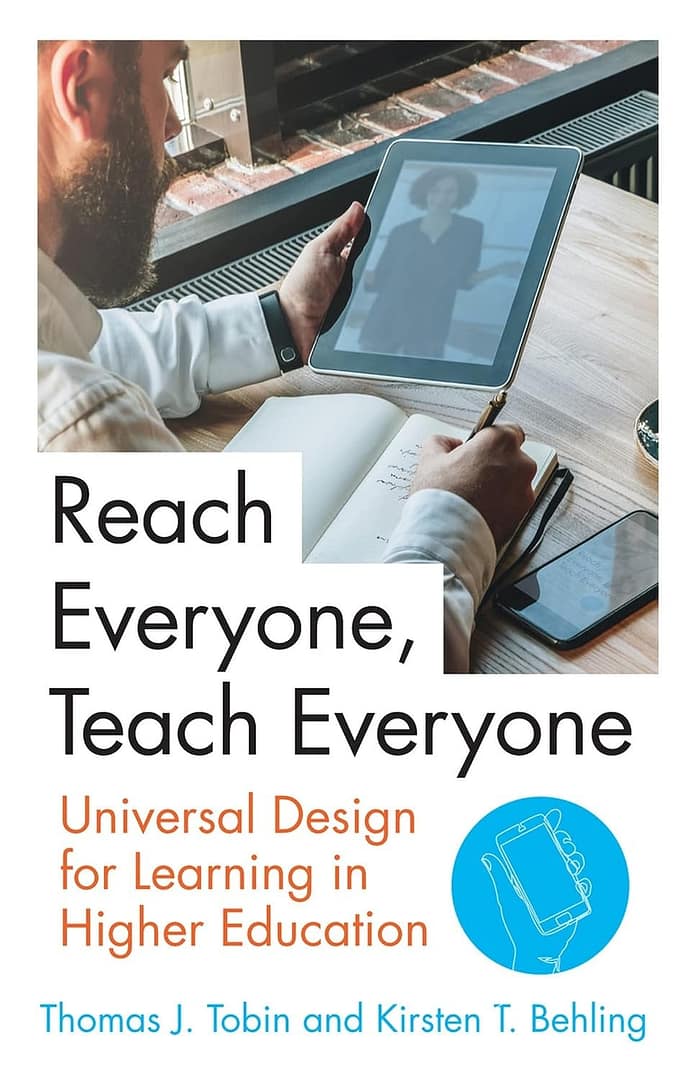
Book
Reach Everyone, Teach Everyone: Universal Design for Learning in Higher Education by Tomas J. Tobin and Kirsten T. Behling
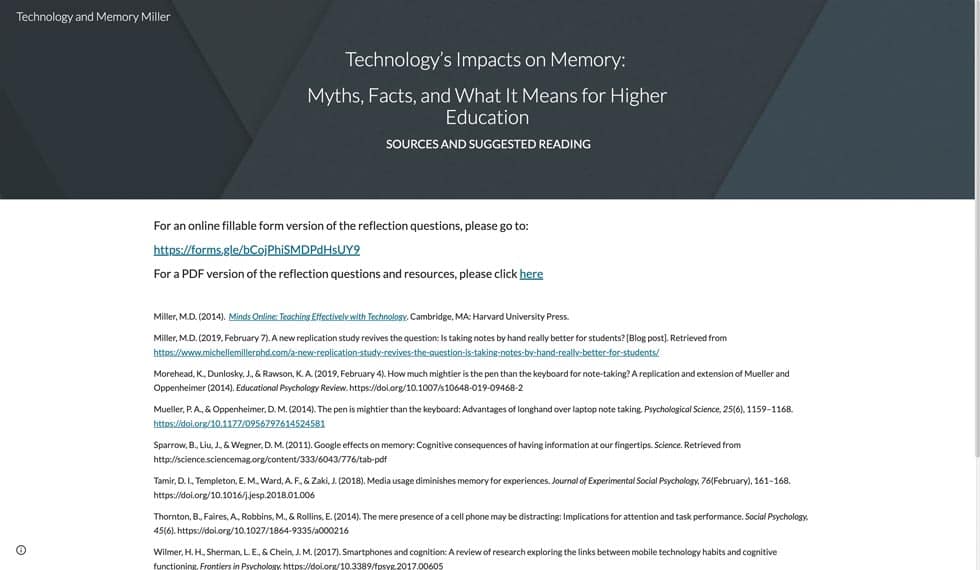
Article
Technology’s Impact on Memory by Michelle Miller
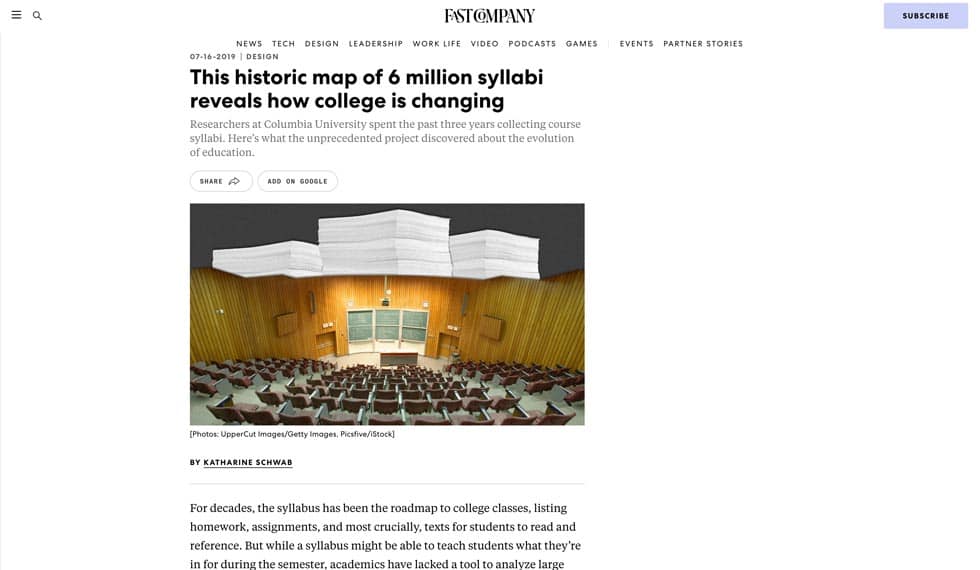
Article
This historic map of 6 million syllabi reveals how college is changing by Katharine Schwab
Book
Engage the Brain: How to Design for Learning That Taps into the Power of Emotion by Allison Posey
Transcript
[00: 00: 00] Bonni Stachowiak: On today’s episode number 269 of the Teaching in Higher Ed podcast, I welcome to the show Jennifer Pusateri to speak about removing learning barriers with universal design for learning.
[00: 00: 17] Promotional Credit: Produced by Innovate Learning, maximizing human potential.
[music]
[00: 00: 22] Bonni: Hello and welcome to this episode of Teaching in Higher Ed. I’m Bonni Stachowiak and this is the space where we explore the art and science of being more effective at facilitating learning. We also share ways to improve our productivity approaches so we can have more peace in our lives and be even more present for our students.
[music]
[00: 00: 54] Bonni: Today, I welcome to the show Jennifer Pusateri. She is the universal design consultant for the University of Kentucky’s Center for the Enhancement of Learning and Teaching where she works with individual faculty, course designers, and departments to infuse UDL into the University of Kentucky’s instruction in both face-to-face and online courses.
Jennifer frequently presents at international conferences on the topic of UDL and she’ll also be joining the prestigious CAST National Faculty in August. Before arriving at the University of Kentucky, Pusateri worked for the Kentucky Department of Education where she served as an education consultant and specialist in differentiated learning and UDL from 2015 to July of 2018.
Prior to her work at the University of Kentucky, Jennifer taught at a nationally-recognized school for students with specific learning disabilities in Louisville, Kentucky where she implemented the UDL framework with students in grades K through 8. Pusateri is currently pursuing her PhD in curriculum and instruction from the University of Kentucky where she plans to focus her dissertation on the impact of UDL-planned teaching on students with ADHD. Jennifer, welcome to Teaching in Higher Ed.
[00: 02: 18] Jennifer Pusateri: Yes. Thank you for having me.
[00: 02: 20] Bonni: I wanted to share with people first how you and I got connected, but it’s a little bit of a story. [chuckles] It started out with a [sic] article that I wrote in EdSurge. The question that someone had was whether or not they were being too harsh with students. One of her big concerns was around people who should have asked for an accommodation but don’t.
One of the things I really tried to emphasize in my answer was just that probably, if you’re asking the question, then you probably are not really thinking about the stigma that comes with people who was just seemed so easy like, “Well, why don’t you just go get the help that you need?” I had done a lot of research for the article around. It’s just not as simple as that.
You were so gracious to reach out and say that one of the things I didn’t mention was the ways in which Universal Design for Learning can help with this. That’s really a lot of what today’s episode is about, but I wanted to just mention to listeners who haven’t been around since episode one. [chuckles] We have talked about Universal Design for Learning a few times on the show previously. Although I feel like, Jennifer, your– I can’t remember how you got in touch, email or tweet or whatever it was.
It was certainly a reminder that we can never talk about it enough. I really think so. I want to mention a couple of episodes which will be in the show notes. Episode 58 with Mark Hofer really was our introduction to Universal Design for Learning on Teaching in Higher Ed. On episode 175, we bumped all the way past all those episodes too. It came up on a Q&A show and then I know that you’re actually familiar with the other guests.
I want to mention episode 227 and that is Tom Tobin. You said he’s been a big contributor to this field as well. [chuckles] For those who have not been listening to those three episodes and who are unfamiliar with the Universal Design for Learning, can you just give us really your definition? Not a textbook definition, but your definition of what it is and what it does for us as educators.
[00: 04: 23] Jennifer: Yes, absolutely. If we kind of think back over the history of the development of the education system in America, things have kind of always been done in a certain way, right? It’s very text-based, very text-heavy, so a lot of reading, a lot of writing. What happens throughout this whole process is that we are in unintentionally putting barriers in place for certain students when we really limit the way that we are teaching in the classroom.
There are a lot of students for whom a text-based classroom is not going to be a good fit. There are, of course, a lot of different kinds of students that that doesn’t work for. Just to mention a few, maybe students who are dyslexic, students who are English-language learners, students who maybe have some attentional issues. Again, that’s just a few. There are lots. Whenever we have a classroom that’s really built around one specific way of teaching, then we’re just kind of automatically leaving people out.
What Universal Design for Learning really does is it asks instructors and teachers to think about the way that they’re teaching and think about the barriers that they might be putting in place for students who maybe don’t learn the same way they do. UDL, it’s a big framework. It’s like an actual, like laid out. It’s like a grid, almost. It’s very overwhelming when you first look at the framework, I think, but it’s really kind of a troubleshooting guide.
If instructors are having some difficulties in their classroom, maybe students aren’t– they’re really just not comprehending the concepts or something like that, then an instructor could use the UDL framework to go in and say, “Okay. Well, if they’re having problems with comprehension, maybe I am putting a barrier somewhere in place. UDL suggests three or four different ways that I might be able to remove that barrier and these things are all based in neuroscience and in educational research.
[00: 06: 20] Bonni: Would you speak a little bit about your first introduction to UDL and also then the broader history behind it?
[00: 06: 28] Jennifer: Yes, absolutely. My background is actually– a lot of it is in K-12. When I taught in the classroom, I taught at the school for students with specific learning disabilities. Everyone in the school, every student in the school had some kind of a learning disability. It was typically what we would call maybe an invisible disability, meaning that it was not really– If you look to the student, you wouldn’t really have any idea that they had any kind of a learning difference.
A lot of our students had dyslexia. A lot of them had ADHD. There were a lot of students with sensory processing disorder. Just a number of different things in that same vein. In my experience teaching in that school, I really saw numbers and numbers of students who were really smart. I mean, they had really high IQs. They were very intelligent, creative, thinkers outside of the box.
When they came to the school, they were sort of beatdown. Because the school system that they’ve always been in, they were never able to succeed in that kind of a setting because of their learning disabilities. The one thing that this school did really, really well, they recognized that the students they were teaching, they learned differently. The school, in response to that, decided, “Well, if these students learn differently, then we need to teach differently so that we’re teaching in a way that they learn.”
They really were modifying how they taught in the classroom to accommodate the kinds of students that they had. I saw how effective that was at this school. Eventually, I was asked for a position I had later at the Kentucky Department of Education. I was asked to look into Universal Design for Learning and really kind of become a specialist in that. As I read about UDL and learned a little bit about it online or whatever, I had these aha moments like, “Oh my gosh. This is what we did in school.”
This is what we did in the school I taught at that was so effective. It is really about thinking about what kind of students you have in your classroom. It’s about recognizing that the classroom is going to have a variety of different kinds of learning needs within it and then adjusting your teaching so that the students in the classroom that you have are able to learn. It’s really as simple as that.
That’s where I started to learn about UDL. As I learned a little bit more about it, I understood the background of it which really helped a lot. UDL sort of started as an academic project. There was a group of researchers at Harvard. They started to look at neuroscience and how neuroscience can let you know how the brain works, how neuroscience can intersect with best practices for teaching and research-based practices for teaching.
They looked at all of these studies and started to come up with sort of this framework of, “These are the best practices,” and we can see by looking at the neuroscience aspect of that that these best practices work because of what we know about how the brain works when it’s learning. They really put all that together in a very effective way. They would go out and do some tests in K-12 classrooms.
They started to see that when they gave students with disabilities assistive technology, so when they gave them something like a screen reader or whatever, that these students were really benefiting from that, obviously, right? That’s removing a huge barrier for a student who can’t see to be able to hear a book being read to them. That is obviously removing a barrier for those students.
Well, they also started to notice that in that same classroom, there were other students who were not blind or didn’t have any kind of visual impairment. Other students were also benefiting from these assistive technologies and they’re like, “Well, that’s interesting.” They continue that research to look at how changing the way that you are teaching to address the needs of a variety of learners in your classroom can really be beneficial for everyone.
I like to think about it in the way that we think of the automatic doors at the grocery store like the ones that just you walk up and then they just know that you’re there and they open. Well, of course, those were obviously designed for people who may be on wheelchairs or have some kind of a physical impairment. Today, I’m so glad that that’s a thing, right? When my children were younger, I would have a cart full of groceries and then in the car like in a little seat in the grocery cart and my toddler with me.
I can’t open the door with all that stuff. I was able to find benefit in the automatic doors that were put in place for people who really needed that, right? UDL is really in that same vein. Whenever we make these changes to our classroom environment and to our instruction based on the needs that we know our students have or we’re just saying, “Hey, I’m sure someone in this classroom might need this,” or at some point in my teaching, someone might need this. When we make those changes and then we allow everyone to have those changes, we are benefiting a huge variety of students. That is really what it’s about.
[00: 11: 24] Bonni: I’m so glad that you brought up the example of the grocery store doors because that is so important. I know it’s a value of yours. You don’t want this to be about that we’re only talking about this approach to one’s teaching and approach to one’s assessing of learning to be surrounded around the subject of disabilities. It’s so much broader than that for you. [chuckles]
I was chuckling when you were giving the example because I thought, “Oh, on occasion–” We have an automatic door into one of the buildings. I will admit that sometimes I’ll just push that button just because I can. [laughs] It can be a preference thing. Especially when I think about the aspect of UDL that has to do with assessment, giving someone the agency to choose how they express their learning when appropriate. If you’re teaching me how to write, then you don’t have me do a podcast to show you how I write.
Actually, you could, but if I wrote it first– You know what I’m saying though. You want the assessment to still match the learning goals. To the extent that you can give me agency, I’m so much more motivated because I may have a preference. If it’s not tied to your learning goal, give me that preference. You’ll have that much more motivation. I love that you’ve brought that up. Even though today’s episode, we’re gearing it a little bit more around disability because that’s why you contacted me and thought it would be helpful to contribute that to our ongoing conversations. That’s really an important point.
[00: 12: 54] Jennifer: Yes, absolutely.
[00: 12: 57] Bonni: We’re going to look at, broadly speaking, two benefits having to do with Universal Design for Learning. I could just stop talking and then you could just talk for 30 minutes and probably wouldn’t be done [laughs] with talking some of the benefits. Today, we’re just doing two. The first one that you’re going to help us explore is helping with– You already introduced this, but helping with hidden or invisible disabilities.
The second one we’re going to explore is removing unintended learning barriers. Let’s look first at helping with hidden or invisible disabilities by starting with, what are some of these? You mentioned that I may not present as someone with dyslexia and so that’s one aspect of it. Sometimes this can be even hidden to the person, right? They may not have been diagnosed yet and so it could be hidden to them as well.
[00: 13: 49] Jennifer: Absolutely. Oh my gosh.
[00: 13: 52] Bonni: Could you talk a little bit just about what you’ve seen are hidden or invisible disabilities and then we’ll get to the UDL component?
[00: 14: 00] Jennifer: Yes, absolutely. A lot of students get through K-12 and then they get to college and then they’re like, “What is the problem? I’ve always got an A’s and B’s. Now, I’m all of a sudden struggling to get a C or a D in the class. What’s going on?” It’s not uncommon for students to recognize that they have a disability or some kind of a learning difference when they get to college. That is very common.
In fact, that was my story. I sailed pretty much through high school and all the things and I got up to college. All of a sudden, I’m like, “Oh my gosh. I have no idea how to study. I don’t have any idea how to manage my time. What’s going on?” I ended up getting assessed and it was determined that I was ADHD. I’m like, “Well, this would have been really helpful to know a long time ago, but here we are.”
That happens to a lot of people and they get to this place where now, there are so much being asked of them and they don’t know what to do with that. You put that, of course, on top of living by yourself, away from your family. For a lot of students who go away to college and you put that at the time that students are, typically, when they’re entering college 18, 19, 20-ish, their brains are not fully formed at that point.
There are also still learning executive function things like, “How to organize my stuff? How to prioritize what I should do first?” All of that together makes this perfect storm of difficulty that a lot of students encounter when they first get to college. That’s one aspect. There are also disabilities that I wouldn’t even think of honestly if I didn’t know any better. Things like allergies or students that might have some post-traumatic stress disorder or students who have exceptionally high anxiety.
Those things can have a huge impact on the way that they learn and the way that they’re able to function in a classroom setting. Those are really the hidden disabilities. We just think of those as things that may not be obvious to someone when you meet them, right? You may not recognize that something else is going on. That’s a huge place that we’ve got a lot of work to do in higher ed.
The other thing too, when students are in K-12, if they have some kind of a disability and they’ve been assessed and diagnosed or whatever, then they have something put in place called an individual education plan, an IEP. You may have heard that before. Those things are just given to them. The services that they receive in K-12, they just get them. They get to school and that is all taken care.
When they get to college, in order for them to receive those services, now, the student themselves, it can’t be done by the parent, it has to be done by the student, the student themselves has to take all of their diagnosis information from their doctors, take all their paperwork to the Disability Resource Center on the campus. Already, you can see some barriers there. They have to take those things to the Disability Resource Center on their campus.
They have to sit down with the consultant there usually, explain what’s going on, what their needs are educationally. That consultant will make an accommodations letter. If you’ve taught in higher ed, you’re probably familiar with an accommodations letter, which will say something like the student might need to have some extra time on exams or this student may need to take exams in a room by themselves, whatever their needs are. They had to take the paperwork to the Disability Resource Center.
They have to sit down one-on-one with an adult they’ve never met before and tell them all the things that they struggle with. Now, they have to get this letter. They have to keep the letter, of course, and then they have to take it into their professor. The student has to physically hand this letter to their professor and then they can receive the services. That’s only if the professor doesn’t fight back. Unfortunately, sometimes that happens. Not often, but it does. Just that process alone, that puts a lot of barriers in place.
We know that, statistically, the percentage of students that we see in K-12 that had disabilities, it’s way more than what we see in higher ed, meaning that there are a lot of students that get to higher ed, for whatever reason, don’t disclose that they have some learning disabilities. We know that there are tons of students sitting in our classrooms who don’t have an accommodations letter, but probably really need that support. That is part of the hidden disabilities that I see a lot here in our campus and I’m sure it applies to other campuses as well.
[00: 18: 34] Bonni: I’m going to ask you to give us some advice around now, how can Universal Design for Learning help us with these hidden disabilities. Before I do, I just want to remind people or perhaps, for the first time, introduce them to the three components of UDL just so they know the categories that you’re speaking in. I’m going to be putting a link in the show notes to CAST, which is one of the places you can go to learn about Universal Design for Learning. They have a graphic.
As you said, Jennifer, it can really be overwhelming the first time that you see this. I’ve sat in sessions before and leave scratching my head. They talked about the affective networks, which I had already really alluded to earlier on the motivation and agency and interesting curiosity and then the recognition networks. You alluded to this earlier, Jennifer, when you were talking about different ways.
I realized, “Oh gosh, people are always confused by this concept. What are some different ways I might represent that knowledge or that information either to give people choice or just to repeat it in a different way?” If I show the video or– Actually, I like your example from earlier. If I had you just reading and people weren’t getting it by reading, then I could show a video or I could have you go through a little case where you actually unpack some of it. The last one is strategic networks.
To me, this all comes back to assessment, although I know I’m oversimplifying it, but to give someone different ways to express their learning or to take action around demonstrating their learning. Again, the three are the affective networks, the why of learning, the recognition networks, the what of learning and the strategic networks, the how of learning. We’ve looked at that these hidden disabilities exist. We know that we have a lot of undiagnosed learners in higher ED just based on the disparity of those who are diagnosed in K through 12. Well, now, what do we do about it? What are some of the ways that we can use UDL to help with these hidden disabilities?
[00: 20: 39] Jennifer: I love that you broke that down into the three different brain networks or other networks. If we’re going to put that into teaching and learning terms, the affective network has to do with engagement, right? The affective network is really about why I should care. Like as a student, why should I care about what we’re learning? The UDL framework gives us three different areas within that engagement affective network that might help.
One of those is recruiting interest. How do I get students interested in what we’re learning about? One is sustaining effort and persistence. Now that they’re learning something, how do I keep them going? Self-regulation. What do they need to do? What kind of strategies and techniques do they need to have to get themselves in the right place for learning in the classroom? That’s really what we’re looking at for the engagement.
Representation, you mentioned that one as the recognition networks. That’s just about how we perceive the information, right? Is it going to be better for me as a student to hear about it auditorily? Is it going to be more beneficial for me to see it visually? Is it going to be more beneficial to experience it with my hands tactilely and get in there and actually do something with the content?
We know that everyone kind of learns differently. There are no two brains that are alike just like fingerprints. We know that it’s not going to always be the same. If all I’m doing in class is I’m presenting text or I’m just lecturing with not even a PowerPoint, just me standing and talking, then I’m automatically putting up barriers for a lot of students who may learn a different way.
You also mentioned the strategic networks, which have to do, yes, you kind of hit it on the head right there, with action and expression. How do students express what they’ve learned or talk about what they know? Also, how do they sort of regulate that? How do they manage their learning or they’re studying or kind of what we would think of as executive function? Yes, there’s a lot going on the framework.
[00: 22: 30] Bonni: [chuckles] The risk of overcomplicating it even more, you were saying a few things that I just want to make sure that I clarify that sometimes people will talk about learning styles. On this podcast before, we have tried to break down that really as a myth. There isn’t research in education that says some of us are visual learners, so I should assess a group of students and say, “Okay. Which one of you are visual,” and show you videos.
Some of you are going to be auditory, so I should prescribe podcast to the 20% of you that are that. I should give these kinesthetic options to those of you who are going to learn. That really isn’t supported in the literature, but what is supported is having multiple means of representation. Back when I used to think that this was true, that there really did exist these research around learning styles. That has been rather prolific both in my background. I was in corporate training.
Also, K through 12, I know it’s also quite a bit still there today. Instead, we want to be remapping our thinking as educators to give multiple representations of things and then that’s going to help everyone. Even if I perceive myself as a visual learner, guess what? If I see it but I also can hear it and also can experience, that really is supported in the literature. These multiple representations of the content that you’re trying to teach. Sorry if I took us on that little– that could be an episode in and of itself. [chuckles]
[crosstalk]
[00: 24: 07] Jennifer: That’s a big theme recently in a lot of the things I’ve seen about UDL and the conferences and things that we talk about the myth of learning styles. It’s not a thing. Learning styles, not a thing. What is the thing is learning preferences, meaning that I might have a preference for learning in a certain way at a certain time learning a certain content, right?
There are certain things that I learn better visually. There are certain things I learn better by hearing them. That can change from day to day. That can change depending on what the content is that I’m learning. All of this is backed up by neuroscience. We know that there are different networks within the brain that have to do with experiencing things visually and experiencing them by hearing them and all that.
What UDL is suggesting is exactly what you said. If we give students multiple ways to look at information, then that’s removing lots of barriers. It’s also allowing different networks in the brain to be activated at the same time. Really, I want my whole brain involved in learning. That’s going to give you the best learning if you got the whole brain all engaged at the same time. Yes, absolutely.
[00: 25: 14] Bonni: Sometimes I’ve seen this show up as preferences like you talked about. That’s such a good thing where you could in your course build in. Would you like to do it this way, this way, this way? A choice of these three options, for example. Sometimes it’s used in conjunction with one another to better reinforce a point. You can kind of play with that in your own teaching.
I found that even just a simple way of setting it up to give a learner some agency really can sort of disrupt in a good way of like they’re so used to having such a linear and not having choice in that. They can really brighten their learning experience from my experience. We’ve looked at a number of ways of removing unintended learning barriers with UDL. I realized, as I look back at my two points we were going to explore, looked at how UDL can help students with hidden disabilities.
What I’m starting to see that, maybe we missed and we can talk about this a bit before we go into the recommendation segment, is maybe share a little bit more about how this can just open up and reduce these stigmas. It isn’t about dividing our classes into those with visible or invisible disabilities and those without, but really just an environment where we can cultivate learning and teaching approaches that will help everyone.
[00: 26: 37] Jennifer: I don’t feel like I’ve actually ever seen this happen, so I’m hoping this is not really what happens in real life. [chuckles] What would worry me is that students who are documented as needing some kind of a service from the Disability Resource Center. If that is in my classroom, I wouldn’t want to single that student out. I wouldn’t want to say, “I’m handing out my syllabi to everyone. Here’s your syllabi,” and then I would have a giant, large print one for someone who may require larger print and like, “Who needs the large print?” and then they raise their hand and sheepishly come down to the front and get the– I mean, like that’s terrible and nobody wants to do that, I hope.
[00: 27: 16] Bonni: It happens. Can I tell you a story where I know that it happens?
[00: 27: 20] Jennifer: Yes.
[00: 27: 21] Bonni: I’ve not seen what you just described, but I have seen what to me is the exact equivalent. That is in my syllabus. It says you may not use a laptop in my class at all unless you have a documented learning accommodation. Anyone who’s using a laptop in that classroom has a giant arrow with sirens going off saying, “I have a documented learning disability.” That’s happening all the time. I’m seeing that sadly. I don’t know where it’s not happening [chuckles] and that we haven’t permeated this 100% across our institutions.
[00: 27: 55] Jennifer: That’s a huge conversation with the technology in the classroom. It will completely exclude some students if they’re not able to access that using their laptop or they may have some kind of an impairment that doesn’t allow them to write quickly. That could be the only way that they’re going to be able to take notes. I think a lot of faculty, at least at my institution, are worried that them having laptops or phones or whatever in their classrooms is it’s going to distract students.
My pushback on that would be, “Well, maybe we need to up your engagement a little bit. Maybe we need to think about some more active learning strategies that you could put in place so that they don’t even really have the opportunity to sit there and look at their laptop the whole time.” They’re not on Twitter because they’re actually doing something that you’ve asked them to do in a classroom.
I think we’ve got some growth. We’ve got some room for growth there, but we definitely don’t want to single students out. That’s one of the benefits of UDL is if you recognize that these are some things that might be a problem, then if I let everyone in the classroom have the same options for accommodations, then it doesn’t matter. No one will know who the students are with the laptop or the students who need the giant print or whatever.
There are some very basic things that I think faculty could do that would be really helpful for a lot of students. One of those things is the time limits on exams. Now, that’s one of the most requested accommodations is letting students have extended time on exams. I would say that faculty might want to really think about, “Why do I have a time limit on this exam? What is the reason for me having–” Is that just because that’s how it’s always been or is that because like when I was in school, that’s how we did it.
We had a time limit on the exam. We kind of need to think through those things. If there is significant reason that they have a time limit, let’s say it’s a medical class in medicine and they have to think about, “Well, if someone is walking into an ER, they need to have a quick diagnosis.” They can’t wait around for 45 minutes while you try to figure out which infusion to give them or whatever.
There are situations where a time limit is necessary, but there are a lot of situations where it’s not. By putting that time limit on, if there’s no significant reason for it, then you’re putting barriers in place for a lot of students. We’re just going to think about things in that way, thinking about like an inflexible calendar or assignment policies in classrooms. I’ve heard a lot of faculty recently that are really getting on board with having almost like a Get Out of Jail Free card.
Every semester in my class, I’ll give you one late assignment. It doesn’t matter what it is. It doesn’t matter when it is and you don’t even have to tell me why. You get one late assignment that you can turn in. No questions asked. That gives students the opportunity to make those decisions. Maybe they’re being lazy that week and they don’t want to do it. Fine. They can turn it in late. That can be their one or maybe they are having some kind of a flare-up of something that they’ve got going on.
Maybe they’re having a really high anxiety. Maybe there’s been a school shooting somewhere else and they are really anxious about that. That’s really preventing them from being able to function in class. Maybe they need to use that day as their late assignment. It doesn’t necessarily matter the reason. By setting that up and offering that one Get Out of Jail Free card day with a late assignment, giving that to everybody, that reduces that stigma so much for the students who really need it.
[00: 31: 31] Bonni: Before we get to the recommendations segment, I just wanted to say that, first of all, these are wonderful examples of ways we can approach. Thank you for that, Jennifer. Second of all, I think what I’m also hearing you not say is we don’t ever have deadlines, that we don’t ever have time limits on things. This is not at all suggesting that people should not be challenged in their learning.
In fact, if this is your first episode listening, please know that there are many, many episodes that would show how much, when we’re challenged in our learning, how much we get out of this. It’s always hard when you have just one conversation to be like there’s so much more. I know both of us could say about this. What I know both of us are saying, we need to be thinking critically about this.
We need to be uncovering our own biases and also the biases that are baked into how things are handled. I came in that you would never question that there always are time limits on exams. There always is this divide. I never asked myself the question, why do I have a time limit on this? I just bumbled along like, “Wow, English is not their first language. It makes no sense that they would have to have a time limit.” I just would fumble into a little bit better practices.
I am certain that in my teaching, I’m still fumbling, [laughs] that I still have even more biases to uncover and even more ways in which I’m limiting people’s opportunities to learn and to engage, and yet there have been a lot of conversations on this podcast that look at these things from lots of different ways. If it’s your first time listening, keep listening and go back and listen to all the episodes. [chuckles] For now, I’m going to send it over to a sponsor message to thank today’s sponsor, TextExpander.
I want to take just a moment to thank today’s episode sponsor and that is TextExpander. It really helps me. It can help you unlock your productivity. How you use this tool is to expand text. You easily insert what they call text snippets. These are little things that you can type. When you press your space bar, it expands into whatever you have told it to expand into. This could be something as simple as a phone number that you never remember. I am famous for this one.
It could be something as extensive as a template for a letter of recommendation and it can be as simple as text, but you even can have fill-in. You could have a fill-in whatever happens to be on your clipboard into this message or you could have where it pulls up a pop-up and asks you to type in the person’s name or type in a specialized message. It is so flexible. There’s so many ways you can use it.
Anytime I find myself repeatedly typing something or if there’s a way where I can automate this process so that I can be more present for the other things, I take perfect advantage of it. I want to, again, thank TextExpander for today’s sponsorship. I want to invite all of you to take advantage of an offer that they have for show listeners. You can get 20% off your first year of TextExpander. You can go to textexpander.com/podcast and let them know there on that form that you heard about TextExpander from Teaching in Higher Ed. Once again, thanks to today’s sponsor, TextExpander.
This is the point in the show where we each get to give our recommendations and I have two for you today. The first is that I saw in Fast Company a wonderful article about this historic map of six million syllabi that reveals how college is changing. This is looking at researchers at Columbia University who have spent the past three years collecting course syllabi. All that unprecedented project helped them discover about the evolution of education.
It’s a fascinating look and they link to different parts of their projects. One example is the Open Syllabus Project. There’s a whole map. It’s a fascinating map where it’s all of these different books that are recommended and then grouped together by discipline. The other thing that the map shows you is interdisciplinary work because they’re laid out where economics connects to finance and just all these really cool bubbles and things you can hover your mouse.
You can zoom in and zoom back out. I would think it would help faculty in terms of thinking about what books are assigned, looking at, speaking of bias, some of the bias that is assumed to be baked in when, in fact, it’s often not. Also, just thinking more interdisciplinary. Some of us with the experience that our doctoral degrees gave us really helped us think rather myopically, but today’s educational experiences really need to be more interdisciplinary, so helping us exercise those muscles.
That’s a great article to go check out. The second article I’d love for you to go check out. I’m all about articles today. No songs today. No movies. Just articles. [chuckles] The second one is from Michelle Miller, who has been a guest on the podcast before. When I saw this list of readings from her, it made me think, “Oh gosh, I just want to have her back on the episode.” Michelle, if you’re listening, I want you to come back in the fall or the spring.
This is her list on technology’s impacts on memory. Myths, facts, and what it means for higher education. I had told Jennifer that today’s recommendations didn’t link to what we were talking about today. Actually, they do. I’m realizing here’s one of the articles she links to, The Mere Presence of a Cell Phone May Be Distracting: Implications for Attention and Task Performance.
Smartphones and Cognition: A Review of Research Exploring the Links Between Mobile Technology Habits and Cognitive Functions. That’s just two of the many articles that she links to here. I could imagine using her list of resources and having a discussion group among faculty on some of the things that Jennifer has talked about today. Michelle, I’d love to have you come back. [laughs] I know she listens at least sometimes. That’s my little nug. I sent an email to myself after I looked at it like, “Email Michelle to see if she’ll come back.” Anyway, Jennifer, let me pass it over to you for your recommendations.
[00: 37: 55] Jennifer: Great. Well, I’m going to actually recommend two books that I have been reading over the summer. The first one is by one of your former guests, Tom Tobin. Tom Tobin has a book that just came out within the last year. It’s specifically designed to look at UDL in higher ed. The book is called Reach Everyone, Teach Everyone. It’s by Tom Tobin and Kirsten Behling, Universal Design for Learning in Higher Education.
They do such a great job in this book of giving specific situations at actual universities, but also really examining some of the things that we talked about today. They give some really great suggestions that are simple and totally doable. One of the things in that book that he talks about a lot is the plus-one idea, meaning don’t go in and try and overhaul your entire syllabus and every assignment all at once.
Just add one new thing this next year. If you have always had a paper at the end of the course or maybe for a midterm or whatever, if you’ve always just done a paper, maybe this year, you could do a paper and you could offer another option. Just add one thing and see how it goes, see how students respond to it. Use it as a little mini-experiment to see what happens, what’s the impact on students, and what’s the impact on me as an instructor.
Plus-one, I love that and that’s part of the book. The other book is called Engage the Brain: How to Design Learning That Taps Into the Power of Emotion. This is by someone who works at CAST. We mentioned CAST earlier. C-A-S-T, CAST. It morphed into CAST, but it started out as the group of Harvard researchers. That group has now become CAST. They are responsible for being the group that designed UDL.
Allison Posey works at CAST and she is the author of Engage the Brain. This book is incredible. It gives so many great ties to neuroscience and tying to neuroscience to what happens in the classroom and I love it. I would highly recommend either of those books. They both have a little bit to do with UDL and they both look at research-based practices and how those tie to the way our brains work when we learn.
[00: 40: 02] Bonni: Jennifer, thank you so much for joining me on this episode of Teaching in Higher Ed. It’s been so wonderful to be connected with you and just have you be a part of this learning community.
[00: 40: 10] Jennifer: Thanks for having me, Bonni.
[00: 40: 14] Bonni: Thanks once again to Jennifer Pusateri for joining me on today’s episode of Teaching in Higher Ed. You’ve eliminated for us so many things about Universal Design for Learning and helping us remove learning barriers using those approaches. Thanks to all of you for listening. If this is your first time listening, I invite you to visit the show notes and see the recommendations that are listed there and also to see the links that will be posted in the episode.
That’s at teachinginhighered.com/269. I also invite you to go check out TextExpander. Textexpander.com/podcast will get you information about them and thanks again to them for sponsoring. I invite you to subscribe to Teaching in Higher Ed. Updates at teachinginhighered.com/subscribe. Thanks for listening and we’ll see you next time.
[music]
[00: 41: 07] [END OF AUDIO]
Teaching in Higher Ed transcripts are created using a combination of an automated transcription service and human beings. This text likely will not represent the precise, word-for-word conversation that was had. The accuracy of the transcripts will vary. The authoritative record of the Teaching in Higher Ed podcasts is contained in the audio file.