Follow the Teaching in Higher Ed Podcast
About this Episode
Matthew Cheney describes Cruelty-Free Syllabi on episode 296 of the Teaching in Higher Ed podcast.
A lot of my work, a lot of my career, and a lot of the moments that were most tense were moments where I had forgotten to trust students.
Matthew Cheney
On episode 296 of Teaching in Higher Ed
Voices on this Episode


Show Notes + Resources
Recommendations from this Episode



Transcript
[00:00:00] Bonni: Today on episode number 296 of the Teaching in Higher Ed podcast, Matthew Cheney joins me to discuss Toward Cruelty-Free Syllabi.
[00:00:12] Voiceover 1: Produced by Innovate Learning, maximizing human potential.
[music]
[00:00:22] Bonni: Hello, and welcome to this episode of Teaching in Higher Ed. I’m Bonni Stachowiak. This is the space where we explore the art and science of being more effective at facilitating learning. We also share ways to improve our productivity so we can have more peace in our lives, and be even more present for our students. Matthew Cheney is Director of Interdisciplinary Studies at Plymouth State University. He earned a BA and a PhD in English from the University of New Hampshire and an MA in Liberal Studies from Dartmouth College. He taught high school English and theater for 10 years in New Hampshire and New Jersey.
Before joining Plymouth State’s Interdisciplinary Studies Program, he taught courses in English, Women’s Studies and Communications and Media Studies. Matthew is the author of a collection Blood: Storieswhich won the Hudson Prize and was published by Black Lawrence Press in 2016, as well as Modernist Crisis and the Pedagogy of Form, recently released by Bloomsbury Academic. He’s published fiction and essays with a wide variety of venues, including Conjunctions, One Story, Los Angeles Review of Books, Electric Literature, Weird Tales, Literary Hub and elsewhere. Academic work with English Journal, Woolf Studies Annual, Science Fiction Film and Television, and the forthcoming books Teaching Modernist Women’s Writing in English (MLA) and The LGBTQ Comics Studies Reader, University of Mississippi Press. Matthew, welcome to Teaching in Higher Ed.
[00:02:11] Matthew: Thank you for having me.
[00:02:12] Bonni: Before we started interviewing, I was up on Twitter and excited to interview you and admitted that when I go back and look at my syllabi from 15, 16 years ago when I first started teaching in higher education, I can say that I likely had a cruel syllabus, a whole collection of them. What has this been like for you? Are these things that you always had in mind as you created syllabi? Did you also have to evolve as I did?
[00:02:41] Matthew: It was a long and slow evolution, partly because I started as a high school teacher for the first 10 years of my career so had less control over policies. I didn’t really think about them very much. They were just there. I would spend maybe 30 minutes writing a syllabus each term because so much was already a given. Then when I moved to higher ed, I took the syllabi that other people had given me as models, and also reflected, I think, on my idea of what a college teacher should be so created very strict syllabi that I look back now and just cringe at. It was a process of how– There were a lot of policies I simply didn’t want to enforce when we got into the classroom.
There were things that I felt were working against my own personality as a teacher and also some of my own ideals. Slowly beginning to chip away at that. It was always difficult though because it’s hard when you’re at different levels of authority within an institution. I started out as an adjunct. As an adjunct, at first, I didn’t feel like I really should be doing much that was different from what tenured professors were doing, for instance. Then after being an adjunct, I was a grad student because I realized I actually liked teaching in higher ed and wanted to continue doing it. I went back to school. There as a grad student you’re really at the bottom of the hierarchy.
I didn’t feel like I had a lot of authority to change things too much until eventually, I realized that I was teaching composition mostly. There were 50 or so sections of composition each term and nobody was really looking very closely at me as long as students didn’t complain. That’s when I really started playing around with things like contract grading and changing some of my approaches to different policies. Now, I’m really lucky because I’m not only on the tenure track, but I’m also in an institution where my job is to be experimental and to push pedagogy as far as I possibly can.
[00:04:44] Bonni: What you’ve just described is an important thing for us to mention as we begin, what you’re going to describe to us shouldn’t be radical but is. I’m thinking around grades. I used to teach as an adjunct many, many moons ago at a different institution. They had the policy where only so many students could receive As in the class and so many students could receive Bs so on and so forth. Today, I have the privilege of saying I would never teach in an institution as an adjunct where they had those kinds of policies that is so counter to my values. I have taught there. At the time, I can say I didn’t know better.
You certainly could argue I should have known better, that that’s not a way to treat people. That’s not what grades are for. I just didn’t have the capacity at the time for the critical thought that I do today. Some of the things we’re going to talk about what could be challenging if you’re at an institution where there are these strict requirements, but I still think all of us need to start at the very minimum asking ourselves these questions and beginning to wrestle. One of the other big things I’m hearing you say, and you talk about that as you speak about a cruelty-free syllabus, there are some assumptions that you come into this conversation with.
I wish, Matt, I could say that I’ve always held all of these assumptions that we all do, but that is, of course, not the case. Could you share with us some of the assumptions that you want me to have and listeners to have as we go through this conversation?
[00:06:21] Matthew: Yes, one of the assumptions that has been really transformative for me is one that came from Jesse Stommel, when he said multiple times in various ways that his basic philosophy of education is trust students. When I first heard that from him, I realized that a lot of my work and a lot of my career and a lot of the moments that were most tense were moments where I had forgotten to trust students, where I didn’t even think it was my job to trust students. I actually thought it was my job to be quite the opposite, which was to distrust students and to fear that they were trying to get away with something, and it was my job to be the cop and keep them from getting away with something. That was important to me.
Others that I have said, for instance, if you see the Google presentation I created on cruelty-free syllabi, the basic assumptions there that I offered were that students are central to your courses. I think this is a key idea that we often forget, especially in higher ed, where we think that we are central to our courses, that our content is central to our courses, that we are here to convey the great knowledge. I think if we switch to thinking about, that we are here for students, that creates some different inflections of the work that we’re doing. Also that you want students to be successful. Again, that goes back to grading on a curve and all of that.
One of the high schools I worked at was told that we should aim to have a B-minus average in all of our classes. That we could tell we were teaching well if we had a B-minus average. That made no sense to me if I was thinking about wanting to help students become as successful as they could possibly be. Another is that you respect the students as human beings, that they aren’t just numbers or widgets, that they aren’t just tools for our own ego or our own brilliance. That, in fact, they are human beings. As human beings, they’re complicated like all of us. Then finally, I think of it as the Stommel rule, you have the capacity to trust students.
[00:08:25] Bonni: As we enter into the idea of a cruelty-free syllabus, we have these assumptions in mind, our students are at the center, we respect them, and we trust them. Speak a bit about excuses. These might be excuses around turning in something late or showing up late to class, that kind of thing. What have you seen around how some of us faculty treat excuses?
[00:08:51] Matthew: I was giving a presentation on this recently and somebody asked me afterwards, he said, “I love all of these ideas, but what about the students whose family members are always dying?” I thought, well, it seems to me that there’s something else going on there, and that there are a few different things I want to think about. One, I would rather take the chance of being gullible and having a student lie to me about a family member dying than take the other chance, which is that I don’t believe a student when their grandfather really did die.
On my first term teaching full-time here at this job, my mother was ill and passed away. I can’t imagine what would have happened if I hadn’t had the support of my colleagues. That sort of support from the full institutional support is something that our students deserve just as much as I deserve as an employee. One, I am happy to be gullible about things that matter. I also think that it’s important for us to create conversations with our students early on, so that they can then begin to trust us too. Students don’t enter a classroom immediately trusting a teacher, particularly if they’ve had bad experiences in the past. That’s one of the things that often motivates the kind of behavior that people want to police. I tell students if they miss the first– I give them a free week. However many times we meet in a week, you have a free week of classes. I don’t need to know why you’re not here if you’ve missed it. That’s fine, whatever. They usually tell me anyway.
If they miss beyond that time then I tell them I’m going to contact them. I’m going to contact them in a friendly way rather than a confrontational way. I do that. If the student is not in class I send them an e-mail and say, “Hey, I noticed that you were not in class today. If you need help with anything please let me know.” Very simple, quick e-mail. Again and again, students tell me, “Wow, I’ve never had a teacher do that for me.” That shocks me because it seems to me just sort of basic human relationship stuff. Then as students go forward, I work with them on an individual basis of why they’re missing classes. If they miss class, what are the obstacles to their being in class?
I had a student last term who was working 50 hours a week to be able to stay in school. That was going to have an effect on our class because that student was so severely sleep-deprived. We tried to help them get the resources that they need, to know that I’m always there. To know that sometimes, yes, it’s going to have an effect on your academic performance, of course, it will. That’s not about you as a human being, that’s about you and time management in this particular moment and the obstacles that you’re facing. For me, I try to always make these sorts of things into part of a conversation.
[00:11:44] Bonni: One of the things that you shared about are words that you say come from Jesse Stommel. It’s a test for our syllabus it’s about “because I say so”. How can I use these four words in order to test out and go and read my syllabi and see how I’m doing?
[00:12:00] Matthew: Yes, I think that’s just a brilliant test and I stole it completely from Jesse. I’ve seen a number of faculty we worked with here are Plymouth try this out and be quite surprised because there’s a way where we get used to a kind of bureaucratic academic language that we oftentimes just inherit. We’re used to this position that creates a kind of authority that we may not actually be comfortable with when we really sit down and think about it. Thinking about why I had all of the different policies and guidelines within my syllabi, I began to realize that a lot of it was just because I was positioning myself within a particular type of authority within the classroom.
I think Jesse’s way of looking at this is just adding the words “because I say” so after each policy and then asking yourself how you feel about that, is a really quick way to get at a lot of the assumptions that may be hidden to us because we’re so used to this language.
[00:13:05] Bonni: You have three areas you tell us we can start in as we look for cruelty in our syllabi. As you just said, we can look at our tone. Do we have that kind of tone that if it was followed up with, “because I say so,” it would fit perfectly or has that not come to mind as we read through them? You also talk about that trust element again. Are we setting up a syllabus with a presumption of trust or untrustworthy students? The last one, are your policies designed more to punish or to support? What are some of the elements inside of the syllabus where we really need to pay attention?
[00:13:44] Matthew: The places that I looked for myself and found the strongest were in places like attendance, there I realized over the years that I have built up all sorts of baroque system just to punish students for missing class. I found a lot in my attendance policies, in policies around technology and cellphones. Those are big areas where I think we often inherit some assumptions about how a student should behave. Also, areas where we all have our own pet-peeves. I think pet-peeves are fine because we also are human-beings but if I have pet-peeves I want to make sure that I show them to the students as my own personal pet-peeves and not as eternal laws of the universe.
I want to make sure in presenting authority because I have authority in the classroom and I have to own that authority. I think that there is also a danger in pretending you don’t have an authority that you do. I want to own the authority that I have and personalize it and perhaps even explain it. I’ve tried to do that also over the years. What I found in doing that is actually I get fewer and fewer pet-peeves because I realized that the logic behind my pet-peeves is deeply faulty. That’s the areas where I’ve been going, also with late work and anything around grading. I think it’s worth thinking about what kind of authority do you want to have and what kind of authority do you want to communicate to the students.
[00:15:19] Bonni: The element of trust just keeps coming back central to me and I’m thinking about some of the questions that you suggest that we pose. Why is it important for students to attend our class? Why is it important for them to turn in work by the deadlines that you set? In terms of deadlines, I do tend to be a deadline-oriented person as I’ve gone and studied about cultural differences and things like. I know I definitely have a very tight orientation to time and not all cultures have that. I also happen to know that I teach in a business program so in the American business context, there are a lot of people going around that have very time-oriented notions too.
To not have our students recognize that sometimes if you weren’t able to get yourself to that job interview on time, it’s going to have you lose out on things in life. Asking ourselves these questions over and over and over again, I know you have more questions that we might want to ask ourselves as we think through our class policies.
[00:16:19] Matthew: Yes, these are all things that I think is valuable to make visible to the students and to ourselves. Often as teachers, we actually can answer these questions. We just haven’t chosen to share those answers with students. I think it’s very important for students to attend my classes. There is a reason that we are getting together as a group in the world that we’ll never be together again after this class ends. We need to take advantage of that time as best we possibly can. If I don’t communicate that to them, then they may not have an understanding of that. It may just be, “This is yet another class I just have to get through.”
It’s important for them to meet certain deadlines because otherwise, I can’t keep up with the work that is coming in. They’re very practical reasons to keep up with deadlines. I’m going to set deadlines based on my own schedule because I have to be able to give students feedback and response to their work. At the end of the term, I have a deadline that I have to meet with the Registrar’s Office or else students’ grades don’t get entered and that becomes a big problem. There’s also the question of deadlines out in the world. I’m on a search committee right not for a position here where one of the biggest criteria is we have to hire someone who is an expert at meeting deadlines because if they don’t, there are significant consequences out in the world for us as an institution.
There are other questions that I’ve asked about why their attendance matters? What we want them to know about the deadlines? Also, what I want to know about the barriers that get in the way of the students being able to attend the class or turn in work on time. I can think back to that student last term I had who was working 50 hours a week. I worked very closely with him on how we’re going to get work done and how we’re going to get things turned in because there is just no possibility of meeting all of the formal requirements for the course. Nonetheless, the student could still have a great experience and do really well by the end of the term if I was able to adjust some things for him.
The other thing I’ve said is that I don’t think that we have to believe that the barriers to our students getting to class or turning in work on time, we don’t have to believe these are legitimate. That’s really not our call to make. They’re legitimate to a student. The student is seeing these as barriers whatever they may be. Working with the students on that, I think is a key to being able to have both a functional classroom but also a supportive and educational classroom.
[00:18:54] Bonni: I have always enjoyed watching home makeover shows. I wonder if you can do instead of a home makeover show, if you can do an attendance makeover show [laughs] and tell us about your attendance policy in 2011 and what it looks like today.
[00:19:10] Matthew: My old one. [laughs] The old attendance policy, I allowed students two free absences back then but then I said if they had a third absence or more and they didn’t have an excuse, then it would lower their grade by 1/3. An A-minus becomes a B+ et cetera for any unexcused absence. Then I explain what’s an excused absence and linked to the university’s policy on attendance, all of that. This all was for good reason. I had reasons to do this. I was teaching, I was an adjunct teaching big classes. I had a lot of students that was a lot to keep up with. The way I expressed all of this was deeply punitive. It was all about, “Don’t do this, don’t do this, don’t do this.”
I think of it as the “thou shall not” part of a syllabus. I’ve been trying to get away from all the “thou shall nots” and aim more for not just understanding, but also empowering students to understand where policies come from and also to be able to work within those policies. My new syllabus, you can see my most recent at out website here at Plymouth for the CoLab which is just collab.plymouthcreate.net. You’ll see on that, up top, there’s a part for interdisciplinary studies or IDS. From there, you’ll see two-course websites, one for our intro course, one for our senior seminar. This term, I’m just teaching senior seminar, but the great Martha Burtis is teaching intro, so her stuff is really interesting to see, too.
Now, what I do on my policy page is think of it as a frequently-asked questions kind of page. What is the course? That’s the course description. What do you need to bring into class? This is actually a common question for students, “What do I need?” For us, there are some very specific things they need. They need to bring a laptop. They don’t need to own a laptop because we have a bunch of laptops we can sign out of our library. I teach in the library, my classroom’s in the library. It’s easy for them to have access to a laptop, but they need to remember to bring it to class, that sort of thing. What you do not need to bring because we don’t have a textbook, so they don’t need to worry about that.
What should you do if you miss class? How many classes can you miss and still pass? Now, I have a much vaguer attendance policy. Answering the question, “How many classes can you miss and still pass?” I say, “I hope you don’t miss any because that could have an effect on your learning, but life happens, so we’ll work with that. You need to contact me, I’ll contact you when you miss more than a week of class.” For years now, I’ve had this idea of a week of classes is an amount that any of us could miss and catch up from relatively easily. More than that makes the catching-up process much harder.
Beyond a week, we need to sit down and have a conversation and figure out what’s going to happen. How’s it going to go forward? How can you still get the material that you need, still have the experience that you need within the limitations that we’re under?
[00:22:16] Bonni: People who’ve been listening to the podcast might remember that I was somewhat recently promoted to a dean position. Under my areas now that I lead is what we’re calling our Living Well Community Resource Center. What I love about it is, first of all, there’s a phenomenal person who has been such an instrumental leader in all of this, one of my colleagues, Amanda Lebrecht, in addition to just getting to watch her tremendous work in this area, it’s also so fun to think back to other episodes where people have come on to talk about food and housing and security.
The reason I bring this up, Matt, I promise it relates to you, is that as I go through and look at some of your other language in your syllabi, you have one around basic needs and I kept thinking, “Oh gosh, I wish I would’ve seen this before.” We just struggled with coming up with a sample basic needs statement for our faculty. Of course, they’re encouraged to put it in their own voice as they would want but I just love the wording. I’ll read. Perhaps you’ve even changed it since then.
“You cannot learn well if you’re anxious about food or shelter. We have some short-term resources to help and there are resources on campus to help with longer-term needs. We hope you won’t hesitate to let someone in our office know if you need help with food and housing. Similarly, if you’re struggling with transportation, with child care, with heck, anything, let us know. We will try to help because if you’re worried about these basic elements of life, you will not be able to be a good participant in our learning community and we want you to be.” I could keep going and going.
You clearly have thought so deeply about these things. It would appear to me that you put these in your own words or is this something that is also a template that’s provided to other faculty? How do you have people try to have a similar voice, but then sometimes they might want to bring their own voice into the syllabus. What’s your recommendation there?
[00:24:08] Matthew: Those are my own words. I think a basic needs statement should be in your own words because you need to believe it deeply. Students need to hear it in your voice. The ideas in it are not my own, the ideas are shared among us here. I would trace my awareness of basic needs back to Sara Goldrick-Rab. I have taken a lot from other people’s basic needs statements, but what I’ve used and what you’ve just read is very much my own words because I need that to be an important part of the policies of my course that students will believe. I’m lucky to work in an office that is fundamentally committed to basic needs.
What the realization I came to with basic needs is exactly what that statement says, which is that a lack of basic needs is an obstacle to education. Here is a thing that is getting in the way of my students’ learning. I, as a teacher, my responsibility is to try to address the obstacles to my students’ learning. That doesn’t mean I have to go out and solve the problem of student homelessness or student hunger, it means that I have to be aware of the resources that are available at my institution, which are many, and I have to have some ability and some knowledge to connect students to those resources. I have to educate myself about the place where I work and the place where I live so that I can help students when they are facing obstacles like that.
[00:25:34] Bonni: I would love to have you share a little bit about names because I think that most of us are getting to where it might be common for us to ask about preferred pronouns, but you take that much further and I think that could be an important source of inspiration for us.
[00:25:50] Matthew: That’s what I’ve realized in thinking about pronouns, is it’s not just about pronouns. It’s about how all of us want to be addressed in the world. Even for people who don’t have any particular investment in their pronouns, we do have some sort of investment in our name and what we want to be known as. I’ve tied the pronoun question in with the larger question of how we want to be addressed within this particular space in this particular group of people. That goes back to there’s a long time I’ve had a statement of some sort about my own name on my syllabus because, after 10 years of teaching high school I was very tired of being Mr. Cheney.
I really just wanted to go by my first name. Every institution’s different in its particular culture, but at this one, it’s very hard to get students to address you by your first name. I always say, “Please, call me Matt or Matthew or just Cheney, my last name.” Then I realized as awareness of pronouns became more and more common, that I’ve already got this space about names within my syllabus within my teaching. I should open this up to everybody. We should all be addressed by the name that we want to be addressed by. That’s really why I have this much broader names policy on my syllabus now.
[00:27:14] Bonni: I am going to encourage people to go to this episode’s show notes at teachinginhighered.com/296, because there are three areas that we can even look further to grow in. We have had episodes on ungrading, but I’m going to link to the articles that you share about that and some of your resources. Then, building a syllabus with the class. You point to Cathy Davidson and Robin DeRosa. I’ll put those links in the show notes. Also, you have blowing up the syllabus altogether. I’ll just have you share a little bit about that and then we’ll move on to the recommendations. What is it like to blow up our syllabus altogether?
[00:27:52] Matthew: It’s really hard. [laughs] That would be in the advanced version of all of this I would say. That originates from a workshop we did here where my boss– She hates it when I call her that so I do all the time. My boss, [chuckles] Robin DeRosa charged me with creating– I have these two sessions. One was an introduction to cruelty-free syllabi. The other one, she said needs to be the radical open syllabus. “Be radical.” I thought, “Geez, what’s radical,” when we’re talking about this. I thought blowing it all up really is the way. What that means to any one person depends on the class, depends on what you’re doing.
What if you were able to start from zero? What if you were to think about the syllabus as something other than a document? What does a syllabus even mean? We place so much emphasis on these things in higher ed. What would it be to just completely deconstruct it along with your students? I think that blowing up a syllabus is aligned with working with your students on a syllabus. It also then brings us to, I think a bigger question within this whole discussion, which is what is the point of a syllabus in the first place. Syllabi address all sorts of different audiences, sometimes conflicting audiences. They can be for assessment, they can be to prove to your supervisors that you’re designing a good course, they can be informational for students.
This heavy emphasis on syllabi opens opportunities for us I think to think about the basic structures of our courses and the basic values that we want to communicate everyday within our classroom.
[00:29:35] Bonni: Before we get to the recommendations segment of today’s episode, I have a guest here with me to thank today’s sponsor, HelloFresh. Hannah is here because she is such a big fan of it like I am. Hannah, what is one of your favorite things about us using HelloFresh?
[00:29:52] Hannah: The fun things about cooking it.
[00:29:54] Bonni: You like to cook it?
[00:29:55] Hannah: Yes.
[00:29:56] Bonni: It’s really easy to cook it. It’s super simple because all the stuff comes premeasured. Hannah just gets the bag out of the fridge, empties out the ingredients like lemons and sometimes there’s herbs in there or just-
[00:30:09] Hannah: When there’s tomatoes I eat some of the tomatoes.
[00:30:12] Bonni: You do tend to nibble on some of the ingredients as we go but it’s all really simple and you’re able to help me all along the way. It’s really a flexible program so if we’re at a town or just too busy for us to be home at night doing that cooking we can skip a week and it’s super easy. They have an app on our smartphone or we can do it on the computer and it’s super convenient. I also know that there is a special meal that you love, anytime we can get it.
[00:30:40] Hannah: A chicken sausage.
[00:30:43] Bonni: That chicken sausage is yummy. Once again, I want to thank HelloFresh for sponsoring today’s episode and for providing our family with such delicious meals. We are paid subscribers of HelloFresh and have been for quite some time. If all of you would like to give HelloFresh a try, just go over to hellofresh.com slash/tihe10, as in Teaching in Higher Ed 10. That 10 is in reference to 10 free meals that you can take advantage of through this promotion. Head over to teachinginhighered.com/tihe10 and then when you place an order you enter the promo code, T-I-H-E 10 and then I’ll get to the 10 free meals.
This is the time in the show where we each get to give our recommendations and I have two today. The first one is more of something that would suggest that we think about and the second one is actually tangible. The first one is to always ask first. What I mean by that, I want to tell two quick stories. One story happened about 25 years ago. A colleague of mine– I was working at a computer training company, this is before the age of laptops. We used to be sent out from Orange County where I live to downtown Los Angeles. It was about an hour and a half drive without traffic and we pretty much had traffic all of the time. We would be sent out with what they called lunch boxes.
Instead of a laptop that might weigh today five pounds on the heavy end things, would be 15-pound lunchboxes. I can recall being sent up to carry 25 of these lunchbox computers up four flights of stairs in downtown Los Angeles before and after teaching my class. It was interesting times, I learned a lot and I worked really hard but one of my colleagues had one of those days in downtown Los Angeles with the leg in the lunchbox computers up and downstairs, and the elevator– a building that didn’t have an elevator and his car ends up breaking down on his way back to the facility. He didn’t have a ton of lunchboxes that day, I recall vividly the number he had because there were four of them.
He didn’t want to leave them in his car because one of his windows was broken so he strapped on the lunchboxes two on each side and he has this big overcoat on and it’s raining so he’s trying to protect them from getting too terribly wet. He’s walking down the freeway to get to a payphone because this is, of course, either before the days of cell phones or before any of us would have had easy access to them. Long story short, he ends up getting back to the facility and he dials in to get his voicemail before he heads home and there’s just the person who is the manager of all of us just berating him over the phone and this voicemail. “How dare you be late and these people were waiting to set up the computers for the next day and I can’t– Do you understand what happens when you’re late?”
Of course, we all can look into this story and realize that she should have been celebrating how hard of a worker he was and how he’s protecting these computers from getting stolen and getting rained on. It’s just always a reminder for me that we always need to ask. Fast forward to this morning, I was getting our kids ready in the kitchen for school and my husband Dave just had completely disappeared and because I know him well, I wasn’t having the same reaction of “How dare you,” but did occur to me that he seemed like he had disappeared and I’m like, “Do you not sense a sense of urgency here? I’ve got a podcast interview with Matt, have you met him? He’s amazing.”
I was so glad that I have the “always ask first” ingrained in my mind and he came in the room and before I even asked he had mentioned, “Sorry, I disappeared but it turned out that when I went to turn on the recording stuff the SD card wasn’t working.” It turns out this whole thing I would have had to cancel with you today Matt if he hadn’t come in here and done that for me. It’s not his job to make sure I’m set up for every podcast interview. That’s my first recommendation is always ask first. It’s just carried me through so many leadership and teaching experiences and I think actually Matt, it fits so much to what you talked about in today’s show as well.
The second one is a book, I just finished reading Where the Crawdads Sing by Delia Owens. It is an amazing book, it’s about a girl who ends up being called the “marsh girl” in a North Carolina coast. She lives in the marsh and at a young age, she ends up being left alone. I won’t tell too much about the story because I don’t want to ruin it but it’s a coming of age story. It’s a mystery because there’s a death and try to solve that mystery in the book. It’s been a long time where I’ve gotten that wrapped up in a story where I literally didn’t want to put this thing down. During the two or three days that it took me to read it, I’d just be out and think, “Oh my gosh, I can’t wait until I get home again so I can pick up my Kindle and start reading.”
It’s a delight. If you’ve not had a chance to read fiction in a while or if that is your genre and you want to really good book to take up Where the Crawdads Sing is phenomenal. Matt, I’m going to pass it over to you for your recommendation.
[00:35:54] Matthew: Oh, thank you, Bonni. I have two recommendations as well and they’re related. There are two books by Ursula K. Le Guin. One is a later novel from her called The Telling which is a science fiction novel. That, it’s not her best book aesthetically, it’s a little didactic. It’s very much a philosophical novel that wants to teach you some things. I think that it’s very appropriate to what we’ve been talking about because it’s a novel about what cultures lose when they don’t value their core traditions and their core history and when they try to impose all sorts of new technologies and new half-understood ideas onto really deeply settled histories and culture. It’s just an extraordinary novel in its ideas and in its humanity and openness.
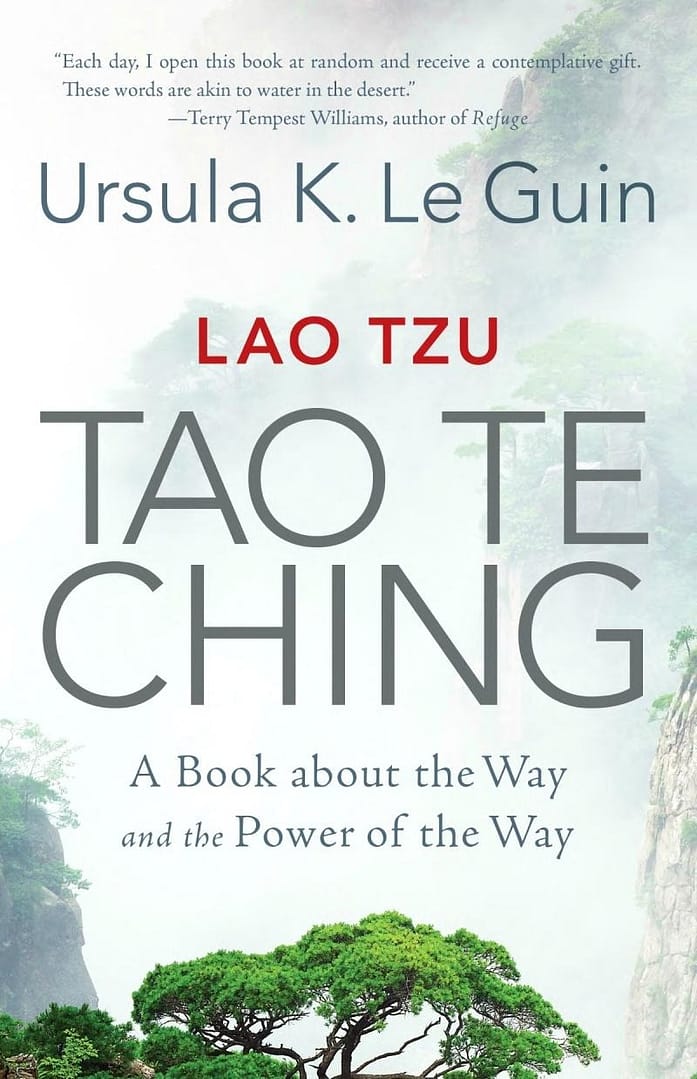
The other related to that is Le Guin’s version of the Tao Te Ching which I’ve been reading recently and it’s just a beautiful collection of poetry on its own but it’s also filled with her commentary as well about the various verses the Tao Te Ching and I’ve found it both comforting and inspiring.
[00:37:09] Bonni: Matt, it’s so great to have gotten to have this conversation with you, and to be following your work and getting to read your writing. I’ve learned so much already and now that I know more about you and I’m connected in this way, I just can’t wait for what’s next. Just thanks for what you’ve given to us as the Teaching in Higher Ed community.
[00:37:24] Matthew: Thank you so much, Bonni, it’s been a real pleasure.
[music]
[00:37:29] Bonni: I really enjoyed this conversation with Matthew Cheney. I’m grateful that you were able to join me for today’s episode, teachinginhighered.com/296 is the place where you can go to get all the great links that Matt has provided around toward cruelty-free syllabi. If you’d like to not have to remember to go grab those links every week, you can always sign up for the weekly update at teachinginhighered.com/update. I should possibly start calling it the bi-weekly update but that’s a thought for another day. I don’t always get to it but you can always go back and find all of the show notes teachinginhighered.com. The transcripts are there for you to download as PDF or for you to view on screen.
Thanks so much for listening, I’ll see you next time on Teaching in Higher Ed.
[music]
[00:38:24] [END OF AUDIO]
The transcript of this episode has been made possible through a financial contribution by the Association of College and University Educators (ACUE). ACUE is on a mission to ensure student success through quality instruction. In partnership with institutions of higher education nationwide, ACUE supports and credentials faculty members in the use of evidence-based teaching practices that drive student engagement, retention, and learning.
Teaching in Higher Ed transcripts are created using a combination of an automated transcription service and human beings. This text likely will not represent the precise, word-for-word conversation that was had. The accuracy of the transcripts will vary. The authoritative record of the Teaching in Higher Ed podcasts is contained in the audio file.