• Skip to primary navigation
  • Skip to main content
  • Skip to footer

Teaching in Higher Ed

  • Podcast
  • Blog
  • SPEAKING
  • Media
  • Recommendations
  • About
  • Contact
EPISODE 595

Higher Expectations: How to Survive Academia, Make It Better for Others, and Transform the University

with Roberta Hawkins & Leslie Kern

| November 6, 2025 | XFacebookLinkedInEmail

https://media.blubrry.com/teaching_in_higher_ed_faculty/content.blubrry.com/teaching_in_higher_ed_faculty/TIHE595.mp3

Podcast (tihe_podcast):

Play in new window | Download | Transcript

Subscribe: Apple Podcasts | Spotify | RSS | How do I listen to a podcast?

Roberta Hawkins + Leslie Kern share about their book, Higher Expectations: How to Survive Academia, Make it Better for Others, and Transform the University on episode 595 of the Teaching in Higher Ed podcast.

Quotes from the episode
We are not cogs in an institutional machine.

We advise lots of different ways of rethinking our relationship with work in the book.
-Roberta Hawkins

You can’t solve institutional problems with individual sacrifices.
-Leslie Kern

We are not cogs in an institutional machine.
-Roberta Hawkins

One of the challenges, is the idea that our work is kind of a calling. It's a passion project. The institution knows that we love our work and that we are passionate about our students and that we care about bringing great ideas to fruition in the world, so it will extract every little drop of that from you in terms of your time and energy.
-Leslie Kern

Invisibilized labor is an equity issue as well as a workload issue.
-Roberta Hawkins

Resources

  • Higher Expectations: How to Survive Academia, Make It Better for Others, and Transform the University, by Roberta Hawkins and Leslie Kern
  • What you didn’t learn in class: Revealing the hidden curriculum, by Lindsay Vreeland, Center for Innovative Teaching and Learning at Northern Illinois University
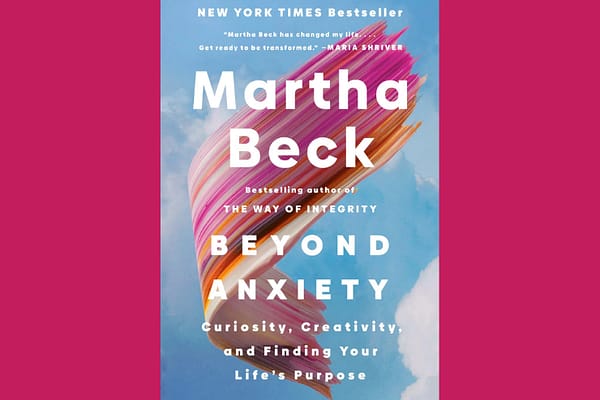
  • Beyond Anxiety: Curiosity, Creativity, and Finding Your Life's Purpose, by Martha Beck

ARE YOU ENJOYING THE SHOW?

REVIEW THE SHOW
SEND FEEDBACK

ON THIS EPISODE

Roberta Hawkins square

Roberta Hawkins

Roberta Hawkins is a Professor of Geography at the University of Guelph. Roberta teaches courses on human-environment relations, research methods and feminist theories. Her research expertise includes digital media and environmental politics. She explores how everyday practices can lead to wider societal and environmental change. Roberta’s research is published in academic journals including Gender, Place and Culture and Geoforum. She is a co-author of the book: Higher Expectations: How to Survive Academia, Make it Better for Others and Transform the University. Roberta loves swimming, reading novels, and good coffee. She lives in Guelph, Ontario.

Leslie Kern

Leslie Kern is the author of three books about cities, including Feminist City: Claiming Space in a Man-Made World. She was an associate professor of geography and environment and women’s and gender studies at Mount Allison University from 2009-2024. Leslie is also an academic career coach at Leslie Kern Coaching, helping academics find meaning and joy in their work.

Bonni Stachowiak

Bonni Stachowiak is dean of teaching and learning and professor of business and management at Vanguard University. She hosts Teaching in Higher Ed, a weekly podcast on the art and science of teaching with over five million downloads. Bonni holds a doctorate in Organizational Leadership and speaks widely on teaching, curiosity, digital pedagogy, and leadership. She often joins her husband, Dave, on his Coaching for Leaders podcast.

RECOMMENDATIONS

Start Today

Start Today

RECOMMENDED BY:Bonni Stachowiak
Make Invisible Labor Visible

Make Invisible Labor Visible

RECOMMENDED BY:Roberta Hawkins
Beyond Anxiety: Curiosity, Creativity, and Finding Your Life's Purpose, by Martha Beck

Beyond Anxiety: Curiosity, Creativity, and Finding Your Life's Purpose, by Martha Beck

RECOMMENDED BY:Leslie Kern
Woman sits at a desk, holding a sign that reads: "Show up for the work."

GET CONNECTED

JOIN OVER 4,000 EDUCATORS

Subscribe to the weekly email update and receive the most recent episode's show notes, as well as some other bonus resources.

Please enter your name.
Please enter a valid email address.
JOIN
Something went wrong. Please check your entries and try again.

Related Episodes

  • EPISODE 288Academia Next

    with Bryan Alexander

  • EPISODE 345Transforming a University

    with , Adanely Jimenez, Adrian Delgado, Jenny Vargas

  • EPISODE 034Practical productivity in academia
    1

    with Natalie Houston

  • EPISODE 508How Curiosity Can Transform Lives and Change the World
    Scott Shigeoka square

    with Scott Shigeoka


EPISODE 595

Higher Expectations: How to Survive Academia, Make It Better for Others, and Transform the University

DOWNLOAD TRANSCRIPT

Bonni Stachowiak [00:00:00]:

Today, on episode number 595 of the Teaching in Higher Ed podcast, Higher Expectations: How to Survive Academia, Make It Better for Others, and Transform the University with Roberta Hawkins and Leslie Kern. Production Credit: Produced by Innovate Learning, Maximizing Human Potential. Welcome to this episode of Teaching in Higher Ed. I’m Bonni Stachowiak and this is the space where we explore the art and science of being more effective at facilitating learning. We also share ways to improve our productivity approaches so we can have more peace in our lives and be even more present for our students.

Bonni Stachowiak [00:00:57]:

I’m thrilled to share a special episode with you today about a book that Liz Norrell told me about. She said I should stop everything, put everything down and pick up this book, which I did and was rewarded. The authors are Leslie Kern and Roberta Hawkins and they’ve really written a wonderful book and we get to have a wonderful, nourishing conversation about higher education. How do we survive academia? How do we make it better for others? And how do we transform the university? Leslie Kern is the author of three books about cities, including Feminist City: Claiming Space in a Man Made World. She was an associate professor of Geography and Environment and Women’s and gender studies at Mount Allison University from 2009 to 2024. She’s also an academic career coach at Leslie Kern Coaching Helping Academics Find Meaning and Joy in Their Work.

Bonni Stachowiak [00:02:03]:

Roberta Hawkins is a professor of Geography at the University of Gulf. She teaches courses on human environment relations, research methods, and feminist theories. Her research expertise includes digital media and environmental politics. She explores how everyday practices can lead to w societal and environmental change. Her research is published in academic journals including Gender, Place and Culture and Geoform. Roberta Hawkins and Leslie Kern, welcome to Teaching and Higher Ed.

Roberta Hawkins [00:02:39]:

Thank you.

Bonni Stachowiak [00:02:39]:

Roberta. I want to invite you first to take us to a moment in time. Or maybe it’s not a moment in time. Maybe it’s just when some ideas started to emerge for you around why we really need to raise our expectations in higher education.

Roberta Hawkins [00:02:57]:

Yeah. Thank you. Something that comes to mind for me is that Leslie and I have worked together for many years and one of the things we have in common is a love of academic advice books. And so we loved reading how to quickly write a journal Article, how to get tenure on the tenure Track, how to make your teaching more efficient. We loved reading those books and chatting about them. And at the same time we were together and separately doing a lot of research about people’s lived experiences in academia and really hearing these stories about people being pushed out of institutions. The way that Institutions were excluding certain people and certain knowledge. And we just had this sense that the kind of practical advice we were getting was really almost in a bubble, like everyone’s the same and we just need to manage our time better. We’re going to be more productive.

Roberta Hawkins [00:03:58]:

And that’s kind of the goal. Without any question about the institution itself, whether that was working well for everybody. What if we had goals of social justice or something in mind? Could we keep our jobs and do them efficiently while also trying to change these institutions? We didn’t really see any of the research that we had done or experiences that we had had mirrored in those advice books. And so it was sort of realizing that there was a big gap there and that we both had an interest in trying to bring those two areas of research and advice together and try to emphasize that we can do our jobs well, keep our jobs, care about institutions, but at the same time try to change them, try to make them more inclusive, try to have these elements of social justice imbued in our teaching, in our service, in our research.

Bonni Stachowiak [00:04:49]:

I felt that so much. It’s wonderful when you create something and put it out into the world and then to have people mirror that back for you. So this is me mirroring back to you that that’s one of the things, one of the many things that I loved about this work. I appreciated so much, you weaving together the individual, because we are all individuals and we’re all so unique. Yet you didn’t stop there because it’s also about a collective effort. And one of the things that was so fun to get to capture and explore about your story was having to do with collaboration and how it has impacted your work. Leslie, would you talk about that just the way the two of you have collaborated and what that’s meant for you, some of the benefits that you’ve experienced.

Leslie Kern [00:05:37]:

I would love to. Once I started collaborating with Roberta and a couple of other professors that we worked with for many years, I started to really see that academic work could feel different and be different. And part of that was, in terms of our collaboration, really intentionally trying to set up a very non hierarchical structure. Even though the four of us were at very different kinds of career stages within the traditional academic hierarchy, hierarchies and at very different kinds of institutions. We really tried to hone in on what each other’s strengths were and to play to those in the process. And at one point we realized that we would not even really refer to ourselves as I, like I, Leslie, or I Roberta like oh, I Leslie edited the Intro paragraph. We would always say we. So we tried to really become like one, like a true collective.

Leslie Kern [00:06:38]:

And it meant a bunch of different things in terms of benefits. First of all, there was just that camaraderie and support and knowing that you always had people who would kind of understand what was going on in your life. There was this sense that even in our very busy academic lives, that projects were always moving forward because we weren’t the only one responsible for them. And indeed, at times when people were on mat leave or taking time off to deal with illness in the family, something like that, there was always somebody kind of working away at things, and it was this kind of like, miraculous feeling of like, oh, things don’t just kind of have to die on the back burner because you got busy or had to take or wanted to take time away. And that was really amazing. And I think it. It kind of taught me anyways to try to like, take a lot of the ego out of academia. And I think where we’ve all witnessed that ego is a big part of, like, what gets us here and what, what in fact drives you to some of those traditional of success.

Leslie Kern [00:07:42]:

But it can ultimately lead to a more isolating, competitive, lonely experience that I think contributes in the long term to kind of burnout and dissatisfaction.

Bonni Stachowiak [00:07:54]:

Boy, that loneliness word resonates with me. And I obviously only have one experience in higher education, but I’ve certainly gone through those experiences of feeling that loneliness. And were it not for collaboration, were it not for a sense of solidarity, I mean, I certainly would not be still working in higher education after 21 years. You advise us, speaking of advice books, you advise us to begin to reshape our relationship with work. Can we start by just talking about why that’s important?

Roberta Hawkins [00:08:34]:

So there’s so many reasons why it’s important, and actually we advise, I think, lots of different ways of rethinking our relationship with work in the book. One of them follows this myth of, like, an individual scholar that’s having all of their ideas in isolation from others, that’s in competition with others, and as a result, that is feeling lonely and stressed. So collaborating on research and writing is something that’s probably common for quite a few academics, especially in some disciplines. But one of the things that we talk about in the first part of the book is that actually we can open up this collaboration in all kinds of other areas where we don’t have to be doing things alone, even things that might seem obvious, like sharing examples of course assignments, syllabi, inviting people in to watch you teach and give you some pointers, not in a kind of metric driven way, but in a supportive way. Doing tasks that are difficult, not by yourself, but together. For example, grading or writing reference letters in a room with some food, with some breaks for chatting, and really trying to think of our work as something that we can do together, even if we’re working on something that’s individual, that we don’t have to be feeling isolated. And most of the time we’re not even in competition with one another. And so trying to move past those kinds of feelings which have been kind of ingrained in us is one of those suggestions.

Roberta Hawkins [00:10:07]:

And then we also offer in the fifth part, final part of the book, lots more examples of how we might want to change our relationship to work. And maybe, Leslie, you can explain some of those. Sure.

Leslie Kern [00:10:20]:

We note that one of the challenges, and it’s not unique to academia, but it’s the idea that our work is kind of a calling. It’s a passion project, it’s something that we are drawn to, driven to, and that many of us can’t imagine doing anything else. This all sounds lovely, but, like, for people who work in health care or work for nonprofit organizations, it’s a scenario that’s kind of ripe for exploitation by the institution, because the institution knows that we love our work and that we are passionate about our students and that we care about bringing great ideas to fruition in the world. And so it will extract every little drop of that from you in terms of your time and energy. And as many of us know, it will do so by withdrawing ever more resources so that we’re pushed to do less with more. And what we see is that people just can’t bear to say no to things or to pull back in some way, or to even imagine a kind of different relationship to work. You will very rarely find an academic who sees their work as a 9 to 5 job. And on the one hand, it’s lovely to have a sense of higher purpose with your work.

Leslie Kern [00:11:35]:

On the other hand, this can mean that nobody feels like they can turn their email mail off at 5 o’. Clock, they feel they have to work on weekends, they have to show up to special events at all hours. And we’re not advocating that everybody just kind of shut down and say, I’m just a worker drone. But in terms of just rethinking that relationship to work, kind of recognizing that being passionate about something does not mean it’s okay for an institution to kind of want you to sacrifice your body and soul to Fill all of the cracks that it’s created or to support the marginalized students that it’s kind of leaving behind and so on. So I think we say in the book that you can’t solve institutional problems with individual sacrifices. And that’s, I think, something that most of us need to hear over and over again as we go through this career.

Bonni Stachowiak [00:12:26]:

I agree that we can’t hear it enough. And in fact, Roberta, when I asked you the first question about why it’s important, you already said, I mean, the book is just chock full of them, chock full of this, the principles that Leslie has described for us, plus the practices. So I want us to zero in for just a minute here on workload demands. And this might be selfish, but, but I, I think based on the conversations I’ve had in the last more than a decade, I’m not alone in sometimes this being challenging. So could each of you maybe share your one or two go tos? Whether it’s one that you’ve been challenged by and you’re happy that you finally got there, or if it’s one that you found more ease with, that you want to advise to other people. I specifically would love to hear even just like having templates set up or you know, how to, how to concretely address when you’re asked to serve on the next committee or the next thing. Like, I’m curious what’s coming to mind. Let’s start, Roberta, with you, you know, ideas for pushing back against workload demands.

Bonni Stachowiak [00:13:30]:

And then Leslie will definitely give you a chance to share any further strategies that you’d like to as well.

Roberta Hawkins [00:13:36]:

Yeah, this is main theme of the book. You’re right. And we’re quite passionate about it. Not always executing these strategies for ourselves, but always trying to, I would say. So there’s so many things that I could say. I think that two, I’ll just highlight two things to start. One of them is that we need to take a little bit of time to get information and reflect on that information. So it might be doing something like a time audit for a week and see what you’re actually doing with your time and then trying to see if that reflects what your job description says, how your job is supposed to be divided.

Roberta Hawkins [00:14:19]:

Depending on what it is you’ve taken on, you might compare what you’re actually doing to what you might need to do to get a job or to get tenure or to stay in your job. We actually, I find, despite being academics who are usually evidence driven and really interested in research, don’t often Take time to ask questions about ourselves and actually just reflect on what it is we’re doing and why we might be doing that. In the book, we have some suggestions around how to do that, and we suggest pairing it with values exercises where you not just ask yourself, what are you doing? But why are you doing it? What’s the point of you being a teacher or being a researcher or being an administrator? And how are you going to try and align just the amount of time you actually have to doing some of those things that you value? So that’s the first thing that I would say, and then the second thing that I love to emphasize is that one of the points we try to make in the book is that we are not just like cogs in an institutional machine, where there is some sort of invisible ghost that’s putting all this pressure on us, asking all of these demands of us, but we are also often the people that are creating work. We’re creating it for ourselves and others, and we’re creating it sometimes for good reasons and sometimes just because it is already, like, part of the system. So, for example, every time I organize a conference session at a conference, then I’m asking my colleagues to write abstracts, to apply to be in this session, and then to write papers about that, and then to send them to me. And as an instructor, I’m creating work for students, for tasks, for the admin in my department. So asking ourselves questions along the lines of not just what can we say no to? Or what are we spending our time doing, but when are we demanding that other people do work, come to meetings, fill out forms, do something within a certain time, submit something to us, and do those requests meet our goals and our overall values as well. So thinking of ourselves both as, like, the people assigning this work and creating this workload in many ways, and also people that are being assigned this workload and dealing with all of these requests at the same time.

Bonni Stachowiak [00:16:40]:

Thank you so much. Leslie, what’s coming to mind for you?

Leslie Kern [00:16:43]:

Yes, you said the S word service work there, Bonni, a moment ago. And that is certainly an area where people feel a lot of workload expectation creep, where people find it hard to say no, and often where people feel some resentment because there can sometimes be a sense of, like, why am I on all these committees? And, you know, so and so in the corner office down the hall doesn’t seem to be doing any of this work. And so at some institutions, they would do more of, like, a collective kind of service audit at, say, the departmental level, where everybody would actually list everything that they’re doing, what the typical time commitment for these committees and roles is. And there’s an effort at the departmental level to kind of even out that service load. And that might not be that every single semester everyone has exactly the same even service. But it could be that, oh, Roberta’s load is higher in this winter semester, but she’s going to step back in the fall, and maybe Lesley’s is going to go up a little bit at that time. But there’s a sense that it’s being considered at a kind of higher level. So it’s not just up to us to say, oh, I think I’ve already hit my max.

Leslie Kern [00:17:59]:

I’m going to say no to X, Y and Z, or I’m going to back out of this, but that we are at a departmental or even higher level kind of managing that workload for people. And in our book, we have a specific example of a research project or an organization that’s tried to do that. So people can find that in there. And I think there’s some templates that can even be used to help start that process.

Bonni Stachowiak [00:18:23]:

I love the template so much, but again, I kept highlighting and it felt like I was highlighting your entire book, which sort of defeats the purpose. But just this idea of thinking in advance what we might say no to and planning for it. Guess what? We’re all going to be asked for some sort of service in all likelihood this coming year. And that could be in your personal life, it could be in your professional life. But guess what? We’re probably almost all of us going to be asked for that. So thinking through when we want to redefine our relationship for work. And Roberta, you talked about reflecting on our values and the different roles and time audits, what those can do for us. But we’re likely going to find ourselves in a position where our gut’s telling us this is probably either a no or a not now.

Bonni Stachowiak [00:19:09]:

And to already have that to reduce the friction. Because I go through the, oh, gosh, the oh, what? You know, and I kind of. I try to, like, de center myself. The world is not going to fall apart if you don’t participate in that. In the past, I’ve said, oh, have, you know, have you thought about somebody else in this other area? Or this person might really be interested in that, or you don’t want to throw your colleagues under the bus either. But I mean, if it’s truly something, you think someone else might have a unique contribution to make where it doesn’t feel like that it needs to continue to be you. I want to ask, before we get to the recommendations segment of you, just to reflect on this collective humanizing and the idea that we all live in bodies. Speaking of things I need to be reminded of, why do I need to be reminded that I live in a body?

Leslie Kern [00:20:00]:

Well, because academia treats you, as we say in the book, kind of like a head on a stick, right? That you are this mind and that you are valued for your mind and usually for one part of your mind, the kind of like logical and analytical and research driven part of your mind, not necessarily the caring, creative, loving, emotional parts of your mind either. So we’re kind of fragmented in that way and everything from the physical environment of a university. I mean, how many of us have suffered through a chair that’s giving us back spasms for a decade because the hassle of getting a new one seems like it might actually be the thing that breaks us, right? Or waited until 3 o’ clock to even grab a bite of lunch because we didn’t want to step away from a meeting a few minutes early to pick something up. So it’s very easy to, as you say, forget that we have bodies. And yeah, so in the book, when we talk about collective rehumanizing, part of it is recognizing that embodied nature of our lives and work and the relational elements of that as well. And so we have recommendations for not just for taking care of yourself, but for building in ways to recognize that with your students in the classroom, for example. So building in a little more break time, stretching time, being clear about people being allowed to eat or to take water breaks, bathroom breaks, modeling that behavior for others as well, taking opportunities for movement. I had a yoga mat in my office for many, many years and I used it honestly for napping as often as yoga or meditating.

Leslie Kern [00:21:45]:

But I would just leave it rolled out and people would say, oh, you have a yoga mat in your office? And then say, yeah. And I think it was a bit of a conversation starter to say, like, yeah, it’s okay to actually get up from this chair once in a while, just stretch out on the floor.

Bonni Stachowiak [00:21:59]:

Is anything coming to mind for you, Roberta?

Roberta Hawkins [00:22:02]:

What comes to mind is last year when I was teaching a class, I actually asked students to brainstorm the ways in which universities treat them like a head on a stick and not a body, not an embodied in community and relation person. It was very easy for them to think of ideas of how this was playing out in their own lives around things like back to back classes where they’re Running from one end of campus to another without a time for a bathroom or a food break. But even things like the accessibility services and having to fill out all of these forms and they go into a system and how students with disabilities are trying to navigate almost becoming like a number and a form instead of really just remaining a person who’s able to access whatever it is they need to be able to learn best. And so I was a little bit shocked that it was so evident to them. And it has got me thinking about my own teaching and how I can start to, even in the confines of my own class, time and classroom, think a little bit more about how to rehumanize all of us instructors and teachers together in that space.

Bonni Stachowiak [00:23:14]:

This is the time in the show where we each get to give our recommendations. And my recommendation is going to be a little bit pulling from some of the other strategies that Roberta and Leslie talk about in this book. And then something that I am experimenting with. It’s been talked about before on the show, but I didn’t recommend it, so I get to share it here. And so first of all, I want to recommend time blocking. And time blocking is the idea that I don’t only have things, things in my schedule that I have to be at on a particular time. So I do teach a synchronous class, and that’s Monday afternoons at 2:30. That’s something that generally if I don’t show up, it’s probably not the greatest move.

Bonni Stachowiak [00:23:52]:

But I also have started blocking out time for giving feedback to those students every week, otherwise known as grading to some of us. So that’s just been wonderful. I move it around. But for the rest of this semester, I’ve got that time block in there and it’s making me better. I loved, by the way, Roberta, that you said you don’t always follow these. It feels good to hear someone else, you know that, oh, wait, you haven’t reached total perfection on all this stuff. But I’m finding that it’s making me be better at. Okay, that’s all that’s gonna fit into this week.

Bonni Stachowiak [00:24:28]:

You know, there’s only so many ways you can move these blocks around and free up time for what’s emerging in the moment. And at some point you need to say, gosh, that looks like I’ll need to do that next week. So I would recommend, I would recommend time blocking. There’s lots of different ways that you can do it. I’ll post an article to, you know, someone who has. I’ve learned some things from about time blocking. Although similar to what Roberta said in the beginning, sometimes the time blocking idea can get a little hacky and a little bit too much self help. That’s not actually practical for us.

Bonni Stachowiak [00:25:00]:

But for what it’s worth, at the very least, block some time out that’s associated with your key roles at your university and see what happens. And I’d love to hear from you if you do experiment with that. So, Roberta, I’ll go ahead and pass it over to you for whatever you’d like to recommend today.

Roberta Hawkins [00:25:17]:

I just want to augment your time blocking recommendation for one moment, which is that if you can do that with other people, it’s even better because it means that you probably will actually stick to what it is you’re saying you’re going to do. And there’s also an element of camaraderie. We have a faculty writing retreat one week a year at my university in the library. And then after that, people block time together, even strangers, like faculty that don’t know one another, either in an online writing room or an in person one. And just this morning, someone in the online one put out a message, I’m going to be here writing for three hours. And other people went. So I just want to say, yes, time blocking, but with other people is even better. My recommendation would be to think about the invisible and invisibilized labor that we’re all doing.

Roberta Hawkins [00:26:07]:

In our book, we have a chart where we try to think of ways to make invisibilized labor, like mentoring students that are not necessarily your official supervisees, chatting with students outside of class, providing mentorship and support to colleagues that are writing a grant application, want to chat about it over coffee, etc. Making those invisibilized actions visible on metric systems, on job applications, on cvs, and this, we think, is an equity issue as long as well as a workload issue. Because often this invisibilized labor falls to women, racialized faculty, faculty with disabilities, queer faculty. And so recognizing that invisibilized work and making it more visible is a recommendation that I have.

Bonni Stachowiak [00:26:53]:

Thank you so much. Leslie, what would you like to recommend today?

Leslie Kern [00:26:56]:

Yeah, I love both of the things that you’ve already described. One of the aspects of our book, we have a bunch of kind of start to date tips. And we also have something that we call Pay it Forward, which is all about thinking about ways that we can be a little bit generous and make sure that we are doing for other people what they’re doing for us. So for example, if you have a reading group and you’re reading a particular article or a book, take some time to actually email the author and give them a little bit of concrete and generative feedback. And I don’t mean critique, I mean actually telling them what you liked about the book or telling them we use this in our reading group, or I’m using your work in my research or this is going on my syllabus. And that gives folks an opportunity to see how their work is landing in the world. They may even be able to put that in their tenure package. My article is being used on syllabi in these number of places.

Leslie Kern [00:27:57]:

When you have a really great syllabus or when you’ve prepared and been successful in your tenure and promotion, can you share these things with people, especially people from backgrounds or experiences, who may not have access to this kind of insider knowledge in academia, finding ways to share that work, to have little repositories? We all have everything in the cloud now, so can you make that a little bit more open to folks? Again, we’re not really in competition and once you’ve got tenure, what’s the harm in anybody else seeing your tenure package? But it might be really, really helpful for someone. I will just Bonni, you asked, are there any books? And I was just thinking oh yeah, I’m reading a book right now that I guess I could put out there. It’s called Beyond Anxiety: Curiosity, Creativity, and Finding Young Life’s Purpose by Martha Beck. Roberta and I are both also just like big self help fans outside of academic advice as well. But I’m just thinking in terms of what we were talking about, kind of being fragmented in the university, kind of being disembodied, valued only for a particular kind of knowledge, and being in an environment that I think creates a lot of anxiety. This book kind of offer some tips for reconnecting with your more creative side and by doing that, reducing the kinds of anxiety spirals that we can end up in. So might be something worth checking out for folks.

Bonni Stachowiak [00:29:24]:

That sounds like an amazing book. I used to read her columns years ago, but haven’t read anything by her in a long time. So I’m excited to go explore that and suggest it to colleagues too. What I appreciate so much about this work and about these recommendations you’re sharing with us today is sometimes it’s stuff we know, but it’s wonderful to be reminded of it, but then sometimes you’ll just have a totally unique spin. I do try to regularly remind students of the ways that they can actually help their professors and they just oftentimes don’t know those little notes. What a difference they can make. But your book really helped me see. Oh my gosh, look at, look at the.

Bonni Stachowiak [00:30:02]:

It wouldn’t have occurred to me to actually write an email to someone whose book we were using. I mean, I’ll usually, I’m spoiled over here because I have a podcast where I get to talk to a lot of authors, so I’ll generally tell them. But your book reminded me, well, go a little bit beyond that because it actually matters that at your institution it was adopted as a faculty book club and that that could be an asset. I hate to frame it that way. That felt icky saying that, but I mean, you were just introducing me to ways of like, oh gosh, I didn’t even think about doing that. And then of course, reminding me of things that I do know are helpful to maybe haven’t done in a while. So I just so appreciate this. What a joy.

Bonni Stachowiak [00:30:42]:

And I wanted to say that it was actually Liz Norrell. She was. Had just finished reading your book and she told me that I needed to drop everything and read this book. She knew it was for me and she’s never recommended a book, let alone, I mean, specifically to me before, let alone told me to drop everything. And so I just did exactly what she said and I was overjoyed that the two of you would come on the show and trust the conversation that was forthcoming and just so appreciate this conversation. It feels very joyful, hopeful and challenging in the best ways possible. Thank you both for this beautiful, amazing book that is going to be for me, the gift that keeps on giving. Thank you both very much.

Leslie Kern [00:31:21]:

Thank you for this opportunity. It’s been great to chat with you.

Roberta Hawkins [00:31:24]:

Thank you.

Bonni Stachowiak [00:31:28]:

Thanks once again to Roberta Hawkins and Leslie Kern for joining me on today’s episode. Today’s Episode was produced by me, Bonni Stachowiak. It was edited by the ever talented Andrew Kroeger. Podcast Production support was provided by the amazing Sierra Priest. If you’ve been listening for a while and haven’t signed up for the Teaching and Higher Ed email update once a week, it could be coming to your inbox with all the show notes as well as discussion, discussion guides and other resources that don’t show up in those show notes. So head over to teachinginhighered.com./subscribe thank you so much for listening and being a part of teaching in Higher Ed. I’ll see you next time on Teaching in Higher Ed.

Teaching in Higher Ed transcripts are created using a combination of an automated transcription service and human beings. This text likely will not represent the precise, word-for-word conversation that was had. The accuracy of the transcripts will vary. The authoritative record of the Teaching in Higher Ed podcasts is contained in the audio file.

Expand Transcript Text

TOOLS

  • Blog
  • Podcast
  • Community
  • Weekly Update

RESOURCES

  • Recommendations
  • EdTech Essentials Guide
  • The Productive Online Professor
  • How to Listen to Podcasts

Subscribe to Podcast

Apple PodcastsSpotifyAndroidby EmailRSSMore Subscribe Options

ABOUT

  • Bonni Stachowiak
  • Speaking + Workshops
  • Podcast FAQs
  • Media Kit
  • Lilly Conferences Partnership

CONTACT

  • Get in Touch
  • Support the Podcast
  • Sponsorship
  • Privacy Policy

CONNECT

  • LinkedIn
  • Instagram
  • RSS

CC BY-NC-SA 4.0 Teaching in Higher Ed | Designed by Anchored Design