• Skip to primary navigation
  • Skip to main content
  • Skip to footer

Teaching in Higher Ed

  • Podcast
  • Blog
  • SPEAKING
  • Media
  • Recommendations
  • About
  • Contact
EPISODE 611

Fostering Peace, Joy, and Community in Teaching and Leading, with Danny Mann

with Danny Mann

| February 26, 2026 | XFacebookLinkedInEmail

https://media.blubrry.com/teaching_in_higher_ed_faculty/content.blubrry.com/teaching_in_higher_ed_faculty/TIHE611.mp3

Podcast (tihe_podcast):

Play in new window | Download | Transcript

Subscribe: Apple Podcasts | Spotify | RSS | How do I listen to a podcast?

Danny Mann shares about fostering peace, joy, and community in teaching and leading on episode 611 of the Teaching in Higher Ed podcast.

Quotes from the episode
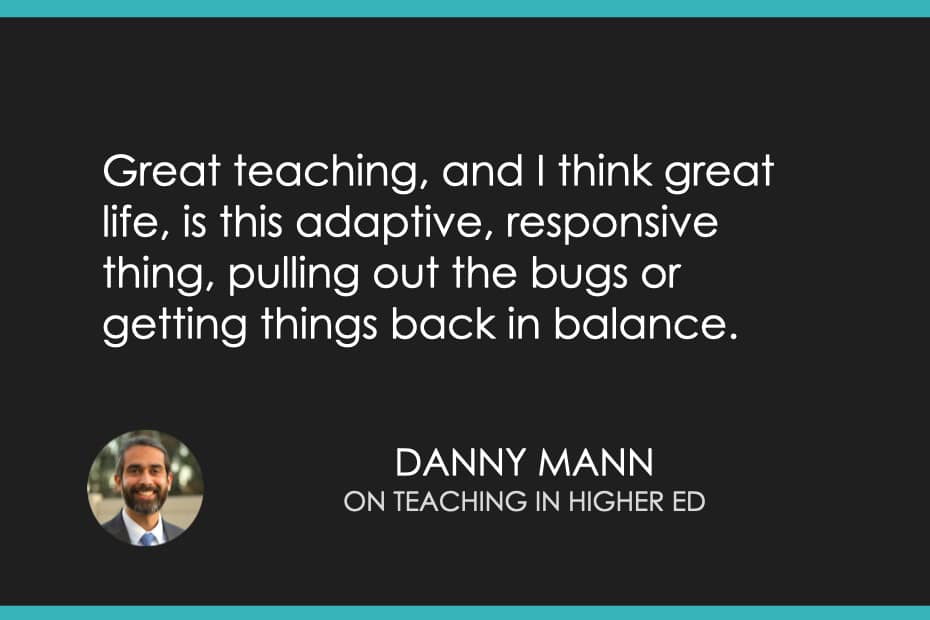
Great teaching, and I think great life, is this adaptive, responsive thing, pulling out the bugs or getting things back in balance.

Great teaching, and I think great life, is this adaptive, responsive thing, pulling out the bugs or getting things back in balance.
-Danny Mann

Peace and joy are really interrelated, and I gravitated a lot towards these, as I spent time studying and practicing mindfulness practices.
-Danny Mann

If you discover your why, you could basically feel much more energized and joyful about what you do, if you align your life with that.
-Danny Mann

Giving students space to speak and share ups and downs. So the ironic leading by listening.
-Danny Mann

Resources

  • University of California Irvine's Division of Teaching Excellence & Innovation
  • Find Your Why, by Simon Sinek
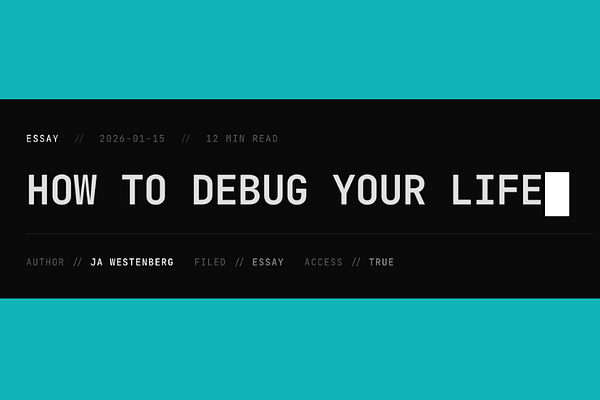
  • How to Debug Your Life, by JA Westenberg
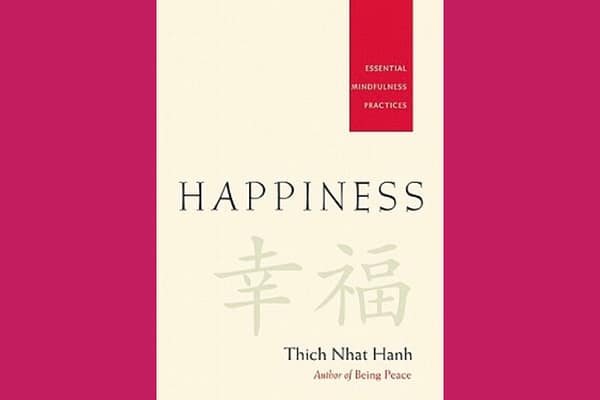
  • Happiness: Essential Mindfulness Practices, by Thich Nhat Hanh
  • Pedagogical Wellness | UCI Division of Teaching Excellence and Innovation
  • The Four Agreements: A Practical Guide to Personal Freedom, by Don Miguel Ruiz
  • How to Debug Your Life, by JA Westenberg
  • Happiness: Essential Mindfulness Practices, by Thich Nhat Hanh

ARE YOU ENJOYING THE SHOW?

REVIEW THE SHOW
SEND FEEDBACK

ON THIS EPISODE

Danny Mann

Executive Director

Danny is dedicated to fostering more peace, joy, and community in higher education. This passion drives his work as the leader of UC Irvine's Division of Teaching Excellence & Innovation. With a Ph.D. in Cognitive Science, his expertise in educational development has gained national recognition through publications, invited presentations, and leadership within professional networks such as the POD Network. At UCI, he focuses on advancing pedagogical excellence, institutional innovation, and inclusive learning environments. Outside of his academic pursuits, Danny is a seasoned musician and rock and metal guitarist!

Bonni Stachowiak

Bonni Stachowiak is dean of teaching and learning and professor of business and management at Vanguard University. She hosts Teaching in Higher Ed, a weekly podcast on the art and science of teaching with over five million downloads. Bonni holds a doctorate in Organizational Leadership and speaks widely on teaching, curiosity, digital pedagogy, and leadership. She often joins her husband, Dave, on his Coaching for Leaders podcast.

RECOMMENDATIONS

How to Debug Your Life, by JA Westenberg

How to Debug Your Life, by JA Westenberg

RECOMMENDED BY:Bonni Stachowiak
Happiness: Essential Mindfulness Practices, by Thich Nhat Hanh

Happiness: Essential Mindfulness Practices, by Thich Nhat Hanh

RECOMMENDED BY:Danny Mann
Woman sits at a desk, holding a sign that reads: "Show up for the work."

GET CONNECTED

JOIN OVER 4,000 EDUCATORS

Subscribe to the weekly email update and receive the most recent episode's show notes, as well as some other bonus resources.

Please enter your name.
Please enter a valid email address.
JOIN
Something went wrong. Please check your entries and try again.

Related Episodes

  • EPISODE 319Fostering Inclusion in Our Teaching
    Marlo Goldstein Hode photo

    with Marlo Goldstein Hode

  • EPISODE 566Joy-Centered Pedagogy
    Woman smiles at the camera

    with Eileen Camfield

  • EPISODE 280The Joy of Teaching – Sustained
    Todd Zakrajsek smiling

    with Todd Zakrajsek

  • EPISODE 092Small Teaching

    with James Lang


EPISODE 611

Fostering Peace, Joy, and Community in Teaching and Leading, with Danny Mann

DOWNLOAD TRANSCRIPT

EPISODE 611: Fostering Peace, Joy, and Community in Teaching and Leading, with Danny Mann

Bonni Stachowiak [00:00:00]:

Today, on episode number 611 of the Teaching in Higher Ed podcast: Fostering peace, joy, and community in teaching and leading, with Danny Mann.

Bonni Stachowiak [00:00:13]:

Production Credit: Produced by Innovate Learning, Maximizing Human Potential. 

Bonni Stachowiak [00:00:22]:

Welcome to this episode of Teaching in Higher Ed. I’m Bonni Stachowiak, and this is the space where we explore the art and science of being more effective at facilitating learning. We also share ways to improve our productivity approaches so we can have more peace in our lives and be even more present for our students. 

Bonni Stachowiak [00:00:50]:

It is with joy that I get to introduce this conversation with Danny Mann. He is dedicated to fostering more peace, joy, and community in higher education. This passion drives his work as the leader of the University of California, Irvine’s Division of Teaching Excellence and Innovation. With a PhD in cognitive science, his expertise in educational development has gained national recognition through publications, invited presentations, and leadership within professional networks such as the POD Network. At UCI, he focuses on advancing pedagogical excellence, institutional innovation, and inclusive learning environments. Outside of his academic pursuits, Danny is a seasoned musician and rock and metal guitarist.

Bonni Stachowiak [00:01:43]:

Danny Mann, welcome to Teaching in Higher Ed.

Danny Mann [00:01:48]:

Thank you so much, Bonni. I’m so excited to be talking to you. I’ve been a fan of this for a long time and just really appreciate the time to be here.

Bonni Stachowiak [00:01:56]:

I read a lot of bios with all the labor that I’ve put into this podcast, the labor of love, and reviewing yours before we spoke today was a balm for my soul. 

Bonni Stachowiak [00:02:08]:

You tell us that you are dedicated to fostering more peace, joy, and community in higher education. I want to ask you, Danny, why those three words—peace, joy, community—as you sit here today, why do we so desperately need those three things to be fostered?

Danny Mann [00:02:26]:

Well, I wanted to say, I, I feel like that’s what life’s all about. But to get more specific, I’ve spent some time thinking about what my own purpose is, in life. And we’re gonna get heavy right away.

Danny Mann [00:02:45]:

And actually drawing from some work by Simon Sinek, who talks about find your why and this leadership stuff, there’s this exercise to really think about what feels like your main purpose, which, if you identify this, is really useful for your job as a teacher, as a, as an educator, as a leader, or whatever you do. But also, it’s really helpful if it connects the dots between— with who you are. And ideally, those are connected. So anyway, so as I did that sort of reflection, I identified my why, still in draft format, but should be pretty close, is to, to care for others so that they find peace. And I feel like if I look at who I feel I am, defining moments as a, as a family member, as a friend, as a leader, as a teacher, all these things. My best moments and who I want to be and who I try to be as much as possible is doing that. And so peace is, is part of that. And peace is also— I feel for me, peace and joy are really interrelated, and I gravitated a lot towards these. Also, as I spent time studying and practicing mindfulness practices, so I see peace and joy as one part, part of who I am, part of who I wanna be.

Danny Mann [00:04:13]:

And part of what I believe is a really healthy foundation for everything else, including learning, teaching, the things we try to do at the university. And ideally, it’s nice to have peace and joy with other people. So I guess that’s where community comes. And I’ve learned that for burnout and, and some major issues, community seems to be somewhat of an antidote for that. And so yeah, those are— that, that’s off the top of my head, that’s where those words come from. But I’d say they’re pretty deeply tied to what I’m trying to do every day.

Bonni Stachowiak [00:04:53]:

There’s an exercise that I have students who take my personal leadership and productivity class that comes from Simon Sinek. I’m not sure if it’s the same one you’re thinking of. I imagine it’s probably not, but he has— it’s a 3-minute video or something. He has you talk to someone that you’re friends with.

Danny Mann [00:05:09]:

Yes.

Bonni Stachowiak [00:05:10]:

And ask, why are we friends? But it’s one of those exercises where you keep asking the same question to draw out the deeper answer, because it might be like, oh, but you’re really funny, or I really— but, but no, why are we friends? And then the next— and then, but no, no, no, why are we friends? And he does an example of it. And I, anyway, I would love— I’m sure listeners would love to hear if, if what sorts of exercises or where did you draw from? 

Bonni Stachowiak [00:05:36]:

Because that rich work— I love this too, idea of part of who I am, part of who I want to be. And isn’t— I mean, you talk about the meaning of life. To me, it’s like we’re never done, never finished until we are finished. But, but we’re— but that idea of continually becoming more of that core of who we are.

Danny Mann [00:05:55]:

Yeah. Yeah. So as far— so yeah, that exercise I’ve, I’ve heard of from him. There’s a, he has a book called Find Your Why that contains that exercise, I believe, and others. And one of them, that I kind of alluded to is reflecting on what are the biggest… What are the most memorable experiences of your life? Like when you look back, like what are some of the biggest things that just stick in your head as, as important moments? And then you spend time digging into why those were important, and who you were or wish you were— wish you could be in those times. And like you said, through, through dialogue, and having a trusted person to kind of ask questions, and reflect together. So, so yeah, I recommend that book if people are interested to spend more time uncovering, but it— he, he has a good argument that if you discover your why, you could feel basically just feel much more energized and joyful about what you do if you align your life with that.

Danny Mann [00:07:03]:

So at work, how, for example, or as a teacher, how can I do practices that align with my why? And the more I do those, I’ll feel better about it because that’s my— aligns with your values and who you wanna be. When things don’t feel right, many times it’s in contention with that why, or it, it’s a tool to help you kind of calibrate why things felt right or not. And then it gives you strategies to navigate your, your work and your teaching. So yeah, like I said, at work, but also just personal, it helps you think about just who you want to be more broadly. And for me, the closer my different worlds are aligned, it feels good to me. I, I don’t like, as much as I can, putting on a new type of persona. I mean, I’m sure it exists, but I try to keep that low so that it’s just a transparent me as much as possible in different settings.

Bonni Stachowiak [00:08:06]:

When you’re talking about those real life-changing memories, you know, that we, we can reflect on, I just had this flash to talking to, I think, a couple hundred leaders in— who were part of a— I don’t wanna get too specific, but a county, you know, working, working for a county. And I got hired a lot during that decade of my life to talk about organizational influence, AKA organizational politics.

Bonni Stachowiak [00:08:38]:

We’re trying to put the— put this positive spin, but I just have this flash of this man. And again, the fact that there were so many people there makes this such a more visceral memory for me that he said— and I can’t even remember what it would be in context to— but he just said, like, it was like as if that almost— almost I have a memory of him almost being angry, but not, not like at me, but maybe just angry in general. He says, I’m this person over here at work, and I’m this different person, and those are two different people. And it was kind of like— and again, right, you know, our memories get rewritten the second we have them.

Bonni Stachowiak [00:09:14]:

So it’s like— but I just remember thinking like, I wanted to set everything aside, like there’s nothing else. I don’t want to— like, don’t do anything else that I had planned. And I just wanted to sit with him because it seemed like such a painful way to go through life. And you know that not to have that sort of integration with oneself. It seemed painful. But, but yeah, yeah.

Danny Mann [00:09:32]:

And just— I acknowledge that we take on different roles and play different characters and stuff. I think there’s some amount of, of— there’s just a threshold that you have to find of— yeah, making sure the core you is always there so you never feel so out of your own skin. But then adapting as needed. So, yeah, you know, I— there’s a balance to be had, but that’s interesting that you noticed this person’s feelings and this intensity and that big distance, and that there was definitely something there to learn more about.

Bonni Stachowiak [00:10:07]:

Yeah. I appreciate what you’re saying too, cuz there’s also this self-regulation that can be really helpful. And, you know, these, these things do— it’s— there’s no perfect easy way to just show up, you know? I mean, it’s, it’s certainly messy.

Bonni Stachowiak [00:10:19]:

Also messy, I know, to like study and research. And I know so many of you, uh, and your colleagues get to wrestle with some of these questions that— these seemingly unanswerable questions, but they certainly can be studied and explored. I know a big area of exploration for you is and has been inclusive teaching and how to lead more inclusively. And before I ask about the parallels and intersections between those things, let’s start with a few examples that come to your mind of effective, equitable teaching that have been important to you and your practice, your values, your approach?

Danny Mann [00:10:56]:

Yeah, totally. And, and I’ll just share that to give some context, a lot of my teaching has been with graduate students in seminar environments. I’ve taught undergrads as well, but a lot of— I spent more years with the grad students, so just to give some context. But, but I, I think I would still argue that a lot of the practices I would promote would work either way, or sh— should be promising for many people. Anyway, so some of my teaching practices that I would parallel with, with leadership practices, since my role has now transitioned to a little bit more leadership administrative. So one I thought of was just regularly giving students space to speak and share ups and downs. So the, the ironic, you know, leading by listening. And, also giving them space, again, the ups and downs.

Danny Mann [00:11:49]:

So sharing positive things, successes, and making it very clear that our classroom could also be a space to openly discuss challenges with the material, or even at times, if people chose to, to open up about what’s going on with them. And that was helpful because I felt like it built community and, built trust and support when the more students could share with me or with each other, people would often, um, see that we had a culture of listening and, and ideally, a freedom to express how they feel. And, and sometimes if you open up space for positives and negatives, sometimes the negatives are hard to hear. As the teacher, it— you want everything to be happy in your class most of the time. But I think there’s a lot of value to giving space to that. And so the parallel as a leader is making sure that conversations with my team in my department also give others space to speak, that we don’t shy away from tough conversations, and people feel as free as they can to, to express themselves. Yeah, I think that takes effort, both as a teacher, as a leader, to address the natural hierarchical imbalance and say that other voices are as important as mine. And so that’s one, one practice. Should I keep going or do you wanna— 

Bonni Stachowiak [00:13:22]:

Yeah, I was just thinking about the— I, I thought where you were going… You, you mentioned it being hard to hear the negative and it sounded like, you know, may, cuz it might sound critical of you, you know, it might, it might, it might bump up against our ego or our deep, deep desire to do this well. But I thought where you might have been going was just— it’s also just difficult for other humans to hear other humans in some sort of painful situation. And, and I— gosh, you can talk about memories. I took a sociology of death class in my undergrad, and I will just— the gifts that continue to go with these people who have been experiencing the most wretched things imaginable, who would come in and really share across a lot of very unique contexts how other humans would try to fix their grief, because their grief was making it really hard for them to hear about their grief, you know. So I learned— I feel like I learned fairly early in my life that I don’t have to feel— there’s nothing you could possibly, you know, say to fix someone else, but what could hurt them or harm them even more would be to try to at least have them act as if they are fixed

Bonni Stachowiak [00:14:38]:

so that they don’t have to make you uncomfortable. I’m sorry, your grief is making me a little bummed out over here. You know, that kind of an idea. So I’m curious if you have found that as well, that, that— oh yeah, just that natural human— I mean, it comes from such a good place, right? I mean, it can come from a good place, but how to sort of release people from that without, you know, having an entire guest speaker series like I did in my undergrad come and convince us of that? Are there practical norms that you try to instill, or like, how do you make that space where that safeness can emerge? It’s really not just a safeness, it’s a braveness. I know that’s sort of an overused, you know, thing there, but— 

Danny Mann [00:15:14]:

Yeah, I’m thinking of a couple different things. One is that I remember actually once I had a, a critical student who in class was just— seemed to challenge a lot of what we were talking about and kind of be counter— most of the class was going one direction and, and they seemed to just be upset almost in how much they were challenging it. And at the end of— we spent a year together, and at the end of that year we had several courses. And then at the end of that year, and part of me just thought, okay, well, you know, I resonated with most of these students, but, but this was just a challenge for one. And I remember this person basically in tears about how valuable —this, their experience was in these classes. And I felt so validated that the space they had to share challenges was well worth it and part of what they needed and what we, what we needed also, ’cause I think it’s useful to hear different perspe— So, so anyway, providing that space is important. And then your actual question, so establishing those norms is really important. And you’re right, it is a natural desire, and it’s much, it’s much easier to try to solve other people’s problems compared to your own.

Danny Mann [00:16:36]:

So in some sense, you can get value from, from people trying to support you when you’re struggling. But, uh, yeah, I think the norms would be just try not to pass judgment on what you’re hearing, and empathize. And one thing that I promote a lot is like— that I would call another strategy is just a more asset-based approach, where we’re thinking about people’s strengths, giving positive feedback. But yeah, there’s, there’s certainly— before you open up these space for people to be extra open, you want to set sort of community norms. How do we speak, make sure that you use I statements. I think— and not try to make it factual, like you’re right or wrong, but— and you know, there’s a whole list of common community norms.

Bonni Stachowiak [00:17:31]:

Well, I’m curious about that. I’m curious your experience with that. I’m, I’m thinking so much of the time this comes up in my parenting, and, and it’s sort of fun as

Bonni Stachowiak [00:17:41]:

you know, those of you that might have children as they get older, it just like emerges new things. But we, we’re big. We’re big into I statements in our family and, and not, not phrasing things as right or wrong. But to get there, it isn’t just about— I mean, you said the word establish, establish the norm. So I just want, for people maybe who haven’t tried this in building community in their classroom, I want to— I feel like I want to warn them, Danny, you don’t just like have an exercise, at least not my experience, have an ex— experience.

Bonni Stachowiak [00:18:12]:

Um, Kathy Davidson is one of the people who I draw from her work. She’s, you know, done a lot around community agreements and her teaching. Yeah, but like, you don’t— again, my experience, speaking of using I statements, yeah, I feel like my experience has been

Bonni Stachowiak [00:18:28]:

that we don’t just do it and then it’s done. Yeah, but there does need to be an interruption on the part of the person facilitating the dialogue to help us get used to perhaps norms that weren’t part of our upbringing, that we, it was— we haven’t been accustomed to doing that. That’s going to take a little bit of behavior change. How have you approached that, that feedback, and sort of interrupting those norms that they bring in from other systems they might have been a part of?

Danny Mann [00:18:58]:

Yeah, no, that, that’s— I’m so glad you asked this. Yeah, I would, I would first say that you need— if someone was gonna start to open up their class for more difficult dialogues, that first they should want to. I think if, if this sounds terrifying and too terrifying that— I don’t think everyone needs to do this, but if, if you feel like it would bring value to your discipline, I mean, your, your content, your style, your students, then it’s definitely worth pursuing. And sometimes you find yourself in these situations even if you’re not trying, cuz the world has brought you a difficult situation. But yeah, to set it up, usually people would have an explicit set of community norms that would involve, like, active listening, talk about the ideas instead of targeting people, mutual respect. And I think in addition to the I statements, like you said, in addition to outlining those, it’s— I think it’s really, really important that the leader models those. So the, the teacher needs to genuinely respect what people think and believe, even if it goes against what they think and believe. And so that’s a certain teaching style.

Danny Mann [00:20:22]:

I think, I think it’s valid for, for teachers to bring— it’s a choice you have, is how much do you share and show your own beliefs versus serve as a facilitator of others’ beliefs, depending on the topic. But anyway, there’s a modeling that needs to happen, a willingness, establishing those ground rules, and then yeah, moderating so that if they’re broken, you jump in and say, hey, let’s, let’s take a pause. And you don’t always— it’s very hard to know what to say in a— if it’s actually a heated conversation or a tough debate or someone’s exposing something really deep. So a really powerful tool is just pausing a little bit and giving yourself time to think. That’s my, my style. And what I think is a powerful teacher and leader is someone who can take a little bit of a pause. And in different contexts, not only that, but there’s a— it takes time to build that confidence. A lot of times, people feel an urgency to fill the space, fill the air.

Danny Mann [00:21:28]:

But if possible, an on-target response that took a few seconds to think about, is often better than something you wish you didn’t say or do.

Bonni Stachowiak [00:21:39]:

One of the things I’ve really struggled with, with this, and I still— I want to go back to the earlier notes I was taking on what you said. It’s both who I am, but also who I’m becoming, for sure. Uh, in those really hot, hot, I think they’re called hot, hot button moments. What is the expression?

Bonni Stachowiak [00:21:57]:

Uh, in my teaching, I will have that tendency to both speed up. So I, that’s like a regular behavior coping mechanism that I try to interrupt to give myself that moment for pause. And, but the other real struggle that I have, I wish I could, I wish I could, you know, be perfect at these things. I’m saying somewhat dripping with sarcasm, but,

Bonni Stachowiak [00:22:20]:

but I want the pause. But I also want to have more trust in handing it over to the group to get their reaction. When I think through the most painful, infuriating situations, that’s often where I, I look back, and I reflect and say, you didn’t let yourself pause, and you did not trust humanity enough. And almost, almost for that person too, because I, I, I’ve in the last couple of years gotten really interested in the topic of dignity and dignity violations. So I kind of think like, well, as the person— you were talking about hierarchy. So as the person who, no matter how much I try to address, you know, to minimize that, it’s still always going to be there. I mean, that’s for as long as I can imagine, it’s going to be there.

Bonni Stachowiak [00:23:06]:

So slow down, but also take those risks to be able to go, I just heard this said, and can I remove any emotions that I might be having? Can I self-regulate enough to go like, how can I say this thing in as neutral a way as possible? As close to the principle of what I think they might have been trying to say, if I gave them the benefit of the doubt, but not, you know, perfectly.

Bonni Stachowiak [00:23:33]:

And then pause and ask others in the group, hey, I’m curious, does anyone— yeah, have a different perspective? Or could we get a couple people to maybe feedback to what did you just— did— is that what you just heard? And any advice for those of us that really struggle with this? Because I don’t, I don’t know that I’ll ever, I’ll ever be cured, but, I sure could— I could use more pausing And I could use more trusting humanity that if you pass that over, something magical can happen on the other side.

Danny Mann [00:24:04]:

Yeah, I totally agree. I think that, that strategy described is perfect for so many reasons. One, it, it gives the trust back to your group, that the teacher or you as the leader doesn’t always have— you might not have the best answer, that you respect other people’s thoughts here, even on a tough problem. It gives more space for others to talk. And lastly, it gives you more time to think. So there is a practical aspect of sometimes, if you’re stumped, pitching it back, like, to let people think together. So, and you mentioned a few things that, that actually I wanted to touch on today about another strategy I use. As a teacher and as a leader, which is assuming good intentions.

Bonni Stachowiak [00:24:55]:

So good.

Danny Mann [00:24:56]:

Um, that at some point I learned that someone had shared that, that this is a very healthy practice for your own well-being, that if, if you just assume that everyone’s trying their best, then that also just puts a big weight off of you, because you will not have as much anger and, and with others and stuff. But also that, that’s part of the trust that you build with people if you assume good faith. I believe that the— what you put out is very similar to what you get back kind of thing. Give respect, get respect. And same with, with assuming good intentions, which also aligns with the asset-based thing. Like, I assume no one’s trying to be a jerk. Like, no one is saying, my intention right now is to be mean or bad. And usually, when it really looks that way, there is their own perspective and, and place they’re coming from that I, I want to try my very best to respect and understand and get to a point that ties into mindfulness stuff of that I can relate to everybody, that no matter who you are, there’s something we have in common.

Danny Mann [00:26:16]:

And this is something I read from Dalai Lama a long time ago that helped me a lot. Everyone wants to be happy. The one thing I know I have in common with anyone in the world is we’re trying to be happy, and the way we go about that is very different and can look— mm-hmm, nice, it could look evil, it could look whatever, but we all have something in common. And, and that means that for me, and I think for a lot of people, if you adopt a mindset of having something in common with people, then it, it opens up the possibility for dialogue, it opens up your, your care potential, and opens up just a lot more potential for a relationship. And if I was to summarize my teaching, or my leadership approach, which I think ties to the teaching, it’s relationship-focused. And so a lot of what I’m talking about is, often you’ll notice serving the relationship— it might seem like it’s serving the relationship more than tasks, but my belief as a relationship-focused teacher and leader is that healthy, positive relationships are the foundation upon which great learning and work and, and so on can build upon. So sorry, I’ve gone a lot of different directions here. I just wanted to— no, it’s so, good— all these different connections and threads I’m hearing.

Bonni Stachowiak [00:27:43]:

It’s so, so, so good. And it reminds me a little bit of The Four Agreements by Don Ruiz, and he talks about never taking anything personally. So part of never taking anything personally is one of the agreements we could make with ourselves to re— you mentioned, um, alleviating some of that pain that can sometimes be self-inflicted.

Bonni Stachowiak [00:28:04]:

But he’ll also talk about, sometimes the person might actually be wanting to be a jerk, or it might actually be personal, but you can still free yourself from that pain if you just decide to never take it personally, or in this case, assume good intentions, whether or not you’re actually right.

Bonni Stachowiak [00:28:23]:

And what a freeing thing. Talk about wanting to be people filled with joy and peace. Like, we can do that in a way, but it does— of course, of course it takes a lot of self-reflection and a lot of self-discipline. And as you say in your bio, a lot of community so that other people can come alongside and help us with having those kinds of healthy relationships we so, so, so desire to have.

Bonni Stachowiak [00:28:46]:

This is the time in the show where we each get to share our recommendations. And speaking of relationships, I feel like I’ve just entered in a new relationship with a writer, and a thinker, and a person who makes videos. This came out of taking a workshop with Harold Jarche, his Personal Knowledge Mastery workshop, which I continue to just feel like the treasures just keep on coming. He introduced me to JA Westenberg. I was not familiar with their work previously. And speaking of bios, Danny, I just have to share this with you.

Bonni Stachowiak [00:29:16]:

How great is this? They write, I am JA Westenberg. I publish a weekly column on technology, culture, philosophy, and what it means to be a human being. My goal: to think in public. And I can tell you, JA Westenberg does just that. And I want to share specifically an

Bonni Stachowiak [00:29:36]:

article in ta— entitled How to Debug Your Life. And I’m going to read just the very beginning. In 1947, Grace Hopper and her team at Harvard were working on the Mark II Aiken Relay Calculator. The machine was massive, a deafening clatter of electromechanical relays, and it had stopped working. They opened the casing to find the problem. It was a moth, an actual literal moth trapped between points F and 70 in relay number 70, panel F. They taped the dead insect into the logbook with the notation, quote, “First actual case of bug being found,” close quote.

Bonni Stachowiak [00:30:26]:

The system stopped working because a foreign object intruded. Remove the moth, restart the relay, the calculation proceeds. So JA Westenberg goes on to write about what it would look like if we treated our lives as if we were debugging things. So lots of, lots of analogies to computer things. And I, I’m just gonna tell everybody to go check this article out.

Bonni Stachowiak [00:30:54]:

And it ends with, by the way, and I’m back to reading their words, quote, “Remember, the moth didn’t intend to crash the Mark II. It was just doing what moths do, seeking warmth and light, following the only program evaluation gave it. Your anxiety is doing the same thing. Your procrastination, your tendency to eat ice cream at 11 PM when the world feels like too much. These subroutines were written by a younger version of you, or by the millions of years of survival pressure, and they were trying to help. They still are. They’re just running on outdated assumptions in an environment that has changed”. So it’s a wonderful, wonderful piece.

Bonni Stachowiak [00:31:38]:

I love their writing. And they also read their columns on a video too, if that’s your preference for the medium. I get something out of every single piece of writing. And if any of you read it, and you start to log your bugs, I would love to hear from you, and we can have some exchange. I’m challenged and inspired by this advice. So Danny, I get to pass it over to you for whatever you’d like to recommend.

Danny Mann [00:31:59]:

Well, if I, if I may just comment on that, because I love the idea of that and I, I believe in that so deeply. That— and it’s part of my hopeful attitude, I guess— that in— just to bring it back to teaching, that teaching is this very complex balance of, of things going on in your class, your style, what your students’ needs are. And if it’s not working for whatever reason, there’s something you can modify to get it back in balance. It’s al- always changing, and that’s what makes it interesting. And many of you have experienced this with— you can have the same class, you’re the same, you— new students, things work, and they don’t. So you need to adjust the levers and do some debugging to make it work again. And there’s so many different ways you do that. But so, great teaching, and I think great life, is this adaptive, responsive thing, pulling out the bugs, or getting things back in balance.

Danny Mann [00:32:58]:

But I believe that it can always be done. And that’s, that’s like a, a belief and motivation I have to, so to work with other teacher— to teach myself, work with other teachers, and just be hopeful that, that we can get it to a place that’s better. Even if it— no one’s stuck forever as a bad teacher or a bad teaching experience. They can all be moved from a, uh, debugged in some way eventually. Sometimes you feel stuck. It might take a while, but— 

Bonni Stachowiak [00:33:31]:

Oh, it’s beautiful. Thank you so much for that. Yeah, that’s beautiful.

Danny Mann [00:33:34]:

Yeah. So onto my recommendation. Since I spoke about mindfulness a little bit and also being open, I’ll just share that it, it certainly wasn’t— a lot of things I’ve shared today weren’t always my philosophies, and I came to mindfulness after experiencing a lot of anxiety and mental health challenges that of course higher ed helped me gain at some— um, but I turned to, to mindfulness as something to learn about to find more peace. And so anyway, I just want to clarify that it’s something that I’ve learned over time, and one of my central resources that was really life-changing was a book called Happiness: Essential Mindfulness Practices by, uh, Thich Nhat Hanh, who has written many books, very prolific about mindfulness. I don’t think that book’s even his most popular one by any stretch. But what I love about it and— is that it gives you a lot of very concrete things to do to, to have a more mindful practice. And my belief is that mindfulness is a really great start for great teaching practices, that if you are present in your classroom and able to listen and, and kind of connect deeply with your students and, and everything that’s going on, then you can do great things as a teacher, at least, that’s my philosophy, and I acknowledge and love that there’s infinite teaching philosophies out there, very different from mine. So if— I’ll leave you with my favorite advice, which is don’t take anyone’s advice.

Bonni Stachowiak [00:35:28]:

That’s in the book.

Danny Mann [00:35:28]:

No, that’s not in the book. But the book is all about mindfulness, and I’m just saying, if you don’t like mindfulness, don’t read it, and that’s fine with me because you gotta find your own path. And thank you so much, Bonnie, for the time. It’s been great to talk and I, I hope we chat more soon.

Bonni Stachowiak [00:35:49]:

Oh, such a joy. I can’t wait until next time. Thank you again. Thanks once again to Danny Mann for joining me on today’s episode. I am so bummed we didn’t talk about music! I guess that’s just an excuse for next time.

Bonni Stachowiak [00:35:59]:

Today’s episode was produced by me, Bonni Stachowiak. It was edited by the ever-talented Andrew Kroeger. And if you haven’t yet rated or reviewed Teaching in Higher Ed on whatever service it is you use to listen, I would love it if you would take a chance to do that now. It helps other people be able to discover the show.

Bonni Stachowiak [00:36:21]:

Thanks so much for listening, and I’ll see you next time on Teaching in Higher Ed.

Expand Transcript Text

TOOLS

  • Blog
  • Podcast
  • Community
  • Weekly Update

RESOURCES

  • Recommendations
  • EdTech Essentials Guide
  • The Productive Online Professor
  • How to Listen to Podcasts

Subscribe to Podcast

Apple PodcastsSpotifyAndroidby EmailRSSMore Subscribe Options

ABOUT

  • Bonni Stachowiak
  • Speaking + Workshops
  • Podcast FAQs
  • Media Kit
  • Lilly Conferences Partnership

CONTACT

  • Get in Touch
  • Support the Podcast
  • Sponsorship
  • Privacy Policy

CONNECT

  • LinkedIn
  • Instagram
  • RSS

CC BY-NC-SA 4.0 Teaching in Higher Ed | Designed by Anchored Design