• Skip to primary navigation
  • Skip to main content
  • Skip to footer

Teaching in Higher Ed

  • Podcast
  • Blog
  • SPEAKING
  • Media
  • Recommendations
  • About
  • Contact
EPISODE 598

Voices on AI: Jeff Young Shares Soundbites of Change

with Jeff Young

| November 26, 2025 | XFacebookLinkedInEmail

https://media.blubrry.com/teaching_in_higher_ed_faculty/content.blubrry.com/teaching_in_higher_ed_faculty/TIHE598.mp3

Podcast (tihe_podcast):

Play in new window | Download | Transcript

Subscribe: Apple Podcasts | Spotify | RSS | How do I listen to a podcast?

Jeff Young shares clips from his Learning Curve Podcast regarding AI in higher education on episode 598 of the Teaching in Higher Ed podcast.

Quotes from the episode
I've been really interested in how students are thinking through AI and where their perspectives are. There is not one student view. You can find students that think all kinds of things.

It is crazy to think of how much we've all learned about generative AI just in the last couple years.
-Jeff Young

I've been really interested in how students are thinking through AI and where their perspectives are. There is not one student view. You can find students that think all kinds of things.
-Jeff Young

Students are very aware of AI and they're also very aware of how it's changing the job market that they might enter.
-Jeff Young

One danger of these tools is that they give you such instant gratification. There's a hit of dopamine.
-Jeff Young

Students are using AI tools, not just for academics. They're experimenting with AI.
-Jeff Young

Resources

  • Learning Curve Podcast
  • Paul LeBlanc
  • Maha Bali
  • Students ‘will spend 25 years on their mobiles’ in The Times, by Mark Sellman
  • Google NotebookLM
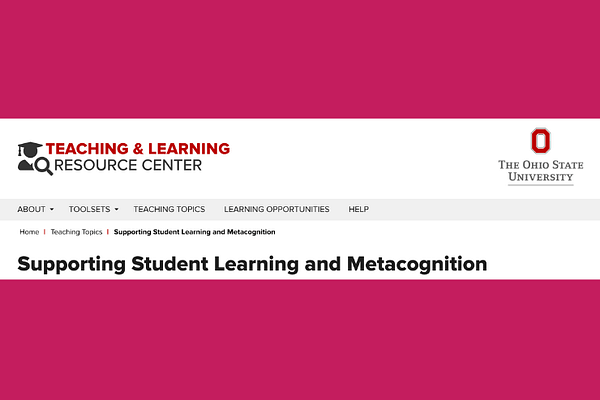
  • Supporting Student Learning and Metacognition
  • Shell Game Podcast
  • Phonograph Podcast

ARE YOU ENJOYING THE SHOW?

REVIEW THE SHOW
SEND FEEDBACK

ON THIS EPISODE

Jeff Young

Jeffrey R. Young is an editor, reporter and podcaster focused on covering who gets what opportunities in education and how AI and other technologies are reshaping our world. He was most recently the Editorial Director of EdSurge and the producer and host of the weekly EdSurge Podcast about the future of learning. He previously spent 20 years at The Chronicle of Higher Education as a reporter and editor. During that time he held various roles, including leading technology coverage, editing the Students section, and serving as the publication’s first Web editor, helping start blogs, podcasts, and multimedia features. He also founded and hosted the Re:Learning Podcast.

Bonni Stachowiak

Bonni Stachowiak is dean of teaching and learning and professor of business and management at Vanguard University. She hosts Teaching in Higher Ed, a weekly podcast on the art and science of teaching with over five million downloads. Bonni holds a doctorate in Organizational Leadership and speaks widely on teaching, curiosity, digital pedagogy, and leadership. She often joins her husband, Dave, on his Coaching for Leaders podcast.

RECOMMENDATIONS

Supporting Student Learning and Metacognition

Supporting Student Learning and Metacognition

RECOMMENDED BY:Bonni Stachowiak
Shell Game Podcast

Shell Game Podcast

RECOMMENDED BY:Jeff Young
Phonograph Podcast

Phonograph Podcast

RECOMMENDED BY:Jeff Young
Woman sits at a desk, holding a sign that reads: "Show up for the work."

GET CONNECTED

JOIN OVER 4,000 EDUCATORS

Subscribe to the weekly email update and receive the most recent episode's show notes, as well as some other bonus resources.

Please enter your name.
Please enter a valid email address.
JOIN
Something went wrong. Please check your entries and try again.

Related Episodes

  • EPISODE 382Teaching Change

    with Jose Bowen

  • EPISODE 307Commitment to Change
    Dale Hoffman

    with Dale Hoffman

  • EPISODE 508How Curiosity Can Transform Lives and Change the World
    Scott Shigeoka square

    with Scott Shigeoka

  • EPISODE 439Education for Love and Wisdom

    with Jeff Hittenberger


EPISODE 598

Voices on AI: Jeff Young Shares Soundbites of Change

DOWNLOAD TRANSCRIPT

Bonni Stachowiak [00:00:00]:

Today, on episode number 598 of the Teaching in Higher Ed podcast, Voices on AI, Jeff Young shares sound bites of change. Production Credit: Produced by Innovate Learning, maximizing human potential. Welcome to this episode of Teaching in Higher Ed. I’m hi, I’m Bonni Stachowiak, and this is the space where we explore the art and science of being more effective at facilitating learning. We also share ways to improve our productivity approaches so we can have more peace in our lives and be even more present for our students. When ChatGPT first appeared in late 2022, it sparked more than headlines- it sparked conversations in classrooms, faculty meetings, and living rooms about what these new tools might mean for teaching and learning. In this episode, Jeff Young joins me to reflect on those early days and how much has shifted since then. Jeff Young is the host and creator of the Learning Curve podcast.

Bonni Stachowiak [00:01:16]:

He’s also a freelance reporter writing for the Chronicle of Higher Education, the Hechinger Report, and other national publications. Jeff and I talk about what students are discovering AI can do and what it can’t, how faculty are rethinking the ways we spend classroom time, and the parallels between what’s happening today with AI and the rise of social media. Jeff also shares how journalism itself is being shaped by these technologies and what it means to seek connection and meaning in a world of instant answers. Jeff Young, welcome to Teaching in Higher Ed.

Jeff Young [00:02:00]:

It is such an honor to be.

Bonni Stachowiak [00:02:01]:

Here and this is such a treat for me with the tables have turned. Jeff Young, are you ready? I’ve been so looking forward to having you reflect on your time as a journalist and also you yourself do some educating. Tell us about what do you remember from your early journalistic conversations back in late 2022 and those early months after the release of ChatGPT?

Jeff Young [00:02:30]:

Yes, I mean, it is crazy to think of how much we’ve all learned about generative AI in the last just couple years. And there was a time before all that that we were out doing our thing and there was one time I was working at edsurg and edsurge was amazing in a way to get a lens on what was happening with tech companies and where things were going. And this one chance we had for we were able to cover a conference in China. So I was able to go to Beijing for this conference on edtech and what’s new and hot and interesting. And it was a treat on many levels. But the one of the things that people were talking about there more than I was hearing back in the States at that time was AI. And people are Talking about AI, but AI kind of differently than I had been thinking of it because I was kind of. AI transcribed my interviews at the time already and there was AI, but it was a little different.

Jeff Young [00:03:38]:

And there was this moment that really struck me where Derek Lee, who. Who is founder of this Chinese based AI company called Squirrel AI, which is still going. I noticed it had a big article about it recently. But he spoke at this conference and my colleague Betsy Corcoran and I actually got to sit down with him and talk to him after he gave this keynote speech that raised all this vision of generative AI in education as a tutor in a way that I was like, what? And so we asked him. I brought this clip that was from the Ed Surge podcast where from this interview where I think if you could have seen the look on my face, it was definitely like, wait, what is he saying?

Bonni Stachowiak [00:04:24]:

I love imagining the wait. What? All right, let’s hear this clip.

Betsy Corcoran: All technology has good implications, but sometimes negative things too.

Derek Lee [00:04:34]:

Of course.

Betsy Corcoran [00:04:35]:

What do you worry about with AI becoming so important in education?

Derek Lee [00:04:39]:

Actually the most thing I worry about is how to say Uncontrollability.

Betsy Corcoran [00:04:48]:

Out of control. What do you mean being out of control?

Derek Lee [00:04:55]:

When we are in a classroom, we know what the teacher knows and we know what a teacher will teacher still then.

Betsy Corcoran [00:05:03]:

Yes.

Derek Lee [00:05:04]:

Even they know something that’s not appropriate. Maybe dirty. Yeah. They were not there to teach in a class, but for the computer. They know everything.

Betsy Corcoran[00:05:14]:

Yes.

Duke University student [00:05:15]:

Right.

Derek Lee [00:05:15]:

They know every information and if they want to please the student. Right.

Betsy Corcoran [00:05:20]:

Yes.

Derek Lee [00:05:20]:

Sometimes that may not be good.

Betsy Corcoran:

The wrong things.

Derek Lee [00:05:24]:

They may take the wrong thing. So how to restrain, how to limit it. Yeah. Start seeing into the right. Right direction.

Betsy Corcoran [00:05:34]:

To limit the computer.

Derek Lee [00:05:36]:

Yeah. It’s like to control the nuclear weapon.

Derek Lee [00:05:40]:

To use it to build electricity. That’s good.

Derek Lee [00:05:43]:

But in other way that will be disaster.

Derek Lee [00:05:47]:

So I think how to regulate AI is very important.

Bonni Stachowiak [00:05:53]:

Such a powerful example and to think, I mean this was like you said, fairly early on. And he’s bringing the issues of sycophantic, you know, large language models and all the things. Now you have been on a new venture lately doing the Learning Curve podcast. I know you’re having a lot of intriguing conversations. Let’s first consider students. So it’s been a minute since 2019. It’s been a minute since the 2022 November ChatGPT chat based large language model releasing. How are you seeing use of it and the ways it’s shaping a student experience in higher education?

Jeff Young [00:06:37]:

2019. Yeah, I think it’s One of the things that I’m liking most about Learning Curve, and I feel like I’m getting some of the most kind of insights from, is talking to students about their use of these tools, because I think there’s a lot of press and there are plenty of quotes of students and AI, and certainly you can find plenty there. But it feels like, as you know, with the podcast, you can sort of try to get some time and extend and think through, hear some more nuances of the experiences. And I’ve been really interested in how students are kind of thinking through AI and where their kind of perspectives are, because obviously the one thing that, as you know, there’s not one student view, and so that’s one thing that’s so important, is that you can find students that think all kinds of things. But there is a sense that students are very aware of AI and they’re also very aware of how it’s changing the job market that they might enter. And so they’re in a very, very real heavy way. If you’re a college student, say, today, even if you’re not that interested in AI, I do think it’s in the air and your take on it might be, you know, have a different kind of resonance than somebody maybe that’s already in a job or has already learned a lot, has already gone through school, has already. Maybe an educator or teaching a class might have a very different kind of mindset about the tools.

Bonni Stachowiak [00:08:14]:

Absolutely. And I know that you had a chance to talk to a Duke student, and I think this one is so emblematic of. I mean, I don’t. I feel like I’m spoiler alert. I mean, that we would hope that. That students were using it to facilitate their learning as opposed to other things. Again, I don’t want to spoil this. Is there anything else listeners need to know before I share this clip?

Jeff Young [00:08:41]:

Yeah, this is a Duke University student in an episode that is all about kind of universities, should they offer AI tools. Is this, you know, and this tool is so different, maybe is it? And is it different, you know, like, if AI is has this existential threat to education or if it might even harm students in some view if it’s misused, that’s a little different than providing email or providing websites, tools, authoring tools, and all the things that colleges have done that have been great over the years. And so this student is somebody I talked to for that episode about what she thinks, and she’s somebody who is using AI and was a student worker involved with AI. But here’s here’s what she said.

Duke University student [00:09:23]:

Or like you’re stuck on a certain problem and someone else is stuck on that same problem. Whether it’s like homework or like a problem set you at your hand in or just like basic understanding and comprehension of the material that you’re presented with. Really just like, oh, ask ChatGPT. Like, just ask if ChatGPT can explain to you, especially if you’ve already gone to your teacher and whatever they’re saying to you is not clicking a lot of times, because you can. Because a lot of these language models and a lot of these ways like ChatGPT and all these other instances you can say, explain it to a 5 year old. Explain as if you were explaining to a 5 year old. Explain it as you’re explaining it to a very specific demographic or a very specific thing that can help it resonate more with you and help it understand. So at least for me, like in my past math class, me and my friend, we used to sit and do these problem sets that we do every single week, like for hours.

Duke University student [00:10:09]:

We just do them and like we’re stuck on a certain problem. And the engineering schedule itself is very strange and very rigorous, especially at Duke. And we had a lot of issues with like times that our professor’s office hours would be. We’d have to take another class at that time. So none of us were able to make it to the office hours this time. So a lot of that was like, ask ChatGPT to explain it to you.

Jeff Young [00:10:32]:

What I love about this clip, Bonni, is it, it subverts a little bit, you know, like, this is a person who’s very willing to say, like, sure, I’m using ChatGPT, but the place that’s coming from is like, because I’m a good student and I want to learn and I need to. She says in a different part of the interview, like, there’s going to come a time where I’m going to get in a room with a test where I can’t get to the tools and if I don’t know it, I’m doomed. So that’s the version of herself she’s thinking of when she’s tempted, if she’s tempted to just have it, do something for her, which I don’t think she is doing. So it’s interesting that for her it’s this. You try the human stuff first, try the other. Can I get to office hours? No. Okay. Can I figure it out on my own?

Jeff Young [00:11:18]:

Like, am I running out of time? Okay, can this unlock? Can I get past the Part of the game, I can’t win on my own.

Bonni Stachowiak [00:11:26]:

And that she’s with her friend. I mean, what I mean, how delightful. So there’s the social learning aspect of it too. The one part that breaks my heart has nothing to do with her and everything to do with. I used to love and delight as a means of assessment, asking students to explain something to an 8 year old. And it was just a way of making what they might have perceived as more formal writing, more formal reading that was difficult for them to associate with. And I really could gauge their levels of understanding. And it was, it was very small stakes.

Bonni Stachowiak [00:12:01]:

And sometimes I would joke with them if it seemed like inauthentic. Have you spent time with 8 year olds? Cause I’m not sure that you have. You know, and not trying to get anyone in any trouble or anything, but just that often used to differentiate if someone was acting as if they understood something or if they actually did understand something. And I was able to do it in a way in which it was okay to admit that’s where it broke down. Oh, now I actually realize I don’t understand something because I can’t explain it to an 8 year old. And I just do get bummed that that is sort of lost to me now, that that can be a way of building those bridges between, you know, discovering where something may not be as understood as people thought that it was.

Jeff Young [00:12:45]:

No, I think this is one of the things that I’m learning in doing the latest podcast is I really trying to let both students and professors and tech leaders just kind of give their perspective, like where they’re coming from on this. It doesn’t mean that every listener is going to agree, even with. I’m sure there are probably some educators being like, well, yes, the student feels like they’re doing it, says they’re doing all they can, but maybe the educator might miss them getting so stuck that they really have to persist and sleep on it a day. There are ways in which something is lost in this change, I’m sure.

Jeff Young [00:13:23]:

And so that’s the trick is like, okay, so if as an educator, someone’s listening to this and thinks like, oh, if that’s the way students are thinking at their best, then maybe there’s something else we can do to. To try to change office hours to try to catch them before they go to AI.

Bonni Stachowiak [00:13:44]:

That is one of the things I have very much appreciated about the Learning Curve podcast is your ability to bring together these differing perspectives without it seeming like a game or a show or trying to pit people against one another. And one of the conversations that I really enjoyed a lot was between two people who saw things quite differently. You did something unique in that you had the first person get interviewed, you had the second person listen to that person’s interview, respond to it, and then gave him a chance to come back. I just thought, you’re such a gifted audio storyteller and I really appreciated it. But tell us a bit about what LeBlanc can tell us about how faculty, one perspective of how faculty are experiencing this shift when it comes to educators.

Jeff Young [00:14:34]:

Yeah, and I would say his, you know, this is Paul LeBlanc. He’s the, until recently the president of Southern New Hampshire University, which famously grew into this big online powerhouse under his leadership. And he is basically now started this company that is, I think it’s a public benefit company. So he’s trying to, you know, he, he’s trying to think through like, what is the next. What is the way AI could be used to rethink education. And so he’s got a AI Chatbot product that he’s working on. But one of the things that I was interested in is to talk to him is that they’re really in the early phases of what they actually have as a product. And I’m less interested in like a product.

Jeff Young [00:15:15]:

I’m not trying to do any product reviews. But they put out this really interesting. His company put out a video that’s almost like an artist sketch of what might be for the technology. And it’s not a product, it’s a, it’s kind of just like an idea made into like a six minute video. And I think that to me was an interesting moment to sort of try to talk to him about what is the vision, what’s the bigger idea, what is the way AI could be most ideally used if the tech gets, if the tech can be done and maybe it can be done today, maybe his company will do it. About what is one ideal of what could be. If you bring in an AI tutor to a university setting.

Paul LeBlanc [00:15:59]:

I would rather see that classroom time as the place where like, hey, we get to put, like you guys have learned, you’ve been working with Ellie. Like we. But Ellie’s really good at moving the dial. Like you’re learning this stuff. I’m going to use this time for us to now apply that learning. I’m going to give you really challenging scenarios and situations where you now have to take what you learned and show that you really can apply it.

Jeff Young [00:16:21]:

Without Ellie, without the AI helper.

Paul LeBlanc [00:16:25]:

It’s no longer what you know in a world where you can know everything, it’s what you can do with what you know. So I’m going to create situations, going to do hands on. I’m going to do experiential. I’m going to do enrichment. I’m going to bring people in. I’m going to have you working with each other. I’m going to have someone stand up and explain a thing that’s pretty complicated and see if they got it right. And you all are going to sort of be the judges of that.

Paul LeBlanc [00:16:44]:

Like, you could use that classroom time to do amazing things.

Jeff Young [00:16:48]:

One of the things I meant to set up so Ellie is the name of this chat bot that he’s. That he’s making. But it’s like this. The idea here is like, what if you had this kind of personalized tutor chatbot that was effective enough, but not. But just replacing the kind of knowledge delivery I think is the idea not to actually. So I even think tutors may be the wrong word sometimes because I feel like sometimes I’ve been a volunteer tutor. I think I have been tutored when I was a student. And I think a tutor is way more about just the content.

Jeff Young [00:17:20]:

Right. You’ve already gone to a class by the time you get to a tutor. I think the idea with this is Ellie or whatever AI Chatbot in this configuration would be like, it’s a flipped classroom in this case. Right. It’s like the person the bot would tell you. Here’s the definitions you need to know and the boring but important stuff to progress to a discussion about the topic.

Bonni Stachowiak [00:17:45]:

This conversation was, like I said, so amazing to me because you did have people with very different views. But I felt like both parties really treated the other’s perspectives with regard and you as an interview is just such a skilled thing. I want to mention to listeners, I highly. I have recommended this episode and I continue to stand by that. I really appreciated Mahabali’s pushback about personalized learning and how we describe speaking of metaphors that perhaps don’t fit. A lot of people call personalized learning something that is not at all personalized, you know, and so I really appreciated the way you set that up where these dialogues could happen and that kind of critique. But I feel like you’re part of the conversation that you have to share with Maha helps us see some of the parallels between what you saw happen with social media and what’s been happening with AI.

Jeff Young [00:18:43]:

Yeah, no, I think one of the things that keeps coming up both in this, like, wonderful interview that I had with Maha. It was just a pleasure to get to hear her reaction and also just her thoughts, her own perspective, her own critical AI pedagogy ideas. But one of the things that is a theme both in what she said so eloquently and others is that the danger of these tools, these networks, is that they give you such, you know, instant gratification. There’s a. There’s a. There’s a hit of dopamine, right, of like, you. You want something and you’re into. You’re bored, or you’re, you know, you.

Jeff Young [00:19:23]:

And there’s this thing, it’s on her phone in her pocket, or however you’re consuming it, but the phone in your pocket is awfully present continually. And I think it’s been something that students and everyone has had to kind of figure out our relation to. And we’re still all figuring out our relation to. I mean, you still have cell phone bands in schools is a very. In high schools and is incredible potent issue right now. So, yeah, I think she was able to cut to this human part as the thing to hold onto, I think, in whatever we’re doing.

Maha Bali [00:19:59]:

Related to these very quick answers you can get from AI. I want to tell a personal story about a friend of mine who moved to a new country, and she has not made new friends yet. She’s got four kids. She has a lot going on. She hasn’t made new friends yet. So when she needs something, she contacts me. And the Internet makes that possible, and it makes. It makes her have a social life, even though she doesn’t have friends in person, which I realize is not good for her, but it’s a good temporary solution.

Maha Bali [00:20:22]:

So one time she texts me on WhatsApp because she needs to talk about something, and I’m at work, so it takes me like a couple hours to get back to her. And you know what happens in between? She’s asked ChatGPT, and ChatGPT has responded to her. And it gave her this kind of combination between Islamic prayer and affirmation that no one ever would say in Arabic, but it was beautiful and interesting and whatever. And then she doesn’t need me anymore. And I think that’s very problematic that you get used to this immediate gratification that you get from the technology, and then any human responding to you is too slow.

Bonni Stachowiak [00:20:56]:

That reminded me of an article from the United Kingdom’s the Times. Here’s the headline, Jeff. Students will spend 25 years on their mobiles. Smartphones wreck Our ability to study with most people surveyed unable to focus for an hour without using them. I’m teaching this semester a class.

Jeff Young [00:21:20]:

Oh, my jaw. I just have to say my jaw is dropping. You can’t see it. But yeah, I mean, that is. That’s quite a number. 25 years, you said?

Bonni Stachowiak [00:21:28]:

No, 25 years. Yep.

Jeff Young [00:21:31]:

Okay.

Bonni Stachowiak [00:21:32]:

I’m teaching a personal leadership and productivity class, and one of the assignments they do is to take a day, set aside a day that I tell them, pick a day that looks like a typical day to you, so try to pick one where you’ll be in a class or two, whatever. Or at least a class or two. And this stat of the difficulty of putting it down. And by the way, those of us listening, or Jeff and I talking right now should recognize we fall into this just the ways in which they can be the dopamine hits for us and the addictive qualities, all by design. And so I don’t want us to student shame here. This is something for all of us to think about where our attention goes. What else are you thinking about in terms of any parallels between social media and the. What’s happening to us as we have these transactions with AI?

Jeff Young [00:22:19]:

No, it’s definitely something where. I think another parallel with AI and social media is that students are using AI tools and not just for anything to do with academics. They’re experimenting with AI. They’re trying it for all different kinds of things that come up in their lives. And I think whether it’s planning their workout schedule or having ChatGPT do all kinds of things that don’t have anything.

Bonni Stachowiak [00:22:48]:

To do with school.

Jeff Young [00:22:49]:

And I think one thing that is similar is that they have this time and they’re spending time with the tools in a way that I think a lot of people with jobs, grownups, if you will, or people with older people with more responsibility or whatever age they are, if they are kind of settled into something, they don’t have that time to use the tools. And I think it was similar with social media forums, especially like TikTok. And I mean, obviously these things all. They have become more and more mainstream. But it’s like early users of a lot of these social media tools were very much college students who really. And it’s such a youth culture in a lot of those platforms, even today. And I think there’s one moment in an interview of a student I interviewed recently for an episode where I don’t have the clip with me, but she had this really interesting comment on. It was at Northeastern University, and the president gave the commencement speech and mentioned AI quite a bit.

Jeff Young [00:23:45]:

And the student’s response was like, as if we don’t know what AI is or that we’re not actually using it maybe more than you are. So I think there’s this sense of that students are maybe doing things we also don’t know with AI, good and bad.

Bonni Stachowiak [00:24:02]:

And you have had a chance to talk to a high school student, and I thought that her description of how she’s using it already in high school, it was kind of some intriguing. I mean, it parallels some of the things you’ve been saying. But let’s, let’s have a listen to her and see some of the other ways that she’s already using it.

A high school student [00:24:21]:

I know a lot of students that use AI to make themselves more organized or help them keep their tasks straight, because I think I would say the two biggest misconceptions about teens right now would be that A, we don’t do anything. We just go to school, go home and sit on the couch and play games or watch tv, and B, that every single teenager is using AI to cheat on their homework and get out of having to do actual work. A lot of the teens that I know are using AI, specifically ChatGPT as like a planner where it’s. I have all these assignments to get done. Help me block out times in my day to make sure I can do that. Also go to my sport practices or help me figure out some basic ideas for this essay I need to write while I focus on this job that I’m working to help support my family, those sorts of things.

Bonni Stachowiak [00:25:18]:

As a writer and as a journalist and a parent and a family member. How is your thinking being shaped about the tensions between what AI can and can’t do?

Jeff Young [00:25:29]:

Jeff yeah, no, I. I definitely think about this. Nothing’s abstract about it for me either with AI use because as a journalist, there is plenty of articles I’m reading and hearing from colleagues about will AI take jobs? Will AI do you know, there you’ve seen already some scandals where newspapers have had AI do book reviews. And it turns out some of the books didn’t exist, but they outsourced it to ChatGPT. And so, but those moments are, you know, give pause to somebody that, like me, who’s my whole career of been interviewing people, writing articles, doing podcasts. This is my livelihood and for people to get it is exciting. I think these tools are cool. If you can feed in a couple documents to NotebookLM and have it give you a podcast of between two bots that are Charming and even kind of cough at random times to make it seem more lifelike, which is what happens.

Jeff Young [00:26:29]:

But it’s existential threat is such a cliche. But it’s more like what’s happening, what’s going on. And if people say this cliche about it’s either you’re not going to lose your job to AI, it’ll be to the person who knows AI well, then it’s the sense of, well, okay, so if there’s a way to adopt AI, that student we just played the clip of, she’s 17 and in high school and feels very busy. And she is, I’m sure, I know she is, but she’s like a star student in her high school. But wherever you are, everyone feels busy these days. And so it’s like, I think as I face these things very directly in my own life, I feel like it gives me a lens to be that much more kind of empathetic to. It’s not some other world that I’m covering that’s having these crises and I’m not in it. When I talk to a professor who’s concerned about a job being displaced by AI or a student kind of wrestling with the temptation of using it to do something for them or not, it’s like all of us, I think, are living this because the pressures are real.

Jeff Young [00:27:39]:

If there’s a shortcut, should you take it? Or where can we get back to Maha’s point about humanity? Where do we stop ourselves and make sure we do go to a friend or wait for the friend to write us back on the text that we sent? And so I think for me, I think I see parallels in journalism to the work that I’m covering on Learning Curve in education. And I also feel like it also just reminds me that you can name just about every profession as having a little bit of this uncertainty. And it’s this kind of. It’s hard to sit with angst about what all this means, even as there could be exciting possibilities that come from it and that maybe the world is going to shift and we have to figure something out. But it doesn’t mean it’s easy. It doesn’t mean you don’t want to listen to podcasts like yours and try to help be with other people and hear other people sorting through it.

Bonni Stachowiak [00:28:42]:

You mentioned the word fear and the existential threat. And another word that I’ve feel has been threaded through a lot of this is loneliness. And a certain kind of loneliness for thinking that these technologies can help us feel less lonely. And I Certainly saw that with the attention audit things that I saw students do. So powerful for me to read through their reflections. And I’ll tell you, Google Notebook is. I had a conversation with Mahabali very early since OpenAI had released ChatGPT, and I still remember her being like, you, I need you to go through the faces because you haven’t gone through them yet. And I remember the first time I saw a podcast that could be produced using Google Notebook lm and I was like, wow, like that.

Bonni Stachowiak [00:29:30]:

Because I have used it for stuff I find incredibly boring. I am so not interested in policies and procedures. So, you know, like getting it to do a podcast about some incredibly boring policy stuff for me. I remember the first time going like, wow. But then, I mean, it’s like a party trick. And then like the second one, you go, wait, this is the same phrase as the third one. Oh, my gosh. And all of a sudden it brings me hope as a person who loves having conversations like we’re having today, because I go, nope, they’re not coming for me quite yet.

Bonni Stachowiak [00:29:58]:

You know, like that. That’s. That there’s something about humans. And of course we have to be careful. Humans are pretty bad about telling if something was written by AI or telling if a podcast, you know, the video. This is certainly a real threat. I do not mean to diminish the things that you raised about that. And yet I do love just being reminded that humans can only do for other humans what only humans can do, and that we are, in a sense, the cure for loneliness that we’re seeking.

Bonni Stachowiak [00:30:27]:

The cure for that fear is to be with other humans. And as you said, to experience that.

Jeff Young [00:30:33]:

Yeah, no, I think that’s really well said. And I do wonder. I feel like we were just getting to this reckoning with social media, thanks to the work of Jonathan Haidt and so many others in the past year or more. And I feel like this AI is kind of. It’s sort of butted in a little bit to the conversation because all of it is just kind of all morphing as AI creeps into the Internet with AI generated materials and increasingly with media and social media. So it’s. It’s like maybe there will be a craving or maybe it’ll extend this kind of trend that was already moving to touch grass and do. All the go.

Jeff Young [00:31:21]:

Phrases like that are reminders that people are really thinking about getting offline, about carving out time without social media, without their phone. But maybe it’ll be interesting to see how AI fits into that which we are not even as far along in processing what it means for how we might use it, good and bad.

Bonni Stachowiak [00:31:43]:

This is the time in the show where we each get to share our recommendations. And for listeners not aware of this, the abbreviation H T stands for hat tip. So I’m raising my hat to David Rhodes, my friend and colleague, for suggesting this resource, and I thought I’d recommend it today. This comes from the Ohio University from their Teaching and Learning Resource Center. The title of this resource is called Supporting Student Learning and Metacognition. And because I cannot do their words and their metaphor justice, allow me to just read the first couple of paragraphs here. Imagine that you’ve been dropped into an escape room with no clue how to get out. Instructions are delivered piecemeal, often in the form of mysterious riddles.

Bonni Stachowiak [00:32:36]:

Escape room activities have become increasingly common in secondary and post secondary courses. They’re a great way to encourage problem solving, critical thinking, and collaborative work. And here’s the key, friends. While an escape room can be a fun and exciting assignment, your course should not mimic one. So the whole article are about things like structure and transparency, metacognition, organizing your course, how to provide ancillary resources, a lot about transparency, giving and collecting feedback. It’s a wonderful set of resources. David did not recommend this to me specifically, but David knows me sometimes well enough that he might have because I while I can combat this sense about myself, I can be pretty scattered. I can definitely live up to the scatterbrained professor stereotype, but because I know that I need to overcome that about myself, I am definitely all about let’s not have our courses so hard to navigate that we’re spending more of the students time trying to just navigate them versus actually solving some of the riddles and puzzles that are helpful to introduce that helpful friction in the learning process.

Bonni Stachowiak [00:33:54]:

All right, Jeff, I’m gonna hand it over to you for whatever you’d like to rec.

Jeff Young [00:33:58]:

Okay, well, I’m going to go with two podcasts and I’m going to bring mine. They’re not about teaching directly, but I think they both inform kind of some tech and reflection. I think the first one is this pretty new podcast series, narrative series called Shell Game by Evan Ratliff, who’s one of my favorite magazine journalists. He is a longtime host of the Longform podcast where he sits down with these magazine journalists and just kind of help understand the craft. And I’ve learned so much over the years from him, but his new podcast is all about AI so it’s about his first season is about AI voice agents or clones. And so he clones. He goes gonzo. He clones his own voice.

Jeff Young [00:34:43]:

He makes an Evan Ratliff, just trains it on his podcast. He just plugs in old podcast episodes and sets and has all of a sudden he’s got this AI version of himself in audio. And each episode he does a thing. Like one time he sends it to therapy with a real therapist at first, but then sees how that rate goes and then sends it in the end to this new breed of AI therapists you can sign up for. And so he has his AI version of himself talking to the AI therapist. So it’s bot on bot therapy. It is very trippy and strange, but it really is. It’s the uncanny Valley.

Jeff Young [00:35:21]:

All the time. You’re just like, what is that strangeness of the host voice comes in and then he’s saying, but now it’s my robot voice. And you can tell always. But it’s a very interesting series in so many ways. It works so well as an audio story. So I recommend that Shell Game, it’s another independently produced podcast, which I want to support. And then the other one is by someone that I’ve gotten the great pleasure to work with, Rob McGinley Myers, who is actually going to be doing some editing on Learning Curve podcast. So I’m very excited about working with him again.

Jeff Young [00:35:51]:

We’ve done many series back when I was at edsurg, but he is a longtime radio guy and does his own wonderful podcasting work. And he has a podcast called Phonograph. And he goes back. It started with just this American Life episodes that he would go back to and basically talk about why they’re so great. And if anybody loves any of these, like this America Life or all these NPR shows. And now more recently, obviously, there are other so many other great narrative podcast. And so he and a co host, Brady Green, who’s also an amazing journalist, they just sit there and they’ll dissect an episode, each episode of something old and wonderful. And so you’re just inspired to go back and listen to that gem you’re enlightened about.

Jeff Young [00:36:37]:

And often they’ll pick something that’s of the moment or inform something about today. So it’s just a great way. Again, something AI could not do is like journalism, where you’re really deeply analyzing something with such heart and depth from somebody that knows what they’re talking about. It’s wonderful. I recommend both Phonograph and Shell Game.

Bonni Stachowiak [00:36:59]:

I’m kind of freaking out a little bit, Jeff, because it’s like you somehow have gotten inside of my brain or my podcast listening habits or something else because I’m like, I need to stop everything and just listen to these things. I mean, it’s literally like the kinds of conversations I would want to have. And particularly going back and revisiting this American Life podcast, I mean, that that’s something I would just, just enjoy to do in general. I can’t wait to hear this and so support you, of course, you know, supporting the work of these independent podcasters. That’s wonderful, Jeff. What a fun conversation. Thank you for the work, extra work that you put in to make it so dynamic in terms of bringing in these voices from your new podcasting venture. And I’m so looking forward to the next time we talk.

Jeff Young [00:37:43]:

Oh, Bonni, this has been a treat. Thanks. I look forward to talking again. Let’s do it again.

Bonni Stachowiak [00:37:50]:

It was such a pleasure today to get to turn the tables on Jeff Young and get to interview him this time around. Thank you so much for joining us. Today’s episode was produced by me, Bonni Stachowiak. It was edited by the ever talented Andrew Kroeger. Podcast production support was provided by the amazing Sierra Priest. Thank you so much for listening. I love having you a part of the Teaching in Higher Ed community and if you’ve been listening for a while and haven’t yet rated it or reviewed it on your preferred listening provider, would love for you to take a moment to do that so you can spread the word about the show. Thanks so much for listening and I’ll see you next time on Teaching in Higher Ed.

Teaching in Higher Ed transcripts are created using a combination of an automated transcription service and human beings. This text likely will not represent the precise, word-for-word conversation that was had. The accuracy of the transcripts will vary. The authoritative record of the Teaching in Higher Ed podcasts is contained in the audio file.

Expand Transcript Text

TOOLS

  • Blog
  • Podcast
  • Community
  • Weekly Update

RESOURCES

  • Recommendations
  • EdTech Essentials Guide
  • The Productive Online Professor
  • How to Listen to Podcasts

Subscribe to Podcast

Apple PodcastsSpotifyAndroidby EmailRSSMore Subscribe Options

ABOUT

  • Bonni Stachowiak
  • Speaking + Workshops
  • Podcast FAQs
  • Media Kit
  • Lilly Conferences Partnership

CONTACT

  • Get in Touch
  • Support the Podcast
  • Sponsorship
  • Privacy Policy

CONNECT

  • LinkedIn
  • Instagram
  • RSS

CC BY-NC-SA 4.0 Teaching in Higher Ed | Designed by Anchored Design