Follow the Teaching in Higher Ed Podcast
About this Episode
Michelle Miller shares about her book, A Teacher’s Guide to Learning Student Names: Why You Should, Why It’s Hard, How You Can, on episode 558 of the Teaching in Higher Ed podcast.
I think a lot of us kinda simmer in this little mindset of, everybody else can do this and I can't.
Michelle Miller
On episode 558 of Teaching in Higher Ed
Voices on this Episode


Show Notes + Resources
- A Teacher’s Guide to Learning Student Names: Why You Should, Why It’s Hard, How You Can, by Michelle D. Miller
- Michelle Miller’s R3 Newsletter
- The Power of Writing Rituals, by James Lang
- National Institute of Aging
- What is a junk journal?
- Justice: What’s the Right Thing to Do – Playlist of Michael Sandel Videos
- Radical Hope: A Teaching Manifesto, by Kevin Gannon
- Audio book: A Teacher’s Guide to Learning Student Names: Why You Should, Why It’s Hard, How You Can, by Michelle Miller
- Audio book: Hope in the Dark, by Rebecca Solnit
- Remembering and Forgetting in the Age of Technology: Teaching, Learning, and the Science of Memory in a Wired World, by Michelle Miller
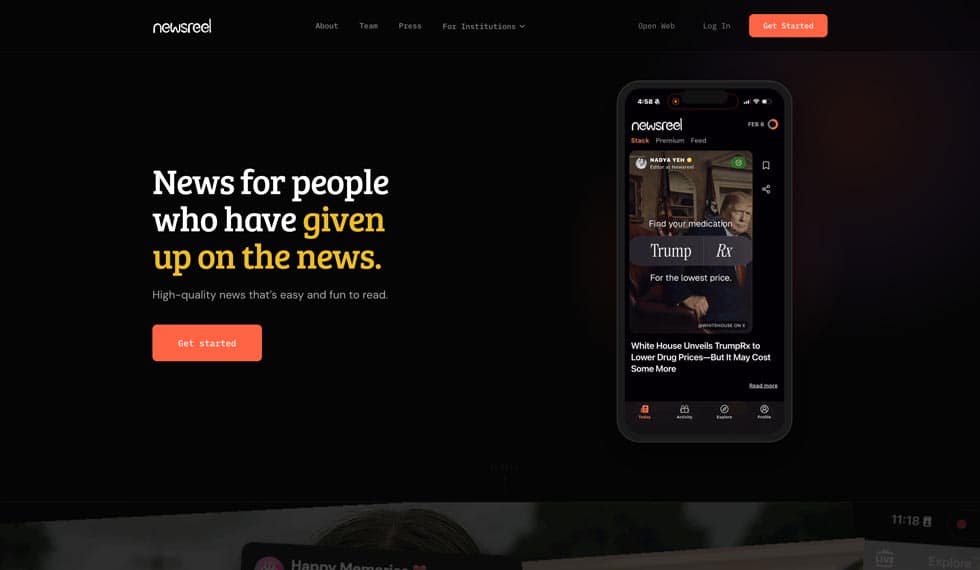
- newsreel.co
- Facades
- The Goat Rodeo Sessions
Recommendations from this Episode

Book
Audio book: Hope in the Dark by Rebecca Solnit
Resource
newsreel.co
Music
Facades

Music
The Goat Rodeo Sessions
Transcript
Bonni Stachowiak [00:00:00]:
Today on episode number 558 of the Teaching in Higher Ed podcast, how to learn students’ names with Michelle Miller.
Production Credit: Produced by Innovate Learning, maximizing human potential.
Welcome to this episode of Teaching in Higher Ed. I’m Bonni Stachowiak, and this is the space where we explore the art and science of being more effective at facilitating learning. We also share ways to improve our productivity approaches so we can have more peace in our lives and be even more present for our students. It’s with joy that I welcome back to the show Dr. Michelle Miller. She’s a cognitive psychologist, researcher, and speaker focused on supporting and inspiring teachers, instructional designers, and leaders who care about learning. She advocates for building learning experiences based on research on how people learn and for using educational technologies in ways that align with those principles of learning.
Bonni Stachowiak [00:01:16]:
She’s the author of several books, including Minds Online: Teaching Effectively with Technology, and Remembering and Forgetting in the Age of Technology: Teaching, Learning, and the Science of Memory in a Wired World. And the book she’ll be speaking with us about today is called A Teacher’s Guide to Learning Student Names: Why You Should, Why It’s Hard, and How You Can. Dr. Miller completed her PhD in cognitive psychology and behavioral neuroscience at the University of California Los Angeles and currently serves as a professor of psychological sciences and president’s distinguished teaching fellow at Northern Arizona University. Michelle Miller, welcome back to Teaching in Higher Ed.
Michelle Miller [00:02:02]:
Thank you. It’s so great to be here.
Bonni Stachowiak [00:02:04]:
So great to be able to see you today and spend some time with you. I understand you have been doing even more writing. We’re here to talk about one of your books, but even more writing. And just as we’re bringing ourselves into the conversation, would love to hear any advice for those of us who yearn to create, yearn to write, and maybe how to keep our minds sharp for doing such things.
Michelle Miller [00:02:28]:
Oh, well, let’s see. I I think yes. With the writing practice, I I’ve really come to settle on a a sort of a philosophy, and this is just really from the past year when I was working on another really my longest, heftiest book manuscript to date, and we’ll we’ll kinda see where that goes in the future. But I really hit on this insight that at least worked for me, which is to really focus on the practice. And, you know, it’s funny. I I’m also an avid crafter. I knit and crochet and things like that outside of my sort of professional life. And we we talk about in crafting being a process knitter or a product knitter.
Michelle Miller [00:03:08]:
There are people who are so process oriented that they will knit some complex thing and they’ll unravel it. They’ll say like, Oh, that was nice but I think I’ll use this yarn for something else. I’m actually knitting. I’m a product knitter. I fall in love with the finished product, and that’s what I’m going for. But that really does, I flipped that around very deliberately really in the past year as I mentioned for my writing practice. And and I said, you know what? The the end product, that’s great if I get this wonderful book that that I wanna read and hopefully others will wanna read at the end or article or substack post or thing like that. But the the project powers the process.
Michelle Miller [00:03:52]:
Project powers the process is what I came up with is, like, the purpose of having, for me, a substack or things that people are interested in reading or a big goal like a a a book length manuscript is to get me writing on a regular basis, not the other way around. And I I I feel like this is probably going to either, other people either also sees on this and go, yes. That’s great. And it’s a way to take away a little bit of the anxiety and they’re like, oh, no. I must be perfect part of it. But and other people will look at this as I know that’s terrible. I don’t want to do that. But that’s kind of where I’ve I’ve been in in the past years.
Michelle Miller [00:04:30]:
That’s sort of the philosophical angle on it. I I I do borrow lots of things from psychology to get myself in over that sort of blank page. How do I get started stuff and get momentum? I I’ve either cues or certain musical pieces, a couple of musical pieces and playlist that I only use when I’m sitting down to write. I don’t listen to them any other time. I I I really I I get a little too obsessed with word count, and I have the spreadsheet that calculates that each day. So I kinda keep my eyes on on those metrics. And, yeah, I I think as far as queuing and and getting that sort of Pavlovian learning going, I I also kinda I feel like you can either condition yourself to write in the specific time and place every day or you kinda take it in the other directions, which is what I did is really trying to deliberately train myself to be able to write pretty much anytime, anywhere, and that’s that’s really what has carried me through. So I don’t know.
Michelle Miller [00:05:33]:
Stay tuned for more and to see, see what the end product of all those, new processes are.
Bonni Stachowiak [00:05:39]:
I’m gonna see if I can find this link. I’m fairly sure that I will, but, of course, now that I say that, I probably won’t. But, James Lang had a wonderful piece about his practice, and he was talking about some of those cues. I don’t remember if he actually referred to them as cues, but I recall being surprised and delighted by him mentioning that he lights a candle each time he goes to write. And I thought that was so beautiful. And you and I actually crossed paths, but it was a year apart, I think, or something like that. I know you spent some time at Louisiana State University at a couple of their campuses, and then I I just traveled there about a year after you did, and it was so fun to sort of feel in some ways like we were continuing conversations together. It was so delightful.
Bonni Stachowiak [00:06:22]:
But a woman that I met there shared she actually asked if she could take a card, a scorecard for the go somewhere card game that I’ve developed. I always joke and say I developed it with the help of the Internet because I got such great advice and resources from a LinkedIn post that I did. But, anyway, she wanted to know she could have the the card, and I thought, well, that’s I mean, I was kind of curious. I I was just I had all these thoughts flooding through my head of why would somebody possibly want their scorecard. And the thing that didn’t ever come up in my mind is a thing called junk journaling. And she said, oh, you gotta look it up. It’s being talked about a lot across social media, so go check it out. And boy did her promise ever deliver.
Bonni Stachowiak [00:07:08]:
Junk journaling is, like, for those who might be intrigued by scrapbooking, but it feels too precious to you and that you have to be too perfect for it. And as you were describing your writing process, I was thinking about my I haven’t I’ve actually as as of this recording, I haven’t done my first junk journaling adventure yet, but I’ve started to put aside the tools that I might want to use and looked at you know, I’m starting to watch some videos and what kind of process would I like to take and what tools would I need. And I just think whether it’s writing, creating, knitting, if we just have a home for those things that are important to us as we go through our process, it just makes it so much easier. Whether it’s because it’s a cue, lighting the candle, or just because if you’re a little bit more scattered, like, I can sometimes be in my own mind, just, oh, these are the tools that you might need to do this thing that you do. I do I just find that an an intriguing idea and looking forward to getting into junk journaling. I had a also speaking of social media, a delightful exchange where people also talked about this somehow links in with what are called traveler’s journals and the idea of documenting that. And I think I mean, I don’t do a lot of traveling, so it’s kind of fun to just think about our our lives as a metaphor of traveling and some of the things that might be helpful together. So I saved my they had made me a name badge as the keynote speaker, so I saved that little laminated thing where, otherwise, I might have felt like it was gonna go into a landfill somewhere.
Bonni Stachowiak [00:08:38]:
I thought, well, that’s a perfect thing to junk journal. I got lots of great stickers from some of their programs there at LSU. It was really delightful. So well, we’re here today, I’m sure, to talk about a lot of things, but I just wanna share that a lot of our focus is gonna be on something that can be so challenging for many of us, and that has to do with learning students’ names. So we’re gonna talk a bit now about your book, a teacher’s guide to learning student names, why you should, why it’s hard, how you can. And I found it such a delightful read. Again, felt like we were having a conversation the whole way through. An important aspect of learning names is just our mindset, Michelle.
Bonni Stachowiak [00:09:20]:
What can you tell us about the importance of thinking about I mean, speaking of processes, why why is it important to think about mindset before we even start to just try to learn really anything?
Michelle Miller [00:09:30]:
Oh my gosh. Well and and you know what? It connects back to one of the things that made me fall in love with cognitive psychology and and scientific psychology. Back when I was man, I think about it now. I was literally a teenager, so that’s a long time, which is just is very, very elementary. But I think profound question of how on the inside in our mental landscapes and machinery, how are we essentially the same, and how are we fundamentally you know, what are some ways that we are different? And this is one of those, like, we are probably more similar than most of us realize when it comes to learning names. I think a lot of us kinda simmer in this little personal sometimes sort of self flagellating mindset of, Everybody else can do this and I can’t. And you know, that is part of what brought me to psychology too of some of my own quirks and going, Wow, do other people experience this? And how can I make sense of some of the different ways that I clearly think about and process the world? So coming to names, that is probably one of the the clearest where I mean, time and again, as a psychologist, I mean, I I do have to laugh. I mean, people say weird stuff to it.
Michelle Miller [00:10:51]:
So the they they ask us some interesting questions. When you say I’m a psychologist, it comes with the territory, but definitely one of them is this revelation. People will say, I I’m really not good at learning names. And and this is the thing. We this is one of these rare areas as I share in the book that we have a pretty strong degree of consensus and shared understanding of how this one thing in memory and learning actually works. And so the story is generally like, wow. It’s kind of a miracle that any of us ever correctly learn a name, let alone that we make mistakes sometimes. So that is the first part of the the the mindset question, which you we ended up building right into the title as I as I worked through this with the the publishers and editors, which is this is this is hard.
Michelle Miller [00:11:38]:
It’s hard for most people. And so having that expectation changes things. And I don’t think it has to be this fatalistic thing of, like, what a chore this is gonna be. But you can expect to put in effort. But I also try to balance that with and if you put in effort in the right ways, you can see it not not become easy or magically just happen at at will, but you can really, really see an improvement in this one thing. And, I mean, I think we can all we can all use that. It’s a win that we can put up on the board. And what’s fun about writing for academic audiences too is you can actually dig into the, like, well, why? What’s the basis for changing your mindset in this way? It’s not just kinda happy talk of like, well, it’s hard, try harder, you’ll do better.
Michelle Miller [00:12:26]:
But what are some of the processes and and kind of hopefully drawing in the reader’s curiosity about why is this one thing so hard. We all do it all the time or we try. What are some of the processes that go on underneath? And once you understand that as well, I mean, of course, I I I give my own advice about how to go about it. But once you have that understanding and that mindset and that openness, well, you can probably come up with techniques that are even better and are geared to your own individual strengths, capabilities, and characteristics.
Bonni Stachowiak [00:12:57]:
Yes. And I I think I’m hearing you say that just how important it is to recognize that it’s difficult for all of us, and we may maybe all is too strong of a word. Most of us, a common a common human feature might be the challenge that it is. I think that we need to now shift our attention into why, though. If if something’s difficult, often things that are difficult you started talking about writing. Writing can be so difficult for so many of us, then then why do it? Why should we spend the time and effort and really carve that out to learn names?
Michelle Miller [00:13:30]:
Right. And so I think that this is and and how we how I together with some input from my editors and my readers, frame this in the book is is this is an inclusive teaching issue. It it really is. And especially as we discuss in the book, this isn’t this is a really uncomfortable thing, but I just decided to wait into it, especially among students for marginalized identities. They’ve had some probably some bad experiences here. And so there there’s there’s not a a blank slate necessarily for our students, especially if they’ve had, you know, more egregious examples of of teachers saying, oh, I’m not gonna try to learn your name or or something is I I perceive your name as unusual or something like that. So so there is that side of it. But really, even in any interpersonal or professional context, being able to have a person’s name down as many folks have observed even the named Dale Carnegie.
Michelle Miller [00:14:39]:
I think we’ve all heard his old saying about, Oh, it’s the sweetest sound that anybody ever hears their own name. I mean, don’t take that as literal fact, but going back a long ways, we were saying it it elevates the conversation differently to be able to use names. And then having the practice, not just knowing them and keeping that knowledge to yourself, but actually flowing that into our discussions and really making the discussions interactive and fully two way in our classrooms, whether they’re small or or large. As I the intro to the book really talks about how this is one of my key failures very early on in my very first class where I’m thinking, well, I nailed it. Why? Because I was so prepared and I had my stacks of handouts and, you know, I stood and used to the correct terminology. It was basically taking the whole scenario of presentation. That was my model where it’s all about me and the information that I’m gonna share with you. And when what I needed to be doing was connecting with students and finding out what they actually needed in this breakout section I was teaching as if it was a giant lecture stage and go there, and the names were a part of that.
Michelle Miller [00:15:54]:
So I think it’s also part of that, another mindset shift of, Hey, instead of I’m sharing information with some faceless group to we are actually in conversation in this classroom. And I guess last of all, something that I incorporated into the book is what can it actually look like when we are even in a large setting conducting a back and forth discussion to be able to say, and we’re gonna be responding to Michael’s point here. And, Jessica, you wanted to respond to what David said and so on. And I have a little actually, a video clip that I just pulled off the net, but it’s one of my favorites. I show it in some of my teaching practicum courses of a very large it’s a legal philosophy class, and he leads this crackling discussion. And he just, on the fly, just ask people their names and builds up the richness of the discussion in that way. So there are a myriad of reasons whether you come at it from inclusion, whether you come at it from, I wanna really level up the the warmth and the interactivity of my teaching too. I just wanna have a really great discussion that we all leave and we feel like that was something special.
Bonni Stachowiak [00:17:11]:
I’m curious now. You have my my interest peaked. Does it happen to be a clip from Michael Sandel?
Michelle Miller [00:17:16]:
Mhmm. Yes. It was. Yes. It was. I believe it’s one of the Harvard great great lectures. Yeah. I I’ve shown this clip for a while.
Michelle Miller [00:17:25]:
It was suggested to me as part of a different development exercise and then I adapted it and I show it as an example of like, okay, this is a classic lecture and there’s a lot of debate about there about the value of the classic lecture. But it is highly interactive and so I do show it as a model just in and of itself to say, Well, what do you notice about the techniques that this lecturer is using? But then I kind of had that moment and I said, Oh, my gosh. And it relates to to this topic as well because that’s one of the incredibly striking things. Now I don’t know Michael Sandel and I don’t know what techniques he’s using sort of behind the scenes to be able to do that as well as he does. But, clearly, it’s something that he he I feel like he must be very deliberately, doing that as part of this lecture.
Bonni Stachowiak [00:18:16]:
I think it’s such a remarkable example across so many fronts. I use it not for that purpose, but for different purposes in a class that I teach. But I’ve I and I’ll put a link to the lectures in the show notes in case anybody would like to watch. I mean, just it’s wonderful topics as well that he covers. He almost shrinks down that room. I believe it it holds more than 500 people if memory serves certainly hundreds and hundreds of people. And and he certainly doesn’t call on all of them by name, but it feels so personal. I’ve I’ve had students tell me that as they are watching it, they feel like they are there in that large Harvard lecture.
Bonni Stachowiak [00:18:55]:
And I’ve had many of them tell me that it’s almost not just almost. They’ve told me that it’s boosted their confidence. They saw such a separation between anybody who would be able to go to such a prestigious school, and they can picture themselves. They do picture themselves being in that room. So you mentioned this being an inclusive practice, and now I’m I’m my mind is is swimming with we had so many conversations about trust, educational trust at the recent pod conference, which Michelle and I got to share a ride back to the airport together. So we’ve got to have some off airtime in the recent months. But in that in those conversations, we kept talking about secondhand trust. And now as you’re sharing, Michelle, I’m thinking about the secondhand benefits.
Bonni Stachowiak [00:19:44]:
Maybe if I don’t have everyone’s name memorized in that large lecture hall, for example. But the fact that I engage so intimately and conversationally with a few, can that feeling of inclusiveness spread to others in the room the similar way that secondhand trust can as well? It’s very intriguing. I don’t know if anything’s coming to mind for you in that.
Michelle Miller [00:20:08]:
Oh, yes. Absolutely. I guess a couple of things. I mean, I lean pretty heavily on, I mean, there’s not a huge amount of research in this very specific area, and I was a little surprised when I waded into it. And that that research is probably still developing, and I’m sure I didn’t I didn’t find everything that’s out there. But, I do lean pretty heavily on some really well put together research that looks very specifically at learning proportions of names in large. I think in this case, it was a it was a STEM class. Not exclusively the large classes that you’d find on any university but typically, it’s social sciences and STEM.
Michelle Miller [00:20:46]:
That’s where students show up and look around and go, Oh, wow. I feel very anonymous. And in this big room and where teachers are always really engaged. Teachers are always saying, how can I do what you’re talking about shrinking the shrinking the room? And there’s some evidence that that absolutely as as your intuitions might suggest that if you learn a proportion of names in the in the in a large class, yes, hundred, maybe it’s not realistic to memories everybody. But if you get a proportion that creates an outsized impression of knowing names. Now in the book, I would say, well, you wanna be self aware of, like, okay. If you’re gonna get a proportion, that proportion is probably gonna be selective and what what are who’s whose names are getting learned here. I I like to my little heuristic is there’s always students who stop up at the front with lots of different classes, but especially like an intro class to say, I have to share this example or I didn’t want to raise my hand and here’s the thing or they just want to chat.
Michelle Miller [00:21:44]:
And if you’re one of those students, I’m going to know your name name by the first couple of times. So that’s sort of my little my my goal there. But if you just know a few, my goodness, students may assume that you you know far more of them. So so there is there’s absolutely that question.
Bonni Stachowiak [00:22:05]:
Another aspect of the reading for me went really personal, Michelle, and that has to do with aging and memory. And I this was, as it should be, very nuanced. Yes. Our brain changes as we age. What specifically having to do with learning names might we want to be aware of? And could you also just sneak in there some hope as it relates to memory and learning as we as we age?
Michelle Miller [00:22:35]:
Right. And and here too, I mean, this this whole book, a little bit of the backstory of the book in the context is, I mean, I I got to approach this in a real spirit of of of fun and nostalgia and reflection because I reached all the way back to some of my my roots and the research that I was publishing at the very beginning of my career. And some of that research besides being very much in the area of language and memory and psycholinguistics was cognitive aging. So my graduate advisor, we had this big vibrant lab and we had a grant from the National Institutes of Aging. So we did a lot of basic research questions but we also looked very specifically at what can be very practical questions. So that’s something that I’ve just dipped back into throughout the years because it is such an important one. In this book, we said, okay. Let’s also consider this from a variety of of different angles and different characteristics, and one of them was definitely aging.
Michelle Miller [00:23:33]:
Now also important because at demographically, we we professors, for which is the audience for this book, we do skew a little bit on the upper end, don’t we? So quite naturally, we we wanna know about this. So with respect to names, yeah, it there it’s sort of bad news, good news here. Absolutely. If you have the impression that names become more of a struggle as you get older, that you’re nothing nothing is out of the ordinary about that. And especially when we’re talking about retrieving names that we haven’t used for a long time. And if you kinda think about it sort of almost in mathematical terms, the older I get, the further back I’m sometimes reaching for a name. I mean, if I’m talking about, say, my fourth grade teacher and what was her name, I mean, that’s very different if I’m 30 than if I’m, say, 55. So that is kind of normal.
Michelle Miller [00:24:28]:
It doesn’t make it any more fun, but it should be a little less anxiety provoking. Also, encoding new names, a process which is the basis for being able to successfully retrieve it later. I talk a lot about that in the book and the factors that go into successfully encoding or putting it into memory. Encoding all kinds of new information does seem to take a bit longer with age. So there too, it’s almost a a little bit of a a mathematical function. Now the good news is that we can put to bed as really a cultural myth, the idea that everything in your mind and brain, your whole memory is just progressively more shot every year you’re on earth. This is not the case. Other aspects of memory hold up really, really well over time.
Michelle Miller [00:25:15]:
And there’s also some systematic and some classic studies, including the one that was actually done on college professors in their sixties and seventies, I believe. And and looking at how some encoding new information quickly was still a struggle, but boy, they were still absolutely they excelled at more meaningful information. So more broadly, giving oneself more time, realizing that especially, we’re doing something that’s brand new and fast paced that that’s gonna be more challenging, but that doesn’t mean that memory is going across the board. That can, I think, be very reassuring? And, also, we we’ve also there’s some fun stuff like those difficulties we have retrieving names sometimes where they get caught on the tip of the tongue. That’s actually what it’s called in the scientific literature, the tip of the tongue phenomenon. It’s annoying as it can be. But it doesn’t mean that that information is gone permanently and it also tends to be even more common among people who speak multiple languages and have larger vocabulary. So if you think you’re kind of selecting from a bigger bucket of all the words and names you know, that sort of makes sense.
Michelle Miller [00:26:27]:
But yeah, whenever I’m hitting that, I go, Well, okay. It’s just partly it’s a glitch that I don’t like, but it’s partly perhaps reflecting that I that I have acquired so many words over the course of my lifetime. So hopefully, that that can give a flavor of how I come at the age issue and how we can give ourselves some grace and but still go into this with some optimism.
Bonni Stachowiak [00:26:51]:
My hope in having you here today is that people will pick up this book. It is not any substantial length that should prohibit any of us from saying I don’t have enough time to read it. It’s definitely a doable read and an important one. So I’m gonna ask you an entirely unfair question because you already have mentioned that there are multiple methods that we could use, and it’s gonna depend a little bit on our strengths. But let’s just start with one technique that might work well for the vast majority of us. And I’m gonna say what it’s not, and then maybe you could share what it is. So what is from what I’ve learned from Michelle’s and other people’s research is what’s not going to help me as much is just repeating it. I mean, that that might be an aspect, but maybe not the biggest fulcrum to help me be able to have that neural network that I need.
Bonni Stachowiak [00:27:39]:
So if it’s not just repeating or studying my notes, if you will, you know, just just reviewing the information. If that’s not gonna be the greatest contributor to learning names, what would be another approach that might be a little bit better of a fulcrum to to get those things cemented?
Michelle Miller [00:27:56]:
Yeah. And it strikes me. I mean, the way you’re you’re talking about it here too, it’s another thing that I I definitely hope this sparks, for folks who are newer to some of the, applied memory science. If this can be an entree into, oh, what springboard other other, ways to encode and learn information that we wanna know and learn that quickly and and but with with a side order of fun as I always like to say. But with names in particular, yeah, when I think about the repetition issue, I I think of how I know I before I got better at deliberately addressing this issue, how we might go about it. So either in conversation, we hear the name, and we think, oh, okay. Then and it sort of walks us over as passively or they’ve got the name tag. How many times do we we talk to somebody at the conference and they’ve got the name tag and we look at the name tag and we look at the name tag and we think, Wow, I must have known him.
Michelle Miller [00:28:49]:
And you know perfectly well. If they cover that name tag up with their hand, you wouldn’t have any clue because what have you not done? So these two critical first steps, which again map onto a lot of other learning tasks, are attending and doing some retrieval practice. So and and that attention step, my goodness, that is a huge piece of the battle. And I think this is particularly true with names because especially for those of us who have a little bit of social anxiety, which is me and probably a lot of your listeners, a lot of other things are kind of cascading through our minds when we’re talking to somebody new or we’re in a social situation and here’s 10 people and now I have to introduce myself. And all that drains off attentional resources. And of course, if you aren’t really focused when the person says their name, if you don’t really focus on that name tag, you’re kind of dead in the water at that point. You can back up and start over, but that’s about it. But then retrieval practice, which is I think a little bit bit different, right, than just saying like, oh, yeah.
Michelle Miller [00:29:52]:
I think I heard the name. If you set it back to them right now, could you could you get that? And for obscure psycholinguistic reasons, actually saying it, like, practicing what we call the output phonology is is different and it’s critical, than just hearing it because the as we like to say, you know, the test isn’t on how well you can recognize the name. The test is on how well you can say the names that that’s what you need need to practice doing. And that I think also blends in for those of us too who who need a few little social crutches, actually doing a little bit of retrieval practice where I, without looking at your name tag, try to use your name. That not only is the very best thing I can do for memory, it also gives me that one moment to say, did I mispronounce it, which is a whole different thing that when I’ve said been working with this person for three months, or they’ve been in my class, and it’s the last week, and maybe I never did get the pronunciation down correctly. Better to go ahead and get that part out of the way. So if you have it wrong, either in pronunciation or you have the whole thing wrong lock, stock, and barrel, they can correct you right then and there. So those two initial steps of I call it, you know, attend and say and then and then retrieve, those initial steps will take you so far in grappling with the difficulty of learning names.
Bonni Stachowiak [00:31:13]:
The nuance that you just presented to us in that tail end, I wanted to just stress it once again. What is the purpose of why we’re trying to learn the names? You also were talking about having some struggles with feeling anxious in social situations and and then the difficulty so many of us could relate to to just being able to attend. I mentioned that you and I both spoke at LSU across, you know, a year. We we sort of followed I guess I was following in your footsteps in that particular linear progression. And and I mentioned the woman coming up and talking to me about the junk journal, which I was instantly very intrigued by as she described it to me. In that moment, I was getting a notification on my watch that my flight had been delayed. And so I just know that I’m not able to attend as much as I would really like to because I had thought we were gonna need to leave the lunch twenty minutes early and rush to the airport, and my brain’s still trying. My brain’s not able to be a % processing.
Bonni Stachowiak [00:32:14]:
We’re cleaning up all the materials. I thought we were ready to strap into the car seat belts and, like, push off to the airport. And and so I just knew I was not fully there. I I mean, I would and I was I so wanted to treasure this moment. So I said, would you mind if I took a picture of us together? And then could I take a picture of your name badge? She didn’t seem like this would be a, you know, she didn’t seem like this would bother her, and I I hoped I left enough space for her to do that. Oh, she was seemed very delighted, you know, to to be able to do that. And that to me, I think about how many people that because I also feel that social anxiety. How many people will come up to me? Maybe they’ll say something about some somebody told me at the pod conference.
Bonni Stachowiak [00:32:55]:
Oh, I, we started our podcast, and it was because of your podcast. And I thought, that is something I wanna remember. And I I don’t know. I there were so many people who were coming up, some of whom I had met many years ago, some of whom I was meeting for the first time, and I thought, what is it you wanna do here? Do you wanna memorize this man’s name? No. Probably not, candidly, in that particular moment. I wanna take that feedback, and I wanna save that encouragement up for weeks when I’m having a really rough time. I want that to go in my encouragement folder. So in that case, when we are encountering situations like that, we wanna think about what is our objective.
Bonni Stachowiak [00:33:30]:
And if my objective is just to save that information, if you will, that my brain’s not gonna be the best for that particular tool. I have this app called Drafts, and that’s kind of my chicken scratch. You know? That’s where scraps of virtual paper go. You know? This is oh, I met someone. They mentioned this about about the podcast or they mentioned this about that, and I don’t have to retain that in that moment. I can use the digital or the analog tools for what they’re really good at and then just free my brain up. You’re as you were describing these two steps. When I when I decide, is this something I’m gonna try to retrieve and really learn in this moment, Or could I better attend to this moment as it emerges if I just quick you know, can I take a picture of your name badge, or could I jot down your name real quick? And then and then because if I’m not really in that particular moment needing to also put the added pressure of learning a person’s name who candidly I may actually never see again for the rest of my life.
Bonni Stachowiak [00:34:28]:
Like, it may have just been that moment I could attend to better if I give myself permission to sort of sort these things. Is this something I should be learning in the moment or something I’d like to contribute to my in this particular case, like, edifying words that people have gifted me with over over these years?
Michelle Miller [00:34:47]:
Oh, gosh. I I mean, there’s so much nuance on what you’re saying as well. I mean, what strikes me is you’re you’re kind of talking about cognitive offloading. Right? This phenomenon which I mean, the term itself is so evocative where we say, okay. Yeah. My brain human brains are not good at memorizing when the exact moment you’re playing is supposed to go off and keeping a tight our brains do not have really good timers in the head. So your watch is great at remembering that and then reminding you at the appropriate time. That here’s something that’s coming up and that’s cognitive offloading.
Michelle Miller [00:35:22]:
And that’s something that I actually talked about a lot in my previous book on remembering and forgetting the age of technology. And I’m starting to see the cognitive offloading concept be talked about more, and and I think it’s great. It’s it’s a very powerful concept, and it explains some ins and outs of how our memories and attention also interact with technology. However, I’ve seen a little bit of a trend or something that always kinda gets to me a little bit, which is not in what you said, but just it it sort of the social discussion of this as that concept starts to make its way into the culture is that, oh, that’s bad. Offloading is always bad. And it’s not. I mean, if I’m offloading like well, I can always look up a student’s picture on my phone and know that if I’m offloading in that way, then yeah, that gets in the way of me actually knowing the names and being able to use them fluidly in class. So that is a negative.
Michelle Miller [00:36:15]:
But offloading your flight information so that you don’t have to monitor that while you’re in conversation with these folks who are so engaged, that’s a good thing. And so there is that nuance, but I think what helps us sort it all out is your intentionality. Right? And isn’t that what we’re oftentimes trying to exhort our students to do? Like, well, if you really wanna remember these things that you need for your exam instead of just, like, paging through the book over and over and over and hoping that it’s getting in there. Here’s how you need to to kinda break down that information and come at it more systematically using these powerful techniques. You decide what is it that you want to attend to in this whole textbook. You’re not going to remember the whole thing nor should you, but here’s how you can get at what you actually need. And wouldn’t it be cool if we faculty and then really all of us functioning adults could start to be as planful to do what you did to say, here’s here’s something that I wanna remember that and it starts with attention like with everything else. We go, what’s happening right now could be really useful to me in the future.
Michelle Miller [00:37:24]:
And this is one of those moments that I wanna weave into my big autobiographical life’s highlight reel. So if you wanna do that, how do you do it? You’re present. You reflect on it. Maybe if I did take the picture, not only does that save the picture, it it sort of offloads a little bit in the moment. But what if I went back and reviewed that? Some people now have end of year photo roll reviews, which can serve to help deliberately shape what we remember rather than kind of leaving it up to random chance.
Bonni Stachowiak [00:37:56]:
Oh, that’s such great a great thing there. I was thinking about even that I use an iPhone, and they recently separated out. You can just view your photos, and it’ll automatically take screenshots out of it. I take a lot of screenshots every single day, and I I like that it it sorts it that way in a smart way because I used to feel like, oh, I should every I should be very diligent about every single month going back and deleting those things, that aren’t more photographic in nature. And now I can still enjoy looking at them and scrolling through them, and it it’ll automatically sort. So I’m not as particular about making sure I go back and and review that. Well, this is the time in the show where we each get to share our recommendations, and I feel that your last two pieces of advice, the attending and the retrieval practice, are gonna work really, really well for me here. I as we are in the newish year, as a this is gonna air, a little bit, more into the year than our conversation, but I’m doing a lot of thinking about what would I like to attend to.
Bonni Stachowiak [00:38:59]:
And I I looked back at the end of twenty twenty four. They have all these normal things where you can see your top music that you listen to and your top podcast that you listen to and your top every everything you could possibly want. It seems like everyone had their top lists, and I felt a little bit guilty about that. I sometimes describe this as candy, as in not nourishing, that perhaps I was allowing myself to have be attending to things that won’t be as nourishing for the long run, to be reacting more to what’s happening in a given moment on a given day. And I but I also don’t wanna think in dichotomous terms because I do want to be a person who looks at the news, is aware of what is happening in the world. I don’t wanna give that up. So I’ve I’ve been experimenting a little bit with what I attend to, and I started with on Blue Sky, the social network Blue Sky. I just asked, hey.
Bonni Stachowiak [00:39:55]:
I I’ve been really enjoying listening to a couple audiobooks, but I’m fairly new to this world. Does anybody have any recommendations of books that would be humorous in nature? Because I thought I’d like to laugh a little more and attend to that. But then I stopped myself and said, actually, just really any good audiobooks would do. So I got a really eclectic mix, some funny books and some that were more serious, but I’ve just been separating out a little bit more. In a morning where I might have listened to podcasts for an hour, maybe I spend half of that time with an audiobook and half of that time keeping current on current events. And and not that I’m militant about it, but just thinking a little bit more. I kinda asking the question as I pick up the phone, which is where I listen to these things. You know? What what would be more nourishing to me? Getting a longer view of history, overarching view of what’s happened in the world, of what’s happened in our country specifically, and that kind of thing.
Bonni Stachowiak [00:40:53]:
So to that end, I I have two recommendations, really. One is just audiobooks in general. I have many, many recommendations to come because I’ve been listening to quite a few of them. So just wait if you like audiobooks. I will have even more to share with you as I listen to some of the suggestions that came in and also ones that I’m finding on my own. I think audiobooks are very I mean, it’s just so it’s almost an art form in and of itself that I’ve really been enjoying quite a bit. And then, specifically, I wanted to recommend a book which has actually been recommended a few times at least on this podcast over the years, and it’s called Hope in the Dark by Rebecca Solnit. And I believe one of the people who recommended it among many, like, is Kevin Gannon, and he writes about it in his book about hope as well.
Bonni Stachowiak [00:41:39]:
And I can see why Kevin Gannon and so many others enjoy Rebecca Solnit’s work and find it nourishing, and it’s just something that I’m enjoying attending to. And, again, she she’s a historian among other things, and and so I’m learning more about the history, and it’s just been really nourishing. So I I want us to attend to audiobooks as a as a possible different medium than maybe you’re accustomed to attending to and specifically the audiobook Hope in the Dark. And, Michelle, I wanna pass it over to you for whatever you’d like to recommend.
Michelle Miller [00:42:12]:
Oh, and and and yeah. And just to to respond a a little bit to what you said.
Bonni Stachowiak [00:42:18]:
Yeah.
Michelle Miller [00:42:19]:
I I love how you’re also kind of framing this as what’s nourishing. I mean, folks who’ve kind of followed me for a while in writing about technology and in the mind know that I’m not always a fan of the, like, those all or nothing rules. Your phone has to be X number of feet away from your bed. You can’t have screens. You got to really look at the situation. And I find a few of those hard and fast rules. A, either are totally grounded in the brain research that they’re oftentimes touted as, or really apply everywhere, every place. But what really does work is to take the honest view of, yeah, what what is nourishing? What makes if if I feel like listening to podcast in the morning stresses me out and it takes away some time for this other thing that which I really like, well, well, then by all means, we should act on that and do the do so deliberately.
Michelle Miller [00:43:14]:
And it’s funny because the names book is actually the first one that where we have an audiobook version, and it’s wonderful. I’m I don’t read it, but it’s she she did a great job. So people can actually as you said, it’s a short book so a great way to dip a toe in this type of book. I didn’t make it out. This blows my mind because we did not coordinate about this. This was not scripted but my recommendation actually has to do with news and news consumption. Oh, wow. I mean part of my deep background as a person is very influenced by my late father and his work.
Michelle Miller [00:43:52]:
He was a career journalist through and through. So I grew up pretty literally running around a newsroom. And so news is very valuable to me, but I agree it has become very, very difficult to consume it in a way that that it really works for us and does what it’s supposed to do, informs us and sparks deeper conversation and doesn’t just make us anxious and overwhelmed and clicking on everything in sight. And so my recommendation is for I’d say this is some trepidation because they’re brand new. This is still very much in rollout and pilot phase, but I’ve been talking to these folks on and off for close to a year. I’m not formally affiliated with them in any way, but I just saw this new application called newsreel.co. So it’s an app called new Newsreel, and they are looking to create something that if you really a very, very broad description of it is a little bit like Duolingo for news, I think is how they sometimes call it. But they are also piloting this as we speak at some different universities around the country to provide students with a subscription to this service, which they say builds a habit of engaging with the news in a daily way and in a planful organized way, but not just being on it all day long.
Michelle Miller [00:45:12]:
So kind of if you wanted to use it that way, you can use it as a one and done. I got myself informed for the day. And so they’re putting it out to students. They’re working with some professors and other instructors to see how it could be maybe even incorporated into different kind of courses and so on. So I would say they are one to watch. I’ve just been, really pleased to see that application developing, and I think it’s high time.
Bonni Stachowiak [00:45:36]:
Oh, interesting. Yeah. Listeners may not realize that most of the time, I have no idea what the guest is gonna recommend, and and, likewise, they don’t know what I’m gonna recommend.
Michelle Miller [00:45:44]:
And it
Bonni Stachowiak [00:45:45]:
but it is pretty wild, Michelle, how often there’s crossover. That is pretty wild. Yeah.
Michelle Miller [00:45:51]:
Yeah. Yeah. And for those who who wanna I I for the first time ever, I I will share, like, when I talk about the bassades piece that probably a lot of people will recognize, and boy, my brain just seizes on that. And just to get myself energized is a delightful album called Goat Rodeo, which is a sort of a classical fusion. And it’s not, again, not something I listen to unless I’m sitting down to work, but it it gets me so energized. So folks may wanna give those a listen if they wanna have a have a little mirror image session of their own and explore how that how that might help fuel their own practices and mindset as well.
Bonni Stachowiak [00:46:41]:
There are so I I geek out a lot on some techie people will share what’s on their home screens or how they’ve set up the different things. I just I’m sure this exists because I don’t think I really have that many unique ideas, but it’d be so fun just to see what people’s cues are for their writing. I mentioned the piece that I hope I can find from James Lang about his and then hearing you. I’m just picturing you listening to this music and what it does to your mind and and encrypting and preparing you for the work to come. That’s really fun. I can’t wait to listen and and go check them out. I’m not familiar with either one. Yeah.
Bonni Stachowiak [00:47:14]:
So fun. Well, Michelle, thank you so much for coming back on Teaching in Higher Ed. It’s been a while, but you’ve been on the podcast many times. And I’m so grateful that our path has continued to pass and looking forward to reading the new book when it comes out.
Michelle Miller [00:47:28]:
Oh, thank you so much. Always great to be here.
Bonni Stachowiak [00:47:33]:
Thanks once again to Michelle Miller for joining me for Teaching in Higher Ed. Today’s episode was produced by me, Bonni Stachowiak. It was edited by the ever talented Andrew Kroeger. Podcast production support was provided by the amazing Sierra Priest. Thanks to each of you for listening to the podcast. And if you would like to extend these conversations, I encourage you to sign up for the weekly email. That update can be subscribed to at teachinginhighered.com/subscribe. You’ll get the most recent episodes, show notes, as well as some other goodies that don’t show up in the show notes.
Bonni Stachowiak [00:48:15]:
Thanks for listening, and I’ll see you next time on Teaching in Higher Ed.