Follow the Teaching in Higher Ed Podcast
About this Episode
Terry Greene talks about the liberated learners project on episode 417 of the Teaching in Higher Ed podcast.
Working with others can be scary, but it is so rewarding in the end.
Terry Greene
On episode 417 of Teaching in Higher Ed
Voices on this Episode


Show Notes + Resources
- Liberated Learners: How to Learn with Style
- Video: What The Heck is The Liberated Learner?
- Liberated Learners: Acknowledgements
- Terry’s blog post about the Liberated Learners Beats to Study to
- H5P
- Pressbooks
- Liberated Learners: Take Out Menu
- Seneca College’s Independent Music Production
- Seneca College’s Independent Songwriting & Performance
Recommendations from this Episode
Resource
Pressbooks
Resource
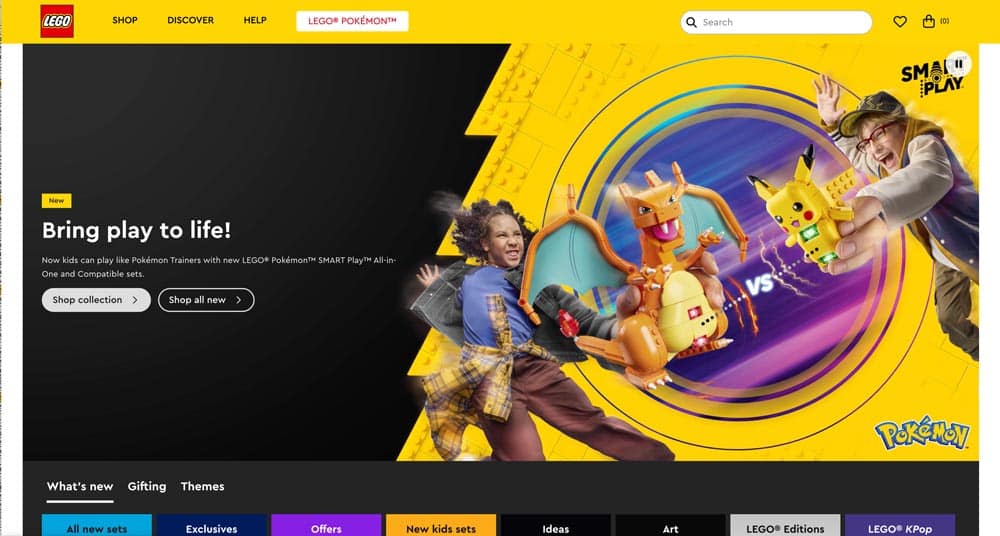
Make Something with LEGO
Resource
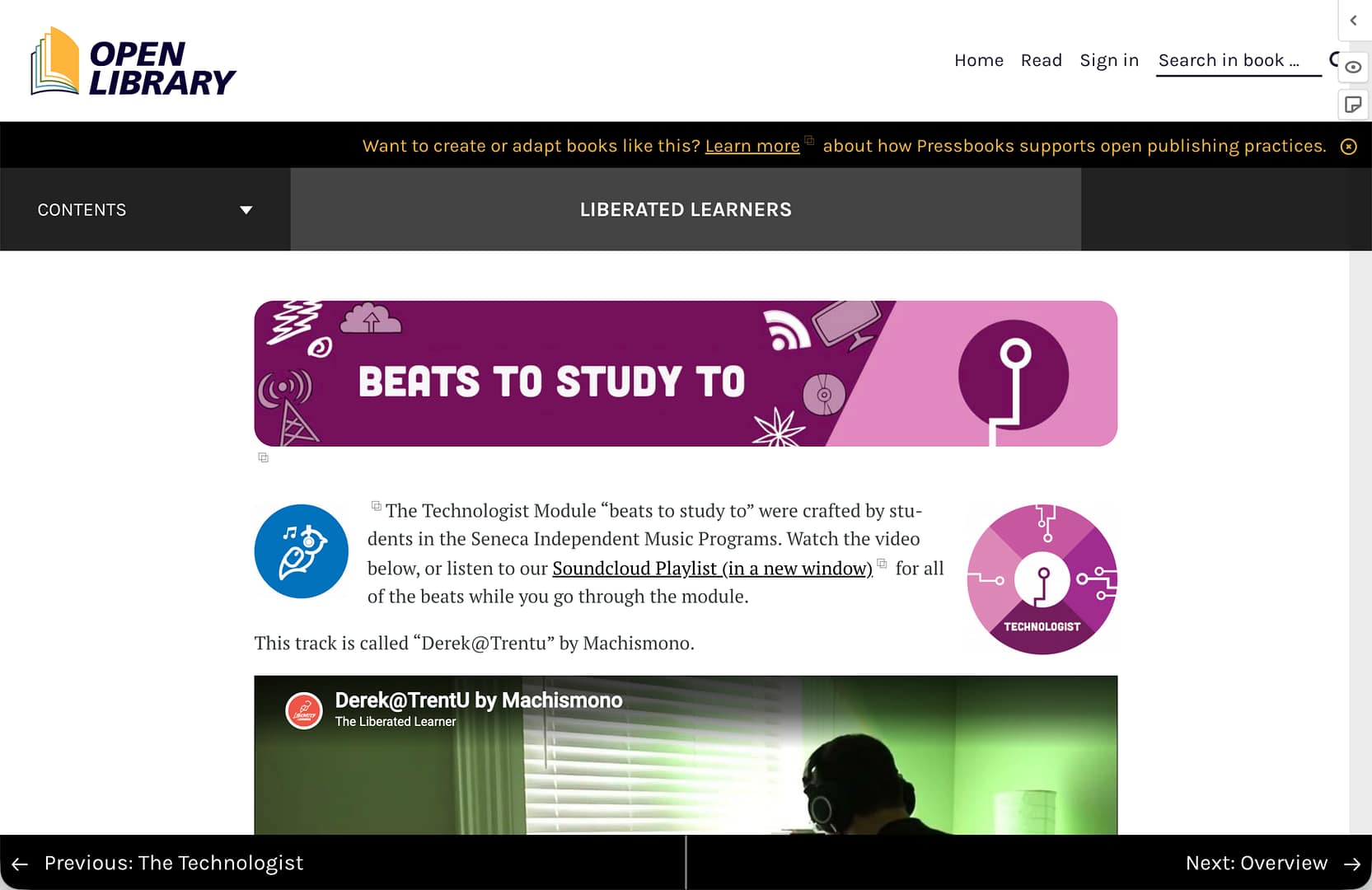
Beats to Study To

Video
#tresdancing
Resource
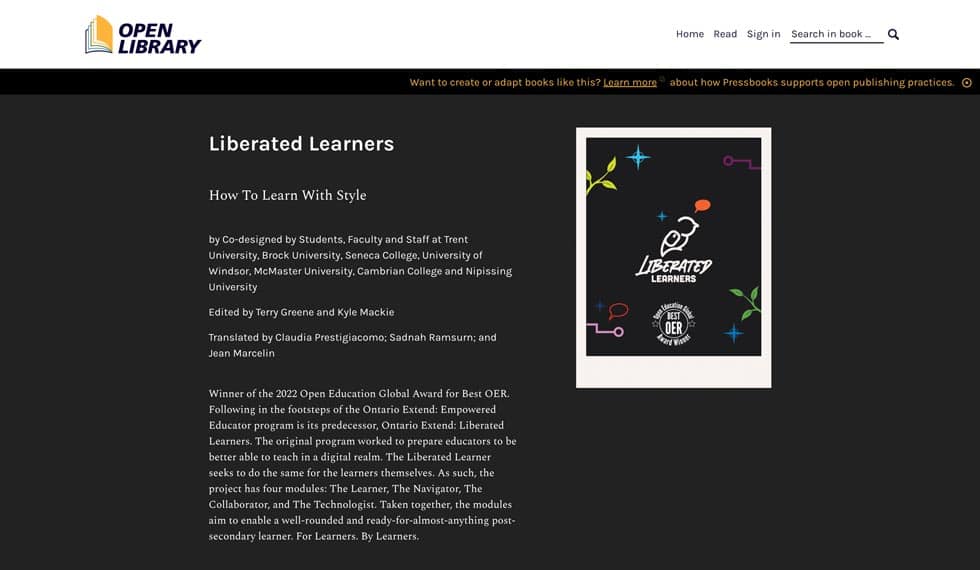
Liberated Learners
Transcript
[00:00:00] Bonni Stachowiak: Today on episode number 417 of the Teaching In Higher Ed Podcast, Terry Greene is back, this time to talk about Liberated Learners.
[00:00:12] Production Credit: Produced by Innovate Learning: Maximizing Human Potential.
[music]
[00:00:21] Bonni: Welcome to this episode of Teaching In Higher Ed, I’m Bonni Stachowiak and this is the space where we explore the art and science of being more effective at facilitating learning. We also share ways to improve our productivity approaches so we can have more peace in our lives and be even more present for our students.
Terry Greene is a senior e-learning designer at Trent University, he’s host of two podcasts Gettin’ Air: The Open Pedagogy Podcast and Check the O.L.: Liner Notes for Groundbreaking Online Learning co-hosted by Anne-Marie Scott. He holds a Bachelors in Elementary Education from the University of Alberta and a Master’s in Science and Instructional Design & Technology from the University of North Dakota.
He’s interested in both the cutting and trailing edges of uses for technology in education, especially those that increase the human element in technology-enabled learning. Hint hint. Those are probably the more open ones. Terry Greene, welcome back to Teaching In Higher Ed.
[00:01:41] Terry Greene: Thank you for having me. I’m very excited to be back.
[00:01:44] Bonni: I’m excited to have you here and since we last spoke, you have been embarking on quite a monumental project. Would you tell us a little bit of a background of what Liberated Learners is and then we’ll go back and revisit how it came to be?
[00:02:00] Terry: For sure. It’s an open educational resource that anyone can use. It’s called The Liberated Learner and we put the tagline as how to learn with style. Not as in we think learning styles are real but that you can learn with style and that if you take these four modules, it’s like preparation, like off-season training for learning in whatever program you’re heading into.
[00:02:28] Bonni: So you’ve told us a little bit about what it is and talked about students being involved, talk about then the origins of it? How was there a found need for this, and then how did you go about tackling it?
[00:02:41] Terry: The origin story, sorry, if it takes too long here. eCampus Ontario is an organization, nonprofit government organization that serves all of Ontario’s post-secondary indigenous institutions. So they get this funding to create things to help digital learning happen, and maybe five years ago now had created and started offering a thing called Ontario Extend: The Empowered Educator Framework.
I was seconded there and I was the program manager for that. I was not so much involved in the creation of the modules but the implementation and getting them out there. They were really successful in really– being a transformational experience for not huge numbers of educators in Ontario, but a really huge impact on the ones that really took it up. I always thought it was because of the– it’s a great framework, yes, and the activities come with so much heart and authenticity and it’s because as this organization that could bring in people to do work here and there.
They were able to find the best people to create these specific modules. The modules were just run through really quickly, the framework is to be a teacher for learning, obviously. A technologist, a collaborator, an experimenter, a scholar, and a curator, so that this fabulous librarian Peg French who did curator, Giulia Forsythe did two of them actually, the teacher for learning and the experimenter module. I’m going to forget who did the other ones. David Porter did the scholar one. They were the right people to be creating these activities, and they created these fantastic authentic activities that became this transformational experience with heart.
While I was there, the senior director at the time, Lena Patterson. Honestly, I don’t know if you like taking names of potential future guests, anybody I’ve just named would be just a fantastic guest.
[00:04:49] Bonni: I am taking notes and not just for the show notes. [chuckles] My ears are–
[00:04:52] Terry: Giulia Forsythe, David Poter, Lena. Anyway, so Lena Patterson at the time said, “Well, this should be a thing also for learners. There should be this but for learners,” and we’re like, “Hey, yes.” At the time, I had done the Open Faculty Patchbook and I was starting the Open Learner Patchbook, a similar idea of something that was originally designed for educators. “Oh hey, let’s make the learner version too.”
Now we can– sorry, fast forward a bit, I’m taking a long time here, to late 2020, months into the pandemic, eCampus Ontario gets a large amount of funding to make virtual learning strategy projects and they said, “Put out your proposals.” Immediately– I’m now no longer at eCampus Ontario now, I’m at Trent University but I’m like, “This is the chance to do Ontario Extend but for learners this time.”
So we wrote a proposal. We knew they always loved inter-institutional collaborations when you put in these proposals as it makes perfect sense so we gathered people from seven different institutions and people that I knew would have that proper amount of trust in students that we could do co-design properly with students and the trust would be there. So it’s Trent University, Brock University, University of Windsor, Seneca College, Cambrian College, McMaster University, and Nipissing University.
The people in there, again, you’ll hear names that would be fabulous guests, Dave Cormier, Giulia Forsythe, Jenni Hayman, Pat Maher, Heather Carroll, and Joanne Kehoe. All people who, like me, value open sharing, collaborating, and trust in students. And so we then were able to get the funding. So that was exciting to actually have a budget to do something like this for once and had a year to work together with students to co-design Ontario Extend. But for learners this time. It became Liberated Learners and it does say on the page Ontario Extend for Students.
Just anybody listening, I want you to know for sure, just in case you’re worried, it’s not just for people from Ontario, please. Ontario, California, there’s a town there called Ontario? Anyway, it’s an open resource, it’s just funded through eCampus Ontario, and it’s a follow-up to Ontario Extend. That’s why that’s there, but please feel free anyone anywhere to use it.
[00:07:32] Bonni: I’ve been thinking about this for a while now. There’s this expression that says you’re going down a rabbit trail, and I wish that because rabbit trails tend to have a negative connotation in my mind in that they were a bad thing that they go. I want there to be a positive way of framing the experience because I went down that, I did not– you’ve done so many amazing things, Terry, you’ve collaborated with such incredible people that anytime you even just dip your toe in, you’re just immersed in all these other things that you weren’t anticipating when I went there.
And so I got to do that a little bit yesterday as I was preparing to have this conversation with you and was not as familiar with some of these entities and how they fit together and was revisiting in other cases. Boy, that you were talking about some of the digital learning projects, and there– it’s just some incredible things that have both happened in the past and then– I think there are still some emerging, correct?
[00:08:26] Terry: Yes.
[00:08:27] Bonni: It was really, really fun. Can you think of something that’s a rabbit trail but– does a rabbit trail also have a bad connotation to you?
[00:08:34] Terry: Well, I think it can be. I guess yes, it does have a bad connotation because you’re maybe going hyper-focused into something but also it means you’re super engaged and you’re enthralled and like, “Hey, let’s follow this.” It’s good and bad I guess, let’s call it good today.
[00:08:49] Bonni: Where’s this going to go? The four places that we might go down rabbit trails in a good way, whatever this positive thing is, and anyone listening who can think of a positive thing, I would love to hear from you and I’m sure Terry would too. We’ve got four main modules. There’s the learner, the navigator, the collaborator, and the technologist and of course, there’s echoes from the initial project that you talked a little bit about. Tell us about if we were to go down our serendipitous route to check out some of the things in the learner, what are some of the highlights of what we might uncover there?
[00:09:21] Terry: Just before I– I would just want to say that these specific modules were– like I mentioned, all those institutions involved, they were developed separately together alongside each other by these institutional partnerships. So Trent and McMaster did collaborator, Brock and Seneca did technologist, and Nipissing and Cambridge did navigator but the learner module was Windsor itself.
They were all set up with all these great co-op students already working and Dave Cormier leading them and it was like, “Well, he’s been thinking about how learning- really happens for so long. He was the perfect person to be like, not a foil, but like every meeting be like, “What are we even doing here? Do we want to like get the real stuff? Or do we want to just–” Even his students said, “When we meet Terry, does he want to hear what we think he wants to hear? Or does he want to hear the truth?” Dave is straightforward. Yes, tell him the real stuff, like we want the real stuff that students would actually engage with. Let’s do it.
And so what they came up with, instead of what you might think is in the learner module, are talking about things in there like the game of school, how to game, like, “Am I motivated with marks? Am I motivated to actually learn? Am I motivated to just get through this?’ You pick your battles. That’s your choice. This is where you get your motivation. This is how you get engaged. This is how you get through struggles. The real stuff, we hope.
[00:11:00] Bonni: Yes, and we could try to pretend that it is not so many times a game, but it is in fact. [laughs] Quite literally.
[00:11:07] Terry: And it’s a different game with every course, every instructor, every this, every that.
[00:11:13] Bonni: Yes, I found that to be so helpful with students when they are experiencing some kinds of challenges. Maybe there is some still glimmer within them that they want to take school for learning’s sake, but they’re just not in a season of their life where they can. I actually have encouraged, especially in recent years, encouraged them to be like, “I know that you really want to experience this in deep and enriching ways. Can we back away from that and look at it like it was truly a transactional thing, which is not what either of us really wants us to be but let me help you find a way?”
[00:11:42] Terry: Sometimes it’s got to be. Yes.
[00:11:43] Bonni: Yes, and sometimes they haven’t really thought about looking at it that way either. Something as seemingly evident as well, if you were missing a bunch of assignments, how about looking at the one with the most points? Instead of going chronologically? Unless they rely on each other, those kinds of things. Yes, all fascinating. Then tell us a little bit about the navigator? Before you share that with– we want to mention that we have been doing some work at my university around what’s called community cultural wealth, which is a framework by a researcher, it was coined by Yosso.
This idea of being able to navigate is something that has shown up in our student feedback as something that they struggle with the most at our university. So I’m interested to hear a little bit about what advice is given and what we might uncover if we go to check out the navigator module.
[00:12:33] Terry: Yes, it hopefully is exactly what we’re describing, like every institution you’re in is going to have different pathways to services and supports and managing your life there while you’re there. So there’s sections on finding the supports, managing your workload, and your timelines, and accessing all kinds of things. We had to keep it succinct-ish. So there could be more, and there could be more, and there could be more. I think we cut a couple of sections out because it was–
The navigator module, when we compare to the original Extend, is doing triple duty being the one that collects the other ones. Because this is only four modules this time instead of six. Yes, they did a fantastic job. There’s some really– I’m getting into the weeds here a bit, but– and this was Sarah Wendorf at Cambrian was the Lead Instructional Designer on it and Heather Carroll at Nipissing. And the students, the work they did. Magnificent use of the documentation tool from H5P, which sounds like the most boring thing on earth.
But it’s so cool and they did it so perfectly. I guess I’m trying to point out that this collaboration, brought out, I think, the best in so many people, by just the way we were working together. So I think it was just great. I got lost there but I just want to say I think it’s really great.
[00:14:04] Bonni: Now you got lost there and I want to keep you there for just a little minute. For listeners who may not be familiar with H5P, you can think of it as a set of tools to allow you to build content for the web, and they’re interactive tools. I know just enough to be dangerous with it. Terry, I know I’ve accessed some content that is H5P. It’s going to let me drag and drop and all that. I don’t know what the documentation tool from H5P is and what was their unique use of it. So I’m curious of what was it that surprised you or delighted you about their particular use of that documentation tool?
[00:14:39] Terry: A very simple use of H5P is that if you have your course page in your LMS and you have a bunch of content or reading, reading, reading, you can create a little piece of an H5P thing which just gives you a little bit of code. You just have to copy it, you don’t know how to make it, that will pop an interactive multiple-choice question right there. Rather than I’ll have to open a quiz, 18 clicks later. Then you get your answer, you get your feedback. Unless your institution has paid for it, it doesn’t give any marks to a gradebook, or anything, but it does make it interactive.
This whole project is a Pressbook, which is an open web page ebook kind of thing. But throughout, there’s all kinds of use of H5P to make something that might be boring text, read, read, read, read, read into an interactive thing. The documentation tool, simply you read through something, and you have some instructions on how to create your own little set of goals or your schedule, a workload idea, just boxes, fill out your answer to this, fill out your answer to this, fill out your answer to this, press export, and it turns it all into a schedule or a timeline or a set of goals that you download as a Word document, and you keep.
Then you could submit it to Dropbox if it’s an assignment for your course, or it’s just something to keep it. It becomes a real, authentic thing you’ve produced right there in the midst of the ebook, it’s really cool.
[00:16:16] Bonni: Oh, I’m so glad that we went down this particular rabbit trail. [laughs] So thank you. Thank you for sharing that, I think so often about– and from the time that I spent engaging in the various modules, it really does feel like we’re having a conversation. I felt very present and engaged. Part of that is that– it’s not like– I think you talked about earlier, when you were describing this project, you mentioned the word heart?
[00:16:43] Terry: Yes.
[00:16:43] Bonni: Because I think there are ways where we don’t have a heart as an instructional designer to think about the other person on the other side of this, it can really seem very rote and transactional. You don’t have that same feeling of presence that I really– it really does come across in every aspect of the project that I’ve looked at so far. Now it’s really fun. It’s also reminding me too, Terry, of just you can have a tool that can do things, but then somebody has a heart and a mind, and then what they’re able to create from it can be.
[00:17:16] Terry: The use of it, yes.
[00:17:17] Bonni: Yes, it’s really, really cool. All right, let’s do the next one here. How about the collaborator?
[00:17:23] Terry: The collaborator, I was personally the project lead, but also on the collaborator team, because Trent and McMaster worked on this one. In the original, there’s a collaborative module from the original Extend, it was about– a lot of use of Twitter, but about developing your professional learning network. We wanted networking to be a part of this too but we were taking a few steps back. We took the opportunity to just help you get ready to collaborate, get in the right headspace for it because a lot of people hate group work. I did too.
But when it’s on, it’s so fantastic. This whole project was a great collaboration. So if you are ready, and then prepared to collaborate, you’re also going to be prepared to self-advocate, and be an ally. If you can advocate for yourself and others, you can collaborate and network and build connections. So we walked people through it that way. You do pretty interesting activities, I think, really authentic ones like build an identity tree, an empathy map, you think about your positionality and I think in the end, you work on a bit of a way to approach finding yourself a mentor and being a mentor as well. Just a lot of steps towards being someone who works well with others. Which is scary, but also so rewarding in the end.
[00:18:57] Bonni: I have noticed in terms of different kinds of collaborative projects that I have worked on, whether that’s through a class type of a structure or context or with colleagues, they’re sort of– I don’t know if it’s a spectrum, that may not be the right analogy for me to be using in my mind, but they’re sort of the everything from the “We have to print it out on paper,” to write down our feedback kind of thing too.
Now we’re emailing each other versions but then you don’t know which version it is and then somebody discovers track changes and they think that’s going to be landing you in a good place and I find so many times just this tension to go, “We don’t need the track changes. I trust you. Just make the change. I don’t need to go back because it–” I think it’s sort of a mindset of when you’re able to either suppress or perhaps even [chuckles] adjust your sense of ego where, “We are riding together,” “We are collaborating.” Then it doesn’t have to be that, “I own this thing.”
Because that’s oftentimes in academic spaces where it’s like, “Oh, I was afraid I might offend you. So I just wanted to see if you were okay with this.” I just think, especially at different phases of a project, it doesn’t really matter if I’m okay, we could play and we could experiment with this, but there’s that kind of rigidity. That’s how I experience it sometimes, of track changes ends up being more of a restrained thing during a process that doesn’t need restraint at that particular moment.
Yes, later in an editing process, sure, but early on, I think sometimes we’re just so tied to,”That is their words, their stuff versus our words, our stuff.” Did you encounter that at all in terms of your collaboration either on this project or just do you have any thoughts around what I just mentioned about collaboration?
[00:20:49] Terry: Yes. I think it’s phases. We let the module teams do their thing and then was given a final– I think it was passing it along to someone with their hooks into it less to do a review and others letting go, “Okay, yes, we gave you it and the evaluator will cut if they want to. We’re just in it for a great final product.” I think that was the feeling around the campfire thing. So it was a bit of an organic– I didn’t properly project manage this thing using any proper tool but leading by example and just always cooperate, not cooperating but communicating.
We were using Google Docs before moving to Pressbooks. So it was less worrying about track changes kind of thing and more just get in there and type your spot and move things around. But yes, there was, I think, less worry about stepping over each other’s toes than maybe what you were alluding to, I think.
[00:22:01] Bonni: We recently had some student interns working on some data analysis for us and they instantly gravitated toward Google Sheets, which I do a lot in Google Docs, but hadn’t really played with Google Sheets hardly at all. They created these amazing things, but it was one of those things where just for our purposes, we needed to get us back into Excel, which– good news by the way, it exported perfectly. So we were able to pick right up but I do think there’s just that flavor of the instantaneousness that can come around some of these Google platforms.
Certainly, there are downsides, but just in terms of I can tell when somebody’s there, whether they’re logged in or whether it’s an anonymous hedgehog or something like that, that really can create some of the elements that we’re talking about here, that what is emerging in this moment that some of the other tools just can’t do. Well, speaking of the technology tools, tell us a little bit then about the technologist and what emerges for us there?
[00:22:58] Terry: This was Seneca College and Brock University. They were great because they were a little more focused than the others, I think. I definitely need to jump back at some point to tell you about the “wicked problems” stories, and how that all came and fed everything. They really focused on– we’re hiring our student co-designers in the summer. This was last summer and they work just in the summer. So they’re going to get it done and they did. They were the trailblazers of making a module and what it would look like in the Google Docs.
And then they were gone, but it gave me the opportunity to be like, “Okay, give me those, and I will build this one out in Pressbooks to have a prototype for others to look at.” They nailed it down fairly quickly that– don’t want to be focusing on any specific tools or anything, we just want you to be prepared to respond to things with a little more flare technologically.
As an instructor, you hear about universal design for learning, and you’d love to give students the option to respond with multiple ways of showing their work. But then as an instructor, you’re probably like, “Well, I have no idea how to help them create videos or podcasts or other types of things, infographics.” I’d love for them to be able to do it, but I just can’t help because I can’t right now. This module prepares students with a basic level of technological fluency, but then also how to podcast, how to do some graphic design, how to create videos.
So now a student having done this maybe before they come into a course can be like, “Oh, hey, I have this option this time to answer– not do an essay for once. I’m going to do a video and I have the chops now and I can go back and revisit these things.” So I think it’s that off-season training for learning kind of idea. Again, “I’m a little bit more ready to do this.” That was the hope behind the technology module technologist.
[00:25:12] Bonni: I want to pick up on the theme when you talked about prototyping for others to look at and just encourage that whether or not we were talking about students or anyone else, how helpful that can be in a project. I think sometimes we might assume that blank slates are the ideal when working with a project like this, but especially across different people, let alone across different institutions, having a model, something that we can look at as a prototype both to then say, “No, let’s tweak this a little bit.” “Let’s get it into this thing and start to bend it a little bit,” but then to be able to have it where other people can look to that so that there’s some more unifying voice I think can be so terribly helpful.
I’ve never worked on anything quite as grand as what you’re describing here, but some of the smaller projects I’ve been able to work at especially collaborating with students and getting them the sense of group work and all of that, building up some good skills and norms and all of that. Having those prototypes can be incredibly helpful. It was something when we wrote in a series of open textbooks across years with some doctoral students having the sample chapter. That kind of thing. In, I think, every case Terry, it wasn’t the first chapter of the book.
So don’t be thinking in a linear way, but like, “Oh, this one back here,” I’ve got some experts, and in your case, you had some limiting factors as far as when these particular writers and creators were available. So let’s pick that one to be the first one even though it doesn’t show up first in the particular project. Tell us about the “wicked problem” stories, I want to hear more about that then?
[00:26:41] Terry: Right from the get-go, we were like, “Okay, we’re these open collaborative salaried type people, but we want this to be for learners by learners.” So right from the proposal on down is, this is co-designed with students and we have all this funding. We want to get money into students’ pockets to do this work with us. So student co-designers were hired at all institutions and we started to talk about, “How are we going to do this?” “Where are we going to– “How are we going to pick what’s in it?” This, that, and the other and the co-op students at Windsor, the ones that went to Dave, like, “Hey, can we tell this Terry guy the truth or just what he wants to hear?”
I wish Dave said what I want to hear because I want to hear what I want to hear, but they gave me the truth. They came up with the idea of, we need to know the real stories of the real problems students are really facing and build the content from there. How about we ask them to tell us the stories of a wicked problem that they’ve faced and whether or not they solved it or not, ideas for how to work around it, and those stories can feed the content.
So last June, almost a year ago, we ran a design sprint saying, “We’ll pay you an honorarium to come and spend every lunchtime with us for a week and you got to tell us your story of a wicked problem you faced and how you got around it. We’ll take those stories and use them to make this resource.” All these modules just have names, they have no specific content in them yet.
I think a powerful thing of this design sprint was how we ran it as in, yes, I did an overview at the start saying, “Yes, I’m senior E-learning designer.” I’m a formal type person here. “Here’s what we’re doing. Here’s where the funding’s coming from. Here’s what we’re asking of you. Good luck,” and then got out of the way. Those student co-designers, so it was Dana Jamaleddine, Asa Reynolds from Trent, Krisha Amin from Seneca, and Rana Kilani from Windsor. These four each went to a breakout room and led like, “Hey, I’m the technologist room, come tell me your stories about technology.” “Hey, I’m the learner room, come tell–”
It was none of us older salaried types in these rooms to make them think we want to just hear what they think we want to hear kind of thing. So they would tell fellow students the true stories much more than what they think. That was where the authentic stuff came from. They had the Tuesday, Wednesday, Thursday lunchtimes to come and practice telling their stories, but then they had a week or two to write them down and get them into us. Then each of the institutions had a look, there was 120 stories.
We collected them all onto a website, the wicked problems website using an Alan Levine SPLOT, which I think he’s talked to you about recently. So they’re all there on this separate site, all the stories, but they feed all the content of the learner module, the technologist module, the collaborator module, and each module itself kicks off with a couple of things, but there’s always a wicked problem story that exemplifies some of the things we’re about to get into. By reading through them all, the student co-designers found the key ones and the supporting ones and drew out–
We need to talk about positionality, we need to talk about allyship, we need to talk about time management. That’s where everything came from, real wicked problems and not lists of 10 things of how to do group work that we might have thought we should have it included in there.
[00:30:35] Bonni: I know that the phrase “wicked problems” can take on a lot of different slices in terms of, I know that there’s a whole body of research around wicked problems in the world, or within countries or economies, that kind of thing. Did you have a shared definition for what constitutes a wicked enough problem to have it be a wicked problem? Did you have to define the term or was it just more whatever comes to mind?
[00:30:59] Terry: Yes. Whatever came to mind and the idea of the Tuesday, Wednesday, Thursday, get-togethers for that one-week design sprint was to hear each other’s stories. I think that helped others spark, “Oh, yes. “Oh, I have something like that.” Or “No, this just gave me the idea.” It was practicing telling it, but also listening to others and honing it in. Some– all the stories came in through this form where we asked four questions and some of them were pretty– hoping they could just write three words down and slip through and we pay them.
That was just a couple, but definitely a wide range of wickedness, let alone verbosity, verboseness, whatever the actual word should be there. So varying quality of responses, but absolutely a wonderful collection of stories.
[00:31:52] Bonni: Do you remember what the four questions were by chance? Or the theme that they took on?
[00:31:56] Terry: Just the gist of it was, describe your wicked problem, tell the story, and then tell us how you solved it/tried to solve it/advice for working around this problem, final thoughts, like Jerry Springer’s last thoughts and then just help us to categorize this by telling us which module you think it fits best in, or however you would hashtag it if you were to be sharing this kind of thing.
[00:32:25] Bonni: The reason I ask, I have two things that are coming to my mind right now. One is that recently at our institution, they changed our governance a little bit and so there’s some faculty reps that work with our board of trustees and cabinet members, et cetera. They had come up with this list and they were referring to this set of professional development funds and saying that it wasn’t efficient, so I ended up after some time, I didn’t want to seem like I was being defensive, but I literally was like, “I can’t think of a way it could be more efficient.”
Literally, we had been– because I loved geeking out with the technology. We had used this whole thing. We went from being paper-based where they used to have to go around to get their chair’s signature, to using a whole workflow inside of Microsoft Teams and they fill out a form and it does all these other– literally, we were turning these things around in record-breaking speed.
So it was like, “I could try to get five minutes faster but I just don’t think that’s really what you meant.” And so I think if we had had these kinds of questions around, because sometimes you see a problem and you go, “Oh, I could fix that easy,” without having some more of that depth of the background. It reminds me a little bit of– I know in software, they do this a lot and one of the applications I’m having tons of fun with and they just keep getting better is this agenda app, it’s only on Mac, by the way. Sorry, friends.
I have got to stop. I’ve been doing that on recent episodes, but anyway, if you ever report a ticket in their help desk, it’ll be like, “This is what happened.” Then it’ll say, “This is what I expected to have happen.” I forgot what the other things are, but literally, you fill that out. They must– I wish every help desk did this because the difference between this is what happened and this is what I expected to happen is pretty key.
[00:34:11] Terry: It’s pretty key, yes.
[00:34:11] Bonni: Pretty key and pretty monumental. I am going to transition this now into recommendations, but that’s a little bit because I want to first recommend the Liberated Learners open textbook that people go in and go down some of these tremendously wonderful rabbit trails that you can only imagine, I think from listening to today’s conversations. So I’m going to recommend that first off and closely related, I don’t believe I have recommended before Pressbooks as a platform, but as you were describing all of these things and as I was getting to play in preparing for today’s episode, it really does bend your mind in terms of what’s possible in a book when it becomes digital.
Some of the ways that Terry and I are talking about, so Pressbooks is pretty amazing. I’ve been using it for years and years now. If you just wanted to do something as simple as self-publish your book of poetry or whatever, and have that for sale as an e-book and even as a printed book, by the way, Pressbooks really has you covered there integrating with different services that would print it for you, all these kinds of things, but it also can have these kinds of interactive elements. It can have the HP5 modules or assets that Terry was talking about earlier. There’s all kinds of things. It’s also really easy to use, so if you’ve ever built any kind of web content, it’s not hard.
If– any parts where it is at all unfamiliar to you, they have amazing documentation that every time I’ve ever gotten myself stuck, I’ve been able to get unstuck without even having to contact someone there so it’s wonderful. My last recommendation, it has nothing to do with Liberated Learners. Although maybe it does, Terry, with Pressbooks and it is to Make Something with LEGO.
Today, we’ve been talking a lot about problems and design sprints and all of these things and I had a big problem in my life, which is that our kids had given me those little Lego minifigs, little figures of people and I actually had made one of myself at a podcasting conference that is supposed to be me. I picked out the head and the hair and the body and I have a little podcasting microphone and they sat always so I wanted to see them every day at my desk and they sat on this little ledge. So they were within my line of sight every time I’m working at my computer and it just reminded me of my kids and all of that.
They got knocked over super, super easy. And so over this past weekend, I completely went very hyper-focused on cord management at my desk. So I labeled all the cords and I had everything. Now it’s going to be so much easier to dust and all of those good things which we should do once a year, whether we need it or not in our offices but I ended up still with these little Lego minifigs, which just weren’t there. We ended up going as a family to a park and I took a big box of just random Lego pieces and I ended up building a structure that fits right over the lip of my desk.
Then it holds the three Lego minifigs that I wanted to have a holder, but it also is now a platform for this little light switch, a LED dimer light switch thing that I had. It brought me so much delight because it was just getting to tap into my inner child and do that at a park outside, which was super, super fun. Then now literally, every single time I’m at my desk, we’ve got the perfect little holder for my switch. I will, by the way, I’ll put a picture of this particular creation in with a recommendation so you can see it and maybe get a little bit of inspiration.
If anybody gets inspired to build something with Lego that has a practical feel to it, or even if it’s impractical, I’d love to see pictures of your Lego creations if anybody does something or has done something in the past. It would be super fun to see. It was great. Those are my three recommendations and now I’m going to pass it over to you for yours, Terry.
[00:38:09] Terry: Now, I want to go build some Lego right now.
[00:38:11] Bonni: It was really fun. It was really fun. [chuckles]
[00:38:14] Terry: It’s like a two-part. I want to make sure to recommend another part of the Liberated Learner that we didn’t touch on. It’s the icing on the cake, was that as we were in the thick of things singing– we’re getting funding from Ontario Government to make something for Ontario post-secondary students, but we were allowed to make it an open resource, which is absolutely fantastic. This is supposed to be for Ontario learners by Ontario learners and they’re learning how to learn.
There’s this trend out there for chill beats to study to. Like if you look up Lofi hip hop radio, there’s just no lyrics music to listen to while you study, and so we thought, “Let’s have some of those for ourselves.” So we contacted at Seneca College one of the partner institutions had these independent music production program, songwriting, and production. I contacted the coordinator and said, “Do you think any of your students would be interested in an honorarium to make some chill beats to study to?” The very Ontario students, some of them that were aiming to help creating like a soundscape for a course, and a bunch of students were interested, we got eight tracks.
So there’s a Liberated Learners beats to study to playlist that you can listen to on SoundCloud or that we made videos for them, just an homage to that Lofi hip hop girl radio station. They came back with such good beats. I listened to them myself over and over as I did much of the editing of the Pressbook itself to finish it off and they’re great. They’re really great, so I recommend please checking those out. Then this also made me think of my real recommendation of something that I have nothing to do with. It’s the Screening Surveillance film series, specifically the most recent one called Tresdancing. It’s a film, a short film, it’s supposed to be near-future fiction but it doesn’t feel so much like fiction because it hits close to home and it’s to do with high surveillance types of technology in education, and it’s a 20-minute fantastic film. If you’re into that, there are three older ones that are also fantastic.
It’s a project by Sava Saheli Singh, and the films are fantastic but also it just reminded me a bit of things to do with Liberty Learner because she went and found student actors and dancers and musicians and local– the local stuff right here. “Let’s make it for ourselves” that I thought fit– is lateral to the co-design of the Liberated Learner. Please go check out Tresdancing because not enough people have seen it. So many people should see it. It’s only 20 minutes. You’d need to watch it.
[00:41:17] Bonni: I have seen one or two of her former films but I need to revisit them because they’re that good, that as soon as you said her name I was, Oh gosh, I need to go back and look” but I’ve not even heard of this one so I’m so glad we get to–
[00:41:30] Terry: Yes. Well, it’s only a couple of months old.
[00:41:32] Bonni: Okay.
[00:41:33] Terry: It’s called Tresdancing and I do know Sava loves talking to classes about it, so anyone interested in checking it out and maybe thinking of screening it in your courses or anything, she would be I’m sure, interested in coming and talking to your class too.
[00:41:52] Bonni: Oh wonderful. Well, Terry Greene, it is so great to be able to have this conversation with you. I feel like you and I are in conversation pretty regularly but it’s not enough on this show. So thank you so much for coming back for today’s episode and for the future ones as well because I’m just glad that we’re connected and able to be able to learn from one another so often. I’m just grateful for your friendship and for your contributions to Open Learning.
[00:42:16] Terry: Oh, it’s an honor and a privilege to come on the show. I appreciate the opportunity. Thank you.
[00:42:25] Bonni: Thanks once again to Terry Greene for being a guest on today’s episode. Today’s episode was produced by me, Bonni Stachowiak and was edited by the ever talented Andrew Kroger. Podcast production support was provided by Sierra Smith, a teacher who just happens to still have enough time to engage in this side gig for Innovate Learning. These podcast episodes are just one Teaching in Higher Ed resource.
If you’d to receive the weekly email update, subscribe at teachinginhighered.com/subscribe. You’ll get the show notes for the past episode, a little preview for the future upcoming episode along with lots of other resources and recommendations. Thanks for listening to Teaching in Higher Ed and I’ll see you next time.
[music]
[00:43:27] [END OF AUDIO]
The transcript of this episode has been made possible through a financial contribution by the Association of College and University Educators (ACUE). ACUE is on a mission to ensure student success through quality instruction. In partnership with institutions of higher education nationwide, ACUE supports and credentials faculty members in the use of evidence-based teaching practices that drive student engagement, retention, and learning.
Teaching in Higher Ed transcripts are created using a combination of an automated transcription service and human beings. This text likely will not represent the precise, word-for-word conversation that was had. The accuracy of the transcripts will vary. The authoritative record of the Teaching in Higher Ed podcasts is contained in the audio file.