Follow the Teaching in Higher Ed Podcast
About this Episode
Rebecca Pope-Ruark talks about her book, Unraveling Faculty Burnout, on episode 408 of the Teaching in Higher Ed podcast.
Burnout is not something we talk about in higher education.
Rebecca Pope-Ruark
On episode 408 of Teaching in Higher Ed
Voices on this Episode


Show Notes + Resources
- Unraveling Faculty Burnout: Pathways to Reckoning and Renewal, by Rebecca Pope-Ruark
- Agile Faculty: Practical Strategies for Managing Research, Service, and Teaching, by Rebecca Pope-Ruark
- Beating Pandemic Burnout, by Rebecca Pope-Ruark
- World Health Organization’s definition of burnout
- Episode 219 with Rebecca Pope-Ruark on Agile Faculty
Recommendations from this Episode

Idea
Use the send-later feature
Book
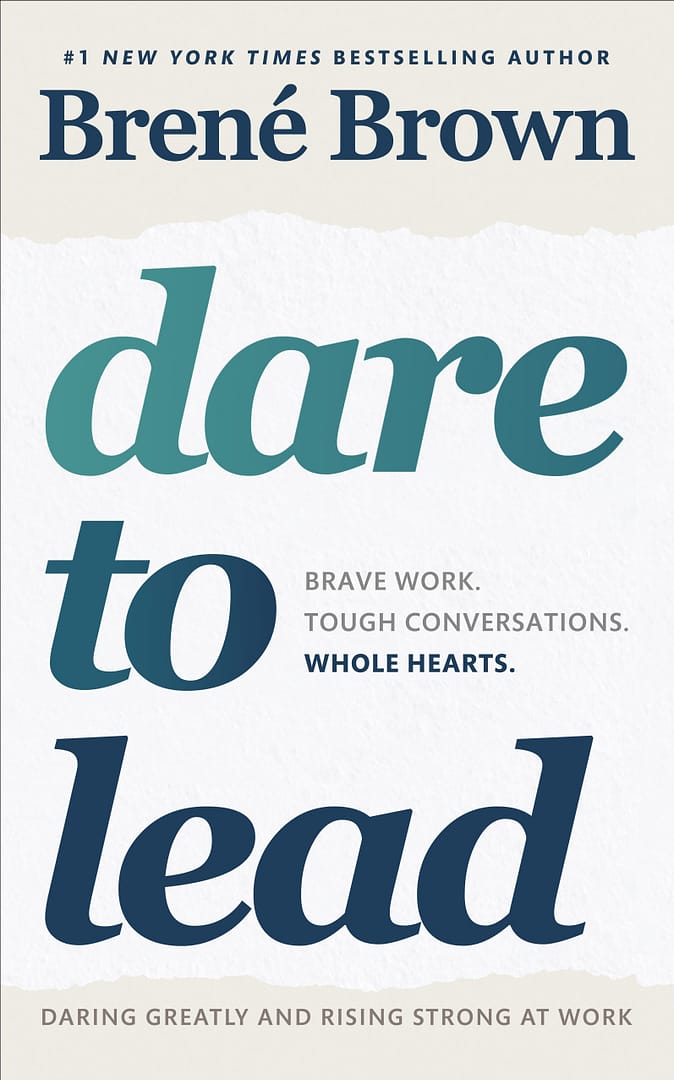
Dare to Lead: Brave Work. Tough Conversations. Whole Hearts. by Brené Brown
Book
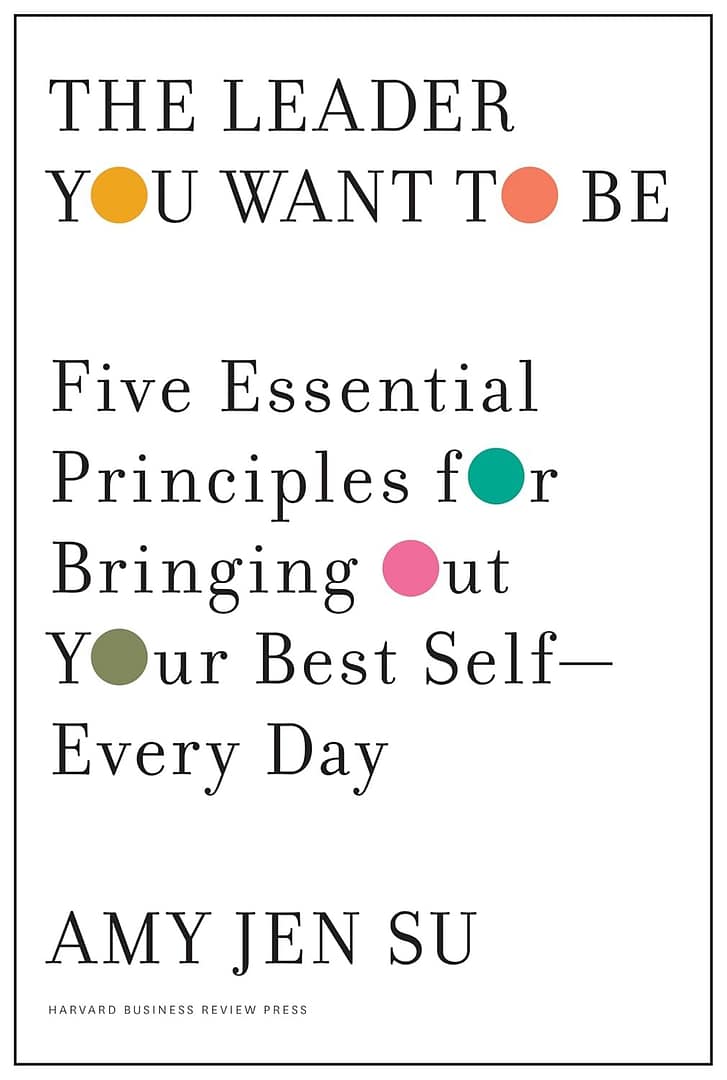
The Leader You Want to Be: Five Essential Principles for Bringing Out Your Best Self–Every Day by Amy Jen Su
Podcast
It’s ok to not be passionate about your job, by Ruth Tam and Sylvia Douglis

Idea
Create a barrier to accessing your work email
Book
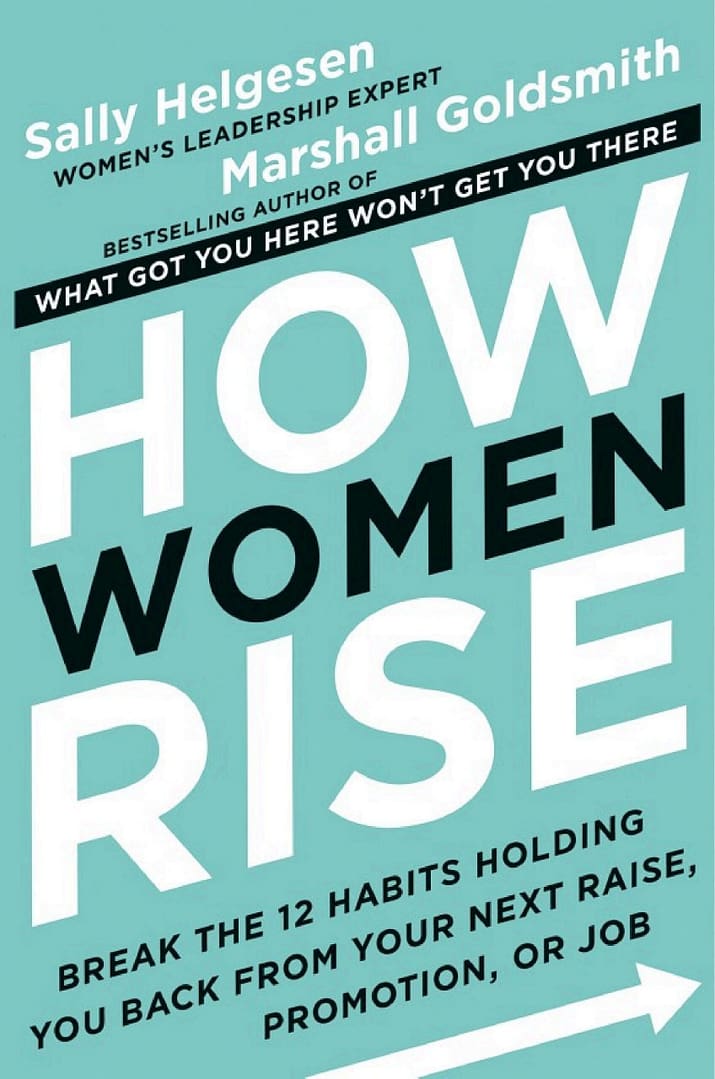
How Women Rise: Break the 12 Habits Holding You Back from Your Next Raise, Promotion, or Job by Marshall Goldsmith & Sally Helgesen
Transcript
[00:00:00] Bonni Stachowiak: Today on Episode number 408 of the Teaching in Higher Ed podcast, I welcome back to the show Rebecca Pope-Ruark to talk about Unraveling Faculty Burnout.
[music]
[00:00:14] Production Credit: Produced by Innovate Learning, maximizing human potential.
[music]
[00:00:23] Bonni: Welcome to this episode of Teaching in Higher Ed. I’m Bonni Stachowiak, and this is the space where we explore the art and science of being more effective at facilitating learning. We also share ways to improve our productivity approaches so we can have more peace in our lives and be even more present for our students.
Today’s guest is Dr. Rebecca Pope-Ruark. She is an Educational Developer, Values and Writing Coach, Burnout Workshop Facilitator, and writer of books. She believes that personal well-being and professional vitality is more important than productivity, but also, that creating our most meaningful work and connecting with others keeps us vital. Rebecca, welcome back to Teaching in Higher Ed.
[00:01:22] Dr. Rebecca Pope-Ruark: Thanks for having me, Bonni. It’s great to see you.
[00:01:24] Bonni: I always enjoy a good conversation with you, and the most recent one I got to have was in reading your book. To start this conversation, I would love to hear you talk a little bit about when you first heard the word “burnout” to describe what it was you were experiencing.
[00:01:42] Dr. Pope-Ruark: Yes, and I talk about this in the book, at the beginning. It was a therapy moment, honestly. I finally decided or was slightly encouraged by my husband, at a point, that I really needed to talk to someone to deal with some of the things that I was going through.
At that time, I was feeling very, not productive. I was feeling very shameful about not wanting to be on campus, not liking my students, not liking them at all, let alone be able to teach them. I was having all of these depressive episodes, panic attacks, so my husband and my general practitioner encouraged me to go to therapy, and it was something that I needed to do.
It was there where– I did the rookie mistake of walking into therapy and saying, “I don’t have time for feelings, I just need to be able to work more. Give me back my focus, get me back my energy, and I’ll be fine.
I have a lot of stuff that I have to do, I need to get into it.” Of course, I listed all the things that I couldn’t possibly give to anyone else that I had to do. At one point, she just looked at me, and she said, “You know what? You don’t need to work anymore. You have burnout, and if you don’t really seriously consider what’s happening to you right now, you might not come back from it.” At that point, she really asked me, “How long have you been unhappy at your job?” And I just blurted out, “Seven years.”
I hadn’t thought about it, and it pulled me up short, like, “Really? Have I been unhappy for that long? Something needs to change. I need to figure out what’s going on here so that I can be happy again, that I can be fulfilled again, but also figure out what really is going to help me do that in my life,” because work wasn’t doing it anymore.
[00:03:19] Bonni: Who is RPR and why was she important for you to have uncovered?
[00:03:26] Dr. Pope-Ruark: “RPR” is my academic alter ego. My name is long and students misspell it in a myriad of different ways, so some of my students just started calling me RPR after my initials, and it just stuck. It stuck for a long time. My friends would call me RPR. I still get called RPR sometimes just because it’s easier to say than my full name. RPR became a suit of armor for me.
I clearly felt that I wasn’t feeling fulfilled in the work that I was doing, but I was also actively pushing against the type of work that I was doing. Things that I had loved in the past, things I had started. I was working on a very innovative design thinking pedagogy program with several of my colleagues, and we had poured our hearts and souls into it. When we actually ran it as a course, it was a very intense experience and not really a pleasurable professional experience, so that impacted me in a lot of ways.
RPR really was this hard shell that I could put on where I didn’t have many emotions, I was just almost an android. I was the academic android of productivity. All I wanted to do was write the next article, get the next student evaluation, get myself a chairship or a director role somehow because that was the next level, I thought, on the ladder that I was supposed to be climbing. RPR really was the part of me that kept me going for longer than I probably should have been going, at the pace that I was going.
[00:05:05] Bonni: One of the things that you write about and speak about on your podcast is just this idea, then, of one of the coping mechanisms being detachment. Would you talk a little bit about that detachment as a means of coping? [chuckles] I’m going to say this, Rebecca, hoping that you’re going to give me the answer I’m going to want to hear, this is totally a loaded question. Is detachment always a bad thing? I’m going to need you to say no to that, by the way.
[laughter]
[00:05:37] Dr. Pope-Ruark: I would say no when it’s a boundary, detachment. Boundaries are good, yes.
[00:05:43] Bonni: Good. I’m feeling better now, I’m going to ease into your answer.
[00:05:46] Dr. Pope-Ruark: Boundaries are good. The World Health Organization defines burnout as a syndrome characterized by unmanageable stress, specifically in a workplace environment. They say that there are three characteristics to that. The first one is exhaustion, and that can be emotional, mental, physical, all kinds of exhaustion. The third one is a feeling of lack of efficacy. You don’t see what the point of your work is anymore or, why are you doing it? Why are you bothering? That second characteristic is detachment, sometimes called “depersonalization.” It’s essentially a pulling back, right?
For me, I was really a teacher’s teacher. I loved being in the classroom, I loved working with students. I was really involved in student organizations, always on campus for students. Over time, I found myself really being judgmental of students for the first time, really very judgmental. Not really seeing them as individuals, seeing them as this kind of posse that was always out to get me, in a way, so I pulled back. I was pulling back as far as I possibly could from their needs and from their emotions, which was not a place that I had ever really been before. I had always been so student-centered.
That sense of detachment really is, “I’m pulling back from the people I care for.” We see it a lot in the caregiver literature for social workers and healthcare professionals, teachers specifically. We give so much of ourselves in these caring professions because we love the people that we work with, and we want them to succeed and we want them to thrive, but when we start feeling those feelings of detachment and pulling back, that can be a cue that there might be something going on at a higher level, that you might want to check out.
[00:07:27] Bonni: It’s really helpful to me. I think that I was feeling a little bit of I think you’ve helped me discover something about my own work and means of coping myself, in that I think what I have been doing a little bit better, as we moved into 2022, on this seemingly never-ending pandemic, was to be better at setting boundaries.
As in, to engage and share my perspectives because I am in a number of roles where giving up and having apathy and not sharing my perspectives isn’t helpful, but clinging on to them after they’ve been shared, that’s not been a very helpful coping thing.
I think what I actually have been doing is boundaries versus detachment because in reading the book, I thought, “Oh, no. Oh, no.” [chuckles] I started to have a little bit of alarm bells because I haven’t necessarily had that experience of not seeing students as individuals, but I have seen myself just able to almost step outside myself. You have done the work, you have shared your perspective, and you’ve prepared to do that in a healthy way, and then, now, you need to release it.
You can’t keep carrying the weight, on, that you have. That was really helpful for me, that I didn’t come out necessarily– as I was reading. It’s been fun to wrestle with some of these ideas and see where I might be struggling as well. Thank you for that.
[00:08:49] Dr. Pope-Ruark: I think, too, that’s a really good example of managing your own self-talk. That was a great example of boundaries, but there’s a lot of shame attached to a “diagnosis of burnout.” It’s not something that we talk about in higher education. We all know someone who’s burned out but don’t necessarily know they’re burned out because it’s not something that we talk about. They might be going through something very severe but we don’t know, we don’t talk about it, and there’s a fear and a stigma of not telling anyone, but it all starts inside.
The way that you’re talking to yourself, a little Brené Brown shame overview– Just because you’re going through burnout doesn’t mean you’re a bad academic or a terrible person, or worthless. It means you’re going through something and that you need someone to talk to, you need someone to help you figure out what’s going on, or you need some self-searching time.
Having those thoughts, like you shared, that, “It’s okay to step away from this, I’ve given what I can give. I’ve given enough, for now, I’m going to step back,” that’s absolutely a wonderful way to think about boundaries as opposed to thinking about detachment.
[00:09:56] Bonni: I know another thing that you speak about that really plays a role in all of this is perfectionism. Could you talk about perfectionism in relation to burnout?
[00:10:06] Dr. Pope-Ruark: Sure. Perfectionism really is RPR’s food [chuckles] in a lot of ways. She lived for perfection and productivity. I think a lot of us who end up being faculty are a certain kind of student, stereotypically. We were probably always the good student, we were always praised for being smart, and those are things that you internalize as a child and as you grow up.
Then you get to a point where you don’t necessarily recognize it consciously, but where you do things for external approval. You do things for promoting yourself to whatever the next level is, to being able to show that you are growing and that you are smarter, and that you’re doing things and you can compare yourself to others.
That comparison robs us of a lot of contentment and a lot of satisfaction. At its core, perfection is a comparison disease. The more we compare ourselves to other people, the more that sucks the joy out, and the more that we try to be perfect to fix that, we find ourselves in this vicious cycle of perfection. We’ll never be perfect. There’s no such thing as perfect, but that’s almost impossible to internalize because of the messages that you did internalize, probably, from a young age.
How do we deal with that especially in a career and in a field where everything we do is judged by someone else every single step of the way? Getting into your PhD program, you have peers assess your work, for promotion, for tenure, for a job, for an article publication, for a book proposal. You have a community that’s judging your worthiness for tenure if you are on the tenure track or continuation. There’s always someone who has to have an opinion about what you do to validate who you are in this industry.
Higher Ed is an industry. I know we don’t like to talk about it that way because, for many of us, it is a calling, but those aren’t mutually exclusive, really. It is an industry, it has a culture. The culture permeates our institutions, it permeates our training, and we are not trained to be less than perfect or to be in any way “weak.” Those are not things that you show, those are things that you hide. When we internalize that and when we keep that in for such a long period of time, how can it not impact our mental health?
Perfectionism is a piece of that, thinking about academic capitalism is a piece of that. The sense that we don’t pass our time, we spend our time. It’s, productivity is a currency in higher education, and if we’re not being productive, if we’re not being perfect, for many of us, that does lead to things like depression, anxiety, and burnout.
[00:12:51] Bonni: I want to ask you a little bit more about the productivity front since I know both you and I have written a book in that giant universe, and I’m sure we could spend all day and just be getting started on that conversation. Actually, before we get there, though, I do want to ask you a little bit about the stigma. Just, first of all, I’d like to thank you, Rebecca, because your book is just so wonderful in terms of being both reflective, while also being rooted in the research, so you’re speaking to my heart and you’re also speaking to my mind as I read it.
Could you talk a little bit about what you really believe we should be doing in order to diminish the stigma around recognizing and acknowledging our individual physical and mental health challenges, and then anything that you’d like to share about your own journey in doing so?
[00:13:38] Dr. Pope-Ruark: Thanks for that, Bonni. I think, like anything that’s associated with mental health, there will always be a stigma. The World Health Organization, in their definition, defines burnout as a syndrome, not as a mental illness. It’s a contextualized feeling, a contextualized type of experience that can trigger things that you might already be prone to like depression or anxiety but, in itself, is a workplace phenomenon.
If you think of society in general, we’re getting so much better at this but there still is, absolutely, stigma on mental health or physical health challenges. We, as Americans, are a bootstrapped kind of people. We’re trained to always keep going and work through it, and bounce back, and all of those kinds of metaphors, so it’s really difficult in an environment where we are taught that we are elite. There are not that many of us teaching in higher education across the country compared to other industries.
Many of us have advanced degrees, the highest degrees that we can get in our fields. We have been trained as scholars, as academics. Some of us trained as teachers at a high level, so the idea that we essentially live on our brains. Our brains are what keeps us fed, keeps us clothed. It fulfills those basic needs, so if there’s something that is maybe feeling a little off about your brain, that can be truly scary, and that could be something that you absolutely want to hide from other people.
That’s across mental illnesses. Not just thinking about burnout, but it’s especially insidious in higher education because we are at the top of our professions and the top of our fields, and at institutions of higher learning, so to put out there that something feels wrong about yourself is not something that feels healthy to do in terms of the culture of an institution.
The number one thing that we can do to start abating that stigma is to talk about it. That’s why I wrote the book.
It was part of my own healing because I talked to so many other people, other women who experienced burnout in different ways, and the more we talk about it, the more we feel like we’re not alone. That, in a lot of ways, it’s not our fault, and that there are changes that we can make, individually, to cope, but also, we need to be banding together to start making the cultural changes that are necessary to–
The only way we’re going to eradicate burnout is if we work at a cultural level. We can’t continue to work on individual coping strategies and put a Band-Aid on the problem. Absolutely, we need strategies to be able to cope and deal with it and acknowledge it, but, fundamentally, it’s a cultural problem that we all need to be working toward.
[00:16:25] Bonni: Both you and I share a universe that is fairly small, and that is people who have written books about productivity, but specific to a higher education context. I’m assuming, when I read your first book, that it was prior to you naming this phenomenon you call RPR, is that correct?
[00:16:45] Dr. Pope-Ruark: Yes and no, because I did think of RPR as a separate person for a while. I remember– and I’ll see this in my Facebook Memories at the end of an academic year, I would write something like, “RPR is going on vacation now and Rebecca will be here for the rest of the summer,” so it was a switch that I felt like I could flip. Sometimes, that worked, and a lot of times, it didn’t work.
It really wasn’t until I did start experiencing the burnout that I really started to lean into that identity so that I didn’t have to feel a lot of what I was feeling so that armor became really protective. It wasn’t until I did take myself to therapy and really engaged in the hard work of that process that I was able to see what was happening and that that person was an identity that wasn’t just me. There was more to me than just that, just RPR to just the work.
I had suppressed that for so long and lived in that identity for so long that it was really, really hard to come back from that. Multiple years of therapy later, I do feel like I’m a different person, at a fundamental level, than I was when I went into burnout, and absolutely when I wrote Agile Faculty.
[00:17:55] Bonni: Where do you, today, see the tensions behind the approaches that you either have written about or just used yourself on a daily or weekly basis? Still using them? Resisting them? Or, how do they, then, now form the newer part of you that’s emerged to want to be more resilient against burnout?
[00:18:18] Dr. Pope-Ruark: Well, ironically enough, I used the Scrum Principles to work on the burnout book, so it’s still definitely a way that I organize my thoughts, the way I can track my progress. It wasn’t in terms of, “Yay, chapter two is done,” in the sense of, “I’ve been productive.” It was, “Yay, chapter two is done, this is really powerful and I hope people appreciate it.” It was a way to track and be able to see the progress toward that end goal rather than just celebrating productivity for productivity’s sake, for me.
I don’t think that productivity is a bad thing. We all need to be productive members of society, that’s absolutely what we should be doing in the culture that we have, and productive members of our institutions, but we almost never talk about contentment.
We almost never talk about when enough is enough, what is enough? I have a coffee mug that just has a big sticker on it that says “enough” that helps me remember to think about, “Okay, are you doing what you really want to be doing? Are you doing it well? Are you overdoing it? Are you doing too much?”
I think energy matters here, too, thinking about, what are the things that give you energy and what are the things that drain you of energy? Thinking about how do you maybe add a little bit more of what gives you energy and resist a little bit more of what drains you?
That could be good boundary-setting or something like that. In the first book, Agile Faculty, I wrote about adapting Scrum Project Management as a productivity strategy for research and teaching students, especially, how to do group work, and I think those strategies are still valuable. I think that we all need better strategies for collaboration, for group work, for just organizing thoughts, so I see that work still as valuable. I think that the point that I realized where I was thinking differently is the sense of, in the first book, I talk about faculty vitality a lot.
That we’re vital faculty when we’re super engaged and we’re doing our best work, and after a while, I didn’t really think about what the logical end of that was, and for many of us, the logical end of that is burnout. When we’re trying to do all of that, when we’re trying to be the best that we can be every moment of every day, when we’re trying to keep walking up the ladder, whatever the ladder looks like in your role, we lose a sense of anything else oftentimes.
We may be losing time with our families, we may be losing our hobbies because higher Ed will take as much as you will give it, just like many industries, so how do we balance? I think a good project management strategy can help us balance, but I’m not going to teach you a project management strategy just so you can make more time for work.
[00:21:03] Bonni: After reading your book, I definitely was left, not with a sense of hopelessness, but feeling equipped, and we, unfortunately, don’t have time to go over all of the ways in which you left me feeling hopeful. I do want to ask you about one before we get to the recommendation segment, and that it is, could you talk a little bit about how you see connection as one of the many ways to resist burnout?
[00:21:28] Dr. Pope-Ruark: Sure, and I’m so grateful for you saying that because that’s absolutely how I wanted to end the book, that this is not a hopeless situation. There’s lots that we can do individually, and there’s so much more that we can do culturally once we are individually able to work together, and that’s part of the connection piece, right? I have four pillars of burnout resilience in the book. Purpose, compassion, connection, and balance.
The connection piece is one of the first things that I think burnout robbed me of, because I pulled back. I pulled back from my colleagues, I pulled back from my students. The people that I had used to be tethered by I was now pulled back from, so I was afraid. I was afraid to tell anyone what I was going through because it was embarrassing and I felt shame about it.
It took a really long time for me to move through that, and it was connection, in a lot of ways, that did save me. I tell a story in the book about a time where– and this was at the height of the burnout, where I had a panic attack in front of one of my senior colleagues right before a semester started, and that, in some ways, was a significant turning point for me.
This was pre-therapy, that that person could have said– could have freaked out, really, “Why are you having a panic attack? I’m just going to back away,” [chuckles] but this person was extremely compassionate to me, in that moment, and shared a story about what they had experienced, at one point, with a similar thing, and really encouraged me to take control and to share with my department chair, who was a very reasonable and caring person. To share with some of the other leaders that I had been doing projects for that I needed time for myself, that I was having some personal struggles that I needed to deal with.
It was being able to tell those folks, to be able to relate that story, and it wasn’t easy. I mean, I told those people these things and then had a panic attack for a day because I thought I had ruined everything, but really, what I had done is turned a corner, I had talked to people. Everyone that I talked to directly about this was amazing, understanding, and compassionate.
I think, in a lot of cases, we probably don’t give our colleagues enough credit, right? It’s scary but the only way that we are going to make some changes culturally is if we are talking to each other and connecting with each other at fundamentally human levels that we may not have been doing in the past. It’s finding those relationships, it’s being the person who’s willing to talk to someone about your own experience or to share their experience. I think connection is one of the most important things that we can do to overcome burnout.
[00:24:10] Bonni: Well, I have so appreciated being connected with you all these years now and getting to learn from you from reading two of your books and from you inviting me on your podcast and getting to have you on here a couple of times, too. I know that we both spend a lot of time in the Twitter community, too, and so many of the people up there have meant so much to me in terms of really naming some of these things and being open about their own experiences. That’s been really helpful.
[00:24:36] Dr. Pope-Ruark: Definitely
[00:24:37] Bonni: This is the time in the show where we each get to share our recommendations. I have one article and two approaches I’m going to suggest. The first thing I’d like to share is an article that’s called, “It’s OK to not be passionate about your job,” by Ruth Tam and Sylvia Douglas. It was very much akin to what you said earlier about higher education, so many workplaces will take just as much as you’ll give it.
This is continuing a conversation that I’ve been having in the last couple of months about burnout on teaching in higher Ed, and just to allow for that as a possibility, that it’s okay to not have that. [chuckles] As someone who is very passionate about the work that I do, it is nice to be given ongoing permission for those times in which I feel less passionate. The two suggestions I have for people, from a practical standpoint, I suppose it might fall under this merging of productivity and burnout.
I don’t know what you think, Rebecca, but one thing that has been so helpful to me is to create a barrier to accessing my work email. I have a university email, and then I have one that’s associated with family, friends, and also with the podcast.
What I did was– I use Outlook for work now, which was really hard, by the way, to let go of inline replies but that’s a story for another day. [laughs] It’s, Outlook is running, I can only get to it if I am sitting in front of a computer. It is not on my phone any longer, it is not on my iPad any longer. It is not anywhere that I can get to unless I am literally sitting in front of a computer, which would generally mean that I’m working.
Oh, by the way, even if I was sitting in front of a computer not working, as long as I didn’t open up Outlook, I’m not going to be exposed to all of that. That has been– it’s just one of those just total game-changers for me. I am more of an activator-type person, I’m more of a feeling like I need to respond, so it just frees me unbelievably. I cannot recommend it to people enough, it has just been an absolutely tremendous change in my life.
Related to that, because I do know that other people in the world– imagine this, Rebecca, haven’t done this for themselves, I have found, since I’m using Outlook now, making great use of the “send later” feature. If I decide to take a Friday afternoon off, and what that means is that, yes, I may spend a couple of hours working on a Saturday, if I decide to do that, how lovely, though, that I don’t have to send that out into the world until eight or nine o’clock in the morning, on Monday morning.
That feature was not available in the setup that I had previously, but now that I’m using Outlook, I’ve got that great “send later,” and it’s really funny because other people that I’m working with are using it now, too, and it totally plays tricks on me. [laughs] I was like, “Wait a second, what are you doing?” Then she’s like, “I did the “send later” thing.” It’s so funny now. It’s really made a big difference to me, and it’s, I think, a good culture setting thing, too.
If you’re going to decide to go on email at odd hours– I had a friend who was ill at work, and as she was getting back to recovery, she found she has a little energy in the evenings, but she would do the “send later” such that in the times when she knew she wasn’t going to have the energy to do stuff, she would just have all of that going out into the world. Those are my recommendations. Rebecca, I don’t know if you have anything to add on those? You are nodding your head vigorously, so feel free to add and then share your recommendations as well.
[00:28:13] Dr. Pope-Ruark: Yes, I think that email especially is a great place to start testing your ability to set boundaries. There’s a lot of overwhelm there, there’s a lot of brainpower attached to that. We feel like we have to be always on because our students are always on, and it seems like our colleagues are always on.
When we can set those boundaries, like, “I’m not going to check email after X time, or if I am, that’s my decision but I’m going to do the “send later” approach so my students don’t think I answer all their emails at 10:00 PM, even if I happen to be at this moment.” Hopefully, you set an earlier boundary for when you’re not going to check your email, but that’s a really good place to practice, I think, setting some boundaries and then you can build up from there.
I have a few book recommendations that I wanted to share. I’ve been reading a lot about leadership coaching and leadership development over the past week or two because I’m thinking, now, in terms of, what can leaders do in higher education to also start the culture changes that we need to mitigate burnout as the epidemic that it is in higher education? I’ve read several books and I wanted to just share some titles. First, of course, is Brené Brown’s Dare to Lead. Many of us love her work, and her perspective on shame and vulnerability, I think, plays into a lot of the ways that I talk about burnout.
That’s a great place to start in thinking about what kind of leader you want to be and how that’s going to be evident in the way you interact with people. Then I’ve also read The Leader That You Want to Be by Amy Jen Su, and How Women Rise, which is by Sally Helgesen and Marshall Goldsmith. He wrote the What Got You Here Won’t Get You There book, the famous book. I think those two are really interesting ways of thinking about leadership from different perspectives and how to grow your capability for that, but I think the more we understand our leaders, the better we can help them support things like burnout recovery for our faculty.
[00:30:08] Bonni: Rebecca, thank you so much for coming back on Teaching in Higher Ed. Thank you for writing this wonderful book. It was nourishing. As I said, it left me feeling hopeful and equipped. Thank you for the gift that you’ve given us in that, and then just for this ongoing conversation.
[00:30:23] Dr. Pope-Ruark: Thanks so much, Bonni. It was great to be here.
[music]
[00:30:28] Bonni: Thanks, once again, to Rebecca Pope-Ruark for joining me for today’s episode of Teaching in Higher Ed number 408. If you’d like to receive the show notes for today’s episode in your inbox once a week, you can head on over to teachinginhighered.com/subscribe and subscribe to the weekly update. That will come into your inbox and we’ll have the most recent episodes, show notes, along with some recommendations that don’t show up on the show, and some quotable words and other resources.
Head on over to teachinginhighered.com/subscribe. Thank you so much for listening and being a part of the Teaching in Higher Ed community.
[music]
The transcript of this episode has been made possible through a financial contribution by the Association of College and University Educators (ACUE). ACUE is on a mission to ensure student success through quality instruction. In partnership with institutions of higher education nationwide, ACUE supports and credentials faculty members in the use of evidence-based teaching practices that drive student engagement, retention, and learning.
Teaching in Higher Ed transcripts are created using a combination of an automated transcription service and human beings. This text likely will not represent the precise, word-for-word conversation that was had. The accuracy of the transcripts will vary. The authoritative record of the Teaching in Higher Ed podcasts is contained in the audio file.