Follow the Teaching in Higher Ed Podcast
About this Episode
Jonathan Malesic shares about his book, The End of Burnout, on episode 395 of the Teaching in Higher Ed podcast.
The data seems to suggest that around half of workers are somewhere on the burnout spectrum.
Jonathan Malesic
On episode 395 of Teaching in Higher Ed
Voices on this Episode


Show Notes + Resources
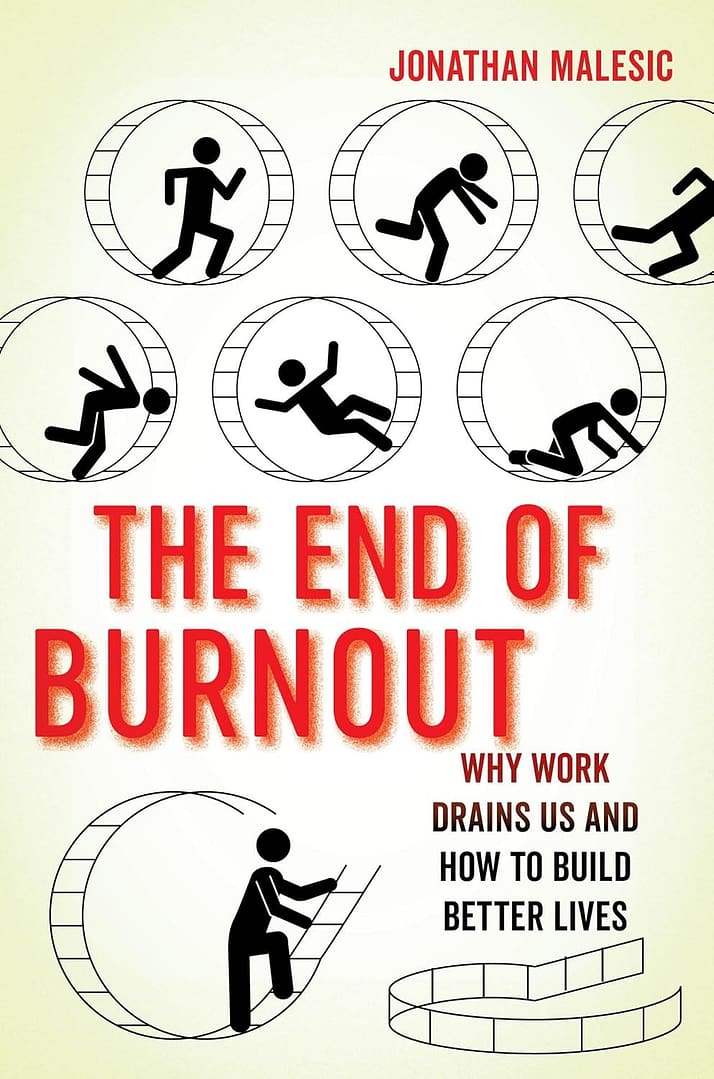
- The End of Burnout: Why Work Drains Us and How to Build Better Lives, by Jonathan Malesic
- Are We All Really Burning Out: Academic Burnout is Real – But Difficult to Diagnose, by Jonathan Malesic for The Chronicle of Higher Education
- Christina Maslach
- O.C. Berkley Faculty Page: Christina Maslach
- How to Measure Burnout Accurately and Ethically, by Christina Maslach and Michael P. Leiter
- Paraphrasing Alain de Botton: Writing a book is like telling a joke and then waiting two years to find out if anyone thought it was funny
- The Parking Lot movie
- Miya Tokumitsu’s book: Do What You Love: And Other Lies About Success and Happiness
- Ruha Benjamin
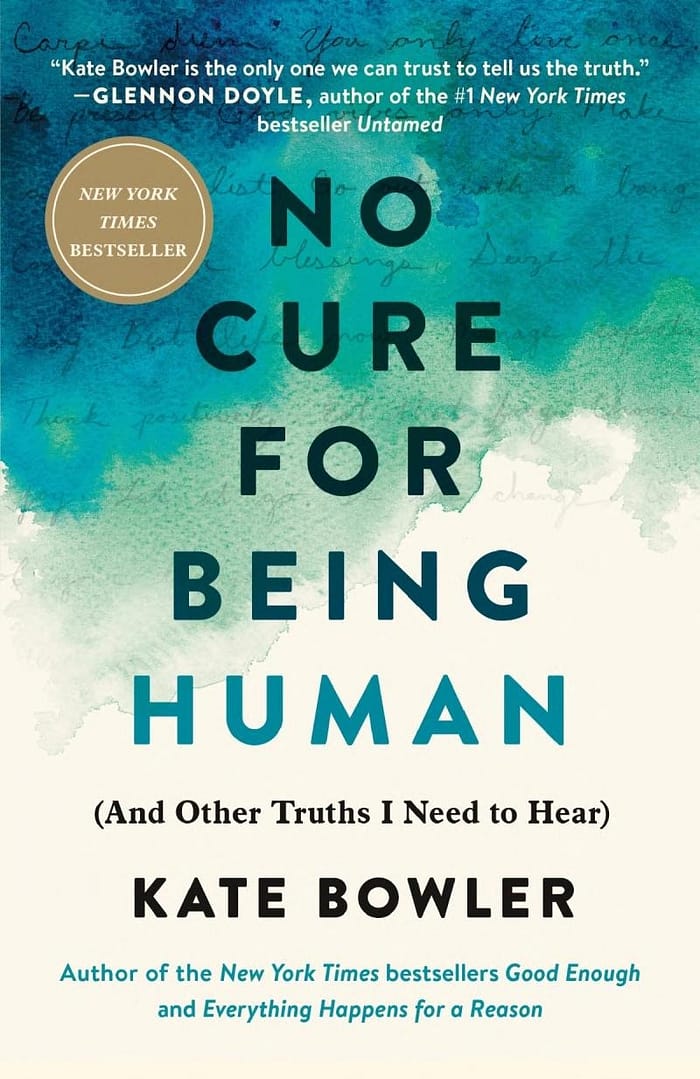
- Kate Bowler
- Fake Buddha Quotes
- “You don’t have to like it. That’s why it’s called work” George Malesic 1933-2018
Recommendations from this Episode

Transcript
[00:00:00] Bonni Stachowiak: Today on episode number 395 of the Teaching in Higher Ed Podcast, Jonathan Malesic returns to talk about his book, The End of Burnout: Why Work Drains Us and How to Build Better Lives.
[00:00:17] Production Credit: Produced by Innovate Learning, maximizing human potential.
[music]
[00:00:26] Bonni: Welcome to this episode of Teaching in Higher Ed. I’m Bonni Stachowiak and this is the space where we explore the art and science of being more effective at facilitating learning. We also share ways to improve our productivity approaches so we can have more peace in our lives and be even more present for our students.
Jonathan Malesic is a writer and former tenured college professor, sushi chef, and parking lot attendant. His essays have been recognized as notable in Best American Essays and Best American Food Writing, and have received special mention in the Pushcart Prize Anthology. His work has appeared in the New York Republic, New York Times Magazine, The Washington Post, America, Commonweal, Notre Dame Magazine, The Hedgehog Review, The Chronicle of Higher Education, and elsewhere.
He’s been the recipient of major grants from the National Endowment for the Humanities and the Louisville Institute. His first book, Secret Faith in the Public Square, won a Foreword INDIES gold medal for the religion category. He holds a PhD from the University of Virginia and teaches writing at Southern Methodist University in Dallas. Jonathan Malesic, welcome back to Teaching in Higher Ed.
[00:02:02] Jonathan Malesic: It’s wonderful to be back.
[00:02:04] Bonni: I had to go in my calendar and look at how long it had been. I was fascinated with the exact date at which we spoke, not when the interview aired. We originally got to first talk way back on June 23rd, 2015 and apparently, nothing’s been happening in the world or to you personally since then. Since there aren’t that many people that have been listening since 2015, would you talk a little bit first about life back then?
[00:02:34] Jonathan: Yes. First of all, just kudos to you for keeping up this podcast at such a high quality and so consistently through so much tumult. It’s really, I think, a wonderful resource for so many.
[00:02:50] Bonni: Thank you. Thanks.
[00:02:52] Jonathan: The last time we spoke, we were talking about a similar topic. We were talking about finding meaning in our work. I was just about to take a semester of unpaid leave from my job as a tenured professor of theology at a small college in Pennsylvania as I had reached a crisis in meaning in my own work. I took that leave and came back to the college in the spring. The time away helped for about two weeks.
For a year or so, I had been struggling to get out of bed in the morning. I had been having a hard time planning for class. I was turning papers back later and later, my temper was growing short. I was just so miserable in my job that I needed this time away. Then I took it and I came back and very quickly, things went bad again. I was just as miserable as before and I ultimately decided to quit.
My wife, who is also an academic, got a wonderful job in Dallas, Texas. When she signed her contract, I signed my letter of resignation and we’ve been here together ever since. Now, I introduce myself to the world as a writer, not as a college professor, though I do teach part-time as an adjunct currently at two different universities here in Dallas.
[00:04:47] Bonni: That whole thing of how we introduce ourselves is fascinating and so much of that resonates. Early in my career, I had worked for 11 years for the same company, and then after three rounds of layoffs, never thinking it was going to be me, it was me. Then just that was a pivotal point in my life to recognize the degree to which I had wrapped so much of my identity around work. Then, of course, reading your work and being familiar with you, that’s really a danger, danger. Time is falling down the well.
When we do have so much of our identity wrapped around our work. To me, it almost feels inevitable. I don’t know how you feel about that. I don’t know that we wouldn’t ever be as human beings, at least somewhat tempted to do that. There’s so much of cultural norms around that. What is your thinking on my hypothesis that it feels impossible? Maybe I could just say it feels impossible for me. How does it feel for you, Jon?
[00:05:53] Jonathan: Well, I think that for years, during my full-time academic career, I just was a college professor. It was so much of my identity, just like you’re talking about. I agree that that temptation is great in North American culture and many other cultures around the world and I think it’s especially powerful temptation for academics. Just to qualify for a job takes years, and then you have to pass so many hurdles to get a full-time job and even then there are more hurdles.
We move all over the country for work as I did, certainly. There’s so much invested, so much of ourselves invested in our job, and we have such high ideals for the job that when the conditions in which we work don’t live up to those ideals, the potential for catastrophe is really great. That was certainly the case for me. I think it’s probably the case for many academics and many other workers across the economy and across the world.
[00:07:13] Bonni: Like so many things that we talked about on the podcast, coming up with a shared definition for things can be such a challenge. I know that that’s been the case for burnout. Would you talk a little bit about why burnout is something hard for researchers to agree what it even means?
[00:07:30] Jonathan: Yes. I think burnout, it’s both a term within psychological research and it’s a cultural keyword that we use to talk about our very troubled relationship with our jobs. The interaction between the cultural definition and the scientific definition is often very, very fraught. According to Christina Maslach who is the leading researcher on burnout and has been so for almost the last five decades, her definition of burnout is it has three dimensions which are measured according to an instrument called the Maslach Burnout Inventory.
The three dimensions of burnout are exhaustion, sometimes called emotional exhaustion, which I think is a feeling that many of us can relate to. We know what it feels like to be exhausted. Though I would want to add that the exhaustion that is characteristic of burnout doesn’t always go away with rest. It’s not like that the tiredness you feel at the end of the semester, and then you return in January and are ready to go again. It’s the kind of exhaustion that I had where I took an entire semester off and was in no better position at the end of it.
First, I mentioned exhaustion, second is cynicism or depersonalization. That’s where you treat your students and colleagues as less than fully human. You see them as problems more than as people. Finally, the third dimension, which is one that we talked about quite a bit actually six years ago, was a feeling of ineffectiveness. That sense that your work is just not accomplishing anything, that you’re failing. That sounds like a nice precise definition and it’s a pretty good one but even many researchers did not operationalize that definition in a consistent way.
There was one meta-analysis of studies of burnout that I really love this thing. It’s still a depressing conclusion, but the researchers looked at something like 180 studies of burnout and found 47 different ways of using the Maslach Burnout Inventory data to come to a really clear definition of burnout. Then you look in the wider culture and there’s even less agreement about what burnout is.
We tend to speak of burnout very loosely. This is one of the biggest problems I think with dealing with burnout in our workplaces is we don’t have a good definition of it. Culturally, we can’t agree. Unfortunately, even the researchers don’t entirely agree. One thing I hope that my book can do is give people within their workplaces a better and precise definition of what burnout is, how it works, where it comes from, and how we can maybe overcome it.
[00:11:11] Bonni: One aspect that you posit that may help us toward that end is to rather than think about it as a state, you invite us to think about it as a spectrum. Could you talk some about why you think that’s a more useful way to think about it?
[00:11:25] Jonathan: Right. Like you say, the common understanding of burnout is like a burned-out light bulb. Either it’s working or it isn’t, and it’s just an on, off, and it’s easy to recognize when you’re on and when you’re off. As Maslach and some other researchers are starting to see, there are a number of characteristic ways of being burned out. Maslach sees four profiles, she calls them. I should credit her main collaborator on this, Michael Leiter. Leiter and Maslach see four main profiles of the burnout experience. You have the classic, the person who scores high on all three dimensions of the Maslach Burnout Inventory, but then there are also of partial forms of burnout.
Oh, and I should say that multiple studies suggest that at any given time, and this research was done before the pandemic, maybe if we repeated those studies now things would look different, but at any given time, something 5% to 10% of workers are in that classically burned out category. Then you have people who score really high on just one or two dimensions of the Burnout Inventory. There are people who score really high on exhaustion, and they’re what I call overextended. You have people who score high on cynicism, I call them cynical, and then there are people who score high just on the feelings of ineffectiveness, and those are frustrated workers.
Those categories, just off the top of my head, I can’t remember what the percentages are of them, but they’re perhaps 15% or 20% of workers fall into the frustrated category. It’s not as negative a condition as the classically burned-out category, but it’s still negative. The data seems to suggest that around half of workers at any given time are somewhere on the burnout spectrum. They might have a partial case of burnout where they’re just overextended, and probably what those workers need is a lighter workload. They could be particularly frustrated, and what those workers need is they need to know that their work matters, they need to see that, they need to see concrete results a bit more. Then there are those 5% to 10% where it’s a really difficult case. Something radical has to change in their careers to get past burnout.
[00:14:31] Bonni: You’re right. I’m quoting you here that work doesn’t dignify us or form our character or give our lives purpose. We dignify work, we shape its character, and we give it purpose in our lives. Talk about that distinction.
[00:14:51] Jonathan: Yes. I think that in our culture, we put a lot of expectations on work to fulfill us and to be the pathway for our flourishing. Not just financially but socially, morally, even spiritually. I think that work just can’t live up to those expectations, partly because the financial stuff off often gets in a way. Academics know all too well that the financial side of education is always pushing against the ideals that we have, that motivated us to get into this line of work. The fact is that any workplace, any cultural expectations we have for work, these are all social constructs and we can reconstruct them.
The thing that I always think, and I want to tell everyone in a workplace, you may not all equally have the same amount of authority, but together, you are the workplace. If you don’t like the culture of the workplace, that can be changed. One person can’t change it but collectively, an entire university faculty, an entire university encompassing not just faculty but staff, administrators, and students can change how they operate. Likewise, we can change our expectations of work. Work was invented by human beings so it can be reinvented by human beings. We don’t have to just allow these ideals to push us around, we can change them.
[00:16:50] Bonni: Would you talk about that on a personal level? I realize that we can’t take one without the other because part of your argument is a collective one. Just for yourself, I was surprised and delighted truly, but that’s probably because of my own sense of ideals, but delighted that you were still in a capacity where you were teaching and doing the work, but truly was flabbergasted quite frankly, that it was something you were turned to. Would you talk a little bit about that on a mini level, how you went about trying to reinvent it as a person? Again, I realize you’re also suggesting we do this collectively.
[00:17:30] Jonathan: I’ve been arguing for several years now that we as a society need to change the place of work in our lives. We need to make work less of the center. We need to see work as a support to whatever is at the center of our lives and arrange our schedules and our goals and all of that with work as a secondary concern. I went through this radical career change. I quit my full-time job. I started writing. Writing is very lonely work for the most part. I was working entirely from home. When you’re a freelance writer, you feel like you’re writing into a void.
You’re sitting there at your desk by yourself, you don’t know who is going to read what you write if anyone ever does. After a year or so of this new career, I felt like I needed to be back in the classroom, even as a part-time adjunct making not very much, so I started teaching first-year writing at a nearby university. I realized that I needed a schedule even if only a couple of days a week, and most of all, I needed people to count on me. I needed someone to care that I showed up. The students cared. They certainly would not miss me if I didn’t show up one day. I think after that, they would start to pretty quickly wonder what was going on. Certainly, my supervisor, she needed me to be in that classroom and doing a decent job.
I guess the point here, is that intellectually, I can articulate how we need to revalue and actually decenter work in our lives. On a personal level, I still have so many of those ideals and expectations, and you could call them hangups about work. I’m a little bit lost if I don’t have at least a minimal schedule and at least a minimal sense that someone’s relying on me to do a good job.
[00:20:05] Bonni: The other thing that I wondered more about, you’ve talked about it a bit, but I had curiosity that continued was, one of the things you talk about is being frustrated when students would be distracted or wouldn’t listen, or those kinds of things, that that was really hard. It resonates so much because this is hard work. It’s hard to prepare for class and all of that. I’ve been thankful that I’ve been able to see tiny glimpses that, gee, this actually isn’t always about me.
You get those stories where it’s like, “Wow, they’ve got something.” Well, of course, it would explain so much more of people’s reactions to get these glimpses of their unique context. I don’t know if you had any thoughts around that that maybe helped you take it a little bit less personally. Because again, it’s not a book necessarily about that but I was curious to see if your thoughts have evolved on that.
[00:21:10] Jonathan: Something that really fueled my cynicism in my full-time, academic career was exactly what you’re talking about when students weren’t into what I was teaching. I reacted I think out of proportion to the actual, I don’t know “offense.” I taught theology and all the students at the college had to take two theology classes. None of them really wanted to. Of course, but to me, that was the most important thing in the world. I built my whole life around the study of theology.
When students didn’t do the reading or didn’t seem to care, or worst of all, when they said, “Dr. Malesic, this stuff doesn’t matter,” that felt like a personal affront, it felt like they were attacking everything that I had stood for. First of all, students shouldn’t say stuff like that. [chuckles] A little bit of this is on them, but I had clearly over-identified with my teaching, and in the last couple years, now that I’m teaching part-time, and my job just isn’t everything to me anymore. I’ve gotten a little bit better at handling students’ often very understandable reasons for not giving their all to my first-year writing class, which again, everyone has to take, no one really wants to take.
Really, in the last year or so, during the pandemic, and I’ve talked about this with so many friends and colleagues, students are often really struggling. In my classes, attendance has been really low. Students are turning in work very late. By so many measures, they’re not learning what their students in previous semesters have. That’s disappointing and it’s sad but I realized it’s not about me. The reason that they’re having a hard time in these classes has nothing to do with me. It has everything to do with a global pandemic that I just want to disclaim I didn’t cause. It’s not my fault. If it were my fault, okay, then we can talk about this being personal, but I really am not to blame for the pandemic. I wish the students were coming to class more. They’re not, they can’t. There’s only so much I can do and I’m okay with that.
[00:24:09] Bonni: Before we get to the recommendations segment, I would like you to talk about life working in a parking lot versus life working as a tenured faculty member, and what we might glean from those two things that are on your resume.
[00:24:29] Jonathan: Right. My postdoc was as a parking lot attendant, basically. I had gotten my PhD, didn’t get an academic job. I worked as a parking lot attendant for a year and it was awesome. I write about this in the book and I think that that job in the parking lot is a really good example of how we can have a more humane approach to work in our lives. I knew that my job when I was a parking lot attendant was not everything of who I was. That was easy to realize.
Then I finally did get an academic job and so I stopped being a parking lot attendant. I became a professor and immediately my job became my entire life. That shift made a huge difference in my life. On the one hand, I did love being a college professor for many years. In many ways, I still wish I could be one, but not in the conditions and not with the ideals that I had for it. Obviously, it just didn’t work.
I think that we could all do well, to see that we remain, just as I in the parking lot was not defined and delimited by what I did for pay, likewise, even as professors, we are not our jobs. We are not what we do for pay. I think I’m a little bit better at recognizing that now. I think that academics, we need to recognize that, or we’re going to continue to burn out at high rates. Ultimately, if you’re, if you’re burned out, you can’t be the instructor, your students need you to be.
Always going the extra mile for your students is, in a way, admirable, but in another sense, it’s ultimately a disservice to the students, because you can’t do that forever. You can’t always be there for them. You have to hold back and we have to build institutions that make it okay to hold back, be competent and dedicated, but not to give everything that we have to our jobs.
[00:27:03] Bonni: Since reading the book, I think I finished about three or four weeks ago, it’s one of those things like you buy a new white car, and then all you see on the freeway are white cars. All I saw in recent weeks and remembered were quotes about burnout. I just wanted to share a few with of them and get your quick one to two-sentence take on them. My husband Dave and I had a professor in our doctoral program who almost every class would say, if you love what you do, you’ll never have to work a day in your life. What is your response to that guy plus about 50,000 other people who also say the same thing? [chuckles] What’s your thought on that?
[00:27:42] Jonathan: My thought is that everybody should read Miya Tokumitsu’s book on exactly this question. I think that’s mythology. I think that’s not really true. Work is always work.
[00:27:54] Bonni: Speaking of work always been work, I got to hear a panel that included Ruha Benjamin, and she said, anytime something is referred to as a calling, it is rife for exploitation. What are your thoughts on Ruha’s quote there?
[00:28:12] Jonathan: I think that’s totally right. On the one hand, I still try to work from a sense of calling, but it’s absolutely true. A calling just raises your ideals and often, employers allow those ideals to be substitutes for really just working conditions.
[00:28:31] Bonni: Kate Bowler, who I’ll be talking about in just a moment, she said in a recent podcast episode, it was so good I had to pause the podcast and actually transcribe it. She said, “Our lives are always for something, even if the math isn’t obvious to anyone else.”
[00:28:51] Jonathan: That’s really beautiful. Our lives are for something and we do have purpose. Pursuing that purpose can be a mystery, and we shouldn’t look only in our work to find it.
[00:29:01] Bonni: This next one popped up in a book that we are reading for my class this semester, called Getting Things Done by David Allen. David Allen, if you’re listening, and I say that sarcastically because he would never listen to this podcast, but this sounds like David Allen or whoever selected this quote, had a fake Buddha quote, so much so that when I went to check its origins– I don’t know Jon, do you remember all those commercials, I think they were in the ’80s where they said, I can’t believe it’s not butter. Do you remember? That’s my terrible accent.
[00:29:34] Jonathan: Of course, yes.
[00:29:35] Bonni: There is a website where they say I can’t believe it’s not Buddha. This is a fake Buddha quote but is said to be a Buddha quote in the book, Getting Things Done. “Your work is to discover your work and then with all your heart to give yourself to it.” Again, not Buddha. What’s your response to not Buddha? [laughs]
[00:29:56] Jonathan: As a religion scholar, I see in that like we so much want to turn our devotion into work into a religious exercise. We’re always wanting to sacralize our work and no surprise that it’s a fake Buddha quote. That doesn’t sound like the Buddha to me.
[00:30:20] Bonni: All right. This last one, I’m going to have you tell us who it is because this person, you would be able to say much better than I would. This is quoting someone that you’re familiar with. “You don’t have to like it. That’s why it’s called work.”
[00:30:34] Jonathan: That’s from George Malesic, my father, who unfortunately passed away a couple of years ago. I use that as the epigram to the book. My dad was a devoted, 40-hour a week white-collar worker and he didn’t teach me to do what I love. He had pretty clear boundaries around his work. I, his youngest child, and the one who got these really weird ideas that my work should become my entire life. The last several years of my life have been a quest to see the wisdom that he was sharing with me and my siblings all those years.
[00:31:19] Bonni: Thank you for sharing about your dad. This is the time in the show where we each get to share our recommendations and I have two today. The first one, surprise. I would like to recommend a book called The End of Burnout by Jonathan Malesic. I told you this before we started recording and I’ll say it again now in front of anyone who listens, as soon as I heard about it, and having met you all those years ago, I knew I wanted to read it and I knew it would be incredibly challenging to read you. You get us to wrestle with really important questions having to do with our identities, and also having to do with our culture and our systems and our norms.
It was a delightful wrestling. It was both an easy read and an incredibly hard read all at the same time and I really loved it. I love that I could– It’s not so dense that I wasn’t able to just really fully engage myself in it but I also asked really hard questions and I continue to. I love this continued conversation you’ve given us so thank you for your book. I really do recommend that people check it out.
The second thing I’d like to recommend is another book and it is by Kate Bowler who I quoted a little bit earlier. This book is called No Cure for Being Human. I’ve recommended another of Kate’s prior books which is called Everything Happens for a Reason: And Other Lies I’ve Loved. Kate Bowler is someone who lives with a diagnosis of stage 4 cancer and she also happens to be a theology professor at Duke Divinity School, and so has been told things by people who I think mean, well, like, “Oh, if you just pray hard enough, or God will never give you anything you can’t handle and a bunch of malarkey as I believe is the podcast friendly, family-friendly way of saying those things.
Speaking of wrestling, this most recent book of hers, No Cure for Being Human is just asking such important questions and allowing us to live within the mystery of life and not pretending things like cancer diagnoses or I still remember vividly when we experienced infertility for many, many years in our lives. There was always just people’s pat answers around it and quick explanations of why that was happening and how quickly would all be solved if we could just literally one time, if we could just put the right amount of baby clothes on our dining room table and get the right amount of people holding hands around said table, it would cure all those things.
She just questions all of that. There’s no cure for being human, pain exists and cancer exists and infertility exists. She doesn’t talk about that in the book but it just is a reminder that we can live in the mystery and still have hope and still have meaning, but still acknowledge our pain and the pain of others. It’s a beautifully written book and both of these highly, highly, highly recommend. Jonathan, I’m going to pass it over to you for your recommendations.
[00:34:22] Jonathan: Well, first of all, thank you so much for that endorsement, Bonni. It’s a real honor, not just to have that but also to have that right next to Kate Bowler who is a really brilliant writer and someone who is asking and addressing these really tough human issues. I’ve tried to do that in my own way with the one specific issue of our relationship to work.
My recommendation doesn’t have anything to do with what we’ve been talking about. It’s just a TV show, not even a new one, that I love and could be worth of binge watch. It’s Bored to Death, came out about a decade ago. It stars Jason Schwartzman, Ted Danson, and Zach Galifianakis. Jason Schwartzman plays a struggling writer, perhaps that’s why I identify with it, who moonlights as a private detective and he and his friends get into all these capers. Why do I love this show? What for one thing it just has all these amazing actors in it.
The guest appearances are by Parker Posey is in one, Oliver Platt plays a recurring character. Bebe Neuwirth plays Jason Schwartzman’s editor. There are just so many wonderful surprises in this show and it’s so charming. It’s funny and it’s a good satire but it also has a great heart. It’s one of the best depictions of male friendship that I think I’ve ever seen on television. My recommendation, reruns of Bored to Death. It’s currently on HBO.
[00:36:14] Bonni: Oh, thank you so much. I have been doing this. I’m not an over-the-top TV watcher but I do enjoy the binge-worthy ones to get that as escapism. I’ve been looking for something because now that Ted Lasso’s over, already recommended the most recent season. I don’t know how much longer I have to wait until the next one. Oh, this is great. Thank you so much.
Jon, thank you so much for coming back on Teaching in Higher Ed. I subscribe to your newsletter. Actually, we should be sure and put the link to that in the show notes as well because I always enjoy getting to read what’s going on with you and being able to read more of your writing and just feel like a little bit of a conversation with you. Thank you so much for today and for all the other things that you do.
[00:36:59] Jonathan: Thank you so much for having me. It was really wonderful.
[music]
[00:37:06] Bonni: Thank you once again to Jonathan Malesic for joining me for today’s conversation on The End of Burnout. Thanks to all of you for listening. If you’ve been listening to Teaching in Higher Ed for a while and have yet to sign up for the weekly review, you could be getting a weekly email with the show notes on episodes like today’s, as well as some recommendations that don’t show up in the show, quotable words, and other good stuff. Head on over to teachinginhighered.com/subscribe if you’d like to subscribe to that weekly update, and thank you so much for being a part of The Teaching in Higher Ed community. Have a great day and I’ll see you next time.
[music]
[00:38:08] [END OF AUDIO]
The transcript of this episode has been made possible through a financial contribution by the Association of College and University Educators (ACUE). ACUE is on a mission to ensure student success through quality instruction. In partnership with institutions of higher education nationwide, ACUE supports and credentials faculty members in the use of evidence-based teaching practices that drive student engagement, retention, and learning.
Teaching in Higher Ed transcripts are created using a combination of an automated transcription service and human beings. This text likely will not represent the precise, word-for-word conversation that was had. The accuracy of the transcripts will vary. The authoritative record of the Teaching in Higher Ed podcasts is contained in the audio file.