Follow the Teaching in Higher Ed Podcast
About this Episode
David White and Jose Bowen share about inspiration, failures and everything in between on episode 305 of the Teaching in Higher Ed podcast.
Whilst it is difficult times, it has also been exhilarating.
David White
On episode 305 of Teaching in Higher Ed
Voices on this Episode


Show Notes + Resources
A theme song, movie, or book
- Station Eleven, by Emily St. John Mandel* (José)
- Groundhog Day (Bonni)
- The Association of Jesse James Soundtrack (Dave)
A tool
- MERLOT Teaching and Learning Mini Site (José)
- Digital Calendars and Analog Planners* (Bonni)
- The Web; No More Nails Household Wood Glue* (Dave)
A Failure/Struggle
- Cognitive Bandwidth (José)
- Beginner’s Mind (Bonni)
- Transition From Work to Home (Dave)
A Source of Inspiration
- The Garden; Social Media (José)
- Jen Heemstra (Bonni)
- Seeing the Best in Other People (Dave)
A Challenge
- Put Students First (José)
- Shift the Focus to What’s Possible (Bonni)
- Trust Our Students (Dave)
A Hope
- We Use This as a Moment for Revitalization (José)
- More of a Sense of Our Collective Selves (Bonni)
- The Erosion of Individualism (Dave)
Recommendations from this Episode


Transcript
[00:00:00] Bonni Stachowiak: Today on episode number 305 of the Teaching in Higher Ed Podcast, David White and José Bowen Join me to discuss inspiration, failures and everything in between.
[music]
[00:00:14] Production Credit: Produced by Innovate Learning, maximizing human potential.
[music]
[00:00:24] Bonni: Hello and welcome to this episode of Teaching in Higher Ed. I’m Bonni Stachowiak. This is the space where we explore the art and science of being more effective at facilitating learning. We also share ways to improve our productivity approaches, so we can have more peace in our lives and be even more present for our students. Today, we are doing something a little different than we have been, checking in with a few of us around what we’ve been up to as it relates to the Coronavirus pandemic. We’re going to be looking at sources of inspiration, things that we are failing at or challenged by and everything in between. Today’s guests are David White and José Bowen.
David White is the Head of Digital Learning at the University of the Arts London and he also is well known for the Digital Visitors and Residents idea. In fact, so much that the episode that you’re hearing now was supposed to be him talking about that model. I’m excited to introduce you to it later on in a future episode but wanted us to cover something a little bit more current with this one. Our second guest is no stranger to Teaching in Higher Ed. That is José Antonio Bowen. He’s the author of Teaching Naked. He’s an innovative educator, pedagogical scholar, passionate teacher, advocate for student success, he’s also a pianist and jazz musician. Dave and José, welcome back to Teaching in Higher Ed.
[00:02:06] David White: Thank you.
[00:02:07] Bonni: We’re doing something a little different today in terms of the show format. We have a number of topics that we will be exploring and each one of us doesn’t know what the other one is going to say. That should be great fun as well. Let’s start out with a theme song, a movie or a book that for you is representing this time. José.
[00:02:31] José Bowen: I just finished reading a book about pandemics. I’ve read Station Eleven by Emily St. John Mandel. I know a strange thing to read at a time like this, but hers is much worse. 99.9% of all people die and civilization ends. I actually found it oddly uplifting, gave me a little perspective now, but it’s a beautifully written book and it actually is full of hope in humanity in some interesting ways. I don’t know. That was distracting in a weird kind of way.
[00:03:01] Bonni: Mine, I feel is such a cliche that I just tried so hard to resist using it because it feels like everyone’s using it, but there is none other that is more representative of this time for me. That is a movie called Groundhog Day, where the day just is repeating over and over and over again. One of my children was actually born on Groundhog Day. It’s a special day for us, but I have lost all my sense of time and I’m doing okay. I’m definitely feeling some of that Groundhog Day-ishness coming into my life.
[00:03:35] David: Wait. Groundhog Day is actually not fictional as well as being a movie.
[00:03:39] Bonni: Well, in some parts of the United States, they actually celebrate Groundhog Day, which is when they decide if the winter is going to keep going for another season.
[00:03:50] David: Yes, from like in film, I just thought they’d made it up for the film, but that’s fine. That’s good I’m learning.
[00:03:53] Bonni: No, but Groundhogs really don’t tell us the weather though. That part is fictional.
[00:03:59] David: You’re going to upset some people with that.
[00:04:01] Bonni: Yes, I really am.
[00:04:05] David: My thing is the soundtracks of the film, The Assassination of Jesse James by the Coward, Robert Ford, which is a title that contains his own spoiler in terms of movies and it’s by Nick Cave and Warren Ellis. It’s so beautiful and ethereal and it’s really difficult to describe the emotions that are in it because it’s sublime, I suppose for me. I just find it a very calming thing to listen to because work’s really intense at the moment and obviously, the whole world is really intense in the moment. I just find that a really calming set of tracks that are helpful that way.
[00:04:45] Bonni: A tour starting with José.
[00:04:48] José: I’m really taken with the new MERLOT mini-site preparing students, teachers for online learning. It has all the usual merlot.org tools, plus it has some workforce development stuff, some lists of free commercial technology that you can use, Office of Civil Rights reminders. It also has a skills course for students on how to take an online course, which I think is good. it’s just full of resource. There are lots of other people who’ve been putting together lists of stuff, but this is a particularly good one in my view.
[00:05:21] Bonni: I have a digital tool and an analog tool. I’m cheating, but they work really nicely together. To me, digital calendars are saving my life right now. Little behind the scenes spoiler, this calendar event for today’s conversation that we’re having somehow in my six years of podcasting, this has never happened before, but it just fell off my calendar. Fortunately, José sent me an e-mail and said, “I’m not sure where we’re meeting.” That triggered in me going, “Oh my gosh. What on earth happened to that calendar invite?” I was able to use a digital calendar, of course, for myself to communicate to Dave and to José where we were meeting, digitally in this case.
Then also to assign a series of yoga classes to my children through their digital calendars because they’ve learned how to go to a digital calendar and click on a link and access things too. It’s almost a way of communicating to them and helping set up their days for success as well. However, I’m also finding my analog planner even more helpful than usual. I’m really into that big three. The big three, what are the three most important things that I want to accomplish today? It helps keep me focused in a very unfocused time. Dave, how about you?
[00:06:40] David: I’m going to cheat slightly. I’ve got two as well. My one is just stepping back because my tool is the web. I was just reflecting if this situation had happened 10 years ago, then we’d have all piled online and everything would immediately have broken. Not everything is broken, which I think is really spectacular. It’s the reason why we’re still connected and not socially distanced even when we’re socially distancing. It’s the reason we can carry on providing people with education and teaching. Sometimes it’s easy to forget that it’s– because it’s so part of our lives it’s easy to forget that actually everything’s running on it. It’s really spectacular. There’s that.
Then my other one is a household almost wood glue that we get in the UK called No More Nails, which I’m really glad that I’ve got a big tub of it because right now, I feel like if anything breaks in the house, I’m a bit stuck. As long as I’ve got a big tub of that, I’m just fixing everything with it. Even things that don’t need fixing, I’m using it on. It’s my safety blanket DIY thing. Those two.
[00:07:48] Bonni: Throughout the years of doing this podcast, something that people have told me they’ve learned more from than anything else are getting to hear about other’s failures and other struggles. José, what’s been a failure for you or what are you struggling with during this time?
[00:08:04] José: I think like a lot of people, there’s a cognitive bandwidth problem that humans are limited in this so stress, nervousness, anxiety, checking the news, just takes up some of it. I’m not used to being less focused. The grocery shopping is stressful enough under normal times and making all those choices and now it’s worse. Now, of course, I’m trying to navigate government forms for various things. There’s all this other stuff to do, but it’s also emotional. Then I’m in the classroom. My students have been great, but they’re so real. I’m so privileged and so lucky, I’m not hungry, I have food, I’m not taking care of my parents and trying to figure out that sort of stuff.
When I’m online with my students, I’m just thinking, what do I have to offer? You’re dealing with real-world stuff here and I can see their kids are in the background and stuff’s happening and I think, “Yes, go do that, go do that. This is not that important. This can wait.” There’s certainly a sense of too much bandwidth. I’m not providing any real value in students’ lives right now certainly in terms of content. It’s probably not as bad as I make it sound, but it certainly feels like a failure to have enough focus because, look, we’re academics. The idea, “Oh my God, we’re home for a few weeks. We have time. Shakespeare wrote King Lear. Let’s do something good.”
[00:09:38] Bonni: For me, something that I’ve been challenged with– by the way, just to be candid, I am challenged every day and as José said, I have it really good. I do recognize that every day that despite those challenges, I am reminded moment by moment of just how good that I have it. One aspect of my work that is challenging me just to want to be better at it is having sufficient beginner’s mind. It’s only one class, by the way. I teach one class a semester. I’m supporting them, and what José talked about in terms of wanting to support our students well really resonates a lot with me. I’m also supporting a team of about 200 resident and adjunct faculty, and some of which have never taught online, never had any desire to teach online.
I know that on a moment by moment basis, when I get a question that seems on its face to be simple, if I don’t think of it and approach it with enough of a beginner’s mind, I’m going to leave those people behind. I’m working with a team of people at my institution. We don’t want to be bouncing back and forth with e-mail. Our hope is that we could get into a conversation with people such that we can more readily answer their questions and find out what the real issue is. It’s so hard because sometimes, technologically, we don’t know why that didn’t work. Is it your internet at your house or is that more on the provider’s level?
Just all these levels of complexity that I realized that some of us that have been doing this for decades and decades, our brain just goes a million miles a minute thinking through these possibilities and recognizing that despite technology not always working the way we wish it would for the vast majority of the time, it is staggering how cool it is. I think back to what Dave said earlier about the web and that not everything’s broken, it’s truly staggering. I want to be getting better at that beginner’s mind, and also coupling it with asking the question of why. What’s behind that question? What is it that they’re hoping to accomplish? There might be a better way than they even know how to ask.
They might be asking you, “How do I do this task over here?” If I remember to ask about the ‘why’, I might be able to open up a whole nother window that’s even easier than the one they’re trying to go through.
[00:11:53] David: For me, what I regularly fail at is the transition from work to home. I’m used to having quite a long commute, which I’m actually finding was quite useful. Now my commute is about three or four meters, it doesn’t take very long. What happens is work’s really intense at the moment and a lot of it’s really strategic. What happens is for about an hour after ‘I’ve stopped work’, I then talk to my family as if I was trying to strategically manage them into some– Like going to the kitchen and say, “Hey, we’re going to need a strategy for filling the dishwashing, guys. Let’s talk about the different ways. Let’s just get together, get some post-it notes.” That’s a disaster.
I very quickly get told that I need to calm down and change mode, which is a bit of a struggle because as of this moment, it’s not necessarily that easy just to go out for a stroll and reset. I think that’s something that I want to try and get better at, is figuring out ways of changing mode and becoming the person that I should be at home that I always am normally, but it’s really difficult when there’s no geography involved. I find that really hard.
[00:13:11] Bonni: Next up, a source of inspiration. José.
[00:13:16] José: I’m going cheat, I have two.
[00:13:17] Bonni: [chuckles] Well, we cheated earlier. So you’re allowed two now.
00:13:20] David: Yes. That’s all right.
[00:13:21] Bonni: We give it to you.
[00:13:23] José: My first source of inspiration is the garden. This is something I’ve been interested in wanting to do for a long time, and I love it, but there’s a little more time. In spring and things are coming up and my wildflower seeds came up. I’m spending a little too much time watering and weeding and watching things grow. It’s a reminder that life springs anew. The other is really odd for me because I normally avoid Facebook and Twitter, except when I have to, for tweeting, for work, essentially. At the moment, I’m finding it inspirational because these people are posting, they’re defending their dissertation, or they’ve just received a PhD and they’ve had to do it online and in unusual ways.
I’m seeing people post, “I did this with my class, and I taught my first online piano lesson.” People are doing things they’ve never done before and succeeding. Maybe it’s the way my feed is set up, but I’ve been focusing– no, I’m not looking at politics, but seeing what people have accomplished and what they’re sharing and how they feel about it has been really inspiring the last couple of weeks.
[00:14:32] Bonni: I found those to be so inspiring too José, and I’ll just click. I don’t even know who the person is. It’s just fun to see people.
[00:14:39] José: Yes, exactly. Somebody who just actually posted their PhD or congratulatory, and I was like, “Congratulations. I don’t know why you’re in my feed, but oe thing to do during a time like this.”
[00:14:51] Bonni: Absolutely. Mine is also on social media. I don’t know this person other than through Twitter. Her name is Jen Heemstra. That’s H-E-E-M-S-T-R-A. She’s an associate professor at Emory University, and she’s in the STEM field. She runs the Heemstra– I apologize if I’m not pronouncing her name correctly, but she runs that lab of hers that she leads. In her profile, it says, “Working to grow leaders, fight inequity, embrace failure and make the world a better place.” My discipline, besides the wonderful interdisciplinary work, it’s very different than STEM, of course.
I feel like I relate to her more than people from within my discipline, just in terms of how she carries herself, her personal leadership, her organizational leadership. She really is an inspiration. I was disappointed to see recently that she said a lot of people were, I think, she used the word ‘trolling her’. Like what she posts, how could you possibly find offensive? It’s one of those people where you just think, “Come on.” I really wanted to encourage her, and I did say on her tweet where she mentioned that, just how much she’s meant to me. She’s really been an uplifting person to me. She’s challenged me to want to be better at what I do. Those are the moment by moment leadership decisions that we make. I’m very grateful for her being there, despite having to persist through some hatred and trolling, which is just sad to see.
[00:16:19] David: For me, it’s my colleagues at work, actually. Working at a big art and design institution, one of the things I like about it is how everything’s always a moving target. The courses that we teach tend to be divergent rather than convergent courses. It’s not necessarily a right answer. What’s been interesting is that the current situation has really brought people together, and it’s been an absolute pleasure working with people. The collaboration has been so good and so strong, and the amount of work that we’ve been able to do over such a short period of time has been really, really spectacular. Whilst it’s difficult times, it’s also been really exhilarating.
I’m really hopeful that we’re forming working relationships that we can carry on with through this, through what is a time of great challenge. I think I’ve seen the best of a lot of people actually at work, and I hope they see that in me too. That’s been very inspiring for me.
[00:17:23] Bonni: So true. Next up, we have a challenge that we would like to offer to people. What do we want to be thinking about? How can we be doing this just a little bit better? Our challenge to you or I should really say our challenge to us is- starting with José.
[00:17:40] José: This is the ultimate moment to put students first. I’d like to challenge all of us as teachers and as institutions to think about what our ultimate mission is as teachers, mentors and as human beings, and ask, “Are we really doing that most of the time?” I think as teachers, we are so focused on our content. We love our content. We love our subjects and our disciplines. This is a time, I think, to rethink, “Am I teaching what I should be teaching? Am I teaching how I should be teaching? Are my students getting the most out of it? What do I really want? Can I check in and figure out what value I’m really adding and where it is?” This is ultimately the time to rethink what we do.
[00:18:23] Bonni: For mine, I almost hesitate to say it. It makes me afraid to share this because I don’t want it to come from a place where it seems like I’m not empathetic. I know that this time is so hard and that it’s hard for others in my faculty community in ways that I know I don’t understand. That I don’t, as I said earlier, have enough of that beginner’s mind to really be able to appreciate what people are going through. Having said that, very early on in this crisis, I found myself getting into more conversations than I would have liked to, which would have been zero, but more conversations about, “This isn’t going to work. Who are you to think that this is going to work? You know this isn’t going to work, right? This can’t work.”
I was trying to be empathetic, and I think I was successful at that based on how things have gone since then, but to say, I know it’s hard but I don’t want to give up. Giving up, to what José said, would be giving up on our students and them being able to graduate or being able to finish their sophomore year or whatever the case may be. I’m not really ready to give up, and it’s not my personality very much, and it’s also not really ultimately fulfilling what I think all of our collective vision is for the possibilities in higher education. My challenge is to shift the focus. Instead of saying why something won’t work, think through what is possible. What’s possible?
If we don’t have a ‘what’s possible’ in a particular domain, then let’s start some conversations with people who have a little bit more experience in that domain to help us see a vision for what’s possible It’s pretty amazing when you look around at what people are coming up with, everything from the seemingly ridiculous. I saw people coming up with document cameras that involved shoe boxes. My husband and I made one of our own, became little inventors, ourselves. There’s little ways and there’s really big ways that people are taking this challenge and being able to turn it into a series of opportunities.
[00:20:31] David: This is something that came up at an online conference where myself and Dr. Bonnie Stewart were doing a session on– Really, ended up being the tension between the idea of care and surveillance online. Where’s the line between taking care of students and offering care versus the way that technology can end up surveilling all of us. It was interesting to me because one of the things that I’ve found as things move online, especially teaching, is that sometimes people want to use the technology as a way of reducing uncertainty and reducing risk.
It’s like, how can we make sure that students can do X, Y, Z? How can we make sure that this kind of process or practice, especially around assessment, is completely predictable and 100% watertight? The technology can encourage us to think that way, “How can I use this technology to make things more certain?” Everybody wants a little bit certainty right now, so I can see where people are coming from. My challenge is really to trust our students. I think actually we’re in a time where we need a greater level of trust and to use the technology in a way that is trusting, rather than to use the technology in a way that tries to, if you like, iron trust out of the system through becoming more draconian in terms of the way that we employ it.
One of the reasons I think this is important is because it’s tempting to go in the non-trust direction, because the technology hints tantalizingly that if you could just get it set up right, then there would be zero risk from any angle. Actually, we don’t need that right now. What we need is to say, “You know what, we’ve set this up, you can appropriate it in various different ways. You can use it in various different ways. We’re going to trust you to do the right thing because we’ve all got plenty to be dealing with right now. We’re going to be generous.” I think that’s the challenge, is to keep trust there and if not more trust, rather than going in the other direction just because we’ve gone digital.
[00:22:58] José: I wish I’d said that that’s beautiful.
[00:23:00] Bonni: We’ve looked at a theme song, movie, or book, a tool, a failure, a source of inspiration, a challenge, and now we look forward with a hope.
[00:23:13] José: I’m going to start with the arts since I’m a musician and there are no concerts. There are some online lessons and things that are happening. I’ve been pretty amazed at the creative things that I’ve seen people do with things that should have only been face to face. My hope is that we use this as a moment for revitalization. We know that artists have often made great art through pandemics but other kinds of tragedy and massive changes in the human condition. I hope this is a moment or what emerges after this moment, probably, where we can really rethink the value of face to face.
Now that we’ve figured out things that we can do online, I think that’s going to strengthen the call for, what we do face to face? It can’t just be, “Well, that worked pretty well online, so maybe keep doing that online.” When we bring people to face to face, we’re going to have to do more than just what we did during this semester online, which was the minimum, but for most people, it’s been content. I’m hoping that we can reevaluate and revitalize our product, I guess, in the broadest sense. What is it that we’re here for? What is it that we can do? I certainly think that’s going to happen in the arts, and I hope it happens in higher education.
[00:24:33] Bonni: My hope is around us having more as a society, of a sense of our collective. I studied in my masters and in my doctorate, something called systems thinking. That shows up in a lot of different domains but examples would include in environmentalism, in policy questions, and in business and leadership, but just this idea that something that I do, seemingly as an individual with my own series of wants, needs, and desires, and that it can have an effect on people all over the world. I started out in my business ethics class, it wasn’t right in the beginning but about a third of the way through, we watched a documentary about fast fashion.
To be more specific, we watched half of a documentary about fast fashion because that was right around the time when we were no longer able to meet in person, and I could only find it available in services that the students might not have access to on their own. We didn’t require them to watch the rest of it, although I did find it somewhere on a documentary site and hope that they had an opportunity to. That really started the conversation around this collective well being, that more of a collectivist sort of mindset, that what we do affects other people in both good and bad ways.
It was a little bit more hypothetical in the sense that one of the places that they focused on was Bangladesh. Most of them have never been there before nor do they know very much about that part of the world. This epidemic, this pandemic is causing all of us to really shrink that and see how this takes places in our families, in our neighborhoods, our communities and so on. I really do have this hope that we as a society might just have a greater stock of really our collective in how small actions that we take can make the world a better place, as corny as that is to say, but that’s really what I’m feeling and what I’m hoping for today.
[00:26:37] David: I think my hope follows on from that because my hope is in the idea of community. I think one of the really positive things I’ve seen happening is, to a certain extent, an erosion of individualism in quite a good way, and this recognition that actually we have to look after each other and we have to share resources and we have to be mindful of our actions and how they affect other people. That’s the same, no matter how wealthy you are, and it’s the same, no matter what your life situation is in. It took us a while to learn, in the UK, but I think we’ve got there. I’m hoping that this sense of– Yes, in a way, it was a little bit like what you were saying, this sense of collective responsibility, which has come about because of the pandemic will stay with us afterwards.
As an extension of that, in the UK, I’m really hopeful, and I think I’m right about this, that the NHS, the National Health Service in the UK, is going to be very well funded after this. Whereas there were political moves to privatize it and it’s always been under threat and comes under a lot of criticism because it’s a useful political football, basically. I think anybody who wants to be voted into Government in the UK for the next 20 years is going to have to be really looking at the NHS. That can only be a good thing for everyone. Again, everybody is relying on the NHS like never before. Even private providers of health services have actually donated all their equipments to the NHS. It’s all focused on them.
There’s something really, really hopeful about this sudden return to the idea of the civic and the public and the shared and the communal that I’m finding really uplifting. My hope is we keep it. That’s my big hope.
[00:28:39] Bonni: This is the time in the show where we each get to share our recommendations. We’re going to start out with José.
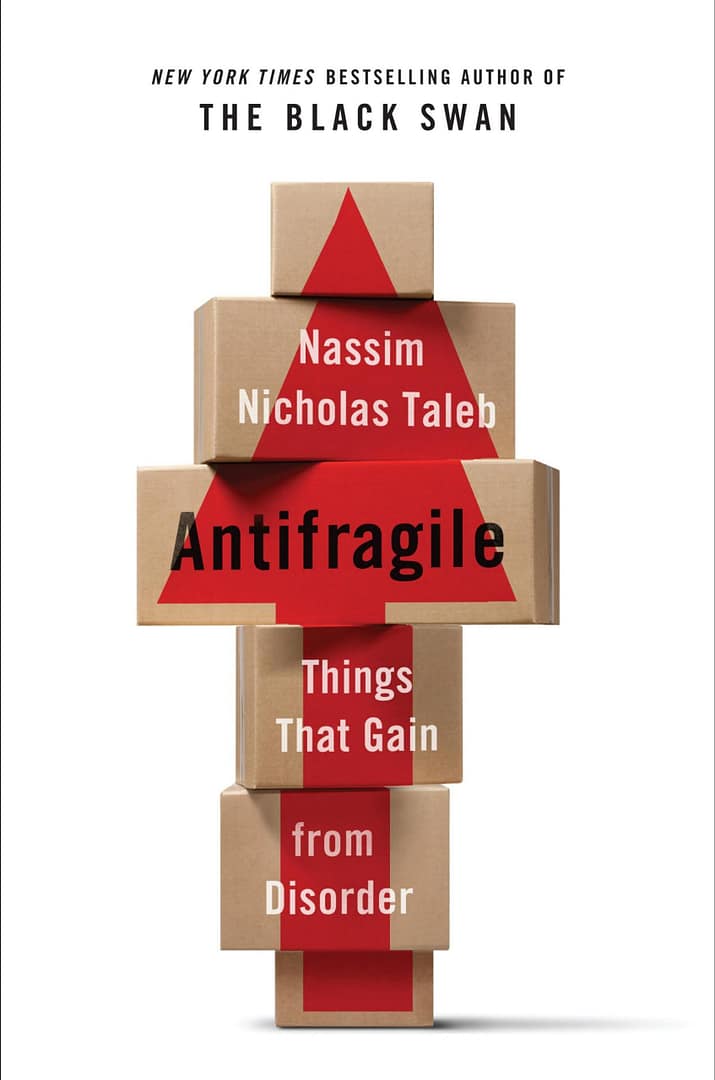
[00:28:45] José: My recommendation is for a fabulous book by Nassim Nicholas Taleb called Antifragile: Things That Gain from Disorder. I write a lot about resilience in students, and he has this concept that there are things in the world that are better than resilient. There are things that actually gain from stress and from chaos, so things like your bones. If you don’t have weight and stress against your bones, they get weaker. Nature gets stronger through chaos and good things happen. Are there systems and ways to design systems and ways to be as a human or institution where you don’t just resist the disorder but you actually embrace it and can grow stronger through it.
It’s a beautifully thoughtful crazy book, but it is one of those big ideas that will transform your thinking. He punches up against all sorts of things that we think, “I know what that means. I like that. Wait, I’m wrong. What is he saying?” It is one of those mind-bending books, Antifragile.
[00:29:55] Bonni: How dense is it of a read?
[00:29:59] David: [laughs] That’s a good response.
[00:30:04] Bonni: You’re scaring me. [laughs]
[00:30:03] José: The truth is, here’s the good news. It’s a long dense book, but you can drop in almost any place. He writes so well, he’s a funny guy. He has a foul mouth, but he is blunt and funny. The book is actually a pretty, I won’t say easy read, but it’s an entertaining, fun, stimulating read. I’ve never read the whole thing through just like, “Okay, I’m going to spend a week,” I read bits of it, I put it down and I come back to it. It’s a great source for inspiration to just dip in because again, it’s counter to so many things that we think we knew. You might not make it all the way through, but a little bit is rewarding.
[00:30:44] Bonni: That sounds like a mixed story.
[00:30:46] David: There’s something interesting in that about the idea of control not being the ultimate and how that relates to the times right now that actually sometimes it’s a good thing to acknowledge that we aren’t in control and that sometimes that’s how things should be and interesting things can arise from that. Is that partly what the territory of the book?
[00:31:11] José: It is. In fact, he’s the author of this, The Black Swan, this has been about the black swan event on the stock market. Indeed, that control is illusionary and it’s not really what we think it is. You’re trying to try and to resist against breakage is not what we think it is. You’re exactly right in terms of where it’s going.
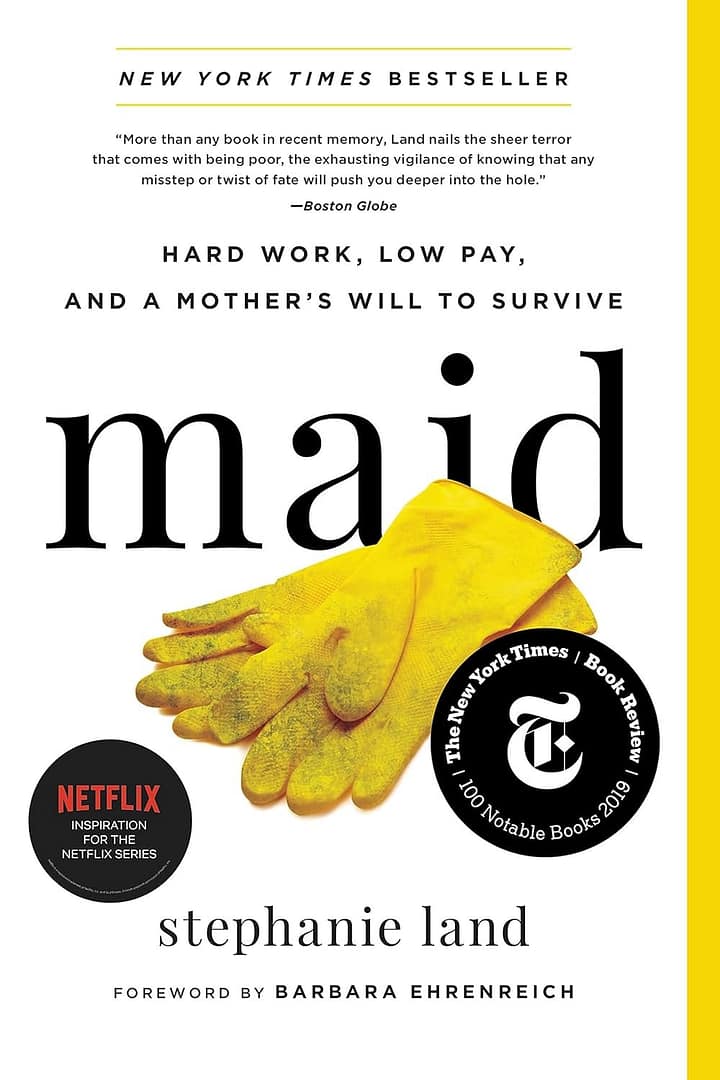
[00:31:30] Bonni: I think I heard him on a podcast. I didn’t recognize the name, but I heard the author of The Black Swan on another podcast. I think he must have been promoting his book on that and I just didn’t remember the name of it. It sounds great. I might just give that a try. My book was the opposite in terms of dense. I was able to read it in about a day and a half and that’s not something I hardly ever do. It really enveloped me in this person’s story. It’s a memoir, it’s called Maid: Hard Work, Low Pay, and a Mother’s Will to Survive by Stephanie land. It’s a wonderful but painful look just at people living right on– I was going to say on the margins but without any kind of margin.
I don’t want to give too much of the book away because it’s her story to tell but some people on Amazon, boy, the Amazon reviews, you just want to go, “No, no, no.” They were mad because she didn’t talk more about what it’s like to be a maid. I’m like, no, she actually talks about it pretty descriptively, but it wasn’t specifically on that as a profession. It’s really about a single parenting story and about a really series of hard jobs and just how difficult they are given the circumstances and issues with childcare and healthcare. I found it very moving. I was glad to see, actually, I went to her website too.
She is a white woman and she does acknowledge, although not as much in the book, more so in her blog, but just about that even though it’s been incredibly hard for her, that she recognizes that when she walks around the world as a white woman, she doesn’t also carry with her the baggage involved in people carrying around things that might evoke racism and other people and things like that. I was glad that she acknowledged that. On a much happier note, a wonderful new online television series has come out by John Krasinski who was in the office. You may be familiar with his acting there and he’s directed and done all other things too, but he has come out with a series called Some Good News.
It’s done out of his home and he must have some either great editing skills or he’s passing that off to other people. It’s just so wonderful. Even earlier when José and Dave were talking about the things that were bringing them hope and the ways that they were being inspired, I felt even just within my own being. I felt my heart rate lowering a little bit and a smile coming across my face. That’s what this television show does. I cannot recommend it enough and it also is one that you could watch with the whole family. My daughter and I just watched the second episode together last night and she was like, can I watch the next one? As of this recording, it’s not out yet, but he says there’s another one coming next week.
[00:34:11] David: My thing– Well, I’ve got a couple of things. I’m going to go in a completely different direction because one of my things is actually a digital game called Return of the Obra Dinn. It’s described as an insurance adventure with minimal color. It’s basically just brown and white. I’ve been playing it with one of my kids and it’s like a narrative puzzle. If you can imagine this, a ship drifts back into the port of Falmouth in 1807 and everybody’s been lost at sea and you have to go onto the ship and figure out exactly who was who and exactly how everybody died. It sounds a little bit morbid, but it’s so atmospheric, it’s so compelling. You gradually piece together who people are and it starts backwards.
It starts at the end. You’re gradually like a jigsaw puzzle of narrative and the music in it is great and the visuals are so simple that it’s so restful on your eyes after days of looking at really glary texts that I’ve actually found it really compelling. I literally woke up in the middle of the night last night and instead of worrying about work, I was trying to figure out this game. I was like, “Wait a minute, if the Cracken came in that chapter, but he wasn’t there-” That’s been great fun and just something, it’s just completely different, but very engaging.
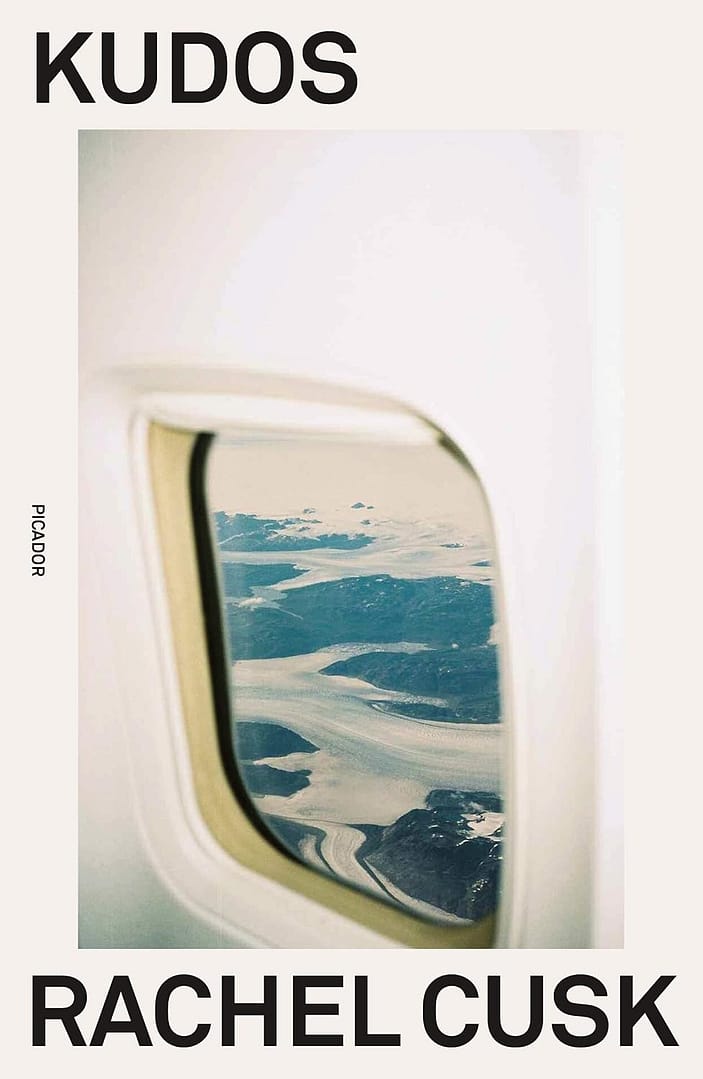
Then the other thing is a novel that I’ve just started called Kudos by Rachel Cusk who, and this is the third in a trilogy with Outline and Transit being the previous two. She writes in this style, it’s very difficult to identify. You can’t quite tell if it’s autobiography or if it’s fiction. It’s definitely somewhere between the two. One of the reasons that I found it so compelling and interesting is because Kudos, this novel opens with her at talking to a man sat next to her on an airplane, like just two strangers might talk but just reading it under these circumstances, it seems so strange. You sat next to someone you’re on an airplane, is nobody worried about that. People are shaking hands, they don’t think anything of it.
I found it just a very, almost startling reminder of how quickly everything had changed. It made me wonder about how we’ll feel about those things when we go back to them or whether we’ll always be modified in our identities in the way we relate to each. It just got me thinking of lots of things just because it opens with that conversation on an airplane and just that seems strange. That suddenly seems strange. That was interesting to me.
[00:36:52] Bonni: Sometimes things like that can be so fun when you’re reading and they just envelop your curiosity from the very first few words. Well, José and Dave, I so appreciate you coming on during this time and sharing little glimpses in your life. What’s bringing you hope, what’s inspiring you and what you’re struggling with. I’ve just really enjoyed this conversation and opportunity to connect with you at an important time.
[00:37:15] David: Thank you. It was a pleasure.
[00:37:17] José: Thank you. It was great.
[music]
[00:37:21] Bonni: Thanks once again to today’s guests, David White and José Bowen. I so enjoyed having this conversation with you. I’m walking away from it feeling uplifted and hopeful and I hope it does that for other people as well. If you are in need of some connections and a little bit of hope, I would love to have us follow each other over on Twitter. I’m @bonni208. There also is a Teaching in Higher Ed account @tihighered. I’d love to connect with you on either of those accounts. Thanks so much for listening to not just today’s episode, but hopefully you’ve been listening for a while and appreciate just this opportunity to check in with one another and see how we’re doing as a community. Thanks so much for listening. I’ll see you next time on Teaching in Higher Ed.
[00:38:15] [END OF AUDIO]
The transcript of this episode has been made possible through a financial contribution by the Association of College and University Educators (ACUE). ACUE is on a mission to ensure student success through quality instruction. In partnership with institutions of higher education nationwide, ACUE supports and credentials faculty members in the use of evidence-based teaching practices that drive student engagement, retention, and learning.
Teaching in Higher Ed transcripts are created using a combination of an automated transcription service and human beings. This text likely will not represent the precise, word-for-word conversation that was had. The accuracy of the transcripts will vary. The authoritative record of the Teaching in Higher Ed podcasts is contained in the audio file.