Follow the Teaching in Higher Ed Podcast
About this Episode
Maha Bali and Autumm Caines share about ownership, equity, and agency in faculty development on episode 252 of the Teaching in Higher Ed podcast.
A lot of the faculty development I offer is very different from my own professional development.
Maha Bali
On episode 252 of Teaching in Higher Ed
Voices on this Episode



Show Notes + Resources
- A call for promoting ownership, equity, and agency in faculty development via connected learning, by Maha Bali and Autumm Caines
- Equity Unbound
- TIHE #223: But You Can’t Do That in a STEM Course with Karen Cangialosi
- DigPINS.org
- Virtually Connecting
- Hypothes.is
- Dual-pathway MOOCs
- Dual-layer MOOCs
- Matt Crosslin’s website
- Twitter Journal Club
- Marginal Syllabus
- Not Yet-Ness
- Intentionally-equitable Hospitality – new article coming soon
- Social Justice & Hybrid workshop opportunities at #oer19
- Mozilla Open Leaders
- Rebecca Hogue
- CCC Digital Learning Day keynote
- “Imagination of how things could be otherwise is central to the initiation of the transformative process”. (Mezirow, 2006/2018 p. 119).
Recommendations from this Episode
Article
Can We Decolonize OER/Open by Adam, Bali, Hodgkinson-Williams & Morgan
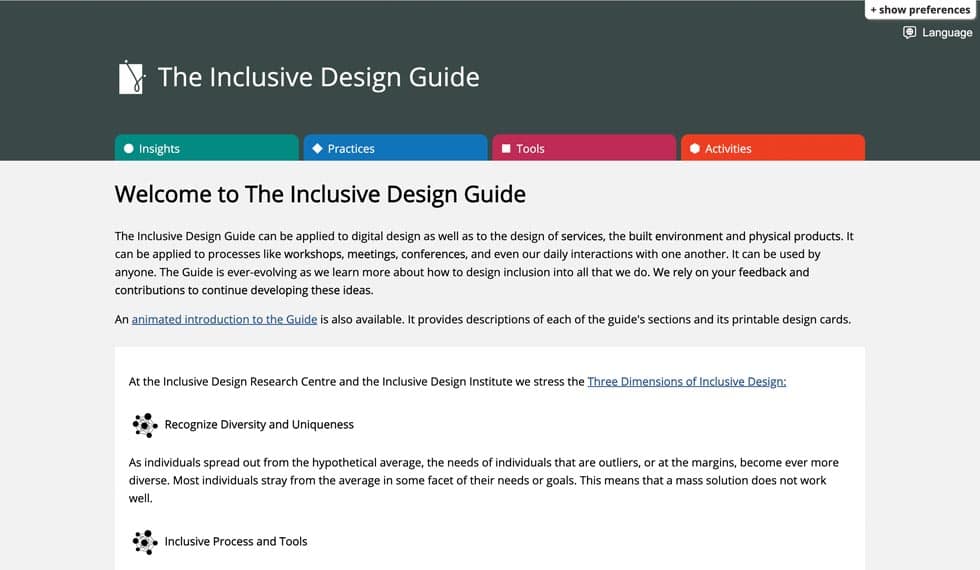
Resource
Inclusive Design Guide
Resource
CCC Digital Learning Day keynote
Podcast
This American Life -490: Trends With Benefits

Resource
OneHE
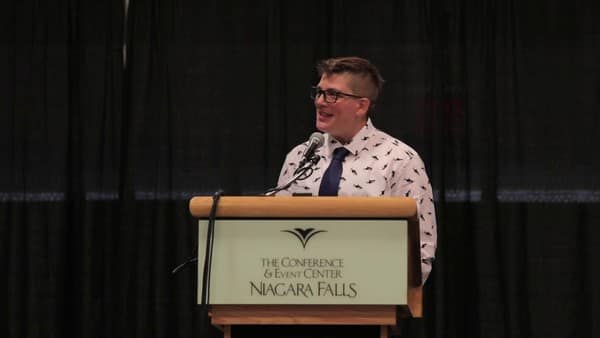
Video
Jess Mitchell keynote
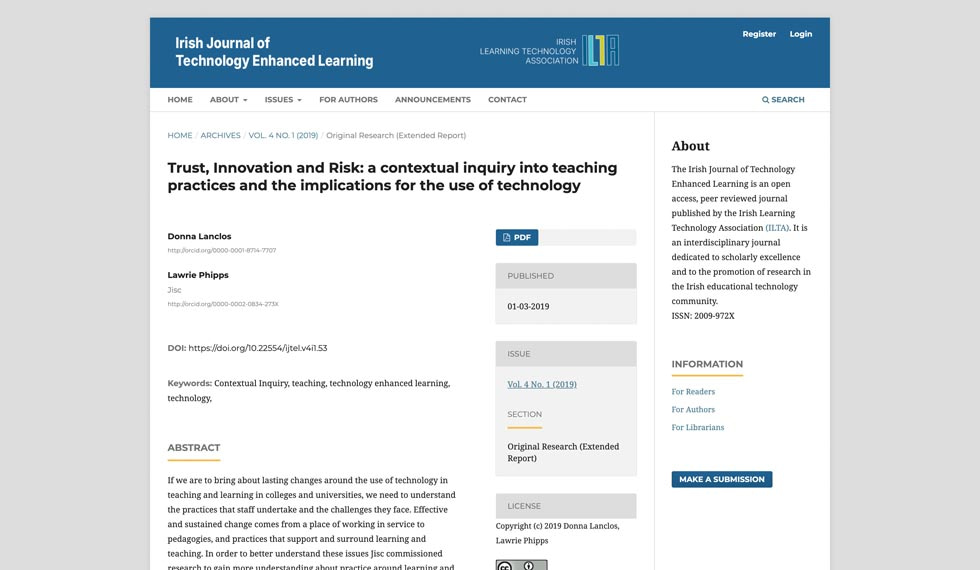
Article
Trust, Innovation and Risk by Donna Lanclos and Lawrie Phipps
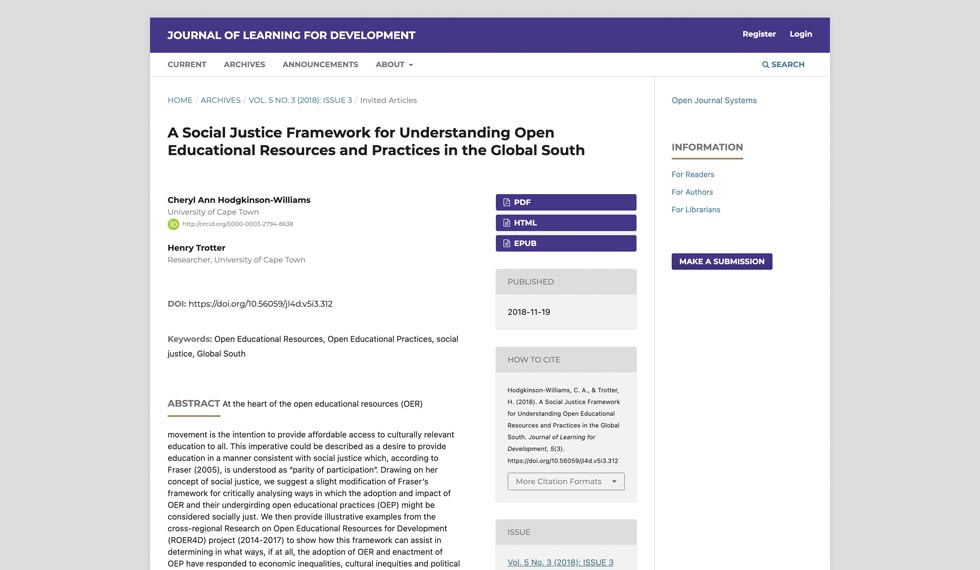
Article
A Social Justice Framework by Ann Hodgkinson-Williams & Trotter
Transcript
Bonni [00:00:00] Today on episode number 252 of the Teaching in Higher Ed podcast Maha Bali and Autumm Caines speak about Ownership Equity and Agency in Faculty Development.
Production Credit [00:00:16] Produced by Innovate Learning, maximizing human potential.
Bonni [00:00:25] Hello and welcome to this episode of Teaching in Higher Ed. I’m Bonni Stachowiak and this is the space where we explore the art and science of being more effective at facilitating learning. We also share ways to improve our productivity approaches so we can have more peace in our lives and be even more present for our students.
Bonni [00:00:53] Today I am welcoming back to the show two former guests and people I just really enjoy having conversations with Autumm Caines refers to herself as a liminal space. Part technologist, part artist, part manager, part synthesizer. She is passionate about the use of technology in education and the many differing facets of how technology impacts society and culture. She likes spending time at the place where different disciplines intersect.
Bonni [00:01:24] Also back on the show today is Maha Bali, an Associate Professor of Practice at the Center for Learning and Teaching at the American University in Cairo (AUC). She’s a full time faculty developer and she also teaches digital literacies and intercultural learning. She refers to herself as a writeaholic/ learnaholic. And I think after you listen to this interview you’ll see many reasons why.
Bonni [00:01:52] Autumm and Maha, Welcome back to Teaching in Higher Ed.
Autumm [00:01:55] Thank you.
Maha [00:01:57] Great to be back.
Bonni [00:01:58] I know there has been a lot going on in both of your lives and so we’ll try to narrow down a little to maybe one thing. Autumm, what’s been new in your life since we last had a chance to talk?
Autumm [00:02:09] Well I’ve started at a new institution and now at the University of Michigan Dearborn in the hub for teaching and learning resources. Super excited to be there for so many reasons. Just a great team and a great group of people. But it’s also my hometown. I am living in my childhood home and back in my hometown so it’s kind of kind of interesting and surreal.
Bonni [00:02:31] I had seen on Twitter that you had made a move but I did not realize it was your hometown. How wonderful.
Autumm [00:02:37] Yeah it’s really great to be closer to friends and family. So that’s really a neat thing in my life right now.
Bonni [00:02:42] And we’ll skip over any conversations about weather because that’ll just create some friction that doesn’t need to be there. [both laughing]
Bonni [00:02:55] Maha, what have you been up to since we last got to talk?
Maha [00:02:58] I was just thinking before I’ve been with you on the show talking about intercultural learning. And since then I’ve been teaching a course on digital literacy and intercultural learning. And since Autumm and I finished writing our article about equity and agency in professional development, I work in faculty professional development. And I’ve been working with Catherine Cronin and Mia Zamora on something called Equity Unbound which is an open connected intercultural learning curriculum that is equity focused and I was using that in my class last semester and Mia and I were all working on it, it was open and other educators could participate. And the website for that is unboundeq.creativitycourse.org.
Maha [00:03:41] This semester we’re not running it in a synchronous way but the resources are still up there and I still use them and other people can use them anytime. I was just interested in the connection between the article we’re doing about equity that we’re going to talk about today and one of the times I came on with you we were talking about intercultural learning. So it all sort of fits together in that thing.
Bonni [00:04:05] Oh yeah and one of the things I don’t know I think you realized this because I think we corresponded over Twitter but you really helped me see an added benefit to having invested all the time and money into transcripts for the podcast that I just didn’t conceive of at all. My big thing, my big purpose for doing it was for accessibility reasons but you helped me see through that project that it also opened up opportunities for social annotation which I know we’re going to talk about as well today. So that was wow. I mean it was really fun because it would be pretty difficult to try to annotate on top of an audio file. I mean it could be done but you’d have to sort of hack your way into it to my knowledge that we don’t have any sort of way of capturing a clip the way some podcasts do. But it was really fun to have that as an option.
Maha [00:05:00] I was going to say awesome, I don’t even remember having that conversation with you. [laughing]
Autumm [00:05:06] And I just wanted to thank you for the transcripts because I actually used an episode that you did with Karen Cangialosi in a faculty discussion board, it was in the back end of the LMS, it wasn’t open but it was part of many resources. And one of them was the podcast and I had somebody who said they didn’t have time to listen to the podcast. There was a point that I wanted to make that was in there and I was able to just go to the transcript, copy and paste that little paragraph and bring it into our discussion. So yeah those transcripts really do help to make it more flexible and bring that conversation into multiple environments.
Bonni [00:05:38] It’s so fun to hear about. So thanks to each of you for helping me see other ways that they’re benefiting people because you know we don’t always necessarily get to hear. And there is a number of people that work on that. One is Sierra who actually takes the automated transcripts and then gets them to actually make sense and puts the person’s names next to them. And then Andrew and I sort of take it from there for actually getting it up on the web site. But that’s not why we’re here today.
Bonni [00:06:04] We’re here today to talk about this wonderful article that you wrote A Call for Promoting Ownership, Equity, and Agency in Faculty Development via Connected Learning. And there’s so much for us to unpack here. And I wonder if we could just start out with the idea of you really had this vision of how this would be able to cross institutional and even national boundaries and how it could combine equity, social justice, and power differences into consideration promoting educator agency. There’s so much here. So I would love to have each of you shared just a little bit about your vision for sharing about these topics and approaches and theories.
Autumm [00:06:51] Well I think Maha approached me about this article and I felt really drawn to doing something in this in this area. I think the idea was sort of nebulous when we started when we sort of hashed out there’s all these different examples that we have open education happening but the faculty development around it sometimes isn’t exactly clear and sometimes doesn’t get celebrated as much, especially the faculty development around it that is sometimes whenever we do any learning it can be kind of removed. So we want to talk about a thing rather than do a thing. And so we really wanted to highlight these examples that weren’t just talking about ownership, equity, and agency in faculty development. We’re just talking about it but we’re actually embodying it, we’re actually trying to create environments where it could thrive.
Autumm [00:07:48] And we had a couple of ideas, a couple of instances from people in our networks that we wanted to highlight. One of the things that I love about the article is the semi functional auto ethnography where we both kind of work through and embody stuff that – we really articulate things that we do every single day just doing community with one another or bringing that stuff into our practice. It is sometimes not visible, you can’t really see it because it’s happening in back channel or because it’s stuff that has to sort of come out as a reflection.
Autumm [00:08:21] So I really appreciate the examples in this article as well as the semi-fictional auto ethnography in it. I think those are the two things that people have come back to me time and time again and kind of said those are the pieces that really stood out to them as being something that they felt like they really were able to walk away with something that they felt like really resonated with them and that they sort of had an aha moment, like they sort of got it. I think I’ll just leave it there. Maha, why don’t you riff on it for a minute.
Maha [00:08:52] So I’ll I’ll go a step back. So for me I got invited to participate in this journal special issue and I was taking a course over the summer, an online course on faculty development for faculty developers who’ve been doing this for a while. And I kept reading about all the faculty development- I’ve been working in fact of 15 years- I’m thinking about my own learning as a faculty developer and how that influences what kind of faculty developer I am and recognizing chatting with Autumm in a back channel the whole time because that’s what we do every day anyway. Is that a lot of the faculty development I offer is very different from my old professional development. So people like Autumm and myself and the autoethnography – the semi-fictional autoethnography shows that it’s like we’re always learning online through Twitter, as we’re virtually connecting, through these other forums that at least my institutional faculty development is nothing like that. If we talk the faculty about “well you should try this with your students,” but they’ve never actually tried it themselves, it’s a very different kind of thing. And it’s scary, yeah.
Maha [00:09:57] And if we want to talk to faculty about giving agency and ownership to their students over their learning, then we as faculty developers need to give faculty the opportunity to practice their own agency, we need to nurture their agents. If you talk to faculty about how important it is to think about equity with students and making sure that their classes are inclusive of their pedagogy, we need to be inclusive in the way we think about faculty development. But then also as an individual, any faculty can do that for themselves regardless of if they are adjunct, if they are graduate students still, like whoever you are, if someone is reading this article of ours and recognizing that all these things exist out there gives them opportunities to think about how they want their own personal development to be even if no one is currently mentoring them or directing them in a particular way.
Maha [00:10:46] So I mean that for me, no one ever told me how to go about this. I started using Twitter for some reason and then I started noticing how other people used it and started to join things and then I discovered things like Twitter journal club which Laura Gogia had started which we mentioned in our article. So as a Ph.D. student, I didn’t have anyone to read articles with. There wasn’t anyone around me in my face to face. I didn’t know anyone online who would help me and I had to read all these articles on my own. And then Twitter Journal Club and Marginal Syllabus now give me a community of people to read articles with online. And yes sometimes it’s someone else who is deciding which article it is. But both of these spaces also allow you to recommend your own articles and then as you become part of them, you can just be doing a thing on your own and invite them into your thing and then have just a larger community of people doing it.
Maha [00:11:39] And I’ll give you another example of myself as a faculty developer. For example, I am in a team of like 15 to 20 people who do faculty development but I’m the only one who uses Hypothesis on a regular basis. My professional development is not a one off thing that goes away, it’s ongoing all the time so I always know what’s happening. So I participate in a lot of these Marginal Syllabus things. So I know a lot more about Hypothesis than the Instructional Technologies who are supposed to do the technology because they don’t use it. They know how it’s supposed to work. They don’t know the very specific use cases. They don’t know the very specific ways in which it crashes or the very specific ways you can use it in a more complicated way or the ways that there are extra things that you can add onto it so that if you’re doing it in a class. So it’s this ongoing learning all the time kind of thing. And for the things that you care about and are interested in- and then when you when you apply them in your classes you’re confident because you’re using them. It is so much harder I think to tell a faculty oh you know this Hypothesis thing and this is how it works vs if they use it all the time and then they let their students use it.
Bonni [00:12:50] One of the – I’m not sure where this fits exactly in the theories that you used. Or perhaps it’s not there and I’m just projecting my own thoughts to it. But because we recently had a conversation about Marginal Syllabus which will have aired by the time this airs and one of the things I really like about Hypothesis is because you can just get started and you’re off and running. You’re not going to know all the ways in which you can expand your use of it. But I mean create an account, install an extension on your browser which if somebody doesn’t know how to do that is a relatively easy technical skill to learn how to do, and then you’re started. You’re off often running and then you can add on additional skills as you go.
Bonni [00:13:36] I recently acquired a piece of technology and was hoping that it would be like that because I use a Mac normally and so I’m just used to like I know that is like the common expression, you just plug it in and it works. And that sort of thought I had acquired something that was like that and it is not at all like that and I’m thinking how to people just to even get started with these things? Because there’s no toehold and I’m so frustrated I want to throw the thing out the window. And as I look over- I’m not familiar actually with all of the approaches that you mentioned. I’m excited to ask you some questions but at least the ones I am familiar with they really do just have this ability to come on in, we’re ready for you. And then to live in what Amy Collier and Jen Ross refer to as not yet-ness and you got to have a least a little ability to live in the not yet-ness. But the tools kind of in my experience the ones that you’re talking about today really welcome you in, I’m not sure if either of you has a thought about that sort of welcoming and an ease to come on in and then grow from there.
Maha [00:14:42] I agree about Hypothesis. So with faculty – and students are much faster usually than factulty in my context might be different in other contexts. But yeah you can get Hypothesis up and running and demonstrate its value in 10 minutes. So this is true. But sometimes a faculty member is coming in and they want something very very specific to do and because I know how Hypothesis works, I recommend Hypothesis for it. It’s a very different thing. You know what I’m saying?
Bonni [00:15:11] Yeah the purpose.
Maha [00:15:12] I know that hypothesis would be able to do the thing that they want which is very very specific like there was one where he needed to do private Hypothesis annotations but using hashtags across different articles that were within the library but not public. So because Hypothesis works in so many different ways, I knew which combination of things to do to make it work. That’s what I was talking about. But the general way of using Hypothesis, it’s quite easy to just hit the ground running. With students I don’t even tell them how to use it, I just tell them to use it and they figure it out.
Autumm [00:15:45] I think often those things that feel natural to us and it feel so welcoming. I think they’re pulling on something that we already have some experience with in maybe other contexts. So I think the big thing that makes Hypothesis so powerful is the fact that it’s social. But if you think about the mechanics of what you do, you highlight a piece of text in a text area pops up that you can write it in. Or you get your choice you can either annotate or you can highlight. That is very similar to other technologies, that’s tracked changes in word. And just like even annotating physically in a hard copy, like the fact that you would highlight something. I mean those those all play on experiences that we’ve had in other environments. But where Hypothesis sort of blows everything up except when you do that you can make that social and other people can see those. But you don’t have to learn those basic mechanical things, you already come to it knowing those things from the other environments and other contexts that you’ve had. And I think they’ve just done a really good job of making that part of it seamless. I don’t think you necessarily see it or you think about it when you’re in there, it just kind of happens and it feels effortless.
Maha [00:17:07] And they’re not the only such tool is a collaborative annotation has existed for quite some time but hypothesis is the easiest one I think to just broke. You don’t get anything. You don’t even need the Chrome extension you can just put it up here is a link and then it’s there. So even when it’s not your own computer it’s like a university. If you’re the captain Stahl things are like the way that them like Haas for example I can install things like. Public just go to run whereas with some other tools you have to install something or not to log into something you know it’s just so there are these little things that make it more accessible and that helps with security. Yes because you want whatever it is you’re offering to be free so that anyone can use to be also a political. It’s also not be the kind of thing like even with hypothesis. So officially I think it’s one of the tools. It’s the least of your data when you create an account just ask for your name and email that’s it.
Autumm [00:18:03] And I think their terms of service or their privacy policy I’d look at it very human readable it’s not like this 14 page document that’s buried in legally is either it’s very human readable.
Bonni [00:18:13] Another tool that of course you’re both from the ground up that’s very equity based is Virtually Connecting and we have talked about it on the podcast many many times previously but you never know when we have someone new listening and also no new things happen in sight of Virtually Connecting all the time as you start to shift and see additional opportunities for infusing that equity has started out of course though. But recognizing that not everyone can get to the conferences they want to get to whether geographic constraints or cost constraints or some combination. And I was also going to say very much like hypothesis we – – and Autumm you’re saying that something we’re used to doing a lot of us are used to – – whether it’s FaceTime or Google Hangouts or whatever just just connecting with others using our phones or our webcams on our computers. And that’s something where most of us are accustomed to doing to some extent and that’s all we really need to start to get involved. But of course that goes deeper than that. You want to share maybe what’s been happening in Virtually Connecting recently or do you want to share a little bit kind of about what I’m oversimplifying here so we’re put some of the nuance on what I’m sharing.
Autumm [00:19:21] Yeah so we have a new article coming out soon where we’ve defined a new term only equitable hospitality. One of the things that has always been attendant virtually connecting is this idea of hospitality but we’ve kind of struggled I think in the past with thinking about it because I do think virtually collecting does hospitality differently than a lot of other places and the term hospitality can be somewhat problematic because hey it can just be reduced to netiquette, right? It can just be reduced to etiquette. It can be reduced to a list of behaviors or a list a checklist. You know if you get everything on the checklist then you’re being hospitable and you’re not right.
Autumm [00:20:08] But the problem especially if you’re working with a globally networked virtual hybrid right because we’re in virtual spaces we’re in physical spaces. The idea of equity becomes it really problematize is the idea of hospitality right because it’s hospitable in one context isn’t hospitable in another and so trying to balance your hospitality across multiple contacts across the globe.
Autumm [00:20:36] It’s an interesting dance I do. And we had some amazing folks who are a part of the community who got to take a deep dive into some of this through the Mozilla. And they help me out. What was the what was the full name of that group?
Maha [00:20:54] Mozilla Open Leaders?
Autumm [00:20:55] Yes.
Maha [00:20:55] A program that mentors over a semester almost a group of people working on an open project. So Virtually Connecting was one of the projects that they mentored and Equity Unbound was another one.
Bonni [00:21:09] Do either or both of you experienced the word hospitality when it’s just on its own as a gendered word?
Maha [00:21:16] We thought Virtually Connecting was a gender thing by the way. I do think of hospitality generally as a gender thing. And I think in general if we were to generalize women tend to be more intuitively hospitable but not always. One of the issues though we all talk about this in a second in more detail but that there are situations where a woman’s hospitality is not intentionally equitable in the sense that the power of the person to which she is being hospitable steamroll over her in a way that she then becomes less hospitable to other people with less power.
Bonni [00:21:53] Yes. Oh I see that still. [laughing]
Maha [00:21:55] Yeah. So let me I’ll explain. Oh I’ll say this in more detail now because it’s going back to what Virtually Connecting is… Virtually Connecting started as a way to allow me personally as an Egyptian mom of a young child – – who is older but still who could not travel to conferences often enough – – and at a point not at all, but now I do travel just not often enough – – to be able to maintain that social networking aspect of conferences. It wasn’t a problem to present virtually and it wasn’t a problem to attend conferences virtually to get the broadcasts. But the problem was those conversational informal hallway conversations that I was missing out on.
Maha [00:22:33] And when Rebecca and I started it – Rebecca Hogue and I started it – it was mainly for a connection between the two of us. So we decided to make it open for other people to join the conversation but also we recorded them in lifestream those others to watch. So at that point the transformative potential for those sessions were for me, mainly, and then for other people who joined the conversations. Some of them were adjuncts some of the international graduate students, but also some of them were people who go to conferences but they just didn’t go to that particular one so it wasn’t really as transformative. It was good but it wasn’t creating an equity thing, right?
Maha [00:23:13] But after we started doing more we started realizing actually that sometimes you have a session with six men who are the onsite guests who are like really high profile people and you’re just really amplifying someone who really high profile or you’re just reproducing power because people who do virtually connecting a lot start to have power. So after doing Virtually Connecting for a couple of years I became a keynote speaker at conferences so I’m not really a person without power anymore.
Maha [00:23:37] In that sense it’s sort of I think it has empowered a lot of us who normally wouldn’t without a voice. So in that sense it’s been transformative for me but what I’ve been learning through Cheryl Hodgkinson-Williams’ work – building on the work of Nancy Frazier in social justice and applying it to openness is that something like Virtually Connecting has a social justice potential – but it’s not in every single contact – every single case and not for every single person. So for some people who don’t have an internet connection at all, who have very poor broadband, for whom synchronous conversations are traumatic, Vitually Connecting would be a negative experience. For someone who is at a conference who does not like to be broadcasted talking then asking them to join a Virtually Connecting experience would create anxiety and would not make them happy. It would not be a positive experience.
Maha [00:24:28] And on the other hand if we keep amplifying white male keynote speakers and not inviting lesser-known voices for example it would be a negative experience in terms of equity. I mean it’s probably fun for whoever else wants to be there. Because sometimes someone who’s like a graduate student wants to meet that person and has is going to learn a lot from being in that situation without a high profile person because they’ve never had a chance to talk to them.
Maha [00:24:53] And then the other aspect of it is that you could put people in a conversation together but then not give the virtual folks an opportunity to speak. Or like have the onsite guest steamroll over them and “hog” the entire conversation. And so again that would not achieve that. And so what we were trying to talk about in terms of intentionally equitable hospitality is that sometimes you actually have to be not as polite or not as nice to the powerful person and the conversation in order to make sure that the less powerful groups have the opportunity to have a voice and to speak and to get what they want out of the conversation. So sometimes you will schedule a session at a time that suits the virtual folks over the years to have to fit the schedule of the onsite folks that you serve with. Is there someone virtual Who’s interested in meeting these people. Is there someone virtual who’s free before you set up the time, you know?
Bonni [00:25:51] Yeah yeah. Those three words together. I’m learning from the two of you right now. Just how they interplay and they each one by themselves would be insufficient. And then they come together and there’s just all this richness to unpack.
Autumm [00:26:06] It’s a lot.
Maha [00:26:07] It took us such a long time to reach that term, actually.
Bonni [00:26:10] Yeah.
Autumm [00:26:10] It did. We went back and forth about what because we realized that hospitality wasn’t really cutting it. We feel like how are we going to describe this thing? Is a lot to unpack.
Maha [00:26:22] And for a while we used radical hospitality. And I think that’s worth mentioning here because it resonates a lot – this concept of radical hospitality – but it also has roots and some religious concepts – and it’s not at all where it came from. But then the other aspect was that someone would hear the term radical and not be sure what we mean by it. Because it can have so many political connotations – which is not what we met. So we thought like intentionally equitable is a very clear – to me it seems clear – of what we’re trying to say. You do it intentionally and needs to be equitable and you know you want to be hospitable in an intentially equitable way.
Bonni [00:27:00] Yeah. It to me it maybe is just my own response to the word radical but radical to me maybe sometimes says you know we’re really on top of this now and it’s this big thing and we’re you know mixing things up and disrupting things. But then we’re going to be done something. And so intentionally equitable hospitality to me speaks to the sustained seemingly small but enormous effort that goes into this. I think of you so often, Maha, whenever I look at my home page of Teaching in Higher Ed because it shows the four or five most recent episodes and it has a circle picture of each of those guests. And if that ever gets to look too off from the kind of diversity that I want to implore on the program I was shaking my head thinking she’s going to be so disappointed in me even though I know you don’t go to my website that often. But it’s just like you from the first time I ever met you, you have been challenging me in such important ways and I’m so appreciative for that.
Maha [00:28:00] But thank you so much for picking up on that continuity. I think the intentionally versus intentional – makes it – – I hadn’t thought of that, I think. And again, Autumm, I’m sure we discussed it, but – I like your observations.
Bonni [00:28:14] Well and of course it’s may be just me projecting things on that may not be there, too, so it’s just how I take it in. Well I want to make sure I don’t let too much time pass by where I don’t ask get to ask a little bit and have you share about a couple the ones that may be less familiar to listeners of this podcast. I know you each share a lot about these things but not not as you know always as much on the show. So let’s start with DigPINS and Autumm would you share about that effort?
Autumm [00:28:41] DigPINS is an acronym it stands for Digital Pedagogy Identity Networks and Scholarship. It is an open faculty development curriculum that’s available at DigPINS.org. It was originally created imagined and created and designed between Sundi Richard and Daniel Lynds – when they were at St. Margaret’s College. They’re now at Davidson College for a while I worked at St. Norbert College and deployed the curriculum.
Autumm [00:29:09] And last year we started like running it concurrently between institutions so it’s a faculty development curriculum that takes place completely online. The content is to look at digital pedagogy identity networks and scholarships so each week we address each one of those things. When we started running it concurrently with other institutions it became more networked. So we’re still working on that and running it. I think there are some institutions that are thinking about running it this summer. We’re having some conversations about it. The curriculum is open.
Autumm [00:29:48] Anybody can go to DigPINS and look at the curriculum that we have there. But we also invite people to contact us through the website and work with us to create these kind of networked experiences. And it’s all hashed out in an article that we were talking about too that Maha and I coauthor together so they’re looking for more of a description of what it is – the article and the Web site I think do a job.
Bonni [00:30:14] Oh absolutely. And there’s one more I want to ask you to share about either of you. Before we go to the recommendations and that is one that I’m the least familiar with is… I know what a MOOC is like imagine that MOOC with an “s” means more than one and then the front is dual pathway MOOCs. So what can you share with us about that?
Maha [00:30:33] I think they have a new term for it and Autumm – I don’t know if you remember it… Is it dual layer? But the idea of the dual pathway is – we know about MOOCs that are inside a space like Cousera or EdEx. They are more familiar to people and then we know about the connectivist MOOCs that are upon like Twitter and social media and you do whatever you want whenever you want kind of thing. The dual pathway I think is great in terms of recognizing individual agency but also equity in the sense that you can choose between the two at any point. So it’s not like you choose to go totally connectivist with the same MOOC, right? So you’re learning the same general learning goals same topic but you can either go just stick to the LMS or you know the closed space of the Coursera or at EdEx and just use the discussion forums there and do the assignments there or whatever.
Maha [00:31:25] Or you can go out on social media and blog about it and do whatever you want or you can go back and forth between them depending on where you’re most comfortable. And I think the first thing is to recognize that a faculty member during faculty development really should have the opportunity to do that. Whether they’re doing it like with an online thing on their own or in formal faculty development. That they should have the opportunity to switch paths and that if we want to encourage people to try that with their students maybe they want to experience themselves as well before they try that kind of thing with students. Because it’s a bit scary sometimes to allow different students to do different assignments or to have different pathways within their course. So that’s generally what that means.
Bonni [00:32:10] The dual layer concept to me sounds like more descriptive of what you’re describing. So I’ll have to I’ll look and see if I can find things to post and the show links on either of those approaches. But of course back to the article which articulates it.
Maha [00:32:23] Yeah, because it’s not really two pathways, right? There are like a thousand different pathways right. You can keep going back and forth. You can do both together. So, yeah, probably the layers is probably the better word.
Autumm [00:32:33] I think that Matt Crosslin has done a lot of work in that area.
Maha [00:32:37] And he’s the one we cite, mainly. He’s the one we cite, mainly, in our [article]. He’s done it with several different people, I think. He’s the first…
Bonni [00:32:45] Well before we get on to the recommendations segment I know I just barely skimmed this or any last thoughts you want to add before we transition into that?
Maha [00:32:55] I think for me, as a faculty developer – this article was walking the talk. That if I know something works or something that I think people should try with their students I think I should apply it to my own faculty development practice – not just in my own teaching. And I think that is generally lacking. And it’s not – maybe some faculty developers don’t do the kinds of things that Autumm and I do anyway in our daily lives that I think we need to give faculty the opportunity – the experience – so that they can then decide – have the agency then to decide what works for them and then based on that be able to make better choices for what works with their teaching philosophy with their students.
Autumm [00:33:37] Yeah I think if I can build off of that a little bit. Another thing that I’ll call out.. Call out that the article is a call, right? It’s a call for ownership, agency, and equity in faculty development via connected learning. And that was a really important piece that we addressed in the introduction. It was part of a larger series of articles that was to address the future of higher education – digital approaches in higher education kind of thing…
Autumm [00:34:05] And the problem with addressing the future a lot of times is that when folks try to do it they do get very deterministic as to predict the future. This article was not an attempt to predict the future so much as to call for a future that is more equitable. And it does create those outcomes that address agency and ownership. So that’s just something that I’d like to end with – as remembering that context as well.
Bonni [00:34:30] Today’s episode is sponsored by TextExpander. And we’re grateful for their continued support of the show now for more than a year. And I have shared previously that it is a tool that I install as among the first applications any time I get a new device a computer, or a smartphone, what have you. And what it does is it takes messages or data that I may repeat over and over again and makes that process automated. So when I want to type in a work phone number, I just type in the little snippet the little shortcut of keys that I know to to insert that and I don’t even have to remember my work phone number and I never do. And if I have got the show notes ready to go for an episode, I just type in TiHE as an Teaching in Higher Ed, SN for show notes and all of a sudden it fills in with all the information I’m going to need to include in those show notes.
Bonni [00:35:27] So I would really recommend that you check out TextExpander and see how it might be able to help save you time and also improve the quality of messages that might go out amongst a team. You might have e-mails that you want to sound the same and you can also personalize them but you might want to sound the same across various team members. For example, if you go to TextExpander.com/Podcasts you’ll be able to learn more about TextExpander let them know you heard about it from us here on Teaching in Higher Ed and get a discount all for visiting that site, 20 percent off your first year. So thanks again to TextExpander for saving me so much time and so many headaches. And thanks also for sponsoring today’s episode.
Bonni [00:36:09] And now on to the recommendations segment. This is the point in this show where we each get to share our recommendations and mine is related to the last line of the article- or no sorry the first line of the article. You would think I could get that straight. This is how you begin, the very first sentence is a quote I can’t pronounce the individual’s name. But the quote is: “Imagination of how things could be otherwise is central to the initiation of the transformative process” by Mezirow.
Bonni [00:36:39] The reason I wanted to share about that particular quote is that I’ve just been obsessed lately with the idea of imagination and how a lack of it can really hinder our work in every area of our lives. And I’ve been doing a lot of speaking around this, just even on this word and this concept of imagination and often playing clips from a This American Life episode. It’s number 490 and it’s called Trends with Benefits. And the interview is Chana Joffe-Walt going out and spending some time as a journalist in the community in the United States that has the highest claims of disability in the nation. And she ends up having a conversation with this woman and asking her about her dream job. And I don’t want to give too much away because I want to recommend that people listen to it. But the woman’s dream job is limited by her imagination and how her her entire life has been framed by her disability and her constant pain. And it’s just a really really powerful look at that. And if you’d like to hear me share a little bit more about that I was able to speak at the CCC Digital Learning Day event recently and there is a link I’ll put in the show notes that would allow you to watch that talk and and hear those clips and get a little bit more of my description than I have time to give now. But I’m captivated just by this idea of how we could all just continually be working to expand our imagination and I could see why you chose this as the starting point for the article just because it really does frame so much of when we do these kinds of things that you’re prescribing. We just have that continuous expansion of our own imagination and it helps in so many areas of our life. So thank you for that. And Maha, I’m going to pass it over to you.
Maha [00:38:40] Thank you. So I’ve got three things on my mind. Very quickly. One of them is I’m really really inspired by the work of Cheryl Ann Hodgkinson-Williams and she recently coauthored (she’s from the University of Capetown, South Africa) with Henry Trotter about applying social justice models to open educational resources and practices. And that article, I will give you the link to. It is an article worth looking at so that people who care about equity and social justice and look at different ways of applying it to ways we use educational technology for example.
Maha [00:39:17] Another thing, buildings slightly on that is I’m working with Cheryl Ann Hodgkinson-Williams, Taskeen Adam, and Tannis Morgan on a workshop at the OER conference in April, not sure if this podcast will be up by then. But that workshop is on decolonizing open. Can we decolonised open? And we’ve written a blog post about that which I can share. And the workshop will be hybrid because I’m not going to be at the conference so others can join the workshop if they wanted.
Maha [00:39:46] The third thing I want to share is slightly different. There’s a new network for educators called OneHE. It’s kind of like a learning community that’s a lot like social media but it’s mainly for educators. And it’s sort of semi-closed, semi-open. And I’m interested in exploring that space because of the way it’s designed to sort of be a supportive space for faculty or educators to work together. So it’s not like you go to Twitter and then you’re free on hashtags. How have something you know it’s a space that’s only for educators. It’s I think for the first few months it’s free. And then after that it’s a very small fee and like depending on where you’re from in the world, it can be really affordable. And the reason they take money for it is that to keep it sustainable and they don’t collect your data the way that social media does and because they offer things like small grants to people who are part of the community and mentoring among people. And I’m excited to see how that goes. It’s very very new. I’m on the advisory board but I agreed to join the advisory board because I’m interested in how this might develop so other people might be interested like me.
Bonni [00:40:54] Thank you so much. And thanks for the links. I’m trying to search but some of them, I’m not finding so that will be helpful for me. Autumn, how about you?
Autumm [00:41:02] Ok so I’ve got two. I was able to attend the Open Education Conference in Niagara Falls a couple of months ago and Jess Mitchell was keynote at that event. And that presentation is available on YouTube, I’ll get you the link to it. It’s a great presentation. I think that everybody should watch it.
Autumm [00:41:24] Another thing connected to Jess’s work is the Inclusive Design Guide which was developed by her office. I’ve just been spending a lot of time on this thing. It’s not a linear guide, it’s something that you can kind of dive into and sort of come at a bunch of different directions in terms of insight practice’s tools and activities. And I love those kind of things that I can just kind of jump into from multiple directions. I’ve been spending a lot of time in that.
Autumm [00:41:50] The other one that’s been on my mind lately there’s a new article out from Donna Lanclos and Lawrie Phipps in the Irish Journal of Technology Enhanced Learning called Trsut, Innovation, and Risk: a contextual inquiry into teaching practices and the implications for the use of technology. It’s a great qualitative study of faculties use of technology that doesn’t start with technology start with the experience of faculty members as teachers but asks questions about technology especially the work around trust is very interesting to me. So I’ll get you the links to all of that, Bonni.
Bonni [00:42:25] Thank you so much Autumm. And thanks to both of you for coming back on the podcast and sharing all these rich things for us to think about. And you started out talking not to think about but actually do something with and have lived up to that promise for us today. I hope people will go visit the show notes and take a look at these things and start doing some stuff and experimenting. Thanks to both of you so much for being here.
Bonni [00:42:50] I’m so grateful for this once again opportunity to speak with Maha Bali and Autumm Caines, thanks to you for being on today’s show.
Bonni [00:43:00] And thanks to all of you for listening. If you are not already on Twitter and wanting to explore it to all three of us are up there and you can find links to our Twitter accounts on the show notes and we’d love to engage with you there as you start to explore some of these ways of expanding your own professional and faculty development. And please feel free to connect with us there. And we’re looking forward to upcoming episodes where we continue to be a challenge in these ways. Thanks for listening. And we’ll see you next time.
Teaching in Higher Ed transcripts are created using a combination of an automated transcription service and human beings. This text likely will not represent the precise, word-for-word conversation that was had. The accuracy of the transcripts will vary. The authoritative record of the Teaching in Higher Ed podcasts is contained in the audio file.