Follow the Teaching in Higher Ed Podcast
About this Episode
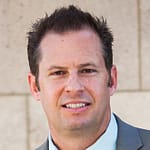
Doug Grove discusses practical program development: what works and what doesn’t when building learning experiences for today’s students on episode 82 of Teaching in Higher Ed.
We see a lot of benefits of synchronous class sessions, but we’re not sure every student wants that. There’s a tradeoff with flexibility.
Doug Grove
On episode 82 of Teaching in Higher Ed
Voices on this Episode

Show Notes + Resources
Transcript
Bonni [00:00:00] Today I have a conversation with Dr. Doug Grove about practical program development, what works and what doesn’t when building learning experiences for today’s students.
Production Credit [00:00:12] Produced by Innovate Learning, maximizing human potential.
Bonni [00:00:23] Welcome to this episode of Teaching in Higher Ed. This is the space where we explore the art and science of being more effective at facilitating learning. We also share ways to increase our personal productivity approaches so we can have more peace in our lives and be even more present for our students.
Bonni [00:00:50] Today I welcome to the show Dr. Doug Grove. He’s the Associate Provost Vice President for Enrollment Management and Program Development and he has been in the field of education his entire career. I’m fortunate to have worked with him previously and still in a way today which I’ll explain in a moment but let me share a little bit more about his role.
Bonni [00:01:14] He has a role in developing online and blended programs and courses Faculty Development and online teaching. And he coordinates the efforts between the business office marketing adult and graduate admissions and the Office of the Provost and his role changed even a bit recently.
Bonni [00:01:35] Hence the new title that just rolled out and what he does really well is build things and that’s what I’m so excited to be able to talk to him about today. He has a Bachelor’s in English from Concordia University, a Master’s in Educational Technology from Pepperdine University and a Masters of Science in Leadership from Cal State Fullerton and a Ph.D. in Education from Claremont Graduate University.
Bonni [00:02:00] He has extensive experience in writing state and federal grants totaling more than 12 million in research funds. He has four peer reviewed journal publications, two book chapters, three published books, and 46 paper presentations domestically.
Bonni [00:02:17] And Doug has taught English, Business and Physical Education in public and private school settings. He has served as a high school Vice Principal, the Coordinator of a County Office Assessment Unit and a School Board Member. Doug Grove, welcome to Teaching in Higher Ed.
Doug [00:02:34] Hi.
Bonni [00:02:35] Well I know that when I read your bio I probably sounded like I don’t know you but you and I for people listening who won’t know this we actually know each other. You know we used to work together at the institution. I am still out now and I was telling you before I pressed record that I actually technically work for you still now as an adjunct to a few times a year in a program that you developed. Doug how would you describe your early experiences with using technology in a learning environment.
Doug [00:03:03] Well my background actually was in K12 before I came into higher education so much of my early use of technology was in environments teaching in middle school teaching in high school I was a English teacher kind abide by trade and by bachelor’s degree.
Doug [00:03:18] So I was fortunate enough in Anaheim Union High School District to work on several technology grants for one of our big comprehensive high schools there. And I had the opportunity to teach but then to also train teachers. But that was years ago.
Doug [00:03:34] So that was you know the high end of PowerPoint and things things like that that we have you know much better options for today more recently. And you know Bonnie when you and I work together I had the opportunity to work on some master’s degree programs and move them into an online environment.
Doug [00:03:56] And then where I am now at Concordia I’m fortunate to have you know for instructional designers that that build courses we’ve been on a pretty good pace of Concordia we’ve we’ve put out about four to five programs a year in the last two years.
Doug [00:04:15] And those programs they are offered fully online today and also in a hybrid version. So more recently my my involvement with technology is really leading a group of people to to work with program directors that are building new programs and really take a look at what are some of the best technologies be it articulate or you know video that we produce in-house for content specific things and then for synchronous sessions you know we utilize it they’ll be connected.
Doug [00:04:47] So to help them you know help bridge that gap between academics and the technology side and what’s going to best help them meet their learning outcomes. How the technology aligns to help them do that not only in graduate programs here Cordia but also an adult degree programs as well.
Bonni [00:05:05] What are some of the things that today’s students are asking for. That it both makes really good sense because it really does facilitate learning well for them but also makes good business sense for them because it’s something that they really desire.
Doug [00:05:21] You know when I think about that question I think the one thing that comes to mind is just constant communication constant may not be the right word but consistent communication.
Doug [00:05:31] So one of the things that we we see not only the course evaluations but also what the what the student is wanting is they still want high touch even though it’s online. Many of the students still want to make sure that they’re getting consistent communication with the faculty member.
Doug [00:05:49] They obviously like in any in any you know relationship they want decent customer service as far as you. Getting back to them on time and in a timely fashion.
Doug [00:05:59] So I think communication is still a big piece that is not only as you said important for the students but also important for the learning process as well. Whatever that vehicle of communication is you know it could be it could be e-mails.
Doug [00:06:14] It could be something within the learning management system in a consistent way that the announcements are done for the course. But I think that communication is still very important on both fronts. You know students want flexibility so we’re we’re located in California and we’re right in the middle of two very busy freeways.
Doug [00:06:33] And most people aren’t going to want to drive here. They want the flexibility of being able to come to class online. They want the flexibility of you know maybe not having to come at a specific time but being able to come on their time so that continues to be an important flexibility for them.
Doug [00:06:49] I would say that that flexibility piece can be a challenge on the academic side as far as what kind of content you have to develop to allow for that flexibility but that gives us an important way to look at classes as well.
Doug [00:07:02] We obviously we have to meet our learning outcomes but we also have to attract students and be able to retain students. So we have to be considerate of their desire to want that flexibility within our programs as well.
Bonni [00:07:16] I was thinking about you talking about the consistent communication the program that I teach for you is for educators I teach a class that is involving technology and leadership for educators and about three weeks ago.
Bonni [00:07:31] I have a problem with my wrist and my hands and sometimes especially high peak grading times are tough for me I get in a lot of physical pain and there was a assignment that had a rubric but it just made more sense instead of me typing out my comments I just did a little screencast.
Bonni [00:07:50] And I actually used a combination of a program called tapes tapes on the Mac and it’s just a one click thing. It records whatever’s on your screen and your voice and then it gives you the link back. But it has a 60 minute limit.
Bonni [00:08:03] So when I reach to my 60 minute limit then I flipped over to use snag which to snag it also has a really nice workflow for a really quick quick screencast.
Bonni [00:08:12] At any rate I just screencast add the rubric and talk them through about where they landed on the rubric and then I showed them their paper and says these are doctoral students they’re getting ready to work on their dissertation.
Bonni [00:08:23] I said hey this doesn’t affect your grade but I thought I’d let you know that if you actually did a hanging indent on your list of references you wouldn’t have to sit here and put space space from a single line and they were completely blown away by that.
Bonni [00:08:37] It’s just so funny because to me I was partially doing it because I know people like voice grading but also just sadness and pain and it’s so much easier for me to communicate that way and add such richness to them I really do see that and that I even think that they like that more because it was they can do that on their own pace at sitting on their own computer and watch those things. It’s really cool.
Doug [00:08:59] Yeah absolutely. And you know it’s another venue for communication.
Bonni [00:09:03] What are students of today not asking for that they may be don’t even realize that they need or at least would benefit from.
Doug [00:09:11] Yeah it’s a good question. You know and it it it’s interesting because at Concordia we spent a lot of time making sure that the learning management system was easy to navigate.
Doug [00:09:22] So we really tried to create a learning environment within the learning management system where students come in they know they go to week one of the class and everything’s there and I’m not sure that I would say that something we did on our end because we knew it.
Doug [00:09:38] It’s kind of a best practice and you don’t want students you know you don’t want students to come to a class and get lost for an hour trying to figure out how to navigate the class learning management system in the classroom. I think to a certain extent at least new students we have they don’t know any different.
Doug [00:09:54] So they come to a class as well organized and they think you know that’s just the way that’s the way it is. That’s the way it should be. I’m not sure that kind of organizational scheme or structure is anything that students are are really looking for the synchronous sessions we’ve done we’ve built into many of our programs required synchronous sessions for some students.
Doug [00:10:16] You know it’s kind of it’s kind of like the student that wants a face to face program still or the student that wants an online program. Still not all students are going to be great fans of those synchronous sessions.
Doug [00:10:31] And you know I think what we realize is part of those synchronous sessions is is it’s a good relational piece of good communication piece for our faculty especially when we have faculty that do a really good job of teaching online.
Doug [00:10:45] I’m a big believer that that helps retention and that the students they get the opportunity even though it is online to engage in real time with the faculty.
Doug [00:10:55] So I mean we see a lot of benefits but I’m not so sure every student really wants that. There’s the tradeoff for flexibility a little bit. So you want to have these required attended synchronous sessions. But you also are trying to provide you know a decent level of flexibility to the to the consumer.
Bonni [00:11:12] It’s one of those things that if given too much flexibility then there can almost become at least in my experience just the snowball effect.
Bonni [00:11:21] And by some point they’re so buried that they just can’t catch up and then it’s going to be really hard if especially I don’t know if all of the programs are designing are through a cohort model are they are they all cohorts are you doing some differently than having students.
Doug [00:11:35] Yes some of the programs are cohorts like a doctoral program that you teach in the cohort program and then we have some other programs that the student can enter at any point in the program. So whatever courses are being offered they can start so eventually you know there’s a little bit of flexibility there.
Bonni [00:11:51] Yes especially the cohort ones though I miss that opportunity to take the class because they got too far behind and I couldn’t catch myself up.
Bonni [00:11:58] Well then it’s going to be perhaps a full year maybe not quite a year but before I could catch up and then I guess you’re just probably potentially losing some students maybe you didn’t need to if they had just that little extra.
Bonni [00:12:11] I say this as someone by the way who went to the gym to workout this morning because there’s a jazzercise class and it starts at night 15 and if I’m not there they don’t wait for me. That’s when I miss that.
Bonni [00:12:22] And I think that there’s a lot of research out there I should say I think I know there’s a lot of research out there that shows that those accountability piece along the way help people complete online programs better.
Doug [00:12:32] Yeah and I know the one the one piece we have just because I just got out I just finished teaching MBA course. These are seven week courses and I had a couple of students that had a bunch of travel for work and then I had a student in France.
Doug [00:12:47] So what I did was if we had some lectures sessions I would check those out in like 10 or 15 minute segments and so I gave the students the option of you can show up face to face. You can show up online or you can watch the recordings.
Doug [00:13:02] And so I kind of gave them that high flex option because two of the students were you know they just they work and be able to finish the course. If they had to show up to every class period and they were good students.
Doug [00:13:14] So you know for them for them it was fine. It worked it worked out so that we builtin you know we have some flexibility where we can do some of those things and offer them to the students. We’re not we don’t have a program yet that is a completely high Flex program like that. But I think that’s something we’re definitely going to get a pilot.
Bonni [00:13:33] Speaking of programs what’s a program that you’ve had a chance to build from the ground up that you’re most proud of in terms of best meeting the needs of learners.
Doug [00:13:44] I would have to say we’ve learned so much but probably one of my one of my favorite programs here that we built right away is our master’s degree in educational administration. It’s a very high demand program that we offer and we build into that.
Doug [00:13:58] We kind of build into that some it’s fully online but we built in some required synchronous session attendance. We have some really good learning modules in that program.
Doug [00:14:10] And you know I don’t know if it’s the speed at which we you know we we finished that program up in about eight months and it was like 10 courses.
Doug [00:14:18] So it was like a sprint but we had some we had some great subject matter experts people that are out and out in the field you know doing administration in our schools every day and they just had a real good sense of what was needed how we could improve upon the face to face program that we’ve been very successful with for years.
Doug [00:14:40] You know the other thing I think that makes me really like that program is it had immediate enrollment success. So as soon as someone that’s you know responsible for overseeing enrollment management here Concordia I really it helps when a program hits some really good enrollment targets right out the gate.
Doug [00:14:59] So it was a well well-received program. We’ve got we get great feedback on it and it kind of within the first year that that program was out it the enrollments in that program surpassed the face of the traditional Face-To-Face program.
Bonni [00:15:15] And what kinds of things have you built in because I know you have done that in other programs. What have you built into this program to keep it more though that high touch with the instructors. So I mean what kinds of sizes of classes do you have and how do you keep that high touch.
Doug [00:15:33] Yeah so we keep the class size around 12 and you know we may push that to 15 but typically it’s about 12 and then we’ll open another section. We do have a specific place in the syllabus and every faculty member is required to do some individual advising.
Doug [00:15:51] There’s a little wiggle room with that we will have professors that want to pair people up and do you know like one on two advising. I think that’s one piece that helps that kind of high touch high connected.
Doug [00:16:03] As I mentioned they do synchronous sessions so I believe they’re synchronous sessions. That’s an eight week program. Those courses run in eight weeks so I believe they have synchronous sessions on week one week three weeks five weeks seven and then I think they do some for some of those courses they do presentations in Week 8 and those are those are recorded and the students show up to those in a synchronous fashion as well.
Doug [00:16:27] So those are some of the high touch pieces. One thing that we we require in that program too is every week at the beginning of the week the professor has to record kind of an intro video. You know usually two to three minutes that just says hey you know this is Professor Grove.
Doug [00:16:45] It’s week one of the class. Here’s what we’re doing this week. Here’s some of the things that you want to pay attention to you know be sure you read that article from so-and-so because the discussion boards are really going to focus on some discussion thread questions that have to do with that article.
Doug [00:17:00] So we think that’s another piece that just creates a real you know high touch for the student. They know that every week before they start looking into the what’s in the class that week they can listen to the professor give a little 2 or 3 minute overview of what’s going to happen that week and what they should focus on.
Bonni [00:17:16] And is there anything behind the scenes that you might share around how you made that happen. Because I imagine that perhaps not every professor you’ve ever come across would be able to easily say Hey great I’ll put it two to three video. I got it. Check. What tools are they using or what coaching did you give them to be able to do that successfully each week.
Doug [00:17:37] Yes so we we do have someone that does that specifically just works on the faculty development and faculty training side and we model best by example.
Doug [00:17:49] So I know that I know that John the guy that works for us he’s he’s done a lot of one on one trainings with faculty. He’s done some larger sized trainings with faculty with a program specifically let let let’s say our school of professional studies let’s say they’re going to launch a new program.
Doug [00:18:06] What we will do is when we bring in the subject matter experts to train them to build the courses we’ll go over all these course requirements so part of it is one having those requirements in the program director saying you know if you’re going to teach in this program you’re going to do this intro video. So I mean at one level it’s kind of it’s a little bit top down which you know in our case has been well received.
Doug [00:18:32] So you know and you know with that specific example no one is arguing that it’s not a good idea to have an intro video. It’s obviously it is a good idea but then we have to have you know John be able to train them to do that whether it’s I mean you can you can you know I do this when I teach. I just use my iPhone.
Doug [00:18:50] I mean I I video myself I uploaded to YouTube and then I posted on blackboard and it can be that simple or if someone wants to use the you know some of the other products that are out there to tape themselves John will sit down with them or we also have we have a short little five minute video that goes through that process of taping yourself loading it up and then putting it into blackboard.
Bonni [00:19:14] I’m not sure if you or John recommend this but because I run across it so much with the students I work with and I suspect people listening might not know that I know this. YouTube has I believe three settings for a video.
Bonni [00:19:25] It can be private. Well if you are private and you post it no one’s going to be able to see it. They have your log in or so. So you don’t want to do private but there’s two other ones you could choose. You could do a completely public which means that it’s going to be in the search engines of YouTube.
Bonni [00:19:41] And anyone can come find it. And maybe that’s what you want for your course because you’d like to invite other learners who are just interested in the topic that you’re talking about but probably for an intro video the best setting for people would be unlisted.
Bonni [00:19:54] And unlisted just means that I have to have the link in order to see your video it’s not going to show up on your channel. And it’s not going to show up for anybody to search for it so the only way they can get to it is through that link and then you can easily embed through YouTube on whatever learning management system or tool you’re using.
Bonni [00:20:11] So I would just highly suggest people check out unlisted as an option for your videos especially intro videos like this what is a mistake that you’ve made in terms of designing a program or class that you think of frequently today when you’re designing programs or classes.
Doug [00:20:27] Oh probably a lot. This may sound a little bit strange but I think one of the mistakes we made early on when we designed some of these programs was we’re trying to be all things to all students.
Doug [00:20:42] And so I would say you know if I had to go back I mean there’s an every program and every you know every program specifically is a little different. You know the learning outcomes are obviously going to be different the way you need to get at the learning outcomes are going to be different.
Doug [00:20:59] And we have I will just say one of the bigger mistakes we’ve probably made is we just took our structure and placed it on any new program. So if if I were to do some of these programs over again I probably would sit down with the program more in the beginning better understand the syllabus the outcomes and then kind of work backward. I think we’ve just you know we’ve done a lot of production and we just keep moving courses through kind of the same production model.
Doug [00:21:34] If we could a backward map to some of these programs I think we would’ve probably made less mistakes and probably would’ve created. You know I mean we have we have a really good program.
Doug [00:21:43] Don’t get me wrong but you know I think we would have we would have done some things a little bit differently like the asynchronous sessions.
Doug [00:21:50] You know those need to be in every class you know. Should that be a requirement across the program that every course is going to meet these nights in a synchronous format. I think of like certain law courses or pharmacology courses I’m not sure how many synchronous sessions you need in some of those classes. I’m just not sure how valuable they are.
Doug [00:22:13] So I think if you know if I’d say we’d make one mistake or if I would say a mistake it’s all. It’s always a you know it’s always a push pull which is a line that you know you want to you want to do the best job you can.
Doug [00:22:25] Aligning the use of technology to those courts and program learning outcomes and you can all we can always tighten that up. I just think we’re going to we’re going to use a couple programs a little differently here in the next year and we’re going to try to kind of tighten that alignment up on the front end versus you know noticing that we need to tweak it later on down the road.
Bonni [00:22:45] It reminds me a little bit of a recent guest that I had on who talked about times for telling. Know if you’ve ever heard of that before but it’s basically instead of I was thinking of always the flipped classroom.
Bonni [00:22:59] Okay. For me the Friday session well that’s where they get they watch a few Penn casts online. They take a quiz to make sure they’ve done the reading and then I see them on Monday and on Wednesday and that’s more active learning small case studies and classes.
Bonni [00:23:13] And that’s that’s how and that’s sort of what I’m hearing you describe while I have this I have this structure it’s worked well. It does. It is designed around certain learning theories.
Bonni [00:23:25] But what he really started to challenge me to do more was to think about well what if it was actually the Wednesday at the last thing in class that you could create some mystery for them. And he I think he turned remember that he’s either in math or science.
Bonni [00:23:42] But for him it was you know how do we start to just unravel this little piece and get them serious about solving this problem because then when they go to watch the Friday videos when they’re on their own they already have their curiosity piqued because you did that in the classroom with something that was a little bit more powerful.
Bonni [00:23:58] Like for me I kind of I still think yeah having a basic architecture around a program as you said earlier with your LMS I don’t want to have to teach to every single class you have to reteach yourself where does this person put the assignments and where does the person that thing.
Doug [00:24:14] Where do I post my homework.
Bonni [00:24:15] Yeah this person does it by week. But the other person does it by topic. I’m really confused and you don’t want to confuse people in an already rigorous and fast paced program.
Bonni [00:24:27] But at the same time being willing to give up that structure if it makes sense and having that healthy tension is what I’m hearing from you.
Doug [00:24:35] Yeah I think there’s I mean look the Socratic model is really what I think we’re we’re all trying to get out in higher education even even in traditional higher education that’s largely face to face. You know we were we want students to review what they’re supposed to review.
Doug [00:24:49] We want them to come ready to be in class and to actually engage in some you know some deeper level discussion whether that’s on a discussion thread or it’s in a live synchronous session. You know we want them moving.
Doug [00:25:01] We want them moving from the lower levels of Bloom’s to the higher levels of Bloom’s and you know helping them take those ideas or take those concepts make application out of them or make evaluation out of them and have a much more you know rich discussion discussion.
Bonni [00:25:19] Yeah I mean really and I really like that tenten it’s both. It sounds what you’ve essentially said to me is it does your success and your failure all wrapped into one. That tension is part of that success for you because if you did unpack every single thing before you got it started on it you’d never get to rule anything out.
Bonni [00:25:38] Because by the time you rolled it out probably the factors that you would have been considering the whole time might have even changed. So I hear the healthy tension I hear you actually reminds me of studying a bit strengths based management and talking about any of our strengths that when we turn the volume up too high they become our weaknesses and that sounds a little bit like this. Yeah. Do you have any favorite tools or even just types of tools that you have been enjoying playing with or would recommend to people to check out.
Doug [00:26:08] Yeah I mean I like Adobe Connect to the platform we’ve been using.
[00:26:13] You know I think it’s it’s still has still has some issues but by and large at least in the instruction that I’ve done it’s served me well.
Bonni [00:26:21] What are you using inside of some of the features that you like about it.
Doug [00:26:25] You know I like screen share. Obviously I had numbers students do presentations this last year and they were able to just get in there and then drive the drive the session drive the Q and A. I liked that aspect of it. I do like that you can see a number of different people in there as well.
Doug [00:26:41] I do like that you can structure or you can preload your classroom so that everything that you’re going to use are all the PowerPoint you’re going to use or whatever it is that you’re going to show is already loaded in there before class starts and then you can you know you can order it.
Doug [00:26:56] I think that’s one thing I learned early on is not going to take myself for an hour if I have some segments that I’m going to do and then have some discussion around them I’ll just tape you know maybe 10 minutes of that segment and then I save that as a separate video and then the students can go back. What I do is just post them into the blackboard then.
Doug [00:27:14] And several students have commented to me you know hey listen do you talk I talk. I talk about socioeconomic approach to management and that’s kind of a complicated idea and I had several students that said they went back in and watched the video and listened to actually some of the Q and A again you know and that’s a nice way just for them to be able to kind of you know figure out what it is they didn’t get out of that session what they still need to learn before the next assessment.
Doug [00:27:38] I’ve been using Dragon Naturally Speaking a lot. Believe it or not and I’ve actually been using it because we do a lot of scriptwriting in some of our course development.
Doug [00:27:48] We try to identify content like let’s say content from a discipline that’s that’s pretty stable so I teach statistics and you know things and statistics don’t really change that much.
Doug [00:28:00] So if you’re talking about correlation correlation is correlation it’s been the same for a long time. I’ve been using Dragon Naturally Speaking to actually produce the scripts that we we have them build the modules with. So it’s just much better than typing it out for me and it actually I think it better because the flow of my speech is different. If I were just sitting there typing it instead.
Doug [00:28:23] So I think it brings a little bit more of a kind of a relaxed feeling to the to the module that’s actually going to play eventually as well.
Bonni [00:28:30] I used Dragon Naturally Speaking years ago. I mean it’s been around forever and I used to not have to speak the punctuation. And then I purchased a copy maybe six months ago and thought here we go again. And then I had to do I had to speak. Every time I wanted a question mark or a period is has that changed or am I just not set it up right.
Doug [00:28:51] I think you occasionally have to tell it to put a period in. But you know I think it captures that pretty good. And the more you know it’s kind of got that the more it gets used to your voice. I think the better the transcription gets.
Bonni [00:29:04] So you’re talking just like you’re talking right now and you’re not having to put the periods in except for occasionally.
Bonni [00:29:11] Yeah.
Bonni [00:29:12] Ok. I have to try.
Doug [00:29:12] And I’ll go back. You know you go back clean it up a little bit if you have to.
Bonni [00:29:15] Yeah.
Doug [00:29:17] For me I like to walk around my office and talk.
Bonni [00:29:21] And that is one of those things that I think you have to get used to doing. So don’t give up right away if people start playing with it. And even if people don’t want to invest right away in it I don’t know if they have a trial version I sort of think they do. But then the most the operating systems today have at least some form of text recognition built into any other tools.
Doug [00:29:44] That’s about all I’m working with right now.
Bonni [00:29:46] Adobe Connect I was going to mention I really liked that it has polls in there and that’s something that I’ve been asking all of the students to do now at least at one point in their presentations to have some kind of a poll to get them used to not just having real passive presentations and get them used to using that tool so I’ll have them.
Bonni [00:30:04] It does make it a little bit harder on me because as you mentioned I do preload it so I have to preload them since that’s not something they’re able to do on their end. But I think it’s worth it for what they learn about facilitating online sessions and getting more engagement going on.
Doug [00:30:19] Good idea.
Bonni [00:30:20] All right this is the time in the show where we each give a recommendation I’m going to recommend just a mind set of batch processing and kind of associated with that is the idea of doing it now.
Bonni [00:30:33] And it’s one of those things that especially as time gets tight that if I’m sitting down at my computer and for example recording this show to the extent that I can do everything around recording the show all in one sitting.
Bonni [00:30:49] That means I don’t have to open up all the windows and get everything ready again. And later on if if I don’t leave myself enough time so what I’ve started to do with blocking out the times in my calendar for the podcast is not just blackout times that I need to do the interview.
Bonni [00:31:04] But also back out a little bit of time to record the intro record the conclusion get everything that I need to done for this one type of work in this case recording and then not have to come back to it later.
Bonni [00:31:16] And I’m finding this works really well with dishes what works really well with packing my bag for the next day I never I mean I don’t forget things if I packed my bag the night before but I’ll tell you what. I’m just darn I’m just. You can just count on me forgetting something if I’m doing it that morning and I’m in a rush and the kids are up and they want to hug mommy before she goes to work and all of that.
Bonni [00:31:40] It’s not all about batch processing these days is thinking about how can I do like work during one time and just take care of things right now and it’s just it really works and combining that with blocking times out of my calendar to do that if it requires concentration or in this case I’m sitting in this inner podcasting studio so this required a little bit of coordination with my husband that he wasn’t expecting to be working in here right now. So batch processing and the idea of doing it now just get it done check it off what is your what’s your recommendation.
Doug [00:32:12] Well I’ll recommend a book I am just about to finish. Start with Why it’s by Simon Sinek and he has a pretty good TED video on this book as well but it’s a book about leadership. My role really is is more so at the leadership level here at the university. I do a little teaching.
Doug [00:32:31] I don’t I don’t I haven’t done a whole lot of course designed in the last two years because I’m I’m blessed to have a really great team that handles all that stuff for me.
Doug [00:32:40] But my role really is about leadership and this book Start with Why the subtitle is How Great Leaders Inspire Everyone to Take Action. And you know Concordia University it’s we’re very much a purpose driven institution and book is kind of given me some things to think about as far as you know when I lead.
Doug [00:32:59] I need to bring people back to you know why. Why are we really doing this and why are we all on the same team and you know that is the case whether it’s the enrollment office or the faculty or you know the financial aid office or the registrar’s office. We’re all we’re all kind of pull in the same row. And we’re all need to work together. So it’s been a good book along those lines.
Bonni [00:33:22] It sounds wonderful. And I will link to the TED talk for people who may want to check that out instead of the book or in addition to the book.
Bonni [00:33:28] And as I look at the cover of the book I’m realizing that Dave my husband actually is about to interview him for his podcast so I will post a link to his podcast episode to if people wanna just a different flavor of a conversation with. I think it’s Simon Sinek maybe. I may have said it wrong. I think you said it right. Anyway.
Bonni [00:33:47] Well Doug it was great catching up with you before I pressed record and after I pressed record and I just want to thank you for carving out time of your busy day to share with Teaching in Higher Ed listeners.
Doug [00:33:58] Bonni thank you.
Bonni [00:33:59] Thanks once again to Dr. Doug Grove for being on this episode number 82 and you can access all of the links and things we talked about at the show notes at teachinginhighered.com/82.
Bonni [00:34:13] And I also encourage you whatever service it is that you use to listen to the show if you would think about just doing a quick radio or writing a review for Teaching in Higher Ed. It’s really easy to do and make such an impact on helping more people discover the show and us just to build a community even more.
Bonni [00:34:31] And if you have yet to subscribe to the newsletter you’ll receive those show notes automatically in your inbox you don’t have to remember to go grab them. And also an article about teaching or productivity on most weeks you can subscribe at teachinginhighered.com/subscribe.
Bonni [00:34:46] And you’ll receive the 19 tools that help you use technology for personal productivity and also in your teaching. Thanks so much for listening. And I just really have enjoyed all of the e-mails that have been coming in with feedback about the show. And thanks to all of you for listening and being a part of the community. I’ll see you next time.
Teaching in Higher Ed transcripts are created using a combination of an automated transcription service and human beings. This text likely will not represent the precise, word-for-word conversation that was had. The accuracy of the transcripts will vary. The authoritative record of the Teaching in Higher Ed podcasts is contained in the audio file.