Follow the Teaching in Higher Ed Podcast
About this Episode
Mia Zamora shares how she approaches making space for emergence in her teaching on episode 475 of the Teaching in Higher Ed podcast.
Intentionality and listening are important qualities for facilitation.
Mia Zamora
On episode 475 of Teaching in Higher Ed
Voices on this Episode


Show Notes + Resources
- What if Classrooms Were Rooted in Care, by Angela DeBarger
- The Equity-Care Matrix: Theory and Practice, by Maha Bali and Mia Zamora
- Intentionally Equitable Hospitality as Critical Instructional Design, by Maha Bali and Mia Zamora
- Building Community Online through Intentionally Equitable Hospitality, A CoLab with Mia Zamora, Maha Bali, and Autumm Caines
Recommendations from this Episode
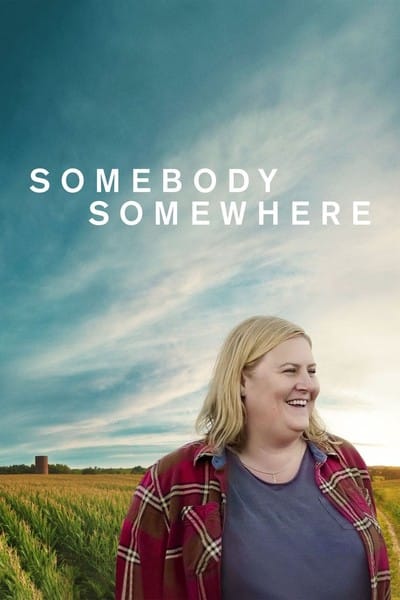
Movie/TV
Somebody Somewhere Season Two
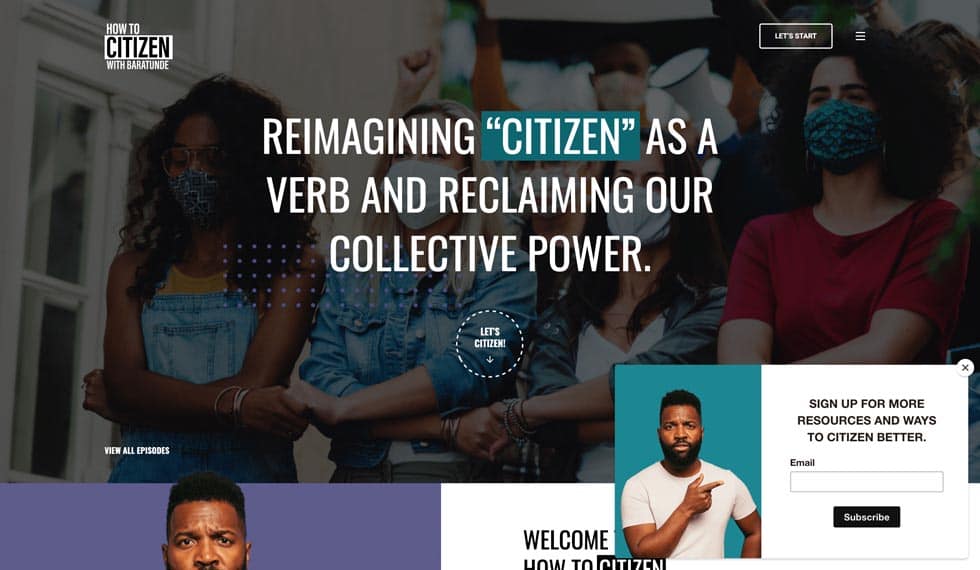
Resource
How to Citizen
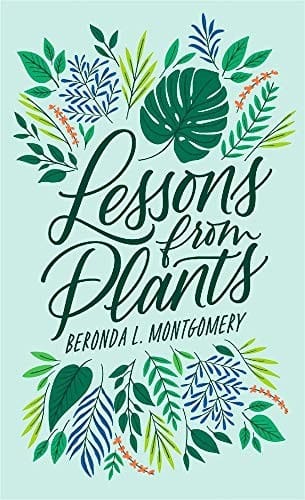
Book
Lessons from Plants by Beronda Montgomery

Music
Music from Somebody Somewhere
Transcript
[00:00:00] Bonni Stachowiak: Today on episode number 475 of the Teaching in Higher Ed podcast, Making Space for Emergence with Mia Zamora.
[music]
Welcome to this episode of Teaching in Higher Ed, I’m Bonni Stachowiak. This is the space where we explore the art and science of being more effective at facilitating learning. We also share ways to improve our productivity approaches so we can have more peace in our lives and be even more present for our students.
[music]
I am so pleased to be welcoming back to the show today Dr. Mia Zamora. She’s a professor of English, the Director of the Masters in Writing Studies, and the Director of the Kean University Writing Project. She’s also the former coordinator of the World Literature Program at Kean University in Union, New Jersey. She received the Kean University Professor of the Year Award in June 2019.
Mia Zamora is a scholar of electronic literature, literary works that originate in a digital environment and require digital computation to read. She is one of five international scholars to have edited the fourth volume of the Electronic Literature Collection, which represents this rapidly evolving field located at the intersection between technology and textuality. Mia Zamora is a digital humanist and a #connectedlearning scholar who writes about how digital technologies are transforming education in the 21st century.
In her 2017/18 sabbatical year, she was the Fulbright Scholar of Digital Culture at the University of Bergen, Norway. There she created and exhibited two public art installations. Mia’s commitment to equity, digital literacies and data rights, and intercultural understanding is clear in both her public scholarship and leadership work. As a leading voice for the practice of open networked education and a winner of the Mozilla Foundation Open Leaders award, Mia has founded several global learning networks, including Equity Unbound and Networked Narratives. Mia Zamora, welcome back to Teaching in Higher Ed.
[00:02:39] Mia Zamora: Thank you. I’m so glad to have returned.
[00:02:43] Bonni Stachowiak: I have been so looking forward to this conversation and want to just start out by asking you, what are the kinds of things that you do or not do when you’re trying to approach designing something in general?
[00:02:58] Mia Zamora: I have discovered along the way that there’s a whole bunch of things that come up that we can’t really anticipate, no matter how much we prepare. There’s just manifestations of whether it be conversations or pathways to certain aspects of the learning design that we want to go deeper into. Basically, it’s unforeseen. What I’ve figured out along the way to do about that is essentially make small spaces for things, knowing space that might be in the schedule, but also even in a curricular sense and in a programmatic sense.
One of the strategies that I have that’s a little bit more macro from a perspective as a director of a program, I direct our master’s program in writing studies and so there might be courses that I don’t know what I want to do quite yet, but I also know that something is going to come up. As an example, this past spring, spring 2023, I taught a course called The Human Nature of Writing. The course was all about artificial intelligence and ChatGPT and how it’s transforming writing and learning.
Now, I can tell you even in the beginning of 2023, I’d say the 1st of the year, I didn’t really know I was going to be teaching that course, but what I usually have is a shell course that leaves space for trends and concerns that come up in the field. In the case of the ChatGPT course, I knew that this was coming down the pike. I knew that I wanted to address it in some way, but the shell course is just a course that’s on issues in digital culture. That idea of a shell course has been really, really productive for me because I can always put a placeholder for a course around generalized concerns, but then turn it into something very specific and very timely. In this case, even an urgent conversation to have.
That’s one I would call an administrative strategy for leaving things open for emergence. Then in regards to just teaching itself, knowing that whatever map I design for the course, that it can’t be so tight that I feel more faithful to that map than I do to what is happening in the room at the time so that there are is enough room, enough space for us to turn certain corners and pursue certain things that we didn’t know would become important to us within the context of what we want to study together overall.
Alan Levine and I have been teaching a course together for several years. This year I did it on my own just due to his current obligations. This is where we came up with this idea. The course is umbrellaed under something called Networked Narratives, but this idea of leaving spaces for things unknown is realized in another form of terminology we have come up with called The Spine where it’s like we give the course a spine, a backbone, so to speak, but we also don’t fill out the flesh. We let the students play around and think about that spine and then point towards the way it should be filled out.
It becomes a lot more of a collaborative process to experience the course because they have such profound and obvious claim on it in terms of their own participation.
[00:06:52] Bonni Stachowiak: I would love to have you share a little bit of advice because there certainly are people for whom the not having structure comes super easy and then we start to see manifestations of that not supporting student learning well. If it’s just, “I don’t know what’s going to be due when and I don’t know what we’re going to cover when, and I don’t know, I don’t like,” there is such a thing as too extreme of this is not going to build a community.
I think sometimes when people see examples, they don’t see the structure because it’s so beautifully and artfully done, so much of the work that you’ve done, I guess it doesn’t feel like it’s as thought out as it actually is behind the scenes, if that makes any sense. Could you give some words of advice to people who maybe struggle with having any kind of structure in there? What are some of the things that you try to think through in terms of what’s needed for that?
[00:07:53] Mia Zamora: I love this question. My brain was percolating with responses as you were mapping out the question, but I’ll say this first: First of all, the realm of this idea of how much structure to put in place should live a little bit more in the facilitation aspects rather than in the pre-design phase of setting or mapping a learning experience. If we do too much structure lean in in the pre-design, we are foreclosing possibilities that we can’t see will manifest. Putting too much in front.
Therefore, again, I’m pointing out that there needs to be something that happens in the moment of facilitation structurally. That is being attentive and listening and building trust with students so that they believe that you are masterful in a way that, just as you pointed out, can be a little bit of a magic act in the beginning, because it seems it could come off as lite, L-I-T-E, rather than the deep dive into learning that’s rooted in theoretical understanding, scholarly underpinning, et cetera.
It could seem like, “Oh, this instructor is easy because they’re just giving us a lite syllabus,” or something L-I-T-E, not hardy, but just easy. That’s an illusion, I think, if we’re doing this right, this question of design for emergence. I think it takes extra work on some level to have spaces open for an articulation of something they’re contributing that hasn’t yet been discovered at the same time that you’re building out the trust and a sense of your mastery as a professor. The mastery doesn’t come from only content, it comes from the finesse in the facilitation. That’s my first comment.
The second thing is, “Okay, how do you do that? How do you build trust? How do you have that agility in terms of in the momentness to pick up on things?” Well, that’s a lifelong kind of challenge for instructors, I think, but we get better at it as we grow. Specifically, I think, with the facilitation realm, that’s where I think intentionality and listening are important qualities. The intentionality should be in terms of what are the values that underpin the community that you’re building as you embark on a learning journey.
Hopefully, those values would be something like equity and so to think about the way students are positioned, the way they feel when they enter into a new learning experience, the relative level of trust or comfort they have with the people in the room, and to intentionally put work into making that something that opens up for them that they feel like they can share and trust and connect and that they’ll be okay when they don’t from day one necessarily know or have faith in the people they’re surrounded with in the experiment called the class in the beginning.
That’s the work, that agility to be able to bridge unknowingness in the realm of a lack of connection and then create connection between the people, the community building, in order to grow the trust. I think, actually, we’ve talked about this before, Bonni, but trust doesn’t come out of nowhere, trust comes from opportunities to share with people, so that’s a facilitation challenge. How do you open up those opportunities? I often tell other people that I think the road to trusting is in the storytelling that people are able to offer each other. What is it about this that means something to you?
That is an invitation to, “Well, this reminds me of this thing that I’ve experienced.” Suddenly, they’re stepping into their own unique personhood in a way that’s trusting to share a small story. I think small stories open up trust. I think we have to facilitate to make those opportunities. I think that that’s just as important as any pre-designed moments where structurally we’re thinking about content and where to put it in order to complement those values on some level. I hope that makes sense. It’s a little bit layered.
[00:12:49] Bonni Stachowiak: Oh my gosh, it makes so much sense. I wanted to just say one quick thing. It’s so beautiful and powerful what you said about trust, something that I’ve noticed is, you said this is, of course, a journey and we’re never there, but I’ve noticed that sometimes when people begin to try some of these things, that if what’s undergirding it hasn’t evolved as in a sense of “What does it mean to teach?” “What does it mean to learn?” that it can be not authentic. “Oh, this would be a good time to have people get into groups and to have them tell a story to each other.” If it’s as a story for the sake of a story.
[00:13:31] Mia Zamora: No, that doesn’t work. [laughs]
[00:13:33] Bonni Stachowiak: Yes. It’s a constant wrestling of, “Is what I am doing in alignment with my values and my deepest beliefs? Does any of this even really matter?” That is not a place I don’t think you ever land but just the importance of that ongoing wrestling, because I’ve just seen what beauty comes out of those opportunities to truly grow a learning community and then I’ve seen it get ugly, where we’re not even self-aware enough to know, “This isn’t working because I don’t actually believe it.”
[00:14:08] Mia Zamora: Right. It’s like you’re going through the motions but you’re not understanding the embodiment of those things, which is, in part, a place of vulnerability. Vulnerability won’t be okay for anyone, the small stories won’t emerge, and then the trust won’t be there, so then it’s just a matter of going through the content rather than exploring something that might empower people to become better people in the world or take what they know into the world bravely and all these things that we hope for in education.
I would say it’s in the facilitation. Of course, I’m speaking abstractly now, or conceptually rather, saying facilitation is a nuanced and important part of structure is what I’m trying to say. “Okay, Mia, how do I do that then? Where do I go to learn that?” That’s where this idea of Intentionally Equitable Hospitality that Maha Bali and I have been working deeply around and with and with others in exploring and refining, this whole idea of IEH is something that is an ongoing, aspirational thing, not an arrival thing, but we’re constantly thinking about it because it is about the magic sauce of having hidden structure in a facilitation mode, rather than in a free design, planning it to pin-it-down mode, if that makes sense.
[00:15:46] Bonni Stachowiak: Yes, absolutely. Talk more then about some of the values around, before we even get to how to attempt to do it, but just wanted some of the values around Intentionally Equitable Hospitality.
[00:15:59] Mia Zamora: Well, the first thing is that embrace of what is in the room that needs to emerge. Again, it can’t be done unless people trust each other. We’ve recognized four phases of IEH. We have Intentionally Equitable Hospitality. We have a pre-design phase. That pre-design phase is about thinking about the values you want to bring into a learning experience and making sure that the things you’re doing before you even start the planning are situated within the context of that sense of values.
A lot of times we think about content when we start planning a class. We start thinking about the reading list, and the schedule, et cetera. We think less about who’s in the room, what people need, or who might be in the room. Then we also don’t think necessarily about what assumptions do I as the default designer and quality assurance leader of the entire experience, what things do I bring to this in terms of blind spots or biases. We don’t necessarily grapple with that too much.
The pre-design phase is about thinking about those things in self-reflection deeply and then aligning things right. Then the second phase, of course, is design. That’s when you pin it down, you start to plan, et cetera. That’s an important phase that I think should be a participatory thing as well. How do we make those spaces, for instance, in the schedule, wherein there’s places for others to fill things out, to have a voice, to collaborate together, to articulate what the learning outcomes can be? Then the facilitation phase is that dynamic phase that I was just talking about where things come up.
We need to lean into a sense of generous authority, which is a term that comes from Priya Parker’s work, but essentially, it’s a suggestion that the teacher is the authority or someone who’s leading out but they’re doing that always with a certain heart of generosity, stepping aside and giving rather than just impatiently leading. That’s really important. Then there’s the idea of intentional adaptation. We notice things that we didn’t expect and we respond to them in ways that always keeps that question of equity and balance in mind.
Finally, the last phase is the sustainability phase. That’s where “How do we sustain this community after the timeframe in which it seems to come to a close?” is apprehended. We have the beginning, middle, and an end of a class, but is there an afterlife of a class in terms of student empowerment and bringing the values and the learning that they’ve essentially gained along the way into other spaces within the university, within whatever communities they participate in?
Where do the seeds of new dreams or similar dreams get to grow outside of the moment of the class? I think we should be thinking about that in education, the sustainability piece, in regards to outcomes for a course, rather than, “Okay, that course is now over, incoming new batch in three weeks, done.” I think if we can imagine our work having an afterlife, that will matter for a lot of people. If that informs the way we design, then I think education will really be in the realm of what we always hope for, which is that it’s transformative for people in terms of how they live their lives.
[00:19:56] Bonni Stachowiak: You’ve given such a rich way for us to think about this, and especially you have helped us distinguish between design and facilitation. Then also a little bit about content-oriented stuff, which I’m imagining often shows up in the form of thinking about a lecture versus facilitation-oriented stuff, which you can use different types of facilitation to address different kinds of problems you might be hoping people would learn how to solve, or different lenses that they might put on to take into whatever the discipline is.
I think it might be helpful to talk through a couple of areas where people may be wrestling with some of these ideas in their minds. Then I want to just come back and hear a little bit more about some of the work you’re doing, especially you mentioned the class about artificial intelligence, hear a little bit from you on that. Two big concerns I suspect that people may have about “These sound amazing, I’d love to start thinking about Intentionally Equitable Hospitality,” or some of the things you’ve mentioned around facilitation and try these things out. However, I can’t see how it would work in my discipline.
How do you think about in terms of more STEM-oriented, or as we move outside of the humanities, how do you think about how people might be able to make use of some of these approaches?
[00:21:24] Mia Zamora: First of all, the praxis of IEH is definitely an interdisciplinary-designed approach. It’s not meant to only be a humanistic perspective. I think certain disciplines are more explicitly rooted in particular product-oriented understanding of knowledge, gaining knowledge, acquisition of knowledge. A lot of assessment is rooted in the proof of the acquisition of that knowledge as a pass go, you’ve got this under your belt.
If we could move a little bit away from that and into the deeper critical thinking of whatever the field is, putting emphasis more on process rather than product in assessment of the outcome, I think that might be the North Star of the interdisciplinary realm for understanding a praxis rather than, “Oh, that’s just humanism stuff.” I think if we’re giving tests where the answer is only this rather than you need to think through and articulate theoretically what you’re doing and sharing that in some way, that’s the zone we want to be in because that’s the zone we can reassure ultimately that the thinking piece is there.
Otherwise, right or wrong answers in and of themselves like answer A, answer B, answer C, no matter the discipline, flies over the thinking piece. Making evident how one is thinking is a key aspect of the interdisciplinary understanding of dynamic facilitation. It’s connected to each other is what I want to point towards. Also just trying to think about other ways to make it evident. I was thinking specifically about the challenge of artificial intelligence in the humanities, but it’s in all fields, right?
[00:23:31] Bonni Stachowiak: Yes.
[00:23:31] Mia Zamora: What’s the point if the machine can do what we’re asking them to do? If the learning outcomes of the course point towards making evident the product of knowledge, then game over in regards to what we’re doing overall. If the learning outcomes of the course are aligned more with the processes involved with getting to certain knowledge, then there’s space for students to be creative and imaginative in terms of their thinking about how they got to the answers they’re getting at. That’s the broad conceptual way I start to think about “This is an interdisciplinary challenge and an interdisciplinary paradigm shift that we need to commit to.”
[00:24:25] Bonni Stachowiak: I’d love to have us just to explore what this might look like. I’ve got a friend who has been on the show a bunch of times who is in the field of computer science and teaches programming classes. You think about, “Oh yes, for programming that’s not involved in AI.” “Oh, it sure as heck is.” [laughs] You can go and tell it to write programs for you.
[00:24:45] Mia Zamora: Absolutely.
[00:24:45] Bonni Stachowiak: I just wanted to pick a few disciplines I at least know enough about to be dangerous. How would we get someone who teaches computer science and programming to have students show the processes involved in getting knowledge about how to write a program? What would be some things that would come to mind for you?
[00:25:05] Mia Zamora: Well, just off the top of my head, if one asks ChatGPT to write a program for some basic function, I think that one of the things that the student can make evident is the variety of ways in which that might happen in coding and that the computer itself is not whatever is spit out. It could be incorrect. That would be one challenge. Is it correct or not? How do you prove that? It also could be a matter of what are other ways to do this than the one that the computer offers, and what is your opinion about which way, in terms of coding, that might be more a beautiful solution, et cetera?
That’s harder to be able to do to everything I just said. That’s also making evident the kinds of thinking that a student needs to have so that they’re not just passing off the task to the computer easily enough. In writing itself, which is my field, I can say, you can ask ChatGPT to write a story, or you can ask ChatGPT to write a theoretical argument in a comparative mode, et cetera. There is a point in writing intention where you are coming up with ideas and there’s a point in which the computer, meaning ChatGPT, might be co-opting the ideas that are manifesting in your own mindscape.
I think one of the things I discovered in this recent course is having students be mindful about where those pathways are disrupted in a way by the computational generation of some idea versus their own. I think if a student can point out where the computer goes in one direction and where their brains might have gone in another in terms of the development of ideas and writing, or in terms of programming in a computer science context, that would be a rich place for actually developing thinking processes that are agile.
What we did in the writing context is that we had students work with ChatGPT and other artificial intelligence software to essentially position them like co-writers. Also what I did with my students is I had them be writing reflective pieces around the moments in which it was enriching their creativity and their imaginative capacity and the key moments where it was co-opting or overshadowing the things that were burgeoning in their own brain. You know what this is all about on some level is mindfulness, being aware of what you think and the moments where what you’re thinking is being placed in other directions due to some kind of prompt or some kind of outside contribution from the machine.
That approach I think is very instructive no matter what the discipline, is be mindful of what you know versus what the computer is suggesting and then articulate the difference between the two and what you think is the best integration or failure to integrate and why. What this comes down to is that there are metacognitive processes that we want our students to be aware of that is connected to a mindfulness practice where people know what they’re thinking.
They’re aware of how they got to that thinking, they’re aware of how other kinds of thinking might be overshadowed by the integration of suggestions that come from the machine, the computational output, then how to consider each one’s own thoughts versus the computer’s generated thoughts. How to sit them side by side and know where the wealth one is and the virtue is in another, et cetera. That’s how to keep humanism alive in all disciplines.
Essentially, we need to keep a free-thinking zone in our own pursuit of education. Mindfulness and the peace of mindfulness in learning and how to learn is I think even more important today than it was before artificial intelligence became such a mainstreamed concern.
[00:29:41] Bonni Stachowiak: I think something else, Mia, that’s come up really throughout this entire conversation and from knowing you and your values about teaching and learning, it’s just this sense of believing that there’s more beyond what I currently know as the facilitator, as the professor, as the educator. I see so much of the time where this can be really hard for people if we don’t truly believe that the learners we have the privilege of being able to walk alongside will one day, or perhaps even today already, exceed us in whatever it is.
The computer programmer example, if there’s not this idea of, “Oh my gosh, I know a decent amount about this today and I can teach some of these basic skills, but you know what, things are changing so fast in this area.” As soon as you bring in such a disruptive thing like artificial intelligence and some of the things we’ve been talking about, you either have to release, but my goodness, if you’re going to cling tightly to trying to control that, prevent it, pretend it doesn’t exist or if it’s moving into that, that’s going to be a really, really hard set of roots to teach from.
If that resonates at all with you, do you find yourself teaching a lot where you just really believe either many of these people already have surpassed me in some interesting way or what an interesting thing that will be to explore where their minds go and “Oh my gosh, I never thought about it that way”? Is that an easy thing for you to imagine the ways? I hate this word “surpassed” because that’s not truly the thing I want to say here, but part of why I think it’s easier for you to leave space is because there’s space for incredible things that you couldn’t possibly anticipate because there are amazing people who have amazing brains and hearts and hands.
[00:31:40] Mia Zamora: Yes. The spirit of your question isn’t exactly it, it’s the heart of the matter on some level. It goes back to that idea of co-learning. When we come together to learn, I think a more traditional model is that the person with the most mastery is the professor. It’s the sage on the stage versus this guide on the side. We all have heard all about that. There’s a spiritual realm to all of this that we’re hitting upon, and it’s connected to growth and lifelong learning, but it’s about being always open to something you don’t quite know everything about.
It is true that every human is a complex universe of all kinds of dynamism and understanding and intergenerational history that’s carried forth. Every person that walks in the room has a million different ways of being, angles of understanding that have been building from the moment they’ve been born into this world. If we are not conscious of that truth as we set out together to figure out what is worthwhile in learning, then we’re missing something inherent because we think it’s just a certain set of knowledge pieces that we’re here to pass on as teachers.
That’s not what the enterprise ultimately is about. It’s a lot more. It’s, yes, that and. Sure, we have some things to teach our young. In many cases, our students could be younger than us, but that’s not always the case, obviously. More than anything, I think we need to think about wisdoms beyond just school wisdoms in order for us to really get the enterprising of learning in the deeper most transformative way.
You’re getting at it in the question and I’m just affirming it in my answer, but essentially, co-learning is having the capacity to tolerate not knowing everything, and at the same time, guiding people to feel confident that what they know is worthwhile and worth listening to as well. That’s a big spell to break, meaning we have to break that bad charm that has existed for so long in education and have students understand that what they know already is something that we need to grapple with together, what they know already as people in the world.
I know that’s a hard pill to swallow for many, many people in terms of teaching because it takes a lot of spiritual strength, takes a lot of patience. Maybe it’s just plain old, “Not what I signed up for.” I know that that exists out there. “That’s not what I signed up for when I became a professor, period.” I think if the world’s ever going to heal and get better, we need more of what we’re talking about here, that impulse to know you don’t know and to make that evident but in a graceful way at the same time that you gain students confidence in your own wisdoms and experience. It’s a paradox that you have to embody, I think.
[00:35:16] Bonni Stachowiak: Before Mia and I get to the recommendations segment, I wanted to take just a moment to thank today’s sponsor and that is TextExpander. You’ve heard me say this before, if you’ve been listening for a while, TextExpander is one of the first things I install on any new device. What happens is I can easily set up and refine and continue to find more uses for TextExpander where I create these little things they call snippets. Easy-to-remember characters that expand into either harder-to-remember things or a long piece of text that would take a long time to go find, copy, paste, et cetera.
It’s really easy to get started, and once you get started, it can be a little bit addicting to find other ways to make use of text expansion. For example, the show notes. Every time I do an episode, I have a pretty darn easy snippet that pops up and asks what the episode number is, who the guest is, and a bit of description and other things that the podcast players ask for. I just type that information in and then I hit submit or my enter key and it all gets entered into the note-taking tool that I use for the show notes.
Other examples of text expanders for me can be things like hard-to-remember things like my work phone number because I don’t use it very often, or things like website links that I distribute often. If you head over to textexpander.com/podcast, you can find out more about how TextExpander can help you type less, I can attest to that, and say more. You can also redeem a 20% off offer for podcast listeners. Again, thanks to TextExpander for sponsoring today’s episode. Head over to textexpander.com/podcast and find out more.
This is the time in the show where we each get to share our recommendations. I have two quick ones that are related to each other. The first is I would like to recommend the second season of Somebody Somewhere. I recommended season one, so I had to make sure I only recommend it once. It has continued to be such a beautiful story about grief. The characters continue to process the death of a family member and there’s lots around identity and music and belonging and lots around family stuff that is so relatable and so important. It was just a beautifully acted wonderful television show and has continued through season two as well.
I wanted to also recommend the music from Somebody Somewhere. It’s so fun when people will go onto the different music services and collect every single song that’s ever played in the background, even if you don’t notice it or if you do, and gathered them all together in a playlist. I’m going to put those in the recommendations, a link to the information about season two of Somebody Somewhere, as well as a link to the soundtrack of every song that has been played, again, even if it’s just a short little bit in the background or actually sung by the characters in some cases as well.
Just two recommendations that really, really feeling good about. Yes, I’m going to pass it over to you, Mia, for whatever you’d like to recommend.
[00:38:37] Mia Zamora: Okay. I was just thinking about this. I’m a big podcast person because I love walking and listening. Sometimes it just pulls me out of one mood right into another. I’m always seeking a good podcast. My first recommendation is a podcast called How To Citizen with Baratunde Thurston. I’m fearful that every one of your listeners already knows this podcast. If that’s the case, then it’s just an affirmation that it’s great. If you haven’t heard about it, it’s a podcast about citizenship, but it’s turning the word citizen into a verb away from understanding it as a noun.
He’s imagining the collective power of coming together and seeking new perspectives, new practices for working to improve society together. I love this piece. If you guys don’t know who Baratunde Thurston is, I think he has this show on PBS, which is about national parks, et cetera. He’s a writer and he is an activist and he’s also, I think, a comedian. It’s just he has these guests on the podcast and he talks to them about how to participate, how to invest in relationships, what it means to understand power. He talks about the value of the collective a lot. It’s a great podcast and I love listening to the conversations he has with very perfectly curated guests, in my opinion.
[00:40:13] Bonni Stachowiak: Oh, that sounds amazing.
[laughter]
[00:40:17] Mia Zamora: It’ll be good. I hope you like it, Bonni, and I hope the listeners like it too. That’s my first one.
[00:40:22] Bonni Stachowiak: Oh, I’ve never of it. Sounds amazing.
[00:40:26] Mia Zamora: Then the second one is a book I just stumbled upon. The backstory on it is I’m really proud of my firstborn son who’s off to college in the fall. He’s going to attend Grinnell College, which is in Iowa, far from where we’re from in New Jersey. We recently visited just to check out the campus. I had the opportunity to meet the newly hired academic vice president or provost of the college and right away I liked her. She has just arrived there too. She’s a newcomer. It’s nice to meet a new person, especially a person who in a personal way, I see her taking the helm of a learning community. I’m curious about who my son is going to be growing with and under in terms of rich soils, et cetera.
I use that metaphor very purposely because she’s a botanist. After talking to her, I realized that she’s the author of a recent, beautiful little book. It’s called Lessons From Plants. I checked it out due to my curiosity and my parenting angle on things, et cetera. I had to check it out. When I read it, I fell in love. Basically, it’s a book about what we should know from plants about plants and from plants, what plants can teach us, which to me is a little counterintuitive as a humanist to think that plants have lessons for us humans to take up, but that’s what the book is all about.
It’s really an exploration of how plants and plant behavior and the way they adapt to their worlds offers specific kinds of insights for human thriving. For me, it was a counterintuitive premise written by a very accomplished scientist that made me think about my work in ways rich with new metaphors. That’s what I want to offer up, Lessons From Plants by Beronda Montgomery. It’s a little book. It’s a perfect little book, [laughs] and the podcast.
[00:42:33] Bonni Stachowiak: Mia, thank you so much for this continuing conversation. Actually, one thing that we didn’t talk about is MYFest. Perhaps maybe just mention a little bit about that for people who may not be familiar with that community. We’ll put a link in the show notes for people who want to learn more. Do you want to talk really briefly about that before we close?
[00:42:51] Mia Zamora: Sure. We’re just thrilled that we are, Equity Unbound and the MYFest22 community, are soon to launch MYFest23. MYFest stands for Mid-Year Festival. It’s an open learning connected festival, where it’s entirely virtual. The spirit of the entire enterprise is the idea of renewal, recharging at a time when we need to reenergize our hearts and our heads towards good work and good work that matters.
We have threads or tracks on open educational practices, artificial intelligence, digital literacies. There’s also a track that’ll cover critical pedagogy and, of course, socially just education. There’s also our extended conversation on community building with Intentionally Equitable Hospitality. Finally, we always are trying to place a focus on well-being and joy. That’s the broad umbrella of MYFest23. It lives online. If you just google it, you’ll find us. Everyone everywhere is welcome. It’s an intergenerational open learning festival that takes place in June, July, and August of 2023.
[00:44:13] Bonni Stachowiak: Mia Zamora, thanks for coming back on Teaching in Higher Ed. I can’t wait until our next conversation.
[00:44:19] Mia Zamora: Thank you so much.
[music]
[00:44:22] Bonni Stachowiak: Oh, that was such a great opportunity to get to speak once again with Mia Zamora. Thanks for listening to today’s episode and being a part of the Teaching in Higher Ed community. Today’s episode was produced by me, Bonni Stachowiak. It was edited by the ever-talented Andrew Kroeger, and podcast production support was provided by the amazing Sierra Smith.
If you’ve been listening for a while and haven’t yet subscribed to the weekly update, I encourage you to head over to teachinginhighered.com/subscribe so you can receive an email once a week with show notes of the most recent episode, as well as some other resources that don’t show up on the dedicated show notes pages. Thanks so much for listening. We’ll see you next time on Teaching in Higher Ed.
[music]
[00:45:22] [END OF AUDIO]
Teaching in Higher Ed transcripts are created using a combination of an automated transcription service and human beings. This text likely will not represent the precise, word-for-word conversation that was had. The accuracy of the transcripts will vary. The authoritative record of the Teaching in Higher Ed podcasts is contained in the audio file.