Follow the Teaching in Higher Ed Podcast
About this Episode
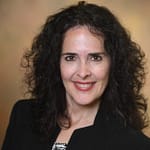
Angel Herring and KaSondra Toney discuss how to foster a sense of belonging on episode 388 of the Teaching in Higher Ed podcast.
I see everyone as a contributor in the education process. As a student, you have as much of a say as I do as your instructor.
Angel Herring
On episode 388 of Teaching in Higher Ed
Voices on this Episode


Show Notes + Resources
Recommendations from this Episode

Idea
Believe in yourself

Article
New Zoom Apps by Jeremy Caplan

Article
Preparing to Teach After 16 Months of Disruption by Betsy Barre

Resource
Libby

Resource
Goodreads
Resource
Calm
Transcript
[00:00:00] Bonni Stachowiak: Today on episode number 388 of the Teaching in Higher Ed podcast, Dr. Angel Herring and KaSondra Toney join me to talk about fostering a sense of belonging.
[music]
[00:00:15] Production Credit: Produced by Innovate Learning, maximizing human potential.
[music]
[00:00:24] Bonni: Welcome to this episode of Teaching in Higher Ed. I’m Bonni Stachowiak, and this is the space where we explore the art and science of being more effective at facilitating learning. We also share ways to improve our productivity approaches so we can have more peace in our lives and be even more present for our students. Today, I’m joined by Dr. Angel Herring and KaSondra Toney. Angel Herring is an associate professor in the College of Education and Human Sciences at the University of Southern Mississippi, where she’s worked in various capacities for 22 years.
She received her PhD from Louisiana State University in human ecology with an emphasis in family, child, and consumer sciences. Dr. Herring is an ACUE-credentialed instructor and values student success as both a professional interest and a personal commitment. She’s the mother of four children, three of whom were born during her PhD program, and she resides in Columbia, Mississippi.
KaSondra Toney is a graduate of the University of Southern Mississippi, where she earned a bachelor’s degree from the School of Child and Family Sciences at the University of Southern Mississippi. In 2020, she was the recipient of the Judge R. J. Bishop Mississippian Award, which recognizes students who have endured financial and/or personal hardships to pursue their education.
Dr. Herring taught Toney and nominated her for the award. Toney is currently a graduate student in the University of Southern Mississippi’s School of Counseling. Today’s guests were introduced to me through my partnership with the Association of College and University Educators or ACUE. ACUE’s certificate programs equip educators with evidence-based teaching practices demonstrated to improve student outcomes and create inclusive, equitable learning environments.
For more than five years, ACUE has connected me with experts and faculty developers who are featured in ACUE’s courses as well as certified faculty to share their work on Teaching in Higher Ed. Angel and KaSondra, welcome to Teaching in Higher Ed.
[00:02:51] KaSondra Toney: Thank you, Ms. Bonni.
[00:02:53] Angel Herring: Thank you.
[00:02:54] Bonni: I’m so glad to get to have this conversation with you, and I’m about to ask each of you to do the impossible. I’d like you, in just a few sentences, to give us a little sense of how you came into this experience. Angel, I’m going to ask you a little bit about how you came into teaching and, KaSondra, I’m going to ask you a little bit about how you came into your own learning experience in education. Angel, let’s start with you. Share a little bit of your background. How did you get into teaching?
[00:03:23] Angel: Well, I completed my master’s in 2000 from the University of Southern Mississippi and shortly thereafter was offered an adjunct opportunity, and that was my first time in a classroom, and I very quickly fell in love and stayed connected with the department through various adjunct opportunities and then that led to full-time opportunities, part-time opportunities and served in various capacities here at the school at the University of Southern Mississippi.
That really inspired– I fell in love with teaching so much that it inspired me to go and get my PhD. That became a quite lengthy process, but I knew once I got that taste of teaching and interacting with college students and seeing what they’re capable of, I was hooked, and I had to go and find a way to make it a permanent position.
[00:04:15] Bonni: My background also started teaching as an adjunct, too, and it was very similar in the terms of– I was clueless, by the way. I don’t know if you were, too, just-
[00:04:22] Angel: Absolutely.
[00:04:23] Bonni: -absolutely clueless. I thought so much of it was going to be like my college experience, and I’m going, “What on earth is happening?” but I also just absolutely fell in love with it, too. Thanks for sharing a little bit about your story, Angel. I know we’re going to hear more as well. KaSondra, how did you end up pursuing this part of your education?
[00:04:40] KaSondra: Well, going back to 2001, that’s when I first enrolled at the University of Southern Mississippi. Unfortunately, I had to withdraw, but I came back 20 years later, and I graduated in 2020 with my degree in Child and Family Sciences, and I’m currently training as a school counselor in training in that same department. I’m going after my master’s degree right now, and I’m very excited about the whole journey. It’s caused a lot of change in myself, and I’ve learned a whole lot, and I just appreciate where I am thus far, and who knows where I’ll be this time two years from now? I hope to still be there doing something.
[00:05:25] Bonni: I want to explore a couple of things that you said a little bit deeper, starting with, tell me what that was like after 20 years returning to school.
[00:05:36] KaSondra: It was scary, very, very scary. I’d spent so much time out of school, I didn’t know if I would be able to be successful because I was a mother, I worked full-time. I just had a lot of things going on, and pretty soon, my oldest child would be going to college as well, so I didn’t know what that was going to look like for my family, but thankfully, my experience, it’s been more than I could ever ask for.
[00:06:10] Bonni: In terms of those fears, do you remember what were the biggest ones? You just mentioned not knowing you could do it, but what is it? What were you not sure that you could do?
[00:06:20] KaSondra: I think I felt like the old lady on campus. I didn’t know if my brain would be able to keep up with technological advances and just as fast as things move now compared to how they were back in 2001 when I first got started. I knew that I was strong in some areas, but again I had been away for 20 years, and I had no idea what it might be like once I got started.
[00:06:56] Bonni: The second thing I wanted to explore with you a little bit was you talked about the first part and then now where you are today, one of the things that I have found in my experience, just personally but also walking alongside others, is how often our imaginations aren’t big enough. When I was in college, I didn’t even know what a master’s degree was, I had no idea what a doctorate was.
In fact, I’m fairly sure I made it all the way through college without ever– I’m sure there must have been letters on people’s doors, but I didn’t understand any of that. Sometimes when I share my story, I’ll be like, “I never would have thought I could be a college professor because I just would think that surely there’s some door that you go through, but I wouldn’t have known what that was.”
I don’t even think I would’ve known even about that there were jobs called counselors, called schools counselors and what that– Today, I sure know, but back then I wouldn’t have known. What are some of the things that you can recall that helped you? Well, first of all, I’d ask, KaSondra, do you feel like your imagination was able to be expanded? Does that resonate at all, and if so, what were some of the things that people did to help you expand it or that you did for yourself?
[00:08:09] KaSondra: I definitely have had that experience. My imagination is– There’s no cap on it now. I have no ceiling to that. I just always imagined myself in this little box of things being a certain way, but once I started focusing on my education more, I realized that opportunities were endless, and my experience there at USM with the staff and faculty was that that was always supported. If I had an idea, it’s like, “Hey, let’s expand on that. Let’s expand on your idea” versus “Let me tell you what you should do.” It just helped me realize the importance of my individual journey.
[00:08:58] Bonni: Now, that’s so wonderful. Thank you for sharing those examples. Angel, I’m curious for you, has this idea of expanding people’s imagination shown up at all for you in your work?
[00:09:10] Angel: Absolutely. That’s been such a blessing and one of the things that like I said, just hooked me from the start is to see students who realize they can succeed, and they are getting it, and there are opportunities that they had never considered for themselves. I’m grateful that KaSondra said that she didn’t feel put in a box, that she was supported by the staff and faculty here in our school.
I can remember I had KaSondra as a practicum student. I’m in charge of the placements when I’m teaching that course, and KaSondra had an interest in-school counseling, so that’s what we pursued for her, and nobody tried to steer her in a different direction, and then as you heard, she’s on the path, the direct path to becoming that school counselor. It’s been wonderful to support students when they have their own ideas. You meet some students. They’re rare. I was not that student.
I’m not that adult now who, from birth, knew immediately what they wanted to do. I can still, while I love what I do and I’m passionate about what I do, there are so many other things I think, “Oh, that would be fun to explore.” I’m probably more used to the students who maybe don’t have that idea of what they want to do. That’s fun, too, as a faculty member to sit with them and talk with them and see, “Okay, if you could just close your eyes and imagine yourself doing anything, what would it be? Have you ever considered this? Let’s look at this resource. Let’s find some people that you could talk to.” That’s a fun thing to get to do as a faculty member.
[00:10:48] Bonni: You’re both reminding me of the opposite of something. One of the tensions that a lot of faculty members have is just this feeling like, this doesn’t, by the way, fit very well with me, just because I didn’t always have this like, “I’m so smart. Let me tell you everything I know.” That’s not something I’ve struggled with, but sometimes people do, they really have honed in on a very precise, very specific discipline, and that’s been something that’s been captivating their imaginations for decades now, and it’s really hard for them to get back into beginners’ minds.
Some of us in faculty development will try to get them to step away a little bit and think, “No, this is not about covering material.” There’s different schools of thought that people can have about their teaching, and that is one of them that I don’t particularly embrace and will sometimes try to talk people out of. Part of it is because I think if we remember ourselves and, Angel, you just described this for yourself if we’re still in our own lives, there’s still so much more out there we could learn, and then if we can also apply that with our students to say, “Imagine if who knows that this person goes on to completely change the world in ways that we can’t even conceive of right now.”
KaSondra, you talked about in the 20 years, you were away from school, how much has changed technologically and boy, even just that one lens, just for us to think about how much changes in that short of a period of time but imagine in all of our disciplines, all the possibility, but sometimes I think we get a little too caught up in “I got to take this information in my head, and I got to transfer it to yours, and our jobs will be done,” and all of that.
Let’s spend a couple of minutes then talking about, what are some of the ways that we can help to foster more of a sense of belonging, and a sense of “You can do this” with learners and perhaps even with ourselves, we can extend the conversation there. KaSondra, tell me about a time when you remember really something specific someone did, even if it seems so small to you, but something really tangible and specific someone did to help you start to have that burning inside. “Wait a minute. Maybe I really can do this.” Can you think of anything specific someone did?
[00:13:13] KaSondra: Well, since I am having the conversation with Dr. Herring here, I remember the first time I sat down in her office and we had a face-to-face conversation, and I could see, as I was speaking to her, that she was thinking about what I was saying. That caused me to let my guard down and talk a little bit more. All the while I didn’t know that she was mentally taking notes of that student that was sitting in front of her and just her giving me that time out of her day.
Initially, when I walked into her office, I thought that it would be a rushed conversation, but it wasn’t, it felt very pleasant. She really paid attention to the things that I was saying. That is one of those great memories for me that is like, “Hey, I am here to support you. Talk to me, I’m interested in what you have to say.”
[00:14:08] Bonni: Before I hear a little bit from Angel, KaSondra, break this down for us by saying, what our memories you have where someone gave you signs that they weren’t thinking about what they were– What’s the opposite of that? Give me a memory. Obviously, don’t say the person’s name or any identifying information, but could you give us a sliver of what it looks like when we inadvertently are demonstrating that we aren’t thinking about what the person in front of us is saying, we aren’t encouraging you to let your guard down?
[00:14:39] KaSondra: Well, one thing for me is when a person is not making eye contact, or they seem so distracted when you’re trying to express your thoughts. I get really excited about the things that go on in my life now, but earlier on in my life, I didn’t really have anyone that I shared those experiences with, outside of my children. They were always excited, of course, but there was not really an adult that I had in my life that I felt like I could share my thoughts and feelings with and they just would pay me full attention. I think a part of that could have been myself because I didn’t share myself as much.
It was out of a fear of someone not listening or being excited for me. During moments like that, over time, that causes you to shut down, and it causes you to keep yourself– I would say not keep yourself but not be as colorful as you would be. I feel completely different. I think back to something that my grandmother loved roses, and I think about when they’re getting ready to boom, and they’re closed up, and I feel like I’m blooming now. It took a long time for me to feel that way. My experience at the university has definitely played a role in it. For the last three years, I’ve been in bloom, and it feels great.
[00:16:12] Bonni: Thank you so much for sharing those examples. I find sometimes, KaSondra, that in my many years of teaching and walking alongside, I almost have the opposite problem where I’ll get so enveloping in the conversation that there’s a guy who coined a term, a state of flow, where you lose all track of time. You’re so into it, and I really find that experience such a joy in my life. I’ll lose track of time. If I literally have to be somewhere I’m supposed to teach a class, I can’t let myself.
I’ve found even something as simple as being able to set up, I’ve got one of these watches, I can have a timer on it. A little gentle buzz on my wrist can allow me to release myself completely to be able to listen to a story like that and maybe not have less eye contact because I’m constantly looking at a clock. I’ve even heard, KaSondra, of people putting the clock behind wherever someone might be sitting so that I don’t constantly have to be looking around because that can be really distracting. I know therapists do that.
Having seen one myself, I’m very familiar with that so that they don’t have to look there constantly like you said, but sometimes we are distracted. Our human brains are pretty– When we got to be somewhere, we do have to be aware of the time, but it’s hard because you really want to give yourself fully to listening to the other person. That’s a really helpful thing for us to think about. Angel, what’s coming to mind for you as far as other practical approaches we can use to help foster that sense of belonging?
[00:17:51] Angel: Well, one thing that I do to try to set that precedent for wanting to engage with students and hear from them and learn who they are, actually, comes from a negative student evaluation that I got one time. I remember it’s been years ago, and I got a written comment on an evaluation, and this student, I want to say, claimed but obviously, it was the truth for them, said that I ignored them throughout class.
Several times they tried to get my attention, and I was devastated by that. It hurt me to the core that someone and this was a larger-section class, but it hurt me to the core that there could have been a student who felt that way at my hand. I use that evaluation whenever I teach face-to-face courses. I say, “Guys, I got this comment several years ago and I want you to hear me say, I want to hear from you. If you ever feel ignored or overlooked, I want you waving your hand.
“I know you have things to contribute, help me see you because that will never be my intent to overlook.” I feel very fortunate that I work in a school where my first priority is student success. It is building relationships with students. I’ve worked in an environment that’s conducive to that. It’s not only what’s within my heart as a person, but it’s what’s been modeled for me professionally.
Building those connections are just paramount. I often use that opposite example to say, “Help me never to repeat this.” I do, for my own sake also, let students know that I promise I never saw this student trying to get my attention, would never intentionally ignore someone, but I think that that sets the foundation for letting students know that I see everyone as a contributor in the education process. You have as much as a student to say as I do as your instructor.
[00:19:58] Bonni: I’m hearing a couple of things out of what you said. One that really has echoed a lot for me is just this importance of being transparent. When I was in school, I’m very, very privileged to be able to say this, I recognize, I never had the impression that something was beyond limits other than I look back now and I just think, “My gosh, I didn’t really understand how jobs work.” I only knew the jobs I had ever heard of in my life, I didn’t realize how many different jobs there were that were out there, but I never had that feeling like I couldn’t do something if I wanted to.
Within reason, of course, I didn’t think I could be an Olympic athlete, but intellectually, I didn’t feel hindered by that. I was just not interested in it. I would get As if it was in my major and I’d get Cs if it wasn’t, but I didn’t ever think like, “Oh, well, that would be beyond it. You could never get an A.” I would just be like, “Well, I’m not interested in–” fill in the blank.
Part of that is the transparency of being able to say, “This is my intent,” and then part of that is also the transparency of being able to say, “I believe in you,” or “I care about you. I believe that you have ideas that are worthy of being expressed.” I’ve been really interested even just in recent weeks. We just did our new faculty. It’s called the New Faculty Experience and got to have a lot of conversations with them, with a lot of different people.
We had these great, healthy discussions around that kind of transparency for “I believe in you” and whether that helps or hurts saying it to a whole class or saying it to one person, and how it came up was someone in the particular cohort that I’m describing had really shared with the group how important it was for him to have someone say that, but it sounded to the rest of us like he meant in a class.
Then when we followed up later, he goes, “No, no, it was at a coffee shop, just me.” The differences between what can seem to be a pat answer and then building those closer relationships like you described, Angel. I want to know from KaSondra, what are your thoughts around global statements that someone might make to a whole class like the one that angel just described, “I care about what all of you have to say, and look at this”?
Imagine that humility, too, that it would take to say that “This is a piece of feedback I got that I’m not happy about, and I don’t want to repeat it. Could you help me not repeat it? I really care.” That’s really important that we do that, but then where that could if it doesn’t get extended like I know Angel’s did, to sound and fall flat. Do you know what I mean, where you’re saying things, and you go, “What you’re saying doesn’t actually match with what you’re doing” and even if we’re transparent if we don’t follow it up with those specific practices that are also more inclusive? Is anything coming to mind for you, KaSondra, as you hear these examples?
[00:23:02] KaSondra: I think that also it’s the responsibility of the student as well to [crosstalk] themselves and take advantage of that statement that has been made. If an instructor or any person says, “I believe in you, I’m here for you,” sometimes you don’t believe that, but then there’s that part of you that’s like, “Hey, let me explore this and see if it’s an actual thing.” That needs to help push you along and help you to seek out that resource. You will either get a yes or no, but it’s up to you to find that out.
[00:23:39] Bonni: Yes, so that’s so good that you’re reminding us, KaSondra, of– I tend to put it way too much on myself. Another aspect of this is that instead of putting it on ourselves or individual students to try to foster then the relationships between the students and then sometimes even to people outside of the class, they talk about sometimes opening a class up, whether it’s inviting guests in or opening up opportunities for mentorship and other ways, Angel, is anything coming to mind for you as it relates to other ways that we can really build this self-efficacy that isn’t going to put the weight entirely on our shoulders?
[00:24:22] Angel: Right. Yes, I’m thinking about having those larger-section introductory courses. Even in those courses, whether it’s through activities, assignments, or feedback that you’re getting during class and class discussion, you might find out what students are interested in. I’m thinking, for example, of a child development course where we had a lot of interest in child abuse and different forms of child abuse and what could be done about that.
I invited in a speaker from a local child advocacy center, who happens to be a graduate of our program that we stay connected with, and she gave a fabulous presentation. Then, to borrow KaSondra’s term, that bloomed into a relationship with her serving as a practicum site supervisor for students who wanted to go in and learn about forensic interviews with child abuse survivors. I think, again, being intentional and being in tune to what you’re listening to and recognizing that “I may not be able to give you that information or provide that opportunity but I can link you to it.”
[00:25:33] Bonni: Is there anything else coming to mind with either one of you in terms of real practical things that we can be doing to foster a sense of belonging?
[00:25:41] Angel: I think something that you’ve already touched on is that sense of time. I know we all claim to have none of it, and we all feel rushed. Whether we have created and/or we just live in a culture, we’re just so time-bound. I think, for a fact, for all of us, it’s going to direct it to faculty, but I think for all of us to just take the time to slow down and to invest. I can tell you that listening to KaSondra, we tell her story today.
I cannot hear KaSondra talk without tearing up and getting emotional and being so inspired by her. I am forever changed by KaSondra’s story. There are two students’ stories in my 20+ years that make me tear up with pride for them, with just– I am changed because I took the time, and we made the time to have conversations and to learn about what these students have endured, what they have overcome, who has been behind them, who has been in front of them. Could I be beside them? Just take the time, make an investment in relationships.
[00:26:56] KaSondra: You’re making me tear up back again.
[00:26:59] Bonni: And me and I just met the both of you. Absolutely. That time thing is so crucial. We’ve been talking about it a lot on the podcast lately. I always want to be gentle in the sense of because I know for so many of us that care so deeply, it can feel so overwhelming. We need to name that. That’s very real, and yet what better way to spend one’s time than getting tiny glimpses that the stuff we do matters.
If we’re going to prioritize anything, this would be the thing to prioritize, as opposed to some aspects of our– I read a book, I’ll see if I can remember the name of it. I just quoted it the other day, but it was a real hard look at time and the ways in which our devices and other things that the whole business model is designed to take up our time and waste it, the addictive qualities of some of these social media that are really, really designed to. By the way, back to what KaSondra said, I don’t want to take all our agency away.
We can put the phones down, but a lot of the business models are designed to be really attractive to us, to waste our time in those ways. I think if we can be thinking about what radical things we might decide to not invest our time in, in fact, I just attended, yesterday, a webinar about email, of all things, what a geek over here? It was a whole thing. It’s a guy, he has a podcast he co-hosts called the Mac Power Users.
He did a whole thing about all these ways I can geek out on my Mac and make it faster for me to move emails into folders, without even having to touch my keyboard and all these things, and I’m just geeking out for an entire hour with this guy, taking notes and doing screenshots and can’t wait to get the scripts from him to do email better, and you know how he ended it, he says, “I’m going to end it by telling you, don’t be good at email because you know what happens if you’re good at email, you get more email.”
I literally was like, “I feel seen, I feel seen,” but I was also like, “Oh my gosh because I really am good enough at it to be listening to a webinar for an hour about how to get through the machine even better.” You know what I mean, he’s just been inspiring me since then as far as, what do we want to be really good at? You know what I want to be really good at, Angel, what you just said and the story that KaSondra just told, and that we would have that time, we would carve out that time to listen and then be a tiny sliver of someone else’s life. What a both bloom and a blossom and then you can see the new blooms that are coming and have hope for our teaching. Thanks to both of you for that.
[00:29:47] KaSondra: Yes. Thank you.
[00:29:48] Bonni: This is the time in the show where we each get to share our recommendations, and I have a couple, and then I’m going to pass that over to Angel and then KaSondra will close us out. I have two. The first one is that I got to have Jeremy Kaplan as a guest somewhat recently. I also have mentioned his email newsletter that’s called Wonder Tools. he just did a whole post that I’m going to link to in the recommendations for new Zoom apps.
A lot of us are using Zoom, and now they have a whole app store. They have everything he talks about in his post, what they are and how you can install them and how it works, but there’s one that I’m looking forward to trying from his post about a timer. You could have a timer sitting there right inside of Zoom. There are other ones like that game, Kahoot, you can have Kahoot running inside of Zoom.
I’m looking forward to experimenting more. I have recommended Jeremy Kaplan’s Wonder Tools in general, and I don’t recommend something twice. I’m going to secretly get by, by just saying, you got to check out his new Zoom apps post. Then the second thing I’d like to recommend is also from another former guest, that’s Betsy Barry. She recently wrote a post about– She titles it Preparing to teach After 16 Months of Disruption.
To myself and my colleagues, what really resonated with us is there’s a lot around learning loss, learning loss of people lost out on years of school, so how are we going to handle that? I like anything that she writes, but I really like that she’s asking in the post, “Are we even asking the right question here?” I liked that because I see a lot of stuff where it’s doomsday, and I’m a little bit concerned that we’re going to go in with a deficit mindset into our teaching, and I don’t think that that’s helpful for us.
I just thought it was a really helpful post that we should all go and read and contemplate and maybe even set up some time to talk to some of our colleagues about, what data is out there, what questions are we asking, and then what we might want to do collectively around that. Angel, I’m going to pass that over to you for your recommendations.
[00:31:59] Angel: Yes, and I did take notes on both of those recommendations, so thank you. My recommendation is not a new one for me. I discovered it about a year and a half ago, but I wake up daily and I’m grateful for it. That is the Libby app. I am a reader, an avid reader, but I’m more of an avid reader now that I have the Libby app. It is a free app that pairs with your library card. You can peruse your digital collection at your library or multiple libraries if you happen to have multiple cards, and you always have books on hand.
If you finish one at midnight, you can check another one out immediately. It’s a huge cost-savings. I know we can purchase digital books, but it really is nice to get them free on your library card as well. Then I would pair that with, I started tracking, on Goodreads, what I’ve been reading about a year ago. I’m so enjoying that. I’m enjoying having access to a book at any time or place, whether it’s on my phone or my iPad, and then being able to keep track and make a goal for reading and track my progress, and then, of course, find new titles to read, based on what others are recommending.
[00:33:16] Bonni: You just taught me something new. I have been using the Libby app for years now, but I didn’t know you could add more than one card to it because I do belong to multiple public libraries.
[00:33:25] Angel: You can. I don’t know if that is a new feature or I just happened to look in the right place the other day but you can. I have two library cards, and I was able to sync both of them.
[00:33:37] Bonni: Oh, that’s wonderful. As far as Goodreads, I’m convinced I wouldn’t read any books anymore if I didn’t have a goal. I do tend to be pretty goal-oriented. I’ve got my goal for how many I’d like to read, and I just barely hit it sometimes. By the time we go on the holiday break at the end of the year, then it might be dog-paddling to try to keep up with my goal.
It really, to me, makes a difference that I set that out in advance. It’s also fun just to see what other people are reading. I enjoy that, friends of mine, and getting to keep up with that stuff, too.
[00:34:07] Angel: It is fun, and I have to say there’s a goal with the digital books coming in from your library because you know you have to finish them because they will just disappear when they’re due. I’ve enjoyed that.
[00:34:19] Bonni: Yes. I’m cracking up, though, because I did read. There was a book that was recommended two years ago or something about sleep, why we sleep, or how we sleep or something. I didn’t make the library goal. I’m a completionist, so I don’t like to just halfway read a book, but I’m like, “You could just buy it now and finish it off, but I don’t remember where I left off.” That is a motivator if you actually work the system, but I just fall off that way. It’s tough. It’s tough.
[laughter[
[00:34:51] Bonni: All right. KaSondra, what do you have to recommend for us?
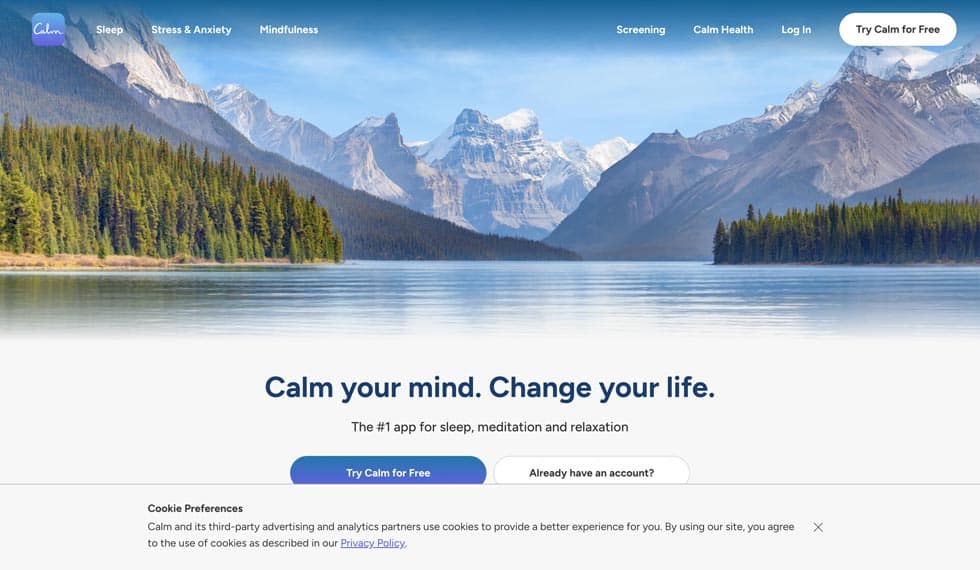
[00:34:54] KaSondra: Well, first, I would like to recommend downloading the Calm app. I use it during stressful times to help me relax or meditate. They have some guided meditations and nice outdoor sounds that you can use on the app. It’s easy to use, and you can set reminders throughout the day just to give you an alert and remind yourself to take a few minutes to slow down.
I am a busy body, and I have a lot of things going through my brain most times of the day. I use it to help me have that reminder set in place so I can move through the rest of my day in a more peaceful way, hopefully. The next thing that I would like to recommend is really more in the form of encouragement. I’d just like to encourage anyone who’s ever faced any type of hardship, just to believe in yourself, whatever your natural talents are, try to build on those skills.
Also, don’t be afraid to ask for support when it’s needed. There is going to be someone out there who is willing to help, even when you feel like there may not be, and you never know who’s watching. I’m a perfect example of that. Thank you both so much.
[00:36:18] Bonni: Angel and KaSondra, thank you so much for investing your time in helping all of us become better at facilitating learning, and just thanks for sharing your stories today.
[00:36:29] Angel: Thank you.
[music]
[00:36:34] Bonni: Thanks once again to Dr. Angel Herring and KaSondra Toney for joining me for today’s episode of Teaching in Higher Ed. Thanks to all of you for listening in today. If you’ve been subscribed to the podcast for a while but haven’t yet rated it on whatever app it is you use to listen to the podcasts in, I greatly appreciate it, as it helps to share the word about the podcast.
If you haven’t signed up for the weekly email update from Teaching in Higher Ed, I encourage you to head on over to teachinginhighered.com/subscribe. You’ll receive the most recent show notes, and you’ll also receive some other recommendations that don’t get shared on the podcast, as well as quotable words. Thanks again for listening, and I’ll see you next time on Teaching in Higher Ed.
[music]
[00:37:35] [END OF AUDIO]
The transcript of this episode has been made possible through a financial contribution by the Association of College and University Educators (ACUE). ACUE is on a mission to ensure student success through quality instruction. In partnership with institutions of higher education nationwide, ACUE supports and credentials faculty members in the use of evidence-based teaching practices that drive student engagement, retention, and learning.
Teaching in Higher Ed transcripts are created using a combination of an automated transcription service and human beings. This text likely will not represent the precise, word-for-word conversation that was had. The accuracy of the transcripts will vary. The authoritative record of the Teaching in Higher Ed podcasts is contained in the audio file.