Follow the Teaching in Higher Ed Podcast
About this Episode
Kelly Fitzsimmons Burton talks about the common ground on episode 378 of the Teaching in Higher Ed podcast.
We need to recognize that the hard questions are usually philosophical at their root.
Kelly Fitzsimmons Burton
On episode 378 of Teaching in Higher Ed
Voices on this Episode


Show Notes + Resources
Recommendations from this Episode

Idea
Read Books Outside

Idea
Do Meetings Outside
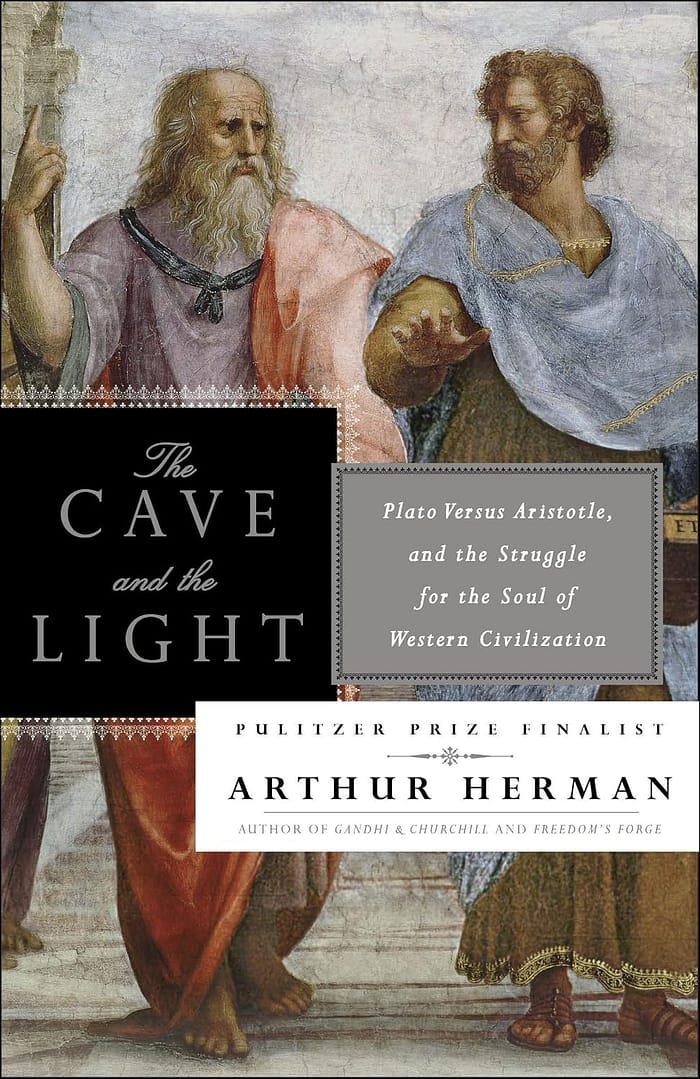
Book
The Light and the Cave by Arthur Herman

Idea
Eat Outside

Idea
Shrink it Down
Transcript
[00:00:00] Bonni Stachowiak: Today on episode number 378 of the Teaching in Higher Ed podcast, Kelly Fitzsimmons Burton joins me to talk about common ground.
[00:00:12] Production Credit: Produced by Innovate Learning, maximizing human potential.
[music]
[00:00:21] Bonni: Welcome to this episode of Teaching in Higher Ed. I’m Bonni Stachowiak and this is the space where we explore the art and science of being more effective at facilitating learning. We also share ways to improve our productivity approaches so we can have more peace in our lives and be even more present for our students.
[music]
[00:00:49] Bonni: Kelly Fitzsimmons Burton is a professor at Paradise Valley Community College. Her website is Retrieval Philosophy and she’s the author of Retrieving Knowledge: A Socratic Response to Skepticism. Kelly completed her doctoral work in humanities with an emphasis in philosophy at Faulkner University Great Books Honor’s College in April of 2017. When not engaged in public philosophy, Kelly enjoys spending time with her husband and hiking with her two cattle dogs.
Kelly was introduced to me through my partnership with the Association of College and University Educators or ACUE. ACUE’s certificate programs equip educators with evidence-based teaching practices, proven to improve student outcomes and create inclusive, equitable learning environments. For more than five years, ACUE has connected me with top experts, faculty developers, and credentialed faculty who are featured in ACUE’s courses to share their work and insights as guests on the podcast. Kelly, welcome to Teaching in Higher Ed.
[00:01:57] Kelly Fitzsimmons Burton: Hi, Bonni. It’s great to be here.
[00:02:00] Bonni: What was your college experience like?
[00:02:03] Kelly: My college experience as a first-generation student, the college where I work is actually the college I went to and we saw it being built as I was going to high school. My mom would say, “There’s your college, there’s your college,” as we drove by. When it came time to go to college, my parents basically dropped me off and told me to go figure it out. It was a little difficult, but I learned to navigate college. I didn’t really know how to be an academic.
I was probably an average student in high school. When I got to college, I struggled a little at first until I found philosophy, which is my discipline. Then things just fell in place and I had a very good mentor there who helped me to figure out how to do the next level like how to go on to the university, how to do a master’s degree. I would say my first-generation college experience, it was difficult at first, but I came to love the academy. I really have. This is my home.
[00:03:11] Bonni: I don’t know a lot about the demographics inside of philosophy as a discipline. My assumption would be, and I’m excited to know if I’m right or wrong, that it doesn’t attract a lot of first-generation students. I would perceive it as a lot of students whose parents had known to tell them this is what college is. I think of it as a highfalutin [chuckles] kind of discipline. Am I accurate with that perception or am I off-base?
[00:03:40] Kelly: I think in the undergraduate degree program, there were probably a more diverse background. When I got into the master’s program, it was more educated people and probably their parents were educated people too. It was a little different, but I don’t know that I really noticed it.
[00:04:04] Bonni: What do you remember noticing at the time? If it wasn’t that, what was it?
[00:04:08] Kelly: I noticed that I was one of the only females in the program all the way through. That was a constant– I think things are different now. I think there are more females in philosophy, but I was always having to interrupt the boys.
[00:04:24] Bonni: [laughs] Tell me about a memory or collection of memories that you recall discovering that interruption was necessary [chuckles] in order to accomplish your objective of being able to share.
[00:04:39] Kelly: I remember having seminar courses of five to eight people and all sitting around a small table and the professor at the head of the table. The professor would throw out a question and people would just go after it and you had to jump in. You had to interrupt and say, “Ah, I have something to say too.” I have brothers, so I’m kind of used to that. You’re having to interrupt and clean your space. I had a good experience, I should say.
[00:05:09] Bonni: That’s great. I’m thinking about that preparation and our family dynamics being helpful to us. I just had a brother, but one thing that has always struck me that I carried with me through a lot of times was just I grew up never feeling like there were any limits on what was possible. I don’t mean like I thought I could fly or something like that, but no one would say as a woman or as yourself that you can’t do X, Y, or Z.
I always thought of it as the things that I was interested in, I did well at. The things I wasn’t interested in, I didn’t do well. When I look back on regrets that I have would be, isn’t it a shame that if I could have somewhere along the line gotten curious about things, I suspect I would have had a much more expansive range of education in areas like science and math?
I sometimes wonder what that would have looked like, how my life might have been different, but I’m so glad that you were able to decide, “I’m taking this cultural thing from my family and this is a place I have some things I want to say.” What do you remember about– what was your voice wanting to say? What were the things that were really important to you in your education that you had a lot to say about?
[00:06:30] Kelly: Well, I always was interested in the bigger questions. I started off– [chuckles] I don’t know how this happened. I think I liked sciences. I started off as a geology major and I couldn’t do the math to get into the program, so I was like, “Okay, what is close to the earth?” Okay, anthropology, and I was doing physical anthropology. I felt like the questions were never big enough.
When I discovered philosophy, I felt like these are the questions I’m interested in. What is the purpose of life? What are we doing here? Why do we work so hard? What are we trying to achieve? What is the good life, so to speak? Really, I got into the question, how do we know? How can we know things? That’s really what gripped me, this focus on reason in philosophy. This is a method and it wasn’t a method that I had learned in other classes. I think it was the big questions that gripped me.
[00:07:25] Bonni: I have a colleague who is returning to teaching after doing a lot of different things and he told me he is rereading a book by someone named Parker Palmer.
[00:07:36] Kelly: I love Parker Palmer, yes.
[00:07:38] Bonni: Well, I keep admitting to him. I’ve actually quoted from Parker Palmer’s book so many times, but I haven’t finished it. We’re recording this episode on August 13th and I’m committing to by December, that thing’s going to get read. I can’t even believe I’ve gone this long, but anyway, he was saying how interesting it is to be rereading that book during a pandemic. I’m curious as you. Sorry, Kelly, to break it to you and anyone listening. We’re not done with this yet. What is it like to revisit some of these questions that you were so passionate about at the time during a pandemic? What’s that been like for you and also within your classes?
[00:08:17] Kelly: It’s, I would say, more real now. One of the things that I’ve been revisiting is the history of philosophy because I feel like sometimes as a philosophy person, you’re a detective. You’re trying to solve problems, trying to figure things out. I’m trying to figure out, how did we get to this point philosophically, historically? I’ve been spending my pandemic time doing that, just rereading the history of philosophy, studying ideas, tracing ideas.
I think my students enjoy hearing that story. My students sometimes tell me they don’t like to read, but I think when you give them something interesting that they want to know about, they will do the reading. I think that’s been my emphasis and I have brought it to my classes a little bit more. I’m hoping to create a history of philosophy online class within the next, I’d say, two semesters.
[00:09:19] Bonni: Have you seen their questions shifting a bit?
[00:09:23] Kelly: I have. The students are focused on ethical questions right now, I think, and questions about technology and the dangers of technology, where are we going in the future with technology, medical questions. These are questions that I haven’t really focused on, but I’m personally interested in them too.
I’m fully online, asynchronous online, so it’s hard to sometimes meet them in a conversation where they’re at right now. My school has a philosophical society. It’s like a philosophy club and we meet once a month and have some really good conversations there. That’s where it’s coming out where I see their questions. I think ethics is number one on their questions list right now.
[00:10:14] Bonni: As you talked about reading a little bit, that can be definitely a skill we can acquire as teachers to help increase the likelihood that students might do the reading. How about increasing the likelihood that students might take more effective notes? What have you discovered in that realm?
[00:10:34] Kelly: This is a good question. It connects with the first question you asked me about my college experience. I came to college not knowing how to take notes and I would write down things, but they were never connected. I would forget what the lecture was about, so I had to teach myself how to take notes. It was a skill that I didn’t learn formally, but I feel like I have perfected it in a way that it works for me.
I hope I can pass it on to my students now because I don’t want them to struggle the way I did in those first few years in college. I encourage my students to take notes. Sometimes I give them– what I call them “core questions.” These are questions that are almost like the grammar of philosophy. You can answer these questions just by reading the handouts or watching the videos or going through the readings I provided. I also encourage them to write their own questions.
If they have a question about the material, write it down, and then try to answer it. I haven’t done this, this semester. Last semester, I gave them extra credit to take pictures of their notes and send me the pictures. Now, when you are teaching five to seven courses to look through all of those notes, it becomes a lot. I may concentrate on the introductory courses where they’re just learning how to do this. I am working on that. I think if you encourage them to take notes and you show them how to take notes, they will do it. I hope they carry that into other courses.
[00:12:13] Bonni: That’s such a good example that you gave in terms of thinking about what we assign points for. Very early in the podcast, I’ve actually had her on a few times, but Michelle Miller, who wrote a book called Minds Online. Very good at helping us become better at teaching online classes. The first time I ever interviewed her, it stayed with me all this way. She was trying to get us to recognize that we don’t have to grade in terms of evaluate everything.
She would encourage us and– Sorry, Michelle, if you’re listening. [chuckles] I’m sure I’m not going to quote her exactly, precisely from– but just my takeaway from learning from her all that time ago was I could. In a lot of our quiz systems, inside of our learning management systems, you can have a multiple-choice-question type. You can have a fill-in-the-blank-question type. You also can have an upload-a-document type.
She really freed me to say– and I also tried to encourage more reading through note-taking. I can have that as a question type and I can spot-check it. Every week, I can skip around, “Okay, now, I’m going to really hone in on these three.” It’s not a policing kind of thing. We’re in a conversation. I actually wanted to see what you had to share from your notes so that they know their notes are not only to themselves but to me, but I don’t actually have to do that 100% of the time to get the benefits.
Then if we share in the class, “Oh, so-and-so,” I always get permission to do this, but so-and-so had this really cool drawing that they did where they sketched out this thing, and then they go, “Oh wow, she’s actually looking at what we’re doing. She really cares. Thank you so much for those examples of ways.” Something else that I know you do well too is not to just assume that students are bad people because they don’t take notes very well and how this is on them. How have you found it to be helpful to really teach them the skills of what note-taking might look like and how it might help them as learners?
[00:14:23] Kelly: Well, a conclusion that I came to at the end of my college experience, which is the PhD, I realized that the best part of my education were the questions that came up. They came up from various sources like my fellow classmates, my professor, my readings. I had wished that I kept a question journal like if I had written down– because those are things you want to think about for your whole life.
What I’ve done now is tailored the– I don’t know what– I tier my grading. The top-tier grading is if you want to get an A in this class, do this assignment where you keep a question journal for the whole semester. It’s not necessarily their notes, although they do sometimes may elaborate on their questions in a note form. I want them to write down the questions that they sincerely have as they’re going through the material.
I try to make it 25 to 30 questions over this semester. This has been really, I think, a fun assignment. I don’t grade it for point. You either do it or you don’t do it, but I find that most of them do it. I want them to see there are questions that are hard to answer with a yes or no. These are things we have to think about and this is what philosophy does. We think about hard questions.
Sometimes it’s uncomfortable and sometimes there’s no clear-cut answer, but we have a method in the discipline for approaching the questions. You don’t give up on the questions. You go, “Oh, that’s hard. I need to think about it some more. Maybe I need to read something. Maybe I need to talk to somebody.” We make progress in our understanding that way. I’m hoping that it’s not just taking notes. It’s introducing the students to a philosophical way of life.
[00:16:25] Bonni: You spoke of the hard questions. I don’t know anyone who is teaching in a higher education context but isn’t struggling with this in one way or another. What advice do you have for people who don’t necessarily teach in your exact discipline? More broadly speaking, how can we do this better? How can we enter into spaces and places where we can have hard questions?
[00:16:53] Kelly: I think we do need to recognize that the hard questions are usually philosophical at root and we’re all philosophers. We either do philosophy well or we don’t. Perhaps we need to revisit the tools of philosophy. Like I said, reason. Reason is just the laws of thinking and these are really basic. If it’s a contradiction, both of those sides can’t be true. If a person contradicts themselves, then what they’re seeing doesn’t make sense.
We do this all the time, but philosophy tells us what we’re doing. There’s a method. Then I think we can look for common ground with people say, “Okay, do we agree on the method that we’re using?” Do we recognize that, “Hey, we all have philosophical assumptions and they’re probably very different”? We all do think we’re right. It’s okay to think you’re right, but are you willing to back up and re-examine your views when you see there’s a contradiction there, or when you see, “Oh, that doesn’t really make sense”?
It may be uncomfortable, but this is how we learn and grow. This is what humans do. This is the best things humans do. I think our age, our era, I don’t know, is highly skeptical. We think we really can’t arrive at truth or knowledge. These are things we think who nobody knows. I think that’s a dangerous place to be. Philosophy when it starts, I would say with Plato, Aristotle, they thought we could attain to knowledge. They thought we could know the truth. If we get rid of those things, we get rid of philosophy.
If philosophy undergirds a lot of the other disciplines, then they have no foundation and that’s a bad place to be. I think we all need to recognize philosophy is part of our thinking. Let’s try to do it better. The best way to do that is through conversation. We cannot write each other off. We can’t say, “Oh, you’re in this box. I don’t talk to that box.” I think we need to just get back to saying, “I’m a human, you’re a human.” Humans are thinking, conversing beings. There’s a way to do it in a civil, polite manner.
[00:19:20] Bonni: I had an opportunity to read a lot of notes about your teaching. I had some great preparation from someone that I work with at ACUE. The reason I mentioned that is that I remember vividly what struck me in terms of the notes he passed on was the phrase, which you just used, “common ground.” I think so many times, people think that the purpose of common ground– I don’t think this at all about you or I wouldn’t even ask, [laughs] but I think they think that’s where we leave it.
They think of it as this great ethical way to be that we’re going to be very neutral and we’re all going to get along to get along. We’re not actually going to get into the messy, hard conversations because that feels scary. Trust me, I have had it throughout my entire time of teaching. It always feels scary. It’s just that sometimes, I feel more or less confident that I have the tools to deal with the scariness that it is where it just feels like it could spin out of control, especially because if it goes such a visceral reaction because it goes so much against your values.
The reason I’m asking you this question, which I’m about to actually ask a question, is because I know that’s not the endgame for you, that we stay in that safe place wherever– Of course, we all believe the same thing. Isn’t that nice? I’ll see you later and you can go on your life. Where do we go after we have found the common ground because I’m thinking it’s not the end for you?
[00:20:58] Kelly: Oh no, common ground is the very first step. Common ground is a place where we can stand and we agree– For me, it’s an agreement on a method for talking about the next things. This is my, I guess, whole life conversation. The next thing is we need to discuss ultimate reality. It’s called metaphysics and philosophy. What is real? What is reality like? That’s where we have a lot of disagreement. We don’t want to talk about that.
Then from there, it gets even harder. You go into ethics and talking about, what is the good life? What is the purpose of life? What are we doing? What’s the purpose of work? What is a virtue and what is happiness? Those are where there’s deep disagreements and then applications of those things like, I don’t know, pandemic talk, the things nobody can agree on. Common ground is just the beginning. It’s starting, it’s agreeing on a method for pursuing those more difficult topics.
[00:22:00] Bonni: When you are able to do that, when you’re able to be in a learning community and establish that level of trust and we have the common ground, talk about what it’s like then when you step into the next step. That’s step one. Where is the next part where things may get a bit messy?
[00:22:19] Kelly: You know, I found– and I think I’ve found this through the philosophical society. I’ve been doing that for about 15 years with students and colleagues. Sometimes it’s good to read a text together and discuss it. You have this common ground. Okay, we all agree that we want to find some truth of the matter together. We have a method for doing that, but we disagree. Let’s read a text and find out where those disagreements are.
Perhaps we disagree with the person that wrote the text as well, but at least we’re having an organized way for conversing. I think conversation is necessary if we’re going to make any progress. I guess you could write books and people read books. That’s another kind of a conversation, but I think real people conversing is the way we’re going to make any progress in this kind of skeptical age where we almost can’t talk anymore.
I find establishing common ground is easy in the classroom. Day one, number one, respect. We’re going to respect each other. Number two, we’re going to use reason because that’s what philosophy does and we’re going to have integrity. If you say you believe a position, then you hold to that position and the implications of it because that’s where it’s hard, right? You can change your mind at any time and then let’s go back. Let’s deal with questions that are prior.
If we agree with each other on more basic questions, maybe we can agree on less basic questions. If we don’t agree on a more basic, we’re not going to agree anywhere else. Then I think if we affirm that, yes, maybe some things can be known, some things are unclear and we can get there together, then I think we have a basis for conversation about harder things.
I think sometimes approaching those harder questions through a text, through a short reading, through quotes by maybe famous philosophers, we can see the contours of disagreement better and agreement. Sometimes we go, “Oh, you and I, we agree.” It took me two years to figure that out. I have conversations I’ve been in with people for five years and we just now have realized, “You know what? We’ve gotten to a point where we agree.” It took a lot of work, but we do agree.
[00:24:46] Bonni: What a good example. I don’t know if you’re ever familiar with the– I was going to call it a podcast. Sometimes things are like TV shows, but I call it a podcast because that’s where I consume it. It’s called Intelligence Squared. They have different kinds of debates.
[00:25:00] Kelly: Oh, I feel like I’ve seen this, yes.
[00:25:02] Bonni: The format is that the people who come– It’s some kind of a forum. I think they do it in Chicago, but I might be getting confused. They come together in some sort of a forum and you vote how you feel about an issue beforehand, and then they hold a debate. It’s a very structured debate with time frames and all of that and then you vote at the end. They did something like that at my university about 15 years ago.
This is a long time ago and a lot has changed since then, but I remember getting so angry for two reasons. One reason was that people were going around trying to manipulate the vote to get their side to win. There’s all this like, “Oh no, no, make sure that you do this and that.” I was new still and new to the format. Also, I didn’t know a lot of the students and all that, so I’m just kind of, “Oh, okay this is–” My discipline, by the way, this is not my discipline.
I’m totally out of my environment, but I’m just watching people whisper to tell people to make sure they vote how they felt differently before it even started. I felt like we’re gaming the system to begin with, so I can’t even really trust that any perceptions were actually changed. I was angry about that, but what I was especially angry about driving home that night was they didn’t even agree, not even common ground.
Before we even got to common ground, they didn’t understand the words that were being used. It was a debate about universal health care. Students didn’t even know. In fact, probably even some people in the room didn’t know. What is it? You go to the doctor’s office and then you pay to visit and those payments are different. The difference between a PPO and an HMO, the difference between what is single-payer.
They’re debating so vehemently about single-payer versus– and I’m thinking, how could you have a debate when people don’t– and I sound like I’m being condescending. I so don’t mean at all to be condescending. I was so angry because I felt like they were missing out on their education, because how could we ever have a discussion about these things [laughs] that we don’t even know the words that are being used? I’m seeing you nod your head a lot. Is this a common thing? [laughs]
[00:27:13] Kelly: I have students that get mad at me for saying this, but I don’t do debate because I think debate is where you’re already at this high level of disagreement. Like you said, we don’t go back and define our terms. Philosophy is a little bit different. I don’t even know if it’s about persuasion. Maybe it is, but it’s about understanding, “Okay, use this word ‘single pair.’ Use this word ‘universal health care.'”
Let’s define our terms. That’s the more basic that I’m talking about. For example, in the logic class, we talk about concepts, then judgments, then arguments. Concepts are the most basic unit of thinking. It’s an idea and words express concepts. Do we agree on the concepts that we’re using? Then we put them into judgments. Universal health care is great. That’s a judgment. It’s either true or false. If we don’t understand the terms first, we can’t agree on the judgment.
Then we shouldn’t go on and make arguments for our position if we haven’t even done the conceptual level of understanding. I think this is the difference between debate and, let’s say, logic. I think if I could have it, everyone would take a philosophy course either in college or late high school and learn what the basics of thinking are because we have mapped out what we do when we think and if we can be more self-aware, self-critical about what we do when we think. Again, you said “feelings.” Feelings are different than thinking.
If we’re feeling something, it’s because we’re thinking something. Can we back up and see what’s making us feel that way? Why do I feel angry? What thoughts are making you have that feeling? I think the benefit of philosophy is helping us to learn to pause and go, “Okay, what are the ideas being expressed? Do I agree or disagree? Why or why not?” Then when I figure out what I think, I can converse with another person and I hope they also can do the same thing.
[00:29:25] Bonni: Yes, thank you so much for all of those explanations and for this way of thinking about common ground to another end. [laughs] I guess you don’t end there. Before we go to the recommendations segment, I’d love to have you share a little bit more about– You spoke about the Public Philosophy Society, but I didn’t necessarily ask you about the public aspect of it because it strikes me as something that goes beyond just the walls of a university or a class or that kind of thing. Talk a little bit more about the public nature of the Public Philosophy Society.
[00:30:02] Kelly: Yes, so like I mentioned earlier, I think we need to talk about these big questions. What is ultimate reality like? What is the good life? I could just be biased. Maybe this is what I think is important, but I am passionate about it. I do want to share it with others and I do think students are excited about these kinds of questions too. We started with the philosophical society on campus, and then I had colleagues around the Phoenix area that were doing some public lectures.
We would go to each other’s colleges and talk to the students. I started a lecture series at my college, where we were doing four lectures, I think, a semester on a philosophical topic. Someone would present a paper and it was public philosophy. It wasn’t academic-ky. It was the students at the 100-level who could understand it. It was about something the professor was passionate about and connecting with the students, so drawing them in and having a public conversation. Then the pandemic happened and we got put online.
The Public Philosophy Society is now on hold because the public has changed. We’re still trying to figure out how to navigate this new way of doing things. I did start a journal, the Journal of Public Philosophy.We’re publishing papers that are more about the common good and trying to draw citizens in, not just academics because we’ve done the academic game. I know the lingo we use is meant to talk to each other, so I want to make philosophy relevant to non-philosophy people. We started the journal. I started a publishing company and the Public Philosophy Society, which is on hold right now until we figure out what to do.
[00:32:01] Bonni: Oh, that’s wonderful. I love the fact that we, if we have access to the internet, can watch a man by the name of Michael Sandel’s videos. He teaches at Harvard a class called “Justice.” I assign a portion of his videos to students in a business ethics class. What I love that that does is he’s such a better Socratic philosophy professor than I could ever be as someone who is neither of those things. Also, I had a benefit that I had never intended.
Now, I show them even more than I ever would have continued to do it without this because they say– I teach at a non-prestigious institution. It’s not Harvard. Let’s just say that. They love being able to picture themselves because it feels like you’re in the room with him. They did such a masterful job of filming it and just being very inclusive in terms of it feels like you’re sitting in the room. I use our video tool that allows real-time commenting, so there’s a little bubble.
I tell them, “Picture you’re sitting in Michael Sandel’s class at Harvard. Every time he asks a question to the people who are sitting in his lecture hall, I want to see you that you’ve typed–” as soon as they start typing, it pauses. It’s funny to see the image of it because every time he asks a question, there’s a million little bubbles all at that time code in the video. Again, I didn’t plan this, but they told me, “I think I could go to Harvard.” Those students are just like me. They’re just like us. I see myself and I see my fellow students in those students and I think it actually– Without me ever planning it, I think it expanded their imagination for what’s possible for them in their lives.
It’s incredible. It’s exactly what you were describing in terms of when we can take our disciplines and have them be accessible to anyone and especially to the public and how important this work is that you’re doing. My gosh, we need that more now than ever, so thank you so much to all that you’re investing in terms of time and I’m assuming money because publishing companies– [chuckles] you’d have to have some resources to make something like that work and I’m just so grateful that you’re doing that.
[00:34:26] Kelly: Yes, I have to say the publishing aspect has been so fun. I love seeing ideas come into the world and I love seeing young philosophers. What I’ve been publishing is the next generation and I think there’s a lot of potential. There are voices that have not yet been heard in philosophy, so it’s very exciting.
[00:34:52] Bonni: Before we get to the recommendations segment, I just wanted to take a moment to thank today’s sponsor, and that is TextExpander. If you’ve been listening for a while, you know that TextExpander has been a sponsor for a long while now. I feel so good about that because it is something that I paid for long before they were a sponsor and continued to this day. It’s such an essential part of what I call my productivity system.
What TextExpander lets us do is easily create what they call snippets. Snippets are just a few characters that automatically expand into things that are either hard for us to remember like for me, my work phone number, or that are a little bit more complex like the show notes for the podcast episode or a letter of recommendation for a student. There’s common information and language that need to go into those things, but then there are variables.
It’s really easy to say, what was the guest number? Who was the guest or what was the podcast episode number and who is the guest or what is the organization that this student is applying for? All different ways that we can either in small ways or begin to build into some of our larger things, again, like writing letters. Right now, I’m writing a lot of letters for faculty who are applying for promotion and tenure.
Whenever we have common steps to those things, we can use TextExpander to help save us time. Again, it’s really easy to get started with TextExpander, and then just to find new and ever-expanding ways to continue to have it help us save time. Head on over to textexpander.com/podcast so that you can find out more information and take advantage of a free trial. Thanks once again to TextExpander for sponsoring today’s episode.
Well, this is the time in the show where we each get to share our recommendations. In past episodes, we have had lots of people come and tell us that we should exercise more and get outside more. I love those reminders. I was thinking about something that I had done recently that I think could be helpful to someone who’s listening. My husband and I both hear pretty regularly on podcasts that we listen to or articles that we read about the importance of getting out into nature.
That also, of course, applies to our children. They were fortunate enough to get to a school where they have an outdoor classroom. We read some of the literature about what they’re learning, about things like nature-deficit disorder, all kinds of things. I think in my mind that I was making this too binary of a thing, that I’m either on a nature trail on a nature preserve [chuckles] or I’m not in nature.
What I have realized recently is it comes up in teaching, but it also comes up just in life. Yes, it is good to get outside and be in nature, but I’ve decided rather– because I realized during the pandemic, there would be sometimes where I wouldn’t get outside at all for multiple days, so that’s not good. [chuckles] That hasn’t happened for a year. I’ve gotten better about that, but I thought I just decided that I could be in nature in my backyard.
Every day now, I go outside and I only eat for like 10 or 15 minutes or something, but I keep telling myself, “I’m in nature. I am in nature. I can look at these plants.” Yes, there are things in our backyard that would not normally be. We don’t have a perfectly deciduous plant or whatever they’re called backyard, but I am in nature and I’m trying to soak that in. I think my two recommendations I’d like to share, I’ve just decided I’m expanding it.
One is I suggest that people eat outside even if it’s just 10 minutes. Just do it outside, but also shrink things down. Don’t tell yourself, “I can’t do (fill in the blank) because I can’t drive to the nature trail and go on the nature trail.” I can be in nature. We spoke recently to James Lang about small teaching. You don’t have to reinvent everything about your teaching. Shrink it down.
Can you spend the first five minutes of class doing X, Y, or Z? Whatever it is that you’re holding back on from having progress toward, stop telling yourself that you can’t. Shrink it down to something you can do. I can sit in our backyard for 10 minutes every morning and it’s been awesome. That’s my recommendation and I’d like to pass it over to you, Kelly, for yours.
[00:39:24] Kelly: Well, Bonni, I am going to riff on your recommendation because one of the things that– a good thing that has come out of the pandemic for me is I feel like I have had the opportunity to be out in nature. I have a nice porch. Okay, we live in Arizona and it’s very hot right now. When the weather is nice, it’s very nice. I have made it a point to do meetings outside and read books outside, eat outside.
I have spent so much time outside. It has given my life more balance and I’m very grateful for that part of the pandemic. Reading outside is the best. My recommendation was going to be a book, but I’m going to say if you do get this book, go read it outside. It’s a fun book. I’ve been reading this book here and there, a chapter here before bed. It’s called The Light and the Cave by Arthur Herman.
It’s a philosophy book, but it’s a fun philosophy book where it’s showing the history of philosophy through people who advocate either Plato or Aristotle and how it gets worked out through Western history. I want students to read more books and take notes in the books and ask questions. I think this is a good starting-off point. The Light and the Cave. It’s fun. The chapters are short. It’s pretty accurate historically, so that’s my recommendation.
[00:40:53] Bonni: Kelly, I’m so glad to be connected with you and I’m grateful to ACUE for making this conversation possible. What a delight it’s been to talk to you. Thank you for investing your time in this way.
[00:41:03] Kelly: Thank you, Bonni. It’s my pleasure.
[music]
[00:41:09] Bonni: Kelly Fitzsimmons Burton, thank you once again for joining me on today’s episode of Teaching in Higher Ed, and thanks to all of you for listening. If you’ve been listening for a while and haven’t yet given this show a rating or a review on whatever service it is you use to listen, I’d appreciate you doing that and helping others find out about the show that way.
I also encourage you to subscribe to the weekly update. It comes to your inbox and has the most recent episodes, show notes, along with other recommendations that don’t show up on the show, and some quotable words and other good stuff as well. You can head on over to teachinginhighered.com/subscribe. Thanks once again for being a part of the Teaching in Higher Edcommunity.
[music]
The transcript of this episode has been made possible through a financial contribution by the Association of College and University Educators (ACUE). ACUE is on a mission to ensure student success through quality instruction. In partnership with institutions of higher education nationwide, ACUE supports and credentials faculty members in the use of evidence-based teaching practices that drive student engagement, retention, and learning.
Teaching in Higher Ed transcripts are created using a combination of an automated transcription service and human beings. This text likely will not represent the precise, word-for-word conversation that was had. The accuracy of the transcripts will vary. The authoritative record of the Teaching in Higher Ed podcasts is contained in the audio file.