Follow the Teaching in Higher Ed Podcast
About this Episode
Eddie Watson shares about assessing the impact of open educational resources on episode 186 of the Teaching in Higher Ed podcast.
Maybe this is more than just about saving students money. Maybe this is a new kind of equity issue that we're pursuing.
Eddie Watson
On episode 186 of Teaching in Higher Ed
Voices on this Episode


Show Notes + Resources
- Episode 137 – Eddie talked about Teaching Naked Techniques
- Teaching Naked Techniques: A Practical Guide to Designing Better Classes by Antonio Bowen and C. Edward Watson*
- OpenStax at Rice University
- National Survey of Student Engagement
- Chemistry – OpenStax
- U.S. History – OpenStax
- Salt Lake Community College’s research: Open Educational Resources and Student Course Outcomes: A Multilevel Analysis by Jessie R Winitzky-Stephens and Jason Pickavance
- 2018 Annual Meeting: Can Higher Education Recapture the Elusive American Dream? Watson, C. E., Domizi, D., & Clouser, S. A. (2017).
- Student and faculty perceptions of OpenStax in high enrollment courses International Review of Research in Open and Distributed Learning, 18(5), 287-304.
Recommendations from this Episode
Transcript
Bonni: [00:00:00] Today on episode number 186 of the Teaching in Higher Ed podcast, C. Edward Watson shares about assessing the impact of open educational resources.
Production Credit: [00:00:14] Produced by Innovate Learning, maximizing human potential.
Bonni: [00:00:22] Welcome to this episode of Teaching in Higher Ed. I’m Bonni Stachowiak and this is the space where we explore the art and science of being and more effective at facilitating learning. We also share ways to improve our personal productivity so we can have more peace in our lives and be even more present for our students.
Bonni: [00:00:50] Today marks the second time that I’m having today’s guest on the show. Eddie Watson was back on episode 137 to talk about the book he coauthored with Jose Bowen, Teaching Naked Techniques. Today Eddie re-joins the conversation to talk about open educational resources.
Bonni: [00:01:10] C. Edward Watson is his formal name, but he does go by Eddie in conversation as you’ll hear in the interview. He is the Associate Vice President for Quality, Advocacy and LEAP Initiatives with the Association of American Colleges and Universities (AAC&U). He was formerly the director of the Center for Teaching and Learning at the University of Georgia. That will be some of the research that he shares with us today.
Bonni: [00:01:36] He’s the executive founding director of the International Journal of ePortfolio, the executive editor of the International Journal of Teaching and Learning in Higher Education, and has published on learning and teaching in a number of journals including: Change, Educational Technology, EDUCAUSE review, The Journal for Effective Teaching, and To Improve the Academy, among others. Eddie, welcome back to Teaching in Higher Ed.
Edward: [00:02:05] Well thanks for having me back on.
Bonni: [00:02:07] It feels like you just on the show because these things go so fast but back on episode 137, you were here to talk about a book that you co-wrote with Jose Bowen, Teaching Naked Techniques. And one of the big takeaways from that episode I recall so vividly was some research that you did around distractions in the classroom and laptop use and cell phone use. I heard from so many people that said you had such a unique perspective and were one of the few people actually performing such kind of research.
Bonni: [00:02:39] I’m excited because we have a whole different topic to explore today. But I know that you have throughout your entire career kept your researcher hat on so we get to both hear your philosophy but also a little bit about some of your findings and discoveries. Let’s start all the way back to when you were at the University of Georgia. Tell us about how you all started to just initially become interested in open education broadly and specifically open educational resources.
Edward: [00:03:11] OK well I joined the University of Georgia in September 2012, I believe. And of course like anyone new to a university, especially in an administrative position like I was in, I came in as the director for the Center for Teaching and Learning. You’re always kind of looking for maybe something signature as an initiative you can kind of put forward and put a lot of energy to and hopefully bring about change in a positive way.
Edward: [00:03:36] And so as we were looking at a variety of different things, open education resources and some of the work going on at OpenStax at Rice University really excited us. And we knew that maybe a quarter of our students had reported having some challenges meeting their financial needs from one semester to the next. And so we felt like we were a little bit kind of nibbling the edges with free textbooks.
Edward: [00:03:58] But then as we thought about it more, that’s kind of the one thing that students have difficulty predicting from one semester to the next. You kind of know how much tuition is going to be months in advance. You kind of know how much your rent is going to be from one month to the next. But often students will arrive at the beginning of the semester on a Monday morning and start collecting syllabi and then after a day or two realize that they need an extra nine hundred dollars or twelve hundred dollars, which does seem to be about the average for a year from some data sources regarding textbooks.
Bonni: [00:04:30] So it’s $900 to $1,200 on average for a student to purchase textbooks for a year?
Edward: [00:04:36] For a year. Correct. So knowing that that can often be a big shock to students we thought if we really could maybe have some courses or maybe even design a path through the core curriculum that would have free textbooks that could really indeed help students. We’ve heard stories, anecdotally, of students that would sign up for that anatomy and physiology class and they were aspiring to be doctors later on in their lives and they see that the textbook package was 400 dollars or more.
Edward: [00:05:10] They would drop that class and actually sort of change their career trajectory based on just what they found the textbook cost to be. Now that’s certainly one extreme example but certainly it happens more commonly that students might see how much textbooks are and then decide you know what maybe I need to delay taking this class. I’m going to drop this class because the textbooks are so expensive and I can pick this up next semester.
Edward: [00:05:32] Which could delay time to graduation, which maybe overall would actually increase the cost of the higher education experience. So I guess what brought us to OERs initially was just thinking “maybe we could save students money.” And we started working with a fairly simple formula as we began that work around saving students money with free textbooks; we were looking for faculty who taught large classes and also had expensive textbooks. So we were thinking if we could just hit one faculty member who taught hundreds and hundreds if not over a thousand students in a given semester or a given academic year. We could have a big impact financially.
Bonni: [00:06:18] Eddie, this is an awkward question for me to ask but because I’ve heard it said so much outside of a podcast context, I’m just going to be bold and ask. Did you hear concerns from faculty who felt like either through whatever loans that students were accessing to obtain their degrees or just the reality, did you hear from faculty who were concerned that maybe the issue of costs for textbooks was inflated and that students were spending their money on other stuff because they didn’t see the value in textbooks? Or was it really- were you able to with the faculty have them all see the kinds of ways in which students weren’t able to access education because of this expensive textbook issue?
Edward: [00:07:02] No, I did hear it. I could think of a couple of examples of faculty who questioned whether or not students were spending their money as wisely as possibly they should. I heard an example of someone driving a nicer car than they drive or something like that. It’s like that’s probably not the student that we’re looking to help. You can have something like that kind of any any context or for any example. But knowing that we had NSSE data, the National Survey of Student Engagement. We had NSSE data that that showed that you know approximately a third of our students did have unmet financial need from one semester to the next. Those were the students that we thought that we could possibly help.
Edward: [00:07:44] I mean one who drives a nice car and doesn’t have to work at all during college, probably the purchase of a textbook is not a challenge for them or would not negatively impact their success in a given course or program. But there are students that indeed every textbook would make a difference.
Bonni: [00:08:02] Yeah. Yeah. That helps a lot.
Edward: [00:08:05] So as we got going with our initiative, we were again targeting those large enrollment courses that were using expensive textbooks, rather than approaching the whole challenge of OER adoption on our campus by doing broad adoption. We actually focused very narrowly on just a handful of courses, thinking that we could have a large impact if we could work very closely with maybe just a handful of faculty over time.
Edward: [00:08:31] And we ended up focusing in on from from 2013 to 2017, this past summer whenever I left the University of Georgia, there were probably eight to 10 different courses that we worked on. And these were core curriculum courses, these large enrollment courses with large textbooks. And over that time span, including this past fall semester, it was nearly 36000 students across about 12 courses that receive free textbooks. And looking at how much the textbook would have cost the previous textbook the faculty were using before they made this adoption shift currently collectively it’s been about $3,260,000 that’s been saved by students.
Bonni: [00:09:19] That’s just remarkable. It’s truly remarkable. And for many people who might be listening and aren’t familiar with these open textbooks, I know for me I’ll admit that it didn’t seem like this could even be possible. You mean to tell me that these textbooks are free? But just describe these textbooks because now I’ve seen them and now I’m much more aware. But how good are these textbooks that students were now able to access as compared to the ones through more traditional publishers in the past?
Edward: [00:09:50] Well that’s a really good question. That’s probably where we met most of our resistance from faculty rather than any other question that was raised, there was sort of the question of quality. And without a doubt there’s a range of quality of things that you can find out there on the Worldwide Web. But there is a project that’s been funded through several different foundation gifts at Rice University called OpenStax and we very much focused our adoption activities on those textbooks from OpenStax.
Edward: [00:10:22] So there are several reasons why. So OpenStax, the people that ran that, in fact the editor in chief used to be with one of the Big Five publishers and used to be involved with the creation of textbooks. So he brought the processes that are used at some of the other publishers forward as they began to author things for OpenStax.
Edward: [00:10:43] So for instance, faculty or indeed the authors of these textbooks. Faculty are indeed the peer reviewers of these textbooks, so just like the regular textbook process. What they did though is that they paid faculty upfront and the contracts were that there were no expectations of residuals or ongoing income from the sale of the textbook because there are no sales of the textbook.
Edward: [00:11:10] So the funding from the Gates Foundation and Hewlett and a few others out there led to the funds that paid faculty to indeed offer these textbooks. But the expectation was from that from the outset that they would be indeed be free. And so that’s often the two questions that are here are well how do you know that these are any good. It’s like well these are the same processes that other textbooks have been offered and then it’s the next question is are these really free is there marketing, is there ads in the middle I mean there’s always a hook in almost anything that’s free.
Edward: [00:11:44] You know you’ll give away your email address and you’ll start getting spam or something like that. And no indeed the OpenStax textbooks are indeed free. So any faculty member can go out there, decide to use them for their course. They actually kind of have a content management system for their textbooks which means you can take it within their system and brand it for your own course like you can have your own name on the front of the textbook. If you don’t like some of the content, you can actually delete chapters or reorganize content. It’s a very flexible machine that they’ve built around these textbooks.
Edward: [00:12:23] And they also continue to pursue grants, which has enabled them to have second edition of various text. And if you go to the OpenStax website, you’ll see that the list of titles that they have are pretty much titles that she would find on any college campus even whether Community College or Ivy you’re going to find Intro to Sociology, Intro to US history, Intro to Biology, Chemistry, Psychology, Physics, on down the line. And they’re actually building out into the business titles at this point I believe. So you can find you know economics titles and the like. Really kind of focusing on where are most students- it’s really about adoption. You know they’ve chosen titles that you would use on pretty much any campus which increases their impact for larger savings for students nationally.
Bonni: [00:13:17] One of the other things that people can see if they go look at some of their textbooks are some of the supplemental resources as well. A guide for instructors, test exam questions. And there would appear some sort of a verification process in order to receive those more instructor oriented materials than you need to be verified that you are indeed a faculty member. And those resources have little locks on them and then the students resources are available to anyone who goes and browses up there I saw that for many of the titles.
Edward: [00:13:46] Yeah and they’re definitely growing more into that domain. That seems to be sort of the new world within what the big five publishers are doing. It’s not just about the textbooks, it’s about ancillary materials. I think for a while they’ve been giving away CDs for instance that might have PowerPoint slides and the like on it. But now they’ve grown into tools and quizzes and almost like another learning management system that might accompany the textbook.
Edward: [00:14:13] So the OpenStax textbooks with all of the ancillary materials they aren’t wrapped around the OpenStax textbooks the same way that they are with the publishers. So there’s a bit of evaluation that facility would want to do is they compare what you might get from a publisher versus what are the extras that come with OpenStax. And are those extras worth the difference between the cost of the two textbooks and thinking also about a universities own identity and its student population.
Edward: [00:14:44] I think we pretty much most faculty have a sense of who they’re serving in terms of the student population. So if you’ve got a population of students that might be more challenged by some of the expenses within an institution, it might be a good idea then knowing that to maybe err toward the free textbook and not make the students have to purchase all the extras that come with a textbook. You can still get the content without all the bells and whistles if you will.
Bonni: [00:15:16] So 2013 to 2017 just staggering results in terms of 36,000 students across 12 courses multiple millions of dollars saved for students. I understand there were some unexpected results coming out of this. Can you share a little bit about some of the implications for equity with our students.
Edward: [00:15:38] Yeah I mean one of the arguments that I used to use with faculty to kind of get them encouraged to use it is that maybe it’s not just about saving students money. Which those bottom line figures are easy to quantify. You know just how many students, how much was a textbook and so there were the savings that semester. But I used to also sort of to ignite people’s imagination I would sort of tell this story. I would say if you and I had went to the same high school and had the same grades, maybe even the same S.A.T. score, we applied to the same college, we both get into the same college. We go to the same college. The first day of class we both see the syllabus and there’s a textbook that’s $300.
Edward: [00:16:22] And just because of of socioeconomic differences maybe you’re from a family that’s better off than my family and so you’re able to purchase that textbook later that afternoon. But for me I have to go through a financial aid process and maybe it takes a week, two weeks. We’ve heard stories of up to 15 days or approaching three weeks of how long it might take for students to receive the funds that they need to purchase textbooks.
Edward: [00:16:48] Let’s say it takes me just 10 days. I bet when the first test rolls around I bet you having the textbook on the first day of class, all other things being equal, I bet you having the textbook on the first day of class you’re likely to do better on the first test than me.
Edward: [00:17:04] So let’s play that out a little bit further. We know from a lot of national surveys regarding textbooks that a lot of students who are in financial need choose not to buy the textbook that they never have a textbook throughout the entirety of the semester. And we also know that some students don’t buy textbooks not necessarily because of financial need but they don’t think that they’re necessarily that important for passing the class.
Edward: [00:17:30] So maybe they don’t buy the textbook and they’re certainly going to be points throughout the semester will where they probably wish that they had that the textbook. But you know they decide not to purchase the textbook. So it sort of dawned on me that maybe this is more than just about saving students money. Maybe this is a new kind of equity issue that we’re thinking about. And it’s almost like a romanticized idea of higher education.
Edward: [00:17:56] Imagine all students walk into class on the first day and everyone has all of the content materials that are needed for the course. No one even needs to make a trip to the bookstore, or borrow money from their parents, or work an extra shift downtown at a restaurant, or whatever it might be. You have the materials with no worries on the first day of class. So we built a study around that, knowing that we’ve had these large number of students who have indeed experienced having the free textbook.
Edward: [00:18:27] We then essentially looked at the courses that had some of the highest numbers and we looked at the semesters before the faculty member adopted the new textbook, the new free textbook, and then we looked at semesters after they adopted the new textbook and then just compared how students did. And we found that- now this doesn’t necessarily speak to learning specifically. We looked at end of course grade as sort of our measurement metric here.
Edward: [00:18:56] But we did see for all students, end of course grades indeed improved when you compare pre OER to post OER. We also saw a significant decrease in DFW rates for all students. And we were able to work with our financial aid office and our institutional research office to also in addition to getting grade data. We also got ethnicity data and Pell eligibility data. And we found that course grades improved at greater rates for non-white students and Pell eligible students.
Edward: [00:19:37] In other words, those that we thought that a free textbook would help those really saw a difference. We also saw significant decreases in DFW rates at greater rates for non-white and Pell eligible students. In fact, looking just at those subgroups we saw DFW rates drop by a third. So it really sort of the notion that OER’s are doing more to make the classroom more equitable, more fair. It really does appear to be the case that that is one of the outputs in addition to saving students money that it is having these other effects.
Edward: [00:20:18] So there’s so much going on these days in higher education when you think about some of the greatest challenges out there. We talk a lot about the quality of learning, college affordability, completion rates, and the like. If we were able to cut DFW rates for at risk populations by a third that that is a really significant impact that could truly shift graduation rates for years on.
Edward: [00:20:48] And when you look at a lot of the initiatives out there regarding how to impact some of these great challenges there or these big predictive analytics projects very expensive initiative programs or universities could buy into in addition to those kinds of approaches. There’s notions of increased advising. I mean all of the things that are kind of like expensive higher up on the tree kinds of initiatives.
Edward: [00:21:12] OERs are really the lowest hanging fruit on the tree when you think about initiatives you might employ to improve student success within courses. Just switching to a free textbook and making sure all students have the materials on day one. That subtle shift in and faculty adoption seems to be having a huge impact on how well students do in classes.
Bonni: [00:21:38] As a researcher is anything that you wish that you would have looked at in this particular report? Or do you just feel like now you’ve got to go tackle other things? Or there are other ways you want to suss out this particular intervention? Or now you just want to see it go wider?
Edward: [00:21:55] Well I guess that was one of the questions that we had was wouldn’t it be interesting to look at other types of institutions rather than just the University of Georgia? Like University of Georgia has a certain profile but does that map to HBCUs? Does that match to community colleges? Does that even map to Ivies? I mean we did have a quite large pool of students that we looked at.
Edward: [00:22:22] We had 22,137 students that were in our sample and of those just over 10,000 were in courses using OERs. And then just over just under 12,000 as I recall were in courses the previous semesters before the adoption so they were using the traditional publisher textbook.
Edward: [00:22:42] And I certainly don’t think that the quality of OERs is so much greater that it resulted in what we’re seeing. I do think the only logical reason that I can come to for the the difference in student success rates and in course grades is really the fact that we OERs were present for everyone on day one.
Bonni: [00:23:00] It’s remarkable. I’m still gonna say it, this will be the last time for this episode, but it really does seem too good to be true. And so if anyone’s feeling that same feeling that I’m describing, go and look, go look at OpenStax. Go look at some of the other places that provide these kinds of resources.
Bonni: [00:23:16] I mean so far and what I have seen it is not too good to be true it’s actually happening. And as you said there are organizations that are invested in this and then places like University of Georgia, you mentioned Rice, I mean all these places that are seeing such great results and then all of that of course becomes very compelling to continue this kind of change.
Edward: [00:23:35] Yeah, it really does. And there’s a variety of different kinds of studies that have popped up out there and there was one that was published from work that’s been done at Salt Lake Community College and we’ve worked with with Jason Pickavance and some of those folks out there at SLCC. And they’ve seen similar gains or similar impacts associated with student success metrics as well. So that’s definitely someone else to check out. It’s a different context to say the the R1 University of Georgia context.
Bonni: [00:24:02] Before we go to that recommendation segment, it has come up on past episodes. But I do want to ask you as well we’ve been talking about free textbooks and in that assumption we’re talking therefore about digital textbooks not printed textbooks. Is there anything in the work that you’ve done with regard to students who want to have them printed out or even how does that work? Is that possible through the kinds of course is that you were describing?
Edward: [00:24:29] Yes so OpenStax does offer a print on demand option. So if you’re a student that would prefer to have a a print copy in front of you, you can certainly order one and have one of those. In fact some bookstores on college campuses that have a pretty big OpenStax presence will go ahead and order a few copies for students who that would prefer to have the paper copy.
Edward: [00:24:52] We did a study before the one that I just described that was mostly about student and faculty perceptions of OER, so free textbooks we were looking at the OpenStax biology textbook. And some of our first semester using. So me and S. Clouser and D. Domizi wrote an article that was recently published I think just this year in IRRODL if folks want to check that out and sort of see what we found from a student perceptions perspective. But some students did- I mean when asked what students like most about the textbook the first answer was that it was free. Not a surprise there. In fact, I’ve sat in classrooms when faculty would talk on the first day of class about the free textbook and when they announced that it was free and a couple of classes there was spontaneous applause. I mean it was just palpable that students were concerned about how much the textbook might cost especially in a science class and were so relieved that there was literally spontaneous applause of 300 students.
Edward: [00:25:56] So thinking more about their perceptions beyond just being free. They like the fact that an E textbook is portable. So when they go to class if they’ve got their laptop or their iPad, they indeed have their textbook in class with them.
Edward: [00:26:12] One of the negatives, one of the issues that students were asked you know what do you not like about the e textbook. One of the issues was eyestrain that some students recognize that reading online was a little bit more of a challenge. They also noted that it’s not as easy to kind of use an E textbook as it is to use a paper textbook. I think we’ve all kind of stuck our hand in a book and then we’re kind of like looking maybe back at the index or we were flipping back and forth with pages and our and our fingers.
Edward: [00:26:44] That’s certainly a difficult task to replicate in an online or with a technological solution. So some students are just, they’ve had a lot of practice doing certain types of things with paper books that they found that they couldn’t do. But it seemed like the excitement the students liked about the textbook far outweighed what they saw as limitations.
Bonni: [00:27:07] One of the things I love about e-reading in general is just if it’s inside of something like ibooks or inside of something like the Kindle app I can just literally just drag my finger and produce highlights that are then saved and stored. And I did want to mention that at least in the case of OpenStax, their textbooks are available to download in ibooks and are available to download for Kindle so that that same kind of highlights and annotations that are provided within those tools are available to students.
Bonni: [00:27:37] I can remember when many of the textbook providers, and they are still doing this now, I don’t even remember this app but an app where all of your textbooks are inside of this proprietary app that’s associated with this publisher and you go in there. It’s just awful. You can’t- the highlights just don’t quite work seamlessly and it’s not it’s disconnected if you use two different publishers. I mean they’re just not ready for prime time in the way that something like Kindle or ibooks are as far as managing our own learning and highlights and those kinds of things. So really a lot of flexible options for people.
Edward: [00:28:13] Yeah absolutely. And you know I think that the tools, the e-tools are only going to get better. I mean there’s always just a continued march of innovation around these tools. And so I’m sure with each iteration we’re going to see small improvements that make the usability better and better.
Bonni: [00:28:30] Anything else I should ask you or you should share about open educational resources before we go on to the recommendations segment?
Edward: [00:28:37] I don’t think so. We’ve been really excited about what the the outcomes have been for open education resources and in my new position at the Association of American Colleges and Universities we’ve been talking about open education resources within that context because we’re very much concerned about student success and student learning and equity issues. And you know there have been some things that have sort of been perennial issues that we’ve spoke about but this kind of highlights a new domain within which you’ll hear some new conversations come about. In fact at the annual meeting in late January 2018 were going to be presenting the findings of this study at the ACC&U conference.
Bonni: [00:29:20] Oh that’s wonderful and to people listening, I will go back and edit the show notes to include links to anything that you know the descriptions of the sessions are that kind of stuff. Once they come out and then I’ll just keep it updated so it can be a living document for all the latest and greatest around this thing. That’s just wonderful.
Bonni: [00:29:37] This is the point in the show are we each get to give some recommendations. And I wanted to share a blog post resource that was posted by Cathy Davidson inside of the Haystack Web site and community. On November 15th 2017 she shared a “Active Learning” Kit: Rationale Methods Models and Research. And in I just liked it because it’s a fairly quick read for all things considering touches a lot of really important ways that we can make our classes more active.
Bonni: [00:30:12] I like that she discusses that it’s not just about producing learning overall but it’s also about producing learning more success for those that are the most vulnerable in the classroom. So she talks about equity and equality in our classrooms. And lots of practical ways that we can go about doing this so she doesn’t just stay with theory but she gives a lot of really practical ways we can make our classes more active. And then there’s a lot of research at the bottom if you wanted to explore a little bit more some of the validity of what she is proposing and dive even deeper into some of these topics. It is just a really well done piece and I’ll link to that in the show notes. And I’m going to pass that over to you now Eddie to make a recommendation.
Edward: [00:30:56] Well I guess one of the things that kind of captured my imagination lately is the number of domains of things that impact learning and retention that really faculty have no control over within their own classrooms. So we know that diet for instance is and water, being hydrated actually impacts memory retention and learning.
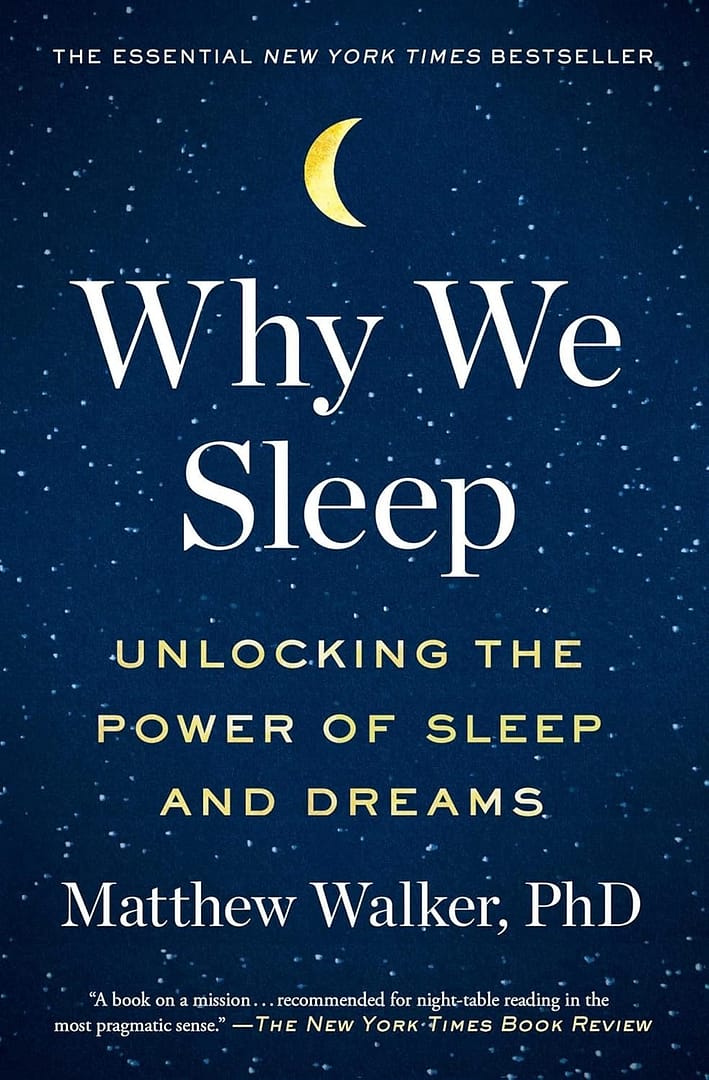
Edward: [00:31:20] We also know that exercise is powerfully important for the same set of issues. And yet another one is sleep. And there was a book that came out in October called Why We Sleep: Unlocking the Power of Sleep and Dreams that I’m currently working my way through. It’s written by Matthew Walker who is director of UC Berkeley sleep and neuro imaging lab. And there’s definitely information in that book about what the difference between a six hour night’s sleep and an eight hour night sleep and how much processing and sort of collating and sorting of previous day’s activities takes place and how much that impacts memory.
Edward: [00:31:59] So it’s really forced me or moved me, inspired me to try to actually get to bed by 11:00 o’clock each night. Not be sucked into my cell phone or television and then try to make it all the way past 7 am to get a full eight hours of sleep. I do feel there’s a difference. I definitely feel there’s a difference when I get a good night’s sleep. So it’s a it’s an excellent book it’s an inspiring book that I would encourage folks to read.
Bonni: [00:32:26] Do you remember what it was the first to had you decide that you wanted to pick up a book on sleep? I will admit it seems like one of those things like yeah I know it’s important, but there’s so many other great books to read. What was it about this title that really captured your imagination?
Edward: [00:32:40] Well I think it was some of the conversations that Jose Bowen and I had had as we were sort of finishing up the final work on The Teaching Naked technique’s book. And we had sort of had that realization while there’s a lot of research that’s been emerging over the last five to 10 years that’s looking at things that wow clearly impact memory and learning that we just don’t really have any control over and sleep has been one of those things. And so I had done some explorations of the power of exercise and that may have even been my recommendation earlier this year when you and I read the book Spark.
Edward: [00:33:17] So when this book came out that I heard an NPR story about it I was like Yeah they really want to dive into this. And then you know I certainly certainly can’t be things that we used necessarily to help our students. We can encourage them to get a good night’s sleep but we’re not going to show up at their dorms and say hey you know it’s 11:00 o’clock but it’s definitely become part of my own sort of mental lexicon of things that I’m trying to do from one day to the next.
Bonni: [00:33:44] Oh yeah. And I did go back and look and that was what you recommended the last time Spark, the book about exercise. So you have a theme going here for sure. I laugh because we’re recording this before 2018 hits and I’m wrapping up my yearly reading challenge to myself. And I look at the list of books that I read in 2017 and just go oh my gosh what a hodgepodge.
Bonni: [00:34:08] I can see no discernible theme other than I really did try to read a lot of different books this year with lots of different topics. But you’ve got a theme going. I won’t hold you to it for the next episode. You are actually we’re booked to have another conversation. I’m really looking forward to. And I won’t hold you to this theme, I promise.
Edward: [00:34:28] Maybe I’ll try to mix it up a little bit next go around.
Bonni: [00:34:30] Yeah. Well thank you so much for your time today, for the time previously and for our upcoming conversation. Every time we get a chance to talk whether it’s being recorded or not I walk away knowing more. And I also walk away, Eddie, just being more challenged to do better for our students. You inspire me because that is something that in the time I’ve known you and study and the work that you’ve done in higher education, you are just relentless about and I appreciate that so much.
Edward: [00:34:56] Well you’re very kind. Thanks for having me on. I’ve enjoyed the conversation.
Bonni: [00:35:00] It’s so great to be able to extend these conversations about open education and the kind of impact that they could have on our students. And just thanks to all of you who are listening who take that extra effort to make sure we’re doing everything we can to serve them well. And thanks to Eddie for coming on the show today and on the show in about a month again. It’s just great. Every time we have a conversation I learn so much from you.
Bonni: [00:35:25] And I appreciate everybody listening and being a part of the community if you’d like to get a little bit of more connection with people that listen to Teaching in higher Ed, we do have a slack channel and you can learn more at teachinginhighered.com/slack.
Bonni: [00:35:42] And if you would like to subscribe to the weekly newsletter that comes out just with the show notes from the prior week’s episode as well as an article about either teaching or productivity on most weeks you can subscribe at teachinginhighered.com/subscribe.
Bonni: [00:35:57] Thanks for listening and I’ll see you next time.
Teaching in Higher Ed transcripts are created using a combination of an automated transcription service and human beings. This text likely will not represent the precise, word-for-word conversation that was had. The accuracy of the transcripts will vary. The authoritative record of the Teaching in Higher Ed podcasts is contained in the audio file.