Follow the Teaching in Higher Ed Podcast
About this Episode
Martin Weller on episode 294 of the Teaching in Higher Ed podcast.
Groups who are marginalized in society are even more marginalized and persecuted online.
Martin Weller
On episode 294 of Teaching in Higher Ed
Voices on this Episode


Show Notes + Resources
Recommendations from this Episode


Transcript
[00:00:00] Bonni Stachowiak: Today on episode number 294 of the Teaching in Higher Ed podcast, Martin Weller joins me to speak about his book, 25 Years of Ed Tech.
[00:00:11] Production Credit: Produced by Innovate Learning: Maximizing human potential.
[music]
[00:00:21] Bonni: Hello and welcome to this episode of Teaching in Higher Ed. I’m Bonni Stachowiak. This is the space where we explore the art and science of being more effective at facilitating learning. We also share ways to improve our productivity approaches, so we can have more peace in our lives and be even more present for our students.
[music]
[00:00:50] Bonni: I’ve been admiring today’s guest’s work for a very long time, and I’m so excited to have him on the show today. Martin Weller is the Director of the Open Education Research Hub, and the Director of the Global OER Graduate Network. Weller chaired the Open University’s first major online e-learning course in 1999, which attracted 15,000 students, and was the OU’s first LMS director. His popular blog, EdTechie.Net, features his writings on aspects of educational technology. He’s the author of The Battle for Open (2014) and The Digital Scholar (2011). Martin, welcome to Teaching in Higher Ed.
[00:01:31] Martin Weller: Thank you for having me. It’s good to be here.
[00:01:33] Bonni: I am trying to decide if your book and this collection of blog posts should make me feel old or very informed. [laughs] I really enjoyed reading it and thinking about this period between 1994 and 2018. Could you share the significance of that range of dates?
[00:01:53] Martin: Yes. Partly, it was accidental. I’m the President of the Association for Learning Technology here in the UK. It was their 25th anniversary in 2018, so I thought, as you do with blogs, why don’t I start a blog series like 25 Years of Ed Tech, doing one piece of Ed Tech per year. When you start doing these things, you think, “I’m not sure I’m going to finish, or see through everything.”
Actually, once I started doing it, it became a really interesting thing to explore. I agree with you, it made me feel like, “Wow, hasn’t a lot happened? Aren’t I old?” but also that it was actually a really useful exercise. I think that period really covers, if you like, the internet years of Ed Tech. Obviously, there was stuff going on before then in terms of the internet, but I think really going back to ’94 is when we see it become really mainstream. The way it captures that kind of popular shift of education technology to really become almost synonymous with internet-driven technologies.
[00:02:49] Bonni: One of the things you try to warn us about is that– I had to learn a new word here. I’m not even sure I’m going to pronounce it. You quote someone named Kernohan in 2014 and he or she is criticizing these ideas of birth myths because what you decided for each year wasn’t necessarily when that technology was born, as they say. I quote the author, “Birth myths are ahistorical. They tie in with phallogocentrism” Oh my goodness, that is a mouthful, “of the concept of creation as a single act by a single person (generally a man) rather than a whole set of pre-existing conditions and preoccupations.” For others who don’t have quite the extensive vocabulary as this author and yourself, would you explain what they’re trying to say here?
[00:03:40] Martin: That’s David Kernohan, who’s here, he wrote that and he’s a very good blogger. I think what he’s trying to say there is, we have these kind of myths and it’s not just in education technology, you often see typically in the arts of the sole creator, it’s often a male creator is an act of supreme creation, it comes from nowhere, a sort of divine inspiration coming naturally. Creation is often much more contextually-based, it’s usually much more collaborative, people are taking ideas from other people, building on them.
You see some of this a lot in the Ed Tech stuff. A lot of the mythology around people like Steve Jobs, I think, for instance, and those people become very central to a lot of the kind of narrative we have in Silicon Valley in education technology … macho to be working 20 hours a day and those kind of things. I think what I was trying to address in that was that partly, in higher education, we have been doing lots of innovation in education technology, but often it doesn’t fit that type of narrative.
What that narrative often wants is to say that, particularly in higher education, they’re too slow-moving, they don’t know what they’re doing, and it needs this savior on the white horse riding in from outside of universities to tell them how to use technology. I was trying to counter that narrative really, I think, in the books to demonstrate there is this history of innovation throughout higher education.
[00:05:01] Bonni: The other real danger, and I have been so susceptible to this, I’m thankful to people like you, leaders in the space, who are helping us to think more critically. I know Audrey Watters is another person who you mentioned quite a bit. She came on to the podcast very, very early. I feel so ill-equipped to have interviewed her at that time. [laughs] We started with, “What’s Cassandra in reference to–?” and we went from there but Ed Tech’s Cassandra.
We need to be thinking critically, we don’t want to just get excited about the bells and whistles and as you said, “Here comes the hero that’s going to disrupt everything and change education as we know it or change our experience with the internet as we know it.” How do we continue to–? Actually no, let’s begin with, how do we start to think more critically about educational technology?
[00:05:49] Martin: It’s a good question because I think the other thing you want to avoid is just being too critical and too dismissive. I think you don’t want to be like, “It’s never going to work. We know what we’re doing, just leave us alone” because there is interesting stuff that happens. I think when I was going through these 25 years, I noticed a shift, really, I think. Often, those early years were marked by optimism like we can change what we want to do with education.
It was really quite liberating … how can we teach effectively using the web and wikis and using things with people coming up with new pedagogies? Now it’s much more concerned around toxic behavior on social media, privacy, the use of data, those kind of things. I think there is a real onus on particularly those in education technology to develop a critical perspective because a lot of this stuff is vendor-driven, and you mentioned disruption, that whole kind of disruption narrative.
“We aren’t going to come in unless you get on board quickly or be left behind.” I think, often, I don’t mean to criticize them, but senior managers in universities like vice chancellors, principals aren’t well-grounded in education technology. They can be scared into this sort of stuff, I think, so then you really need critical voices in the room who aren’t just saying, “This is nonsense.” They’re asking key questions like, “Well, how will it work? How will it improve learning for our students?” Another question like, “Who owns the data? How can students opt out if they need to, what are the possible downsides?”
Just having that kind of catalog of critical questions, you can bring something and asking for evidence, particularly, because people often come in with bold claims. We saw that, obviously, with MOOCs quite recently, MOOCs are going to democratize higher education, they’re going to regain the university. This stuff just gets spouted and gets repeated. There’s not any kind of evidence for how it’s going to work or what it’s going to do. I think basic stuff in actual impact for our learners is the basis for that.
[00:07:45] Bonni: I appreciate your reference to Massive Open Online Courses or MOOCs because I think they represent all of the things you just mentioned. How exciting that I have access to take a course from the Ivy League universities and from universities all over the world? They’re right here, and many of them are freely accessible to me unless I want some sort of verification from my employer that I took the course and completed it. “Completed,” we should put in air quotes, but that’s hard to do in podcasting.
At the same time, we want to think critically about them, as you said, because there was this promise of down with professors are going to go away and be replaced by lowly people like me that work at these teeny, tiny private universities is never going to be able to live up to the promise of what MOOCs could offer, so people like me will go by the wayside. I think that’s an example. I teach a class in educational technology, and it’s primarily to educators of younger than higher education.
It feels so overwhelming because I want to give them a broad look, but I can’t even dip my toe into a single topic that you’ve written about without the fears coming in and then even just some real things that go well beyond the technology. A quick example is blogging. I do ask that they blog. I used to have them blog about the topics in the class, and I found that to be less helpful than blog about something you’re passionate about.
That is a much better entry point. When we started, one of the first things I have them do is make an About page. They go and they look at different people’s About pages and think a little bit about their identity and also, therefore by extension, their digital identity. One time I got an email, it was so beautiful, from a student who said, “I don’t know who I am. How can I figure out who I am such that I could then express it?” I thought, “Oh, my gosh, just how do you teach a class that feels so overwhelming that there’s so much to share, but there’s also so much work that has to be done on the personal level in our personal level as well?”
[00:09:46] Martin: Yes, that’s a really good example. I have a lot of sympathy with that student. I think I didn’t know who I was, so what should I do when I was blogging? I think blogging and books, but I’ll start with blogging. I think you want speak on those two examples.
Of course, I’ve been blogging since 2006, and that was my third attempt at blogging because I struggled to find the right voice, I think it was students talking about that. I used to be the blogging evangelist. I was the person rolled out to say, “Everyone should be blogging, it’s great.” I still believe a lot of that, I still believe it’s a really good space, and it’s where a lot of the debate and discussion you have the almost maybe the reason you came into higher education is have this kind of informal network with people and talk about interesting things, but I’ve also come to realize that actually, it’s not always a safe space for everyone.
I’m a white male, a certain age, talking about fairly uncontroversial subjects. My experience with blogging is quite nice. That’s very different for other people who might be writing about subjects from a different perspective and attract all sorts of different views. That’s an example of how, over time, I’ve had to nuance that position. It’s not just, “Isn’t it a good thing?” It’s actually, it occurs in this context, and these are things we need to be aware about. I think that you mentioned MOOCs as almost like the archetypal example, I think, of educational technology and the sort of myth and hype and most the reality about them.
It was fascinating to live through that MOOC bubble from 2012 and seeing that take off out of nowhere. There’s so much in there to unpack. First of all, you’re right, we shouldn’t knock them. I think in many ways, they’re great. Who’s against free learning for millions of people? I think it’s not something you’re going to argue against, but there’s lots of talk about the way venture capitals put money into them and what they perceive of higher education, and also they still require people to produce them from universities and then who owns copywriters and things but also their issues around colonialism.
They’re usually coming from the West into other countries and also just evidence that actually, they might actually benefit experienced learners more than inexperienced learners. It brings a whole list of questions. The thing that really used to get me about them was, in particular, you then see people saying that MOOCs have invented online learning. This used to drive me mad because I think just a personal goal in ’99 at the Open University, I was chair of our first major online course that was completely online, and we had 15,000 students.
It’s slightly going to nearly 2012 that suddenly, they’ve invented online learning and people saying, finally, it’s universities understanding the internet. You go, “Oh.” That was part of the motivation for writing this book really is to counter that narrative that we’ve been doing nothing all these years.
[00:12:38] Bonni: That gets me to wanting to ask you about change. It’s such a wonderful book that, to me, felt like going on a journey. It’s not a fair question, it’s like whenever someone tries to ask me what my favorite episode is of Teaching in Higher Ed, but I’m going to try it anyway. What do you think of as something that you wrote about that has radically changed in all these years, that would be hard for someone to even recognize it in its earliest iterations?
[00:13:06] Martin: I think not so much on technology but I think some of that optimism and radical thinking that was around in the late ’90s when the web first started to become popular, and there are things like wikis, asynchronous learning, and bulletin board systems. I think people were really thinking like, “How can we construct knowledge differently?” Even the whole thing about hyperlink… talking about nonlinear narratives and that, and it felt like we were going to really change the way we teach.
It wasn’t really about disruption, it’s really talking about how we can do interesting things in teaching and learning. I think some of that optimism and almost rebellious attitude has gone along, and in some ways, it’s almost become much more corporal and industrial. I think if you were to look back when I was reading through some of those papers, you go back and look at them and think, ‘We, there are some really radical ideas here,” and we don’t see that so much now.
I think MOOCs are probably another good example of that. It was interesting that the sort of what we call the xMOOC model or the much more broadcast model was the one that became popular. They’re popular and that’s good, it’s fine but not really a very interesting model compared to people like Stephen… the cMOOC model was much more connectivist and useful, finding your own networks, those options which were really about thinking how we structure knowledge differently.
[00:14:28] Bonni: You mentioned hyperlinks, and that’s one of those topics that is both simple but also hard to understand if people aren’t quite familiar with just how magnificent that was. Would you talk to us about information or perhaps technology without hyperlinks? What did it look like before that became so much the norm and then what’s the promise for it even still today?
[00:14:49] Martin: I think that we were stuck in a text, a book mindset, so everything is chronological. I think we used to try and play around with that in books, so there were some experimental authors who would write to read any chapter in any order and those kind of things. That’s very chronological mapping, so you had a textbook and your style introduction and work through hyperlink.
It meant you could jump out to all different places. I think the point of hyperlinking, the really crucial thing for education was what it demonstrated was, you were no longer in control. With a textbook, people might read in a different order, but pretty much you’ve controlled what they’re getting… With the hyperlink system, within five links, they can be somewhere completely different from where you’ve intended. I think that in some ways that gets to the real crux of the issue about what the web brought to education, both good and bad, was that it was a loss of control for educators. I think in some ways, we’re still grappling with that, I think…
[00:15:52] Bonni: You also mentioned connectivism, which is another one of those topics that when you read about it, it’s just hard to understand the depth that’s there. You talk about connectivism as it connects with educational technology. Could you talk about how we were forced into it? “Forced” may not be the right choice of words here, but how did we start to become more connectivist in our teaching approaches because of some of the technologies or lack thereof?
[00:16:21] Martin: Connectivism was George Siemens and Stephen Downes talking about at the end of the 2000s. The reason I’m trying to think, what does it mean to teach and learn network space where you’re connected to lots of different people, you’re connected to lots of different resources, and you’re putting them together and you’re synthesizing them? cMOOCs is not really a a firm pedagogy, and they didn’t say it was, it’s more of an approach to knowledge construction.
It’s really seeing yourself as a node in a network approach, and the value of the network that you construct around yourself, both with resources and people, is how you construct knowledge. Stephen Downes also to argued that that’s a more scalable model than a more hierarchical model that is more traditional.
[00:17:07] Bonni: You also were talking about the bandwidth issues that were present, which held us back from perhaps relying as much on the video as we normally might have. That would have been sort of we were doing a lot more lecturing, straight lecturing without interaction, without active learning with our students at the time, let alone something like constructivism and then the limitations actually helped us then leapfrog into something entirely new.
[00:17:32] Martin: Yes, I think that’s true. Sometimes limitations can be strangely empowering in a way. I still miss the 140-character Twitter… to write something very concise. You’d have to go over and over again to get some to the crux. I think because of the bandwidth issues, and we often have to come up with quite interesting ways to get people to write and construct knowledge well than just like, “I’m going to record an hour lecture and stick it out there.” It’s like when you got all that freedom, sometimes, it means you’re not quite as creative as necessity being the mother of invention, I guess.
[00:18:05] Bonni: A few weeks ago, I had an opportunity to spend some time with four nursing faculty from the Middle East. I haven’t had this kind of experience in a very long time. None of them had ever even heard of what a podcast was, let alone ever listened to one, and it was the funniest thing. Speaking of control, I don’t tend to try to take a lot of control when I’m working with faculty, it doesn’t tend to pan out very well for us when we try that.
Before I knew it, they’re taking their phones out, many of them actually had phones that already had podcast apps on them without having realized that prior or even known what that was. I’m curious, for you, what that you wrote about in the book would you imagine that if people didn’t know about today and then heard about it would just have them scrambling to get their hands? What truly is just this exciting, innovative in the actual meaning of the word “innovative” educational technology that still today would you imagine just light a room on fire with excitement about it?
[00:19:05] Martin: Do you mean if they didn’t know about it already?
[00:19:06] Bonni: Yes, if they didn’t already know about it.
[00:19:09] Martin: I think if you didn’t know about the web, I used to run at the Open University, we used to do summer schools, we don’t do as much now. Every summer, we’d go away for two weeks, and I used to run a workshop on IT, and what we do is get people to publish a webpage, and this is like the handcrafted HTML they’re editing before. It was still was a marvelous moment when they’d publish their page and they’re looking at it and they’re like, “It’s interesting.”
I tell them, “Anyone in the world can see this page now,” and they’d get one of their friends… was a wow moment for a lot of people, a really magical thing if somebody realized, “I can publish this thing and other people will see it.” I still think that’s pretty amazing that more people know about that. I still think although it comes in lots of baggage now, I still think YouTube and video is pretty amazing actually, being able to record everything the whole “anyone can be a broadcaster” thing, and that comes with– That means anybody could be a broadcaster.
[laughter]
[00:20:06] Martin: … I think they’re still pretty amazing, and I think I might have even pointed it in the book a little bit, I don’t think we’ve really grappled with video enough in terms of our education, in terms of using it innovatively for assessment, for example. I still think there’s a lot there for us to explore, quite a tech-space mindset, I think.
[00:20:26] Bonni: Yes, and I think sometimes I’m wanting to use it more, and yet I’m also trying to use these skills of thinking critically about it, recognizing that just because I have the latest iPhone doesn’t mean that my students do. So much of the time, it’s gone to now 100% of my students, regardless of socioeconomic status, do own a smartphone these days, but that smartphone may not have the storage capacity to install another app that I think is going to be great for their learning.
They may not have access to high speed internet at home and especially, when you start talking about video, those are large-file sizes. They are even talking about not fitting their photos on. Have you any ideas around how we can overcome that? Do we need to stop thinking about their smartphones as a method for this and try to get them a more democratizing kind of technology to construct them?
[00:21:17] Martin: I think it’s like all these things, when we first started teaching online, a lot of the reservations were made. Everyone’s got dial-up and not everyone’s got an efficient computer. You’re always slightly ahead but I think you’re almost at the stage now where you can think most people have those things and for some people who don’t have, storage might be an issue, then maybe they have upload options or you can use things like that.
You can find some workarounds, but I think it’s always slightly wrong to operate at the assumption that the person is actually the worst case because there’s so much other… around that. You can say something like, “If you really got nothing, then we can loan you these… I think we shouldn’t let that quite be the barrier. Usually, there are some workarounds you can get through these things.
[00:21:59] Bonni: Yes. I’m even thinking as you’re sharing that, even just live video, which is not something that I’ve experimented with so much. In fact, I shared about a poster sessions that was quite unlike most poster sessions that was held outdoors, and I think of it more as like a carnival, but I had a student be a host of a Facebook Live event, and that was my last dipping my toe into that because I had my lock orientation on the phone set, so you couldn’t watch the video.
[laughter]
[00:22:27] Bonni: You have to have to your head turned to the side the entire time. Live video is something I should experiment with more because, now, so much of social media is shifting over to whether it’s Instagram Stories or just the– It’s a lot more here and now than I think I have the skills for or even the mindset for.
[00:22:46] Martin: Those are skills that we should be hoping our students develop. Almost whatever jobs they’re going into, they might well have to do that kind of–
[00:22:54] Bonni: Let’s talk a little bit about social media. What were some of the things that you had to celebrate and also some of the critical thinking you had around social media?
[00:23:03] Martin: Yes. Again, it’s the optimism, pessimism stories. Again, I think, it helps, having lived through this. I think people take it for granted now, but it’s good to remember when it was like in my days. One of the great things, actually, when you first became a blogger and then made social media, Twitter, there’s a kind of network of connections you make as an academic.
There’s a joke that previously, in order to just keep that network going, you have to be on the conference circuit, meeting up with people, but now you can have conversations with people in Canada, in Australia and the US all before breakfast, keep this network of connections going. A lot of those people who I got to know through blogging and then later Twitter have become proper friends, sometimes we’ve met them face-to-face but not always but also really useful in an academic context.
I think all that building up of that academic network because it’s really useful, it’s still really valid. I’ll give talks sometimes on this, about the paradoxes of social media, and I think one of them is, you have to understand the opposing things simultaneously on social media. Another thing is that it is a democratizing space in many ways. I’ve seen stuff, for example, with the keynote people we get into conflicts with are not necessarily professors with a massive research publication record. They’re people who are interesting on Twitter and then have interesting things to say.
That does open up, I think, to a lot more people, but at the same time, it’s true that groups who are marginalized in society are even more marginalized and persecuted online. Both of those things are true simultaneously, and quite difficult to get your head around, I think. I think that in terms of the negative, we’ve seen how it’s used, it’s become weaponized in many ways.
We thought, “Wouldn’t it be great once everyone could chat freely online?” but it’s difficult, I think, to understand just how much that can be used against you. If people want to be cynical and use data, it’s very difficult to combat that. I think, as human beings, almost, we haven’t developed the skills to deal with that influx of information that’s continuing. If you’re someone whose Facebook feed is populated by fake stories, whatever, then you start to think that that is the norm if you haven’t got any kind of contrary to that.
I think it’s quite a dangerous position for us to be in because people could be completely isolated as well to think that that is the reality and they’re not connecting to other people around to be able to have a kind of shared concept of reality or values anymore. For higher education, I think part of our role is to combat that but also understand how we operate within that environment because lots of people now see higher education and expertise as bad things, and that’s a very strange position to be in…
[00:25:56] Bonni: The other day, I saw a man who had talked about that he has started going to therapy for dealing with the racism he encounters on a daily basis, and it was one of the things where I just thought that I, through social media, get to see others lived experiences that are so different than mine without asking them to educate me. It’s not your job to educate me what it’s like to live so, there’s people who have written wonderful books that help do that and then social media, as well.
Like you said, I live such a different experience online. I don’t tend to write about controversial things, and if I do, it’s like thinking that people should have access to healthcare is one I can remember on Facebook that got some people riled up, which I think I’ll fight that all day. Silly me, for thinking children of this world should get to go to the doctor when they’re sick. Craziness, I know but–
[00:26:49] Martin: You wouldn’t think that was controversial thing, would you?
[00:26:51] Bonni: No, but for the most part, people that are really advocating, I’m thinking about people I’ve started to follow from disability access and accessibility advocates, that they can write one thing and then all of a sudden, just the vitriol that comes and just absolutely disgusting. I’m even learning from that, them asking, “Hey, could you help look through this thread? I can’t do it anymore,” and “Block some of these people for me,” and seeing the groups come together and try to support and learning what that even looks like.
[00:27:22] Martin: Yes. I think for all of us, we’re all going to need to develop very good social media strategies, whether that’s completely avoidance or partial avoidance or things like that, when to mute, when to block, what societies you build up, who to engage with, how to cope with this because you don’t get a lot o it, but occasionally, you get it. I’m not going to deal with it. I don’t know how some people deal with it. It’s like you get the stuff on a regular, much more vicious spaces… when they do it. I think we’re just at the beginning of this really, being able to be connected to everyone in the world all the time. It’s like it’s going to take a few years, I think, if not generations to work through.
[00:28:06] Bonni: Yes. I think about us and the United States and how much we have learned, we can only hope about social media and the downside, the underbelly of it, if you will. I laughed because I started blocking people on Twitter, anyone who had a name that was letters but then followed by a whole bunch of numbers. I assumed every single one of those people was a troll because that’s a common sign of a troll would have lots of numbers, but I also found out that’s the default setting of a new account on Twitter.
It only happened that I discovered my error when someone who does our show notes and some of the podcast production for us had just signed up for a professional account for a class she was taking as part of her masters degree, so I saw her name and I was thinking, “Well, she’s certainly not a troll. What is going on?” She said, “No, that’s the default.”
I go, “Oh, my gosh, I must have blocked 10 people for absolutely no reason.” [laughs] It is hard to learn the rules, that is for sure. It’s hard to learn how to be helpful in these spaces.
[00:29:00] Martin: It’s challenging as well over the times, so it’s not like once you learn, then that’s it. This stuff develops.
[00:29:06] Bonni: Yes. Well, here is another unfair question for you because I’m realizing we’re running out of time for the main part of our interview. I just want to open it up to you, what have we not talked about that when we go back to listening, we’re going to go, “Ah, she didn’t ask me about this”? What else should we talk about before we move on to the recommendation segment?
[00:29:23] Martin: First of all, I should say when the book’s coming out. The book should be screened 2020, coming out from Arthur Basker Press. It will be freely available online… I guess the thing– I touched upon it but perhaps the motivations for writing the book, and we touched probably, I think one was to counter that narrative of a hero riding in, but I also think having worked in education technology for quite a long time, I think interestingly, it’s the sort of field that people will movie into from elsewhere, which is one of its delights, in a way.
It’s not a discipline that you go and study, but if you go to a chemistry conference, then most people will have studied chemistry, whereas if you go to an educational technology conference, you might be talking to someone who studied philosophy, someone who studied psychology, someone who studied arts, and all sorts of them. That’s useful, but one of the downsides to that is that we don’t have a shared history or shared understanding on lots of things.
I wanted to write a book which gave at least some basis for that shared history. Also, it’s a new book… to think about that kind of shared understanding that we have. Also, I think, as we’ve gone through this 25-year period, I wanted to then try and draw out some themes that I think will be important when we think about where we go next, in a way and I think lastly, just to highlight the good work that’s happened within higher education and the stuff that we have done.
[00:30:50] Bonni: Well, I can say absolutely in the affirmative that you have accomplished all of those things. It was absolutely a delight to read your book. I’m honored I got to read it before the spring. I would not have wanted to wait. Also, I should note that you do have all these blog posts that people can begin to consume some of this and start to have the dialogue on social media, and you wrestle with some of these things themselves. Thank you for this wonderful work.
You do mention that there really isn’t a lot around the history of educational technology. I know Audrey Watters is working on a book. You had seen a– Was it a list of books that she had? It was just like there’s just a very small list that might fit in the smaller version of Twitter characters that you were referring to.
[00:31:31] Martin: Audrey… any recommendations for history Ed Tech books and she gave them the ones she had. It was just one of those moments you think, “Actually yes, I can’t think of many more.” It’s like you might find a chapter in a book or sometimes people reviewing where they got to now. Often, there’s so many books just dedicated to history of Ed Tech, so that indicates that maybe there was a need for it.
[00:31:56] Bonni: One more thing I’d like to share too about my own experience. I did say that so much of this, I got to watch these changes take place firsthand and that that’s just remarkable to me, but at the same time, it’s a very accessible read. Even if you weren’t familiar, there were a couple of them that I was not familiar with. It’s just right there for you to understand, what is it? What was its impact? There’s not a lot of the expression that we use. I don’t know if this will translate to the UK, but inside baseball, I don’t have to know a lot in order to understand what you’re talking about. This is not a difficult-to-read book, even if you’re not as familiar with educational technology. I’s really brilliant.
[00:32:35] Martin: Thank you. It’s a book you can dip in and out of, I think. You can read a chapter here and there, I guess.
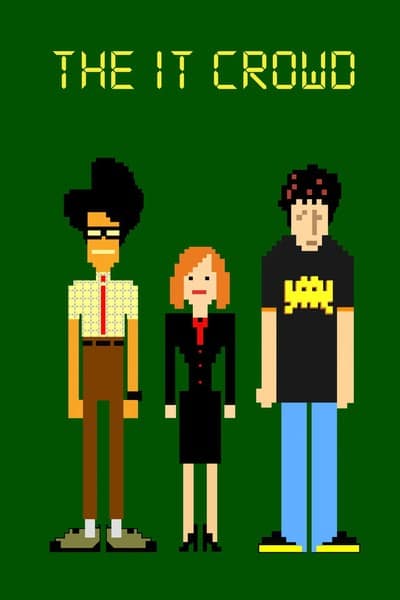
[00:32:41] Bonni: Absolutely, yes. Well, this is the time in the show where we each get to give our recommendations. I have one that popped up while you were talking because you were saying the people that will just assume that a hero rode in and they invented something and that it’s usually a white man who has accomplished this massive feat. That was actually a plotline for a very funny British comedy called The IT Crowd.
I’m reading from the Internet Movie Database. “The comedic misadventures of Roy, Moss, and their grifting supervisor, Jen, a ragtag team of IT support workers at a large corporation, headed by a hotheaded yuppie.” I thought maybe I had recommended it because I watched this many, many moons ago. For sure, at least it doesn’t show up on my search engine on my website. I don’t think I’ve recommended it. If you enjoy the topic of this kind of– I guess you’d say it’s like the humor of the office, but done with technology, it’s just so funny, just so, so, so very funny.
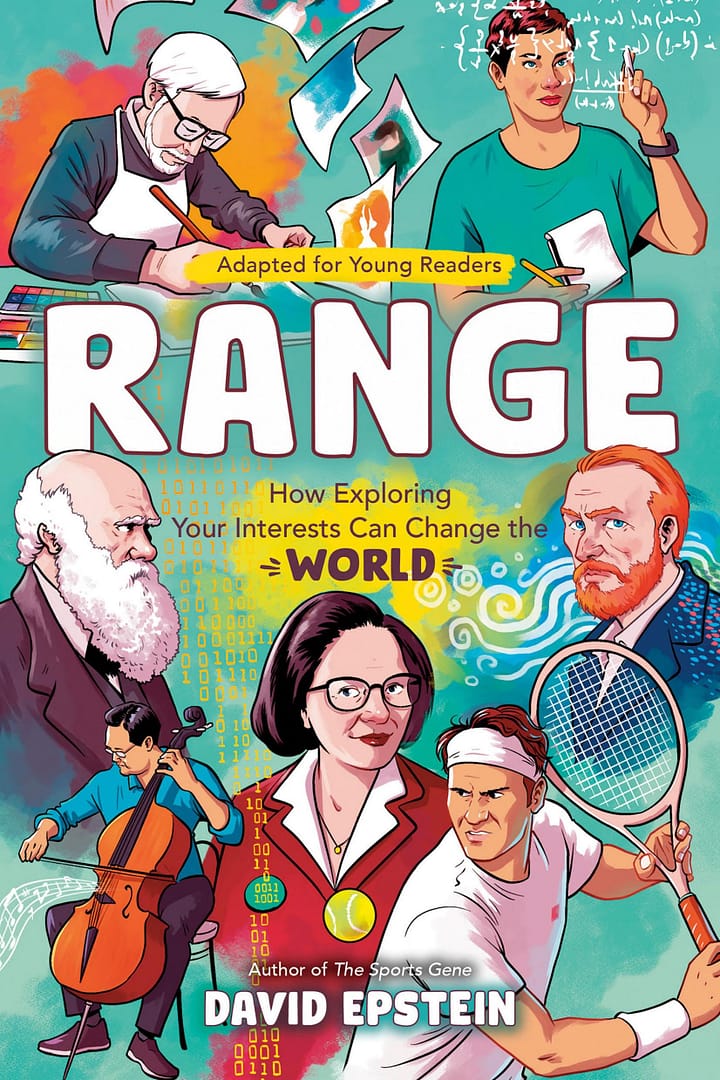
They do have a plotline and in of the episodes that has to do with who invented the internet and then yanking the chain of the person that they report to, who somehow got her job with zero IT experience but just talked her way into it. That’s my first recommendation. Then the second one on a totally different space is a book called Range: Why Generalists Triumph in a Specialized World. It’s by David Epstein. I did not know of his work before this other than he is celebrated for being an incredible researcher.
Some of you might have heard of the 10,000-Hour Rule that was a Malcolm Gladwell thing where people criticized him because he’d say, “You do 10,000 hours and you become an expert,” but that some of the people he celebrates in that like Bill Gates, he didn’t account for the role that luck played or that one’s family fortunes may have played. He’s criticized a little bit. Then, also, he had said in a podcast, I heard this, that, this is Gladwell, he researches the things that agree with what he says. [laughs]
This guy, David Epstein, is known for being the opposite of that. He’s arguing the opposite. He says he enjoys the intellectual banter with Gladwell that both of these ideas are important, not that we should never be specialized, but David Epstein talks a lot about the downside to an overemphasis on specialization. He looks at all of the benefits if we do more interdisciplinary work, if we are looking for evidence of why our idea wouldn’t work, or why it isn’t true. There are so many examples, he goes in education, he goes into music, sports, business.
Talk about Range, his book lives up to that name. It was an absolute delightful read and one that I’m definitely going to have to go revisit because there are so many important points that I think he makes in it and challenges me just to continue to be the learner that I am and to risk going and getting to talk to people like you, Martin, who are experts in their fields but that that we can sometimes add to the conversation even more with a beginner’s mind. Those are my two recommendations for today. Martin, I’ll pass it over to you for yours.
[00:35:59] Martin: First of all, just I’ll backup your recommendation so the IT Crowd is excellent and really funny. I haven’t read that book, but it’s on my list to read because my other role at the University is I’m the chair of the Open Program. What that is is our multidisciplinary program so students can study any options they want they want across the university. It’s like studying music one year or computer science the next year kind of modules, and we’ve always done that.
I think it’s almost like if we didn’t have it, we’d reinvent it now, particularly for the point that he makes in that book, which is, in order to solve the complex problems of the world, you need people understand across a range of disciplines. You need specialists in this world but also need this kind of the people that are cynical… I guess my recommendations would be, one would be … already, Mike Caulfield’s blog and the book he wrote on, what he calls The Four Moves, so checking misinformation disinformation.
That’s a really useful process to go through. Those are really good fun examples he demonstrates as well. As I mentioned, that shows in the book, I think it’s one ways of to deal with the dystopia we find ourselves in. I think that’s a really useful approach. Another one I’d say just to think about my end-of-year book review thing that I do usually every year, it’s not a tech book. I’ve read a lot of really excellent books this year.
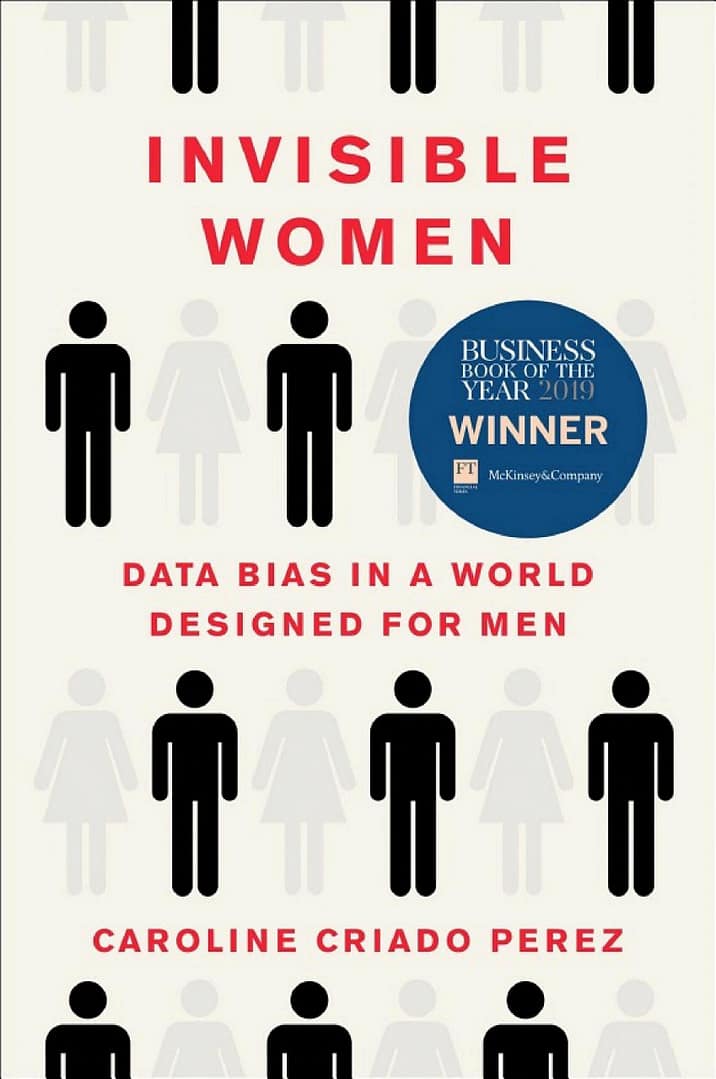
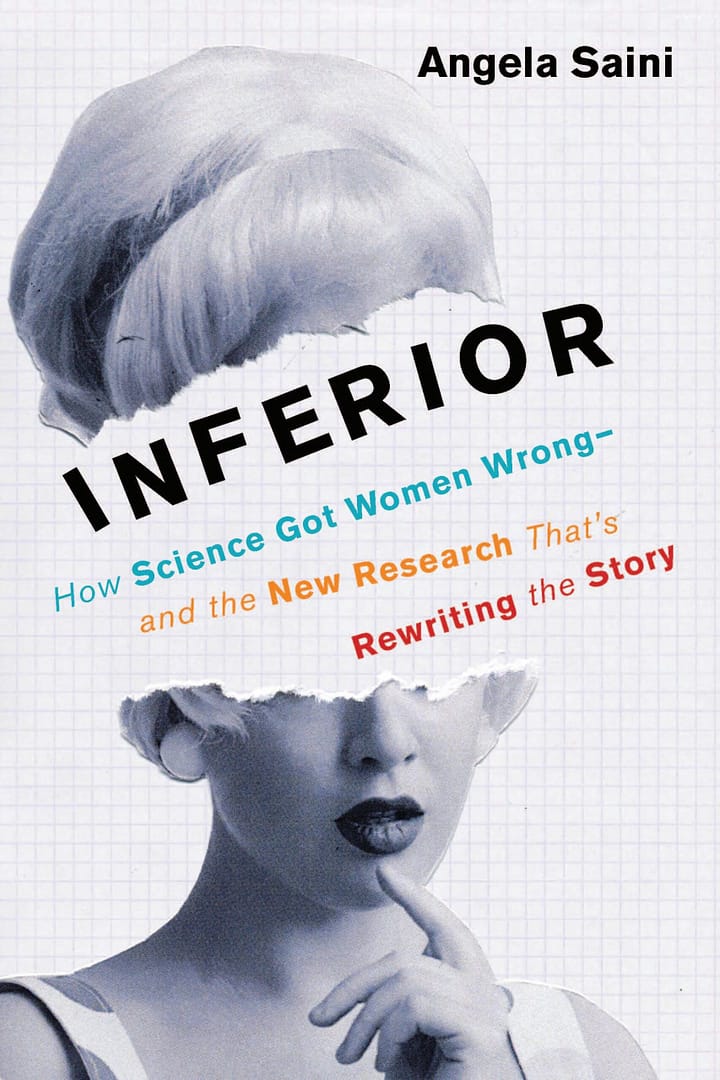
There’s a lot of really good feminist science writers around. I think most people might have read Caroline Criado Perez’s Invisible Women about bias in data. If you haven’t read that one, I certainly do recommend that. Another one that I would really recommend is Angela Saini’s Inferior: How Has Science Got Women Wrong. That’s a really good understanding of the things that science got wrong about women and then how you use science to demonstrate that. I think there’s a lot for us to just learn in education also to think about those things. Those would be my two recommendations.
[00:37:52] Bonni: I have not heard of either of those books and that sounds right up my alley.
[00:37:55] Martin: You must read them, they’re brilliant. Certainly, Criado Perez’s book, I think for more applicable to tech but Angela Saini’s is just as really well-written.
[00:38:04] Bonni: Thank you so much for all three of these recommendations. I did a link in the show notes, Mike Caulfield also recently put out some openly-licensed modules that you can have students go through in order to learn more about evaluating new sources. He’s been doing these really fun videos where he walks through how he does this. It’s, for me, what’s been the missing piece.
I feel like I really struggle with trying to be at all adequate for providing my students with this. I feel like that was just the missing thing. I’ve got now some modules I could assign, but then I’ve got his expertise in getting to watch behind the scenes of how he would handle, and he does it. In some cases, he says without knowing in advance what he’s going to do because he wants it to be cold for him just like it’ll be cold for us when we go through it.
[00:38:53] Martin: That’s a really excellent model. He’s very articulate and funny and works really well.
[00:38:59] Bonni: Speaking of getting to meet people in person, I had an opportunity to meet you this year at Open Ed and what a pleasure that was. I’ve just admired your work for so long. Martin, it’s such an honor to get to talk to you today. Thanks for being the guest on Teaching in Higher Ed.
[00:39:13] Martin: Thank you for having me. It’s been great.
[music]
[00:39:18] Bonni: What a pleasure it’s been today to have this opportunity to speak with Martin Weller. It was like a little bit of time travel. I loved reading his book, I hope you’ll pick it up, 25 years of Ed Tech. Depending on when you listen, it might be a preorder or perhaps it will already be out. Thanks so much to all of you for listening and to being a part of the Teaching in Higher Ed community.
You are one of the things that fuels me to keep going on the hard days and the joyous days and everything in between. If you’d like to stay connected with Teaching in Higher Ed, I do send out a weekly email where the show notes from the most recent email go out as well as a blog post written by me, either about teaching or productivity. You can subscribe at teachinginhighered.com/subscribe. Thanks so much for listening. I’ll see you next time on Teaching in Higher Ed.
[music]
[00:40:10] [END OF AUDIO]
The transcript of this episode has been made possible through a financial contribution by the Association of College and University Educators (ACUE). ACUE is on a mission to ensure student success through quality instruction. In partnership with institutions of higher education nationwide, ACUE supports and credentials faculty members in the use of evidence-based teaching practices that drive student engagement, retention, and learning.
Teaching in Higher Ed transcripts are created using a combination of an automated transcription service and human beings. This text likely will not represent the precise, word-for-word conversation that was had. The accuracy of the transcripts will vary. The authoritative record of the Teaching in Higher Ed podcasts is contained in the audio file.