Follow the Teaching in Higher Ed Podcast
About this Episode
Dave Stachowiak on episode 446 of the Teaching in Higher Ed podcast.
Start small so that you start somewhere.
Bonni Stachowiak
On episode 446 of Teaching in Higher Ed
Voices on this Episode


Show Notes + Resources
Affiliate income disclosure: Books that are recommended on the podcast link to the Teaching in Higher Ed bookstore on Bookshop.org(https://bookshop.org/shop/teachinginhighered). All affiliate income gets donated to the LibroMobile Arts Cooperative (LMAC)(https://bookshop.org/shop/LibroMobile), established in 2016 by Sara Rafael Garcia(https://www.cuentosmobile.com/bio).”
Recommendations from this Episode
Person
Stephanie’s bio on Twitter
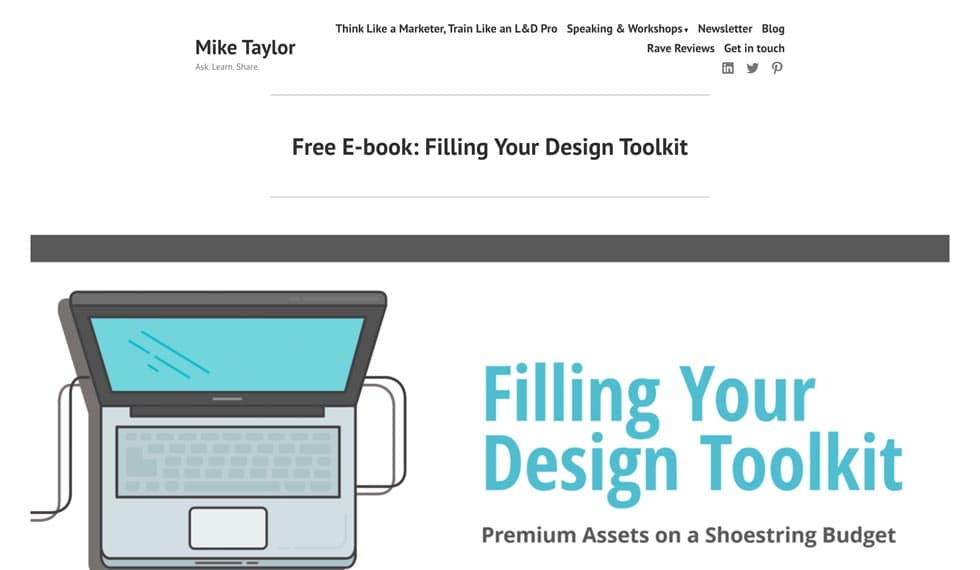
Article
Filling Your Design Toolkit by Mike Taylor

Idea
Be you

Idea
Research a better interest rate
Transcript
[00:00:00] Dave Stachowiak: Today on Episode 446 of the Teaching in Higher Ed Podcast: How to Create a Digital Speaker or Author Media Kit.
[music]
[00:00:13] Bonni Stachowiak: Welcome to this episode of Teaching in Higher Ed. I’m Bonni Stachowiak, and this is the space where we explore the art and science of being more effective at facilitating learning. We also share ways to improve our productivity approaches so we can have more peace in our lives and be even more present for our students.
[00:00:41] Dave: Hello, it’s Dave Stachowiak, and I am turning the tables on Bonni today to ask her a bit about a topic that ended up being a very popular topic amongst a number of your faculty colleagues recently, Bonni, wasn’t it?
[00:00:55] Bonni: Yes. We did our faculty gathering in August of 2022, and my friend and colleague, Naomi Kasa, we did a session on how to create an author-speaker media kit. It was so funny because she’s just so brilliant at so many things and I just on a whim said, “Hey, would you care to join me for this session?”
It turns out she used to build media kits, this is what she did for a living in one of her jobs. I wish she could be here today to share. For various reasons, she’s not able to be. I’m still hoping to get her back in one way, shape, or form. We thought we would at least start the conversation today and see if I can get her to join me at some point in the future. Thanks for feeling willing to interview me today, Dave.
[00:01:39] Dave: Of course. My sense of having talked to you and others over the years on this is that there’s not even a lot of awareness on what this is, and why it would be beneficial. My sense is that there are many of us, including many academics that haven’t really ever had any training or any perspective on how to do this well. We’re thinking that we can cover some of the foundational steps at least to get us all started. As I’m looking at the list you’ve crafted, there are some things I have not done, even though I should have … yet, but I haven’t put this together formally.
I think there’s a lot that we can do as first steps for many of us, because of course, many people in your world are doing speaking, doing writing. Even if you’re not doing that a lot, this, I think it’s an opportunity to really have a bit of a move toward recognition and name recognition for the work that you do, even if you do it just occasionally. We should start with, what is the author-speaker media kit?
[00:02:40] Bonni: Yes. A digital author-speaker media kit is one that can be accessed anywhere that someone can access the internet, and it includes visual and narrative elements. They can be quite simple or quite extensive, and it’s a place where people could go to get, for example, headshots of you in a couple of different formats or different bios with different lengths, and other information about who you are and how you show up in your work.
[00:03:11] Dave: Since we’re going on the assumption here that some folks have not heard some of this language, a headshot is literally a photo of you used for professional reasons. I know some people know that language, but I’m not sure everyone does. That’s probably a starting point for having something where people can use if they’re going to use your– have a bio, or list you in a conference proceeding or something like that, having that, just getting started there would be key. This is maybe a good lead into our first point of this isn’t like you’re trying to put together an entire website starting small and this is really key, right?
[00:03:46] Bonni: Oh, absolutely, yes. We want to start small because otherwise what happens is it just remains too big in our heads. In fact, I’m saying we because it’s very much a me-thing. I know sometimes I will not get started on something that if I had just started in small ways, could have grown and evolved into something pretty magnificent over time. Just starting– I don’t know Dave if you have heard this before, but I do like this advice of people just having trouble exercising on a consistent basis, then stop thinking about it as exercise and just think about it as putting your shoes on and doing something, moving your body in some way for five minutes.
I literally have never done that where I put my shoes on, go outside, and start walking, so in just five minutes– I’ve never actually gone. In fact, we do this all the time at night like, “You want to go for a walk? Only five minutes,” and then it never ends up being a short– because once you get your body moving– in this case, once you get your mind and your creativity moving about how you might like to represent. As you said, it could be something as small as, “Gosh, my headshot that I last took was 10 years ago.” Probably you’d look different than you did 10 years ago, although if you don’t, hey, keep that going as long as you can.
[00:04:56] Dave: More power to you.
[00:04:57] Bonni: For me, one thing that changed over time is I used to wear contacts every day, and then I went to exclusively wearing progressive glasses, and so I’d look a little bit different obviously. Obviously, over time I’m also changing how I look as well, so having those things that are updated is really key. Starting small. Sometimes you admire something that someone else is doing. I’m thinking of Tom Tobin, he is exceptional at things. If you go to his website, you can see he’s got a comic book that’s about copyright law for those of us who are not lawyers and we want to know enough to be living up in the spirit of those things.
He has a big brand around a book that he co-authored on Universal Design for Learning. He does speaking, so you could go to his website and get all of the descriptions of all the talks that he could give. He’s really far. It’s one thing that I’ve not really done a tremendous job at over the years as much as I might like to, is having really compelling descriptive talks of talks that I could give, I think that would be more seamless.
It always feels far out there because I see someone like him and I get so, “Wow, that would be great if I could do that, but it feels like I can’t.” The fact is if I had just started, “Okay, let’s just get one description done and ask people what they think about it,” and then if the next month I did a second one that was a standard talk that I give, that type of a thing. Start small, start small, start small so you can actually start somewhere. It is magnificent how these things can evolve and grow over time.
[00:06:30] Dave: In the spirit of starting small, thinking about this for perhaps the person who occasionally gives a conference presentation, or gets asked for a bio occasionally for something for their department or their university as a whole, what’s a good starting point?
[00:06:48] Bonni: The title of this episode mentions not just how to do a media kit, but specifically how to do a digital media kit. For me, the best way to start would be to use whatever cloud service it is that you use and create a folder on it, a digital folder that’s called media kit, it’s that easy. For me, I use a service called Dropbox and I have a folder inside of Dropbox that’s called media kit. That folder I can link to on Dropbox so that anybody can view it. That’s a great way to start because then anything that you put inside of that folder called media kit is going to be visible to whoever you share that link to.
Again, it doesn’t have to be a Dropbox, it could be other cloud-based services, but just the ability to share a link that doesn’t let people edit it. They can’t add things to your media kit, they can just view the items that are in your media kit. One way to begin the smallest of steps would be to create a media kit folder on a cloud-based service.
I’ll name a few and then if I miss any Dave, let me know. We’ve got Dropbox, we’ve got iCloud, at our university, there’s OneDrive that’s a part of the Office 365, Google, it could be a Google folder on Google Drive. All different kinds of options there as long as the service allows you to share a link that people could view that one folder. That’s a really easy way to begin with the smallest of steps.
[00:08:30] Dave: How do you recommend that folks approach a bio? I think probably the two most common things that would go in a media kit would be the headshot and then the bio. What’s the starting point for the bio?
[00:08:41] Bonni: We’ve got that folder, that digital folder that’s called media kit, now inside of it, you create a folder nested within it called bios. Then inside of the bios folder, it is pretty standard that if you’re going to go out and do talks, there are three pretty standard lengths that people are going to ask you for. They might ask you for a 75-word bio, they may ask you for a 150-word bio, or finally, the longer type of bio might be somewhere around 300 words.
In terms of approaching bios, I would start with, one, you could go if it feels easier to you, maybe you even already have a bio to get something that’s around 300,
you could start there and then shrink it down to 150, and then shrink it down even from there to 75. If you don’t have anything that you’re working with, and maybe you start at 75 and expand from there. In terms of bios having those different lengths, it has been incredibly just such a benefit to me.
Then as things changed over the years of my career of having a media kit, maybe I got a new title at work so then maybe I would need to update, but the updating doesn’t take anywhere near as long as that deep, deep reflection of how you want to approach the bios. I would start with one length and then maybe set a goal for the next month to have the second length and so on and so forth, but also pass it around to people that know you fairly well so that they can see if the language that you’re using really aligns with your authentic self. They can provide some helpful feedback to you.
[00:10:21] Dave: I think for some people writing a bio comes pretty naturally. I think for a lot of folks, that’s a hard place to start from of thinking, “How would I describe what I do in 75 words when it’s–” and getting outside of our own brains on that. Do you have any tips either what you’ve seen work for you or for others who maybe are approaching that for the first time and never really put that down digitally?
[00:10:45] Bonni: I think on any of these types of activities it can be helpful to go read other people’s and get a sense of what is it about their way of describing that is compelling. I’ll actually put a link in the show notes to a few different people’s bios just to give you a flavor of different ways that I’ve seen people show up. What I tend to prefer are people that seem like real human beings. They show up in terms of they’re credible in terms of their careers and what they’ve accomplished and that kind of thing. They also seem like a real person you could sit down and have a deep conversation with, and you get a sense of who they are as a person, what their personality is like, and some of their interests outside of their primary function at their job.
[00:11:34] Dave: You have a note on publishers here and I forgot to ask you about that before we started. What’s the aspect of working with a publisher that’s helpful to know on this?
[00:11:43] Bonni: This is actually something that my friend and colleague Naomi had mentioned. This was one of her many contributions to our presentation because she pointed out that a lot of times publishers have resources that they could provide you to include in your media kit, but you might not think to even ask them and they might not think to even give them to you.
She said to make sure, for example, that you ask them for a PDF of your book cover. In my case, Stylus Publishing was my publisher for my first book. It’s a beautiful flyer. I’ve got the cover of the book, but it also has the back cover too with different people who endorse the book and that kind of thing. From a publisher at a minimum basis, you should have a picture of the cover of your book, possibly some nice graphically designed where you see the cover and you see the back.
Sometimes they might give you some kind of a discount code to use if you’re out at conferences speaking, or maybe you’re doing some kind of an online session for a group that’s bought your book and is now doing some kind of a discussion or they’re incorporating it into their class. They might offer some kind of a discount code that they’d like you to use in those particular cases.
[00:12:56] Dave: By the way, could you put a link to your own media kit in this episode? I think a lot of folks would like to see that. I was thinking about the other bios we were thinking of linking up, but of course, everyone listening knows you. It’d be fun to see just how– I don’t think I’ve read your different three versions of your bio in a while, so it’d be fun to just see how you’ve worded that.
[00:13:15] Bonni: What I’ll do is I’ll put it in two different ways so that you could explore that possibility in two ways. One is, most people, if they’re going to access my media kit, they go to my website and they fill out a very brief online form, which as soon as they fill out, that form gives them access to the media kit, to that folder that I was mentioning.
For all of you, you may not like that extra friction of having to put your email in because you just want to take a look at what it looks like. I’ll put a link into the media kit. Then I’ll also put a link if you yourself are looking for a way of leveling up, I hate to use that cliché expression, but you may want to put your media kit essentially behind some kind of a form where they need to give you their email address because, for me, I like to know.
I’ve had a couple of times where someone who works for The Chronicle of Higher Education has filled out that form to get my media kit, and that generates a separate email list of people who not only are really interested in my work because I also have an email sign up for receiving my weekly email updates, but this is a different kind of a person. You always wonder, what was it that made them interested in the media kit?
I have found that generally speaking, they might be journalists or they might be interested in hiring me to speak, and that’s a pretty good list– For me, it’s a narrowed-down list of the group of people who maybe have a different type of an interest in the work that I do and I just like having that set up. I won’t create the extra friction.
In the show notes, you can go and just access that digital folder to see what it looks like, to see how it’s structured, or if you want to see what that workflow looks like to actually fill out the form. By the way, I know– then beyond my media kit, which I have never emailed that list, so you don’t have to worry about getting bombarded with emails from me. Someday down the road, it may be important to have that list for me if I were to write another book, and then to be able to email that entire list of people. That’s a really nice list to have growing, even if I’m not making use of it today.
[00:15:21] Dave: We’ve talked about bios. The other key piece of course is the headshot, which we mentioned a little bit upfront, but there’s some more detail here to think about with what a headshot should look like, especially formats, some technology behind that. What do you suggest people know?
[00:15:37] Bonni: I’m going to give you the minimum today. Then as I mentioned, I’m hoping to have my friend and colleague, Naomi Kasa come on the show, or maybe we’ll do a YouTube video or something like that to share even more details around this. One thing we need to be aware of is that social media sizes are always changing.
Once you think that you’ve got your bases all covered across the different social media, then of course they’re just going to change them again, so recognize that. The resolution of your photos really do matter. I was mentioning, Dave, when I was talking about those of us that might not have had our pictures taken for 5 or 10 years or something like that. Not only might we look different in older headshots and photos of us, but the resolution of those photos also may not be up to today’s standards and look as good as it possibly could.
You might be appearing pixelated, or the quality of the photo that you might want to include if you were a speaker at a conference website is just not going to look that good. Resolution really matters. Another thing that really matters is being able to provide people with different aspect ratios. What does that mean? I might want a square photo for certain types of places I might show up online.
I might want to rectangular as in a landscape aspect ratio, which may be what they’re doing for, again, a particular conference, or maybe your publisher might be doing that. Then I might want to have a rectangle, but this one in this case is more of a portrait type of dimensions. Then as far as the pixels themselves, at least 3,000 or more pixels. The pixel dimensions is going to be important to get the kind of quality of photo that we want to have in those cases.
[00:17:30] Dave: Could I add two things on type of photo on this as well too? One of them is to just have some thought to what you’re wearing even if you are having someone grab a smartphone and take a picture of you. I think it’s generally good to have someone take a professional headshot of you in whatever you typically wear to work. It’s always weird to me when I see really formal tuxedo or a cocktail dress or something like that, and that’s not the professional capacity that they show up on. The other thing too is if you’re just wearing a t-shirt or something like that, and that’s again, not the professional capacity you show up in.
I think it’s just wear whatever you normally wear to work. Then the other thing I would suggest, this is also an obstacle for me when I’m trying to find a photo of someone or featuring them on our episode, is if they have a photo but it’s the entire length of their body or they’re really distant.
The standard is for you to have that frame mostly around your head, hence the word headshot. They’ll have a picture of themselves, but it’s their full body length and you can’t see it. When it’s that small, zoom down on an icon on social media, you can’t really see who the person is. Just be conscious of that when you’re putting together your photo. If you think about those two things and just a little bit of basic lighting, I think you’re going to come up with a shot that is really great and you can get that on an iPhone these days. You don’t have to hire a professional photographer to do that.
[00:18:55] Bonni: In addition to thinking about what you’re wearing, I would encourage us to be thinking about what we’re doing. I enjoy having photos of what I actually do. If you are a writer, having a picture of you writing. I know that may sound silly, but having a few of those in there in your media kit might be really helpful. Dave and I, in my case, we have pictures of us podcasting. Side note, we’re not actually podcasting when we get those photos taken, and that’s key for me. I like having also pictures of me teaching. When I was out at Tarleton, this is– Was this the last trip I took before COVID hit us?
[00:19:34] Dave: I can’t remember. It was about that time.
[00:19:35] Bonni: I did a couple right in a row, which was really nice, but they kept bringing me back to Texas. I remember that and I saw–
[00:19:41] Dave: You were in Texas a lot first. I though you were.
[00:19:43] Bonni: I have such fond memories whenever those photos come up on my memories on the phone, I remember, “Oh, we were all so innocent then. What a day.” Anyway, so I had someone who had come a little bit early to the talk I was giving. I asked if she would mind taking a picture of me standing on the stage as we were testing out the different equipment and stuff. Sometimes when I do that, the pictures don’t turn out great. I’ll tell you what, Dave, they show up a lot better than if someone tries to get a picture of me when I’m actually speaking because I’m going to have some awkward expression on my face or my gesture is just weird.
If I can actually just focus on one thing at a time, in this case, pretending like I am giving a presentation to a room full of people, but I’m going to be a little bit more conscious of standing up really tall, I like to do that. I like to do what Oprah told us to do many decades, again, and stick my chin out a little bit. It’s thinking tall sticking that chin out, all that good stuff.
Oftentimes people are willing to just take a few photos of you. I would suggest, if you’re a podcaster get some photos of you not actually podcasting, but pretending like you’re podcasting so you can get a nice set of gestures and a facial expression. Same thing for speaking, same thing for writing, same thing for teaching.
If you do that a lot and you do it often enough, you make up for the fact that maybe the lighting wasn’t that great in that particular situation or it just didn’t turn out that well. I’ll typically try to just be purposeful even though I really don’t like to have my photo taken, they’re just on my phone. It’s not like anyone else has them. In the few cases that we’ve hired professionals, they are good about picking out the ones where [laughs] it looks good. You don’t have to do that yourself in those cases.
[00:21:26] Dave: Yes, I really like the invitation you made on a recent episode you did on personal branding of– I think you told a story of being with a group of students and just saying, “Hey, let’s just grab our phones and go outside and take a few photos. Whoever wants to use these as their professional photos, great.” I think that’s the thing that anyone can do, right?
Even if you don’t have the time or resources to hire a professional photographer or it’s not worth it because you’re not doing that much media things. If you just hand someone your phone– and by the way pro tip, do that early in the day, if you’re doing it outside early in the day before the sun’s up or at sunset time, what do they call that? The golden hour in photography. Lighting’s usually really good.
You do that three or four times over a couple weeks like, “Hey, we’re outside walking between wherever. Would you just take a quick photo of me? I’m wearing what I’m– normally wear to work.” Do that a few times. You’re going to eventually find a photo that you don’t hate, [laughs] right? One that you can use as a professional photo. That’s a great starting point, back to your invitation of start small on this. Speaking of the personal branding episode you did, how does that apply to the media kit?
[00:22:34] Bonni: One other way that you can be extending your personal brand, which I didn’t talk a lot about on that episode, is having some kind of a color scheme that you use pretty consistently. If you do speaking, have three to five different colors that you use across all of your slide decks. If you go to teachinginhighered.com, you’ll see my link to the past slide decks that I’ve used.
You will notice that while they do– one might be really, really pink. I really got into pink for one of them and almost the entire slide deck is pink. Pink is one of the four colors that are part of the Teaching in Higher Ed logo. I sometimes will really pick up on the blue or sometimes I pick up all of the colors. By the way, you may be your brand.
In my case, it’s Teaching in Higher Ed. I don’t necessarily have it as branded around me, but no one’s even going to notice that you’re doing it, there’s going to be something a little bit more polished. You’re always using the same fonts for the different items that you might include in your media kit. You’re always using the same color scheme and as if you do speaking or that kind of thing, slowly in very subtle ways, you are becoming that much more recognizable and that consistency can bleed its way into authenticity in some pretty powerful ways. Spend a little bit of time doing that.
If you were to do a search on Google for create a color scheme, maybe there’s a color that you really, really like and then you can have that. In some cases, maybe it’s not colors that really stand out to you, but you really like a picture. Then if you upload a picture to a lot of these websites, it’ll create a color scheme from a photo and you can try and experiment with that and really start to get something. Then if you use that over time and you’re disciplined about it can really turn out in some pretty nice ways.
[00:24:27] Dave: Yes, there’s wonderful resources on that, on how to create color palettes online that a professional designer is going to do for a website or materials if you hire someone to do it. You can start. In the spirit of getting started, you can start just by creating that yourself. If you have a starting color it’ll create a whole palette, it’s really, really cool. Should we say more about fonts? I know you’re really intentional about this on your slides. What works for you?
[00:24:51] Bonni: You’re usually going to have– you don’t want to do anything more than two or three different fonts, but there are, broadly speaking, two classifications of fonts. There is a serif font and serifs are just the little curly cues. If you picture a capital A, is that A made up of very straight lines when you come down the upside-down V, is there a little bit of a curvature that ends that A? Serif fonts are ones that are easier to read. You tend to see them used in body text.
Then you have sans serif. Sans as in no serifs, no curly cues. Those are typically used in headings. Although just like all good art and design, once you know the rules you can certainly break them. In general, you have fonts that are generally more suited toward headings.
You have fonts that are generally more suited toward subheadings and body text and generally speaking, they were designed to go together. They’ve already done the work for you of knowing which ones go together. Just like we were talking about with color schemes, there also are places where you can go to find out fonts that play together well, that’s not something I really know how to do very well. I just know where to go and go, “Oh, okay, somebody else has figured this out.” If you were to go across all of my materials, you’re going to see the same fonts.
Then at my university in the hat that I wear as a dean of teaching and learning, we have the same thing where there’s two different fonts, a serif and a sans serif for each of those two. Those are the two that we stick with across all of our materials.
[00:26:36] Dave: If you’ve never done much thinking about utilizing fonts intentionally, one other suggestion I think we’d have is use what’s built in on your– if you’re using Microsoft Word or PowerPoint or Keynote, I would probably caution anyone– unless you really know what you’re doing, of going on the internet and finding some really fancy font and downloading it.
If you use a font that’s not normally installed on computers, if you pull up a PowerPoint on a computer that doesn’t have that font installed, then it’s going to revert back to something that is not going to look as good. Generally, find the fonts that are already installed in all the common operating systems, use two or three of those. As long as you’re consistent, you’re really golden.
[00:27:20] Bonni: If you’re doing this at work, it is possible that your marketing department may have already made a purchase where you can install the fonts and make sure everybody on your team installs the font. That’s what we like to do, Dave, is sometimes we’ll send the file to someone who doesn’t have the font. Then as you said, if they’re the ones who display it, if they’re the ones who show the PowerPoint and they don’t have the font, that’s something that I sometimes miss with the groups that I work with.
[00:27:45] Dave: I think this takes us to our recommendations segment for today’s episode, doesn’t it?
[00:27:50] Bonni: It does. This is that time for us to make our recommendations. I’m going to start and then Dave, I’m going to pass it over to you. We were talking earlier about showing up in real authentic ways. I was not contacted, but someone followed me on Twitter. A lot of times when someone follows me, I’ll just do a really quick glimpse.
I’m not always able to do this, but a really quick glimpse as to whether or not I think this person should be included as part of my personal learning network. It’s nothing personal, it’s just, does this person tend to tweet about things that I think would be either edifying for me or somehow grow and expand? I guess that’s what edifying means. [laughs] Again, I don’t want to sound snobby, but it’s just, is this going to be something good to have showing up in my feed?
I was recently followed by someone named Stephanie. My recommendation is to be you, just go beyond what it is that you do, but something a little bit playful or authentic or really you. Stephanie followed me, she’s a postdoctoral fellow and I’m reading now from her Twitter account, “Postdoctoral fellow at Ohio State interested in behavioral neuroimmunology.” That is a mouthful right there. She can probably say it faster and better than I’m saying it right now. Behavioral neuro– Ooh, that’s a doozy. Neuroimmunology. She’s probably practiced.
[00:29:11] Dave: She probably knows how to say it.
[00:29:12] Bonni: Yes. It was impressive when I read it. “Memory in aging. Also, education, sustainability,” are you ready for this Dave, “and cats.”
[00:29:22] Dave: Our daughter would like that.
[00:29:23] Bonni: Yes. Well, it’s funny, this is exactly the thing I thought of when I saw that. Stephanie, you only could have gotten closer if it was red pandas, but you’re definitely in the universe of our daughter. Thinking about things. We talked about having a 75-word bio, 150 and 300, how about 280 characters or something even smaller where– I instantly thought, “Well I’m interested in these things too. I don’t know a lot about it,” and it was just a pretty basic thing.
Besides which, by the way, I don’t just read their bios. I go and look at maybe their last 10 most recent tweets and just see how good of a vibe I’m getting, if we’re going to be good people to be following each other.
Then the second thing I wanted to recommend, it comes from someone who is in more organizational learning as opposed to specifically higher education, and his name is Mike Taylor. For people to sign up for his emails, he has a giveaway, a digital giveaway and it’s called Filling Your Design Toolkit. It’s a free download of an ebook that has all these different resources that you can get that talk through a lot of the things that Dave and I just talked through here.
I highly recommend checking out Mike Taylor’s Filling Your Design Toolkit. I would suggest signing up and then if you’re not interested over time, it’s an easy unsubscribe. He follows all the anti-spam laws and things like that. Those are my two recommendations. Dave, I will pass it over to you for yours.
[00:30:54] Dave Stachowiak: I have a recommendation that probably there’s not a good segue for other than I’m thinking about this moment in time. It’s near the end of 2022 as we’re recording this and inflation is everywhere in most of the places people are listening to this. It’s a really difficult set of circumstances because the economy is changing in a lot of places.
Inflation is at the highest that we haven’t seen in decades. Of course, even the places where people are getting regular raises, those generally aren’t in alignment with the inflation number. In effect, a lot of people have taken pay cuts in the last year or so. We’ve been thinking about that ourselves and how do we hedge against that a little bit as a family.
One of the things that we realized in the last six months or so is that we’ve been using a traditional bank for many, many years where you can go and go to a branch that’s in our neighborhood, which of course we never go to because we do everything digitally. I really realized in the last six months or so that there are so many excellent options for online banking now, at least here in the States, where they have the exact same protections and insurance that all the traditional banks with branches have.
In many cases, there are options these days for much higher interest rates. I’m not even going to say the amount of the interest rates because inevitably it’s going to change a month from now, but it’s substantially better. We’ve made some moves recently on just thinking about where we’re doing banking so that we can get interest on money that’s sitting in an account and that hedges against inflation just a little bit. It’s ended up being some money enough for a dinner once a month.
[00:32:38] Bonni: I suspect people are now pretty relieved that you’re not recommending any type of cryptocurrency or anything. [laughs]
[00:32:43] Dave: No, do not. Do not. My gosh. Yes. This is just traditional-
[00:32:49] Bonni: They’re like, “Oh.”
[00:32:50] Dave: -checking account or savings account. Get one with an interest rate. There’s so many good options now. That’s my recommendation. There we go.
[music]
[00:32:59] Bonni: Thanks to everyone listening to today’s show. This episode was produced by me, Bonni Stachowiak. Editing was done by the ever-talented, Andrew Kroeger. Podcast production support was provided by the amazing, Sierra Smith. I encourage you if you have not yet already to sign up for my weekly email updates. You can do that at teachinginhighered.com/subscribe. You’ll get the show notes for the most recent episode and some other good things that don’t show up on the episodes.
[00:33:30] Dave: Thanks for having me back. I’m so glad to be here.
[00:33:33] Bonni: Thanks for being here and I’ll see everyone next time on Teaching in Higher Ed.
[00:33:37] Dave: Goodbye.
[music]
[00:33:59] [END OF AUDIO]
The transcript of this episode has been made possible through a financial contribution by the Association of College and University Educators (ACUE). ACUE is on a mission to ensure student success through quality instruction. In partnership with institutions of higher education nationwide, ACUE supports and credentials faculty members in the use of evidence-based teaching practices that drive student engagement, retention, and learning.
Teaching in Higher Ed transcripts are created using a combination of an automated transcription service and human beings. This text likely will not represent the precise, word-for-word conversation that was had. The accuracy of the transcripts will vary. The authoritative record of the Teaching in Higher Ed podcasts is contained in the audio file.