Follow the Teaching in Higher Ed Podcast
About this Episode
Karen Caldwell talks about learning out loud on episode 438 of the Teaching in Higher Ed podcast.
Our brains are literally switched on when we are curious.
Karen Caldwell
On episode 438 of Teaching in Higher Ed
Voices on this Episode


Show Notes + Resources
- Karen’s TEDx Talk, Learning out Loud
- Make it Stick
- Juliana Paré-Blagoev
- Eric Mazure
- Measuring actual learning versus feeling of learning in response to being actively engaged in the classroom, Louis Deslauriers, Logan S. McCarty, Kelly Miller, Kristina Callaghan, Kristina Callaghan, and Greg Kestin
- How Humans Learn : The Science and Stories Behind Effective College Teaching, by Josh Eyler
- Pooja Agarwal
Affiliate income disclosure: Books that are recommended on the podcast link to the Teaching in Higher Ed bookstore on Bookshop.org(https://bookshop.org/shop/teachinginhighered). All affiliate income gets donated to the LibroMobile Arts Cooperative (LMAC)(https://bookshop.org/shop/LibroMobile), established in 2016 by Sara Rafael Garcia(https://www.cuentosmobile.com/bio).”
Recommendations from this Episode

Transcript
[00:00:00] Bonni Stachowiak: Today on episode 438 of the Teaching in Higher Ed Podcast, Learning Out Loud with Karen Caldwell. Welcome to this episode of Teaching in Higher Ed. I’m Bonni Stachowiak, and this is the space where we explore the art and science of being more effective at facilitating learning. We also share ways to improve our productivity approaches so we can have more peace in our lives and be even more present for our students.
Today, you are in for such a treat. My guest is Karen Caldwell, an educational developer and adult learning specialist, as well as an instructional designer with a background in professional development and digital literacy. Karen earned her Doctor of Education in Mind, Brain, and Teaching at John Hopkins University and is based in The Thousand Islands in Ontario, Canada, where she’s an assistant professor in the School of Education and Professional Studies at SUNY Potsdam in Upstate New York.
Karen is also a training and development consultant specializing in employment readiness, including the design of virtual reality training experiences. Prior to moving back home in 2018, Karen lived and worked overseas for over two decades; Dominion Republic, South Korea, Turkey, United Arab Emirates, and Baja Reign in roles such as English as a foreign language teacher, trade commissioner for education and training for Canada in the Arabian Gulf, college instructor, professional development supervisor, director of student services and curriculum and assessment developer.
At SUNY Potsdam, Karen teaches in three fully online programs: the advanced certificate in college teaching, MS in instructional design and educational technology, and MS management, and does faculty training and online pedagogy with an interdisciplinary team of instructional designers and faculty.
As a non-traditional student and lifelong learner herself, Karen places special emphasis in her courses on applied learning, authentic assessment, mastery learning, and career readiness. In her recent TEDx Talk, Learning out Loud, Karen shared her teaching and learning approach to achieve learning goals and empower us all to harness and make sense of the information flood we face within and beyond our classes. Karen, this has been such a long time in coming. Welcome to Teaching in Higher Ed.
[00:03:06] Karen Caldwell: Thanks so much for having me. Just know that on the other side of the world, on the other side of the pond, I began listening to you while driving through deserts and other really cool landscapes. It’s a real pleasure to finally be meeting with you live.
[00:03:24] Bonni: Well, it’s a funny thing because I don’t know if you heard, I think I mentioned you two or three times on the podcast in the last few months or so, but there were two Karen Caldwells in my mind, or possibly even three. I don’t know if you heard me mention that. You wrote to me. There was the Karen that was reaching out and asking questions.
Then there was the expert on Twitter and then I realized, “Oh, my goodness, it’s the same Karen Caldwell in the sense of–” I love how you model what we’re going to be talking about today so well of being a lifelong learner. I feel like so many people say lifelong learning and speak about it and maybe not as vulnerable of a way as I think perhaps as warranted. Do you ever find that where it seems just surface-level talk?
[00:04:16] Karen: It used to be for me. I’d hear that and I’d think, “What degrees do you have, and what outward pieces of evidence do you have of your learning?” Then as I aged and saw how brilliant both of my parents are, they don’t have those letters after their names, but they’re infinitely curious. My dad sits and watches TV with a dictionary beside him, and he watches mostly nonfiction. My mom used to read four books a week, and so now she maybe reads one and a half.
Once I got a chance to live and travel around the world and experience other ways of learning and learning lessons, really deep lessons, and then reflecting on what I had back home with my mom and dad, I really saw that, oh, my goodness, they’re in their 80s and still very sharp, and this really represents lifelong learning for me. It doesn’t feel cliche anymore. Now, that I see how we still go to them, I’ll still phone my mom. If I can’t find something online, I’ll phone her because she has probably a longer memory than Google.
My dad, I’ll ask him about how to manage maybe something going on in my classroom. He was a coach for 40 years. He asks a lot of questions. He’s not afraid to say he doesn’t know, same with my mom, and I try to have my students do that. That’s a long answer about just having a chance to pause and reflect on what it really means to learn and have those experiences and then seeing what you have already in front of you. That’s my understanding of lifelong learning.
[00:05:57] Bonni: I’m hearing you say the importance of the pause and the importance of the reflection. I’m also hearing you talk about vulnerability and the importance of vulnerability. Whereas for some of us saying, “I don’t know what you’re talking about. Could you help me figure this out together?” Feels terrifying. Feels terrifying. I think in academia, we sometimes presume of ourselves that we are infinitely curious, and yet, I’m not sure that we have that vulnerability to couple with our curiosity. Maybe that’s not fair of me to say, but sometimes it feels that way.
[00:06:37] Karen: Well, I think the importance of curiosity is that we, you and I, know what that looks like through lived experience, but there’s also some really compelling research that is only now showing us that our brains literally are switched on when we’re curious and even incidental information that comes into our field of view or that we take in from our senses. We remember that longer when we’re just in a state of curiosity, whether we’re focusing on it or not. Like you, I absolutely adore the word curiosity and I think of Curious George and all of those other tropes.
It is truly being vulnerable as well and admitting that you don’t know something because, for a lot of us, it’s our ego or maybe our status. I only recently started working in higher education in North America, so my status was quite different from my peers who were the same age. I think I started that age 53, but I had been living overseas for two decades. Talk about feeling vulnerable and feeling like I really should be an expert, but I didn’t complete my doctoral degree until 2018, so I’m not really good at being an opposer, so.
[00:07:56] Bonni: Oh, that’s great. Talk a little bit about that experience of going back to get your doctorate and particularly at the end there when you were ready to defend, that’s such a funny word that we use, to defend all this research you had done and your desire to be holding on to a set of safe feeling notes.
[00:08:15] Karen: Yes, I’m so glad you brought that up because that captures what I try to help my students see about the importance of vulnerability and curiosity at the same time. I had already tried two other doctorates and I was not afraid to step away from them, whereas many people might be nervous about sharing that or call it a failure. To me, I learned so much by trying it almost like Goldilocks and realizing it wasn’t for me, actually, because I was not being pushed hard enough, I felt.
When I finally found the right program, which was the Doctor of Education at Johns Hopkins University in Mind, Brain, and Teaching, I was really pushed to my absolute limits as a learner. That used to be my identity, is that no matter what happens in life, I can learn stuff just by really working hard. It doesn’t come to me quickly, but I work really hard. I share that in my TEDx Talk the notion of if you want the fruit, you have to climb the tree. For me, learning was all about effort, which is a positive thing and it’s true.
It was also something that I accessed from experts or folks who knew, or the research, or the author. That word “author” is such a powerful word and it’s linked to authority. I never felt that I was an author or someone who was a knower or a holder of knowledge, but I could find those people. Just like I wrote to you, I write to people I greatly admire and ask for additional information. I have no problem doing that. That’s how I approached this doctorate, which was fully online. I was overseas for most of it and would come home for summer residentials. I was just thrilled with the information, Bonni, because it was finally about how my brain processes information. In all my training in the past, prior to that, I had not really learned at all about how my brain functions. I’m a real nerd. I always take a lot of different learning opportunities. I’m an instructional designer, for example, and my masters in curriculum, teaching, and learning, but I’d never encountered how my brain works. I was taking in all the information and all the research, and at the time, the book, Make It Stick, was just coming out.
It wasn’t part of our course content, but the research that’s collated and gathered and very nicely explained in the book that has all of that information. That was just coming out. We were reading the research and talking about it in our discussion forms, but I was just taking notes and I was reading and highlighting and rereading and going back to lectures that had been recorded for us. By the time I was in front of the camera, just like we are today with my advisor, Juliana Paré-Blagoev, who is just brilliant. She asked me a question, and I thought, “Okay, I know that I know visually where it is on the paper and where I had highlighted it.”
She stopped me and said, “Wait, this is an oral exam care, and this is two full years of learning, but you’re not allowed during the exam to consult your notes. This is really to see whether or not you can walk the walk.” I froze body. Actually, I don’t know if you notice in the talk, but I get really emotional when I think about this because, A, I revered Juliana so much. Also the information, it was I’ve been living and breathing it, but not doing anything with it; just consuming it, entirely consuming it, thinking about it, yes, but I could not explain it.
I could not explain it to my mentor. That really floored me. She said, “Look, don’t worry. You know what to do. Just go and read what they say works and do it.” It was truly humbling that having been such an education nerd my entire life, and even as a student crying on the last day of school in elementary school because I love school so much. This was really like pulling the rug out from underneath me when I could not answer a question live.
[00:12:33] Bonni: Yes, that talk about vulnerability and that feeling of have I really learned this? Actually, I guess even deeper, what does it mean to learn?
[00:12:46] Karen: I think you’re right. I think feeling frustrated, how have I actually even learned this, or am I just a parent? That’s not how I wanted to see myself. There was a reason why I had kept trying to find the right program and the right opportunity, and it wasn’t to be able to call myself a doctor. I was lucky enough overseas to have finally established enough of a network to have a really good job, and it wasn’t to get a different job. It was a passion project, primarily, but it was just one of those you hear in the medicine field “doctor, heal thyself”.
They mentioned that doctors are often the worst in terms of being a patient or paying attention to their own children’s health. It almost felt like that. I had the information and I could copy it– not copy it, but I could write loads and loads of academic papers, for example. I was not really processing it at a deep level. That’s actually how I got thinking about learning out loud, on a broader sense, is that I have been teaching academic writing for over two decades.
My original teaching role was as English as a foreign language teacher or English as a second language. I had taught the academic essay time and time again, and then I just was good at it in school. It didn’t mean that I could actually really process the information. I just knew exactly how to organize it, how to cite. In my final year after that horrifying experience, where I really thought again about my own identity, I started to think about all the assignments that I was being given again, research papers that I was to write.
I thought, “But I’m not really being pushed anymore,” so I started asking some of my professors if I could do something different, like write a blog post, for example, thinking that it would be easy. Again, my goodness, that was so tough to take complex research findings and synthesize them and give alternative viewpoints and then make it consumable for, I guess, an intelligent generalist or someone who might be reading the blog.
That, too, was really humbling. Also, it was really helpful for me to think about, “What am I preparing my own students for if I’m only having them write academic papers which have value? What do they actually do when they’re outside of the classroom walls with the information we give them?” That was a really helpful experience as well. That really shook me up, that experience with Juliana. Then I started to think, “Wait, what am I doing with my final year of study as I worked in my dissertation? How can I apply this outside of the classroom, so to speak?”
[00:15:34] Bonni: So much of the time when people reach out to ask how to do something, the most recent example would be someone that’s been a guest on this podcast before, who I feel close to, even though I’ve never met her in person, reached out and is wanting to learn how to use WordPress. WordPress is what my website is built on, and I’ve taught students using the free version of WordPress to write blog posts and stuff. Many times people think that the challenge is where do I click and what is a feed and what’s the difference between a page in a post, for example?
In her case, as we had a little bit of an exchange, she came back and said, “I think what I’m starting to realize is I’m just really afraid of this process.” It sounds very much like that’s maybe what you went through with this, what to many people, if you haven’t done it before, seems easy; or podcasting, oh, it must be pretty easy. The hard part must be to learn how to edit on a timeline [chuckles] as an example there. Of course, we quickly discovered, Karen, that there’s often– I don’t want to say this isn’t every case, but it’s often not the technological how, but actually back to that vulnerability. Does that resonate with you?
[00:16:51] Karen: It certainly does. I’m curious if you also feel this and that. I will say that my identity as a teacher just means that I can design and develop learning experiences, but for me to share my understanding publicly, I had the Poser syndrome of, “Karen, who are you to tell people about knowledge mobilization, or who are you to tell people about how the brain might work under these conditions?” Like, “Why would people read your blog?” Talk about vulnerable. It’s also about authorship and belonging in that online space.
I just think we need to help our students as well with this notion of belonging in those online spaces and contributing to the conversation. Some students really gravitate towards the notion of privilege. I say I’m privileged on a number of levels, primarily my education. That’s where I have spent all my money, [chuckles] is that I’ve invested in my education and I now have the privilege of having learned with others. I think it’s part of my responsibility to share what I’ve learned more publicly.
In Canada, we have such a great public school system. Our university system is subsidized well enough so that a lot of people have access to it. I also think I’m teaching and traveling on the backs of Canadian taxpayers at times, and I think, “Well, what am I doing with this? I have my classes, but am I helping my students to pay it forward, and am I myself paying it forward?” Then again, that question of vulnerability comes back into play where you’re wondering, “Well, do I really have anything to say that anybody would want to read or listen to?”
[00:18:49] Bonni: I’d like to revisit your mention of using highlighters in reviewing your notes. That is oftentimes I think about you and I are similar in age and I think back to my time and I don’t actually ever remember studying in high school as weird as that is. Besides standing outside the classroom for a geography test, [chuckles] putting that all in my short-term memory, promptly forgetting. If anyone would ever like to take me down in a game, just pick geography and you’ll likely win.
Anyway, I remember in college, though, studying, getting the highlighter out, going back to the textbook, and sometimes having notes in the margins, that kind of thing. What have we learned about the way that the brains work? Maybe our highlighters, in some cases ought to be put aside. By the way, I still use digital highlighters.
[laughter]
I still use highlighters. In what circumstances may we want to put those aside and use something else to help facilitate our own learning or others learning?
[00:19:52] Karen: I think that’s such an important question today. Because if you and I had this discussion three years ago, I would have cited research
that we had up until that point that would say, you know what? Maybe even don’t use a highlighter, but press Pause, walk away from the content, rephrase it in your mind, try to explain it to someone else that might be nearby, or do something with it. I just checked over the weekend because I still try to help my students with their own study skills, and it really does boil down to your purpose.
Before you pick up your geography notes or before you pick up your laptop or your iPad to read something, set your intention, set your purpose. When you do that, you’re reading in intentionally or you’re watching a video with intention and looking for something specific or at least exploiting that for your own purposes. I think the word exploitation has such a negative connotation, but really we have this avalanche of information coming at us.
I really like to think about being in charge of our own attention in this attention economy and being selective and intentional about what information we spend our really limited cognitive energy on as we take in this avalanche of information, not just into our minds, but we have a lot coming through all of our senses. Whatever your intention is, exploit the tools around you to meet that goal or to serve that purpose. Highlighting is not as derided as it used to be in the research.
My understanding and my takeaway from that now is that if I highlight something, that means that I have actively selected something because it meets my purpose. Especially annotating in the margins is another great technique or strategy. The more you elaborate and you interrogate that content, again, coming back to your purpose, the more it will be embedded in your, at least, short-term memory and it’ll have much more of a chance to go into your long-term memory.
A hack that I used to also teach in the doctoral program after I graduated, so talk about an input flood that those students manage. With my students, I would do a couple of tutorial sessions at the beginning and really have them take out a PDF if they used paper or have it up on the screen. We’d read a few pages together and think about what do we want to take away from it. The hack that I share with them is not just highlighting, but walking away, coming back.
Then on the cover of your PDF, you write those key takeaways so that as a practical sense when you’re thumbing through all your PDFs, it’s right on the top and you’re like, “Oh yes, there’s a table here or there’s a bit of a diagram that has come to my mind that represents the content and I have the page number beside.” It’s like a trail of breadcrumbs. Also, to get back to your point about highlighting, does it meet your purpose? Are you highlighting information that’s serving you? Then after you’ve highlighted, what do you do with that content?
If it’s on page seven, you could go to the front of your book and sketch out a few representations of that information and just put page 7 on it, so you’re still supporting your cognitive load because you don’t need to memorize the page number. It’s the meaning, but it’s that trail of breadcrumbs. If I were to show you any of the books I have around me, the inside cover has that trail of breadcrumbs of what I want to take from each chapter, and even concept questions, for example. Highlighting is not nearly as useless as it used to be described as, thank goodness. [laughs]
[00:23:46] Bonni: What a wonderful way of illustrating this is what is your purpose. I shared on a recent episode about, with students, I’m doing this thing I jokingly call an after party, and essentially we’re working on the reading assignment for the coming week and we’ll go and loot it. It’s a very brief reading quiz to test for understanding. I asked them to upload their notes in a certain format. Then there are more reflection questions in there as well, but we’ll go and we’ll look at those before we start reading.
It had never occurred to me, I’ve been teaching almost 20 years in this context, how scandalous that would feel to them because I don’t really think that they’ve heard of this idea of reading with intent. When I skip through the pages of the book that involve a lot of stories about Stephen Covey talking about his son, because I know this for sure– I suppose I don’t know this for certain. [laughs] I’m relatively certain none of these young people in my class have any children.
This is not a story that’s going to be as powerful to them as some of the other stories, but it is really wild to me how scandalous it feels to read with intent, to read with purpose, and to think about the ways in which they may apply. It’s an application-oriented question. I’ll ask, what are three ways you could apply this in your life? Pretty much, Karen, there’s not a wrong answer unless you don’t talk about your life. If you sound like you’re giving a book report, then no, that’s not what the expectation is.
It’s not like I’m super punitive about it, but they learn pretty quickly. I want to hear about your context, your life, how is this going to be meaningful? It is wild to realize the extent to which we don’t do it. I was thinking about my experience when I was getting my master’s degree versus your experience. I knew in advance we wouldn’t be able to have our notes with us. Ours was a written exam in addition to other measures. I was only thinking about this just as you were sharing your story.
I used what I now know of is called retrieval practice. I had my flashcards and so the different authors and the different theories, I got a master’s in organizational leadership. It’s pretty amazing to me to think back how long ago that was. Someone who taught in the program told me that the essay that I had written during those, I don’t know, it was five or six hours, I can’t recall the exact specifics, but they said mine was the best they had ever read, but also the longest. This stuff was in my head. I also have the advantage of typing, I haven’t measured myself in a long time, but at the time, 90 words a minute.
You can get a lot out if that’s already in your head. If you’ve practiced and had what we call these desirable difficulties with the flashcards, really testing myself that way. I love it now that I can go back. Albert Bandura passed away I think a year or two ago. He was both in that early masters but also showed up then again in my doctoral work too. If what your purpose is for highlighting is just to, oh, I need to quickly synthesize what’s here and then what might be important for my dissertation or that kind of thing, then having that writing right there, that’s going to help you a little bit.
If your purpose is to be able to write a response to questions without your notes, you’re going to have to introduce to oneself a lot more desirable difficulties, again, assuming if you’d also like to carry that knowledge with you a lot longer than maybe that short-term geography test example that I used earlier on. Talk a bit about the study from Harvard, I believe it’s Eric Mazur, and what we can learn from Eric. I know he’s done many studies, [laughs] so pick one, but one I know that resonates a lot with you.
[00:27:56] Karen: Eric Mazur, his original specialization was about students teaching each other. I think the study that I shared in the TEDx Talk was from a researcher named Deloria and colleagues, but also from Harvard. I think it’s within the same group because it’s from the sciences, and I know Eric Mazur teaches physics. The Deloria study contrasted only one tweak to an instructional strategy. The students across the entire study, they experienced both conditions and both conditions were a standard lecture of a physics concept by individuals who had had extra training in making the content engaging and sharing concrete examples, and using visuals on the whiteboard to explain themselves.
The students also in both conditions had a note-taking sheet. They filled in the blanks or connected concepts with dots or demonstrated a process with a flow chart or arrows. The only thing that was toggled on and off was this. When they reached the problem-solving stage to apply that content, in the one condition, the students continued listening while the instructor did a think-aloud protocol and illustrated how he had solved the problem, but, again, in a very engaging and almost expert way of explaining.
In the other condition, the students were put into smaller groups and they were given that same problem to solve in smaller groups with the instructor right there circulating to answer questions and to monitor for accuracy and other aspects of the learning process. Then at the end, in both conditions, they came back together, and they received the fully worked example on a piece of paper, so they were supplementing their note-taking sheet, I believe. Then they were tested in two different ways. One was on their feeling of learning, how much did they enjoy it? What did they think of the instructor? Did they want to learn physics in this way throughout their careers? Then the other was an actual test of learning, so a knowledge-based test, I would guess. It’s important to know that these are science students and obviously successful if they’re in university and not just any university, but it wasn’t as if it was students in the arts and sciences taking a physics class.
In those results that came out, they found, and this is where I know that it’s helpful to pause and ask people to guess where the differences came in, but in all cases, students preferred that approach where this engaging lecturer explained things to them and did a think-aloud protocol and used visuals in all of those instructional techniques that we learn about. They all preferred that wanted to learn in that mode forever. Also, they rated that instructor as a stronger instructor. On the other hand, the test of learning did not bear the same fruit.
The test of learning had almost the opposite results where they performed better in the conditions where they had to stop and do this problem solving and have that. I love that term, desirable difficulty from Bjork. Another term that is similar to that is called the productive struggle, which is also something to be really meta about with our students and say, “Look, I’m about to give you something, you’re going to struggle a little bit. It’s called the desirable difficulty and it actually means that you’re switched on.”
Those were the really compelling results that have been replicated across all different conditions for older learners, younger learners, in formal environments and training environments or learning independently that the more that you try to immediately apply what you’re taking in, from that input flood, the more you’re able to retain it by wrestling with in a little bit. I think it’s important I’m really glad you did mention the desirable difficulties because that’s part of the experience.
When you’re in the other condition where you’re listening and you’re– I don’t want to call it you’re entertained, but because that has a negative connotation in education, but certainly, you are living in the moment and enjoying the experience, but you are not actively doing anything with that information. It’s called the illusion of fluency, that I find really helpful as a term because I know when I’m reading something, and then if I try to explain it to someone later, I realize that I had the illusion of fluency as I was reading it. Yes, isn’t that a great study?
[00:32:39] Bonni: Oh, it really is, and it captivated. As I mentioned to you and I think on the podcast as well, that at our new faculty, we had such a good time discussing that and there were actually other colleagues who were in the room who were participating on our facilitation team, and they couldn’t have planned it any better just to open us all up to the ways in which we may hold ourselves back.
Something that I hadn’t really pondered as much until today, I’m really, really interested in curiosity and imagination and wonder. Those are things I really enjoy experimenting with in my own teaching and sharing about what people are doing there. Then, of course, there’s this other body of literature from Robert Bjork and so many others, Pooja Agarwal, The Retrieval Practice, all of that, you mentioned, I’m trying to remember the name of the book.
[00:33:29] Karen: Make it Stick.
[00:33:30] Bonni: Yes. I wasn’t going to say how people learn, but no, [laughs] it’s a different one so Make it Stick. They start to cross over in our minds. To me, I wonder what would it look like if we combined both of these bodies of research because we do like those feelings of learning. We like to hear the dynamism, we like to be curious, we like to have our imaginations– I don’t know that we always love to have that, but a lot of times we love to have our imaginations expanded and how powerful that can be when someone is very able to be eloquent in those ways.
Then if we couple it with those desirable difficulties, perhaps then we can counteract some of the ways in which we really don’t prefer that. That’s not fun. [laughs] It doesn’t ask us to be vulnerable in ways that it puts more on us. It’s not necessarily what we might choose for ourselves. I think both of these things together could act in a way in which they might sharpen each other rather than thinking of it in my own mind sometimes as more dichotomous. Yes, that’s interesting, so.
[00:34:36] Karen: Yes, I really love your talks. I’ve attended two different conferences where you’ve talked about the beauty and value of wonder and how we need to really nurture that and so that actually sent me back to my original focus in my doctorate. I was originally going to research curiosity. At the time, there weren’t really enough measures had been validated or this shared definition. It’s fascinating research where, again, I really gravitate towards findings that show that it’s across the lifespan where these findings are consistent and also within the classroom and outside of the classroom.
I return to it, thanks to your talks, I believe last fall I attended. The one study that keeps coming back to me is they had university students and older learners and they were presented with a series of trivia questions. The first thing they did was rate their level of curiosity. Did they really care about the answer or not? Then they made a guess. Within I think an eight or 14-second time span, occasionally, random images would be put in front of them for no reason whatsoever and then the experiment would go on.
Across all cases, all age groups, they found that it was the level of curiosity that led to the participants retaining that information. Number one, for you and me as educators, it’s that learning bump. When we have our students in that state of curiosity, what’s happening in our brains at that point, I just liken it to a flipping on a switch. That means that the input will be retained for longer. It didn’t matter whether those predictions were accurate or not, so go ahead and have your students predict. It’s the state of curiosity or wonder, another term that I love, that really matters.
It’s that incidental input that comes in while you’re in that state of curiosity that is also retained. Folks that had these random images, they remembered those random images while they were in a state of curiosity as opposed to the other random images when they were like, “Meh, I don’t really care about this information.” We’re only now getting the quantitative and measurable indications of what curiosity means and what happens to our learning.
Absolutely, I agree with you. How do we merge these two together so that we’re creating a learning journey that begins with purpose and curiosity. Then that helps you go up that mountain and then down into that valley as well, knowing that you’re going to get to that next mountain peak because you’re curious about it or you have your purpose for engaging in that journey. Yes, I really love that notion of wonder.
[00:37:31] Bonni: We did this a little bit with your TEDx Talk and as you shared about The Harvard Study, I pressed pause on the video. I had people pull out their phones and go to a poll everywhere question and predict what they thought that the results were going to be. It was fascinating to me. I didn’t plan it this way. I don’t like to play games with people or try to trick people, but 100% of them got the answer wrong. It created a bond for us where we can be wrong together.
You know what? [laughs] How much more can you then be right if you’re willing to be wrong? The fact that all of them predicted incorrectly, I think, it just created a really nice bond for us. That created some trust in some unexpected ways because, again, I would not have necessarily thought that 100% wouldn’t get it right. When you were talking about the difficulty in research and curiosity, as you can imagine, I’ve done a decent amount for the talks that I give around curiosity and imagination.
Josh Eyler’s book, How Humans Learn, always comes to my mind because he is got a chapter on curiosity. He says, the only thing that researchers can agree on is that there is no shared definition of curiosity. [laughs] That comes to mind. I’m like, “Okay, yes.” [laughter] When you look the word up in the the dictionary, what you find is there’s no shared. Researcher’s definition is what is what I take away from his work so well.
Karen, this is the point in the show where we each get to share our recommendations. I would like to recommend a movie. I set my own movie night, an outdoor movie night in our backyard, and I had our two kids join us, even though at first they didn’t want to watch this movie, but they both joined me. Both enjoyed it and I enjoyed it too. The movie is called Marcel the Shell with Shoes On. When I first saw the preview of the movie, it’s about a shell. That’s why it’s called Marcel the Shell. [chuckles] The Shell, it’s a documentary, it’s very hard [laughs] to– obviously a fictitious one, but the description from the internet movie database reads “A feature adaptation of the animated short film interviewing a mollusk named Marcel.” It’s set up where the main character being the shell, but also a very important character is the man who is creating this documentary. It is a story of loss. It’s a story of community. It will make you laugh. It may even make you cry a bit.
I absolutely love it. Marcel has a very unique voice. I have discovered that I have a superpower of doing Marcel’s voice. I am not feeling vulnerable enough today to do it on the podcast recording. If anyone would like to hear me do Marcel Michelle with Shoes On voice, you can send me an email or tweet to me and I will be more than happy to provide a personal little behind-the-scenes impression of Marcel for those little side audience. I’m not ready to put it out to the world. My daughter says it’s irritating, so I should warn you it’s irritating. My husband says it’s remarkably close to the voice of Marcel the Shell. I discovered a new superpower. I’m not sure how useful it’s going to be, but Karen, I get to now pass it over to you for your recommendations.
[00:41:06] Karen: Well, I’ll be writing to you because now you’ve got me super curious.
[00:41:10] Bonni: Good. I love making people curious. Perfect.
[00:41:16] Karen: How many recommendations can I make?
[00:41:18] Bonni: You can make up to 42 and that’s where I have to cut you off.
[00:41:22] Karen: Okay, sounds good. Well, the first recommendation is an individual named Renee Hobbs, who is the founding director of the Media Education Lab. She wrote this book, Create to Learn. It’s a really great book. It’s audience is really undergraduates, but I use it all the time in my teaching. She teaches a lot of different courses, but Digital Authorship at the University of Rhode Island, that was a phenomenal experience for me. She talks the talk and walks the walk for Learning Out Loud.
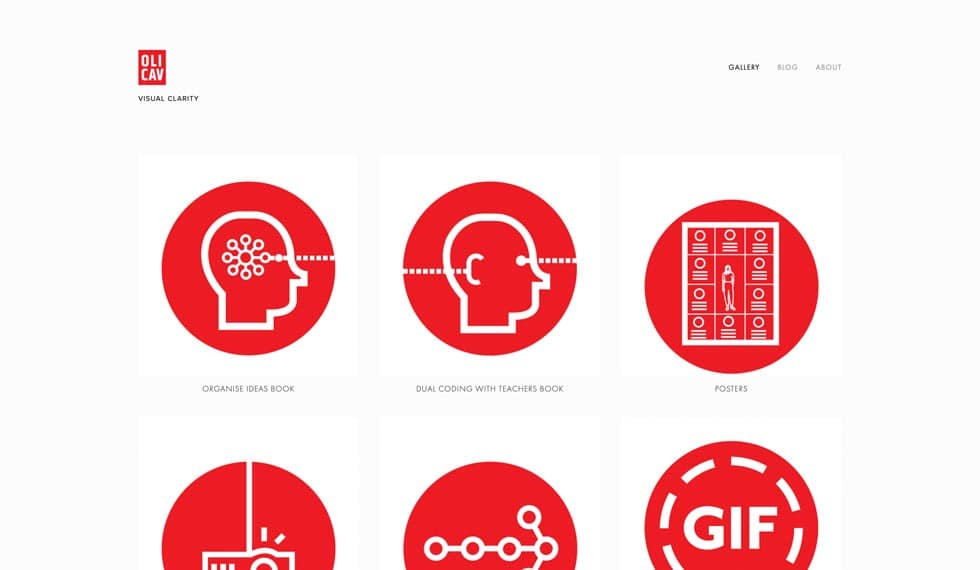
Just like you and I talked about, she gets our curiosity with a few different questions and then we have the input and then she has us create something. She’s phenomenal. Just as a human being, she’s a wonderful generous human being. With all of her publishing work, she donates a significant portion to various charities. Renee Hobbs is amazing. On the Learning Out Loud, I’ve been inspired for years by the work of Oliver Kabiglioli, who has written this book, Dual Coding with Teachers. He’s just an incredible.
He calls himself, I think, an information designer, if I’m not mistaken. The last thing I looked up. He was ahead of teaching for years at a special school. The Dual Coding for Teachers is a really cool book, number one, but it also talks us through how to help our students learn out loud by combining words with images. He now calls them word diagrams. It’s a really great practical how to. His second book that he coauthored with David Goodwin is Organize Ideas. I don’t know about you, but I always thought, oh, I know how to organize and classify and compare and contrast.
They take us through the different ways to communicate different relationships among information. That’s where I found I had a gap in my teaching. I would say, “Read this and this, now go create a visual. Here’s an example of what I did.” I didn’t really bake in anything where I had students think about, “Well, are you sharing a sequence or are you creating a checklist much like a tool go-on they would want us to do, or are you demonstrating a cyclical process? How might you depict that?” So that’s where I had that gap. This is just so full of great practical information, and he’s a wonderful communicator.
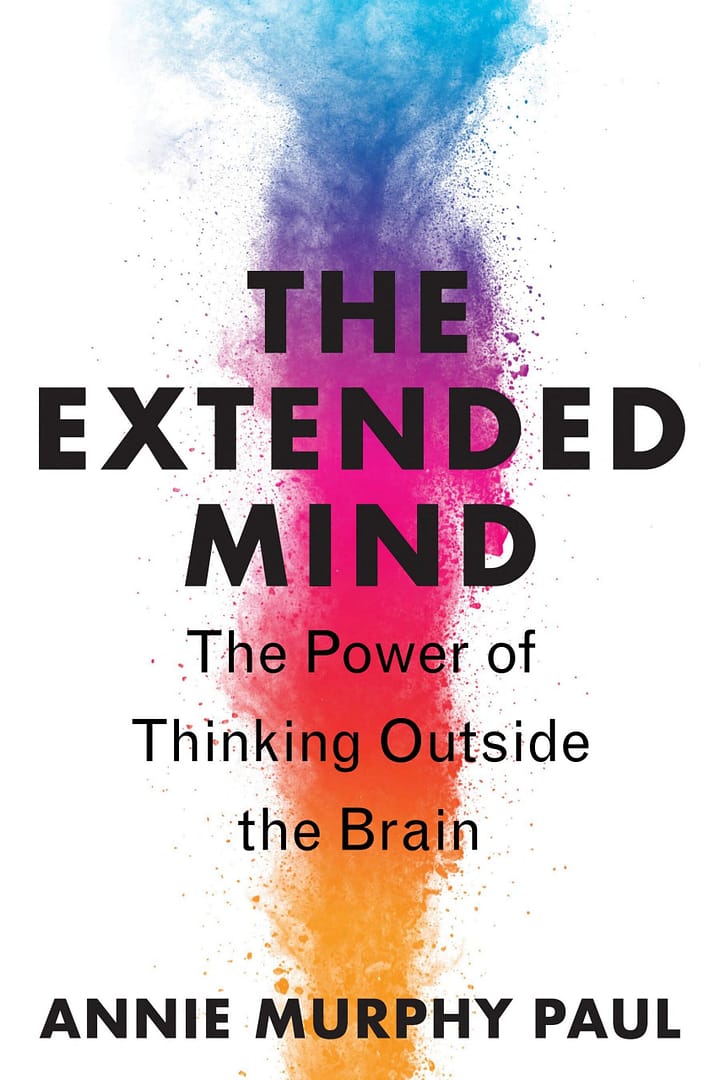
The last one is a book called The Extended Mind by Annie Murphy Paul. It’s the power of thinking outside the brain. She takes the work of Clark and Chalmers and their understanding that we really do need to think about our external memory fields, but also embodied cognition and distributed cognition. Like what I’ve learned from you today is through interaction. I think together, our knowledge would be greater than you and I separately.
It’s really about recognizing what collaboration really brings to solving these what could problems that we have. Then there’s situated cognition and having familiar surroundings and feeling, not only belonging, but also different cues that we have in our environment that support us cognitively. It’s just a fascinating read. I think we’re just scratching the surface of how we are able to move away from this brain-bound approach to learning and really recognize our environment, our bodies, and other individuals in our learning process.
I think that brings us back to Indigenous ways of knowing. I’m just dipping my toe in to learn much more about what that means. There’s just so much overlap bonding between what Indigenous societies have known for millennia and what our positivist materialist ways of measuring stuff is finally showing, so that these two worlds are colliding for me right now. That book, The Extended Mind, is really helping me to bridge over and understand why so much of the Indigenous Ways of knowing speak to me. I’m learning the vocabulary of both worlds through this book. I would highly recommend it.
[00:45:37] Bonni: Oh, thank you so much. I loved reading her book. It is such a mind-bending. I know that’s a cliche, but a mind-bending book for sure that has stayed with me for so long. I posted a slide that I had created for a presentation and she wrote back and said how much she liked the texture of the wood that was on the background. I had taken the cover of her book and you know how they have graphics that are mock-ups, so it was a place I could put the cover of her book to look like it was sitting on a table. I thought, “She mentioned the wood grain.” Then my husband says, “You should write to her and see if she’ll be on your podcast and say, ‘I’m the wood girl.'” I thought that’s probably not good. I don’t know that that’s really do it for her. You recommending her book has encouraged me. I should at least reach out and try.
[00:46:27] Karen: Oh, please do. I would love to hear you two sit down and have a good old chat. She’s working at Hidden Brain as well. You know the podcast from — [crosstalk]?
[00:46:35] Bonni: I just saw that. Literally, I don’t often stay around for the credits on a lot of podcasts, but for some reason, I did, and I thought, wait a minute. I actually had to replay the last 15 seconds because I thought surely my brain just must be getting confused. Talk about a mashup. There used to be peanut butter and chocolate, and now there’s Annie Murphy power and brain, which is just remarkable to me. I’m going to have to find out more about that. For sure. For sure. Well, Karen, this has been such a wonderful, delightful conversation that I feel like– [laughs] For those of you who are not watching the video, which is to say none of you, she’s holding up my book. Look at that with a thumbs up.
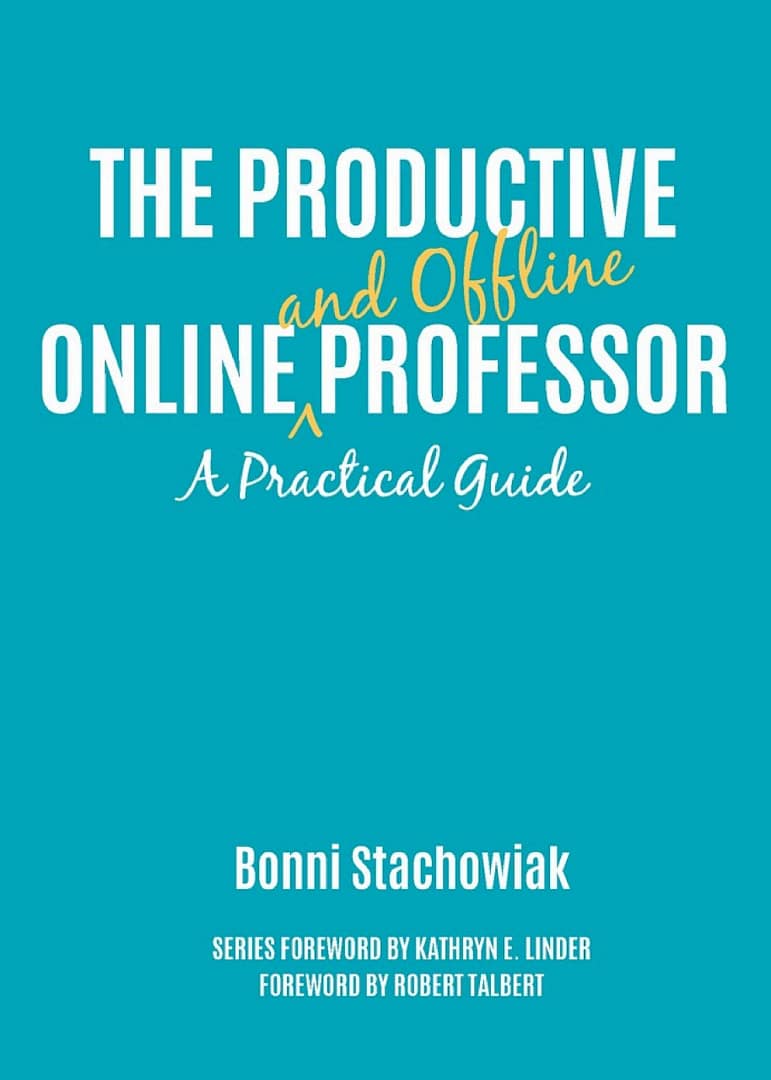
[00:47:24] Karen: Yes, I just realized I hadn’t mentioned it. I’m sorry to interrupt you. If you’re an educator, whether you’re teaching online or not, Bonni’s book, The Productive Online and Offline Professor: A Practical Guide, is truly a practical guide. You can see I continue to go through it. I also recommend that, but am I at 42 now?
[00:47:46] Bonni: Well, thank you so much. I actually just gave it to our new profiles, our semi-new profiles, because he was talking about how many more projects than he has and so much going on in his mind. I don’t do that very often, but I was like, “Girl, a lot of this stuff can be really helpful when you’re new in a job that can try to manage a whole new swath of information coming at you.” Yes, thank you so much.
[00:48:10] Karen: Absolutely. It’s wonderful.
[00:48:11] Bonni: Well, it’s been a delight. I feel like now we’ve had conversations in multiple mediums and multiple channels. This is not the final part, it just introduces a whole new opportunity. Thank you so much for coming on the show today, Karen.
[00:48:28] Karen: My absolute pleasure. I’m the president of your Canadian fan club because you give so much to the world and it really talk about mobilizing knowledge and learning out loud. The work you do makes a big difference, and so I greatly appreciate it.
[00:48:48] Bonni: Oh, Karen Codwell, thank you so much once again for being a guest on today’s episode of Teaching in Higher Ed. Today’s episode was produced by me, Bonni Stoviak, and was edited by the ever-talented Andrew Kroger. Podcast production support was provided by the amazing Sierra Smith. Thanks to each one of you for listening to today’s episode. If you have yet to subscribe to the weekly email updates, head on over to teachinginhighered.com/subscribe. You’ll get the show notes from the most recent week’s episode, and you’ll also get some other goodies that don’t show up on the podcast. I’ll see you next time on Teaching in Higher Ed.
[music]
[00:49:47] [END OF AUDIO]
The transcript of this episode has been made possible through a financial contribution by the Association of College and University Educators (ACUE). ACUE is on a mission to ensure student success through quality instruction. In partnership with institutions of higher education nationwide, ACUE supports and credentials faculty members in the use of evidence-based teaching practices that drive student engagement, retention, and learning.
Teaching in Higher Ed transcripts are created using a combination of an automated transcription service and human beings. This text likely will not represent the precise, word-for-word conversation that was had. The accuracy of the transcripts will vary. The authoritative record of the Teaching in Higher Ed podcasts is contained in the audio file.