Follow the Teaching in Higher Ed Podcast
About this Episode
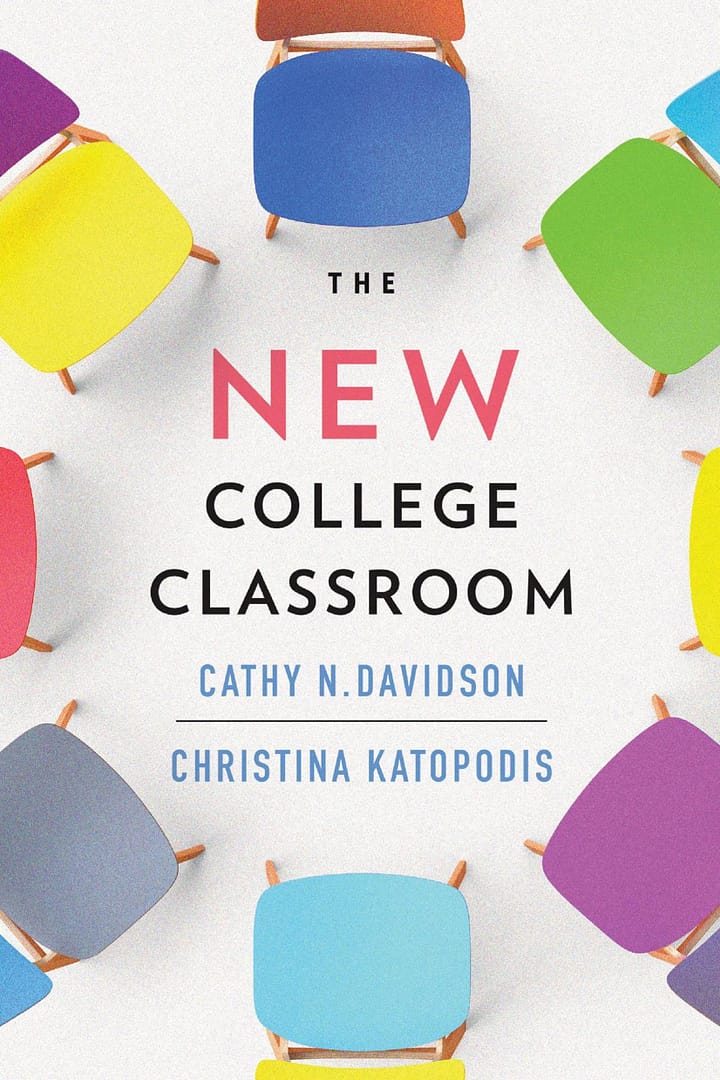
Cathy Davidson + Christina Katopodis talk about their new book, The New College Classroom, on episode 433 of the Teaching in Higher Ed podcast.
Active learning is about structuring class so that students have more autonomy and control of their learning.
Christina Katopodis
On episode 433 of Teaching in Higher Ed
Voices on this Episode



Show Notes + Resources
- The New College Classroom, by Cathy N. Davidson & Christina Katopodis*
- Cathy Davidson Named Senior Adviser on Transformation to CUNY Chancellor
- Video: The Backwards Bicycle
- Ungrading: Why Rating Students Undermines Learning (and What to Do Instead), by Susan D. Blum*
- Charles William Eliot
- Sarah J. Schendel
- Audre Lorde quote about aphids
Affiliate income disclosure: Books that are recommended on the podcast link to the Teaching in Higher Ed bookstore on Bookshop.org. All affiliate income gets donated to the LibroMobile Arts Cooperative (LMAC), established in 2016 by Sara Rafael Garcia.”
Recommendations from this Episode
Transcript
[00:00:00] Bonni Stachowiak: Today, on episode number 433 of the Teaching in Higher Ed podcast, The New College Classroom, with Cathy Davidson and Christina Katopodis.
[music]
Welcome to this episode of Teaching in Higher Ed. I’m Bonni Stachowiak and this is the space where we explore the art and science of being more effective at facilitating learning. We also share ways to improve our productivity approaches so we can have more peace in our lives and be even more present for our students.
[music]
It’s such a pleasure to be welcoming back to the show Cathy Davidson and for the first time, to be welcoming Christina Katopodis. Let me tell you a little bit about each of them before we begin the interview. Cathy N. Davidson is the Senior Adviser on Transformation to the Chancellor of the City University of New York, CUNY. She also is the Founding Director of the Futures Initiative and Distinguished Professor of English as well as the M.A. in Digital Humanities and the M.S. in Data Analysis and Visualization programs at the Graduate Center, CUNY.
The author or editor of over 20 books, she has taught at a range of institutions from community college to the Ivy League. Cathy held two distinguished professorships at Duke University, where she taught for 25 years and also became the university’s and the nation’s first Vice Provost for Interdisciplinary Studies. She is co-founder and co-director of the Humanities, Arts, Science and Technology Alliance and Collaboratory, HASTAC.org, the world’s first and oldest academic social network founded in 2002.
Davidson’s many prize-winning books include the classics Revolution and the Word: The Rise of the Novel in America and Closing: The Life and Death of an American Factory with photographer Bill Bamberger. More recently, Cathy has concentrated on the science of learning in the how we know trilogy. Now you see it, how the brain science of attention will transform the way we live, work and learn the new education how to revolutionize the university to prepare students for a world in flex and as you’ll be hearing about on today’s interview, a coauthored book with Christina Katopodis, The New College Classroom.
Davidson has won many awards and grants including from the Guggenheim Foundation, ACLS, NEH, NSF, the MacArthur Foundation. Most recently, the Council of Colleges of Arts and Sciences presented Davidson with its annual Advocacy Award. She has served on the board of directors of Mozilla, was appointed by President Barack Obama to the National Council on the Humanities, and has twice keynoted the Nobel Prize Committee’s Forum on the Future of Learning.
Also joining me for today’s conversation is Christina Katopodis, PhD. She’s a Postdoctoral Research Associate and the Associate Director of Transformative Learning in the Humanities, a three-year initiative at the City University of New York, CUNY, supported by the Mellon Foundation. She is the winner of the 2019 Diana Colbert Innovative Teaching Prize and the Dewey Digital Teaching Award. She’s also the co-author with Cathy Davidson, as I shared earlier, of The New College Classroom, which we’ll be talking about in today’s interview. Cathy and Christina, welcome to Teaching in Higher Ed.
[00:04:13] Cathy N. Davidson: Thank you. It’s great to be here.
[00:04:15] Christina Katopodis: Thank you so much.
[00:04:16] Bonni: I realized Cathy, I should have said welcome back because you have actually been on this show many times before and I wanted to start out by asking you, Cathy, because the first part of both of your book talks about changing ourselves. I just wanted to begin asking Cathy what’s been happening in your life in your context, maybe in the last few years, there’s probably just been a few things going on?
[00:04:42] Cathy: The most recent one was that out of the blue, the chancellor at CUNY… that many part-time students, 26 campuses, called me and just said, “How would you like to be my senior advisor on transformation?” I am the official CUNY change queen … and have the very great honor and pleasure of working with the chancellor to expedite all kinds of changes without a job description. Various different things that we’re working on.
On a professional level, that’s one of the main things I’m doing. I may actually still been at Duke the first time you and I talked. I’ve also made a huge transition from an elite private institution to directing the Futures Initiative at the Gaduate Center, CUNY, which is the nation’s largest public urban university, about 70% of our students have incomes below $18,000 a year in the most expensive city in the country. We’re talking about students who work full time, basically non-residential campus who are so hardworking and brilliant and have nothing to fall back on. They’re really remarkable, remarkable students.
It’s an inspiring position to be in every day and I see change happening constantly as students, often who are the first generation college students in their family, also, the majority of our students are first generation who are entering college. It’s very, very exciting and it’s a great honor to be in this situation.
[00:06:18] Bonni: Cathy, you’re the first person I have ever known with this title. Is this common in higher education? It feels very unique.
[00:06:25] Cathy: It’s rare in higher ed, thank you. Actually, the chancellor created a whole office of transformation. It’s more common in business and often in business, the role is to expedite, to see a major complicated challenge with lots of different stakeholders, and to be purposely outside of that so you can go in and try to get everybody to come together to make something happen far faster than it normally could or should if one of the stakeholders was in charge. We’re almost like the change-making equivalent of ombudsman, where it’s somebody outside of the situation who helps to bring improvements and bring people to consensus so that something can happen more quickly than the normal. There is such a position with some frequency in the C suite of businesses, pretty rare in higher education. I’m very excited about that.
[00:07:16] Bonni: Christina, this is our first time meeting today as we’re speaking, but I feel like I already know you. I know that’s such a cliche to say, but your expertise, your competence and your care for students comes through on every page in the book. I just wanted to know from you, even though we haven’t met, what’s been going on with you lately in your context?
[00:07:36] Christina: Oh, thank you so much. It is such a pleasure and honor to meet you and thank you. In the last couple of years, I graduated with my PhD in English from a program at the graduate center at CUNY and I’ve had the tremendous privilege of moving to the CUNY central office in the Office of Academic Affairs. I work in that office on Transformative Learning in the Humanities. It’s a three-year grant from the Mellon Foundation that Cathy was faculty co-director for the first two years of the grant with our other codirector, Shelly Eversley, and I came on as a postdoctoral research associate for the grant.
It’s been such a privilege to move from being an adjunct of tenures and a graduate student to this position where I get to think about transformation on an administrative level and having a seat at the table or being on a webinar or in the room giving a talk where the chancellor is listening, which is amazing and being able to talk about adjuncts and their expertise and what they have to give to the university and just all of the valuable talent and skills that we have across the campuses and to bring people together.
Disciplines, we often get siloed, campuses we set we get siloed. It’s really wonderful to be in a place where I was describing it yesterday as being in conversation with the head of an octopus and being able to bring all of the arms into contact with one another and to talk to each other.
Sometimes we spin our wheels trying to start something new or bring people together or learn something new on our own and it’s been really wonderful to bring faculty together from across campuses across programs who can talk and learn about what’s going on in their classrooms, what are they struggling with through in the pandemic and what works, what doesn’t, what strategies do they have to share? That’s been such a joy over the last couple years. Thinking more on terms of change and transformation at the institutional level has been just a real privilege to have that kind of opportunity.
[00:10:03] Bonni: The idea of change, the idea of transformation is so energizing to me, but what you both possess that goes along with your desire to work toward that change and that transformation is your ability to have that context, and that’s one of the things that is so deeply rooted in this most recent work. We’re going to be exploring in our conversation three aspects to change. We’re going to start by looking at changing ourselves, we’ll look at then changing our classrooms, and ultimately, I’d like to end the first part of our conversation with a simple topic of changing the world. How does that sound? We’ll do that all in the length of one episode. It should be easy, right? [laughs]
[00:10:46] Cathy: No problem.
[00:10:47] Bonni: No Problem.
[00:10:47] Christina: Oh, yes, we got it.
[00:10:50] Bonni: I want to start about, when we think about changing ourselves, I would love to hear from each of you why that’s such hard work. Christina, let’s start with you. Why is it so hard for us sometimes to change ourselves?
[00:11:02] Christina: Oh, man. Change is hard. You get anxious and nervous about something new because it’s unknown. I really felt those feelings of nervousness and anxiety starting out as an adjunct with zero training in teaching. No one even handed me a book and said, “Hey, read this.” I just had to dive into the deep end and sort it out for myself and I’ve heard that story over and over again.
When you are thrown into that situation, the first thing you do is just repeat what you learned as a student by doing what your teachers did. That’s how things have been going in higher ed, as Cathy has said in the new education before this and many times, that we just keep doing what our mentors did and what they did before them, and so nothing has changed really since the 19th century. That’s a problem.
I’ve been so lucky to meet so many adjuncts at CUNY who were willing to say, “Hey, yes, take a look at my syllabus,” or, “Hey, here’s this thing I do with grading that’s a little bit different,” or, “Oh, I’ve had a student like that before. This is what I did.” Learning from my peers, especially about active learning, just flips the classroom. There is the flipped classroom model where students do– They listen to the lecture or they do the reading, and then they come to class, and instead of getting more of a lecture, they ask questions and they do. They learn by doing, exercising what they’ve been learning about.
That active learning, I like to think of it as putting students in the driver’s seat and giving them more autonomy, and it’s about structuring a whole class so that students have more autonomy and more control over their own learning and education. That is really intimidating for a first-time teacher and it takes some time to unlearn traditional structures that have been ingrained in us. We’ve been ranked and rated since birth.
Unlearning institutionalized structural racism and sexism and all of the ways in which those systems of oppression have been ingrained in us, undoing that and trying to do something different, structure the classroom so that students are empowered. That’s just hard. It’s hard to unlearn all of that, K-12 and my own higher ed education, and to try to do something new. It’s really amazing what happens in the classroom when we do that.
[00:13:52] Bonni: Oh, Cathy, that unlearning is such hard work. I recently saw on Twitter someone shared a video about where they made– You might have seen this video, Cathy, where they make a simple change to a bicycle. Instead of when you turn it to the right it going to the right, it’s adjusted and configured such that it goes to the left. It’s a seemingly simple change, right?
[00:14:14] Cathy: Oh, that would be horrible.
[00:14:15] Bonni: Our brain should be able to figure this out. Sure enough, you can already predict, Cathy, it doesn’t go well no matter how professional of a bike rider they find. It doesn’t go well for them. What are some themes that come to mind for you, Cathy, as you think about the difficulty, that raw work of unlearning?
[00:14:35] Cathy: First of all, Christina used the word structure a couple of times. I want to emphasize that it’s not just an accident that we repeat things in some ways. Your bicycle analogy is exactly right, that if all of our responses are structured by the configuration of the bicycle, that’s what we learn and that’s what is reinforced. In higher education, everything about higher education structures hierarchy. It’s not accidental.
When Charles Eliot, who was the president of Harvard for 40 years at the end of the 19th century into the 20th century, sets about to, along with his colleagues and many of his former students, restructure the puritan college that was designed to train ministers into a university to train the professional-managerial class for the modern world of Taylorism, assembly lines, et cetera, making the manager class four to keep those new factories and new assembly lines running.
Everything he does is about how the person above you rewards you for doing your work and then you reward the person below you. You always know exactly who’s above and below. For the professorate, there are adjunct professors. They don’t usually have a vote in a department. There are instructors, often don’t have tenure, often don’t have a vote. There are assistant professors. There are associate professors. There are full professors, but that’s not even good enough, there are distinguished full professors. Some universities even have ranks behind that.
Everything you do tells, is communicating to you, you either have made it or you haven’t made it, and you have to make it in a certain way, and the person who has already made it by knowing how to turn the bicycle right when you want to go right is the person that’s telling you whether you should make it to the next level or not. We passed that on to our students too.
It’s so familiar to think we’re doing discussion, but really, in a class of 30, statistically three students are going to raise their hands every class. Those three students, sociologists of education have done this work, are most likely to share the same features as their professor; the same, often, gender, same class, same educational background to their parents, income background to their parents. It’s a little scary.
You have a constantly self-replicating system that was designed for the assembly line. What is an assembly line? It’s a self-replicating system. That isn’t just a metaphor, in other words, it’s a whole system. When we are learning how to ride a bike that turns left when we think it’s going to turn right, we’re having to not just change our own reflexes, but I think we have to really think about bicycle design. Are we changing the bicycle to turn left when we think it’s going to turn right just because we want to mess with people, or are we doing it because turning that bicycle in a different way might save your life?
I guarantee people will be more capable at turning the bike the right way if they know that turning it the old way means they’re going to crash, and they’re going to have be scraped and scarred, and all kinds of horrible things are going to happen. That doesn’t mean you have to have negative advances. You can also have positive ones.
For example, if you’re told, “If you learn to change the bike in this way that is different from what you’ve been turned before, you’re going to speed right to the finish line, you’re going to use less muscles, it’s going to be great,” then you have positive conditioning and positive reinforcement of how to change in a situation of strange structure. We need to do that for higher education.
Why, for example, do you get tenure based on refereed papers? We know that a typical faculty member spends 66% of their time not just in the classroom but somehow involved in teaching, grades, writing exams, syllabi, teaching, meeting with students. It’s almost invisible for most institutions when it comes to tenure. There are real structural things that we can do on a higher level. As professors, we can do that for our students too, by making sure every student is the objective, not the three students who shoot up their hands.
[00:18:49] Bonni: Cathy, you quote Bell Hook’s book, Teaching Community: A Pedagogy of Hope, about what caring educators do for us. Would you paraphrase for us?
[00:18:59] Cathy: Caring educators make us unafraid. In Bell Hook’s world, the most important thing we can do for students is empower students to be confident to go ways that are not the well-trodden ways. For her, that means also going on a path that helps other people as well. That creates community that I just talked about hierarchy that’s the opposite of hierarchy, or in fact, that has a different kind of meritocracy, one that’s based on contribution and worth, not on rules that are written in advance.
She is constantly, in all of her work, not only teaching us to transgress– the title of her most famous book is Teaching to Transgress but also teaching us– trying to provide situations where every student feels their full potential and understands what that full potential is, and how they can use it in the world and use that in the world for their own betterment but equally, and at the same time, the betterment of a community.
[00:19:58] Bonni: We could spend weeks and weeks talking about just the section on changing our classrooms, but since we don’t have weeks and weeks I’m going to invite us to focus a little bit on grading and feedback. Christina, I’d love to have you share a bit about what are some of the challenges regarding grading and feedback and then we can explore a little bit about how we might change our classrooms when it comes to them.
[00:20:23] Christina: Yes, it’s, again, one of those things that you inherit a particular grading system. One that has been around as Cathy has pointed out since Charles Elliot in the 19th century. I think that one of the challenges is students talking about changing ourselves, we are also in a position to mentor students through change. When it comes to grades, anxiety just skyrockets. One of our colleagues who was part of Susan Bloom’s on grading book that she edited asked his students at the beginning of the semester, what comes to mind? What’s your reaction when I say this will be graded?
One of my favorite student responses was, hell no, or another student said, my grade is going to cry. All of their responses were like, stress, anxiety, like, oh, no. I think that when it comes to changing a grading system and using alternative forms of assessment and feedback, we have to invent our students through that so that we can build trust. Like I am here to help you learn, learning is the goal and to take on that kind of growth mindset, like very Carol Dweck, that growth mindset of you are here to learn and grow, how can I help you achieve that?
Then we can show them, not just tell, but show them by giving constructive, formative feedback. Using language along the way in our feedback that encourages growths. Not saying you are good or not good at this, but hey, you worked really hard at this and that effort shows in this product how things turned out. You worked really hard at this, or it takes this amount of time to do well on this assignment. To pull students and ask them, “How long did it take you to complete this assignment?” Kathy knows that I’m referring to Sarah Schendel. I don’t know, Kathy, if you want to jump in and talk a little bit more.
[00:22:36] Cathy: Okay. Sarah Schendel’s a law professor at Suffolk University and she does such an interesting thing because it needs us to say, in law school you have to grade people, there’s very little way to deviate from that. She does something very interesting when she gives a law exam, she requires students to answer two questions at the end of an exam and those questions aren’t graded, but you fail if you don’t answer the questions.
The first question is to try to answer honestly again, it’s not going to be graded. How many hours did I spend studying and preparing for this exam? Second question is, what grade do I think I’m going to get on the exam? She then grades the exams, hands them back, and she has students turn to what they wrote in advance. They see their own writing there and think to themselves, Wow, I thought I could get away with studying for 75 minutes, and I thought I was going to get an A plus and I got a C.
Then she has a really interesting conversation about what does that mean? Does it mean you have to study longer, different, better? It gives students the power to look at their own expectations about themselves and their own preparation and use that to then recalibrate what they need to do for the next exam. Somebody else might say, I studied seven hours and I got an A plus, but maybe I didn’t need to study seven hours or prepare for seven hours.
It’s really an incredibly, I’ve never heard of it before. No one ever asked me those questions when I was a student, but I love the idea of giving students a practical tool. It’s also one of those tools you can use the rest of your life like, hmm, at this job, am I going to do the job correctly if I do it in 15 minutes or not? There it’s like a little mental practice that you can do to figure out why am I not exceeding, why am I not excelling?
Because it gives you something concrete. It’s very hard for us to measure ourselves against ourselves. She actually creates a structure by which we have a measure that we’ve set up to help ourselves be as good as we want to be. It’s really quite simple and an ingenious add-on for a law professor.
[00:24:43] Christina: I think what Kathy is pointing to as well that goes hand in hand with grades on grading or what’s also called alternative assessment and changing our classrooms is thinking about the classroom as a continuum. Like we have come in being ranked and rated since birth and we are used to the A, B, C, D, F system. How do we transform our classrooms to move beyond that? Then how can we carry that transformation forward and think about this as a lifelong learning or thinking about preparing students for world readiness, or even just on a smaller scale, how is this class going to prepare you for the next class you take after this one?
How is this test going to prepare you for the next test once you learn how you did, how long it took to study? One thing I do with my students is I have them in static groups throughout the semester, so they’re always working in the same group when they do group work and they get used to collaborating with one another. Then at the end of the semester, I ask them to do a self-assessment. How do you think you did in this class? Were you a good listener? How hard did you try to listen? Were you an active participant? Okay, if you don’t feel like you were a most active listener or a most active participant, did you contribute to the class notes?
What did you contribute that you’re proud of and what could you have contributed more? What could you keep working on listening or participation or contributing going forward? How would you like to build on the skills that you tried in this class going forward in your next classes in the next semester? Then students take that same evaluation and they give it to their peers.
Only I read them, but they let me know if they thought that each group member was a good listener, a good participant, like the first to volunteer to do something or someone who helped everyone else get organized, or who kept everyone’s mood up when something went wrong. With their permission anonymously at the end of the semester I sent students, it was optional you could leave feedback, like a sentence or two about your peer and what your review is of their contribution.
It was totally optional. Everything else was just like circle one, circle this. Every single student wrote something about everyone else, and they took the time to say something meaningful about each of their peers and their groups and they said such beautiful things about their peers that with their permission anonymously I shared the positive feedback, the constructive feedback with each student. I got such beautiful emails back like in the middle of finals, just to feel this vote of confidence from one of your peers really I think that’s something based on the comments that they sent me that they will would carry with them to the next class, to the next semester, to the next year.
I think that’s a way of thinking about the whole student and changing our classrooms in terms of how we grade participation, and because we are only one person who can only notice so much and peers are so generous with each other. Often so much more generous than they are in self evaluations, they’re so critical of themselves. That peer evaluation really fills that out and gives them formative feedback that they can take with them for the rest of their lives.
[00:28:25] Bonni: Well, Christina, you have really opened the door for the last segment of this part of our conversation. The easy one, of course, I say sarcastically, and that is changing the world. What I noticed, Kathy, from all the way back when I first had the honor of meeting you till today, it’s just struck me to really ask the questions about what should have been obvious to me, Kathy, but it just wasn’t around. We go from when we talk about grading and feedback and how we’re structuring our classes to one where there’s always somebody being compared to their peers, you’re better than them, you’re worse than them, only so many A’s all this stuff.
Of course that when you think about what it’s going to take to transform the world, it isn’t going to be us competing and fighting against one another, but coming together in unity to accomplish the really important work to be done. I’d like to ask each of you the tough question, which is, how do you want to see education change the world? How about we start with Christina and then close with Kathy on this one. Christina, what is one way, it doesn’t have to be the way, but what is one way you would love to see education change the world?
[00:29:30] Christina: How would I love to see education change the world? I would love for students to feel empowered to solve some of the world’s toughest problems. I would love to see students feel empowered to solve things like what do we do with the gig economy? What do we do with adjunct labor and how do we give compensation, security, healthcare, all of the things that we need to this enormous population of people that are working gig to gig and struggling to pay for health insurance and other things. I would just love to see students feel empowered to solve those really hard problems for the world that we’re in now.
[00:30:17] Bonni: That only happens when it comes from mutual respect, and so much of that just exudes from this wonderful book. Christina, thank you for that. Kathy, easy question. [laughs].
[00:30:26] Kathy: I know.
[00:30:26] Bonni: What’s one way you would like education to transform the world?
[00:30:30] Kathy: Well, one way I would like very much, and this came up yesterday in a conversation we were having about mental health because we hear over and over again that students post-pandemic, not that the pandemic is over, and that’s part of the issue, are struggling with mental health issues. Not fl We’re living in a world with really dire problems and I think the pandemic made everybody stop and be able to see those problems in a much clearer way. I think if I can reinvent higher education to reinvent the world, it would be giving students a voice in changing the world and in learning to work together for that change.
Clearly, things like climate change, with the floods in Pakistan, the coastline now gone in Indonesia, my sister lives in Livermore, California, where it was 113 degrees this week.
Students are looking at their near future, and wondering, “What in the world are we going to do in this world?” Clearly, it has to be done communally. One society trying to have everything and every advantage and every luxury is not going to save the world from climate change. Thinking through how we can work collectively and collaboratively to make difference, which may start on tiny levels.
I had dinner once. This is a long time ago, two books ago, with a superintendent of California schools who said the one thing they’ve found would change everything about a school in the most impoverished area of California could be changed with having a communal garden. That when kids, young kids, middle school kids, high school kids were taking care of a garden and bringing home, and sometimes animals too, and bringing eggs home or food home, it changed everything about how children weren’t new to work together and changed everything about futurism. “Oh, if you take care of this little plant, this plant is going to grow and if you don’t take care of that little plant, that plant is just going to die.”
That’s a metaphor for me as a student, it’s a metaphor for my family, it’s a metaphor for my education, it’s a metaphor for my country, and for the world, the larger for the world. I was so intrigued by that and I wondered, “Why don’t we have communal gardens in every school and other projects where you see, in real ways, how your labor feed you?” I mean that both metaphorically and actually. I think that’s a great metaphor for changing the world as well.
[00:33:13] Bonni: Oh, I was listening to a podcast yesterday, Kathy, and someone was talking about really our deepest rooted beliefs that we have about ourselves and about the world. The person was saying too many times we act like it’s a journey that has a destination, and instead, he preferred an analogy of a farm. I thought that was such a gorgeous way of writing about personal transformation.
Can we stop acting like it’s a race or it’s a map that we never got? Everyone else sends the map and no one ever gave it to us? Thinking about our lives and our growth as transformation as a farm. I thought, “What a wonderful metaphor for me to wrap my head around?” I do tend to always want to be moving towards something and that gets me into trouble sometimes.
[00:33:56] Kathy: Now, a really beautiful metaphor. Really lovely metaphor.
[00:34:03] Bonni: Well, this is the time in the show where we each get to share our recommendations. Mine is probably not going to be a surprise to listeners of this podcast episode so far. That is, that I would like to recommend Christina and Kathy your book, The new college classroom.
[00:34:17] Christina: Lovely.
[00:34:17] Bonni: I do feel a little bit spoiled in my life that I’ve had this podcast now for all these years, and so publishers will often send me books and it just feels like Christmas or … something all over the place. It feels wonderfully generous to be able to receive these, and yours was such a gift even over and above that, every page, like I said. I even saw some people that I was familiar with that I’ve had on the show on some of the pages, so that was fun to be like, “Oh my gosh. I’ve been able to talk to that person before.” Then, of course, so many people were entirely new to me.
What I love about it is it really lives up to the promise when you get to that table of contents where there’s changing ourselves, changing our classrooms, and then changing the world. You don’t stick only with the theoretical because we can’t really transform without some examples, some modeling. What would this look like? Our imaginations are not expansive and, not at least mine, has not been in my teaching without having those exemplars to seek to try to mold myself like, but what I think you really do, you both seem to have been at pretty big institutions. I met a very small one.
I didn’t need to do any mental work to shrink it down. You already shrink it down to that classroom level, to transforming students’ lives at the classroom. That is, I think, hard for some people to do to have it apply across so many different contexts. Just thank you for this gift that it is to us. I cannot recommend it enough. It is one that should go on all of our bookshelves. I anticipate being one that I can easily revisit as well to come back and see additional ideas.
[crosstalk].
[00:35:50] Kathy: Thank you, It’s an honor.
[00:35:53] Bonni: Kathy, what do you have to recommend for us today?
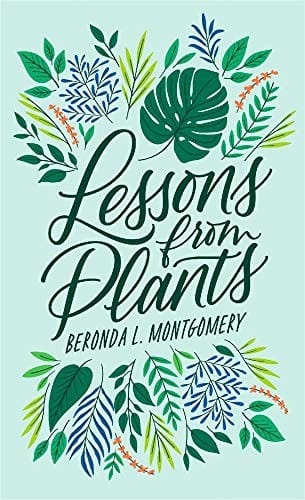
[00:35:55] Kathy: Well, I’m going to stick with the farming thing. I adore a tiny little book, it literally it’s the size of a field guide to the birds or something. It’s small. It’s by Beronda Montgomery. It’s called Learning from plants. She has a wonderful analogy in the book where she says, “If my plant is dying, I don’t blame the plant. What does it need? Does it need better soil? Does it need better light? Am I watering it enough? Am I watering it too much? How can I contribute to the condition so this plant will thrive?”
She herself is a plant biologist. She uses that as an analogy that we should always be using in education to think about what we can do so plants thrive. Also, during the pandemic, I’ve raised orchids for the last 20 or so years, and I used to live in North Carolina where it was easy to raise your orchids. There was always good light, etcetera. Now I live on the ninth floor of a New York City apartment.
There’s never enough light. It’s either overheated in the wintertime with the heat coming out of our 1930s apartment or over-air conditioned in the summer, so it’s a real struggle to get an orchid to bloom and stay blooming here. In some ways, the challenge is important, because here I am at the tail end of a very long and very fortunate career. It’s a great analogy to think about the things I need to work on in myself, in my classroom, and in society. I take Beronda Montgomery’s book seriously. I have two very beautifully blooming orchids as we speak, so I’m feeling very good about that.
[00:37:34] Bonni: Oh, what a wonderful recommendation. I can’t wait to pick that up, Kathy.
[00:37:37] Kathy: It’s a beautiful book. It’s just has a lovely cover and feels great. It’s tiny. It’s almost like a prayer book or a field guide. It’s a very lovely book.
[00:37:46] Bonni: Oh, it sounds wonderful. I’m sort of chuckling in a self-deprecating way because I do live in Southern California. You mentioned us having a very, very, talk about transformative but not in the positive way, heat issues out here. Two of our ficus trees that are in– we have a little atrium and they both they didn’t make it past all this.
[00:38:08] Kathy: Wow.
[00:38:09] Bonni: We think about that at the individual level, what kind of transformation are we responsible for to tend, to care for, to make sure those plants have the fertilizer and the water? Boy, your work really inspires us to think also beyond the individual level two so thank you for that gift.
[00:38:24] Kathy: Absolutely.
[00:38:25] Bonni: Absolutely. All right, Christina, what do you have to recommend for us today?
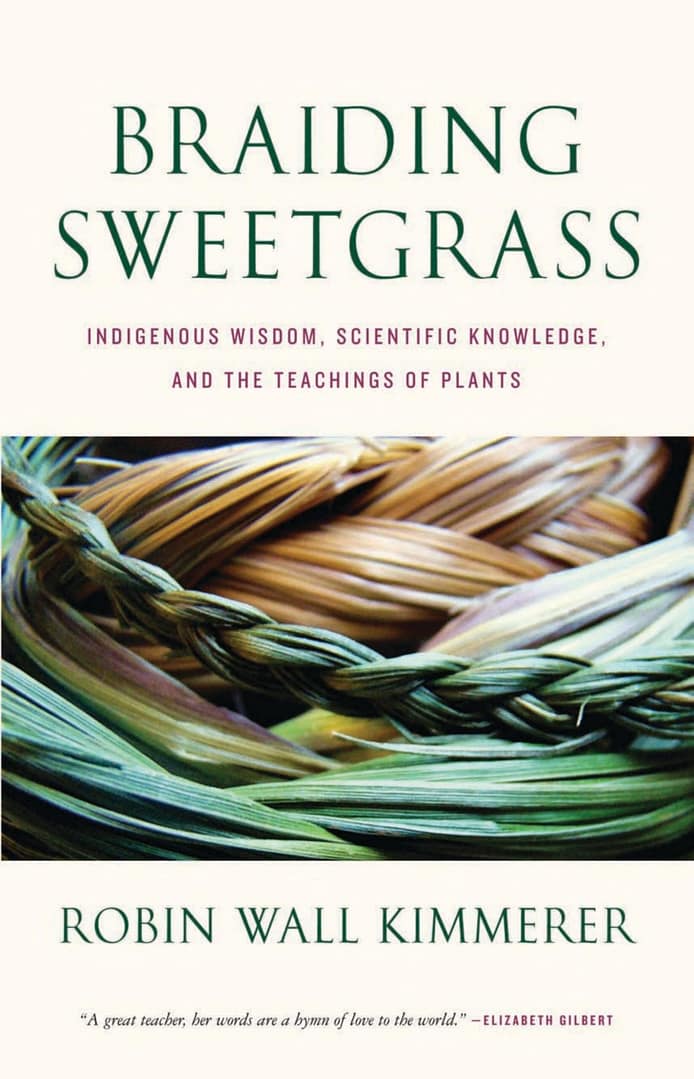
[00:38:29] Christina: Well, I’m going to build on that and recommend Robin Wall Kimmere’s Braiding Sweetgrass, where she talks about the world as a gift. She talks about so many different kinds of plants as a trained biologist who specializes in mosses. She combines these indigenous ways of knowing and the scientific way of knowing. She talks about the whole ecosystem, and all of the gifts that we give to our neighbors. Like a corn stock that comes up first gives structure that the bean can latch on to with its vine and then it can lean up toward the sun.
Then beneath the surface, the beans make more nitrogen, which the corn needs to survive. All of this stuff happens below the surface that we cannot see. It’s just this really beautiful book, and she speaks from so many realms of experience also as a mother and as a teacher. I think it’s a book for everyone, in academia or not. I also have a garden. Actually, gardening is one of the top three things that people say makes them happiest. I live in a New York apartment, and on our ninth floor, there’s this community garden.
I have a little square plot of a raised bed and I can grow cucumbers and beets and carrots and bok choy and onions and leeks and all of these things, and I learned from my neighbors. We also are all learning together and messing up together, so we happen to have an enormous aphid population. Aphids, for those who aren’t familiar, can eat plants, particularly leafy greens like kale and bok choy and stuff like that, or broccoli, and they get stuck in there… Beronda Montgomery or Robin Wall Kimmerer, you could say, “Hey, stop this aphid infestation, please,” or you could look to a communal solution.
I actually learned about this from an Audre Lorde poem about aphids, funny enough, but ladybugs eat aphids. What can we look to in our environment and in our community to find a solution? My little toddler, my partner, and I released ladybugs into our community garden, and they did a much better job than any kind of pesticide or any kind of treatment or spray or neem oil or whatever it was that we could have used. The ladybugs just did their work. We weren’t completely free of aphids, but it was under control.
I’ve learned that from both Beronda Montgomery, I love that book, and also from Robin Wall Kimmerer, to just think, “What can I use in my community, what resources do we have to pull together that we could solve this problem together in a collaborative way rather than thinking in a competitive way?” Like, “Get off my lawn,” not like that, but like, “How can we all try to find different things in our environment that we can use as tools to make this better?”
[00:42:01] Bonni: Oh, what a nice way to end us, Christina. That “Get off our lawn” made me chuckle because I think one of the ways to cure myself of when I’m feeling that way is to be around people like the two of you because I get like that. We all have the days that really bring us down, but then when we can lift our eyes up a bit and be inspired and get connected with that real hope, what a beautiful thing. I’m going to look up that Audre Lorde poem, it sounds really good, too. Ladybugs are cool. They’re really cool. [chuckles]
[00:42:29] Christina: Ladybugs are so cool.
[00:42:31] Cathy: Bonni, if I can say, one-
[00:42:32] Bonni: Please.
[00:42:32] Cathy: -of the things that lifts me up is your program. It’s such a generous thing that you do. It’s such a delight and an honor to be a recurring visit on your program. Just thank you so much for doing this.
[00:42:46] Bonni: It is an absolute joy, and I’m so glad to be connected with you all these years and continue to have all these opportunities to learn from you. Christina, so glad to get to know you. Hope this is just the beginning.
[00:42:58] Christina: Thank you so very much. This was such a joy.
[music]
[00:43:04] Bonni: A resounding word of thanks to Cathy Davidson and Christina Katopodis for joining me for today’s episode. Today’s episode was produced by me, Bonni Stachowiak, and was edited by Andrew Kroger. Podcast production support was provided by Sierra Smith. If you have yet to sign up for the weekly updates, you can be supported even more by Teaching in Higher Ed by receiving the weekly show news and some other content items that don’t show up in the shows. Head on over to teachinginhighered.com/subscribe to get those weekly e-mails in your inbox. Thanks so much for listening, and I’ll see you next time on Teaching in Higher Ed.
[music]
[00:44:04] [END OF AUDIO]
The transcript of this episode has been made possible through a financial contribution by the Association of College and University Educators (ACUE). ACUE is on a mission to ensure student success through quality instruction. In partnership with institutions of higher education nationwide, ACUE supports and credentials faculty members in the use of evidence-based teaching practices that drive student engagement, retention, and learning.
Teaching in Higher Ed transcripts are created using a combination of an automated transcription service and human beings. This text likely will not represent the precise, word-for-word conversation that was had. The accuracy of the transcripts will vary. The authoritative record of the Teaching in Higher Ed podcasts is contained in the audio file.