Follow the Teaching in Higher Ed Podcast
About this Episode
Laura Horne shares about student mental health – creating a culture of caring on episode 317 of the Teaching in Higher Ed podcast.
I don’t think that we really always realize how common mental health issues are.
Laura Horne
On episode 317 of Teaching in Higher Ed
Voices on this Episode


Show Notes + Resources
Recommendations from this Episode
Video
CAPTCHA

Movie/TV
Mrs. America
Video
12 Stages of Corona

Person
Sarah Cooper
Podcast
Unlocking Us Podcast
Book
Dare to Lead by Brené Brown
Transcript
[00:00:00] Bonni: Today on episode number 317 of the Teaching in Higher Ed Podcast, Laura Horne from Active Minds joins me to talk about Mental Health on the College Campus.
[music]
[00:00:12] Production Credit: Produced by Innovate Learning, maximizing human potential.
[music]
[00:00:21] Bonni Stachowiak: Hello, and welcome to this episode of Teaching in Higher Ed I’m, Bonni Stachowiak and this is the space where we explore the art and science of being more effective at facilitating learning. We also share ways to improve our productivity approaches so we can have more peace in our lives and be even more present for our students.
[music]
Today’s guest, Laura Horne, joins me from Active Minds. The nation’s premier nonprofit organization, supporting mental health awareness and education for young adults. They have a presence on over 800 college, university, and high school campuses nationwide. Earlier this year, Active Minds and ACUE published a report, creating a culture of caring, practical approaches for college and university faculty to support student well-being and mental health.
Many of you who’ve been listening for a while, are familiar with ACUE already. They are the Association of College and University Educators and they connect me with guests on most months and they’ve got courses and a community site that feature many of teaching and learning’s top experts, faculty developers, and practitioners. Laura Horne develops innovative strategies and unique partnerships to empower students to help schools and society embrace a comprehensive public health approach to mental health. Prior to Active Minds, Laura led public health initiatives at the National Association of County and City Health Officials in Tulane University.
Laura earned her master of public health degree in community health sciences from Tulane University and her Bachelor of Arts Degree in Communications from Loyola University, New Orleans. She enjoys running, reading, finding adventure with her husband and three girls and following the Washington Nationals and New Orleans Saints. Laura works from Philadelphia. Laura, welcome to Teaching in Higher Ed.
[00:02:27] Laura: Thank you, Bonni. Thank you for having me.
[00:02:29] Bonni: I was so glad to be connected with you via ACUE. In fact, as soon as I saw the resource that they sent over that you had worked on with their organization, I was like, “Yes, I want to talk to her. When can I talk to her?” I’m just so grateful to have this conversation with you today.
[00:02:46] Laura: Thank you, Bonni. I’m so grateful to be here and we’re very, very proud of the resource. One of the things that I think is so unique about it is that they’re recommendations from students. We know they’re going to be helpful and also approved by faculty so we also know they’re going to be realistic. We’re really excited to talk about them with you.
[00:03:03] Bonni: Before we get into the four recommendations from that report, I want to just back a step up and hear from you as a professional. What are some of the myths that you see really being pervasive that get us in the way of learning what we ought to learn about mental health issues?
[00:03:21] Laura: I so appreciate this question. I think a couple of things, one, I don’t think that we’ve really always realize how common mental health issues are. We know that one in three students meet criteria for a diagnosable mental illness. It’s very common. It’s about seven million students nationwide. Then additionally if you think about it, we all have mental health challenges in our lives. Mental health exists on a spectrum.
I think one of those myths is that when we talk about mental health, we’re talking about only students who have a clinical mental health problem, but what we’re really thinking about is students who are challenging their every day with mental health issues and also that people who experience mental health issue can live very healthy, happy, productive lives. Sometimes we have these images of someone who has a mental health issue as someone who is not like us.
Someone we don’t know, someone who might be an institution, whatever we think of when we think of an institution or not able to hold down a job or to do well in school, but actually, what I always like to tell students, especially is if you’re in a classroom sitting by three people, at least one of those three people statistically is living with a mental health issue and most likely able to do all the things that you would do to succeed in school and in life.
[00:04:50] Bonni: When I used to work at the University of California, Irvine, I had the opportunity to work on some video series that we did on mental health and it was across the campus. It was really a great educational experience for me. I got introduced to a couple of professors who were married and they taught at that time in the history department.
They really echo some of the things that you just talked about and I was so grateful for that, that I– because I think I used to think of it in a really binary way. I just didn’t have any exposure to it and to know that just like you said, that I will be affected in my lifetime, how could you not be by challenges with my own mental health.
Then also that other people that are like me will be too and there’s such a stigma around it so much of the time and it’s nice when we can release that and recognize these are issues that we all face, of course, to different degrees and in different ways, but then it doesn’t have to feel so scary to talk about it. It doesn’t have to feel so scary when you’re experiencing it.
I’m thinking about early on in the pandemic. This would be at least here in the United States, I’m thinking probably March but days are really mysterious to me. It’s timeframes right now, but talking to friends, it was scary for me because I would have a pain in my chest and I was not used to experiencing pains in my chest.
That’s not– Usually, my reactions to stress would show up more in my neck and my shoulders and that kind of thing. It was really, that felt super scary to me like, “Oh my gosh, what’s happening to my body right now that feels very outside of my control?” Then to talk to other colleagues and other people who would describe that same pain in their chest and to go, “Oh gosh, this is a normal physical response to severe stress that so many of us encountered in that time.”
[00:06:43] Laura: Yes, I’m thinking so much about students and faculty and people in general during this pandemic. This is a crisis for all of us. I think so many people are experiencing what you just shared for the first time, perhaps during a pandemic. I think when we can take that non-binary approach to mental health, then when we’re experiencing challenges ourselves, like you said, it’s less scary.
We can give ourselves more grace and more space to think about that and to hopefully if we need to, to seek help without feeling like we’re not being true to ourselves or– I think a lot of students in particular, if they’re experiencing a mental health issue for the first time right now, they might be thinking, “This isn’t me. What’s going on? This isn’t me.” Actually, no, this is a part of life for a lot of people. Whether you have a mental illness or you’re just going through a period of time where you’re struggling, I think we all have some degree of personal experience with what it’s like to struggle emotionally.
[00:07:48] Bonni: You mentioned one in three will meet the criteria for struggling with mental health issues during college. Are there any diagnoses that show up that we really want to be familiar with vocabulary before we start talking about these four recommendations?
[00:08:04] Laura: Sure, yes. We see right now, even before the pandemic that anxiety and depression have particularly been on the rise among college students and high school students as well. Actually, I think we still have a lot to learn in terms of why that might be, but I do think we see often among our young adults, that the world that they’re living in right now is very challenging. A lot of it we are still learning about as they are experiencing it. They are guinea pigs in a way for things like smartphones, social media. There’s so many societal issues.
Even right now, with talk about racism and police brutality and all these different things on top of a pandemic, I think young adults are growing up in a very unique, challenging world, interfacing with things that we are still learning about and don’t quite know what the mental health implications truly are. I think we’re that reflected in the data. That’s one of the things I would put out there. First and foremost is that, if we are hearing more from our students, that they’re struggling, that’s likely because more and more students are struggling and we’re seeing that year to year. It’s a problem. It’s a serious problem and one that I hope will become even more prioritized for campuses nationwide.
[00:09:18] Bonni: The first thing that we want to be able to do as faculty is to normalize the need for help. How do we go about doing that, Laura?
[00:09:27] Laura: One of the things that I loved hearing from our students when we first started to work on this guide together, was that the first thing and the most important thing that they really value from faculty members is approachability. We heard from our students that next to friends or the counseling center on campus, they most want to go to professors and academic advisors when they’re struggling, but over 60% of those same students say they don’t yet feel comfortable doing so. There’s something there that’s lacking in terms of approachability and maybe even permission for students to feel like they can go to their professors and their academic advisors for issues that are impacting their academics, even if it’s not related to their grades, even if it’s just everyday stress. A couple of things that we recommend for faculty to communicate approachability are very simple things that we think could be done tomorrow even.
One of the things that I love that I’m seeing a lot of faculty do right now or in the spring semester during the pandemic, was allowing some space to just check in on your students and ask how they’re doing before jumping into the lesson. I think as our society, we often ask how are you as less of a serious question and more of a greeting. It’s almost like getting that small talk out of the way before we can really get down to business.
What I think students would really value is knowing that their faculty will allow them to talk about what is impacting them on a day to day, if anything, so that they can have that moment and then really engage with lessons. I think that’s an important piece, especially as we’re having national conversations around challenging issues to not be afraid to provide space for that. Ultimately, I think our students will be better equipped to learn and engage with the content if we can do that together.
[00:11:25] Bonni: So many times the questions that we ask and this is a very– I can only speak to it being a very American thing. I’m sure this is the case that other cultures do, but that thing of like, “Oh, Laura, how are you doing?” “Oh, I’m fine. How are you?” It’s like, I’m actually not fine. It’s just that we’re programmed. That’s the cultural programming that so many of us have. For me, this ends up when we ask our students questions like that, it ends up being more like a rhetorical question unless we treat it with some ability to really slow ourselves down.
I’m going to link actually to a really early episode in the podcast, but I talk with my husband, Dave, about the eight-second rule. Then if you’re going to ask a question and you actually want to leave the space for people to respond, to get in the habit of counting in your head, one, 1000, two, 1000 and so on, people will know how to count to eight, but that’s actually feels like an eternity when you’re trying it out for the first times, but you’d really be surprised how that uncomfortable silence can actually build a bridge for people to have uncomfortable conversations.
The other thing that I try to do too, you were mentioning in terms of the renewed fight for civil rights in our country, I have not been teaching during this particular season of it, but I certainly have in past classes. Sometimes what I’ll try to remember is that for some of my students, this is very central to their lived experience and they’re talking about it with their families and they’re hearing about it in all these spaces and places and they’re carrying it with them, but for other students, they will have no idea what we’re talking about.
I’m thinking about, not again the most recent one, but sadly there have been others where there’s a shooting of an unarmed black man and then to come into a classroom and just be ready to enter into a space of like, “What are you hearing about in the news?” To just check in. Then that way, students who haven’t heard anything about it, don’t have to be alienated to be like, “What on earth are they even talking about?” Then it does open up that space. The other thing too, that you were talking about and we want to normalize the need for help seeking behaviors, both as individuals.
Sometimes that’s harder to do because we don’t know, but then sometimes it’s happening and you do know that many people have been affected. We sadly had a while ago, one of our students who was taking a break from school passed away. It was one where an entire group of our students at entire group of majors. I teach at a relatively small school, so probably 30 students who were directly knew this person and friends and in fact, one of the people in my class was his girlfriend.
I knew this is something that has touched the lives of 40% of this class that I’m meeting with today. Then just to have those– Actually, we’ll talk about that a little bit later too, because it’s not just normalizing the need for help, but there’s some other strategies that we were able to use as a community too, that I really appreciated.
[00:14:28] Laura: Absolutely. Another thing that I’ve really appreciated seeing during the pandemic, our faculty sharing what the pandemic has been like for them. I think in a way, we can model for our students, the kind of responses we’re hoping for beyond, “I’m fine,” or, “I’m good,” by being willing to share and be vulnerable a little bit ourselves, because this is something that has impacted all of us.
Then where appropriate sharing stories about setbacks and rejection and failure, especially if you are an academic advisor and you’re mentoring a student, I think being able to share beyond the highlight reel, as we say, and normalizing setbacks as part of the journey, I think also helps normalize the need for help. Then the other thing that we suggest that we’ve found is helpful is sharing at the beginning of your class. Then you have the semester that your students can talk to you. If they’re struggling for any reason, putting that in your syllabus also in our guide has a recommended syllabus statement that makes it very easy.
You can just plug in the counseling service phone number into that statement and then copy piece it there. Referring back to it through the semester, I think helps because often our syllabus will give students resources for tutoring or academic support, but really calling out that, “We’re beginning of semester together, you’re going to run into academic challenges, but you might also struggle emotionally and if you are and it’s impacting your work, I hope you’ll feel free to come to me, but also hear counseling services available as well,” and just normalizing that, because it is normal. We want to bring that more on the open so that students know they’re not alone and feel like that’s okay for them to seek help when they need it.
[00:16:06] Bonni: The second recommendation you have for us is to actively listen and you’ve got a good three step process for us. I realized we bounce back and forth between these stages, but we want to be actively listening with validate, appreciate, and refer. Tell us a little bit about this recommendation.
[00:16:24] Laura: Sure. V-A-R is we call it Validate, Appreciate, Refer is a tool that was actually created by students at UCLA. What they were finding was they were taking standard suicide prevention trainings, which were helpful for when you are encountering another student in a crisis moment, but often what they found is they were trying to help their peers just navigate everyday challenges.
They really needed a quick three step tool to use in those kinds of conversations to know what to say. We find that with faculty too, that they often just want to know how to respond appropriately when a student is struggling and then also have a sense of what their role is in supporting their students. Validate is just validating that what the student is expressing to you is challenging.
It does sound difficult. That is something that so many of us struggle with or, “I’m sorry, you’re going through that,” is a great validation. We have a graphic that crosses out sayings that we would normally say when someone’s struggling. At the very end, it’s just, “I believe you.” That’s a big piece of it, especially as faculty, I think we can sometimes worry that if we give any flexibility that students might take advantage of that unnecessarily and I think a great basis for a conversation is just communicating to a student that you believe them, that you know that it took courage for them to ask for what they want and what they need to do well in this class. Just validating that.
Then that moves into the next step, which is appreciating, that it took them courage to do that and thanking them for coming to you. So often we want to go right to a solution. We want to fix the problem. What we’re really trying to help faculty do is just relieve that burden of feeling like you have to solve students’ mental health issues and what you’re really there for is to be a helper, validate them, appreciate that it took them courage to come to you and then refer them to appropriate resources.
In order to be a great referral, we really need to understand some level what resources are available, even having a cheat sheet, like the one that’s in our guide printed out so that you can refer to it or give it to a student when needed to point them to the right resources and not feel like you have to play that role of a clinician or a resource in and of yourself.
[00:18:44] Bonni: One of the themes that you’re introducing here– You’re not introducing it for the first time on this podcast, certainly, but I want to just draw people’s attention to you echoing what’s been said so many times on this podcast and that is we need to trust our students and so many of us. I described my experience working at University of California, Irvine and meeting those history professors.
Those helped me uncover some real biases that I had, that I was completely uneducated. We need to recognize that we all are still very much uneducated about certain aspects of our teaching and this might be one of them for you. If you find that you’re having difficulty believing your students that are struggling with anxiety, with depression, it’s quite likely you yourself have probably never experienced clinical levels of anxiety or depression and need to get some sort of an education.
I know, Laura, one of the things you want to warn us about, it’s not like, “I have to go get my PhD in this,” but we’ve got to name those biases that are preventing us from believing our students. When you were talking earlier about this, I was just reflecting back that we were taking a– One of the students in my classes had asked me if she could speak with me. I think we were texting, I use this service called Remind that lets them send me a text message and all that. I think she’d said she wanted to talk before class and then we didn’t touch base. Then all of a sudden she was next to me at the break or whatever. She started getting– We went to a private place. It wasn’t in the classroom but she started getting teary-eyed and her mom was in the hospital with her grandmother as she was passing away.
She’s like, “Could I leave 15 minutes early so that I could go be with my mom. I just want to be with my mom.” I was looking at her. I just I felt so sad and I get sad just remembering this that like, “I’m looking at my watch. What are you talking about?” I give her a hug. This is post-physical distance. I’m glad to report but I was just like, “No. You can’t leave 15 minutes before class. Go now. Go and be with your mom.”
It’s saddened to me to think as approachable as I am that she still felt like she had to stay. To me it represents even more. If we’re going to error on any side, error on the side of trusting them, because you might occasionally find that you get duped. You know what, I would so much rather be duped on occasion like, “What is that cost to me if I’m duped on these issues versus if I believe them?”
That’s been for me just an ongoing growth process that I never want to finish, because I know I still have so much learning to do and so much work to do. This is just so important what you said. I believe you. Then you also mentioned, I also believe I am not a trained psychotherapist so I want to listen. I want to show my care for you. Part of my showing my care for you is to refer you to people that really are equipped to serve you in the ways that you need,
[00:21:43] Laura: In so many instances, students really just need compassion, empathy and validation. I don’t want to keep going back to the pandemic but we did a National Student Survey at Active Minds of students and what they were experiencing in April right after the the pandemic. It was interesting when we asked what their stressors were. The main stressor was not really knowing for sure what their university thought about what the pandemic experience was like for students.
Many students said it hasn’t been a vacation for me. It hasn’t suddenly gotten easier for me to do my studies. This has been an adjustment and I really want to hear from my college leaders and my professors that they understand that this is difficult and challenging. I want to know what flexibility or accommodations might be available to me if I need them. I think in most cases, students just want great communication.
They want to hear reflected back to them that your professor understands what you’re going through and to the degree that’s possible there may be some flexibility available. Mostly, they just want to know that that you understand those soft skills are really what young adults really are looking for from their leadership.
[00:23:06] Bonni: The next recommendation you have for us is to embed courses with well-being practices.
[00:23:12] Laura: Yes. We have heard from several universities and colleges that are going to great trouble to embed well-being into courses. Some of this might be offering special modules that faculty can lean upon integrate into their classes that they’d like to teach their students about mental health and well-being as part of the academic experience. I also think this can be done at very actionable, small ways.
For example, we suggest setting deadlines at reasonable times of day. This is another one by default, somehow their society, we’ve decided to often set deadlines at midnight. I think sleep is such a core part of positive mental health for all of us, but especially students. If we can set a deadline that still allows students or encourages them at least to get sleep at a reasonable hour, that could go a long way.
Often when I say that faculty will ask, “Well, what is the right time of day?” What we’ll say is it really doesn’t matter. It could be 10:00 AM, 5:00 PM, as long as we are telling our students with enough notice. I know so many do through their syllabus, when the deadlines are for assignments. Then as long as we’re doing that, we just want to make sure that as much as possible, we can prevent students from pulling all nighters and denormalize all nighters as a part of the college experience if we can so that students can get the sleep that they need.
Other things are assigning self-care as homework. Then the other thing that I love to tell professors in case they don’t know is that your counseling center, your wellness center, or peer health educators on your campus often have workshops that are ready to go. If you need to cancel a class for any reason, we encourage you to instead reach out to your wellness center and see if the student peer educators can come and give a session to your class about self-care, or sleep or well-being as part of academics.
[00:25:19] Bonni: That’s a great idea. I teach a class where we use one of the books that we read is The Seven Habits of Highly Effective People. The last chapter, the last habit is about sharpen the saw. Part of sharpening the saw is that we are taking care of our bodies, of our minds and that we’re able to be more equipped if we’re not sleeping enough if we’re not exercising, and all the great stress reduction benefits that it can bring.
I had never really contemplated that that could be an opportunity to bring in that part of our campus. I love just that you just sparked that idea for me and I hope other people listening are thinking about that too. One other thing that I’m looking at as far as the response to the pandemic, I am really emphasizing for the fall, just being as flexible as we can be in our teaching.
I’m kind of planning it the opposite of how I’ve taught some of these classes and that is just planning if it was all online, and then building back in the opportunities to be in person. One of the things I’m going to miss about that, but I’m already thinking about ways to replace it is we have a wonderful place called Back Bay, where we will often go and take a walk together as a class.
We separate but then we come back together. They’re physically moving their bodies as they’re listening to a podcast and they walk out to listening to it. They walk back talking with one or two others from the class about what they took away from it and then we all gather back together. I think we can still do that through the modern miracles of technology where if there can be an option where people do it together, let’s we’re going to do it during our normal class time. Find somewhere where you can be to move your body and put your headphones in and everything.
Then also give the option to those people who aren’t unable to be there that they could plug back in. In fact, someone named Sean Michael Morris, who has been on the podcast many times before he coined this term synchronish. The podcast listening walk would be synchronous, because we’d all do it at the same time. Then the ish part, synchronish, would be if you couldn’t make that walk then can you plug in with a discussion board or a hash tag or something like that that would allow everybody to participate even if they couldn’t be there at the same time.
[00:27:36] Laura: I love that. One, because I think so much of the uncertainty we still have about the fall can be paralyzing. You might not know exactly how to plan and I love your approach of assuming virtual and then building on that and giving students different options for engaging with the content. I think often we think about, “Okay. Now I’m learning. Now let me stop learning and now I’m going to take care of my mental health.”
Learning is curiosity. It’s relational. It’s alive. How can we do these things together as part of the journey? I think I love the example that you shared and I hope that– I think so much of that has been prevalent during the pandemic, because we’ve had to. It’s been undeniable how the pandemic has impacted both our mental health and our learning and our teaching at the same time. That’s one thing that I hope will live on beyond the pandemic is being more relational, and on this journey together as a shared experience when we’re in the classroom together.
[00:28:38] Bonni: I so appreciate what you said too, about this we’re in this together. Just to compound this even more on top of a pandemic, we’re also dealing with some raw hundreds of years since the founding of our country of issues around race. We need to also recognize that coming back in the fall, it isn’t going to be a feeling universally of we’re all in this together. Really trying to prepare ourselves for, “We’re all in this together yet I realize you’re not all feeling like we’re all in this together.”
It’s going to be a wild thing. I’m so glad that today’s conversation can help to start to equip us. I know the last recommendation you have is to practice self-care and seek resources when needed. This is not just about our students, but recognizing we also need to normalize help seeking behaviors for our self as well. What recommendations do you have for us around this?
[00:29:32] Laura: I think that’s great. When I think about some of the barriers that probably exists for faculty when supporting student mental health is that they think so much of our history in higher ed is thinking about professors as facilitators and providers, but not necessarily as beneficiaries, or equal members of this community that we’re building together. What I’m hoping to see in the future is that we will equally prioritize faculty mental health and well-being that we will invite faculty into this conversation that young adults all know about. Young adults are not afraid to talk about their mental health. They’re not afraid to seek help when they need it. I think that’s amazing that we’ve been able to support our young adults in that way and change the tide with new generations coming through, but I think in order to really create a full, healthy community, everybody plays a role as we just demonstrated and everybody has to be a part of it.
It’s that old saying of you have to put your oxygen mask on first, before you can assist others. It’s just practical that if faculties are burdened by their own lives or their own responsibilities, then it’s really hard for them to be available for students in that way. We are encouraging again, faculty to remove the burden of feeling like they need to fix all students’ mental health issues and know that it’s okay to not always be available. You’re not a 24-hour help desk, you’re there to communicate through the different strategies we provided that you’re an approachable person that they can come to when they’re struggling.
You’re there to check in on them knowing that in order for them to succeed academically, they also need support emotionally to some degree, but otherwise I encourage faculty to set boundaries to say no, when needed. It’s possible to say yes and no from the heart. We can still show care for our students, even while we’re doing what we need to take care of ourselves and set boundaries and know where our role is and where it isn’t.
Prioritizing our own well-being in the same way that we’re encouraging students to do so and modeling that for them, we say take a 10 minutes of sabbatical every day, at least when you can to connect with the world beyond yourself and your work and then exploring what your campus may offer you as a faculty member to prioritize your mental health. We’re also advocating for colleges and universities to equally prioritize faculty mental health, and think about what we can offer them as equal members of this community, who will also have a big role to play in supporting our students academically.
[00:32:14] Bonni: When I speak to my students and try to do all four of these recommendations, I will sometimes talk about real small self-care things. You mentioned the 10 minutes sabbatical, I am a huge fan. Thank you mom for the 10 minute walk, getting outside during the day we get those endorphins going. We also get that great vitamin D.
To talk to students about me doing that and then also just encouraging them and that’s been something that’s been so helpful to me in my life, but I immediately follow it up with, “Please, don’t misunderstand me. 10 minute walks are really, really helpful, but sometimes we need more than that and so let’s remember we have a counseling center. Let’s remember how important that is to our well-being,” and just to be continually normalizing that.
When my husband was in college, he suffered from clinical depression. He’s very open about telling that story. He’s very much wanting to reduce the stigma of that. He’ll regularly talk about it with students. I always feel free to share his story. I don’t tell it as well as he does. It’s much more powerful coming directly from him, but I think especially, and you didn’t mention this, but especially it would seem the stigma is even greater for men seeking counseling services.
I just think it’s helpful for them to know we all are going to need these things at different parts in our life. You mentioned the oxygen mask, the one that I always do, if you broke your arm, would you go see a doctor? Well, sometimes you need to go see a different kind of doctor and our arms are broken and we need to get that help and trying to normalize that.
[00:33:47] Laura: Yes, asking for help is a sign of strength and it’s necessary. It’s part of the journey for everyone, whether you see it or not. Again, all about normalizing that and modeling it for our students as we can.
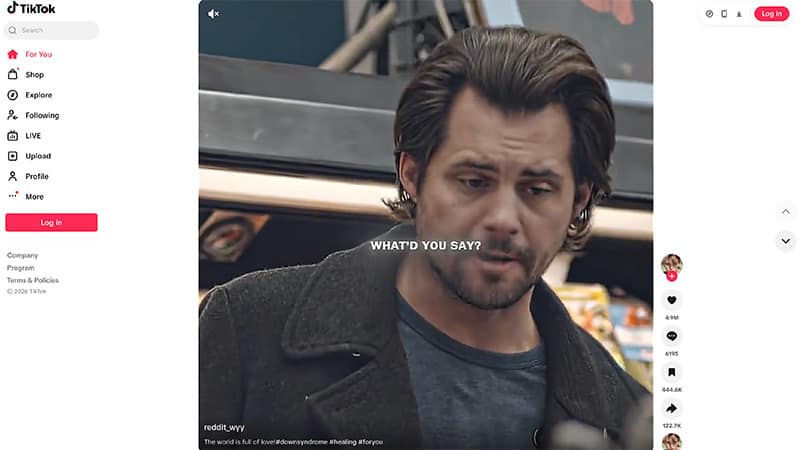
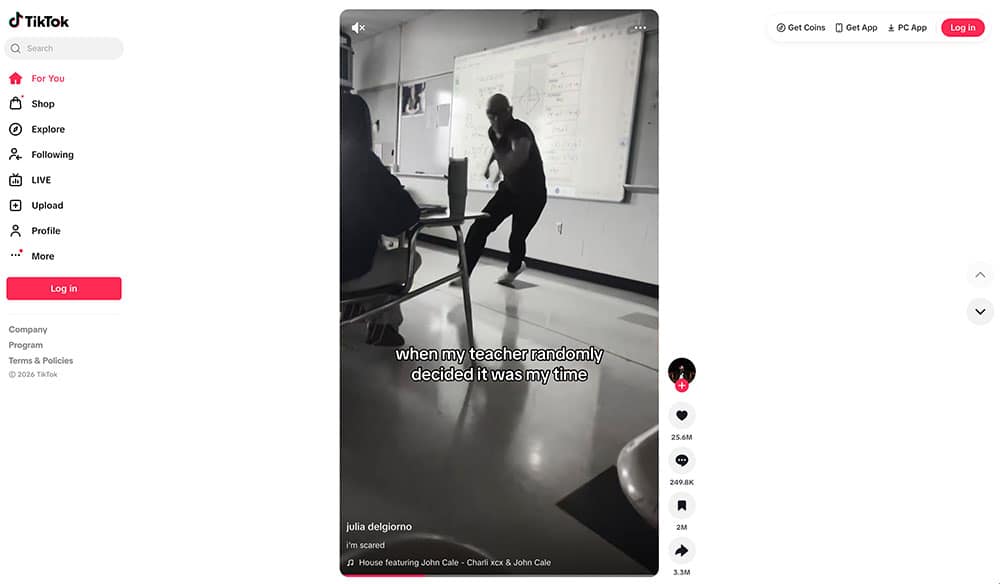
[00:33:59] Bonni: This is the time initiative where we each get to share our recommendations. I actually changed mine, Laura. [laughs] I ended up joining the– I’m a lurker. I’ve never posted anything there, but there’s this video service called TikTok and I have just come across a couple of comedians that I will link to in the show notes because of course, since I changed in the middle of our conversation, I can’t remember either of their names, but anyway, one of them is a guy who– You started talking about sharing what the pandemic has been like for us. The funniest one that I’ve seen around this is just he looks through his entire history of like what it was like in the beginning.
You sort of joked about that. This hasn’t been a vacation for our students. He’s in the beginning like, “Whoa, you mean I don’t have to go to work.” He’s like, “Oh, woo.” Then over the time of the video– They’re not that long. The whole thing about TikTok is they’re short videos. His hair just goes from being so meticulously groomed and he’s a handsome guy and then all of a sudden at the end, he’s completely just shoveled and he does start making reference to some of the conspiracy theories that have come up around the pandemic as well. They are very racially, inflammatory conspiracy theories that I think we both have to fight against, but also occasionally need to laugh at it.
They’re absurdities. It’s really one worth watching. I’m going to post a link to that and the second one of his, that I’ll link to as well, which has nothing to do with anything we were just talking about, but everything to do with when you go to those websites and I don’t even know if I’m pronouncing this word right, CAPTCHA, I think. It’s the thing that says that you’re actually a real person. First of all, I cannot, when it’s like, “Click on the things that have street signs,” and I’m like, “I can’t.”
[00:35:51] Laura: I know, why do they make it so hard?I know, I feel the same way.
[00:35:55] Bonni: I fail more than half the times on that.
[laughter]
Anyway, he has a little comedic bit where it’s like click on this to prove you’re not a robot and he clicks on it and he’s actually a robot. It just tickles my funny bone to no end. The second TikTok comedian that I want to recommend is all over the news. People probably have already heard of her, but if you haven’t stop everything right now, her name is Sarah Cooper. She has been lip syncing some of the things that are happening around the pandemic. Most of her lip syncs are around Trump and things that he says, although she does other people as well.
She plays all the different characters that show up in these different clips and she is absolutely a hoot and now I’m just convinced that that’s all I want to hear. It’s is just from her. I don’t want to hear directly from the source. I just want to hear from her. She is an absolute treat. A wonderful, wonderful thing. I did want to mention something. I held off from joining TikTok forever in a day because I did not need another social network. Two things, one is, it is possible to just join it and be like me and never contribute anything to it.
There’s nothing wrong with that, but secondarily, if you do get a link, like the ones I’ll post in the show notes, so you don’t have to belong to it. You could just click that link and go watch the video and never even joined the service, which is also a wonderful way to take in the video. I’ll post some of my favorites of hers on the recommendations for today’s episode and Laura, I get to pass it over to you for yours.
[00:37:22] Laura: Well, I can’t wait to see those, first of all. I’m a big TikTok fan too, but only recently. What I love are the cooking shows on TikTok.
[00:37:31] Bonni: I have not seen any.
[00:37:32] Laura: Oh my gosh.
[00:37:33] Bonni: I haven’t seen any.
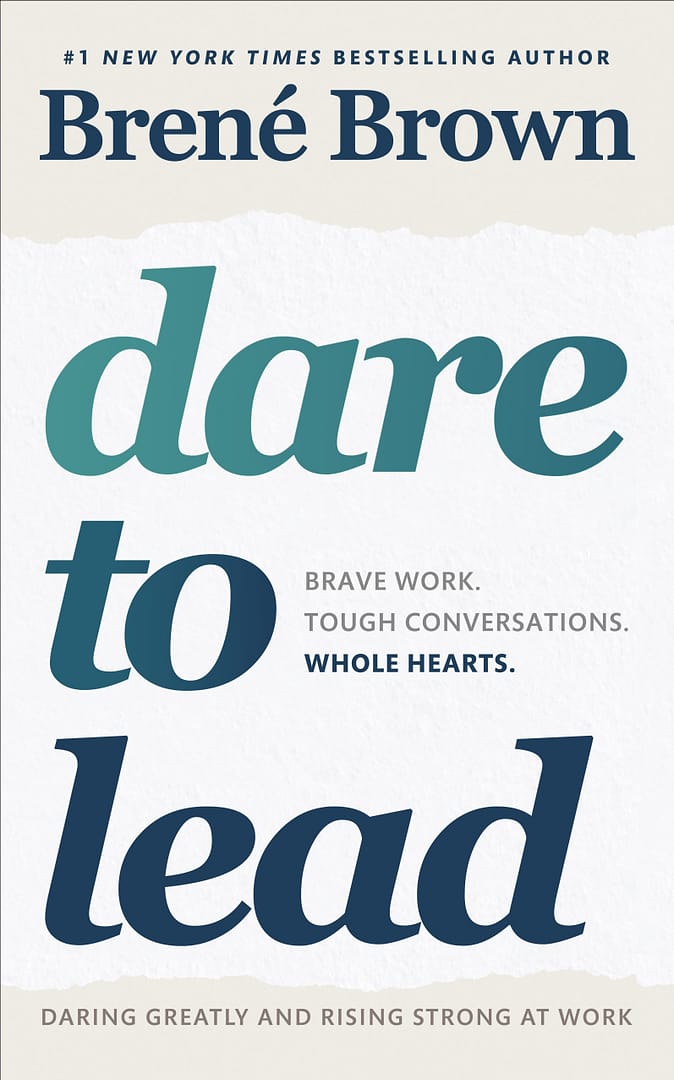
[00:37:34] Laura: I’m addicted to them. I don’t know what it is. I don’t know what it is, but you feel like you’ve eaten a meal. It’s just great that wasn’t what my recommendation is going to be. My recommendation was going to be a book that many you probably have heard of, but keeps coming to mind to me during this time and it’s Brené Brown’s Dare to Lead.
As I’m leading a team, when I’m thinking about what faculty can do to support students, what comes to mind for me in both cases over and over again is Brené’s model of just courageous, vulnerable leadership. Not being afraid to address the questions and the elephants in the room, making space for those conversations, leaning into hard conversations and not being afraid to rumble, as she says.
Instead of shutting down or armoring up, come to conversations with curiosity, ask questions. That’s been such a key for me to try to listen more rather than speak or spar during conversations, but to turn it around and ask a question has been a total game changer and maintaining a tone that allows two people or more to have a really difficult, challenging conversation in a productive way.
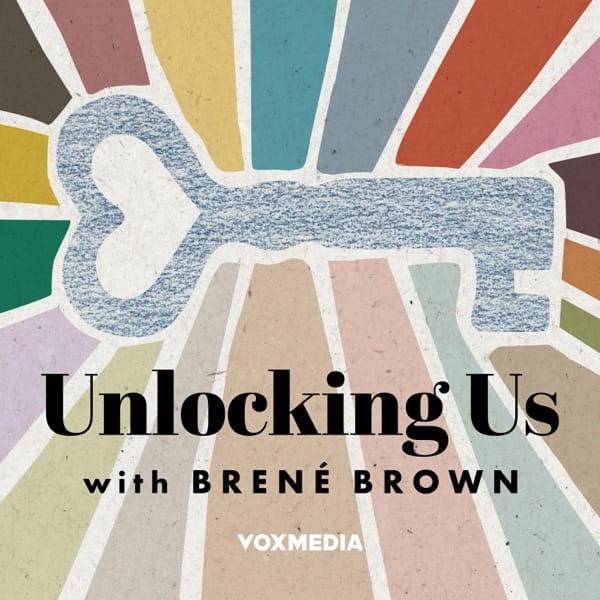
It also talks a lot about valuing soft skills and talk so much about young people and how they want to see those skills model among their leaders. To me, it’s just a book that has been around for a while, but it’s just so powerful and needed right now. She also has an amazing podcast out called Unlocking Us, which has been great self-care for me. She has amazing guests. The conversations are very accessible and fun to listen to.
Then the other one I would mention, I just finished watching a Hulu show called Mrs. America and it follows the feminist movement and the history of equal rights amendment. It’s just been really inspiring. It really dives deep into the stories of women who were fighting at that time to see expansion of rights for women. It’s really prompted in me a need to go and read more books about that era and the people involved in it and I just really enjoyed it.
[00:39:43] Bonni: I’ve seen advertisements for it, but scrolling through social media. I never processed any– I had no idea when it was about, it sounds really good.
[00:39:51] Laura: I highly recommend it. It’s great.
[00:39:53] Bonni: That Unlocking Us Podcast, there’s too many podcasts coming out right now. I’m not as interested in the ones with celebrities as I am, even the ones that were just her, I think are some of the best, and there was one on over-functioning and under-functioning that I’ll put in the main show notes for people, that language for me was so important just to see that our responses to stress, I can make the assumption that everyone’s going to respond to stress like I do, and in fact, that is not true.
Having a language to use for this is– and any of our strings when the volume gets turned up too loud becomes our weakness. It’s not like it’s a bad thing where it starts, it’s just when it gets amplified too much that it’s getting in the way of our mental health. I would strongly recommend that people check out that one, but again, I– Celebrities I’m like, “Oh, no, not as interested.”
[00:40:53] Laura: [laughs] Well, yes. She interviews a lot of writers too, which is great to hear them kind of bond over their writing process and all different things. I would have guessed you were a Brené fan.
[00:41:03] Bonni: Oh my gosh, you were talking about the rumbles on the Dare to Lead, and that is– I forgot that also is such a good language to have because if you really want to be able to bring a group of people together, whether it says teacher or whether it says a leader, you’re going to have to rumble.
[00:41:18] Laura: Yes. I would say we read that as a team in Active Minds, and it gave us a whole new lingo to share, to just cut to the chase and have conversations where we can under– Just kind of ground each other with the same vocabulary, and it’s been amazing and life-changing. We also read Seven Habits together too, so I’m a big fan of reading books as a team to get through challenges together.
[00:41:42] Bonni: Oh, I’m so glad to know that, and what a pleasure it has been to be connected with you, and it sounds so corny, but I just feel like I’m talking to an old friend even though we just met. It’s just a delightful conversation, and I’m so looking forward to getting this episode out into the world and for people to be able to learn and I know both of us would be really interested in hearing what people have to say about the recommendations and their experiences too, so please, people get in touch.
[00:42:06] Laura: I would really be interested in hearing what folks think and say about these recommendations. Bonni, it’s been great speaking with you too, and I appreciate so much that you allow me to come on to the podcast, and I look forward to seeing your TikTok.
[laughter]
[00:42:19] Bonni: Great.
[music]
[00:42:23] Bonni: Thanks once again to Laura Horne for joining me for today’s episode of Teaching in Higher Ed. Thanks for these great recommendations on how we can all contribute to greater mental health on the college campuses, including ourselves, normalizing the need for help, seeking behaviors, actively listening with validate, appreciate and refer, embed our courses with well-being practices and for ourselves, practice self-care and seek resources when needed.
I hope people will go over and check out the show notes for this episode. They’ll be on teachinginhighered.com as well as within your podcast player. If you’re listening via a podcast player, you can go over and access the report and the other resources that were mentioned and check out those recommendations as well. Thanks so much for listening and I’ll see you next time on Teaching in Higher Ed.
[music]
[00:43:18] [END OF AUDIO]
The transcript of this episode has been made possible through a financial contribution by the Association of College and University Educators (ACUE). ACUE is on a mission to ensure student success through quality instruction. In partnership with institutions of higher education nationwide, ACUE supports and credentials faculty members in the use of evidence-based teaching practices that drive student engagement, retention, and learning.
Teaching in Higher Ed transcripts are created using a combination of an automated transcription service and human beings. This text likely will not represent the precise, word-for-word conversation that was had. The accuracy of the transcripts will vary. The authoritative record of the Teaching in Higher Ed podcasts is contained in the audio file.