Follow the Teaching in Higher Ed Podcast
About this Episode
Viviana Pezzullo shares about theory versus practice in pedagogy on episode 315 of the Teaching in Higher Ed podcast.
Sometimes for students it may not be comfortable to share videos, but I think it is important for the professor to do it.
Viviana Pezzullo
On episode 315 of Teaching in Higher Ed
Voices on this Episode


Show Notes + Resources
Recommendations from this Episode
Resource
Agenda

Resource
Notion

Article
How I’m Spending My Pandemic Summer Vacation by Sarah Rose Cavanagh
Book
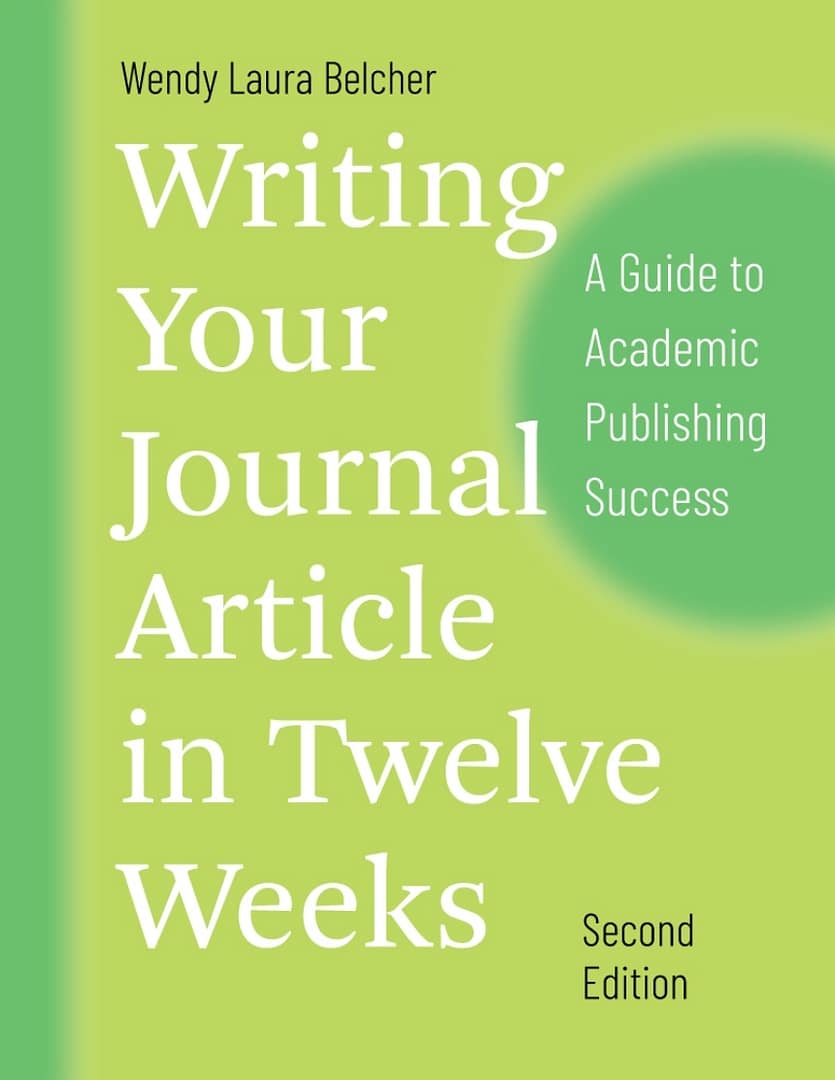
Writing Your Journal Article in 12 Weeks by Wendy Belcher
Transcript
[00:00:00] Bonni Stachowiak: Today on episode number 315 of the Teaching in Higher Ed Podcast,Viviana Pezzullo joins me to discuss theory versus practice.
[00:00:12] Production Credit: Produced by Innovate Learning, maximizing human potential.
[music]
[00:00:21] Bonni: Hello, and welcome to this episode of Teaching in Higher Ed. I’m Bonni Stachowiak. This is the space where we explore the art and science of being more effective at facilitating learning. We also share ways to improve our productivity approaches so we can have more peace in our lives and be even more present for our students.
[music]
[00:00:49] Bonni: Viviana Pezzullo is an ACUE-credentialed Graduate Teaching Assistant in the Department of Languages, Linguistics, and Comparative Literature, and a PhD Candidate in Comparative Studies at Florida Atlantic University. She grew up in Italy, studied in France and worked in Poland. Her journey continued to Florida to pursue her PhD in comparative studies. She picked FAU for its focus on preparing graduate assistants for teaching. Viviana, welcome to Teaching in Higher Ed.
[00:01:21] Viviana Pezzullo: Thank you, Bonni. It’s a pleasure to be here with you today.
[00:01:24] Bonni: I know we just got to hear a little bit about your background, but I would love to have you dive in more. Tell us about the various places that you’ve had an opportunity to teach in your career.
[00:01:37] Viviana: Okay. As you said already, I hold a BA and an MA from the University of Naples in Italy. Then I also studied in France as part of my Master’s Degree at the École Normale. I was ready from my very first year of my undergrad, I was able to see and experience different types of learning techniques in different countries. Then after I graduated for my Master, I moved to Poland and I taught Italian Language and Culture.
I also was able to experience how was teaching in a different country, from what I originally studied. I can see differences among the France, Italy, and Poland, but I believe that the main difference is between Europe. We can group all these countries as Europe and the United States. For me, it was such a big change when I moved here in 2016, to see how actually people in structure were teaching overseas as compared to Europe and Italy.
[00:02:42] Bonni: Talk about that big, big distinction that you saw between the countries in Europe where you taught and or student and the United States.
[00:02:51] Viviana: In Italy, for example, is more focused around oral presentations. We read and we study a lot, and then we go and have this presentation with the professors during the day of the exam, while again, in the United States, it’s more focused around certain papers or projects. I think it really gives you the chance to experience what you studied in context.
This is already in terms of studying and preparing, but also in terms of teaching methodology, because even when you want to get credentials in Italy, for example, you have to take different classes in pedagogy, for example, language acquisition if you want to teach knowing the discipline, but you rarely get the chance to go in the classroom and implement your own techniques.
In the United States on the other hand, for me, and this was shocking for me because when I moved, I start teaching the week after I arrive. For me was shocking because again, I feel I wasn’t prepared, I wasn’t ready. I had actually to challenge myself and to go in the classroom and actually do all those things I read them about, but do it in real life. It was a very interesting experience.
[00:04:11] Bonni: Certainly, I’ve heard from many people in the United States, but this tends to sadly be across the board is just a lack of an emphasis in the vast majority of PhD programs, doctoral degrees on the aspect of our roles as professors that involves teaching. Did you find that to be the case for you as well, not always having the teaching on teaching and more of the emphasis on your discipline?
[00:04:39] Viviana: This is a very good question. I can talk from my own experience. I have to say that when I arrived, I told you that I started teaching right away, but at the same time, I was also taking a mandatory class on Second Language Acquisition. It wasn’t called like that, but it was, again, focused on different methodologies, different ways we can actually help our students succeed and help students learn a foreign language.
It was theoretical, but I was also putting all this theory into practice because I was actually teaching the class. This helped me very much because not only I was able to access different resources and talk to my professor, but I also had a group of other fellow PhD or MA students who are teaching at the same time different languages, Spanish, Italian, French.
We had the chance to talk to each other, tell each other stories about what was happening in the class, what was working, what wasn’t working. For me, it was a good way to start the program with this kind of experience. Then I was lucky enough to actually attend the ACUE course. This gave me the same vibe because I was reading and I was watching videos about different activities and methodologies and pedagogy, but at the same time, ACUE was asking me to implement these techniques.
I was able to do the two of them at the time while I was talking to the other people in my cohort because we had FAU two cohorts, one for faculty and one for TAs. I actually had the chance to talk to my other fellow graduate teaching assistants and talk about my experience, and how I could ameliorate some techniques and what was working for them, especially because we were all coming from different disciplines. It was interesting to see how the same technique, for example, maybe applied in different fields.
In my experience, I actually had this kind of training because of my home institution and because of ACUE. Talking to other people, I know that some other institutions don’t focus too much on that. They actually prefer training PhD students more in the discipline and more like in research, but it’s such a shame because teaching is such a big component of our job and what we do.
[00:07:15] Bonni: When you think back to your first year of teaching, is there maybe one big mistake that you were making at the time that now, you’re able to carry forward with you as a treasure because you got a little bit more figured out?
[00:07:30] Viviana: Yes, absolutely. First year, as I said a little bit before when I was talking about my background in Italy, I think in Italy we are very used to look up professors. We have to follow their footprints and we have to do things exactly the way they do it. I was trying to replicate the same mindset also when I moved here. After one year, I actually realized that I had so much more freedom than I had in my own country to experiment.
I actually realized, okay, I had done IOR at the time. I was always checking with her like, “Is it okay if I’m doing this? Is it okay?” At some point, she told me like, “Don’t worry. You can implement your own techniques. Feel free to experiment, to experience all these amazing activities that you are designing for the students.” For me, it was a shock because I was always used to have somebody who told me what to do. Now, I was in charge for myself, and I felt much empowered.
This is why I think that usually, I know that it’s not the case for everybody because sometimes TAs have to teach, co-teach, or help, for example, professors when they are not full in charge of the class. I think it’s time, especially right now when this pandemic, I think it’s important that TAs are more aware of their contribution to teaching.
It’s not always the case that I think they need to be more aware of what they do, why they do it, and try to really develop their own teaching style. This is something that probably structures or universities do not encourage enough, graduate teaching assistants should have to develop their own teaching style.
[00:09:29] Bonni: I think that is definitely true for graduate teaching assistants. I think it’s true for all of us that teach to be constantly asking ourselves those questions of what is it that we’re doing, being able to name those things, and reflect on them and then to be asking that why question continually. You brought up the pandemic, and those of us in the profession of faculty development wanted to avoid for the most part calling this online learning. What we were doing was, as both the art and a science that has been done for some time and what we were seeing happening wasn’t quite that. The term has been used a lot is emergency remote teaching, and tell me about your experience then with early 2020 and what happened.
[00:10:18] Viviana: Okay. In the spring, I was teaching two classes. I was teaching actually more than two, but we are going to get there. I was teaching an online class already, it was already online and it stays online. It was beginner Italian and I was also teaching a face-to-face class intro To Word Lit. I actually was lucky because this happened during the week of spring break. I actually had that week to re-organize my course, so this was good timing because I actually had that week to think of a plan B.
Yes, the main problem with that class, it was, I build it very much around interaction and participation. Participation was such a big part of that class. I needed to try to find a way to convey the same interaction and participation, communication being fully online environment. This wasn’t easy, especially because I had a very good class, a very big group. They were very close to each other, and they really liked talking through the text they were reading.
It was such a bummer for them when we were not able to see them in person anymore. I tried to, for example, to rely a lot on videos. I use Flipgrid and I turn many of the presentation and assignments on Flipgrid so that they could actually talk and look at each other’s video and then respond to these videos. For example, I told them to finish their responses, always with a question. This will always leads to having a conversation with the peers. Actually, I think this helped to maintain the same energy because it was a very energetic class.
Also, for example, on my side, also the communication between the teacher and the students, needs to be more or needed to be more personal. For example, I recorded video announcements. I had two weekly announcements in which I will film myself explaining, not only coming deadlines, but also, for example, some of the material that they were struggling with, or responding to Frequently Asked Questions. Again, I found it very helpful to show my face and they were actually able to see me and comment on it, and this way like maintain some of the engagement.
[00:12:55] Bonni: Yes, I’ve seen that some research around whether or not us sharing our faces is going to change the learning outcomes. What it seems to say is that, it’s not necessarily tied to learning directly but that it does tie to that sense of approachability. For any of us, when we’re learning for us to be vulnerable, to have those kinds of failures, try again, having a teacher someone who’s our professor who is approachable really can make a difference for us to have the persistence to be able to overcome those challenges.
[00:13:35] Viviana: You’re right. I mean, sometimes for students it may not be comfortable to share ideas, but I think it’s important for the professor to it because you have to put your face on it. I remember talking with colleagues about this issue like, for example, can we use videos that somebody else recorded in our own class? I think it’s important that students know who the professor is.
It’s important, at least, for us to show who we are and what’s our message to the class. We can re-adjust in my case, at least the videos worked fine with that class in particular but I do see the issue of sharing videos in other context. I think the video, it’s just a way for us to build a community that is outside of the classroom. This is one of the, I think one of the main concerns that we have to face in this new phase of education.
We need to find a new way to build a community because community is so important for teaching, especially foreign languages because we value so much interaction and communication and in order to do this we need to have a very strong community of students. For example, another way one can do this is to break down, to split larger classes for example into smaller groups.
They don’t necessarily have to share their faces but they can do, for example, I don’t know an Instagram of the class and they can do takeovers. Then they can share, for example, different pictures about the culture of– They can choose up the words or they can choose some aspects of the culture they’re studying and they can do take overs, and they can comment the pictures in the videos.
You create an engagement or, for example, you can create a buddy system. You pair students at the beginning of the semester so they have a person they can always rely too and they can practice with. I know that probably sounds silly to pair students, we are not a dating app. I think it’s important because when they’re in the class they bond because they see each other.
They sit next to each other in class, so they have the chance to develop real friendships sometimes or relationships. When they’re online, there is an extra step that needs to be taken. Maybe if we actually do it, we do the actual first step we can bring people together and this may also help them practice more and feel more comfortable practicing the foreign language that sometimes can be intimidating.
[00:16:29] Bonni: It sounds like both you and I were in the fortunate situation where we already had some competence at teaching online, and that in our in person classes just kind of had to turn up the volume a little bit more with the online portions. What advice would you have for people who are just getting started with it? They’ve done face to face and this trying to build community online is entirely new to them and the technology is really challenging for them too, so they don’t want to take on too many tools or that kind of thing. What’s one piece of advice you would have for them?
[00:17:01] Viviana: I don’t think we need complicated external tools. We can simply use the tools already built in our Canvas. If we keep them clean, organized and we actually listen to our students and we try to be flexible and accommodate their needs, I think this is going to be an effective course. Especially because in terms of accessibility, not every students may be actually able to participate in activities if they actually are also on external complicated websites that require, for example, require them to be on a laptop.
Sometimes it’s much better to use I don’t know the Google suite, for example, that works very nicely on the mobile, or maybe just another video. We can just do recording of our voice, talking about the topic, for example, for today or explaining some grammar rule in the case of language teaching. These may be even more effective because they can listen to it. They don’t even have to watch a full video. Keeping it simple does not necessarily mean that we are under-doing, but actually maybe a way to accommodate many more students.
[00:18:21] Bonni: When you gave the suggestion earlier on for your students using Flipgrid to ask a question at the end of their post, that’s the kind of thing that is a practical example of what you’re talking about. People think they have to learn every single tool and every single feature of those tools, but sometimes having a really, really small set of them. Then thinking really creatively about how to best leverage them to create the kind of engagement and the kind of pedagogy that you want to have in your classes can be so important.
I so appreciate your advice to listen to our students. That’s one of the things that I’m struggling with a little bit this summer because I’m not seeing as many of my students, I’m not teaching a summer school class, for example. Then just trying to think through about the fall and do the best that I know how to do. I know that I’m not alone in that. I also want to remember that a lot of the practice and the mistakes that we’ve made in the past, we’re going to be able to use no matter what happens come fall.
This is the point in the show where we each get to give our recommendations. I have a couple of things to share. First off, Sarah Rose Cavanagh shared in The Chronicle of Higher Education, an article called How I’m Spending My Pandemic Summer Vacation. It reminded me a little bit of a syllabus and she’s kind of committed to lifelong learning. She’s looking at the kinds of things that she wants to do around the civil rights uprising that is happening in our country and to equip herself in those issues. She’s looking at her pedagogy and she’s looking at all kinds of things that she wants to do over the summer. Lots of great resources. I would highly encourage people to go check out that article, perhaps create a syllabus for themselves for the remainder of the summer when you’re listening to this, and just for us all to be doing that important work of equipping ourselves.
Then the second thing I’d like to recommend is it’s both an app, but it’s less about the app, and it’s more about the practice. That is I was finding myself, this is a bit of an understatement, “getting quite scattered”. I’m chuckling because I am someone who wrote a book on productivity, and I tend to have some pretty good organizational systems going. That all didn’t happen for a while. It was difficult to pull out of.
For me, I found an app that actually I had used a while back, but just started using it again, it’s called Agenda. It is for the Mac; although, if you’re on a PC, then you could also do the same thing. I’m about to talk about with Evernote, just as one example. The idea here is one app for notes that you take having to do with meetings. I’m in a ton of meetings right now, I’m on our COVID-19 leadership team, and I’m also lead our faculty development efforts.
There is a lot going on, and I’m finding just having that one place if it’s a meeting and then it connects with my calendar, so it pulls in who was at that meeting, what was the name of it. Then I can just type in the notes. There’s also a way of indicating an action item that needs to take place as well, and then I can copy that and put it over into my task manager.
My recommendation is for the app Agenda, if you’re on a Mac. If you are not, please do not fear, use whatever app it is that you use for taking notes, but just discipline yourself. That when that meeting starts, you’re going to the same place and using the same kinds of naming convention, so that you can more easily follow up and make sure that you’re tagging those action items as well. Those are my recommendations that I’m going to pass it over to you for yours.
[00:21:55] Viviana: Actually, it’s very interesting what you said about the app because I wasn’t about to suggest an app, but since you mentioned it, you can also use Notion for the same purpose. This works on the PC. For the same reason I’m using for my meeting notes, I’m using Notion and works on a PC just fine. Maybe an option for the PC users. Another recommendation that I have actually ties to what you say about productivity.
It seems to be odd because of what I said about giving importance to teaching, and now especially for graduate teaching assistants to focus on teaching and not so much on research, but not to make it your only priority. My recommendation is the book by Wendy Laura Belcher, Writing Your Journal Article in 12 Weeks. I know it’s very famous, people already know it probably.
I found it especially unfolding during this period for me, because even though you are not writing an article, it gives you a routine. It gives achievable goals that you can set for yourself and helps you in a way creating these habits of writing and working, even though everything around you may be all over the place. Maybe you’re no longer going to the office, no longer going to go to the department and see your colleagues, but creating your routine just for yourself, can help you feel more productive and help you feel more you’re on track.
She recommends 400 per day, and I’m actually following her challenge. It’s working very well. This does not necessarily have to be words for an article, even though this is the main purpose of the book. Again, this may be a small challenge for you to live every day as you have something to give.
[00:23:54] Bonni: That’s wonderful. I love the way that you express that too because there are some days when we just need to forgive ourselves and realize that just taking a shower, getting out of bed, some of those little things that we can do to nourish ourselves are important. Then on the days when we have anything left, how wonderful to have a structure that can carry us through when our brains are having a hard time doing that for us like they might normally.
[00:24:18] Viviana: It doesn’t have to be complicated or impossible to achieve. If it’s small, like 400 words is not much, but if you can focus on that, you feel better at the end of the day. At least I do because I have my dissertation to write. When summer started, I felt like, “How am I going to be able to write a whole dissertation in the middle of all of this?” The answer is thinking like baby steps 400 words at a time, and I’m going.
[00:24:50] Bonni: Viviana, it’s so wonderful to have been introduced to you through ACUE. I’m just so glad that we got to have today’s conversation and we got to learn from you. Thanks so much for your time.
[00:25:00] Viviana: Thank you so much for having me, Bonni. It was such a pleasure. I love your podcast, I’m a big fan.
[00:25:05] Bonni: Oh, thank you. I didn’t even know that until just now. I’m glad to have you as part of the community now it’s official.
[music]
Thanks once again, to Viviana for joining me for today’s episode of Teaching In Higher Ed. If you would like to get the show notes for today’s episode and the links to those recommendations, head on over to teachinginhighered.com/315. It’s Episode 315.
I just want to thank you for all the work that you’re doing to listen to podcasts like this, to read books, to take that theory, put it into practice in your teaching and continually working to serve our students better. It is an honour to be doing all of this in community with you. I’m more grateful for this community than ever. Thanks so much for listening, and I’ll see you next time on Teaching in Higher Ed.
[music]
[00:26:10] [END OF AUDIO]
The transcript of this episode has been made possible through a financial contribution by the Association of College and University Educators (ACUE). ACUE is on a mission to ensure student success through quality instruction. In partnership with institutions of higher education nationwide, ACUE supports and credentials faculty members in the use of evidence-based teaching practices that drive student engagement, retention, and learning.
Teaching in Higher Ed transcripts are created using a combination of an automated transcription service and human beings. This text likely will not represent the precise, word-for-word conversation that was had. The accuracy of the transcripts will vary. The authoritative record of the Teaching in Higher Ed podcasts is contained in the audio file.