Follow the Teaching in Higher Ed Podcast
About this Episode
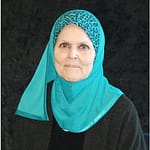
Dale Hoffman shares about a commitment to change on episode 307 of the Teaching in Higher Ed podcast.
Students need to like you before they can accept the idea that their education is relevant to you.
Dale Hoffman
On episode 307 of Teaching in Higher Ed
Voices on this Episode

Show Notes + Resources
- Experienced educator revives her classroom to meet the needs of 21st century students
- Dr. Hoffman’s Speech at Folsom Lake College ACUE Pinning Ceremony
- Folsom Lake College Program Facilitator Caleb Fowler on Partnering and Advocating for a Stronger Workforce: Remarks from the CCCAOE Spring Conference 2019
- Commitment to Change blog on ACUE’s site
- Little House on the Prarie
- 7 Habits of Highly Effective People*
- Her grandpa did the Lindberg trial
- Brené Brown’s Podcast: Unlocking Us
- Brené on Anxiety, Calm + Over/Under-Functioning
Recommendations from this Episode


Transcript
[00:00:00] Bonni Stachowiak: Today on episode number 307 of the Teaching in Higher Ed Podcast, Dr. Dale Hoffman and I discuss her Commitment to Change.
[music]
[00:00:12] Production Credit: Produced by Innovate Learning, maximizing human potential.
[00:00:22] Bonni: Hello and welcome to this episode of Teaching in Higher Ed. I’m Bonni Stachowiak and this is the space where we explore the art and science of being more effective at facilitating learning. We also share ways to improve our personal productivity approaches so we can have more peace in our lives and be even more present for our students.
Today’s guest was introduced to me through my partnership with the Association of College and University Educators or ACUE. ACUE believes that all students deserve an extraordinary education and that faculty members play a critical role in their success. This year I’m working with ACUE to showcase and celebrate teaching and learning stories as told by the practitioners who experienced them. In this episode, we’ll hear the story of Dr. Dale Hoffman, a veteran adjunct faculty member, about how she has embraced change during her nearly four decade career as an educator.
As you will no doubt hear in this interview, Dale’s passion is education. She describes how she loved teaching since she was a child and how she discovered different aspects of teaching all the way to completing her credential, discovering an interest in adult education and eventually finishing her doctorate at UC Davis when she was hired to administer the education programs in a private women’s prison and has taught the inmates a variety of college classes through Yuba college while continuing to teach for the Los Rios community colleges.
Although her PhD is in sociology, she’s gradually transitioned to become an anthropology instructor. Biological anthropology is her favorite. For the last 20 years she’s worked as a teacher and educational administrator for the California Department of Corrections and Rehabilitation, bringing community college opportunities to our high security inmate population. In addition to her “day job”, she currently teaches for American River, Folsom Lake and Sierra colleges and she says we are living the adventure of adapting our teaching to the current health crisis. Dale, welcome to Teaching in Higher Ed.
[00:02:45] Dale Hoffman: Thank you.
[00:02:46] Bonni: I’ve been looking forward to this conversation since I first heard about you. You have been an educator for nearly 40 years. Let’s start out with just what you remember about the beginnings of becoming a teacher.
[00:03:01] Dale: Do you want me to go to the very, very beginning or the beginning of my professional teaching career?
[00:03:07] Bonni: How about the very beginning?
[00:03:09] Dale: The very beginning is my memory of my mother telling me that she knew that I would become a teacher because when I was three I had all the kids in the neighborhood sitting on the curb in a line teaching them how to tie their shoes in a bow. That was my first memory. I don’t think I really thought much about becoming a teacher as I was growing up, but I had several experiences that in looking back, I can see shaped me. One of the most important things was when I was in seventh grade and I was in algebra class. The teacher, whom I really didn’t like, all of a sudden stopped the class and asked me to come up and teach the concept that he was trying to get across that a lot of the students weren’t understanding. I was a really shy student and I got up and I did it and people understood what I was saying.
That was really a positive experience for me and got me to think about teaching a little bit. Then when I was in college, I went to Cal Poly San Luis Obispo and I majored in social sciences, really enjoyed it, had no idea what I wanted to do. Then when I graduated, I kind of fell into the elementary teaching program, which was outstanding. Then I started really beginning to see myself as a teacher and enjoying it. I did student teaching in kindergarten and fourth grade. It was a fabulous experience. Then I discovered after I graduated that there really weren’t any jobs in that area because there were so many women supporting their husbands at the university that there were few jobs available but I did have the opportunity to start teaching at a community college, Cuesta College, and then at Cal Poly itself and I was really hooked on adult teaching.
[00:05:04] Bonni: What do you remember about those early days then of college teaching? What were some of maybe what you would consider to be early successes and I’d also love if you’d share some early failures?
[00:05:16] Dale: The early successes were that I learned pretty quickly the importance of using a variety of different approaches to teaching students. I was able to teach a class on art for people preparing to be preschool teachers, which had a lot of hands on activities. Seeing the fun that the students had in doing the activities, I began to understand how important it was to mix lecture with activities, with hands on events for the students. That was really, really great.
One of the challenges was that I really didn’t feel comfortable in the lecture mode and, like a lot of community college teachers, as I started getting more experience, I had to drive from school to school and so what I would do is record my lectures, listen to them while I was driving in the car and practice them. I think it took me about five years to get comfortable talking in front of an audience of people. That was the most painful part of developing my skills as a teacher.
Then another really important thing that I learned that I should have mentioned earlier was the importance of becoming interactive with the students rather than just giving them a very well-crafted address about the topic. I quickly learned that asking them questions and having them give me feedback and creating that interactive atmosphere really enlivened the class for everybody and kept people on task.
[00:06:48] Bonni: I was going to ask if you– You’d spoke about learning to become more comfortable giving those public addresses, but I wondered if you then had to unlearn that almost, to become uncomfortable with a one way form of communication.
[00:07:03] Dale: I think after I mastered the one way form of communication, it became easier for me to shift that over to an interactive communication. When I was at Cal Poly, there was a teacher there that was very popular. I sat in a couple of times on his class and I noticed that he had the students sitting in a circle and it was just a conversation. I really envied his skill at keeping the students focused on the topic that they were talking about and making that class exciting for everyone.
That became my goal in terms of that shift. I didn’t feel that it was difficult to give up the lecture. What I found was important was for me to develop the skill to be smooth, that when I fielded those questions, making sure that we guided them to the topic that was at hand and enhance the conversation and then including as many people in that conversation as possible, particularly the students that were a little bit more shy and less likely to shoot their hand up and demand to be heard on a particular issue.
[00:08:18] Bonni: It’s so wonderful hearing about these early experiences of yours and I know that we’re going to explore them a lot more, but before we do, I know that we share a book in common that has meant a lot to us. Would you share how The 7 Habits of Highly Effective People has affected you? I know there’s a specific story where it really stood out to you in your life and your career.
[00:08:42] Dale: The 7 Habits of Highly Effective People is something that I became aware of really early in my career and I’ve read it a number of times. I’ve become a trainer. I’ve used it to teach my staff. At the present, I have about 36 employees and it helped me really understand the importance of the difference between being efficient and being effective and that also supports that interactive approach that isn’t really just all about me and what I’m doing.
It’s also much more importantly about the other person, what they’re perceiving, what’s important to them, how to include them into that conversation, how to create those win-wins, how to be clear about what the goal is. When I was first in the prison, I had an AB1 class, which is adult men that are at the level of kindergarten to the end of third grade. One of the things that I was doing was I was reading to them after lunch because I remembered from my own elementary school period how wonderful that was. We would come in after our lunch recess and just relax, and the teacher would read these wonderful books. I remember one of them was Little House on the Prairie. There were just a number of children’s classics that were read to us. I was reading several books that I thought would be of interest to them. One of the students raised his hand and he said, “Well, why don’t you give us something that would be useful?” That was my hint and I really took that up with a vengeance. One of the books that I had us read was 7 Habits of Highly Effective People. It took us almost a year to get through the book, and we went habit by habit.
That first habit, which is, basically, take responsibility for everything in your life, was really a difficult sell to them. Because, of course, one of the things that inmates are skilled in is making sure that everyone but them is responsible for the problems that they’re experiencing in their life. I think it was a great experience for the students, but I think it was an even greater experience for me because it really helped me go more in-depth and really take a look at how those habits could be applied in real-life situations, in teaching, as well as in life.
[00:11:15] Bonni: I’d love to circle back to your use of the word useful. To me, I think some of what that was was wanting it to be relevant. I take that very seriously. That is one of the greatest challenges and also one of the greatest opportunities as an educator is to seek to find things that will be relevant. One of the things I find myself wrestling with is that I want the vast majority of it to be relevant and useful now.
Yet, I do come across some things that I find that seems almost impossible to do that I need to try to cultivate this trust with the learners that it actually will be relevant to them in the future. Do you ever feel that tension between trying to make it relevant now but also knowing that it’s absolutely going to be relevant more in the future? I don’t know if that’s anything you’ve ever wrestled with in your mind.
[00:12:09] Dale: As a matter of fact, [chuckles] that is ever so true. One of the things that I’m teaching now is physical anthropology lab. This is all about the evolution of humans and how we got from where we came from to where we are now. The first half of that lab is all about the basics of science and things about how the cell divides and how DNA works. Then we look at all kinds of fossils, and we study about primates. Yes, that is a huge issue in that class. I think trust is important.
One of the things that I learned, I should say from hard experience, is that students need to like you before they can accept the idea that their education is relevant to you. That’s something that I really try to work on, is to develop a personal relationship with each student so that we have some sort of connection. Another thing is that students are concerned, of course, about their grades and so I try to provide multiple and unending opportunities for students to earn the grade they’d like to have in the class and put that responsibility back on them.
I also have things that I think in terms of the subject matter and my signing-off on a grade, telling the next instructor that they have mastered this subject area that I’ve taught, that I have identified those things that are really relevant in that field and make sure that students have a basic understanding of that. Working all that together is always a challenge and something that I’m constantly thinking about during the class, and also explaining to students, saying that, “Well, this material might not seem like it’s relevant to you. You’re a communications major or a business major, but you just never know when some of this information may come in handy or may provide some opportunities for you to share things at a cocktail party or in a business situation or connect to a client that you might otherwise not be able to speak to in these terms.”
[00:14:32] Bonni: You’ve been doing this a long time. Talk a bit now about how your students have changed in those decades.
[00:14:40] Dale: Well, I think that when I first started out, my students were a lot more well behaved, centered toward learning the material, earning the grades, doing what we’d like to see students do in terms of the model we have for education. A much more traditional group of students. It might be because the student body was from a less diverse background, and I’m saying that in terms of mostly socioeconomically but also ethnically.
As time has gone by, our student population has become much more diverse. College education has been more relevant for a much larger audience of people, particularly in community college. Nowadays, it’s really difficult to get a technical or what we would have considered a working-class job without some college education and background. People have to know how to understand chemistry if they’re going to be a janitor, or things that now have become much more technically challenged.
We’ve also reached out to communities that were underserved and brought more people in that may not have the secondary preparation that they really need for college work. The other stream of students that I see coming into college are people that have emotional and mental health challenges. All these different combinations have put, I think, more pressure on teachers to widen their scope of teaching approaches and do a better job at connecting with students who have different needs and who learn in different ways, different modalities.
[00:16:31] Bonni: You described students who are compliant and you used the phrase ‘more well-behaved, more traditional’. From everything I know about you, I can guess, perhaps, that you wouldn’t want to go back to that. Is that a fair assumption, that that wouldn’t be a group you wish you had teaching today because of what today’s students offer?
[00:16:54] Dale: I would say that it was good for me at the beginning because it was less challenging. It was more like the background I grew up in. I went to school because my parents told me to. I worked hard because my parents said I should. I worked hard because my teachers set those goals for me. You’re absolutely right. I would never want to go back to that.
I am a really enthusiastic, passionate, committed educator, and I want everyone to be educated. I want everyone to see themselves as a lifelong learner. I want information and knowledge to be accessible to everyone. I think excluding people from the educational process is a tremendous tragedy, and so, no, I would never want to go back to that kind of a environment.
[00:17:43] Bonni: You shared a bit about teaching in the prison system. I know listeners would love to hear more about the Granite Adult School, how you got started with that, and a little bit more about the programs you run there.
[00:17:56] Dale: Well, when I started with Los Rios, I was interested in working in the prison school because for my doctorate in sociology, one of my areas is criminology. My grandfather introduced the stenotype into the court system. He did the Lindbergh trial. My childhood was filled with stories about high profile criminal cases that he participated in and so I was really interested in crime, not to do it but to study about it.
I was told by the dean at that time that he was very, very sorry, but they only accepted teachers into the prison system who were male. I was a little bit disappointed. About six years later, I took a little timeout for some family issues, and when I came back to apply again to Los Rios to start teaching again, they told me they were really sorry but the only class that they had available was to teach a college class in the prison system. I had my wish come true, although there was a delay.
So I started teaching classes in the prison system. One of the first classes I taught was in the prison where I work now. I was a contract college teacher for Los Rios and for Delta College in the prison system, where I had an exposure to inmates to teach them college classes. This got me more interested in the whole situation of providing education to people who are incarcerated.
I later got a job being in charge of all of the educational programs in a private women’s prison in Live Oak, California, and then I transitioned and applied to Folsom State Prison and became a teacher there and then an administrator, and I’ve continued to work for the prison system for about 25 years. I started out as a college teacher and then became a full time employee. Throughout this process, I saw this less prepared group of those college students that I had been exposed to in the prison system. Many of them were absolutely illiterate, especially my AB1 class, and I became more and more interested in meeting their needs and involving them in education. I often say that it is hard to sharpen a knife while you’re reading a book and completing your homework.
I see education in the prison system as a way to reduce violence, to change behavior, for inmates to set a better example for their family members. Almost all of them have children and care about those children and visit them. Just a way to make our prison system more of a timeout, where people can reevaluate their lives and chart a new course that is more positive for themselves, for society, and for their families.
[00:21:03] Bonni: When we think about big issues in the world, climate change, human trafficking, mass incarceration, for me and I know for many others, it can be so easy to just have our little tiny reptile brains think that’s just too big. There’s nothing I could ever do there. As I’m thinking about you tell your story, it’s very motivational, but I think, “Oh, I couldn’t do that, because I wouldn’t even know where you would begin. How would you do that?” That’s one of the misnomers I see that comes up so much.
Again, I still find my brain doing this pretty regularly, more often than I would like, to think that you knew everything you were doing when you walked in that first day. What advice do you have, perhaps globally, or perhaps specific to those who care about mass incarceration that can make it smaller, smaller such that we might feel like we could have hands to contribute?
[00:21:58] Dale: Well, I think that this is one place where maybe Seven Habits is a really useful tool for taking a look at this. We look at it on a very personal basis. If I’m a victim of a crime, I’m angry about that. I have really negative feelings toward the person that has violated me in whatever way they have. I think that our initial reaction is that we want them to feel some of the pain that we felt and so removing them from society and putting them into a prison feels really good on a personal level.
Then I think that we have to look at the situation on a little bit larger scale. What’s happening to that individual while they’re incarcerated? They have a particular life. Most of these guys who’ve come in here haven’t really had much of an education. Most of them are from the lower levels of society in terms of economic and social opportunities. Many of them have been abused. In fact, that was one of the surprising things I found out working in the women’s prison was that every single female prisoner that I came in contact with had been sexually and physically abused. This just really blew my mind.
We need to ask ourselves is their prison experience just adding to that abuse, that resentment, that feeling of exclusion. They know a lot of the stuff that’s going on outside. They see other people having opportunities and achievements that were never open to them. Then on the larger scale, since we know that about 90% to 95% of all people who are incarcerated are going to leave prison at some time, I think we need to ask ourselves who do we want coming out of prison? Do we want them to be people that have a new attitude, better skills, and opportunity to do achieve something?
Do we want that neighbor to be coming to visit us to case our house to see if they can steal our possessions or victimize our family or do we want them coming over visiting with us and asking us where they can buy the items that they admire in our house. I think that we have conflicting emotions on those different levels about what we want to do. Since I’m at that mid-level where I’m working with people in prison, one of my goals is to promote the idea that we need to make the prison experience a transformational one, one in which people have the opportunity to take a different direction.
They have the opportunity to learn vocational and academic skills that will make it possible for them to make different life choices when they leave the institution. In our particular prison, we have four different vocational opportunities for individuals. We work with three community colleges so that they can complete an AA degree. We’re working to extend that to a four-year degree.
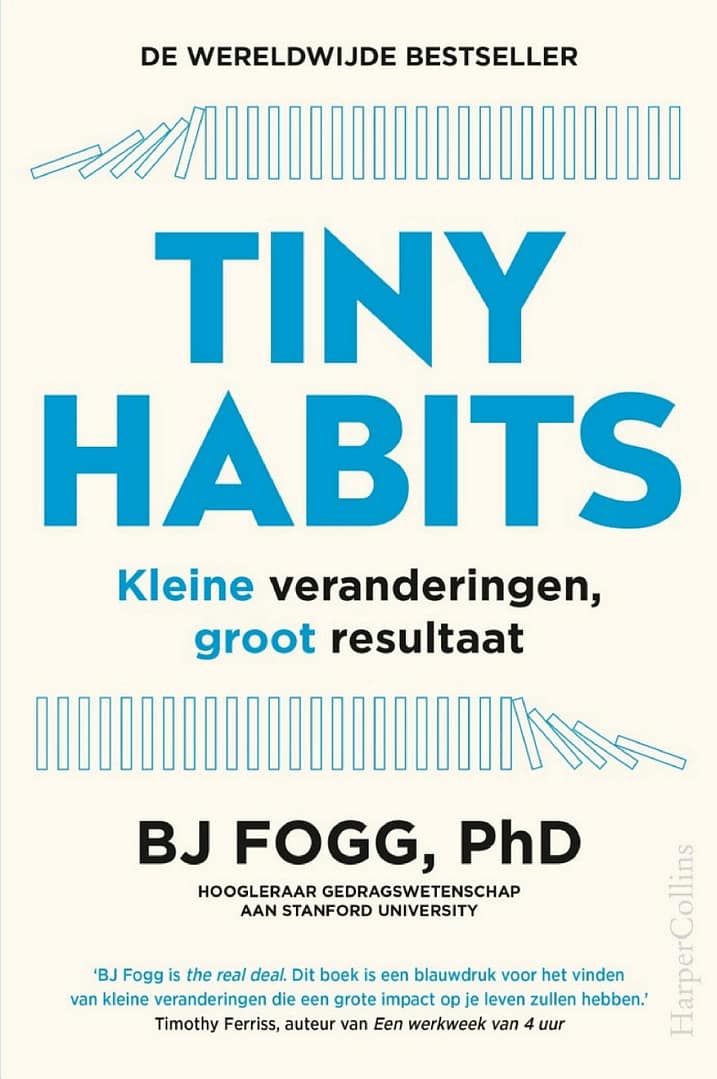
We have lots of different opportunities for recreation, for self-improvement, for self-reflection, and for healing for individuals to work through the issues that brought them to prison and leave with a different mindset. It doesn’t mean that we’re necessarily successful with everyone but providing that opportunity and working for a cultural shift so that all inmates begin to see this as a transitional event in their life is something that has been a commitment for me professionally to achieve. I’m not saying I’m there but this has really motivated me to keep working toward that inch by inch. This is another area where another book, the Tiny Habits I’m going to talk about later, I think weighs in as an important tool to help keep me focused
[00:26:07] Bonni: Before we get to the recommendations segment, I don’t want to miss the opportunity to ask you about more recent changes in your teaching. I know that you never consider yourself done. What are some of the more recent things you’ve been working on and changing in your teaching?
[00:26:22] Dale: Well, I think I mentioned earlier that I want to make a personal connection with each student and I teach a lecture class. One of the things I noticed in my lecture class is that students often are reticent to participate. This is a change that I’ve seen more recently with students is that they’re less willing to share a personal opinion, or to have a personal opinion about academic information. I don’t know if that’s because of some of the emphasis we’ve done on standardized testing or I’m just not sure about what the motivation is, but I’ve noticed that that is an issue.
What often has happened in classes in the past is that one or two students end up dominating the conversation with me. One of the things that I learned in my ACU was the name tents, and that’s really been transformational. In my lecture class, I have every student put up a name tent, make a name tent and put it up and they need to use it in every class until I’ve mastered their name.
This becomes a little interactive game with each of us is to make sure that I’m learning their name so that I can call on them. For the ones that I don’t know their name, I have it readily available to me because they have to write it in large enough letters for me to see it so I can call on them. This has made the conversations in the class much richer and encouraged the shyer students to participate more, but still including those individuals who are more likely to want to talk.
Another thing that I’ve done that’s a change is that I’ve added a rubric to my take-home tests. This is to help students understand how to write those essays that I want them to write where they’re evaluating the material that we’ve discussed in class and weighing in on their opinion, and what I expect in terms of the difference between just repeating what’s in the book, putting that information in their own words, evaluating that information, predicting beyond that information, or including new ideas that they’ve developed based on the information that they’ve read about. The quality of student performance in my lecture classes has really improved and that’s been very gratifying.
[00:28:50] Bonni: You are an inspiring person to me and I know anyone who listens to this episode will be similarly inspired. This is the time in the show where we now get to share our recommendations and I have two that are very much related to one another. They both have to do with quilting. I always have a strong association with quilting because it’s something that my mother has done for many, many, many years. It’s also something that is just comforting to me.
Recently I came across the femedtech Quilt that we’ve talked about previously on the show, the group of feminist educational technologists that have come together on Twitter for some shared leadership. They’re femedtech and they were coming together with a quilt that would have been shared at the Open Educational Resources 2020 conference. Of course, since so many conferences were not able to happen, at least not in the ways they were initially conceived in an in-person format, they still have all these people that sent in their quilts, but now the quilt exists in a digital form, and I’ll be linking to it in the recommendations as always. It’s just such a beautiful tapestry, both literally and figuratively, of all of these people from all over the world and their stories. You can click on the little hotspots that are there on the quilt and learn more about the origins of that particular square, and the stories that it evokes. It’s just a beautiful piece. Then probably even within days of discovering that or I should probably say rediscovering it, I had heard of it before, but I was now just seeing it in its digital form, I came across a tweet by Seren Seeley.
It’s a picture of just beautiful squares full of these vibrant colors and she writes, “This is the most incredible special gift ever. My lab mate Eva’s mother-in-law made a quilt out of my dissertation data, ‘functional connectivity matrix.’ I have no idea what a ‘functional connectivity matrix’ is but it matters not. It’s just a beautiful quilt and it’s so fun to see how it maps to the data in her dissertation. Then she’s also got a picture on the back from the mother-in-law of her lab mate. She tells a little bit more of the story of her lab mate having a few month old son hanging around in their lab, and that he had really resonated with this poster. He loved the vibrant colors and such and that was where the inspiration came from. Those are a couple of recommendations I have, and I’m going to pass it over to you now for your turn, Dale.
[00:31:43] Dale: Well, my recommendation currently is Tiny Habits by B.J. Fogg. This is a really exciting book about how to create change in your own life and also how to encourage a group to create change and maybe how to deal with individuals that are problematic in your life, and how to help them change. I’ve been excited about this book. I’ve read it through a couple of times. B.J. offers online free resources, free classes. I took his 5-day class and now I’m just finishing his 10-week class and it’s exciting. He’s an extremely generous researcher. He is at the Stanford Laboratory for Behavioral Design and he’s just really exciting about the way he shares his research outcomes, and includes people.
My class on Saturday morning, which we’re just finishing, usually averages almost 400 participants. He’s just everyday doing more and more to help people better understand how to make change in their life and how to make that change permanent by celebrating, by looking at change at the lowest possible level to make it easy. I’ve done some interesting in it and I think fun things in my life to make some improvements that I found were really fun.
[00:33:23] Bonni: What are a couple of improvements that come to mind?
[00:33:26] Dale: Well, one of them that he recommends and I started early on is what he calls the Maui habit and that’s when you wake up in the morning, and you sit by the side of your bed before you stand up. You say to yourself, “This is going to be a fabulous day.” Then you do a celebration, could be a thumbs up, could be a snap your fingers, could be a smile, whatever feels emotionally easy for you to do because one of the things he teaches is that emotions lock habits in.
As result of doing this, what I found out was challenging days became much easier. I was just really an amazing transformative habit, a very small thing to do. A couple of days, I forgot to do it and it wasn’t quite as fun a day and so I’m a real believer in that. I thought that that was an amazing thing.
[00:34:23] Bonni: I’m probably going to share about this more in a future podcast because I have lots I could say, but Brené Brown has come out with a podcast and I just listened to her second episode. She ties in something that I think will relate to his lessons for us and that is she was talking about wanting to be a more calm person. The whole episode is about being over functioning or under functioning in times of stress. She had discovered and really kept having to remind herself that it’s not like she is a calm person or she’s not a calm person, but that we can become a more calm person through various practices and that was really an awakening for me.
I think sometimes and this does go back again to Seven Habits, we can convince ourselves, have this mindset that we just are who we are and those are personality traits that are unchangeable, unmovable. It sounds like he’s looking at not just habits like you mentioned tying your shoes earlier, but other habits that have to do with our emotions and wellbeing, being changeable through these approaches and practices. I did share with you before we started recording how excited I am to read his book, and I got it on a special deal. It was on sale the other day, so it’s waiting once I catch up with a few other reads that I’ve checked out from the library.
[00:35:40] Dale: Well, I keep expecting to see it on the New York Times bestseller list, but it hasn’t shown up yet.
[00:35:45] Bonni: Oh, no. I thought for sure it had just based on how many times I’ve heard about it. Just sounds wonderful. Well, Dale, it has been so wonderful to be connected with you. I’m grateful to ACUE for sharing about you and I was so excited to have this conversation and just thank you so much for your time. I know it’s precious. You do so much in this world and I just treasure this conversation.
[00:36:06] Dale: Well, thank you, Bonni. It’s been a real honor to be able to talk to you and you’re a generous interviewer and I’ve enjoyed the time. Thank you very much.
[music]
[00:36:19] Bonni: I hope you enjoyed that conversation with Dr. Dale Hoffman as much as I did. She’s such a calm and engaging person and I’m so grateful for the conversation that we got to have. I’m also thankful to you for carving out part of your day to listen to Teaching in Higher Ed. The listener numbers have gone down a little bit, not as many of us are commuting. I’m not able to listen to as many podcasts so it means that much more to me that you would take the time out to listen.
Thank you for being in community. Thank you for what you’re doing to improve your teaching and to contribute by learning, listening and sharing what it is you’re taking away. Thanks so much for being a part of this episode of Teaching in Higher Ed. I’d love to hear from you on social media or otherwise, to hear a little bit about how you were inspired by Dale’s story. Thanks to ACUE for introducing me to her. See you next time on Teaching in Higher Ed.
[00:37:13] [END OF AUDIO]
The transcript of this episode has been made possible through a financial contribution by the Association of College and University Educators (ACUE). ACUE is on a mission to ensure student success through quality instruction. In partnership with institutions of higher education nationwide, ACUE supports and credentials faculty members in the use of evidence-based teaching practices that drive student engagement, retention, and learning.
Teaching in Higher Ed transcripts are created using a combination of an automated transcription service and human beings. This text likely will not represent the precise, word-for-word conversation that was had. The accuracy of the transcripts will vary. The authoritative record of the Teaching in Higher Ed podcasts is contained in the audio file.