Follow the Teaching in Higher Ed Podcast
About this Episode
Andrew Stenhouse shares about positive work-life spillover on episode 301 of the Teaching in Higher Ed podcast.
When we have control over our rhythm, that is where we tend to thrive.
Andrew Stenhouse
On episode 301 of Teaching in Higher Ed
Voices on this Episode


Show Notes + Resources
- Life-Design Counseling Manual, Mark L. .Savickas
- The Happenstance Learning Theory, John D. Krumboltz
- Prof Michael Leiter
- Christina Maslach
- How work spills over into the relationship: Self‐control matters
- Examining the “Neglected Side of the Work-Family Interface”: Antecedents of Positive and Negative Family-to-Work Spillover
- Elianne F. Van Steenbergen
- Daphne Pedersen Stevens
- Krista Lynn Minnottee
- Susan E. Mannon
- Flow: The Psychology of Optimal Experience, by Mihaly Csikszentmihalyi*
Recommendations from this Episode


Transcript
Bonni Stachowiak: Today, on episode number 301 of the Teaching in Higher Ed podcast, my colleague Andrew Stenhouse joins me to talk about positive work-life spillover.
[00:00:13] Recording: Produced by Innovate Learning. Maximizing human potential.
[music]
[00:00:22] Bonni: Hello, and welcome to this episode of Teaching in Higher Ed. I’m Bonni Stachowiak and this is the space where we explore the art and science of being more effective at facilitating learning. We also share ways to improve our productivity approaches so we can have more peace in our lives and be even more present for our students.
Joining me on today’s episode is Andrew “Andy Stenhouse, my colleague at Vanguard University. He teaches graduate courses in Vanguard University’s Organizational Psychology program including Behavior and Psychology in Organizations, Psychology of Leadership and Motivation, Organizational Systems, Development and Change.
He also occasionally teaches a Team Leadership and Conflict Management class for the Leadership Studies program. Prior to returning to Vanguard University, he founded and directed the Organizational Psychology program for Concordia University, Irvine, California’s first Bachelor of Science degree in Organizational Psychology designed specifically for working professionals. He also occasionally teaches organizational behavior at California State University, Fullerton, and the Chicago School of Professional Psychology and Career Development Theories and Techniques at Pepperdine University. Andy, welcome to Teaching in Higher Ed.
[00:01:52] Andy: Thank you. Good to be here.
[00:01:54] Bonni: We’ve worked together a long time now.
[00:01:56] Andy: Yes, we have. We’ve been through quite a bit together.
[00:01:59] Bonni: We have been through quite a bit. I don’t know, though, the origin story of how you first got interested in this research area.
[00:02:08] Andy: I think I have seen parts of my own professional career where I’ve just been so excited and so engaged, and then there are other times when it was just very difficult. Probably, for most people, we know what it’s like when we’re trying to fulfill job responsibilities that don’t really fit who we are. We’ve also been maybe working for employers that don’t fit with who we are. I think both of those cases have certainly impacted me. Teaching Organizational Psychology and then also working as a clinical counselor, I see first-hand both with students and clients how many people are miserable at work and take it home to the family.
What’s interesting is I’ve seen so many people come in with relational difficulties, but once we start talking, we realize that’s really not the issue. The biggest issue or the core of the issue is how unhappy they are at work, and they just simply take that home with them, and home is where the fallout happens. It has been a developing passion of mine. I realized, as many do, we spend more of our waking hours at work than we do any place else, including home. That’s probably the place where we have the biggest impact to make positive change.
[00:03:29] Bonni: I know that people ask you frequently about a related topic. I realize it’s not a direct overlap, but just this quest for what most people call work-life balance. As you work with clients and then also in your own research, where do you discover that that term may fail us?
[00:03:49] Andy: Currently, we’ve kind of gotten away from that term. We don’t use work-life balance as much as we look at work-life integration. I think that’s been a multi-generational development in this conversation. If you think that the traditionalists and the early boomers, we were taught, “Leave your personal life at home.” That was the burgeoning of the briefcase, leave your personal life at home but please take your work home with you and get stuff done. That was the expectation.
Later on, we had the later boomers and early Gen X-ers revolted and said, “No, we’re going to bring our personal life to work, but then we’re going to leave our professional life at work as well.” That didn’t work. Now, where we are, particularly with millennials and Gen X-ers, it’s like, “No, it’s my work and my home. I’m going to just live my life and if I need to take a couple of hours to take my kids to school or soccer, I’m going to do that and I’ll work in the evening after they go to bed.” We’ve shifted our expectations but also our pattern, and it’s more integrating than it is balance.
[00:05:06] Bonni: I know that there aren’t any hard and fast rules on these things. I’ve observed people who will talk about really wanting there to be a super hard barrier. Actually, the people I’m thinking of tend to be compensated on an hourly basis, not a salary basis, so that would make sense to me. Those are good boundaries. Those are boundaries that are supported both by labor laws and ethics, that you should work for those things you’re being paid for.
I do, however, think it could potentially hold people back if they continue to have that paradigm. As I think about moving up to a salaried position and moving up in terms of one’s leadership position, that being super rigid about those barriers could potentially hold them back. Particularly the example that you just gave, one of the things I mentioned quite frequently about the joy that I have in the work that I do, I do work hard.
I will occasionally, for example, work on Saturdays, but to me, it’s not like I’m working Monday through Friday from seven to four or eight to five. I get to be there when my kids have events at school. I get to pick them up at 3:30 sometimes, we’ll go to a park. I don’t have those rigid boundaries and I think that’s helpful in my particular profession. I suppose there’s a lot of variables and contexts that we don’t have one blanket answer, but do you have thoughts around the rigid boundaries versus the –?
[00:06:30] Andy: Yes, I do. Actually, there’s a couple things that come to mind. One is autonomy and control. Actually, it’s two. We have a fine balance. When we talk about highly engaged employees, what we’re hoping we see is they’re reinvesting their discretionary energy back into the work, and we love that. In fact, those of us who love our jobs, my weekends are spent when I can read material in my discipline, it’s relaxing for me. Preparing for a new lecture is energizing. That’s often a great way that I can relax and get rejuvenated over the weekends.
Grading papers is not one of those areas, I have to carve out time during the week for that. We have our own personal differences of what energizes us and what doesn’t. There’s always a fine line between engagement and just burning ourselves out, but I think when we find people who absolutely love what they do, they don’t want to shut it off. I think where I see the big issue is in control. I get to control if I want to read a new book or read a new article over the weekend.
What I don’t like is the infringement on my off time, and that’s typically something like emails. Now, granted, I don’t have to respond to an email if it comes in Saturday morning. Largely, this is somewhat predicated on the culture where we work. Some people, there’s an expectation that no matter what time I send an email to you, I should hear back from you within a couple of hours. That could be in the middle of the night, that could be on the weekend.
Organizational culture drives a lot of those expectations. That’s where I think we’re seeing more companies, actually even shutting off their servers at five or six in the evening or over the weekend with a message, “We received your email, it will be delivered to the inbox first thing tomorrow morning, or first thing Monday morning.” The balance is really the control of the individual. Do I have control of what I’m doing in my “off hours”? I have no problem, and if you do, and as you said, if you love your job, you don’t want to just completely let it go but you do want to control what aspects of it you’re able to focus on.
[00:08:46] Bonni: You spoke about your weekends and enjoying to read material related to your discipline. I feel very much the same. The person I report to, our provost Pete, he had once shared with me that — it was in a congratulatory way, he was appreciating the contributions I make, it was not at all a negative thing. He was talking about that he really wishes for me to spend even more time in the deep thinking. His off comment was, “Yes, I’d love to see you reading at work.”
I couldn’t even let him continue because the thought of just being there at work pulling out a book, I can’t even. Still to this day, it makes me chuckle so much. I very much did love him sharing that, I felt edified just by the heresy that I felt like he was encouraging me to pursue that, what felt like a very out of the sorts way to work. But I did appreciate that, that I do have that kind of autonomy and control and he respects the contributions I can make so much that he sees.
I’m thinking back to the one thing that I don’t even know where this came from, but somebody about eight to 10 years ago was talking about what many of the Presidents over the history of our country have said the hardest thing about that job is, and it’s having that time to do that deep thinking, and just how critically they treasured it and the time and space that they put apart for it.
Of course, that’s a totally different example, but it is a big part of some of our lives, and a lot of that, to me is context. I am not able to do deep work when I’m on campus because I feel like that’s my time to exercise my strengths in terms of relationships and teaching, the mentoring, the coaching and working with colleagues.
[00:10:27] Andy: I think you’re on the mark. When we have control over our rhythm, that’s where I think we tend to thrive. The rhythm is what we get to do when we get to do, and that includes context where we get to do that, maybe for you, certainly for me reading outside and the fresh air, somehow that’s almost become sacred space. Trying to read in my office, unless I’m looking for something rather quickly to put in a paper or a presentation or something, is very different than sitting down with a book and a highlighter and going through it from beginning to end. That’s done either in my living room or in my office at home or on the back patio.
[00:11:12] Bonni: What’s a time in your life where you would describe yourself as being really out of balance not to integrate it in terms of work-life? What did you learn from that experience?
[00:11:24] Andy: Probably two things, I realized I have spent, in 25 years of my academic career, I’ve always had one foot in administration and the other in the classroom. There have been times when I realized I absolutely thrive in the classroom. I love the student interaction. There are certain aspects about my personality, I’m a very organized person. As you know in academia, if you can use Excel you become the dean of something. There’s great peers that you work with. I love team collaboration but there are other people that are more gifted in administration than I am.
I think once I realized I don’t have to do that, I can let other people do it, really freed me to what I just say, I’m much more intrigued and energized by mentoring than I am management. When I mentor, I think that’s what I do in a classroom, it’s teaching, instructing because I get to be a co-learner with our students. For me, I teach primarily graduate students in our industrial organizational psychology program. They come in with experience, they come in with ideas and it’s very energizing for me.
When I think when I’ve not been in my zone professionally and I’ve been out of sorts, it’s when I’ve spent time away from that environment, more on the management side than the mentoring side.
[00:12:52] Bonni: What I hear you describing is a pretty radical kind of self-awareness. Because once we do get into those positions, it’s pretty tough to say, well, actually I need to knock this thing down and re-examine all of it. That has to have required, I would imagine, some time for reflection and real intention in doing that.
[00:13:18] Andy: I think so, because I know people that have gone the other direction and they go, I really don’t like the classroom. I like the strategic thinking. I like working and building something and collaborating with teams. I absolutely get it, I think. For me, the self-awareness is — and this is something I’ve said to my wife, when I realize I wake up in the morning and I’m excited to go to work, on the nights I have class, those mornings are full of energy. I get up, I get to prepare for the class. I get to look forward to it.
When I know I have a day full of meetings, my morning just feels very differently. It is a sense of self-awareness. I think it’s self-awareness after 20 years of watching what energizes me and what doesn’t.
[00:14:08] Bonni: I know you’ll know this researcher’s name. I really stumble over pronouncing it every time. I wish that my husband Dave was in the room so he could coach me right now but Mihaly Cskszentmihalyi. I think I did okay.
[00:14:20] Andy: Cskszentmihalyi.
[00:14:23] Bonni: [chuckles] You did much better than I did. Mihaly, so he is the researcher who coined the term flow. That’s part of what you were describing, is that kind of energy that comes where you lose track of time. I just had it happen to me the other day where someone text me, weren’t we supposed to meet?
I was like, I was just right in front of the computer. My phone was on mute and I just — you get absorbed in it and you find yourself having more energy and an ability to focus so, so very much deeply than in other areas of your life. I think that’s important for us to pay attention to. We spend so much time talking about, what do you want to be when you quote unquote, grow up, which of course our students are all already adults but what’s that next step for them career-wise instead of — it’s such a hard question for them to answer.
[00:15:10] Andy: I don’t think it’s a fair question to ask either because — I’ve said this to grad students. I actually teach a class and career development right now. I’ve said this even to my own kids who were around 30, question is not what you want to do when you grow up or what do you want to do for your professional life. What do you want to try next? Because people are going to graduate. They got five to seven different careers, not just jobs, but very different careers. There are stages that we go through and the workplace changes.
You’d say, this is the job or this is the career I want to stay in the rest of my life. That career may not be around for the rest of your life. We’re reading more and more about scaling up and basically just responding being these protean career that can be pliable to the trending work environment. It’s just going to continue to happen that way.
[00:16:08] Bonni: I mentioned a few shows ago about a book I read called Range. I don’t know if you’ve heard of that one, Andy, but it’s really in contrast to Malcolm Gladwell’s 10,000 Hour Rule, that becoming the expert and it’s exactly what you just described, what do you want to try next. It’s the strength of having a more broad interdisciplinary look at work and school and all of that.
I don’t ask my students what they want to be when they graduate. It’s not a question I ask but I don’t have one to replace it with and I really like this, what do you want to try next? I think that would really cover what that book range talks about and really how our careers are evolving in this generation.
[00:16:50] Andy: In the career discipline, we’ve had Mark Savickas’ Life-Design Work. It has been around for quite a while and happenstance theory is in another way of approaching career development. You look for sequencing of events and interests that move us into a direction that is more fulfilling. I think the idea of picking your career and starting out and staying on those tracks may not be as realistic as it once was.
[00:17:19] Bonni: We have explored some of the downsides or at least the lack of relevance around work-life balance. We’ve talked more about work-life integration and you’ve used the phrase talking about work-life spillover. What can you tell us about how work-life spillover works both in terms of the positive and the negative?
[00:17:41] Andy: There are actually four ways that we have work-life spillover. We call it interference. We can call it enhancement. For instance, there’s a positive work-to-family spillover, which is what I’m interested in. We’re probably most familiar with the negative work-to-family spillover. There’s been actually great research from a couple of University of North Dakota, that have been researching positive family-life-to-work spillover and then we’ve seen negative family-to-work spillover.
There really are four ways of looking at it, both directions, one is interference and the other is enhancement. I’m particularly interested in the work-to-family enhancement, that positive work to spill over. Because my feeling is, can you imagine if we can create work environments that are so healthy and so invigorating that when people go home at the end of the day, their family-life actually improves. I’ve said that, I’ve actually done research.
I did a research project with the Santa Ana Chamber of Commerce to where I surveyed some of the people and they indicated that 82% said that being in a positive mood at work helps them go home in a positive mood. 84% said that being happy at work improves their spirits at home. Another 84% said having a good day at work allows them to be more optimistic and proactive with their family.
I joke with my marriage and family therapist friends that, I think, if we focus on the workplace, we can probably do more to enhance marriages than probably anything else. It’s not just my research. It’s other researchers we’ve seen that that just tends to be the case.
[00:19:34] Bonni: When I think about our colleagues and friends who have become recent mothers, and this is specific to women, there really can be that guilt around this. Some of this is to, I think we’ve evolved where these bonds that we have with our newborn children probably are there for a reason. It makes sense but there’s so much intertwined in terms of the guilt, yet I guess I have a bias here, Andy, that if we can eradicate that guilt for ourselves, how wonderful it can be as mothers to experience what you’re describing here.
I know for me, it’s been really, really good that both Dave and I can work professionally and have very fulfilling lives that way, and we do have, you talked about earlier, that autonomy and control, both of us have that such that we have the flexibility to take a day, in the middle of the day and go sign up to volunteer at the book fair or whatever, things like that. I don’t know if you’ve looked at all in terms of that guilt of going back to work after having a child or just the guilt of working and needing the support of family that way.
[00:20:39] Andy: Well, I think there’s an assumption that maybe previous generations, that you have to choose between — particularly moms, there is a stereotypical approach to expectations of men and women in the workplace particularly with families. But there’s been research that would indicate that working moms, for instance, if they have a regular work schedule, and they have, typically it’s more prestigious, in other words it’s a little bit more of a professional job, they actually are better at parenting.
When they do come home, they’re more attentive to their children, they’re more intentional with their children. We see research that would indicate it’s kind of just the opposite, that working moms tend to be better when they come home. There’s some pretty interesting research and I think some of this is Elianne F. Van Steenbergen from the Netherlands, has really looked at women in the workplace as well as Minnottee and Pedersen from University of North Dakota. They got some pretty supporting research to show that a lot of that is pretty outdated thinking.
[00:21:50] Bonni: One of the things I found in our own family’s life is — well, actually, I don’t find it in our family because it happens so naturally. I happened to be partnered with someone who’s been very much a partner in marriage before we had kids, and in the years now since we’ve had children, when I talked to other women who are struggling with this, part of it is really having to renegotiate some of those traditional gender norms, because none of what you just said can be true, if we’re still expected to continue to support 100% of the housework, or 100% of the cooking, or all of those things.
It reminds me a little bit of some of the research around faculty and their service at their institutions, and how women end up having to feel like they have to provide more service, in terms of serving on committees or mentoring students and then especially when you get to women faculty of colour, really, really expands to a truly disproportionate amount of service, which doesn’t always pay off in terms of tenure and promotion pursuits.
[00:22:53] Andy: Right, and that is across the board. I think women, working moms in particular, while they can certainly flourish in the work place, they report that their loads at home don’t diminish at all and as you said, in some cases, they just have greater workloads in both places. That part is still fairly one sided.
[00:23:15] Bonni: You’ve explored these four different ways that we might experience work-life spillover. Now, that we know a little bit about the literature, what can you tell us from a practical standpoint that we might learn that would help us enhance our own lives?
[00:23:30] Andy: Well, I can tell you from my own personal experience, as well as my own research. We look at burnout and engagement as one continuum, so Christina Maslach at Berkeley for years has talked about this engagement versus burnout, and so, I think intuitively and empirically, we now understand that, when people come home after being engaged at work, they actually bring energy into the workplace. They are investing that energy into their kids and their family, their partners, into their home-life, and so who does not want to have that at home.
When I’m having a great day at work, my wife loves me to have a great day at work, because it changes my attitude at home. Along with Christina Maslach, Michael Leiter developed the areas of work, and there are six areas that I think contribute to this engagement that we can bring home. This is what my research actually shows, that there’s intrinsic motivation that creates this energy engagement and it all tends to enhance the work family spillover, and that’s a doable workload, not that we are over overloaded but a good workload. We have a sense of control of what we do.
Of course, we usually work for other people. We do have deadlines, but there’s that autonomy that I talked about, that’s very important. Third, we need to feel like we’re part of a community which for those of us in the academic community, that’s something that I think we particularly enjoy. There needs to be a level of reward that we get and that’s not just monetary, although, it’s important because we want to be paid enough to where compensation’s not a problem for us and there needs to be a sense of fairness and then we need to be in a place where our personal values align with the organizational values.
So Leiter would suggest, and I tend to agree with him, that if we have all six of those areas working well for us, then we will be more engaged at work. If we are more engaged at work, we bring that positive energy and dedication and sense of accomplishment back into our work and to our family-life and have a better family life.
[00:25:44] Bonni: Any advice for us in terms of if we wanted to start to pursue some of those things? It’s tough when you don’t feel like you have that control, especially if you’re already experiencing burnout. Any first steps or initial things that might have a good payoff for us early on?
[00:26:00] Andy: I think intrinsic motivation is kind of what we take to the place, and those are the three areas, and that’s a sense of connectedness, which is absolutely important, so look for ways to connect to other people, feel like we actually have just a social support group, have this sense of autonomy and control is what can you control. Realize there are things that you can’t control but kind of focus on where do you get to make decisions.
I think some people have more decision-making autonomy than they realize. Then, the third is a sense of mastery, of being able to get better at something. We need to have a challenge. We need to kind of surprise ourselves every week of, I wasn’t sure I was going to be able to accomplish that, but doggone it I pulled it off. Those three things kind of contribute to our ability to go into the workplace intrinsically motivated. Now, there are places to where you don’t have a culture where those three things are possible and, unfortunately, that’s sometimes is a place to where you’re never going to thrive there.
[00:27:00] Bonni: I really appreciate all three of these things because my locus of control does tend to be internal. What can I do to change my circumstances, so I think about, I’ve never visited or heard about a campus where there aren’t at least some opportunities for that sense of connectedness, some of those formal opportunities for those social connections, but also, your colleague down the hall, there’s always opportunities for coffee, even if it’s not a formal thing that the university puts on.
Then in terms of the autonomy and control, I’ve seen that so many times where people put themselves in the box that says, I can’t do this and it’s just, what if you tried, what would happen if you tried to exercise some of the autonomy you say isn’t there, and just the freedom that can come with that. Then lastly, again, institutions today, I don’t know of any that don’t have some kind of a faculty development initiative or a committee or even an actual institute or department dedicated to those things.
What a wonderful thing if other people listening and I imagine they have done this, Andy, are like you and they know that joy of teaching, they probably wouldn’t listen to this podcast if they didn’t, all the ways that we can continually be thinking about becoming a better teacher. What’s the next challenge for ourselves? What’s the next thing we can experiment with in our teaching and really continue to challenge each other and challenge ourselves?
[00:28:23] Andy: Absolutely. I think for those of us that have been in the classroom for so long, the challenge is what can I do differently, and that keeps our mastery higher. It’s a way to keep challenging ourselves. I also think that the classroom is one of the reasons that we’re in a classroom because that’s the one space that we do tend to think that we have more control than others, but we’ll lose that enthusiasm if we’re not challenging ourselves with learning new material or new methodologies or stretch our mastery.
[00:28:51] Bonni: I can’t resist asking this final question before we get to the recommendation segment, because I’m just so curious. You’ve been teaching a long time. What do you think of as one thing that you’ve really changed your mind about teaching since you first started doing it?
[00:29:04] Andy: Easy, how much I don’t know. When I first started teaching, I was absolutely convinced that I had to know more than our students and I would work so hard at knowing everything. Now, it’s very freeing and liberating walking into a classroom fairly ignorant. It’s liberating and I think it adds value to least for the graduate students, that there’s an expectation as we have a shared learning experience, and I get to learn from them and they have so much to teach me.
[00:29:34] Bonni: I remember early on, I’d started out teaching computer classes, so it’s not quite the same thing, but how scary that idea was to admit that you didn’t know something. Then all these years later, once you’re totally comfortable with it, of course, you need to be confident that you’re bringing value to the classroom, but what does that value look like. It doesn’t, for me, wind up being that I’m a wonderful, tremendous, limitless source of knowledge on really any topic. [laughs]
[00:29:59] Andy: Exactly.
[00:30:00] Bonni: Well, this is the time in the show where we each get to share our recommendations and I have two of them. One is that I read a book. It was actually recommended by James Lange. He wrote a review of it in The Chronicle. He said words such as that it made him fall in love with libraries all over again and just such a wonderfully written book. It’s called The Library Book by Suzanne Orlean. I’m just going to read, actually, the first part of the description because this is how gripping it was for me to pick up this book.
It says, “On the morning of April 29th 1986, a fire alarm sounded in the Los Angeles Public Library. As the moments passed, the patrons and staff who had been cleared out of the building realized this was not the usual fire alarm. As one fireman recounted, once that first step got going, it was goodbye, Charlie. The fire was disastrous. It reached 2,000 degrees and burned for more than seven hours. By the time it was extinguished, it had consumed 400,000 books and damaged 700,000 more. Investigators descended on the scene but more than 30 years later, the mystery remains. Did someone purposely set fire to the library? If so, who?”
It’s a really hard book to describe because it’s a little bit of a mystery and you get enveloped in the idea of who might have done this and why and all those things, but it’s also very much a history of libraries. I didn’t know that libraries were first only available to men and also wealthy men. You had to be a man. You also had to be able to pay a fee to join a library. I didn’t know that that’s how they started. They also have some stories about discrimination when it was legal and they had a woman who was running the Los Angeles Library who was amazing.
She made all these amazing changes. Then they just brought in a man and said, “We’re firing you because you’re a woman and we’re going to bring a man in to do your job.” It was very overt. Today, we still have discrimination lives a long and healthy life but it’s just more that it’s covered up today, instead of just being that open.
Anyway, it’s a wild ride of a book. It was definitely a page-turner. Not the normal kind of book I would have enjoyed. I just enjoyed every minute of it and also because we’re here in California, it was interesting to read about the Los Angeles Public Library. I’d love to go up there and visit, and to see some of the things that she described so well in the book.
My second recommendation is ridiculous. Andy knows that we both had a colleague who recently had a baby. In fact, we’ve got some more babies coming in our campus as well. It turned out that this particular colleague was going to need to have a C-Section, and I ended up having an emergency C-Section with my first pregnancy and then a planned one, the second one. I’m going to recommend that if anyone knows someone who had a baby and could use this product, it is awesome. I’m going to suggest that you get yourself or you get your friend who’s going to have a baby, a grabber.
They’re advertised on Amazon for the elderly, how if you were going to need to — instead of reaching down, you could just grab something. They’re so good, they could actually pick up a dime off the floor. I love it for all kinds of purposes. My kids each have a grabber. It lets them get the clothes that are hanging on the second rung that’s too high for them too reach. I love grabbing their grabbers to get something from under their bed because I don’t like crawling under the bed.
I’m going to suggest that people get themselves a grabber. It’s particularly useful if someone recently had a baby and a C-Section and doesn’t want to do a whole lot of picking things up, because I’ll tell you what, I dropped so many things. I would literally just get to the point where I’d go, “You know what? I’m not picking that up. It’s just going to stay where it is.” That’s how done I was with picking things up. A book, a grabber, and Andy, now, it’s your turn.
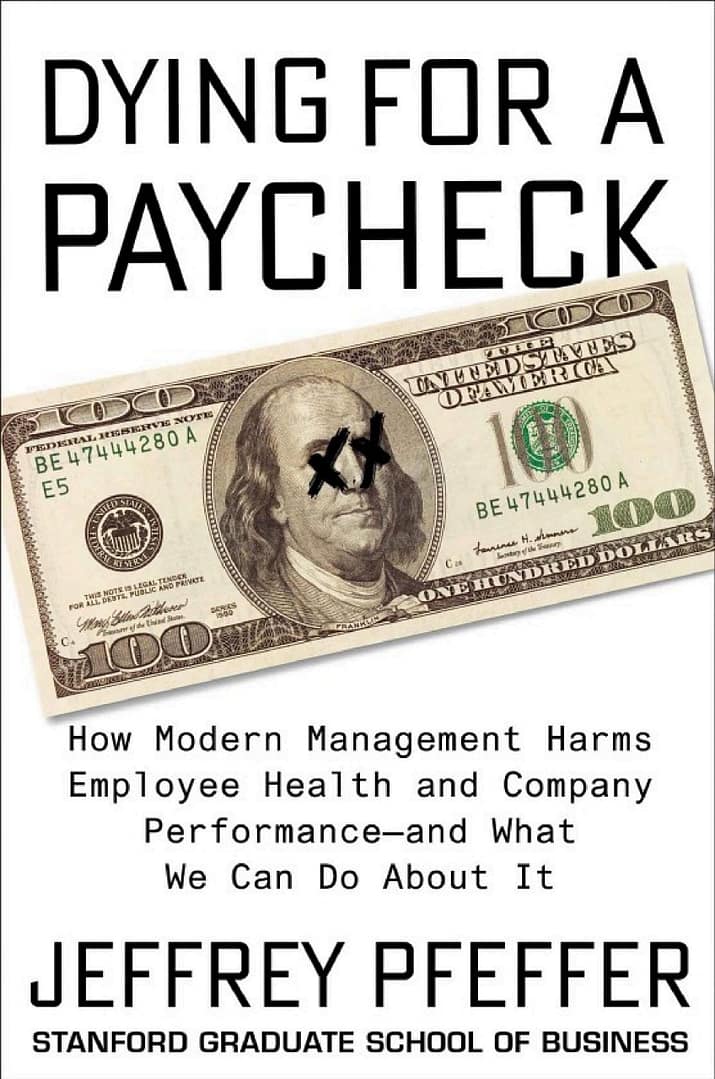
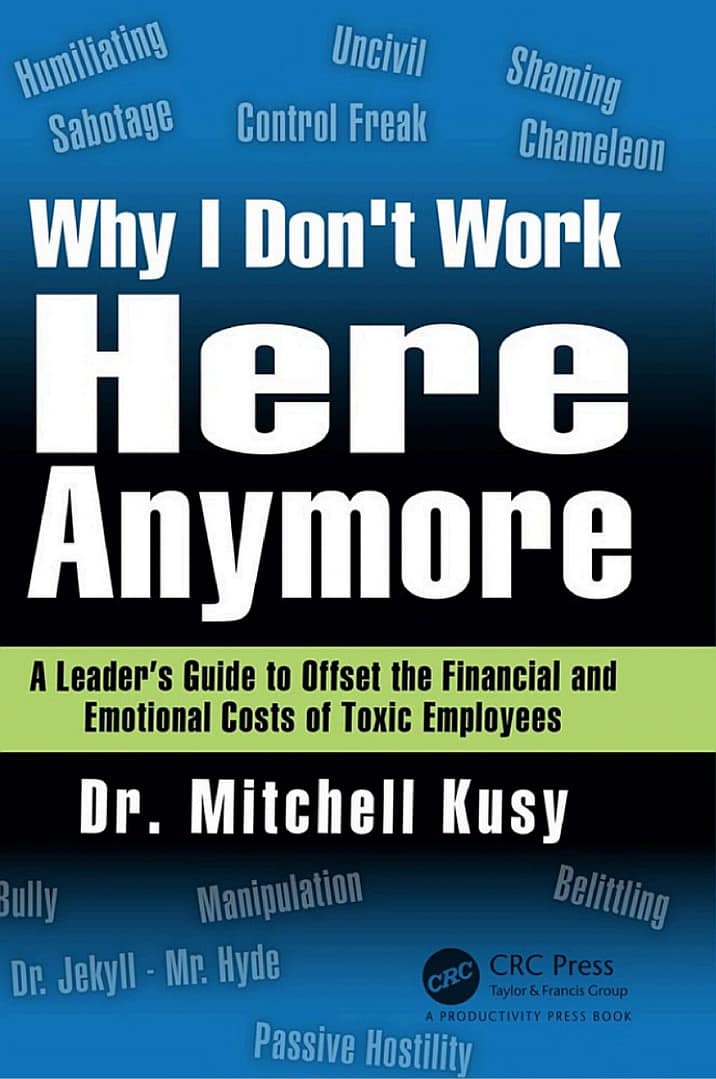
[00:33:39] Andy: I’m stuck on that grabber. I think I’m going to need a couple of those and just walk around with them and save me a few steps. Resources, for me, that I think of right now is actually just a couple of books that I’ve read related to career. We had Mitch Kusy actually do one of our workshops for our last conference, Why I Don’t Work Here Anymore. He really takes a look at the financial implications of a toxic work environment.
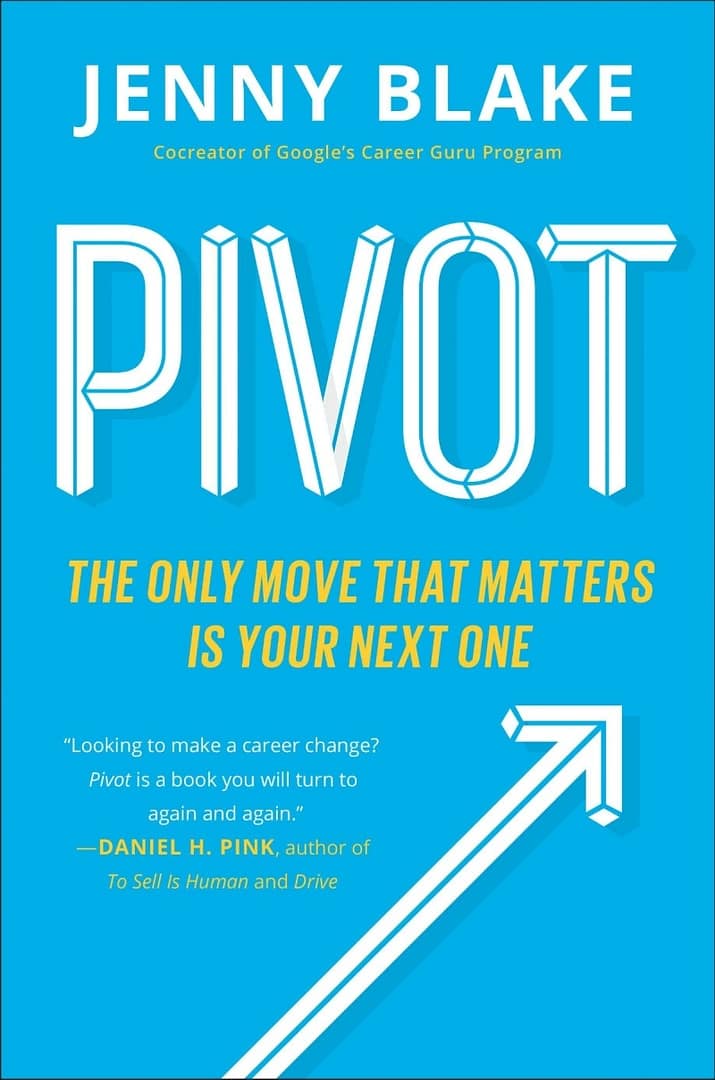
Jeffrey Pfeiffer from Standford wrote a great book, Dying for a Paycheck, talks again about the high cost of working in a job that doesn’t work for you, not just the cost of the employee but the cost to employers as well. Then on the positive side, Jenny Blake’s Pivot continues to really lighten it. What I like about Pivot is there’s a lot of younger millennial women professionals that are particularly liking that book, and so that’s great. That’s really almost like What Color is Your Parachute for this generation.
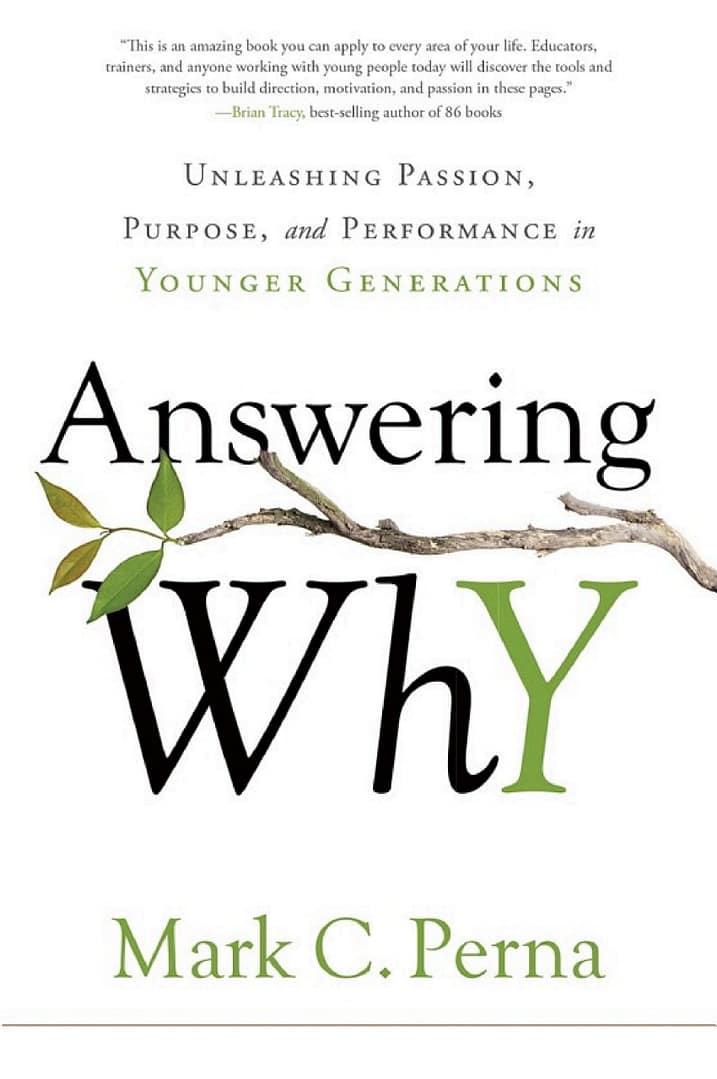
Then a book that I’m finishing up right now is Answering Why by Mark Perna. This is great for me because he’s specifically addressing what he’s calling the Why Generation but it’s W-H-Y, Why Generation, asking the why. He’s including in that some Millenials, primarily Gen Xers and even the Ys that are coming up, but it’s really unleashing the passion, purpose, and performance for the younger generations. That’s been pretty eye-opening and pretty exciting for me as I read through this, and I think of this group of younger cohorts coming into our colleges. I highly recommend both of those.
[00:35:18] Bonni: Would you talk a little bit more about the one called Pivot, because I have recommended the book What Color is Your Parachute? so many times, yet I hesitate sometimes because it doesn’t seem like it’s kept quite as current. But what I like about it is it does give anyone who’s job-seeking a good structure. Sometimes I see students move away from, I don’t have a syllabus telling me anymore when things are due. I don’t have those social connections to help me during times of stress. Talk a little more about Pivot because I’m curious about the social replacement.
[00:35:47] Andy: Pivot is and does have, probably, the last half of the book is very similar to What Color is Your Parachute? Jenny Blake is the author. She gives very practical advice to, not just job shifters, but people that are launching into their careers. I think she does a great job with that. The thing I really appreciate about how she begins the book is setting expectations, kind of what we’re talking about earlier that there is likely multiple paths that people can take throughout their careers.
I think it’s a practical writing but it also is based on some pretty sound theory. She doesn’t get into a lot of complicated, theoretical explanations and very practical, very easy to read. People are finding it quite helpful.
[00:36:31] Bonni: Andy, thank you so much for giving up your time this afternoon to help us learn more about positive work-life spillover, and thank you for recommending four books that I want to start reading this evening. I don’t even know how I’m going to do that, but it’s just been such a pleasure to get to have this conversation. These are things that we don’t often get to talk about, you and I. It was just special to me that you agreed to come on the show.
[00:36:51] Andy: Thanks. I appreciate it. Thanks for the invitation.
[music]
[00:36:57] Bonni: Wow, I have quite a few books I want to start reading all at the same time. Andy Stenhouse, thank you so much for joining me on today’s episode of Teaching In Higher Ed, giving us so much to think about in terms of the ways in which our work-life can positively spill over into our home life.
I really appreciate your work with me and all of the things that we’ve gone through together, and also just appreciate you coming and sharing about this topic today. Thanks to all of you for listening and, if you’re interested in this topic, you might also be — I’m like Amazon right now, you might also be interested in my book called The Productive Online and Offline Professor.
You can find out more about it and the topics that are contained in it by going into teachinginhighered.com and it’s right at the top of the home page. You’ll see the little book peeking up from the bottom. Thanks so much for listening and I’ll see you next time on Teaching in Higher Ed.
[00:37:51] [END OF AUDIO]
The transcript of this episode has been made possible through a financial contribution by the Association of College and University Educators (ACUE). ACUE is on a mission to ensure student success through quality instruction. In partnership with institutions of higher education nationwide, ACUE supports and credentials faculty members in the use of evidence-based teaching practices that drive student engagement, retention, and learning.
Teaching in Higher Ed transcripts are created using a combination of an automated transcription service and human beings. This text likely will not represent the precise, word-for-word conversation that was had. The accuracy of the transcripts will vary. The authoritative record of the Teaching in Higher Ed podcasts is contained in the audio file.