Follow the Teaching in Higher Ed Podcast
About this Episode
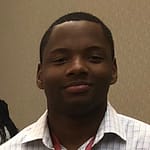
Christina Zambrano-Varghese and Marcus Flax shares about transformative learning experiences on episode 297 of the Teaching in Higher Ed podcast.
I’ve come to see how critical the first day of class is.
Christina Zambrano-Varghese
On episode 297 of Teaching in Higher Ed
Voices on this Episode


Show Notes + Resources
Recommendations from this Episode

Article
2019: change and hope by Catherine Cronin
Podcast
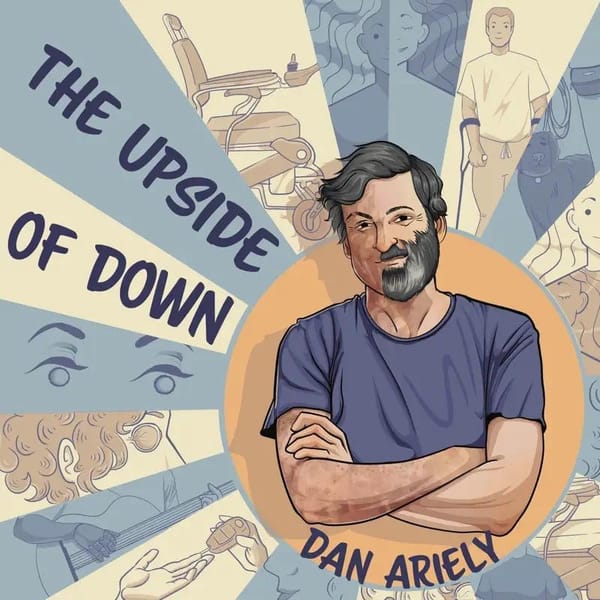
Arming the Donkeys podcast

Article
Start a Bullet Journal

Article
Hymn to Time by Ursula K. Le Guin
Transcript
[00:00:00] Bonni Stachowiak: On today’s episode of Teaching in Higher Ed, Dr Christina Zambrano-Varghese and Marcus Flax join me to talk about transformative learning experiences for teachers and students.
[music]
[00:00:15] Commercial: Produced by Innovate Learning, maximizing human potential.
[00:00:24] Bonni: Hello, and welcome to this episode of Teaching in Higher Ed. I’m Bonni Stachowiak and this is the space where we explore the art and science of being more effective at facilitating learning. We also share ways to improve our productivity approaches, so we can have more peace in our lives and be even more present for our students.
Dr. Christina Zambrano-Varghese is an ACUE credentialed professor of psychology at Rutgers University Newark. Marcus Flax is a former student of hers, and they’re joining me today to talk about their transformative teaching and learning experiences. Christina will share why her own recent pedagogical development experience totally changed her identity of professor and inspired her to reimagine a psychology class that originally was very unpopular with students, psychology of research methods.
After earning the ACUE certificate in effective instruction, Dr. Zambrano-Varghese ditched the lecture based format and replaced it with active learning instruction techniques, lots of small group collaboration, and applied research projects which we’ll hear about in this episode. Also joining Christina is Marcus Flax, a senior psychology major at Rutgers, Newark. Marcus is also a former student of Christina’s having taken her redesigned psychology of research methods course. He made big strides as a result of the changes that Christina has implemented and has some experiences to share with us about getting to present at academic conferences.
Today’s guests were introduced to me through my partnership with the Association of College and university educators or ACUE. ACUE believes that all students deserve an extraordinary education and that faculty members play a critical role in their success. ACUE prepares, credentials, and supports faculty to teach with practices that improve achievement.
This year, I’m working with ACUE to showcase and celebrate teaching and learning stories as told by the practitioners who experience them. In this first episode, you’ll hear the story of a psychology professor at one of the country’s most diverse universities and why she decided to make major changes to one of her courses. You’ll also hear from one of her former students who will share how he experienced those changes in the classroom. Christina and Marcus, welcome to teaching in higher ed.
[00:02:59] Christina Zambrano-Varghese: Thank you.
[00:03:00] Marcus Flax: Thank you.
[00:03:01] Bonni: I’m excited to have this conversation with both of you. Christina, let’s start out from the beginning. Not the very, very beginning, but let’s start with the beginning of how you ended up teaching in a higher education context.
[00:03:13] Christina: I was working as a mental health counselor and it was always my plan to be a counselor and maybe adjunct a class or two a year on the side. As soon as I got in the classroom for the very first session, I was at a for-profit community college. I was teaching psychology to students who had just graduated from their ESL program, I knew that I’d found what I was meant to do with my life. By the next semester, I had quit my full-time job. I started adjuncting anywhere that would mean until I finally landed a position on the teaching faculty at Rutgers Newark.
[00:03:46] Bonni: I had a similar entry point in that it seemed so impractical to me at first. Because I started as an adjunct as well for a year and it just was like, “This is amazing, but could this actually work, logistically speaking?” It is something that really hooks you early on from the beginning. Could you tell us a little bit about the students that you serve at Rutgers Newark?
[00:04:10] Christina: Sure. Rutgers Newark is always known for being one of the most diverse universities in the nation and that is a word that you can apply in every dimension possible. We have every race, ethnicity, religion, age. I mean, everything that you could imagine. I’m just amazed by the students I get to work with. One of the first questions I ask my students is how many languages are spoken in the classroom and it’s numbers that would blow your mind every semester.
[00:04:37] Bonni: Yes. Marcus, for you, can you tell me a little bit what it was like in terms of coming to Rutgers Newark? What were you expecting maybe from the student body and then what do you see when you’re there?
[00:04:48] Marcus: When I got the Rutgers Newark, I was a transfer student from another public school. It definitely wasn’t as diverse as Rutgers Newark was. When I was a high school, Rutgers Newark had a bad reputation because of it was Newark. I’ve fallen in love with Rutgers Newark, not just because of the faculty, but the diverse campus. Even the community itself has wonderful people in it. I couldn’t have asked for a better school. I wish I had attended there all four years instead of just the two that I’ve been there.
[00:05:17] Bonni: The institution where I teach, it’s a small private liberal arts college. We went through a radical shift. This isn’t something that normally happens in this amount of short of a time. In seven years, it went from being a predominately white institution to an extremely diverse– I would say not as diverse as what you described, just diverse specifically on the racial front.
One of the things I’ve become obsessed with is the idea of context. How little of it I so often have an understanding of in other people. Just to give you an example of a recent thing that still haunts me. Even though I don’t think that I actually made a mistake. It was just the horror that I could have really made a mistake. Has to do with class I was teaching where they needed to show the workspace where they work. This is actually a productivity and personal leadership class that I teach.
The guy who wrote out our book, one of the books that we use, he does say that we might be working in coffee shops. Our workspace might be our backpack. I still was just horrified that in my mind they would have to work spaces, they would have their desk at home or in their dorm.
Ever since then, I’ve heard a couple of stories where I’m most recently a story where someone talked about that in their Spanish class their teacher asked them to describe their bedroom growing up. She had to make up a story about a bedroom growing up because she did not have a bedroom growing up. I’ve kind of been obsessed about that. Is that something that either of you think about just the vastness of the differences and context of people that are being brought together in community to learn, but just how delightful that is? To me, also terrifying that I could make such big mistakes in that area.
[00:06:56] Christina: It’s been something that’s been hugely eye-opening to me. My master’s degree was in multicultural psychology. I thought that I had a good lens. I thought it was really good at putting myself in other people’s shoes. I went to a really small liberal arts college like you described and the things that I encountered when I was in college are just decades away from what my students are encountering. Last semester, I had a student that was one of the top students in the class always participating. I was always blown away by everything that he contributed, but his assignments were always late.
Finally, about halfway through the semester, I talked to him, and I was like, “I don’t understand why your assignments are never in on time on Monday.” He said, “I was embarrassed to tell you that I’m in a halfway house that’s incarcerated for 20 years and I don’t have access to the internet over the weekend.” Just the stories that some of our students have we just have no idea about the context that they are still rising to the occasion despite all these odds that they’re overcoming.
[00:07:57] Bonni: What have you then decided that you’ll do to avoid your first thought? To me it’s like, “Let’s not go with our first thought on these things.” Is there any sort of thing that you’ve tried to implement to help you not step in it so much?
[00:08:17] Christina: I try to just make my students feel comfortable talking to me before it’s too late. Every professor wants to have an open door policy, but I try to just be really intentional about why that’s so important and why you should talk to me, and we can work things out rather than after the semester when things are too late. I really just want my students to feel comfortable even though these are really big classes that I teach, and we may not have a chance to talk one-on-one upfront.
[00:08:44] Bonni: Marcus, for you this might be a good time for you to share a bit just in terms of the role of the professor and how much in your past has a professor helped your learning and perhaps around this area of helping you feel comfortable. Are there examples where they’ve hindered your learning?
[00:09:02] Marcus: Helped? I say I’ve been fortunate to like every professor I’ve had. Not just at Rutgers Newark, at my old school as well. A lot of them have had an open door policy where it wasn’t just, “Hey, if you need anything, come to my office hours.” It was always, “We’re in class right now. You can talk to me at the beginning of the class. You could talk to me at the end of the class. Whatever you’re going through, I’m not going to turn you away.”
That’s been helpful because I wasn’t the best student in high school. Coming into college, it was very intimidating. I chose psychology just because I was interested in the brain, but not necessarily because I knew it was something I wanted to do. When I was at my first school, the whole reason why I was put on psychology in a more research-oriented track instead of just counseling was because I had a professor who talked to me, who asked about my past, how I was doing in school before coming to college. She gave me the tools to succeed during college.
[00:09:59] Bonni: Trying to think back then, for me, it’s a lot harder to think back [laughs]… for you because you’re still in it. What do your professors do to have you experience that just feeling of welcome?
[00:10:13] Marcus: I’d say that being a more personable professor, like what Dr. Zambrano does. During classes she’ll talk to students, it’s not just, “I’m reading off my PowerPoint slides, you have a test on Monday,” and then that’s it. She talks to the students, she gets the students talking to one another, she walks around and listens to the conversations, jumping into the conversations to hear what students are saying, it makes you feel like you’re part of a community rather than just a classroom.
I’d say that’s more beneficial to a learning experience because college is hard and it gets stressful after a while. When you go to class day in and day out, you can get burnt out, but when you get into a classroom where it’s a more of a community feeling, it’s a lot easier to participate, it’s a lot easier to think, it’s a lot easier to just do your best.
[00:11:00] Bonni: Can you take us into the early first couple of classes that you had in the psychology of research methods class? What do you remember feeling about coming into a class about that topic and what do you remember maybe your peers thinking or saying about it, just take us back to early in the class.
[00:11:17] Marcus: Sure. When I took her class, I actually had already taken the class at my old school. I walked in with the expectation that, okay, it’s going to be another hour-long lecture class where I’m going to have to take notes the whole time, we’re not going to talk, we’re not going to do any classwork with partners. Obviously, there’ll be a paper at the end, but nothing, where it would force me to work with other people, but from the first day we were talking with other people and that was a surprise to me. Everybody does icebreakers but these weren’t just icebreakers. These were, okay, here’s some topics about psychology, talk to your partners about what you think about them. Every class is like that, it wasn’t just the first day.
Not only in her research methods class, the lab that was attached to the research methods class, the TAs made sure that how she ran her classes, they were running as well. In those classes, those were smaller than the lecture hall, but we still had groups, we were always talking every day.
I say that the experience was a lot different and I did like it a lot because like I said, taking notes off of a PowerPoint for an hour, it gets very boring, it gets very tedious. I definitely learned a lot more in her class than I did at my previous school just because I was engaging with the information rather than just trying to study it.
[00:12:36] Bonni: I remember about 10 or more years ago, hearing a group of students early in the semester talking about how much they cannot stand the very first class, the very first day coming back from a semester or starting out brand new. The old, “Okay, let’s everybody in the entire class–” We’re saying about classes of 30 people or so, “Everybody go around, all 30 of you and everybody introduce yourself and say the same thing.”
I think that the intent behind a professor wanting to do that is such a great intent to want to get to know them. There’s nothing unexpected out of that, right? There’s nothing to get you curious thinking, “Oh, I’m in for something different here, aren’t I?
Christina, are there any things that you do to try to have that sense of this is something different and in fact, it might be helpful too if you share a little bit of before and after because I know that– Like me, we didn’t just start out perfect as teachers and not be learning things along the way. Could you give us a before and after and some of the things that you try to do early on in a class?
[00:13:41] Christina: Absolutely, I remember hearing students talk about syllabus day or syllabus week even and this expectation and you’re just going to be able to sit there and we’ll start week two, class will really start. I’ve come to see how critical the first day of class is. The expectations that I have for my students, I want to show that In the first 10 minutes, we’re doing an activity of the semester. They don’t really know me, they don’t really know the class, there’s no syllabus to be handed out yet, but I want them to get into the practice of getting to know each other, talking about the material, getting excited about the material.
I try to think of something that’s going to grab them and show them what’s to come, but also set the expectation of, I want to hear from you and you’re not going to just sit there passively, but the class is only going to run with us working in this journey together.
[00:14:33] Bonni: I use that word a lot, journey, and I also use the word a lot experience. I think we like going on a journey, we like experiencing things that are maybe different, get us to think a little bit different, although that’s often hard, so we need a trusted guide to help us realize that expanding our mind in those ways, we’re going to be in a safer place to do those kinds of rich reflection and really transformation.
Marcus, what are the times in your educational experience where you can really remember being stretched, where you think, “I don’t think I can do this, but yet I think I can do this because this person is telling me I can do this.” What are those times that you can recall?
[00:15:13] Marcus: I’d say midterms and finals definitely not so much because I didn’t know the information but there’s so much I needed to study in a short amount of time. One of the things that I’d say like the first few weeks at Rutgers Newark, I talked to a professor and they were setting up plans for students to not wait until finals to start studying their information. They had this calendar, you have five classes, start studying right after Thanksgiving or before Thanksgiving and feeling stretched at my old school completely disappeared because when you have a plan, it’s a lot easier to look at your life on a piece of paper and be like, okay, I need to do X, Y and Z and I’m not going to overwork myself because that’s what hurts you the most, but when you try to do all five classes in one day, you need to study everything it doesn’t work, you have to take the time, you have to be patient, you study one thing at a time and then move on.
[00:16:12] Bonni: Those are the kinds of things that for many– Well, it starts with many professors actually not even knowing the literature or the research around learning theory and around– One of the areas you’re actually talking about Marcus is called retrieval practice. There’s a large body of research around retrieval practice that if we spend less time trying to pour information into your head and more time where we’re helping you to retrieve, it’s creating those neural connections in your brain, but a lot of professors don’t know that, they just think, “I have a group of students, they’ll learn the way that I learned and then if they don’t, that says something about them, they don’t work hard, or they’re not trying.” I place an intent on a group of people that actually doesn’t exist. That’s the first starting point is just that they don’t know.
Then sometimes it’s that they might know, but then it’s just easier rather than change myself, it’s easier to place the blame on someone else when things aren’t going well. If you’re not scoring well, it’s because you weren’t prepared before you came so it’s not my fault, somebody else. People like Dr. Zambrano, she can look inside herself. Let’s go back Christina and tell us a little bit about where did you start to notice specifically in your research methods class that changes were in order? What were the symptoms, if you will?
[00:17:30] Christina: Yes, absolutely. I started out definitely like you’re saying that I taught the way that worked for me, I looked at my favorite professors and I said, I’ll just try to do exactly what they did and I was fine in the lecture class, so I’ll just do that as well.
I noticed that I wasn’t reaching everybody by any means, because the class was fear, there was a lot of stigma around the class, students were afraid of taking it, so they would push it off to the last semester. Then if students didn’t do well, it would delay graduation. It had really huge implications if students were not successful.
Another thing that prompted me to want to fix things up was academic integrity. I was just confronted over and over every semester with tons of plagiarism, tons of violations and going through the whole process of punishing students until I finally, finally have the insight to say, this isn’t something that should be punished, if I want to teach them academic integrity, why am I treating this as something different than how I try to teach everything else in the semester? I started to view academic honesty as I want you to learn what an experiment is. If I want you to learn what academic integrity is, I have to teach you, I have to give you the tools, I have to give you a place to practice and work with the information and figure out how to do things correctly. Design activities, design assessments rather than just, okay, this is my role and you need to follow it and that’s the end of the story, so ineffective.
[00:18:59] Bonni: There’s so much of that where we just assume people know coming in. Then there’s also the thing that even if they know it, no one’s really ever helped them buy into it. Like, why does it matter? It’s just a set of rules, but the rules that don’t make sense to us and I remember one of the second or third book I ever read specifically about teaching in higher education is by James Lange, it’s called Cheating Lessons. He starts at all his workshops, this has been an area he’s talked about for many moons now. He talks about, how many of you sped on the way to work today? It depends where you live. I don’t know. Do you commute by car or do you take public transportation, Marcus and Christina? How do you get to school?
[00:19:43] Marcus: I take the train.
[00:19:43] Bonni: Okay. Christina?
[00:19:45] Christina: I drive.
[00:19:46] Bonni: For me, where I am, we have horrible public transportation. If you had a room of faculty, you’d have most of them who drove a vehicle to get there. I mean, it’s not great for the environment, it’s not great for our traffic, then you’d have most of them who sped at some point because I think it’s like 55 miles an hour, in some places, 65. The traffic, trust me, it is not flowing at 65. It’s because that rule doesn’t make sense to us. It’s actually safer if I go with the flow of traffic than if I were to go 10 to 20 miles slower than everybody else that’s driving on that freeway. That’s how it is for academic integrity.
Have you seen that same thing, Christina, where you’re like maybe they don’t know the rules? That’s one thing as a teacher. Maybe they know the rules, but they just never really know why it’s important.
[00:20:32] Christina: Absolutely. I would say that a big thing that has improved. Last year, I had zero academic integrity violations despite having the same sized classes and the same types of assignments. A big thing that changed is that I don’t let them work the night before, so there’s assignments chunked throughout the semester, so by the end of the semester, when this big paper is due, they’ve already done all the work. They’ve already put together everything.
A big way that I’ve kind of got through into that value piece is that I’ve told my students, “Anyone can go look up an article and read an article. I can do that myself. I don’t care what the article says. I care about your voice. I care about what you learned from it, what you got out of this, how this ties into your own research.”
Instilling some of that confidence in my students of what they have to say matters. It doesn’t matter if there’s grammar mistakes. What matters is the way that they’re interpreting the research and getting something out of it. That process is so important, but I think without lots and lots of practice, they’re not going to understand or have that trust in themselves.
[00:21:39] Bonni: That whole thing of, “I care about what you have to say,” is missing so much of the time that. People might care, but actually expressing that, “I care what you have to say.” I see time after time, again an outsized and oversized emphasis on grammar, on proper APA or whatever the citation style is. That actually creates more of a bias around the whole purpose of the paper would be to share ideas or to synthesize research or whatever.
Then, it becomes, I can’t get rid of this bias around the writing that it wasn’t according to APA style or if there were grammar issues. It creates kind of a real mess because then it has that feeling of like, “I’m never going to get there. I can’t write in this thing that– I didn’t do it so well. You’re not giving me times to practice and you’re not giving me times to fail unless they’re really big stakes.” That’s a wonderful thing.
Marcus, tell us a little bit about, for you, where you remember first learning about plagiarism. Do you even remember when you first even heard about that as an idea, and then your journey along the way and your education of caring about it, not caring about it along the way?
[00:22:51] Marcus: I’d say I learned about it in high school, but in high school, it was really just don’t copy somebody’s homework, don’t copy somebody’s paper. Then, you get the college and there’s a lot more rules added. At the beginning of semester, the college always sends out the long PDF file of all the academic integrity rules, but nobody reads that.
I’d say a lot of students still just think, “Don’t copy somebody’s homework, don’t copy somebody’s paper.” Those academic integrity rules, there’s a lot more within those rules, and then people will break them. I know people personally who have broken them, but didn’t even realize that they were breaking. Then now, they’re mad at their professor. Now, they’re mad at their school. It just creates this conflict between students and the academic community to the point where they’re just trying to graduate and not be penalized because they messed up for something they didn’t know about.
I’d say my journey with academic integrity, I’d say it’s been good because especially in psychology, a lot of professors really harp on that because at the end of the day, the professors themselves might be researchers and it’s a very big deal to plagiarize in the academic community. I know for a lot of people that aren’t psych majors that are just regular business majors or art majors, they know what plagiarism is, but they don’t understand the full realm of academic integrity.
[00:24:14] Bonni: Yes, there are a lot of rules around it and if rules don’t make sense to some of us, at least I know for me. I don’t always want to follow them. We need the time for practice. We need the opportunity to know that people care. Part of this writing, part of this research is to form a way of expressing our ideas, but it’s a long path to get there. We can’t just go from start to finish, and that’s a wonderful-
[00:24:37] Marcus: I think… class was the first class where the plagiarism rules were really broken down. The way papers were supposed to be written without plagiarizing someone. It was the first class where I’ve ever seen it. Most of the classes I’ve been in, they threw the APA book at us and said, “Here, these are your rules. Follow them.” That’s it.
[00:24:55] Bonni: Yes. I still bristle. I don’t get overjoyed at the APA style book. I know that it’s there, but I don’t love it. I do love the idea that someone would care about my ideas though, and then that I could– It’s a ways to get there. It’s not the only thing. That’s a wonderful thing to emphasize. Marcus, before we go to the next part of the show, I would love to have you talk a little bit.
I was surprised to learn that you actually took the work that you did in this class and were able to present it at a conference. I say that I was surprised because that’s pretty unusual, at least where I teach. That’s not common that someone would actually get to take the learning from a class and get to go to a conference. That’s a pretty big deal. I don’t know, is it a big deal there? Is that something that happens all the time or is it unusual there? Maybe tell us a little bit about that path.
[00:25:44] Marcus: Sure. It’s not completely unusual. They do have undergraduate research day in the spring, but this conference was an outside conference separate from the university. It’s the Black Doctoral Network. They had their annual conference in Newark this year.
What we did in our research methods class is, we wrote up proposals, and it could be on anything you wanted. Mine happened to be on social media addiction and the fear of missing out. What I looked at was that there was a lot of research that had already been done on social media addiction and the fear of missing out, but there wasn’t a lot of research looking at what mediated the relationship between the two. I looked at variables such as self-esteem, social capital, and social seeking behaviors, they’re called affinity seeking behaviors. I also looked at how socioeconomic status played a factor in all of those variables.
I came up with an experimental proposal that would look at different students at their social media addiction levels and their fear of missing out levels and then also looking at those variables amongst those students. After the proposal was done, I presented at one conference, was it the P3 Conference, Dr Zambrano?
[00:26:57] Christina: … Higher Education.
[00:26:59] Marcus: Yes. I presented at that conference first with a poster. Then, she told me about another conference, the Black Doctoral Network conference where they were having an undergraduate research presentation and I got to participate in that. It was a whole conference, so I listened to a lot of different speakers. There was different professors there talking about how to be better academics, how to be better students. They had an event where graduate schools came. They had an event where they said how to get your research funded, how to write better research papers. It was an amazing experience.
[00:27:32] Bonni: Absolutely. What a tremendous thing. I’m thinking about how much more your undergraduate experience can come alive when you’re getting to start to grapple with these kinds of questions. I mentioned earlier in our conversation how obsessed I am with the topic of context and just my capacity to get it wrong and not wanting to do so. The other thing I’m obsessed with is the idea of imagination because we talk a lot about imagination and creativity, but one of the things I keep seeing come up time and time again as I explore those topics is that it’s so often just that we don’t even have the capacity to have imagination.
An example of that in my own life would be that I, from the age of five, wanted to be a high school teacher when I grew up and then when I was in college, my family’s business went under after being part of our family for generations and I was just terrified. I ended up going into a whole different direction.
My dream of being a high school teacher never was able to come true, but part of that was because I didn’t even know to dream. How does one even become a college professor? I would never have thought that it was possible for someone. I didn’t have the capacity for imagination around what’s possible.
Marcus says, “You’re telling me this story. I’m getting so excited for you and what this means in your life because you have a greater capacity for imagination now or at least I’m imagining that you do through these experiences.” Does that resonate at all with you? Are you seeing that now you can picture things that maybe you couldn’t picture before?
[00:29:00] Marcus: Yes, definitely. When I declared my major as psychology, the only thing I thought of was being a mental health counselor, being a psychologist. I had never thought about research before. At my old school, I actually had a professor call me to her office and she’s like, “I think you’d be good at doing research.” I appreciated what she was saying to me, but I was like, “No, I’m just here to be a mental health counselor or a psychologist. That’s it. I don’t want anything to do with research.”
The last semester I was there, I took an experimental methods class and that’s what awakened a spark, but the difference between that class and Dr Zambrano’s class was we wrote a proposal at the end, but I didn’t get to present it. It was just, “Okay, I turned it in. Here’s your grade.” With Dr Zambrano’s class, it was, I wrote this proposal. I got to present it multiple times, and through presenting it multiple times, I’ve thought about research more and what research areas I’m going to focus on when I do decide to go to grad school, because it’s one thing to say, “I want to go to grad school,” but then it’s another thing to figure out what you want to focus on in grad school. Psychology is so big, so I think having that experience has helped me tremendously figure out what I want to do in the future.
[00:30:17] Bonni: Christina, would you speak a bit about what resonated with you, what you might think about in terms of expanding in our students’ imagination? I’d also love a few shared just logistically how on earth do you do that in terms of time limitations. I’m so inspired by that, but I don’t know even how to take those first steps.
[00:30:34] Christina: It is so thrilling to hear Marcus say some of the things that I really hope that I’m accomplishing in my classes. For so many years, I heard my students in research methods say that, “I’m just not a researcher. This is just a means to graduate. I just have to get through this class so I can get on to the next thing.” A huge goal of mine has been to just get them to see themselves as researchers. Maybe it’s just first semester, maybe it’s for the rest of their careers. Being able to overcome some of those stereotypes and those fears and really see themselves as being capable of doing research and accomplishing these different things.
I’ve seen a lot of success in it. I took it a step further. This past semester, I decided to introduce my introductory psychology students to research. I had them read a couple of research articles and write summaries.
They also created a very mini research proposal. Just a little one-page idea of what they would do if they could go out and do their own psychology research. I’m hoping that I’m just planting that seed a little bit of imagining that this is what I could do. Maybe it’ll interest some of them, maybe not. Just imagining all the different possibilities. Like Marcus said, that there are so many of them. The more they are exposed to, the more that hopefully, different students can find their niche somewhere in the field.
[00:31:57] Bonni: If we want to be able to take these kinds of steps, what kinds of things do you recommend that we do? I’m assuming like looking at the journals that are within our field and the conferences. What would be some early steps you would tell us to take if this is not something we’ve tried?
[00:32:13] Christina: I would say the most helpful thing to me would be thinking about what the main takeaway I want my students to get out of a class. As you prepare for the next semester, students are not going to remember every single term there. The more that we cram in there, the more that they’re going to cram it and forget it.
I like to think of every semester is, if they only remember two things, what are the skills or the pieces of information or the experiences that I want them to remember. Ten years into the future, they’re going to remember this class. What’s one thing they may remember about this class? Then I really try to just design my whole entire semester of meeting those objectives. Being really intentional about every activity, every assessment. How am I going to get them to that goal?
If my goal is for them to understand research or see how research plays a part in their lives? If they’re exposed to an idea on social media or they’re exposed to something in the news, what skills can I instill in them to think critically about that and to question the claims that are made? I think just that process of reflection, taking a little bit of time before we dive into a new semester and reflecting on that one big thing that I want to leave with my students, whether it’s increasing their confidence or piece of material.
[00:33:30] Bonni: All right. This is the time in the show where we each get to give our recommendations. I wanted to share about a blog post that Catherine Cronin posted. It’s called Change and Hope. It’s a beautiful piece of writing. She’s been on the podcast before and when she was here, one of her recommendations was to share a poem.
I guess that’s not the only time she’s ever recommended poems because she ends her post with a poem. My first recommendation is that we each go read her beautifully written just challenging and all the best ways possible blog post. I’m going to read the poem. I’d like to also recommend, it’s called Hymn to Time by Ursula K. Le Guin.
Hymn to Time.
Time says, “Let there be”
every moment and instantly
there is space and the radiance
of each bright galaxy.
And eyes beholding radiance
And the gnats’ flickering dance
And the seas’ expanse
And death, and chance.
Time makes room
for going and coming home
And in time’s womb
begins all ending.
Time is being and being
time, it is all one thing
the shining, the seeing,
the dark abounding.
Christina, what do you have to recommend for us today?
[00:34:50] Christina: I’m going to recommend Arming the Donkeys. It is a podcast with Dan Ariely from Duke University. He’s a behavioral economist. I’m recommending this podcast because, one, I just really enjoy listening to these really brief informal snippets of research. They’re really short, 5 to 15-minute introductions to a project that a researcher is working on.
I’ve also started to weave them into my classes a little bit and getting students excited about just this one really interesting idea. Then we can break it down more deeply and think about how the researcher got to making these pretty interesting claims.
[00:35:25] Bonni: Yes, that’s awesome. I love it. Thank you so much. I did not know he had a podcast. I’ve heard him on other people’s podcasts, but how nice to know that he’s got one of his own. We could integrate with our teaching too because I always think that that’s phenomenal. Thank you so much for sharing that. Marcus, what do you have to recommend today?
[00:35:41] Marcus: I’d recommend to not just students, but anyone as well, starting a bullet journal. We go through the day we’re on our phones a lot. We’re on the computers a lot. We have so many things to do. We have thoughts in our head. Bullet journaling has allowed me to get everything out of my head at the end of the day, at the beginning of the day.
Organize my life from a piece of paper. Look at it, see where I can make changes. It’s not just a to-do list. I write down my thoughts on the day there if I have a good idea, movies I want to watch, books I want to read. It’s something that I have found beneficial this last semester. I’d say, writing, in general, has changed my life completely.
[00:36:18] Bonni: Do you remember when you first heard about the idea of doing a bullet journal?
[00:36:22] Marcus: I would say, maybe my second year of college. I started it, but I didn’t really get into it because it takes time. You have to have patience to do it, you have to sit down and think about how you want the journal to work for you. You can go on YouTube and look up all the different styles to do in the bullet journal, but has to be something personal to you, so you actually sit down and work on it yourself.
[00:36:47] Bonni: Broadly speaking, there’s two different types of bullet journals. There’s the – I don’t know what to call it – a simplified version, just take out a black or a blue pen. You could even fold paper. It doesn’t even have to be a notebook. Although, it might stay together better but it’s a notebook. Then, there’s the artwork of a bullet journal where you mentioned, movies you want to see, where people actually draw little movie reel and the film strips coming out of it.
Which type of bullet journal approach do you take? Are you more the artistic or are you just more the brass tacks just get the ideas done.
[00:37:19] Marcus: I say it’s a little bit of both. I’m not a great artist myself. I take the minimalist standpoint, but then I take the artistic ways of formidable gem. I have my to-do list in my calendars. Then I do also have movies I want to watch, books I want to read. Maybe I’ll draw a little stick figure or something, but it’s nothing like I see people on YouTube with the pens and the paint. Looks nothing like nothing compared to mine.
[00:37:46] Bonni: There’s a book called The Back of the Napkin. You’d love this, Marcus, the guy is actually arguing against like, “Let’s get rid of PowerPoints.” PowerPoint slides were intended to enhance communication. Actually, in his opinion too often detract from it. You say stick figures in a self-deprecating way, but you can really convey very powerful ideas when you can simplify things down to a stick figure. There’s amazing things you can do with that. I’d encourage you to keep with that.
You are an artist, Marcus. You don’t think of yourself as, Monet or whatever, but you’re definitely an artist. I hope you’ll keep doing that because it does challenge our brain to, “How do I take this idea and put it into something besides words?” That’s so wonderful. I’m so excited to hear you recommend that. I echo those challenges for people to try it out.
The other thing you were alluding to is having a place for ideas. Actually, I have a book that by the time this airs will have already come out about productivity. I’m all about closing loops, like checking boxes off, I did it, I did it, I did it. One of the things I’m really seeing is the importance of having open loops. An open loop of movies, I might want to see. I don’t have to check off all those boxes. In fact, it’s a place where I can put new ideas.
As I’m thinking about research I might want to conduct or a poem I might want to write or whatever. Those open loops, but a place to house them, a place to house our creative energies. I just love that you recommended that. Thanks to both of you for being on the show. What a delight to get to have this conversation and get to know a little bit more about you as learners and teachers.
[00:39:25] Marcus: Thank you for having me.
[00:39:26] Christina: Thank you so much for having us, Bonni.
[music]
[00:39:31] Bonni: Thanks once again to Dr. Christina Zambrano-Varghese and Marcus Flax for joining me on today’s episode of Teaching in Higher Ed. If you want to learn more about the episode, see those show notes, you can visit teachinginhighered.com/297. There’ll be links to information that we’ve shared about on the episode. Those links are also in your podcast player, by the way. Wherever those show notes are held, they’re available.
I mentioned during the recording about my new book, it’s called The Productive Online and Offline Professor. You can learn more about it on the homepage of teachinginhighered.com. Scroll down the tad bit and you’ll see information about the book and also links to where you could check out for purchasing information. Thanks so much for listening. I’ll see you next time on Teaching in Higher Ed.
[music]
[00:40:26] [END OF AUDIO]
The transcript of this episode has been made possible through a financial contribution by the Association of College and University Educators (ACUE). ACUE is on a mission to ensure student success through quality instruction. In partnership with institutions of higher education nationwide, ACUE supports and credentials faculty members in the use of evidence-based teaching practices that drive student engagement, retention, and learning.
Teaching in Higher Ed transcripts are created using a combination of an automated transcription service and human beings. This text likely will not represent the precise, word-for-word conversation that was had. The accuracy of the transcripts will vary. The authoritative record of the Teaching in Higher Ed podcasts is contained in the audio file.