Follow the Teaching in Higher Ed Podcast
About this Episode
Bonni Stachowiak discusses homelessness and housing insecurity in higher education with Rashida Crutchfield and Jennifer Maguire on episode 281 of the Teaching in Higher Ed podcast.
Making the time to do something that is different has given me so much more energy, creativity, and ability to be present to my students.
Jennifer Maguire
On episode 281 of Teaching in Higher Ed
Voices on this Episode


Show Notes + Resources
Recommendations from this Episode


Transcript
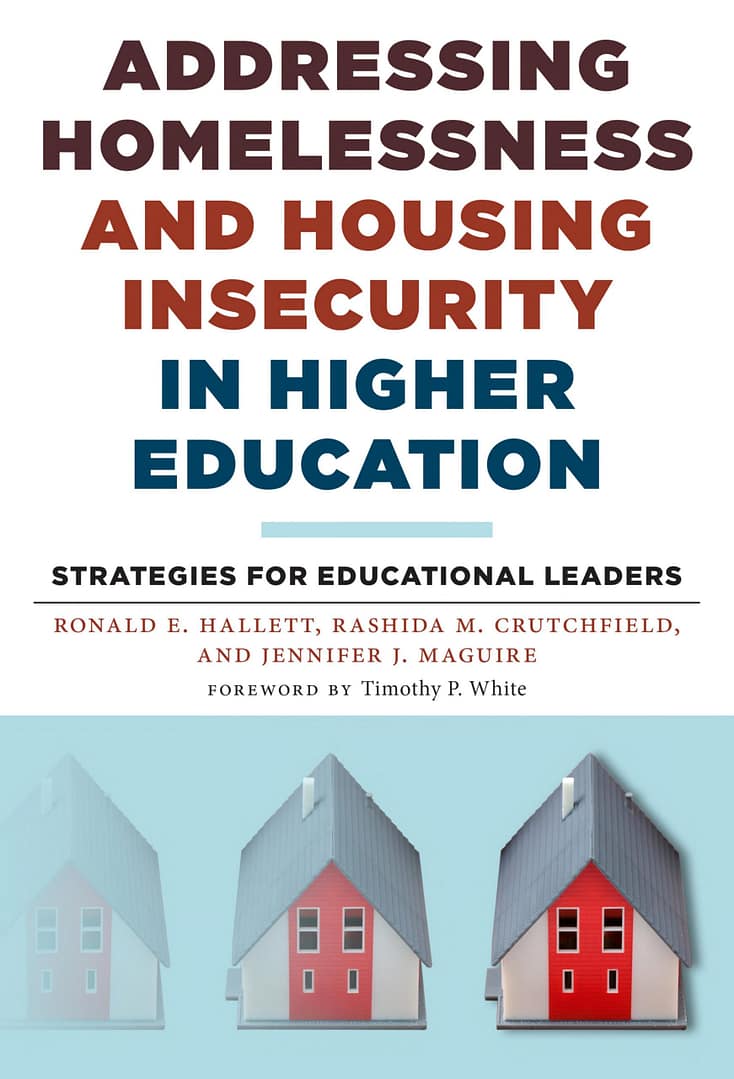
[00:00:00] Bonni Stachowiak: Today on episode number 281 of the Teaching in Higher Ed podcast, Rashida Crutchfield and Jennifer Maquire, discuss their new book, Addressing Homelessness and Housing Insecurity in Higher Education
[00:00:16] Production credit: Produced by Innovate Learning, maximizing human potential.
[00:00:25] Bonni: Hello, and welcome to this episode of Teaching in Higher Ed. I’m Bonni Stachowiak. This is the space where we explore the art and science of being more effective at facilitating learning. We also share ways to improve our productivity approaches so we can have more peace in our lives and be even more present for our students.
On today’s episode of Teaching in Higher Ed, number 281, I welcome to the show, Rashida Crutchfield and Jennifer Maquire. If you’ve been listening to the show for a while, you would have been introduced, at least through this podcast, to Rashida Crutchfield on episode 237, as she discussed on that episode, Meeting The Needs Of Our Students, and she really got us introduced to this topic and other guests have as well.
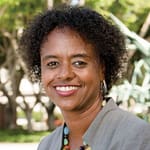
Rashida Crutchfield is an associate professor in the School of Social Work at California State University, Long Beach. Dr. Crutchfield was commissioned to lead research in this area by California State University, the Office of the Chancellor study on Food and Housing Insecurity. This system-wide study on basic needs has garnered statewide and national attention. She’s provided input on state policy and provides support and advice to staff, faculty and administrators across the state and nation who wish to replicate and expand resources for basic needs and secure students.
Joining Dr. Crutchfield today is Jennifer Maquire. She’s an associate professor in the Department of Social Work at Humboldt State University. Jennifer works collaboratively with students, scholars, practitioners, and community members on a variety of innovative research and projects that aim to transform how students basic needs are met in the California State University system, as well as informed state policy being redesigned to better serve students in higher education, Jen and Rashida, welcome to Teaching in Higher Ed.
[00:02:34] Rashida Crutchfield: Thanks.
[00:02:35] Jennifer Maquire: It’s great to be here.
[00:02:36] Bonni: Congratulations on this wonderful book, a tremendous resource. My institution, we’ve been really digging deep into this stuff and your book is just like a handbook for us to get started on some efforts and continue others so thank you so much for all the work that I know you put into this book.
[00:02:53] Rashida: We’re really excited to provide it. We’ve been really thrilled to have many people from across the nation reach out to us and we’ve been emailing and calling and traveling and it’s really nice to be able to have this resource to pay forward and ultimately, we expect people to grow out of it, but it’s nice to have that basis to really share.
[00:03:17] Bonni: Yes, absolutely. In fact, I’m sort of chuckling because as I was finishing up my reading today, I’m excited to say that I did finish this book. I don’t finish all the books [laughs] on the show, but it really is a fast, practical, tangible, resource. It’s just wonderful but I was cracking up because I had to take my little scanner app and scan some pages and send them over to some colleagues, who said it’s that practical to get started in some of these areas and to continue the work. I’m just excited to talk to you today about it. Let’s begin, Jen, with you. Talk a little bit about the information that is available to us about these issues, but also the information that is not available to us.
[00:03:58] Jennifer: That’s a great question. I would say there isn’t a whole lot we do know in regards to counting college students who might find themselves homeless. We do gather a little bit of national data through FASFA where students can mark themselves as an unaccompanied youth and they get some assistance through financial aid, but largely, this is an invisible issue where students may or may not even see themselves or label themselves as homeless. A lot of students in this position, I would say, are really highly mobile, and might find themselves in different living situations and accommodating their lives around that.
[00:04:40] Bonni: I envision too that part of the difficulty in gathering the data, I mean, there’s tonnes of difficulty in it, but it’s just the shame around it. What have you found about the shame that exists that also prevents us from getting the kind of data that we want?
[00:04:54] Rashida: Yes, I think that’s a great point. We do have some data here at the CSU. Jen and I collected data and found that almost 11% of our students who are experiencing homelessness, but we assume that that’s a low number.
A lot of people may not even utilize that term homelessness for themselves, so I’ve talked to many students who are living in their car, or living in tents and say things like, “I live in my car, that’s my home. I’m not homeless.” I think there’s so much stigma connected to that word that students may not even be using it even though they may be seeking supports or not.
Then more to your point, some of our students just don’t want to be seen as being “in need.” One of the reasons why in our book we recommend that people not develop committees called The homeless committee or The group for homeless students,because you’ll be in that room by yourself because students don’t necessarily want to be labeled that way.
There are ways to really reach out to them, but it is difficult to get those numbers either for programs and services or to really find out real numbers about who’s out there because of the layers of stigma we’ve put on people who don’t have a place to live.
[00:06:21] Bonni: Rashida, one of the things that we just looked at is students’ perspectives and how they self-identify, but I know there’s a lot of myths on how faculty and staff might view these issues for students. One of the things I know you talked about in the book is just this issue of Couch Surfing which can be overly glamorized and some of our faculty, some of our staff might remember, perhaps it involved intoxication, sleeping on a friend’s couch or whatever.
[laughter]
[00:06:51] Bonni: Would you speak about the difference between what you’re calling Couch Surfing and what that means to a student who is living that way and then what it might have meant for some of us who slept on couches, [laughs] how are those two things different?
[00:07:05] Rashida: Sure. Thank you for the question. I have fond memories of having a joyous college experience in many circumstances where I might end up hanging out with friends overnight, either because I wanted to or because it was safer to do that, or what have you. For our students, when we’re talking about homelessness, we’re talking about a lack of fixed regular and adequate place to stay, which is a definition that comes from the US Department of Education, and that’s different.
If I decide to hang out with Bonni and sleep on her couch because we’re having a good time, that’s very different than having to stay with Bonni for three days because I have no place else to go and then maybe I’m going to sleep in my car for a couple of days and then maybe I’m going to hang out with a couple of other friends. It is that mobility, that constant insecurity that is a trauma experience.
I, in interviews, have had students who talk about how they schedule themselves and it’s almost a part-time job to figure out, who am I going to stay with right now? Who am I going to stay with over the weekend? Who am I going to stay with next week? That is a incessant pressure and never having a place to put your things and often losing your items because you’re so mobile. That’s a very different experience than the fond memories I might have about hanging out with friends because we wanted to spend the weekend together.
[00:08:43] Bonni: How about then, you mentioned it as trauma and I know, Jen, you’re going to share with us a little bit more about the definition, but just speak a little bit about how trauma then affects students’ abilities to gain an education.
[00:08:59] Jennifer: Well, I think that part of the experience of students having to move from place to place in addition to everything Rashida was describing is also thinking about how students have to constantly reorient themselves in terms of their transportation, how they’re going to get there, their ability to have time to read, or take in information or prepare or do assignments in places where they feel like they have, either a quiet space or a computer that’s charged or even have their books with them to do their assignments.
When you come in to the classroom and you’re missing even that preparation work because of your physical circumstances and always being on the move, then when you get there, not only are you missing, perhaps the content, but coming in in that state where you maybe have high cortisol or you haven’t had a lot of sleep at night and it can be really difficult to concentrate, trying to participate in class conversations where you don’t have maybe that background information you need while you’re having trouble concentrating, it can just, as you can see, unroll this cumulative effect of missing out on quite a bit of your education.
[00:10:09] Rashida: I would just reiterate that it is that stress response; that fear and stress response that has short and long term impacts on our physiology and that manifests in many different ways.
[00:10:23] Bonni: You set up the rest of the book after we just get through what are these issues? Why does it matter? By the way, you also emphasized how important all of our roles are in all this, which we’ll talk about a little bit later on. You set up a real good promise; something that we can do to respond to these deep-rooted issues and that is becoming a trauma-informed and sensitive college. Jen, why don’t you start us off and tell us what trauma is.
[00:10:53] Jennifer: I think trauma will be defined differently by each person who’s experiencing it, and really what that shared quality of it is having to deal with any kind of circumstances where you don’t have the resources, whether within yourself or outside of you to be able to help you problem-solve through that space where you get to come back to a place where you feel calm and safe and everything’s okay.
I think as we become trauma-informed institutions, we’re really helping to put those supports in place to help a student when they’re in these potentially traumatic situations, such as being constantly on the move, and helping them be able to get back to a middle ground where they do feel they’re safe, and they do feel stabilized to some extent. Rashida, do you want to go into trauma-informed institutions?
[00:11:43] Rashida: I would just add in terms of defining trauma, I think it’s important to reiterate what you’re saying, Jen, that for me, for instance, if I had a close death in my family, I would feel pain and suffering, and that would be hard. Not all hard things, though, are trauma. I would grieve and I would grieve a loss, but I would still have the resources to have the capacity to move forward.
Now, if I don’t have a place to stay, I can be resilient and I can go to classes and I can continue my life, but I’m having this ongoing stress because I don’t have the resources to maintain my capacity. I can be empowered and feel strong, but that trauma is ongoing, so I think it’s important for us to be really clear about that. As institutions who are trauma-informed, particularly, as faculty, we get to see our students where they are.
I think, for me, one of the very practical manifestations of this is if I have a student who’s falling asleep in my class, I might just assume that they partied too hard last night, or maybe they don’t think I’m as brilliant as I think I am, right? Instead of going in on a student about their irresponsibility, I might stop and ask, “How are you?” and, “Maybe you can tell me a little bit about what’s going on?” Or, “Did you have a place to sleep last night and when was the last time you ate?”
Those aren’t things that we’re used to asking students, as faculty. As faculty, I want to know where your homework is, right? I can’t really expect my students to have their homework if they were sleeping in their car last night and so we get to really think about our roles with the students and their success in more than just what’s happening in the classroom.
[00:13:47] Jennifer: What I would add to that, too, is when you’re thinking about being a trauma-sensitive or a trauma-informed institution, that’s where it becomes really important for there to be outreach and education to faculty who find themselves in these conversations with students, unpacking what is trauma of their daily lives or what potentially is trauma and have resources that they know that they can call upon, and people who can support them because when you open up these kinds of conversations and you have nowhere to go with them, that can be a really hopeless state for students as well.
[00:14:19] Bonni: In terms of becoming a trauma-informed and sensitive college, you outlined four stages in the book. We’re going to look at all four; localize, evaluate, implement and sustain. Jen, talk to us about localizing and evaluating.
[00:14:36] Jennifer: I think localizing is really about understanding the issue within your institutional context, as well as understanding the community in which your students are living. For example, do you have housing on-campus or off-campus? Really, understanding what the housing landscape looks like in your area. What kinds of resources are there for students on and off-campus. Assessing them as you get started in learning about what your students may be experiencing.
Then I think it’s really important to start exploring how students experience or navigate your institution, once you have an idea of what the issue may look like on your campus, which also may include surveying students or talking to different resources, you may have that sort out students and finding out what are they already doing? How many students do they see? Getting a good idea of what your issues look like on campus.
Then it’s important for learning too. I think when we become a trauma-informed institution one of the things we have to think about is who’s carrying the burden for students? Is it students who have to figure out what they need to do on their own? Which is what can make the experience of being homeless, more hopeless or more traumatic, is if you don’t feel like you have the supports in place, or as an institution are we talking together? Are we working together? Are we collaborating to understand what it is like for a student who can come and ask for help? Can they just tell their story one time? Then are we able to line up the supports in place to help stabilize them so that they can focus on their education?
[00:16:14] Bonni: That is so key what you just said about, it’s already so traumatic as it is, but do we need to have to repeat it to all four or five of our professors? Even just having that communication in place still respects privacy. There are certainly legal and ethical issues involved in that well, but if we can just even protect them from that can be an early step to becoming closer to where we want to be in this area.
Rashida anything that you’d like to add on the localized and evaluate, or are you ready to share with us about implement and sustain?
[00:16:45] Rashida: I would just think about making sure that as we’re localizing and evaluating that faculty are working with Student Affairs and vice versa, I think we tend to live in isolation. I was actually just talking to a faculty person the other day and he was talking about how he wanted to collect data and really figure out what his campus could do. I asked him because I actually know his campus really well and I said, “Well, have you talked to the Student Affairs folks? They’re actually doing lots of great things,” and he was like, “Right.”
[laughter]
[00:17:16] Rashida: I think sometimes on the faculty side, we get really excited, but we have to work hand in hand with our Student Affairs folks, who are probably largely going to do a lot of the implementation piece. Also, they have to look to us for that research piece, because I’ve also known lots of Student Affairs folks who want to put together a quick survey just to see what’s going on, and that doesn’t necessarily get the data that they’re actually looking for, so that collaboration, putting people on equal terms in that collaboration, even though the hierarchy of our institutions sometimes allows us, faculty folks, to come in.
I walk in the door with my Student Affairs like I know I’m faculty, but I’m here to listen. I think that’s just really important to build those relationships and those collaborations really closely in that process of understanding what’s going on at our institutions.
[00:18:12] Bonni: That’s absolutely so vital and unfortunately, there’s a lot of unlearning that has to happen. We’ve been sometimes conditioned to have these hierarchies that just don’t need to be there in solving these issues.
[00:18:25] Rashida: Right.
[00:18:27] Jennifer: Just to speak to that a bit, I think that is really in terms of where we’re moving in thinking about students’ basic needs, is really thinking about their holistic experience and all of their health, not only, are they getting an education? But are they fed and housed while they’re here? Is there experience? Are they feeling like they belong? Are they feeling like they’re getting as much as they can out of their education? It’s just they’re not separate pieces; we can’t break a student up into separate pieces, and so really just honoring that. As Student Affairs and Academic Affairs, we do need to partner to really think about everything that a student experiences throughout their day.
[00:19:07] Bonni: Rashida, talk about then implementing and sustaining on our road to becoming a trauma-informed and sensitive college.
[00:19:16] Rashida: In our book, we really emphasize that students really have to be a part of this process of implementing. Again, just like faculty can come in and run things, we as student affairs and faculty can forget that we have to have real tangible places for students to take leadership, and at the very least, have input, and not the one student we know, but really engaging our student governments, engaging students who are experiencing these issues to ask them what they need.
I think there is a level of empowerment. You have to be careful not to exploit our students, but when often they are given the space to really have valuable input, that really makes the implementation process so much more successful because then we know students are more likely to really respond to what we do. We definitely put forward a single point of contact model as ideal, and that gets to what Jane was talking about. About having a conduit or a facilitator who can ensure that students get connected to different points on campus. At Long Beach State we have a basic needs program where a student may apply for an emergency grant or emergency housing and then they meet with a case manager and that case manager can assess the situation and then connect them to emergency housing, can help them make an appointment with financial aid who might be able to adjust their financial aid package based on their status, can connect them to counseling, can connect them to community resources. That all happens while the student is just talking to that case manager.
Then when they go to housing to get this emergency housing, they don’t have to re-explain what’s going on. They’re just greeted by someone in housing who says, “Hi, I’m Corey. These are the rules for housing. You’ll be with us for about two weeks. We’re happy to have you,” and settle you in versus, “Oh, why are you here?” That single point of contact model is in the book, and also, I think our program is available online as well and is definitely a great model.
A lot of campuses are developing food pantries and we think that’s really a good first step, but is not a long term way to help support students with food insecurity. We’re looking at encouraging comprehensive and thoughtful ways to really help support students. That all has to be within the capacity of the campus culture and climate as well as the community, because I can say that we have resources. We have our Multi Service Center in Long Beach, but they may not have that in Albuquerque.
The framework that we put forth gives lots of different kinds of strategies and helps support campuses think about what fits best both on your campus and in your community. Then we ask that campuses really think about sustainability, so making sure that there are continuous links with all of our different silos in our institutions so that this program doesn’t end up pushed to the side for this one person who is getting all of the students. That this is an ongoing institutionalized effort.
I think that for a lot of institutions, we are fearful of the media getting a hold of hearing that we have homelessness. I think those of us who stepped out in front, I think the CSU system took a hit on that. We exposed ourselves and really identified this issue, and so I think institutions need to know that they’re not alone, but there are ways to help really craft a message to have as the media comes in, really supporting that and not being afraid of that and utilizing that to gain support for our students rather than taking that as, “Oh, well, something is wrong with our institution.” No, something’s right about our institution because we know that this is an issue and we’re dedicated to supporting our students
Then, of course, sustainability in terms of funding is always a challenge, but again, there are ways to develop short and long term funding streams. We always, though, want to start with what are the resources that we have that might be refined and then how do we grow in a way that makes sense for our institution.
[00:23:59] Bonni: Of course, one of those things is using outside partners. You’ve shared about that as well as some of your other California State University colleagues of just the strength in that and letting organizations that have an expertise be able to support in those ways, and you can co-support each other’s work as well.
[00:24:17] Rashida: Right, but State of California recently funded rapid rehousing for our college students. That really is an investment in actually having institutions work with housing agencies. That’s a link that’s been missing for a long time. The resource actually goes to the housing institution and has a case manager on the campus who can help streamline the process of community-based supports around housing. That’s new for us and we’re very excited, but it is that link of bringing in community partners to make this great because we can’t do this by ourselves. We have to be a community of people who are dedicated to the success of our students who are then going to reinvest themselves in our communities.
[00:25:03] Bonni: We looked earlier at the role of faculty members as far as helping with research, but, Rashida, I know there are other ways that we can support in this area. I also would like to have you, though, discuss ways that we aren’t helpful in this process where we need to rely on the experts that are out there.
Do you see that wrestling where we want to be helpful, but sometimes as not so helpful? [laughs] I’m sure I’m asking a really complex question, but I think that will help us sort of wrestle some of these topics out a little bit more.
[00:25:34] Rashida: Sure. Faculty get the opportunity to not recreate the wheel in this way. I think sort of going back to the research, for instance, Jane and I have made our instruments available online for anyone who wants to do these kinds of surveys. We’ve learned a lot. There’s folks who are together. We’re trying to refine these tools to make them as accurate, valid and reliable as possible. I think faculty get to choose to work together and not in isolation to really support development and research and programs and services. I think we also get to remember to play nicely with others and stay in our lane at the same time. Also, very simply, I think we get to check ourselves in our assumptions about our students.
I interviewed a student who was in engineering as a major and she had been struggling in her classes and she had resisted talking about it, but finally, she really was trying to get an assignment in and it just didn’t go for her because she didn’t have a place to stay. She disclosed what was going on with her professor and he said, “It sounds like you’re having a really hard time. Maybe you should switch your major to dance.” I had to stop myself from wanting to get up from the table and find him, but I didn’t.
[laughter]
That’s not a fair representation of the STEM folks because I was up in Humboldt and lots of STEM students are talking about how supported they felt. It’s very different and very different places, but I think fundamentally as faculty, we get to educate ourselves about what we think we know about this issue. Look at what’s happening, what’s been done already, and then find our fit.
[00:27:26] Bonni: That is so helpful. I know we can’t be engaged in any ways in this work without it becoming hard. Work of teaching is hard. The work of supporting and helping in these areas is hard. Jen, to wrap up this part of the show, would you share a little bit about how we might think about our own self-care in all of this.
[00:27:47] Jennifer: Well, I think self-care, again, is really individual, but I do think it’s really important to find time where we can step away from the work a little bit because it is always ongoing. Having those conversations with students, we’re with them all the time, it can be very stressful and to find some space to do things that are unrelated. One of the things that I learned to do this summer when I had a little bit of extra time was I got to pick up learning how to surf. It was humbling in many ways, and is humbling, but in so many ways, it was so nice to go out and do something completely different from working with my students, doing the research, doing conferences, doing just the busyness of life that we do as faculty and to be able to find a different part of myself in that time.
I know we don’t have a lot of time to do it, but I found that making the time to do something that is different has given me so much more energy and creativity and ability to be present with my students and be completely available for them when I am here, which is much of the time.
[00:29:08] Bonni: Well, I feel like you just set us up well for the recommendation segment, because this is when we get to recommend something or things that have had our attention in recent weeks or months. I want to start my recommendations just by saying people need to get this book and share it with multiple people at your campus addressing homelessness and housing insecurity in higher education. I really meant at the beginning of the show that it’s just a really well-done resource. I think it should be on every college campus.
My second recommendation, I have recommended parts of it before, but I’m so glad that I waited instead of just doing the whole thing, but to take it in small pieces. People, if you’ve been listening to Teaching in Higher Ed for a while, might remember I recommended the 1619 project that was from The New York Times and that was a written piece they did in The New York Times magazine.
I’ll just read the little intro here. 400 years ago, in August 1619, a ship carrying no more than 20 enslaved Africans arrived in The English Colony of Virginia. No aspect of the country that would be formed here has been untouched by the 250 years of slavery that followed.
I did recommend the 1619 project in general. I also recommended one of the episodes, but I have a different episode to recommend today. Today, I’m going to recommend Episode Two of The 1619 Podcast and it’s entitled, The Economy That Slavery Built. The subtitle here is, In Order to Understand The Brutality of American Capitalism You Have to Start on The Plantation.
I have mentioned in prior episodes how compelling these stories are. So far as of this date, I have listened to four episodes, and every single one I just think, “I think I need to listen to it about 10 more times, and then maybe [unintelligible 00:30:57] just begun to skim it. Every sentence is so rich and raw.”
I find myself just feeling like how did I not understand these connections before? It’s just a beautiful work, both the written part as well as each of these episodes. I’m going to recommend today that people go listen to Episode Two of 1619 Podcast, The economy That Slavery Built, and I’m going to pass it over to Rashida for her recommendations.
[00:31:24] Rashida: Okay, and I’ll thank you both for your recommendation of our book, Ron, the lead author of this book and I, did a monograph that’s super heavy and dense. This was really intended to be very user friendly. I’m glad to hear that you found it that way. I appreciate the recommendation. I read the book of the podcast that you’re suggesting. Now I’m interested in this as well.
My recommendation, I just made a transition from assistant to associate professor, and over the summer I took part in the National Center for Faculty Development and Diversity that was developed by Kerry Ann Rockquemore, and I might be mispronouncing her last name. It’s a great organization that provides really intensive support. It’s an independent professional development, training and mentoring community of faculty, postdocs, graduate students. They’re really dedicated to supporting academics and making successful transitions, which is definitely what I’m doing. They sort of see transitions in a broader sense, not just 10 year, but also looking at who you want to be throughout your career. Then you’re a part of this big community of people and then you get a lot of resources on how to really strategically plan your every day and there’s Webinars and online groups. It was incredibly helpful for me and I’m hoping it’ll be helpful for others. How about you, Jen?
[00:32:52] Jennifer: Well, those are both great recommendations. Thank you, Bonni for recommending our book. I do appreciate it and I hope that it will be as helpful for those who read it as for us when we wrote it.
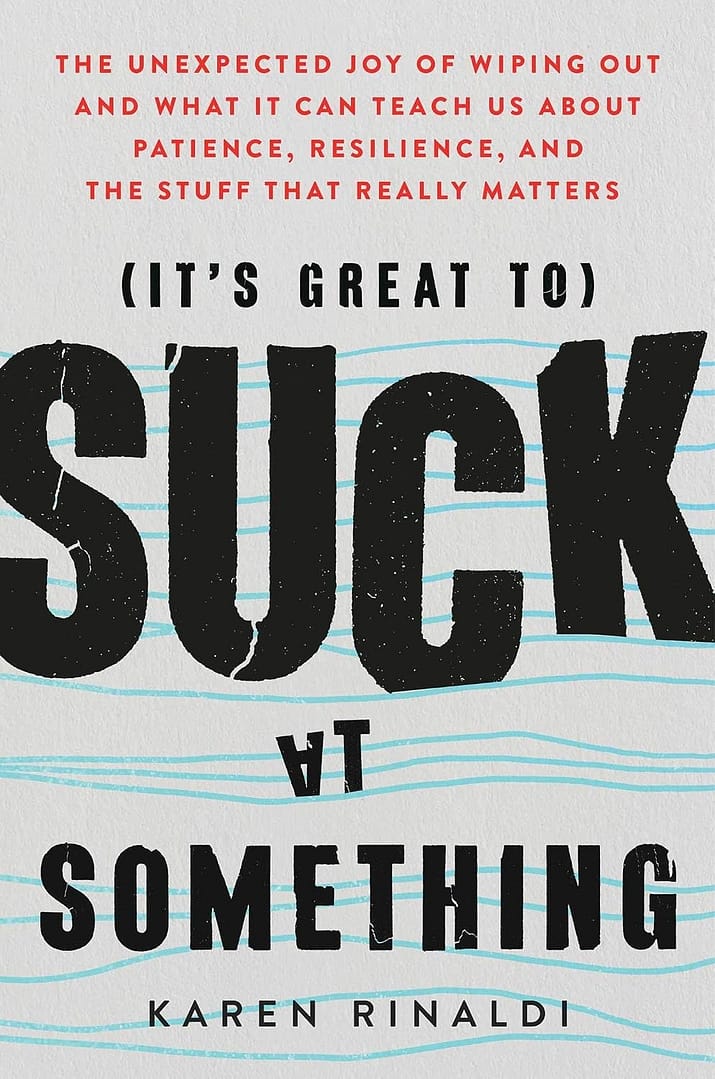
My recommendation, I’d like to make links back to the self-care that I was speaking of, it’s called, It’s Great to Suck at Something by Karen Rinaldi, The Unexpected Joy of Wiping Out and What It Can Teach Us About Patience, Resilience and The Stuff that Really Matters.
I am not all the way through this book, I have just started to read it. It is just an unexpected delight to be able to, again, step out of the busyness of my day to day and sort of the stress of the work that we do. Think about are there things that we can do that make us better people so that when we do engage in the work that we’re in, we’re better at being there.
This is really a great look at what are some of the things that maybe we could try or never have tried because we were afraid of not being good at it. In a society where we are expected to be perfect at something and we are constantly posting the best memories of our lives to share with our family and friends and colleagues. How do we just take a risk and go out and be terrible at something and look awkward at something and enjoy it for just the sake of enjoying it.
Really, one of the joys of surfing is not just getting out there and catching a wave, which is very challenging just to learn in and of itself, but it’s driving with, for me a friend or with my daughter listening to music we get there, we get to the beach. You get to go out into the water and connect with nature and have this meditative experience of being on the water and trying to catch a wave where you’re really focusing to sort of stay alive and have fun. Then I get rejuvenated and I get to go back and jump in to my work and be refreshed and be ready to be there 100% for my students and all the people that I work with.
[00:35:00] Bonni: Your joy in sharing that story, as well as sharing about the book is infectious. Even though I have no desire to learn how to surf, but I do have a desire to read this book now.
[laughing]
You got me on one thing, I like to watch other people do it at this point, but it’s been many decades since I got out there myself.
[00:35:17] Jennifer: It’s recommending that you can learn how to do anything you may be terrible at.
[00:35:21] Bonni: Yes, I love it. I love it. Well, it is so great, Jen. I’m so glad to be connected with you for the first time today. Rashida, I’m just glad that our conversation feels like it’s continuing. I just really appreciate how you have spoken, not just into my work as a podcaster and lifelong learner, but also at my institution. I don’t even think I had a chance to tell you much over email. You’ve just really helped us begin parts of our journey and sustain other ones. It’s kind of we’re at different stages and different ways, we’re trying to support our students and your work has really been instrumental to us. I just love how much I’ve been able to learn from you and that you’re connecting me now with your other co-authors and other people doing work in this field. Thanks so much to both of you for being here today.
[00:36:02] Rashida: Thank you, Bonni. It’s just been a pleasure to get to know you and just really grateful for your willingness to spread the word about this work and so many others. It’s just you provide such a good service, it’s such a pleasure to talk to you.
[00:36:16] Jennifer: Agreed. Thank you so much, Bonni, it was great to be here.
[00:36:21] Bonni: My thanks once again to Rashida Crutchfield and Jennifer Maquire for joining me on today’s episode of Teaching in Higher Ed number 281. If you’d like to see the show notes from today’s episode and all of the great links that Rashida and Jennifer shared with us, that’ll be @teachinginhighered.com/281. You are also welcome to subscribe to the weekly, I should say, almost a weekly update @teachinginhighered.com/subscribe. That’s where you’ll receive the show notes from the most recent week of the episode, and also receive an email or an article written by me about teaching productivity.
Thanks for being a part of the Teaching in Higher Ed community. Hard to believe, we’re coming up on episode 319 episodes. I love getting to be part of our collective learning process, and I’ll see you next time on Teaching In Higher Ed.
[00:37:15] [END OF AUDIO]
Teaching in Higher Ed transcripts are created using a combination of an automated transcription service and human beings. This text likely will not represent the precise, word-for-word conversation that was had. The accuracy of the transcripts will vary. The authoritative record of the Teaching in Higher Ed podcasts is contained in the audio file.