Follow the Teaching in Higher Ed Podcast
About this Episode
Paul Hanstedt shares about Creating Wicked Students on episode 256 of the Teaching in Higher Ed podcast.
If we’re going to face wicked problems, we’d better have wicked competencies.
Paul Hanstedt
On episode 256 of Teaching in Higher Ed
Voices on this Episode


Show Notes + Resources
- Paul Hanstedt ACUE Community article: Five Tips for Getting a Good Start on the Semester (and Maybe Even Enjoying Ourselves a Little)
- Creating Wicked Students: Designing Courses for a Complex World, by Paul Hanstedt*
- General Education Essentials: A Guide for College Faculty, by Paul Hanstedt*
- Wicked the musical
- Milgram experiment
- AAC&U creativity rubric
- Recess Revolution
Recommendations from this Episode


Transcript
Bonni [00:00:00] Today on episode number 256 of the Teaching in Higher Ed podcast Paul Handstedt shares about creating wicked students.
Production Credit [00:00:11] Produced by Innovate Learning, maximizing human potential.
Bonni [00:00:18] Hello and welcome to this episode of Teaching in Higher Ed. I’m Bonni Stachowiak and this is the space where we explore the art and science of being more effective at facilitating learning. We also share ways to improve our productivity approaches so we can have more peace in our lives and be even more present for our students.
Bonni [00:00:48] I have a partnership with the Association of College and University Educators, ACUE. And they bring me wonderful guests including today’s guest Paul Hanstedt. ACUE’s courses and community site feature many teaching and learning’s top experts, faculty developers, and practitioners and they showcase evidence based teaching practices. I’ll be linking in the shownotes at Episode 256 to the ways in which Paul has contributed to ACUE’s work.
Bonni [00:01:20] And I’m excited to share more about him now. After 30 years in the classroom, Paul Hanstedt will become the Founding Director at the Center for Academic Resources and Pedagogical Excellence at Washington and Lee University in July 2019. He has worked with over four dozen colleges and universities in the US and Asia to explore general education and pedagogical reform. He is a recipient of several teaching awards including a 2013 State Council for Higher Education in Virginia Outstanding Faculty Award and the 2014 Case Carnegie Virginia Professor of the Year Award. He’s authored several books including General Education Essentials and Creating Wicked Students. Paul, welcome to Teaching in Higher Ed.
Paul [00:02:10] Thank you. Nice to be here.
Bonni [00:02:12] I believe the first time I ever heard about you was actually by way of your book title, which I don’t like to pick favorites but I can say it’s among my favorites. It instantly caught my attention because of this word “Wicked.” Which I was mentioning to you that that comes up a lot for people I know from Boston like “wicked awesome.” That was a big expression when I was in college, “wicked awesome.” I don’t know if they still say that there but instead you called your book Creating Wicked Students. And I imagine we probably have to back into this. So should we first talk about other wicked things you’ve come across in terms of higher education?
Paul [00:02:50] Oh. In terms of higher education, ok?
Bonni [00:02:52] Yeah. What are wicked things in higher ed?
Paul [00:02:54] Well it’s intriguing. I first came across the term when I was in Hong Kong. I was there as part of a Fulbright to help the region shift their university curriculum from a three year to a four year system. And I encountered a gentleman named Edmund Koh and he was educated at Stanford University and then was an engineering professor at Carnegie Mellon. And then when I met him he was at the Hong Kong University of Science and Technology. And he was talking about wicked problems that his engineering students would encounter, problems where the dynamics were shifting, where the data was incomplete, where there was a pressing need to solve the problem. But you were doing it half blind sometimes and uncertain of where things were going but you still had to do something about it. And he said “if our engineering students are going to face these wicked problems, they better have good competencies.”.
Paul [00:03:46] And coming away from that conversation, my thought was that we’re all facing wicked problems. So many of the issues challenging us these days social media, technology, human interaction in a political forum, of how we get along with each other, how we communicate with each other, who we are communicating with, our assumptions about each other, all of that, those are wicked problems. The opioid crisis is a wicked problem. Education is a wicked problem. Politics is a wicked problem. And my basic theory is that we’re going to face all of us, to use Edmund’s words, if we’re gonna face wicked problems, we’d better have wicked competencies. All of us.
Bonni [00:04:28] I’m so curious. Was that part of their culture? That expression? Or was he bringing it across from the US.
Paul [00:04:36] Yeah. No it’s actually not, as far as I know, a phrase that came out of Hong Kong. My understanding of it is that it began in city planning. I’m sure I could track down the actual citation for you I’ve seen it and read it but I don’t have it right in front of me. In the 70s and the recognition in city planning that they were doing a very good job of preparing their students except when their students got into the world things were much more in flux and much more dynamic. And then as I understand it, engineers heard the term and thought well this describes perfectly what we have. So I believe it comes out of actually United States academic settings and the recognitions of the difference between those retained problems we face in the classroom and the wicked problems that people face in a dynamic world.
Bonni [00:05:19] I’m going to take us on a tiny bit of a tangent and I promise it will make sense in a second. But have you ever heard of the Milgram experiment where there were people who are being shocked in another room and then the person who was delivering the shock they kept saying “oh no it’s OK. They’re fine. They’re fine. Don’t worry about them. Just keep going.” And they would they would say “raise the level of the shock.” And then- it’s a psychology experiment.
Paul [00:05:43] It just came up today actually.
Bonni [00:05:46] You and I have weird connections like this. So how did it come up today?
Paul [00:05:50] Yeah yeah. Why did you bring that up?
Bonni [00:05:52] Well so I think you might have a dog with you, is that correct?
Paul [00:05:57] I have a dog in my house.
Bonni [00:05:59] I kept thinking I heard a little whimper of a dog. Or I thought it was a bird. I couldn’t decide.
Paul [00:06:04] The window is open so you probably are hearing a bird.
Bonni [00:06:07] Oh lovely. Anyway I just have this this random. I feel like I’m getting to talk to you before we started to press record I feel like you could do this little tangent with me as I was thinking like “is this is a test for me to see if someone’s being harmed in your presence?”
Paul [00:06:27] The most intriguing thing, you know that that that initial study was just a baseline study, right? And that there was a whole series of studies that came after it with various different variables.
Bonni [00:06:36] I was not aware of that. In fact I am more aware of that that study could never happen today because of some of the rules we have around research now. But no, I did not know that.
Paul [00:06:46] Oh no they did it. I want to say they ran it somewhere between 12 and 20 different ways. Sometimes there was a scientist in the room, sometimes there were two scientists in the room, sometimes they could see the recipient of the shock, sometimes they couldn’t. Sometimes there was another non-scientist in the room.
Bonni [00:07:05] OK.
Paul [00:07:07] And I want to – – and I don’t have it real clear in my head – – and again in this part of this comes down to me for this conversation about dress code. My daughter, they have this anonymous reporting system. And so one of the things I was going to suggest is that they make it a two tier system that two people have to report the same person before they get called in for dress code because one of the later variations actually went down to- and I can’t remember if it was that there were two scientists in the room and one was arguing for the shock and the other was arguing against the shock or there is another participant in the room but it dropped down to zero when that variable was present. The person that was administering shock refused to do it. Isn’t that intriguing?
Bonni [00:07:56] That is super intriguing. Thank you for allowing me to go on that. I suppose that we can somehow tie it back to the word “wicked.” I am curious because of course wicked can have such negative connotations. Did you- what kind of thought went into- becuase so much of the challenge with us in higher ed has been disparaging toward our students and trying to shift it to thinking of them as really bringing assets with them into college and beyond. And so what kind of thoughts did you put into that as far as using the word?
Paul [00:08:30] You know it’s sort of funny because I am the son of a Lutheran minister so you would think that I would have put a lot of thought into that word but it didn’t bother me at all because at the core of it what it means, the connotation I could see having a very negative impact. But at the core of it, the way this is defined it is, it’s a powerful student. It’s a student who can walk into a situation that is dynamic, that is in flux, that is fluid, that is challenging, even a little frightening and they’re capable of stepping back and examining the situation and approaching it in a thoughtful, deliberate, productive way. So by the time I wrote the book, I had that term in my head for six years. So the connotations for me were completely positive. It had to do with agency. It had to do with thoughtfulness. It had to do with understanding that you have a right to step into a problematic world and be a part of the solution.
Bonni [00:09:27] Yeah I had a very positive association with it the instant that I saw it, like I mentioned. And I am wondering if our definition of that word wicked has changed, it would be interesting to know. I saw the musical Wicked for the first time just recently in the last six months or so. And of course the character they’re playing, the wicked witch you know. Spoiler alert. But let let me just say that characters that we think we understand from just catching glances of them, they’re often much more complex than we would ever let on. And so I was very intrigued. I wonder if that’s part of it where that definition really is changing because I didn’t necessarily- like I would think it’s not the same thing as evil, wicked just has a totally different connotation to it.
Paul [00:10:13] There is – in terms of the connection to the wicked witch – – because there is for me implicit in that a fearlessness, a courage about this is complex, this is messy, this is hard but I’m OK stepping into it. I’m ok looking into it. I’m OK being part of the solution. And good Lord in the world we live in now we need this desperately.
Bonni [00:10:37] One of the things that has been intriguing me for some time now is this idea that before we can begin inviting our students to learn there’s actually a lot we have to do to help them unlearn.
Paul [00:10:49] Yes.
Bonni [00:10:50] What kinds of things have you noticed in your work that really come up for needing to help our students unlearn? And then also I suppose what we need to unlearn too. There’s a lot of that.
Paul [00:11:00] Oh no. Exactly you know. So it’s come back to that what we need to learn because I think that’s a really great question. So my background, I have a PhD in Victorian Literature but I was at Ohio State University and so I fell in love with composition and rhetoric when I was there. So I’ve really done very little literature. And I do consider myself a writing specialist. So one of the things we need to teach our students to unlearn is simply the algorithmic approaches to writing that they are taught in high school in order to be prepared for standardized testing. The five paragraph theme is the obvious villian. But a lot of it is sort of the thinking behind that which is not just that here is a structure, but this structure is all there is to it. It’s not about complex thought. Abortion should be legal or illegal for these three reasons and none of which are critically developed and none of which are particularly complex. So if we’re going to get students used to complex problems, that idea that there’s there’s a one paragraph answer to something or three one paragraph answers to a complex problem, that’s one of the things we have to unteach.
Paul [00:12:11] One of the things I find intriguing is that when I’m working with honor students or high performing students or students who have achieved or been very successful with the traditional sort of system of testing and grading, in other words straight A’s students, they struggle more with wickedness and complexity than the B minus student or the C plus student. And sometimes that’s simply because they become risk averse because the grades seems to be the determining factor whereas for other students they’re actually kind of intrigued with the problem and they have a little bit of that cocky wickedness, sort of sauntering swagger and they will take on a wicked problem and take risks and sometimes come up with better, more thoughtful, more creative, more out of the box solutions than the the brightest students in the class or the highest performing students in the class is a better way to put it.
Bonni [00:13:05] A challenge that so often comes up from people when we start to open up these ideas of- in some cases it comes up of getting rid of the rubrics for something and just letting people create. And so when we talk about not having as many parameters and just seeing what happens, a lot of it as “well then they won’t try very hard.” And I always, I think this is really interesting because I think that part of me still believes that too. And yet when I experiment with it I find that I am most often quite wrong. And then in the occasions where I’m right, it doesn’t really matter. Like why do I need to act like everything that I might invite someone to to create with me- like it has to be the most important thing to them in their mind. So I just- did you think about that as well as you were- I mean you’ve written more than one book,, has this come up for you as well? This idea of the fear of what will happen to their motivation if we try to do this more?
Paul [00:14:06] It’s funny, it hasn’t. I wasn’t thinking- I didn’t have it at the forefront of my mind as I was writing either of the books, but I know that my thinking has been shaped a lot by irreverent students, by students who have more creative ways of approaching the world, who take more risks. And it’s interesting that you mention rubrics because I had one student in particular, I have a complex relationship with rubrics. I recognize their value. I recognize how they can be used very productively to communicate to students “his is what I’m looking for.” And we have to communicate to students what we’re looking for, particularly in a “wicked” context. But I’ve always just kind of felt like every time I use them I’m sort of manipulating the boxes to get where I want to get with the students grade or in terms of motivating them. And I remember one year I thought “okay this is a year I’m going to use these rubrics.” And I had them sitting by my desk and I was doing paper conferences and at the end of every paper conference I would turn to the student and say “OK well just so you kind of know, here is the rubic I’m going to use to be grading the paper and if I were to mark you right now on this draft, here’s kind of where I put you in the thing.” And there was one student where I of began by saying “I don’t know if you’re familiar with rubrics,” and she is of Jamaican descent and was raised I want to say by a single mother, but I’m not entirely sure and was a little bit of a free spirit and she the minute I said “I don’t know if you’re familiar with rubrics” and she goes “well I know much more than is in those little boxes right there.” And I all but picked them up and just put them in the garbage at that point.
Paul [00:16:01] But at the same time I will say that we do know that there is that constraint can be valuable for creativity. I mean I work in creative writing and any poet will tell you that there’s sometimes power to having to work in a form or a sonnet form and that it pushes you to sort of shape things within these tight confines and adapt in some ways that maybe you wouldn’t that you could have anything you wanted to do anything you wanted. So I don’t know that I felt fear about opening the box too wide. But I do know that we need to find ways to allow students to take risks.
Bonni [00:16:46] Yeah.
Paul [00:16:47] If everything we have in our class fits in a little box and everything we do in our class has a grade attached to it, they’re not prepared for when they step in to a complex world, a messy world, a world where another problems like anything they faced in the books or in their classes.
Bonni [00:17:08] I also have a complex relationship with rubrics. And I have lots of different feelings about it but one of the things that I just absolutely think we all need to resist is this notion that “I’ll know it when I see it” because rather than freeing them up for the kind of creativity and the messiness that you’re describing, instead we’re expecting them to read our minds and they do not have the same educational background or perspective- I mean I just think that that that is not fair to to our students and so that as far as sometimes I use them sometimes I don’t, I think I should use them less in terms of just this- it is more of a creative type of a thing- and some people have put together some wonderful rubrics for creativity like AAC&U has some nice ones so it’s not like I think that they’re all bad. But I think we should use them when they’re helpful and don’t use them when they’re not helpful. But don’t expect people to read our minds and that we’re gonna know when we see it, whenever “it” is.
Paul [00:18:12] Well one of my favorite techniques and I don’t think she’s the only one that does this but I have a colleague Hannah Robbins who’s in the mathematics department at Roanoke College. And the way she approaches it is that she designs a rubric with the students. And that makes sense to me because if we want them to know what’s in our heads and we want them to know what we’re after, well simply handing them a rubric isn’t enough. Here read 500 words that I’ve crammed into tiny boxes for you and then you’ll understand what I’m thinking. But if you’re having a conversation about creating it together, they’re going to understand what you’re after and they will also have a greater sense of this idea of authority that I talk about a lot of the book of being capable of authoring something, of having enough of a brain to say something that matters and to understand to be part of this conversation about how they should be graded.
Bonni [00:19:02] One of the other areas that you explore and have some prescriptions for is this day to day pedagogies, what can you tell us about that?
Paul [00:19:11] I can tell you that the edit didn’t like the word pedagogy.
Bonni [00:19:15] Someone on Twitter was really not a big fan of pedagogiestThe other day too and I was like “what’s going on with that word?”
Paul [00:19:22] I mean here’s what it comes down to. So if we wanted students they have the authority, a sense of authorship and ability to walk into the world and not just be a part of the world but also to kind of create the newness of the world. I mean the world is changing every single day. This is obvious right. And if we want our students to be full participants in citizenship, and in business, and in non-profits, and in politics, they have to be part of that authoring of new things and new ways of thinking about things and new solutions to problems.
Paul [00:19:55] And so if that’s what we’re after in the end, then we should be giving them the kinds of projects and the kinds of work and the kinds of exam questions in our classes that engage them in those ways where it’s not necessarily about well there is a right in the wrong but sometimes there is. And they need to know that. But sometimes how that right and wrong is applied, how that content is applied is very complex, and very messy, and very dynamic.
Paul [00:20:22] And then my other argument is OK if we have a messy complex world, we should give them messy complex questions and messy complex papers in the classroom. But if we’re going to be giving them those kinds of exam questions and those kinds of final projects, they need time to practice because that’s changing the rules.
Paul [00:20:40] And this is sort of alludes to a question you were talking about earlier where the rules that they’re learning so often, not all the time but so often, coming out of secondary education is that the correct answers are at the back of the book, and there are right and wrong answers. Well yes there are sometimes and yes they are not sometimes. But if what I’m saying is listen there are variations of what is accurate, variations of what is a good idea. Here’s a complex problem, there can be some solutions that are 100 percent really good on it, some solutions that are 85 percent pretty good on it. If we’re going to change those rules, we better create day to day interactions with our students and practices in the classroom and allow them to practice with these changed rules and these change dynamics. I mean I don’t think that surprises anybody. You don’t throw a question on the final exam that they’ve never seen before or never seen in any form.
Bonni [00:21:38] Yeah and some of that practice too is practice because so much of what they get in other parts of their education are these things that have right answers. I need to have practice just loosening the reins a bit for those times when there is not one correct answer. That’s something that can’t be you know midterm final good, yeah you got it or you didn’t. That really requires a lot of practice.
Paul [00:22:05] think this does relate to something that you mentioned earlier in that it asks us to change how we perceive who we are in the classroom and what our role is in the classroom. I mean I’m a very very old man. And so I grew up in the system so many of my instructors stood at the front of the room and delivered information. And I carried that model of what it was to be a professor in my head for a long time. And there is a place for that and lecture can be very powerful and very effective and content is crucial. We can’t ignore that there are some situations and there’s some information that is either factually correct or factually not correct. But we need to also recognize that on some level we’re not just the deliver of truth, we are also the coach who helps them get through these muddy situations. That means playing a slightly different role. It means allowing them to mess up and creating space in our syllabus for them to mess up. It means admitting very often that we ourselves are not quite sure. And that can be a little scary both because of the models we carry in our head of what it means to be a professor but also because of things like evaluations, if they come in thinking the teacher knows everything and they’re going to deliver that everything to me and then we say “Actually no. We’re not really sure.” The second feel a little risky for us to.
Bonni [00:23:35] For my students final project in my business ethics class they created games. In two cases they created board games and in one case it was a Jeopardy game that they projected. And so we played them together as our final time to get together and one of the one of the games required that we were in pairs and it was an uneven group so I played the game with a student and one of the questions I should have known this answer and for the life of me I just couldn’t think of it. The student can think of it. And I mean it just came up so often in the course, how could I not remember that? And it is hard because they were shocked. One of the students was bold faced like “I can’t believe you didn’t know that. You didn’t know that.” And that thought like “oh this is even more embarrassing.” And one of the other students said “that’s how I feel when I take a test. I’m sitting there and I know that I know this but I just can’t get it’s to come.” I thought like this is healthy modelling, this is healthy modelling. But it was really hard. It’s hard to be in that place. But I think really healthy for me to to have experience that embarrassment and that feeling of panic of “oh my gosh I should know this.”
Paul [00:24:43] Oh yeah. I mean that to be reminded about what it’s like to feel sort of powerless. That’s right. Yeah.
Bonni [00:24:50] The other thing that was interesting that they brought up was that they were saying well in this case they said “if I had heard the guy’s name first, I could have told you that he was the creator of this philosophy.” But because we started with the philosophy, they couldn’t back up. And you were talking about practice earlier. If that kind of recall needs to happen both ways, then the practice better both ways too. I thought that was interesting. My failure in that moment generated some really good discussion around that and also of course points out the weakness of tests that we’re not always able to convey the knowledge that we already have.
Paul [00:25:29] In the last year I’ve had two people say to me, “what do you say to professors who don’t want to give up the sage on the stage approach or being the all knowing person in the room?” And my response to both of them was the same, which is if you sit down with a bunch of professors and say “what’s the best moment you’ve ever had in your teaching?” Very seldom is it going to be the time I gave that lecture where I nailed it perfectly. Very often it’s going to be them telling a story about the student in the class who couldn’t get it, couldn’t get it, couldn’t get it, and then turned and handed it to the professor, a paper, or project, or solving a problem, or doing an oral presentation with this look on their face like they can’t believe it, they just did it. I mean that’s rewarding. That’s what we teach, to be in the classroom and have that student stand up and go “I get this. I got it now.”
Bonni [00:26:33] That whole idea of thinking back to the best moments in our classes I can’t imagine it’s “I nailed the performance aspect of it,” I don’t think that’s why most of us went into this.
Paul [00:26:45] Yeah.
Bonni [00:26:47] Before we get to the recommendations segment for today’s episode, I wanted to take a moment and thank the sponsor for today’s episode and that is TextExpander. They have been sponsoring the podcast now for more than a year. And if you’ve been listening for that time you know what a big fan I am. You know that I consider it an essential tool that saves me a lot of time so that I can be freed up for the kind of stuff I really want to be doing, engaging with students and people close to me. TextExpander is all about saving time with typing and if there’s something that I type often whether it’s something that is longer that I don’t want to have to retype or just something that I don’t remember very well like my work phone number is one I just notoriously don’t remember. I essentially program it, but it’s super easy to do. I just type in what they call a snippet, a few letters few characters, and it automatically expands them to be this larger segment of text or as I said something I don’t remember very well. And they recently upgraded and have a new visual editor for snippets and so when I have villains maybe it’s the date, or putting someone’s first name in there, all kinds of ways I can make it even smarter, there’s a new visual editor that just makes it that much easier to see what’s there and to make any changes that I want to. And there also is a team version of TextExpander. So if I want to have this within a group of people, a department, what have you, it will help us all be able to save that time and also have that professionalism and consistency that we’re looking for. And if you go to the link that’s in the show notes today if you go to TextExpander.com/podcast you can get 20% off your first year and please let them know that we sent you over there, that that you heard about them from Teaching in Higher Ed. Thanks again to TextExpander for sponsoring today’s episode.
Bonni [00:28:37] This is the time in this show where we each get to give recommendations and I recently got to go to this event called Imaginology and it was for kids and families I suppose, I mean people of all ages, kids of all ages. And they had all these different exhibits. It was on a fairgrounds by where we live. So there’s a farm on the fairgrounds and the kids got to see that. And one of the things they had was just this open play area and I forgot the name of the organization but I’m going to put it in the show notes because I can ask my husband, I know he took a picture of their information. So I’ll put the name of this nonprofit. But the nonprofit they had brought in just all this stuff for the kids to use and build and create and imagine. They had cardboard and tires and I didn’t even- I never thought of this as something kids but enjoy playing with, but the kinds of- they’re not headphones but the things you put over your ears to protect you from…
Paul [00:29:30] Like earmuffs?
Bonni [00:29:32] Yeah. Yeah. And then they had I mean just all kinds of stuff. But as they came in there were rules and so I’m just going to read the kids oath that they take and then I’ll read the one for the ones bringing their kids. So the kids oath: “I promise to take care of this place, take care of this stuff and take care of each other. That means stuff on stuff, not stuff on people.” And I love the simplicity of that and the invitation that it is to be here but you know take care of the place that we’re creating here. And the adults oath is: “I promise to let the kids lead the play and encourage the four C’s creativity, communication, collaboration, and critical thinking.” And my son and daughter just had the best time there, just free play. Just go do whatever you want. It was really really great fun and I just was inspired by this and will encourage people to take a look. I’ve got pictures that I’ll put in the recommendation so you can have a look and also link to that nonprofit once I figure out what the heck its name was because they were great.
Paul [00:30:41] Yeah. And think about how that contrasts with our syllabus.
Bonni [00:30:44] Mm hmm. Yes.
Paul [00:30:45] Which is rules about how you can fail if you don’t do the right thing. So.
Bonni [00:30:53] Absoutley. Paul, what do you have to recommend for us today?
Paul [00:30:56] Well this is interesting. I’ve been thinking about this for a while- and a little background, this laas last year I had a sabbatical. And after 21 years as a professor at that point I got the wicked students book done pretty early in the sabbatical and I was working on a novel- I’ve got a crazy idea for a vampire detective. But I really spent a lot of the year reading. And it was the first time I’ve been reading- I probably read more books in that one year than I had read in the previous two decades, and part of that is raising kids and part of that is having the job and commuting and all these things.
Paul [00:31:33] Well and then that connects to this other idea. I had some students teaching a class and they were talking about the amygdala and they were talking about how the amygdala takes information very quickly and then it’s basically the fight or flight place. And then I was thinking about David Cole and James Cole and their model for deep learning which begins with information input concrete input, and then reflection, and then hypothesis, and then action or testing of the hypothesis and it’s on a circle. So you know one leads to the other and it can be non-linear and- but here here’s where I’m going with all of this.
Paul [00:32:12] I’ve been thinking a lot about what I call the necessary pause. The way so often our students come in, we give them information, they take it, and then they hand it back to us in exactly the same form. And what we know is that that speed doesn’t deepen their learning. It doesn’t really mean that they’ve taken the information in and owned it.
Paul [00:32:36] So I’ve been thinking about the ways that sometimes asking students to write about biology using visual forms or write about literature by creating a video, that change of genre forces them to pause and think “OK how do I translate this from one form to another? What videos have I seen before? Or how might I do this?” And I’m thinking both about how it works in the classroom and how that necessary pause is going to deepen their learning. But then I’m also thinking about for the rest of us. And this is where my mention about reading last year on my sabbatical comes into play. How much I learned to pause again, to not just get something in and then turn it around and put it back out. I was reading more carefully.
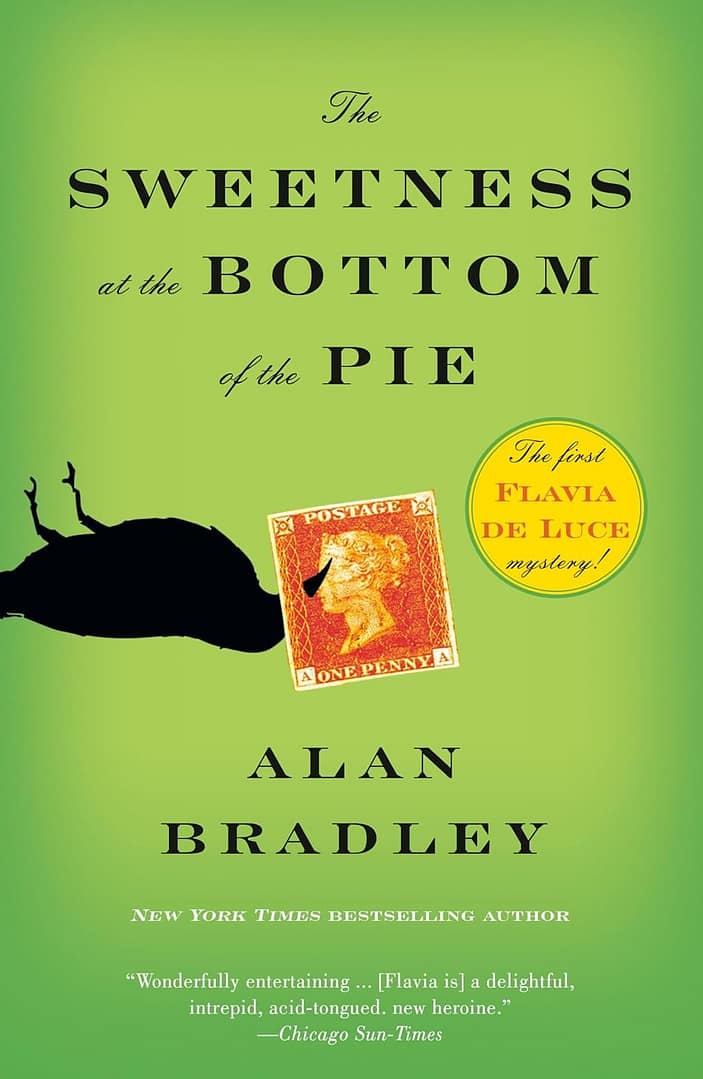
Paul [00:33:26] So I guess my recommendation is that people pause more and if you need to help the pause I would strongly recommend a series of light detective novels by Alan Bradley about a young eleven year old chemist named Flavia de Luce who spends half the time trying to solve the mystery and the other half the time trying to figure out how to poison her sisters. That’s my recommendation.
Bonni [00:33:52] I did not think that’s where we were going to land there.
Paul [00:33:58] [laughter]… Lay on the couch – because we know this, right? You know that when- you know how many times people say, “Well I’m in the shower, then suddenly the idea came to me.” That’s because you’re not trying to move so quickly. Give yourself time to reflect, connect to past experiences and idea of neuronal networks and then move forward and lying on the couch reading a book. That’s a great way to pause. So that’s mine. Is that too wordy? Is that too much? I’m sorry.
Bonni [00:34:21] No, I totally love it. And you’re reminding me a little bit. It’s like I know better than the story I’m about to tell you but it’s nice when somebody gives us a little nudge and that is that I was a little stressed out about this chapter I was supposed to be writing, the deadline is looming and I’m the person who likes to hit or exceed my deadlines. So my husband said “what are you writing the chapter on?” I said “I don’t know.” He said “go look right now what that chapter is on. And then even if you don’t have time to work on it in the next few days until closer to the deadline, at least your brain can be working on it.” And I thought that was such good advice and I took it. And I know that but every once in a while we need that reminder.
Paul [00:35:00] Yes because sometimes- we make it in this profession because we perform high and fast and quickly. We meet our deadlines. We publish. We exceed expectations. And boy, good, but pause. Having it there, letting your brain mull it. Give it some time. You’re gonna come up with better ideas. Yeah, that’s a great story. Did it work?
Bonni [00:35:27] Yeah, it absolutely did. And then when I sat down to do it, it’s some of the fastest writing that I’ve done just because I had been working on it mentally all that time and then I got to really- .
Paul [00:35:36] Excellent, good.
Bonni [00:35:39] Paul, thank you so much for investing your time in this community and just sharing your expertise. It’s just been such a delight getting to know you and I hope this is just the beginning. It’s great being in community with you.
Paul [00:35:50] My pleasure. It’s been a wonderful conversation. I hope we talk again soon.
Bonni [00:35:56] It was so fun to get to have this conversation with Paul Hanstedt. Thank you Paul so much for being on the show and allowing me to go on a couple, maybe just one little nutty tangent but it sure was fun to do it with someone who is willing to improvise with me. So thank you for that Paul.
Bonni [00:36:14] Thanks to all of you for listening. I sure do treasure this community. It’s episode 256 and I’ve been doing this for 5 years now and it’s been an absolute joy every single week, rain or shine, sometimes a day early sometimes a day later just because of a holiday but I haven’t stopped. And it’s been because of you, it’s been because of the people that come on the show to have these conversations. And it’s also been a lot of you telling me how they’ve had an impact on you. So thanks for letting me know that – – whether you send me a tweet or however you get in touch, it just brings me absolute joy. Thanks for listening and I’ll see you next time.
Teaching in Higher Ed transcripts are created using a combination of an automated transcription service and human beings. This text likely will not represent the precise, word-for-word conversation that was had. The accuracy of the transcripts will vary. The authoritative record of the Teaching in Higher Ed podcasts is contained in the audio file.