Follow the Teaching in Higher Ed Podcast
About this Episode
Bonni Stachowiak shares about her experience at the AHSIE Conference on episode 255 of the Teaching in Higher Ed podcast
If you’re going to come to my class, you need to come with purpose and passion.
Leticia P. Lopez
On episode 255 of Teaching in Higher Ed
Voices on this Episode

Show Notes + Resources
- AHSIE 11th Annual Best Practices Conference | April 14-17, 2019 | Riverside, CA
- AHSIE 2019 Program Details
- Gina A. Garcia
- Decolonizing Hispanic-Serving Institutions: A Framework for Organizing – Gina Ann Garcia, 2018
- Exploring College Students’ Identification with an Organizational Identity for Serving Latinx Students at a Hispanic Serving Institution (HSI) and an Emerging HSI | American Journal of Education: Vol 124, No 2
- Episode 123 with Yolanda Flores Niemann on Presumed Incompetent
- What Does it Mean to be Latinx-serving? Testing the Utility of the Typology of HSI Organizational Identities | Garcia | Association of Mexican American Educators Journal
- Microaggressions in the Classroom- YouTube
- Microaggression presentation – Google Slides
- Dunning–Kruger effect – Wikipedia
Recommendations from this Episode

Transcript
Bonni [00:00:00] Welcome one and all to episode 255.
Hannah [00:00:08] Welcome one and all to episode 255.
Production Credit [00:00:10] Produced by Innovate Learning, maximizing human potential.
Bonni [00:00:20] Hello and welcome to this episode of teaching in Higher Ed. I’m Bonni Stachowiak and this is the space where we explore the art and science of being more effective at facilitating learning. We also share ways to improve our productivity approaches so we can have more peace in our lives and be even more present for our students.
Bonni [00:00:47] So Hannah, I was gone this week earlier. Do you remember?
Hannah [00:00:51] Yes.
Bonni [00:00:52] And do you remember where I was? What kind of event I was at?
Hannah [00:00:55] A conference.
Bonni [00:00:57] I was at a conference, it was the Alliance for Hispanic Serving Institution-
Hannah [00:01:03] I forgot state she went to but it’s close to- um- Zion National Park.
Bonni [00:01:09] It’s actually nowhere near Zion National Park. It’s in a place called Riverside. That’s about an hour from our house. Do you want to say goodbye to everybody so they can hear more about my conference?
Hannah [00:01:22] Bye-bye “arty-pants.”
Bonni [00:01:26] The Alliance of Hispanic Serving Institution Educators was a great experience. They had their conference April 14th through 17th and I want to share just some of the highlights that I was able to experience there and some of the people that I had the opportunity to meet.
Bonni [00:01:41] I’d like to start by sharing about getting to learn a couple of different times from Gina A. Garcia. She presented as one of the many people who shared at the Hispanic Serving Institution 101, HSI 101, that was a Pre-Conference Institute. And one of the things that they started out with was talking about micro aggressions. And previously I’ve had on the show Yolanda Flores Niemann and she shared about her book that she was one of the editors for, Presumed Incompetent. And she did talk about micro aggressions. And on that episode a video came, I believe she recommended it, about micro aggressions. I recently showed it in one of my classes and it’s just such a wonderful piece that I’m going to recommend that people go back and revisit if- oh and Hannah has something she wanted to share about Garcia. Do you want to say that again? Because they couldn’t hear you. You can say it again.
Hannah [00:02:36] My teacher’s name at school is Mrs. Garcia.
Bonni [00:02:41] You have a teacher named Mrs. Garcia at school. Yes, so that name is familiar to you.
Bonni [00:02:46] You might wonder why Hannah is with me today recording a podcast. Hannah and our son also helped me out the other day. And it all went away, Hannah. We had a podcast trauma and I had to rerecord. So here we are. So we’re back to talking about HSI and about micro aggressions.
Bonni [00:03:07] They talked about them being spaces and places and that they’re not all conducive to supporting multicultural students. They’re not perfect. And one of the things that Gina A. Garcia’s work looks at is a typology of HSI Organizational Identities. And it’s a two by two quadrant and it looks at yes, we can be on one end of the spectrum, we can be enrolling a lot of Hispanic students. But on one hand they might be able to perform academically or we might not have the kinds of supports that they need to perform at those levels. And on the other spectrum that she looks at is the degree to which we have their culture integrated in our institutions. Are we able to help them bring their full selves to our institutions?
Bonni [00:03:59] I’m gonna be linking to many of the resources that I learned about at the HSI 101 conference as well as you know throughout the podcast, so please look for her article about that topology. And if you are an HSI or aspiring to be one, that would be a good place to start in having some discussions around where you might land on that topology. I know that many from my institution did.
Bonni [00:04:21] Another person I had a chance to meet is Leticia P. Lopez. One of the things she shared starting right out in the institute was “if you’re going to come to my class you need to come with purpose and passion.” And she just brings so much passion and purpose to her own work. And it was fun to hear her talk about her own teaching. Both of them emphasized in their work and in their presentations to us the need to reference critical theories and to access Decolonial Theory and Critical Race Theory. I’ve really enjoyed meeting them and getting to hear from them. And as is the case at so many conferences, it isn’t just about the formal presentations but I had a chance to watch some of my colleagues give a presentation and someone asked a question at the end that sort of made me say “I want to go meet that person and talk more.”.
Bonni [00:05:11] He’s a PhD student at the University of California Santa Cruz at their Department of Education, Edgar Martinez. And he, in addition to being a PhD student, also works on their HSI project called Science, Education and Mentorship in Latino Lives in Academia. He’s a data analyst for that project. We had one of those conversations where you just meet someone and you have so many things that you can talk about and just bounce from one thing to the next. He had talked about Bandura who is cited in my dissertation so my ears perked up a little bit but he looks a lot of Bandura work around self efficacy. I was fascinated because in general in this podcast in the past when things like self efficacy have come up, we have I believe 100% of the time just talked about it as a global thing, I either believe I can do this or I don’t. And he looked at self efficacy at the class level as well as at a programmatic level and found differing things there, differing results depending on if it was again at the class or the program level. So I may have an opportunity to have him come on the podcast at some point to share about his research and the work they are doing is just absolutely fascinating. But I wanted to say right now what a privilege it was to have an opportunity to talk with someone that we had a lot in common, but then a lot of things I wasn’t aware of.
Bonni [00:06:35] One of the things I was mentioning to him is I had just listened to a podcast on the Dunning-Kruger effect that I thought might be somewhat related to some of the things he was talking about. The Dunning-Kruger effect is this idea that if I learn a little bit about a topic, we will tend to overestimate the overly confident that we know our stuff in that particular domain and the more that we know about it the more we realize we know nothing. And it really vastly goes down of course once we learn more. So the Dunning-Kruger effect was something I thought he might be interested in as well. We got to exchange some emails and he sent me some more information about the self efficacy work that he is doing.
Bonni [00:07:15] I mentioned that you should check out the typology of HSI Organizational Identities, so please have a look at that. Speaking of UC Santa Cruz, I had a chance to hear from a couple of other people from UC Santa Cruz and they were a part of the HSI 101 and they were talking about the practitioner inquiry cycle. And part of the issues that got brought up actually a number of times throughout the conference is being more deficit minded when it comes to our students. I wouldn’t be surprised if so many of you have heard “oh this type of student…” and insert your ethnic identity here. This type of student comes in, they’re underprepared. Well that’s viewing an entire population of people as if they are a deficit to our institutions and instead we should be having an asset based mindset and can be a lot more helpful to us to creating conditions under which their learning can thrive and helping them bring, as I said earlier, their whole selves to their education. So we started with that and then looking at the practitioner inquiry cycle which I’ll link to an article that explores that in further depth as well.
Bonni [00:08:24] A really moving part of the conference was the presentation of the scholarship winners. Each one of the students who received a scholarship got up and shared really from their hearts. Their their minds and their hearts were very engaged and it was so inspiring just to learn how they were able to persist through some very difficult conditions and to be able to pursue their educational dreams. That was really really cool to see and I’m so glad that they make that a part of the HSI conference.
Bonni [00:08:56] This is the point in the show where we each get to give recommendations. I’m saying we each get to give recommendations, we’ll see if Hannah has anything she wants to recommend. Actually I’ll start with Hannah, so let’s see.
Bonni [00:09:05] Hannah, is there anything you want to recommend to people today on the podcast? Anything like a book that you like or a movie or music or just something that you think they should think about or do?
Hannah [00:09:18] You should watch the 5th movie and the 6th movie of Star Wars.
Bonni [00:09:26] Oh, yeah. You like those Star Wars movies, huh? And what did you see in the fifth and sixth movies of Star Wars that you really liked?
Hannah [00:09:34] I liked that Luke Skywalker had that green lightsaber and killed all of the bad guys. Because I like the good guys better than the bad guys. And I liked that Luke Skywalker turned to the good side.
Bonni [00:09:53] Yeah.
Hannah [00:09:54] And it’s kind of funny cause my brother watches those Star Wars movies and my brother’s name is Luke and it’s Luke Skywalker.
Bonni [00:10:05] Yeah. Yeah. Do you know we didn’t name him Luke because of that, but he does have the same name right?
Hannah [00:10:11] Sort of the same name.
Bonni [00:10:14] Sort of the same name, but not the same last name. Well thank you for your recommendation, Hannah. I’m going to give mine now. And I have three of them to give for myself.
Bonni [00:10:21] One is a conference that any of us can attend even though it’s technically over but all the information is still available online. That is the 2019 PressED Conference. It’s an online word press conference. It was really creatively done. This is the second year I’ve been aware of it, I’m not sure how long it’s been around but the second year I knew about it. It’s a word press on education, pedagogy, and research conference on Twitter. And so they have presenters who have queued up a number of posts, a number of tweets around a particular topic and then they also have keynotes. I’m going to read to some of the titles here: collaborating with students to bridge the gap between academic disciplines and industry, PhD and beyond: a WordPress adventure, using WordPress in a Japanese university for research led teaching, using WordPress to develop a professional associations blog. All kinds of presentations as I mentioned some keynotes some not and then of course all of the conversations that happened as a result of these 16 or 17 tweet threads. There’s so much information that’s available, so I’d suggest that for this recommendation you go up and have a look at some of these. You’ll just see the title there. You don’t even have to belong to Twitter to view Twitter threads. Just click on the link and it will bring up a post and in some cases it will have a lot of information. Other cases it’ll be short tweets with some pictures or possibly links over to other places as well. So highly recommend the PressED conference.
Bonni [00:11:58] Another really interesting thing that happened- which I find it just fascinating when you come across something and then you see it everywhere. And that is the one of the recent episodes of a podcast I enjoy listening to called Parsing Science. And it is a former professor of mine from my doctoral program, Doug Leigh and his co-host, they interview people about research each episode. And in this particular case they interviewed Amy Orben and she’s looking at screen time. And as a parent of course we see screen time all the time, but the headline is Screen Time May Be No Worse for Kids than Eating Potatoes. And when you look at her research, she explains it in such an accessible way but really looking at when we look at such large datasets how it can be problematic to come to the kinds of conclusions that some researchers have. So I found out about new methods for statistical analysis I was not familiar with and just really enjoyed this very thoughtful look into an issue like screen time. It really does apply to a lot of different issues that I know many of us are concerned about in a related thing of just those distractions in terms of the social media and also the devices in our classes. I just thought it could provide some thoughtful analysis for us in our work as well. So I’d suggest that you have a listen to the Parsing Science episode on Forking Paths of Kids Screen Time.
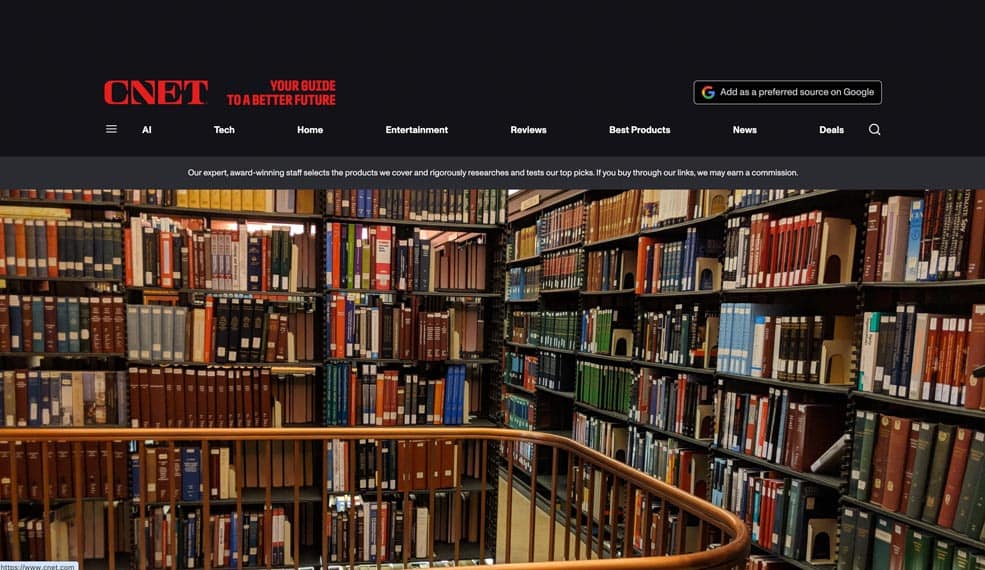
Bonni [00:13:27] And the last thing I’d like to recommend today is a wonderful article called Libraries Lean in On Twitter Facebook and Instagram to reel you in. From pithy tweets to insta novels on Instagram libraries around the world are using social media to entertain and reach their audiences. And it has all these different examples of libraries and how they’re using social media. In one case, the New York Public Library created insta novels, digitized versions of classics designed to be read on a smartphone. Lewis Carroll’s Alice in Wonderland was the first classic to get the treatment. Absolutely a delight. They also have some pictures in there as well.
Bonni [00:14:08] One of my favorite pictures is from Liverpool University library and it’s a picture of as we see shelved books but stuck in between two of them is, it’s trash essentially, a sandwich to wrapping for a chicken bacon and lettuce sandwich. And the tweets with the picture included says “Please don’t shelve sandwiches. If you need help differentiating between books and food, ask a member of staff. #Experts.” It’s so fun how they go about just really reeling so many of us into libraries back in and just really building this culture of learning. It was really a great article I suggest people have a look.
Bonni [00:14:51] Thank you so much for listening today and I got Hannah still here with me but she’s got her volume back on.
Hannah [00:14:58] Hello!
Bonni [00:14:59] Hello Hannah. And this is where we get to tell everybody thanks so much for listening to episode- what was our episode number, Hannah?
Hannah [00:15:10] 255.
Bonni [00:15:10] Hannah, you actually remembered. That’s great! Yeah. Thanks for listening to episode 255. If you want to see the show notes you go to teachinginhighered.com/255. And we’d just appreciate you listening. You have anything you want to say thanks for, Hannah? Put your nose on the microphone.
Hannah [00:15:32] I like when you said- I like when I got to talk about Star Wars and I like in the movie- in the 6th movie in the beginning I like when that snail thing…
Bonni [00:15:52] Oh, the songs almost going to be over, so can you say goodbye and say thanks for listening?
Hannah [00:15:56] Thanks for listening so very much. Bye!
Teaching in Higher Ed transcripts are created using a combination of an automated transcription service and human beings. This text likely will not represent the precise, word-for-word conversation that was had. The accuracy of the transcripts will vary. The authoritative record of the Teaching in Higher Ed podcasts is contained in the audio file.