Follow the Teaching in Higher Ed Podcast
About this Episode
Remi Kalir discusses annotating the marginal syllabus on episode 252 of the Teaching in Higher Ed podcast on episode 251 of Teaching in Higher Ed.
Annotation is a cultural practice. It’s a social practice. It’s collaborative.
Remi Kalir
On episode 251 of Teaching in Higher Ed
Voices on this Episode


Show Notes + Resources
Recommendations from this Episode
Resource
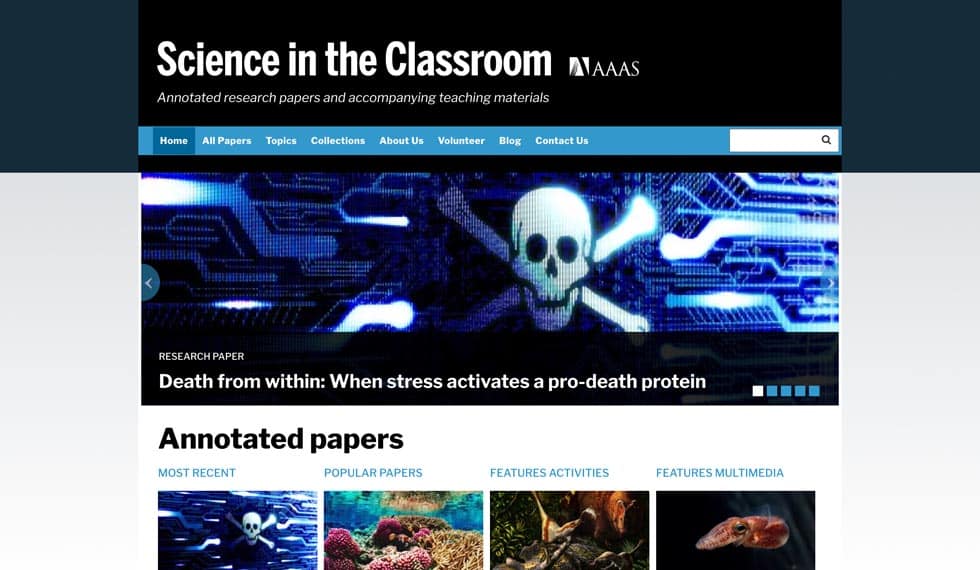
Science in the Classroom

Resource
SFSU Marginal Syllabus

Resource
Climate Feedback

Product
Kawaii Novelty Highlighters
Transcript
Bonni [00:00:00] Today on episode number 251 of the Teaching in Higher Ed podcas, Dr. Remi Kalir is back this time to share about annotating the marginal syllabus.
Production Credit [00:00:13] Produced by Innovate Learning, maximizing human potential.
Bonni [00:00:22] Hello and welcome to this episode of Teaching in Higher Ed. I’m Bonni Stachowiak and this is the space where we explore the art and science of being more effective at facilitating and learning. We also share ways to improve our productivity approaches so we can have more peace in our lives and be even more present for our students.
Bonni [00:00:50] I’m so glad to be welcoming back to the show Dr. Remi Kalie. He’s an Assistant Professor of Learning Design and Technology at the University of Colorado Denver School of Education and Human Development. Kalir as a co-founder and facilitator of the Marginal Syllabus, which we’ll be talking about today as well as lots of other great resources too. And he’s a former middle school teacher. Kalir’s current research about educator learning through collaborative web annotations was supported by 2017-18 Open Educational Resources Research Fellowship from the Open Education Group and a 2016 National Science Foundation Data Consortium Fellowship. He has served as chair of the American Educational Research Association’s Media, Culture, and Learning Special Interest Group as, Co-PI of ThinqStudio, CU Denver’s digital pedagogy incubator, and as a board member of InGlobal Learning design.
Bonni [00:01:55] Remi, welcome back to Teaching in Higher Ed.
Remi [00:01:57] Bonni, it’s great to be here. Thanks for inviting me.
Bonni [00:02:00] I mentioned to you before we started recording that I have been sharing a lot about a project that you have been so involved in that we’re going to be sharing on this episode. But I know that you thought before we dive right into why we’re so excited to be talking to each other, we should take a step back. Let’s take a big step back and just talk about annotation in general and why we do this thing called annotation.
Remi [00:02:25] Yeah I think it’s a great place to start, Bonni. And again it’s lovely to join you. I’m eager to engage with everyone who’s listening to the podcast and the broader Teaching in Higher Ed community. I presume that many educators who are listening today are accustomed, in some way, with annotation. Maybe you recall annotating a literature book in high school, or maybe there’s a more formal annotation system that you use in some type of scientific domain. There are even annotation conventions specific to mathematics. Whatever it may be, many of us highlight, we underline, we scribble little notes, either to ourselves or back to the author in the margins of our book.
Remi [00:03:07] For the last few years now both my teaching and also my research have become increasingly involved with aspects of annotation. And not only studying how individuals perhaps annotate for any given work or project but really how adaptation is a collaborative practice. Annotation across all kinds of documents has existed for literally millennia, whether it’s religious groups, whether it’s early forms of writing, whether it’s uniform tablets, the Hebrew talmud or additions of books that were then copied by scribes and passed down through the medieval ages and then were brought into now a print culture and a book culture.
Remi [00:03:49] Annotation is with us. It’s a cultural practice. It’s a social practice. It’s collaborative. And I’m very interested specifically in how educators and how learners students across disciplines practice annotation, and engage with annotation, and use annotation to pursue their interest driven and their disciplinary interests. And in that respect, I am ready to start our conversation today talking about some tools and some projects all of which are really grounded in the social and collaborative practice of annotating.
Bonni [00:04:22] One of the things I’ve noticed is that annotation tends to oftentimes sort of bring about the great divide between the analog and the digital. And specifically, the learning management we use at my institution now is Canvas. And then when they didn’t have any ability to annotate using something a device like a stylus, specifically the Apple Pencil, that is something they have today but I have been around long enough where they didn’t have it. And I would have colleagues who would say “well I would just never grade using their speed grader tool.” I would never do that because I have to have those things you’d mentioned, like highlights and I need to be able to write on. And as soon as that came out, then instantly they were more open to the digital- and I would contrast myself with that. I really have resisted students turning in papers. And I think part of that comes from me myself, I remember annotating my textbooks when I was in college and doing a lot of highlighting stuff but then I would never go back to them and revisit them. Or even if I highlight physical books today, I don’t find that as satisfying as I do highlighting on a device like a Kindle or something like that because what the technology allows us to do to revisit those annotations, just to me, makes it more accessible and more exciting to imagine down the road how much those things will benefit me. And some of these are just stylistic preferences. But I’m so excited about what you have to share because it’s like bringing these two divides together. And I mean it’s just exciting what’s possible today.
Remi [00:05:57] It is. There’s been a real boom in annotation tools and practices given our current digital era. Although if we remember that most of us just depended on our two hands. Annotation has always been digital in that respect, we have always kind of veeb writing in our texts. Using our hands to respond to that with which we read.
Remi [00:06:19] And so I think it is important to think of the different ways in which whether we call it an analog digital divide or we think about the ways we’ve again brought reading and writing practices across different kinds of media that annotation persists and the practice of annotation persists. You mentioned in her comments Bonni that sometimes we think of annotation as a private activity. The notes that I write to myself in the margins of my book in the marginalia or small glosses that some people call them that are kind of unique to my idiosyncratic notetaking. Then we also think of the importance of collaborative approaches to annotation of a note that I might write down whether it’s in the margins of a book or the margins of a PDF or an online document or an online newspaper. Whatever it may be, it can be shared with somebody else. And those digital annotations can be curated. Those digital annotations can be archived somewhere.
Remi [00:07:14] In some cases, digital annotations can be shared across platforms. Some of those may be public or open to multiple audiences to read. They can become a bit of a record of ongoing conversation or talk in a shared document. In other cases, those digital adaptations may still be private or used in a more private context like a course. But yes, we’ve seen a proliferation in the last number of years of annotation tools that are digital, that are networked, that are open. And I’m particularly excited today to share about a tool that I’ve used for the last four years now. It’s a free tool. It’s an open source tool. It is a tool and an organization that is deeply committed to connecting digital and open annotation with education, with learning. And that’s a tool called Hypothesis.
Bonni [00:08:07] And hypothesis I know you’ve shared about it on the last time you were on. But as I mentioned to you, it’s just so easy when we hear about these tools so often that we can’t adopt everything that we learn. So I wonder if you would kind of go back and- you were describing what sometimes is called social annotations, sometimes called social reading, but this last little theme you were just starting to emerge on is- I was definitely using examples of mostly for my own paradigms but also then with a teacher or a professor to student- but when we broaden those lenses and say “hey this doesn’t have to be just a conversation in your book sitting on yourself, but this is a conversation you could have with people that are passionate about the same things that you are passionate about and are interested in having some more dialogue.” The richness of that is truly incredible. Let’s start maybe by saying a little bit technically about what’s involved and using a tool like Hypothesis because I think sometimes people might feel like “oh I couldn’t. That sounds technical.” And it really is super easy to use. I wonder if you could just share a little bit about what technically is involved here to use a Hypothesis?
Remi [00:09:19] You know that’s a great question. So let me begin even by backing up one step further which is that again there are many digital annotation tools that listeners of this podcast may have played around with or may are very familiar with. Diigo, a social bookmarking tool that also has annotation capabilities. Genius which previously was Rap Genius is a well-known digital annotation platform. It’s primarily used to annotate lyrics. And there are a number of other perhaps commercial digital annotation tools. Some of them are browser based, some of them are standalone applications. What I appreciate about Hypothesis is that as a nonprofit organization, they’ve created a free open source browser based annotation tool. This means that I can go pretty much anywhere on the internet, I can go to the New York Times or any other news organization, I could go to any of my favorite magazines, I could go to a PDF that an organization hosts like or report some kind of summary of legislation. I can go to a place where I’m reading text on the internet and I can use hypothesises to annotate that text, to mark it up, to add my own notes and my own comments. So what is technically necessary? Well in one case, a browser. And the other case, a free Hypothesis account, which takes about a minute to sign up for. An email is required. Should also point out here that Hypothesis is not a social network. You’re not creating an elaborate profile. You’re not linking a Hypothesis account to Google or Facebook or Twitter. You’re creating an opportunity to read and write atop the web. So it’s a very simple process of signing up and getting started.
Remi [00:11:04] The other thing I’ll mention about this tool and why I find it particularly useful is again it’s free. It’s also based upon an open standard. That means that we’re Hypothesis as a tool or as an organization to transition to no longer be sharing its particular tool with the world. I could take my Hypothesis annotations and actually bring them over to be used by any other standards based annotation tool or annotation platform. I could essentially take a open standardized corpus of my annotations and carry them with me because the tool self is based upon an open standard. And I think that’s a really important infrastructural piece that this organization has committed to. I think it makes it really quite important for learners of all ages, for researchers in particular, for scholars, and certainly for educators who want to work with this tool but also perhaps work with digital annotation for years to come.
Remi [00:12:06] Oh and I am reminded of one other thing I’ll mention briefly. Another reason why I feel very comfortable using this particular tool in my own teaching and learning, with my own students, is because when students author public or open annotations using Hypothesis, they retain the intellectual property of those annotations. It’s very important that intellectual property is protected. And also it’s very easy to create private groups. And so I don’t have to have the entire internet reading what I write or reading what my students write. I can do so in a private space, essentially on a private layer of annotation over the Internet and that creates for me a safer and more intimate discursive context for course conversation. Those are a few reasons why I feel particularly comfortable as an educator adopting this tool into my practice.
Bonni [00:12:56] I loved as you were talking through some of these elements, it was reminding me of some of the great resources people have provided around the kinds of questions we should ask about any educational technology we might think about using. And the one that you just mentioned is one that I often forget but it’s so essential it’s like OK it may be easy to get your stuff in, but any educational technology tool we might use we got to also get it out at some point. If you have been in this field for I don’t know even three years then you know things go away that we really like it a lot and we want to be thinking proactively about if what if this thing went away. So that’s a great example. And I didn’t know that about the intellectual property either. I did see the option for private groups, but haven’t set one up before but it sure looks easy. I mean just “click here to start a group.” I assume you would just need to know what their usernames were?
Remi [00:13:45] That’s right. Or you can invite your students in the a link. And so there is an entire set of resources and I can hash through some of the resources attached to this episode. We can share a link to the Hypothesis education resources. And I’ll just mention that again I work collaboratively with the organization. I am a public employee of the University of Colorado Denver. I don’t work for Hypothesis and some people confuse that from time to time.
Remi [00:14:10] I would just say that their team, as an whole organization, but specifically their education folks they have a director of education who is himself a Ph.D. He is a former K12 educator and really gets the kind of daily lives of K12 and a higher teaching, really understands the needs of educators, and they’ve been able to craft a really robust set of education resources including most recently a very nice series of LTI LMS based integrations. And so if you are, you mentioned Canvas earlier Bonni, my campus also uses Canvas, but maybe you are using Moodle or maybe you are using Blackboard, if you’re using a LMS to teach you are curious about how Hypothesises might be useful in your own classroom activity, then you can also access and use the tool and there are resources to support that as well.
Bonni [00:15:01] Oh that’s fabulous. I’ve had a chance to meet a couple of people from Hypothesis at various conferences and they really do have such an intimate understanding of the challenges we experience and the opportunities that are there. And it’s just fun to see them engage because you mentioned wanting to make it clear that you don’t work for them, but oftentimes they’re just so engaged in the conversation just they would seem just like any other professor who’s wanting to teach well. And so it’s just fun that when you really know- I don’t know if they would call us customers- but the people who use their service they really just know our lives and what we experience so well. It’s really fun to have been around them a couple of times.
Remi [00:15:37] It is, they’re collaborators. Again it’s a free opportunity. So I have been supported by not only them but other organizations. You just mentioned the idea of conversation and maybe that’s a bridge to talk briefly about a project that has grown out of of my work with collaborative annotation.
Remi [00:15:54] I have worked, since being a K12 educator myself, I worked closely with K12 educators. And here in the Denver metro area, I was working with some educators who were very concerned about access to and participation in equity conversations. Educators, despite their very busy lives and their incredible demands, wanted to have an opportunity to talk about pressing educational equity topics. They wanted a way to get together asynchronously, read compelling and provocative educational scholarship, and have really robust conversations about what this means for their practice. And we created a project that uses Hypothesis as its technical structure. And the project is called the Marginal Syllabus.
Remi [00:16:38] We use the word “marginal” really intentionally. We have kind of three interpretations of what that means. The first is that we’re engaging with perspectives that are marginal to the educational status quo. When we’re often talking about educational equity, we’re often perhaps looking at counter narratives or critiques of the way that school is. So that’s one interpretation of marginal that we embrace.
Remi [00:17:01] Then we’re using Hypothesis to have conversations in the margins of texts online. We’re literally bringing people together into the margins of scholarship and having educators talk about these pressing equity oriented issues.
Remi [00:17:14] And the third piece is that we’re using again a technology like Hypothesis that is really marginal to commercial education technology. As we have discussed today Hypothesis is free. It’s a nonprofit organization. And there are not a lot of open source software tools that educators happen to use to advance their own professional learning. I think that’s a kind of marginal use not only of educational technology but of an approach to professional learning. And so we’ve created this Marginal Syllabus project that’s now in its third year and has really grown into a project. It’s a collaboration between the National Writing Project, the National Council of Teachers of English, Hypothesis, scholars of various literatures in education all of which are related to equity, publishers of academic content. And every month we launch another conversation where educators come together to participate in an annotation conversation about educational equity and that’s the Marginal Syllabus.
Bonni [00:18:14] I went back to revisit it. I’ve actually been back a few times. You are great about having engagement on Twitter so it comes across my screen from time to time. And the most recent visit, one of the things I was surprised and delighted by when I had visited the last time that you were on the show it definitely I mean I was very excited about it was very much so appreciative of these conversations that are going on and the rich way in which the people that you have collaborated with have curated this tremendously powerful content. I was just absolutely delighted. But one of the things at the time when I saw it and it may have just been because I missed it but was it very much just did look like text based annotations. And on my most recent visit- because on the main part of the syllabus you include oftentimes a PDF which can be annotated using Hypothesis, and then there might be some text that’s on a web page like we’re used to seeing, and then you also record oftentimes a conversation with the author or other people doing this work. And so I was used to the rich media being on the main web page and text based being on the Hypothesis over on the right hand side.
Bonni [00:19:27] And this most recent visit, it was like an entirely different thing and I don’t know if the features changed or I just missed the last time. But there’s oh here’s a link to another video where another person is talking about something related. Oh here’s a PDF of an info graphic. It was just it was like an entirely different thing and it was happening on the right hand side where I thought cause that’s not something that is necessarily possible to do in the margins of a physical book.
Remi [00:19:53] That’s right. And so that’s a really great example. And it reminds me that I should mention that Hypothesis is an annotation tool that allows us to mark up all online text, like a PDF that we read in the Marginal Syllabus project. But the content of annotations can be multi-modal and can include of course multimedia. And so if you enter into any of our recent Marginal Syllabus conversations- I should mention that in the 2018-2019 Marginal Syllabus, which has nine conversations this year, all of our articles and all of our texts come from NCTE publications. If you go to any of our current conversations, you’ll see that a variety of media. You’ll see educators embedding YouTube videos and saying “as I read this article about the lives and literacies of black youth”- which is our current February article, this current month as we are recording- “here’s a video that I am reminded of.” And that video can actually play in the annotation layer. Or “here’s a link to a related instructional resource or article” whether it’s scholarly or the news media that I’m reminded of.
Remi [00:20:56] We encourage our educators as they pursue their own professional learning to really enliven the margins of that conversation through all kinds of multi-modal engaging discourses.
Bonni [00:21:08] Is there anything else that you want to share about the Marginal Syllabus that we haven’t really talked about? I just know that there’s so much there and I don’t want to miss anything.
Remi [00:21:16] Let me just mention briefly that we are in our 3rd year. We have about a dozen to 15 participants who jump into the conversation every month. Sometimes that also includes the authors who we are with. And again the current syllabus that’s running throughout the academic year is oriented towards literacy education and issues of educational equity in literacy education, be that in both K12 and higher education contexts including in teacher education. And actually I’m announcing because it’s just been confirmed so I am announcing live for the first time on the podcast, we are going to be running a syllabus this summer for teacher educators. So if you are working in a higher education context and do any kind of teacher education work, you’re preparing either future educators or you’re doing master’s level teacher education work and you’re interested in the connected to learning movement, connective learning theory, design principles, and what connected learning looks like in classrooms today. And I know you’ve had guests on this podcast who have spoke about connected learning before… We are going to have a Marginal Syllabus that will share a series of articles all from a single journal, the [00:22:24]Site [0.0s] Journal, we have a partnership with them and we’ll be [00:22:27]curating [0.0s] a series of articles from that publication about connected learning and having a summer reading group around the intersection of connected learning and teacher education as our summer Marginal Syllabus. And that’ll be the fourth iteration of our project. And so if that resonates with others then that would be a great opportunity to join into this activity as well.
Bonni [00:22:49] It’s just so fun to think about how these tools we can get in and get using them. But as we collaborate with other people and with marginal syllabus, these kinds of projects that we do, these new opportunities emerge. And I know that you have one that has emerged to help us with a few challenges. One would just be who’s doing what out there? Because that’s not necessarily what Hypothesis was built for. A little way of tracking that engagement and I wonder if you would now share a little bit about CROWDLAAERS.
Remi [00:23:19] Yes. I will just briefly mention the side project that grew out of Marginal Syllabus conversations, which is that sometimes when you visit an annotated text , it’s hard to know who’s saying what? And how many people are in here? And when were they having a conversation? And what are all the collaborative threads in this particular discussion? It’s so very briefly I’m working with a doctoral student at my institution, the University of Colorado Denver, and we’ve created a public dashboard that visualizes how crowds of people come together and add layers of discussion and conversation atop any website, any web page, any URL, anywhere online. And the name CROWLAAERS is actually a very long acronym which I won’t share now but we’ll put a link into the dashboard.
Remi [00:24:10] There is a again a web page or PDF that has annotated with Hypothesis, you can very simply paste in that URL and learn very quickly who are the participants? What have they said? When did they say it? Is this part of a collaborative thread? A longer series of replies? Are there any tags that are associated with this information?
Remi [00:24:31] And the last thing I’ll mention about CROWDLAAERS, although I could talk about it for a very long time, is that we are working with groups of educators now who are using this to track their private class activity. There is a way to turn CROWDLAAERS into actually a private class dashboard. And so if educators out there are using Hypothesis and are interested in having a new window, a new perspective on what their students are doing when they are using Hypothesis to take notes, to collaboratively analyze a reading, to have a social media experience, we can set out what we’re calling a “course collection,” a private dashboard for classes who want that unique perspective on how their students are using Hypothesis.
Bonni [00:25:20] One of the things that come up often in this podcast is just this tension between those who want to track every little thing and have a very very precise means for measuring every click, every word, and real time based sometimes too. And then on the other end of the spectrum which to me I will say candidly I don’t want to be on either ends of the spectrum because the other end is “oh that’s not important at all. We’re all just here to talk and you don’t need to track anything.” What I really appreciate about CROWDLAAERS as it really seems to land somewhere in the middle of all this in the sense of- I think as educators if we try to track too much every little thing, then it becomes almost this “I don’t really want to learn this way.” I classically criticize people who set up discussion boards and you need to reply to three other people and your replies need to be between 300 and 400 words. And I just go like AH that’s stifling for me as a learner.
Bonni [00:26:22] I actually took a course, I won’t mention the organization, but it took a course that was part of my own professional development. I paid for it out of our department’s budget. I’m doing this for my own career development and they did have that reply to 3 and how many words. And I thought “Oh my goodness gracious.” Don’t you understand, I’m actually not getting any credits? There’s no transcript for this. I actually want to learn this stuff but I felt very stifled by that. And my sense about CROWDLAAERS as you have described and going and looking at the site is that it would help someone who at least wants to have some tracking going on but it doesn’t have to get to the level of exactly word count and I mean it may provide that information but I mean it just seems to me like a tool that would work really well for “I want to track this stuff,” but I don’t get the sense it’s like a micromanaging kind of tracking.
Remi [00:27:11] That’s right, Bonni. And let me just mention that I’m not advocating for the quantification of every student learning. My former students or current students or colleagues for that matter who may be listening to this podcast know that I tend to be very laid back and improvisational in my own teaching. Nonetheless, I do think it’s important that we promote social and collaborative activity. And this is a learning analytics dashboard. It is not intended to quantify and thereby measure this student versus that student. Rather it’s meant to encourage the types of social and collaborative activity that Hypothesis makes possible. And so by visiting a CROWDLAAERS dashboard and by looking at the summary and the visualization of any particular conversation, the idea is to say “oh that’s cool. I can also see that Bonni was in here too.” And neither can very easily just look at just Bonni’s annotations and maybe some of the replies. Oh and maybe Bonni is in this really interesting thread with some other people and you know what I want to go and join that thread because I’m now interested in the contents of the conversation.
Remi [00:28:17] I want to jump back in and very briefly one are the more sophisticated technical features of this dashboard is actually the ability to leave the dashboard behind. And when you use CROWDLAAERS, you mentioned earlier that taking out your data, well from CROWDLAAERS, you can actually take yourself out of the dashboard and jump back into the actual annotation conversations.
Remi [00:28:40] We wanted to provide people with the links that bring them back into social and collaborative activity. So again yes, Bonni, I really appreciate that. The idea is not to quantify everything and say Student A is better than Student B. Rather the emphasis is really to say how can we support social learning analytics so that we can support collaborative learning?
Bonni [00:29:04] Oh and I hadn’t even really realized that layer of it too. So thank you for sharing that. I was thinking about the other day when I was preparing for our conversation, I was doing kind of what you’re describing but without CROWDLAAERS but just with Hypothesis. Saying “oh here’s my Maha. Oh and t here is the things that she’s commented on.” And then “oh Remis here too.” I mean it was just sort of a nice discoverability but I also did want to mention for people that are concerned about they’re not as accustomed to sharing as openly as this, You can make anything private. And Remi, you did mention that earlier in our conversation. But I just want to make sure that you know one more time to emphasize this is not something where you have to have everything that you’re doing be totally public. There’s that option as well.
Remi [00:29:43] Yeah. And again, let me also emphasize along that note, that’s why we’ve also created a private version of CROWDLAAERS so that educators who are using private rooms with their students and want only to have those students have access to their private group activities. You can use this as well. And we really respect that privacy and we really want to create tools that support activity that is not public to everybody everywhere.
Bonni [00:30:08] What have you found have been some of the barriers that either students have had or professors have had in terms of using Hypothesis in order to advance the kind of deep reading and engagement that it was designed for?
Remi [00:30:22] Well that’s a great question because it gives us something that we mentioned earlier in this conversation which is that some students believe that introducing a digital annotation tool means that they need a kind of do away with writing by hand. So I always say, because sometimes this is an initial barrier, if you want to kill those trees and print out all of our course readings, go right ahead. That’s fine. If you want to by hand highlight, write down your notes, and mark up your hand on paper. You want to do all of that. Go right ahead. And then once youve done so, identify just two or three of your select annotations that you then want to share, that you want to make social and you then great use those into Hypothesis. So thats why the response I often have to students.
Remi [00:31:10] Something else that I talk to a faculty about because I talk to a lot of faculty whether its just informal conversation or through more formal professional learning about how they can use this to support different kinds of conversations. Because after all there are different functions for annotation. Sometimes you annotate to identify different kinds of information. We’re looking for clarity, we are looking to define, to provide additional context. In some cases, we want to comment, we want to provide more of a critique. And in some cases, we want to spark that kind of rich conversation. There are lots of different purposes for annotation. Sometimes faculty perhaps don’t know that there is such a wretch of opportunity to use a tool like this.
Remi [00:31:51] So I want to demonstrate not only the multi-modal or multimedia aspects of annotation, but I also want to demonstrate the kind of discipline specific or almost genres of annotation that are possible and that often helps faculty to better understand “Oh I see how I can use this in a history course versus in science and technology studies course or even in mathematics.” And there are some really fascinating examples of mathematics professors and courses that use Hypothesis as well. And so part of it is just making people aware that the tool provides for a lot of flexibility.
Bonni [00:32:30] One of the things I was thinking about while you were sharing, that’s what is so fun about Hypothesis just because as you talk about it new applications emerge so easily. I was thinking about we are a Hispanic serving institution. And so I’m regularly exposed to those kinds of practices that would be more supportive of our marginalized students in their learning. And one of the ones that it is certainly not new but I will say that I used to resist sharing sample papers with students as I just felt like that made it too easy for them and let me just say I no longer believe that and really do adhere to when we have examples from past classes or if we can look at in whatever the discipline is in whatever ways that we’re asking them to write to show them samples to help them, I now have fully changed my mind about that. And I was thinking about that one way that I’ve heard of professors doing that is within the learning management system. But another way would just be upon the screen, on a projector while they’re in class. And someone recently gave that example. And I thought well you could have it up on a screen in class but you also could have the students using Hypothesis to put their annotations there and give them a chance to reflect and engage. And if it’s five minutes or 10 minutes or whatever. That would be sort of a way of having a back channel but specifically at looking at a sample paper. Or if sometimes another practice that I am hearing faculty do is students who are willing to turn their major paper in early, then they get the opportunity to get some feedback from peers and from the professor. So perhaps that’s a student’s paper that is willing to share that upfront and get the feedback that way. So there’s so many applications.
Remi [00:34:13] There are Bonni and let me mention, it reminded me that there are many ways and many reasons why we might bring digital annotation practices into our classrooms. I’ve written a series of blog posts about the importance of annotating course syllabi. I have a blog post and now a series of blog posts called Annotate Your Syllabus. And I talk about the importance of having students in the very first class annotate the class syllabus together, collaboratively, so that they can ask clarifying questions. They can share their opinions about readings, they can react to assignments and say “this is confusing. Might you be flexible about this or that?” Could your potentially even change something. They should show appreciation for your class policies if you have some more student centered and supportive class policies in your syllabus. Peers can actually also provide one other advice about the class through their annotations atop the syllabus. And you can annotate a course syllabus if it was a Google doc. You could use the commenting feature there. You could actually print out physical copies of your syllabus and paste them all of your classroom and have your students walk around and write big pieces of paper. Or, like I do, you could use Hypothesis.
Remi [00:35:25] It’s all to say that the example that you’ve just given of having students annotate together in a collaborative way exemplar papers to better understand the expectations of a given assignment is of a type of a kind of way in which we can kind of peel back and talk about some of the unwritten rules of teaching and learning. Like how do we navigate read about a syllabus and actually use annotation as the entry point to help our students just become more successful learners.
Bonni [00:35:57] And I have read some of your posts although I’m certainly going to go revisit them now and will be posting them on the show notes. But one of the things I really am reminded of as I think about reading your posts is that it just seems so welcoming. I mean truly inclusive in every sense of the word that this is not a document that is set in stone, I’m welcoming you, I’m inviting you to this conversation. And that’s just a lovely way to start a learning community.
Remi [00:36:23] It sets the tone that them that the entire endeavor of learning can be co-constructed. Absolutely.
Bonni [00:36:27] This is the time in the show when we get to give our recommendations and I’m going to save my big story about getting completely enveloped in something called Bullet Journaling for another podcast because I want to give Remi plenty of time for his recommendations but specifically down this little avenue I’ve been traveling lately and sort of having some artistic fun in my own way is I found a set of highlighters that are just so fun to use. They look like highlighters for a 7 year old. They’re very colorful and playful and everything but they’re also just very usable too. There’s a thicker side and then there’s a thinner side. It’s a double sided pen. And then they don’t bleed through the paper very easily and lots of different types of paper and I’m going to recommend those. These are the Kawaii Novelty Highlighters and there is a link you can click on in the recommendation segment to go have a look if you’re a person who likes to use highlighters. I hadn’t bought some and a really long time because highlighters tend to last a long time. So it’s just fun to get a new set of tools and every time I pull them out now it’s really fun.
Bonni [00:37:33] So I’m going to pass it over you Remi now for your recommendations.
Remi [00:37:38] Thanks Bonni. Let me just share a few products that specifically are using annotation to serve public learning. I use that in a very broad sense. One is the Climate Feedback Group. Climate Feedback peer reviews the news. There is a distributed network of literally hundreds of scientists with specialisations and all kinds of fields related to climatology, climate science, climate change. And an article might be posted in the New York Times, or in the Guardian, or in any other major media outlet, and these scientists will come together and they will use Hypothesis and they will provide their expert commentary right on top of that news article. And once this group of scientists comes together and does a public peer review of the news, the Climate Feedback Organization then provides essentially a rating of scientific accuracy and the overall credibility of that particular news article. They might say it’s very high or very low. For educators who are working in the sciences or who are interested in notions of fact checking and kind of the collaborative production of knowledge in a way that holds organizations responsible for reporting accurate information, you should definitely check out Climate Feedback. We’ll have a link to Climate Feedback in the notes.
Remi [00:38:58] Also speaking of science and supporting science education, there’s a really interesting project called Science in the Classroom. It’s actually a project that comes out of [00:39:07]Tripoli [0.0s] and it provides annotated research papers and accompanying teaching materials all from the Journal of Science. And so a interesting article, whether it’s anatomy and physiology or maybe it’s chemistry, ecology, space science, whatever it may be, articles published in the Journal Science are then annotated again using Hypothesis and made publicly available so that whether they’re advanced high school studies, or undergraduate science students who are studying these topics, they can gain access to not only this important scholarly content but the expert commentary on top of that to support their own learning. And I think that’s really exciting and another great resource again for folks who are working in science and science education.
Remi [00:39:54] And then the last thing I want to share because I think it’s an important point of departure for educators to advance their own professional learning, my third recommendation is actually to copy a marginal syllabus project to kind of make it your to create your own little local chapter. We have of course this national Marginal Syllabus. We have our national partnerships as I mentioned with organizations like the National Learning Project and the National Council of Teachers of English. However, there is a group at San Francisco State University that has created their own local chapter of the Marginal Syllabus. They have their own website. They have their own schedule of readings. They have a core text that they’re reading and collaboratively annotating. And they’re doing so with just the faculty at San Francisco State University who want to really dig deep into our own local community. And it really gives me great hope that the model of essentially online book club that can then be mediated through collaborative annotation is very exciting and so if there are other institutions, groups of educators out there who want to create their own kind of local chapter of Marginal Syllabus, work you can actually look to the San Francisco State University’s group as one potential model. And I of course would be thrilled to support groups of educators across any discipline or any grade level who wants to pick this up and kind of run with it on their own. So those are my three recommendations.
Bonni [00:41:18] Thank you so much. I’m always sad when we have to say goodbye but I’m also there’s a tiny bit of me that so happy because I can’t wait to go look at all three of those things. And I’m so glad that you could come back and join me on the show again. And I’m already looking forward to the next time when you come back and have more things to share with us because I always just learned so much and I know the listeners do as well.
Remi [00:41:38] Thanks again, I appreciate the opportunity.
Bonni [00:41:41] Thanks so much for coming on the show Remi Kalir. And thanks to all of you for listening. As always, such a great invigorating conversation I have so many things I want to go explore that Remi talked about. And I know once I’m there then I’ll find even more things. I just love that about hosting the show. I also love what a community that we are and if we have yet to connect on Twitter, I’d love to have you join me in the conversations that happen there. My user ID is @Bonni208. And there also is a Teaching in Higher Ed Twitter account that’s @TiHigherEd and would love to have you connect with either or both of those accounts. Thanks so much for listening and I’ll see you next time.
Teaching in Higher Ed transcripts are created using a combination of an automated transcription service and human beings. This text likely will not represent the precise, word-for-word conversation that was had. The accuracy of the transcripts will vary. The authoritative record of the Teaching in Higher Ed podcasts is contained in the audio file.