Follow the Teaching in Higher Ed Podcast
About this Episode
Kimberly L. Mitchell discusses her book, Experience Inquiry , on episode 232 of the Teaching in Higher Ed podcast.
Inquiry is getting the students to do a lot of the question asking.
Kimberly L. Mitchell
On episode 232 of Teaching in Higher Ed
Voices on this Episode


Show Notes + Resources
Recommendations from this Episode

Transcript
Bonni: [00:00:00] Today on episode number 232 of the Teaching in Higher Ed podcast I welcome to the show Kimberly L. Mitchell to talk about her book, Experience Inquiry.
Production Credit: [00:00:14] Produced by Innovate Learning, maximizing human potential.
Bonni: [00:00:26] Hello and welcome to this episode of Teaching in Higher Ed. I’m Bonni Stachowiak and this is the space where we explore the art and science of being more effective at facilitating learning. We also share ways to improve our productivity approaches so we can have more peace in our lives and be even more present for our students.
Bonni: [00:00:51] Thanks for joining me for today’s episode number 232 of the Teaching in Higher Ed podcast. Today’s guest is Kimberly L. Mitchell. She’s the author of Experience Inquiry and an internationally recognized speaker on inquiry based instruction. Kimberly is the founder of Inquiry Partners and teaches undergraduate courses on adult learning and development, history of the teaching profession, and comparative international education at the University of Washington’s College of Education in Seattle.
Bonni: [00:01:26] Today’s episode is made possible in part by Top Hat and toward the end of the episode you’ll get to hear a little teaching tip made possible by Top Hat about meta cognition.
Bonni: [00:01:40] Kimberly, welcome to Teaching in Higher Ed.
Kimberly: [00:01:42] So great to be here with you Bonni, thanks.
Bonni: [00:01:45] It’s been a while. We connected a long time ago when we each had our things going on and we finally figured out how to have this conversation about your wonderful book. I think that at first I was somewhat intimidated when I heard about inquiry based teaching or inquiry based learning. It did sound really complicated and formal and something that I could aspire to one day. But you say in your book that it’s actually quite simple. Could you break it down for us so that we can realize probably all of us are hopefully doing it in one way or another but could strengthen what we’re doing?
Kimberly: [00:02:18] Well you’re not alone in that feeling. In fact, when I first heard about increase based instruction I felt like I should know about it. It was very esoteric to me and I guess I assumed I knew what it was until I actually saw it happen and then it was brought down to earth for me. So inquiry is basically just getting students to do a lot of the question asking and thinking in the classroom.
Kimberly: [00:02:44] I think people associate inquiry with science classrooms like it’s a process and certainly the process of going through the scientific method involves inquiry, as does a lot of project based learning, but inquiry can happen in a quick conversation. It’s simply showing curiosity, provoking curiosity in students and then letting it go for a little bit without giving easy and quick answers.
Bonni: [00:03:13] I forgot the name of the person who wrote the forward of your book…
Kimberly: [00:03:17] Kath Murdock she’s one of my edu-crushes, I call it. She’s out of Australia and she talks a lot about curiosity and keeping wonder alive in classrooms and she has a wonderful TED talk about it’s called The Power of Hm. And her blog is called Just Wondering. She’s fabulous, she focuses a lot on early learners and I was always intrigued about how that could work in secondary classrooms and in higher ed because I teach at the university level. I’ve lifted a lot of her ideas and made them work with my students who are older.
Bonni: [00:03:59] Well one of the things that she talked about in the introduction or the prelude. *laughs* I’m having difficulty with words today. What are those things called that happen before the first chapter? She talked about a trip to the zoo being her first time I’ve ever seen inquiry based learning. And our kids go to a school where that is definitely what they do in terms of just igniting their curiosity. And I get sad sometimes when I see them do it so well for 4 year olds and 6 year olds in this case. And then I just think so much of the time when I do this well in higher ed I am also having to fight against the fact that their curiosity really has been muted in their learning experiences.
Bonni: [00:04:44] It’s not just an age thing, I think that it’s just really that at some point in time that schools we stop emphasising that it becomes about questions that have correct answers and I know that there are lots to be said about the challenges with our educational system. But for me, doing it well is both wanting to do it well as a person but also I’m sort of fighting against more of a culture that it’s harder I think to ignite that curiosity. Because to me, that’s what it’s all about, how can we do that better?
Kimberly: [00:05:18] That is right. And in fact Kath in her talk talks about how classrooms some how if you think about it are the least hospitable places for curiosity and wonder.
Bonni: [00:05:32] How so?
Kimberly: [00:05:33] Because it’s not authentic. If you’re jamming people together at a specific time with like you say the culture of school where it’s a game you play and those of us teaching in the higher ed know that it’s about getting a good grade. It’s about going through the hoops, not necessarily about being curious and letting your wonder wander because making mistakes could cost you. And making mistakes is an integral part of curiosity and wonder and being wrong or looking stupid.
Kimberly: [00:06:05] So the challenge I think for us is how do we create authentic curiosity in these places called schools and classrooms? And you know Kath talks about going to the zoo. If I brought my students out to the zoo, I think that’s more hospitable to wonder. So how do we create it when we are teaching from 8:30am to 10:50am and the chairs are bolted to the floor and people are tired and you have a curriculum to cover. And that is what I wanted to explore in my book is what are the strategies? What are the dispositions we bring as instructors? And what are the specific things we can do, the actions we can take, the moves we can make to provoke curiosity?
Kimberly: [00:06:55] And a lot of people have the impression that inquiry is something you do 24/7 like in classrooms. I don’t know if that’s possible. I strive for that. What I try and do is tilt things so that students are talking more than I am, that students are starting to ask more questions than I am, and that I do start to see a little bit of the wonder creeping in to my classroom. That’s the goal.
Bonni: [00:07:22] What I like about that approach, and that is very much the way that I took in your book as well and just your philosophy really of teaching is that we don’t have to be perfect in every moment. Cause one of the big emphases is that I really am the designer of these experiences. And I mean if you’re going to invest the kind of time that it takes to design these experiences that will invoke the curiosity and get the students asking the questions and then that’s where the work really shifts to the students doing the work- if you’re going to do that well, it can really feel like a big failure if the expectation is like you said that every minute of every class is going to look like that. But if we look holistically just this idea students of talking more than me-.
Bonni: [00:08:09] It was really funny because the other day this was during a break in a class and one of my students was so kind he had bought me a little gift. His dad had almost died and then it had a big turnaround and was now doing better. But anyway, we got to get to talking about another professor that he had. And he was saying that he was doing a good job but basically we came down to a discussion of he talks too much. Like the young man didn’t say it that bluntly but that’s what it was essentially. And so some other people who are in that same class, are in both classes, so mine as well as this other persons. What percentage of the time do they think he talks versus them talking? And then in my class what percent of the time? And I just felt so good because they actually didn’t agree on the percentage. One of them thought it was hugely offensive that they were 10 percentage points off from the other.
Bonni: [00:08:56] And to me, like anything over 50 percent, I am golden. Like even though I want to be- I think my aspiration would be like 70/30 would be the best. And I think both of them had me at least at 60/40 and I’m like that’s great but 70/30 to me would be perfection. But still just even if I can stop being a perfectionist just them talking more than me is a great aspiration to have over the course of a semester.
Kimberly: [00:09:21] That’s amazing. And I think it’s unusual. The cognitive demand being put on students needs to happen. It doesn’t mean that the teacher is not involved or not planning. And someone once said at the end of teaching it’s your students pits that should be sweaty, not yours. And so now you just made me think, my sweaty pits happen when I plan that is when I’m working hard as I’m planning and just let me just roll assessment into that is thinking about what’s coming out of a lesson and how I roll that into the next lesson. That planning, that’s where I’m working hard. When we’re in the classroom together, that’s when my students are doing the cognitive heavy lifting.
Bonni: [00:10:03] So far I’m looking at your five aspects of inquiry based teaching and learning. And we’ve hit a bunch of them. I’m actually going to mention them, talk about them. So stay curious is number two. And we’ve talked a lot about that, that is just vital. Ask more, talk less. And on the ask more, talk less, if people listening are new to that, I encourage them to go back and listen to a super early episode. We’re going to the back catalog here about the 8 second rule, which I will link to in the show notes. But the short version is you ask a question and you stop talking. And you count one thousand, two one thousand, all the way to eight one thousand. And you will get an answer from someone in that class.
Bonni: [00:10:54] And if you don’t, then now you can break that silence and maybe ask it a little bit differently that kind of thing. But what happens is we condition people I’m going to ask a question and then I’m going to quickly answer it for you. So they ask more, talk less, if that’s kind of something you struggle with, try that eight second rule and it can really help you sharpen your skills at that. Do you have anything to add as far as how to sharpen our skills? Because it is a big adjustment.
Kimberly: [00:11:20] I think students, especially older students they need to continue practice how to ask a question. I know that sounds strange, but it’s a skill that we need to keep building over time. And I recommend people look at something called the question formulation technique which comes out of The Right Question Institute and it’s just an exercise to get students of all ages to keep practicing their question asking skills. It ask students to also analyze the questions they ask, are they open or are they closed? Convergent and divergent questions. Practice turning a convergent question into a divergent question and back and forth.
Kimberly: [00:12:00] So playing around with questions I think is important. I have my students keep something called to a query book, it’s just a comp book. And instead of writing, or in addition to writing notes about what they read, they’re asked to write as many questions as they can about what they read.
Bonni: [00:12:16] I’m going to definitely have to check that out, I haven’t heard that before. And that hasn’t been something I’ve been necessarily good about focusing on. I’m excited to explore that some more.
Kimberly: [00:12:24] The other thing I’ll say is you mentioned that that 8 second rule and that wait time. And there’s a lot of research behind the efficacy of that. I read that the average wait time in most U.S. classrooms is actually .7 seconds. So even though those eight seconds might feel uncomfortable, they’re really important because we do need time to think.
Bonni: [00:12:48] When you are not accustomed to doing it, it feels like a lifetime.
Kimberly: [00:12:52] It is super uncomfortable and it’s very awkward. So I just call it out. I just tell my students this is called wait time. Now it feels strange and it will help and it will feel feel less strange at the end of the quarter.
Bonni: [00:13:04] Now I did the probably less wise thing of explaining to them how it’s actually a manipulation on my part to take advantage of the discomfort that we have as a society around silence. And so if you ask a question then you can take advantage of the pressure that people will feel to fill the silence. And so then they just mess with my head and make it go longer the 8 seconds just to mess with me.
Kimberly: [00:13:25] I love it.
Bonni: [00:13:27] So be careful who you tell about this.
Bonni: [00:13:30] So one of the earlier ones is to get personal and we sort of talked around that one, but I’d love to hear more of what you have to say around getting personal.
Kimberly: [00:13:39] Well this is all about relationships and it matters. Emotions play a big role in memory and how we retain information and make connections over time. I go for the positive emotions. Negative emotions will stick with us too and I like to create as many emotional connections as I can not only with my students, but my students connect with one another because they’re going to be doing a lot of talking together and co- creating understanding together and making meaning.
Kimberly: [00:14:09] And then all of us with the content. This is as simple as just learning their names. I have name tags for all my students and I make sure they learn how to pronounce each other’s names. And I learn to pronounce their names.
Kimberly: [00:14:25] The other thing is just something as simple as banter. If you look at which professors have made the biggest impacts in our lives, which teachers students- and this is an assignment I give I ask them to reflect on this. It has to do with just sometimes the banter, the talking before ann in between the cracks and crevices of a lesson and being yourself and sharing a little bit of who you are with your students.
Kimberly: [00:14:51] And then I would say finally the most ancient and effective way of teaching has been storytelling. So can we get really good at telling stories, not necessarily our own stories, although students love to hear stories about our lives and they will remember them. But what are the parables and the metaphors and the stories about what we’re teaching that will help them again make connections that remember this stuff?
Bonni: [00:15:19] We are recording this conversation early but it’s going to air right around the United States Thanksgiving holiday. But prior to this being recorded, it was the Canadian Thanksgiving and one of my students was sharing that she was feeling homesick because she wasn’t able to go home, it wasn’t obviously an extended break for us and so she was missing her family. And then it happened to be also on Indigenous Peoples Day and Columbus Day and so we ended up on this whole conversation about how so many of us were told about the history of the United States when we were young and how I mean and because it really was you’re describing the student to student relationships. I felt- this is a small class, I felt pretty comfortable just being snarky about like they lied to you! And making jokes about that. When clearly some of the people their eyes are getting bigger. They’ve never heard about this, I said I know I hadn’t either you’re at least younger than I was when I discovered what a lie we had been told.
Bonni: [00:16:26] And but it was so neat because it was the students who were more informed about some of these atrocities in our history and how they haven’t really been named or told in the history books for many of us growing up, I mean it really depends on a lot of factors of course. But they were teaching each other. And so if someone had or maybe they are offended, now that no one seemed to be I mean they seemed to genuinely talk about curiosity. They were like what? Tell me more.
Bonni: [00:16:56] But if someone was offended, it genuinely was just an authentic conversation that had happened in our Check-In time it’s sort of when we gathered together, it’s a longer three hour class so we check in how’s everybody doing? That kind of thing. But it was really neat just them teaching each, other those student to student relationships. And there was some humor in there too that I think softened sometimes when we have to hear hard things, that kind of I love that. To me so much of it is that student to student and how can I make that happen? Because I am an empathetic person. But almost if I’m too empathetic I can’t be that for everyone in the class. I will not be effective unless I can help them be that for each other.
Kimberly: [00:17:34] We put so much pressure on ourselves in our role in the classroom and instructional in how we teach and we see it as you know we’re the answer key, we are the authority, we are the one that has to debunk everything, and we really have to share that with our students. They are capable of debunking one another and questioning one another and as you say teaching one another. And in an inquiry classroom that’s actually what I look for is are the students starting to come alive and take on the roles that traditionally have been assigned only to the teacher?
Bonni: [00:18:11] I want to pull in then one of your other factors because I think it relates so much to this. This is also an area that I in taking your self-assessment discovered once again that I’m not so good at and there was really around building a culture of providing evidence. And so I wonder if you might talk a little bit about that because to you it I could say Oh yeah I provided a culture. But the thing that got me where I couldn’t score myself very high was unprompted. If my students did it unprompted, then it really would just be permeating everything. And I know that for me, where I am developmentally it’s because I prompted, it’s because I emphasize in the rubric, the points are associated with it. It has not really become a part of how they take information and then share it out with others so could you talk a little bit about that?
Kimberly: [00:19:00] Well that is my weakest area too. I continue to struggle with encouraging evidence in my classroom. And this is because we’re still learning culturally as a society to deal with the fact that the sum of all human knowledge is now on our cell phones. And it means we need to start being really rigorous about where sources come from.
Kimberly: [00:19:21] And for me, it’s a matter of prompting which we don’t often do actually especially with adults. We don’t ask people to back up their sources of information. When my mom or dad say something that I find is perhaps suspect, I need to be willing to say how do you know that? Where does that information come from? And then get my students to do it with one another. Something that I’m trying to just model it as much as possible on my slides calling it out, letting them know. Telling them when- for example, today I had a slide and we were talking about the percentage of the GDP that goes to education in the United States. And I had a statistic from 2014.
Kimberly: [00:20:09] Now I don’t think my students would have called me out on it, but I sure did. I said do you notice anything about the statistic? Do you think I could probably find something more current? And I think it’s just a matter of us lingering there and just going there as much as possible even though it feels time consuming. It’s so important that we stop when we start talking about this. And you know what Bonni, maybe it’s we’re just going to have to prompt it and and get as many teachers to do it from as early an age as possible Intel it becomes just what you do and maybe this is a cultural shift and we just have to keep doing it.
Bonni: [00:20:47] It definitely is one of those things that I think instead of thinking that we’re somehow going to do it in our one class that our time would probably be better spent, my time would probably be better spent you know building that culture with the faculty because it is not something we can do in 15 weeks. And that’s not been my experience. I can get them to do it but I’m getting them to do it through coersion not because of curiosity.
Kimberly: [00:21:13] That’s right. And sometimes I’ll pause class and we’ll just spend a good hour on looking at sources of information. I really like what library media specialists from Dominican University, they are in my book and I highlight something that they’ve designed called the CRAP test and it’s just a method for going through. You know our students typically at least my students at the University of Washington. They don’t chomped to the library anymore. They google it and so this is a way, a method for looking at these URLS, these web sites and judging the veracity of the claims that they’re making.
Bonni: [00:21:55] Another great resource around all of this- and speaking of someone who just ignites my curiosity is Mike Caulfield and I’ll link to the episode of him in the show notes and he actually puts a critical lens on some of these CRAP tests. I forget the other ones that he mentions, but because they are limited by not focusing enough on knowing the domain. So that that just going through this and he’s got a couple of examples. Again I’ll link to the stuff on the show notes.
Bonni: [00:22:24] So on one hand Mike inspires me because it’s like yeah I want to go even further I want to get better at this. So it’s that that inspiration of wanting to do better. But on the other side too just following him on Twitter and stuff like when he does stuff I do get really curious about it because when they will sort of try to solve the riddle if you will. It makes me want to want to learn more about whatever that domain is that he’s talking about. You know it is a lot of times it will be something having to do with politics. By the way, he does that after he gets people to start using the tools. He starts with stuff that is not so personal to people just to get them to their muscles. Oh it’s so good. It’s so good. But he is a very political person so then if you follow him on Twitter, you’ll be like oh I’m really curious about that and he breaks stuff down it’s just really fun.
Kimberly: [00:23:13] Oh that’s great.
Bonni: [00:23:14] So before we started recording I told you that today’s episode I was trying something for the first time minutes this teaching tip thing. I laugh because I’m realizing your last point actually relates to the teaching tip. So since you didn’t seem to mind it before we started talking, I’m just going to do it right now.
Kimberly: [00:23:30] Let’s do it.
Bonni: [00:23:32] Today’s episode is sponsored by Top Hat and we are starting a new series with Top Hat and that is doing a teaching tip in the episode and Kimberly is so well versed in this teaching tip because her last part is extending thinking time. And I wanted to just share a little teaching tip around metacognition and on a past episode which I will link to in the show notes. Todd Zakrajsek shared about the importance of metacognition and this can be something like he gave an example of having an exam wrapper. Many professors will do this where you take the test but then after you’re finished with the test you write down how did you think you did? What approaches did you use to study? What do you think you might do differently next time if you didn’t do as well as you predict that you might have done, etc?.
Bonni: [00:24:21] But just getting students to think about their thinking, to think about their learning to stop for the moment and do that reflection. And you talk about extending that thinking time. And so today’s sponsor Top Hat, they have a product called Top Hat Classroom and there’s all kinds of things we can do with it in our classes and I’ll be talking about how some of the features map two different teaching approaches but in this particular case for metacognition you could put a slide up on Top Hat and have that time for extended thinking time or for metacognition and you could say on there. How do you think you did on the test? And you can have them respond anonymously. How many hours did you put into studying? How far were those hours spread out? Were they all the night before or were they spread out?
Bonni: [00:25:12] And then visually they could kind of see you can actually even slice the data so you could say how do you predict that you did on the test? And then slice it for people who think they got A’s they spread it out more or. I mean and you could even do this a little later after the exam results were back. How did you do? But it all could be anonymous.
Bonni: [00:25:31] So they don’t have to feel this pressure or a sense of I’m more of a failure than just an individual but now the whole class knows about me. It’s really nice. But the other thing is they really can help learn from each other and start to go Oh I know that person used flashcards, that’s a type of retrieval practice and they got the A, I just went back and looked at my highlights. So there’s all these ways that we can use this metacognition to help our students do better. And I just want to thank Top Hat for sponsoring today. And now I’m going to ask you briefly what else you would like to say about extending thinking time?
Kimberly: [00:26:06] Well I tip my hat to Top Hat. I’m thinking they read a chapter. They come in and you ask them to list out all the questions that that chapter raised for them. And they could see visually where everyone is and then they can up vote or assemble themselves into a small discussion groups based on the the topics or the questions that came up that they want to discuss. And to me that’s another example of extending thinking time, utilizing technology, which I’m a big fan of.
Kimberly: [00:26:39] I think you know along with extending thinking time is going along with this idea do you remember when Google initiated 20 percent time and they gave their workers the freedom to pursue some passion projects. And it’s also called passion projects in a lot of K12 schools or genius hour. I’m a big fan of that at the college level too and I try and set aside time in our curriculum for students to explore issues that obviously relate to the content that we’re studying and then to teach it back to the class. So extending thinking time it can go many different directions. But for me, it’s about voice and choice. And like you were saying Bonni using Top Hat or using different tools, you can also create real community in this strategy, getting students together around areas of interest to them or bringing students together who are struggling with certain areas. It’s fabulous.
Bonni: [00:27:37] I’m so glad that this came up because next semester I’ll be teaching the class. I think it’s my third or fourth time teaching it, something like that. And I knew about the Google thing but I didn’t know what they called it. And I also had hadn’t really connected it to some of the things I try in the class. All this to say I had been calling these things development opportunities and that just sounds so clinical to me. And I think that passion projects would really resonate a lot more with my students and I’m going to try to do some more creative things and that just completely captivated me so that that’s going into the syllabus for sure. I love it.
Bonni: [00:28:14] Well this is the point in the show where we each get to give some recommendations and my recommendations today are musical in nature. It’s been a while since I did a musical when it actually played the music, but I’m going to play a little clip from the first one. This has Melody Gardot I and this song is called Who Will Comfort Me.
Who Will Comfort Me: [00:28:37] *Who Will Comfort Me by Melody Gardot plays*
Bonni: [00:29:00] So that is a great song. And on the little description here it says, “Melody Gardot continues to luxuriate in sultry moods and yearning sensations. This Philadelphia based singer songwriter reaffirms her substantial talent again and again in these tracks.” It’s such a great album. So check out that one.
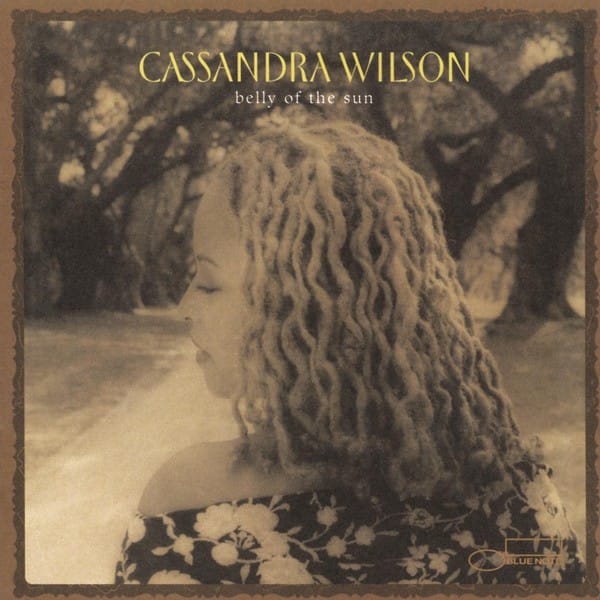
Bonni: [00:29:20] And then the second one is kind of a similar feel. It’s Cassandra Wilson. The album is called Belly Of The Sun and this song is the Waters of March. Which I know the Waters of March. I should have looked up the origins because I knew by other artists but then when I came across hers way back when I just I really really like her rendition of it I’ll play just a little bit.
Waters of March: [00:29:46] *Waters of March by Cassandra Wilson plays*
Bonni: [00:30:14] I should have done my own podcast preparation because now I’m so curious who’s saying that first and who was the origional singer. What are you going to? Well I get to pass it over to you now and ask what you have to share?
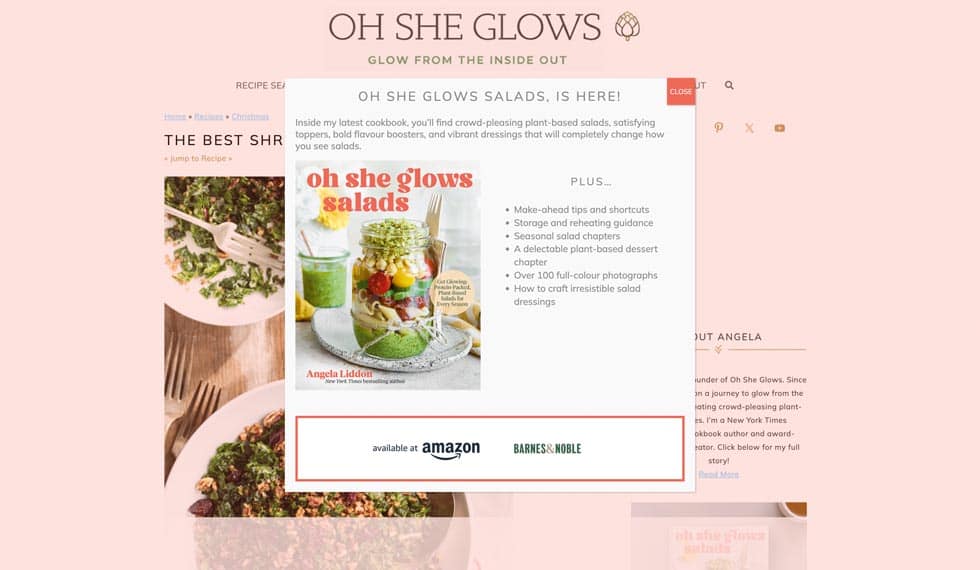
Kimberly: [00:30:28] I have a recipe to share. It is something that is so delicious and unique and it comes from a website called Oh She Glows. It’s called the best shredded kale salad. So you could eat this and feel super healthy. And it has roasted pecans with Brewer’s yeast and cranberries, it is delicious.
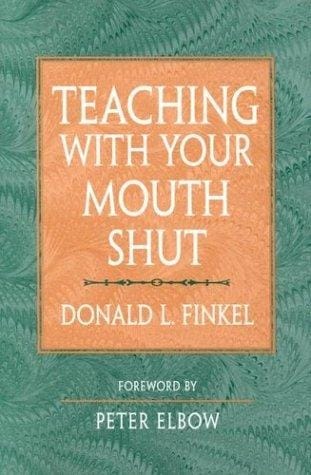
Kimberly: [00:30:54] The other recommendation I have is a book that was written many years ago by a professor who sadly passed away at a very young age. His name was Don Finkel and he was at Evergreen State College and he wrote a book called Teaching with Your Mouth Shut. And it is a beautiful book and full of great ideas from someone who to me is one of the original inquiry professors out there.
Bonni: [00:31:23] Something tells me he had the eight second rule down.
Kimberly: [00:31:28] I think he probably did.
Bonni: [00:31:28] I can’t wait to check that out. And the salad sounds delicious. Kale is one of those things that I actually eat on a pretty regular basis and it surprises me because I don’t consider myself as a very healthy eater, but if you mix kale with the right things it’s like you’re not eating kale. Cranberries are the best and pecans are so good so I can’t wait to check them out too. My husband be very happy because he likes him some good kale salad too.
Bonni: [00:31:50] Well Kimberly, I think this is just the beginning for us.
Kimberly: [00:31:55] I hope so, Bonni. Like I said, you’re like a kindred spirit. I just love what you’re doing. I love what you do. It’s so fun talking with you. I wish for a neighbors and we could eat kale salad together.
Bonni: [00:32:04] So if we ever get up your way, I’ll definitely swing by for some kale salad.
Kimberly: [00:32:08] Let me come down there please.
Bonni: [00:32:12] That all sounds wonderful. Thank you so much for coming on the show and for sharing your book with me.
Kimberly: [00:32:16] Thank you Bonni and I just really thank you for being so responsive and so kind and warm and authentic.
Bonni: [00:32:24] Thank you Kimberly. It’s been such a pleasure.
Bonni: [00:32:29] Well I can tell you that when Dave, my husband, listens to this episode the first thing he’s going to want to do is make that best shredded kale salad. But I think I’m going to actually even make it before the episode airs so. But it sounds so good. And the book sounds wonderful and Kimberly it was so fun talking to you.
Bonni: [00:32:48] And I’m just so glad to all of you listening for being in community with you. It is a season of Thanksgiving. Also problematic in terms of our history but as we mentioned earlier, that’s a story for another day. But in true trying to take whatever I can out of the season, I’m just so thankful for each of you for being a part of this community and just collectively how we make our abilities to facilitate learning even greater together. Thanks for listening and I’ll see you next time.
Teaching in Higher Ed transcripts are created using a combination of an automated transcription service and human beings. This text likely will not represent the precise, word-for-word conversation that was had. The accuracy of the transcripts will vary. The authoritative record of the Teaching in Higher Ed podcasts is contained in the audio file.