Follow the Teaching in Higher Ed Podcast
About this Episode
Anton Tolman shares about his book Why Students Resist Learning: A Practical Model for Understanding and Helping Students edited by Anton O. Tolman and Janine Kremling on episode 171 of the Teaching in Higher Ed podcast.
Everybody who has taught has run into student resistance in one form or another.
Anton Tolman
On episode 171 of Teaching in Higher Ed
Voices on this Episode


Show Notes + Resources
- Why Students Resist Learning: A Practical Model for Understanding and Helping Students Edited by Anton O. Tolman and Janine Kremling
- Episode #169: The New Education: How to Revolutionize the University to Prepare Students for a World in Flux with Cathy Davidson
- SQ4R reading method
- Perry’s Scheme – Understanding the Intellectual Development of College-Age Students
- Episode #047: Developing metacognition skills in our students with Todd Zakrajsek
- No-Drama Discipline by Daniel J. Siegel and Tina Payne Bryson*
Recommendations from this Episode



Transcript
Bonni: [00:00:00] Today on episode number 171 of the Teaching in the Higher Ed podcast Anton Tolman shares about his book Why Students Resist Learning: A Practical Model for Understanding and Helping Students.
Production Credit: [00:00:16] Produced by Innovate Leaning, maximizing human potential.
Bonni: [00:00:25] Welcome to this episode of Teaching in Higher Ed. I’m Bonni Stachowiak and this is the space where we explore the art and science of being more effective at facilitating learning. We also share ways to improve our personal productivity so we can have a more peace in our lives and be even more present for our students.
Bonni: [00:00:53] Joining me for today’s episode is Anton Tolam. He’s a professor of behavioral science at Utah Valley University. He received his degree from the University of Oregon in clinical psychology and worked in clinical practice for many years before joining the Academy. He is the past director of the faculty center for teaching excellence at UVU where he led the University’s Faculty Development Program for almost seven years. He currently serves as faculty coach for the office of teaching and learning in addition to his other duties. His current research is focused primarily on student and faculty resistance promoting metacognition and power dynamics in the classroom. Anton, welcome to Teaching in Higher Ed.
Anton: [00:01:40] Thank you. I appreciate the opportunity to be here.
Bonni: [00:01:43] Ever since we started corresponding I’ve been very excited to talk with you about student resistance. This is something that has come up on many episodes of 160 some odd episodes that we’ve done. But as I mentioned to you we’ve never really gone in as much depth as much comprehensive depth as what you have done in this wonderful book and I wonder before I start talking to you about resistance and some of the ways that you’ve created a model for us looking at it. Before I start asking you questions about resistance and your model for student resistance I wonder if you could share a little bit just about the origins of why you decided to write a book on resistance.
Anton: [00:02:29] Well I think one of the main reasons is the reason you just gave which is that this is a part of teaching. It is a part of life when you’re working with students. I think everybody who has taught has run into student resistance in one form or another. And yet I think we often don’t approach it very effectively. And so as a faculty developer so I work I let our faculty development center it’s called the faculty center for seven years almost.
Anton: [00:02:57] And this was just kind of a recurrent theme I saw over and over again is that faculty would encounter student resistance and just get very frustrated with it. I think Mary-Ellen why we’re so well in her book she said sometimes faculty will interpret that as almost like a personal affront. But the students are kind of rejecting them or really being antisocial towards them. And so I think it’s it’s it’s a topic that really is very important.
Anton: [00:03:21] And I have been working for years on the issue of metacognition. And so I’m really a believer in the importance and the power of promoting student metacognition and develop instruments to do that song. And so that was my area of research I was working on that. The more I did the more I realized that this tied back into issues of resistance. And that launched me into thinking about what really is are the causes of student resistance and I’ve got little models I drew in sketchbooks for several years changing the model around as I work on that.
Anton: [00:03:56] But one other thing I’d mention is that this book is notable because it was code coauthored with seven undergraduate students at the University of Utah Baylor University and a graduate student that in California had CSU San Bernardino. So the book not only are we talking about student resistance kind of third per third person but the students were part of this discussion and we had their stories in the book we have their voices even their own kind of growing awareness of their own resistance as they went through this research process and writing the book so they didn’t just do like background work for us they actually wrote a lot of material in the book. And then of course we edited it. So I think that’s unique.
Bonni: [00:04:44] It definitely is what. What a strength that that offers to have that kind of perspective it would be lost without their voices being right there just congratulate you on the work. I could imagine that it took to coordinate all these different authors and all these different voices and perhaps some people who hadn’t written in this kind of fashion before because I’m sure it took some coaching and guidance as well.
Anton: [00:05:06] Exactly. And a lot of them graduating the book wasn’t done yet. So then I’m e-mailing and they’re sending me by. So it was an interesting process.
Bonni: [00:05:13] One of the other things that you talked about sometimes it does feel personal and I think it’s healthy just to own that you know instead of trying to convince ourselves that we’re so foolish for thinking that I think the first step at least for me has been to own it. For me it came up early on in my learning more about plagiarism. I’ve joked on those episodes before that it felt like they were cheating on me you know.
Bonni: [00:05:36] And so that can certainly be part of the resistance. But one of the disappointing things for me is if people start to learn more about active learning and try to put some of that into practice early in their own experience they can think that they’re doing something wrong because they’re getting that resistance when in fact they’re doing everything right and that it can be such a healthy natural part of really deep learnings I always get I always hope that I try to make sure that I give people cautions about that it’s not going to be smooth sailing and that’s not necessarily a bad thing.
Anton: [00:06:07] No I agree with you. And it’s it’s a very human reaction I think partly because when we are teaching you know we are kind of the experts specially in higher education. We are we’re the one but the content knowledge expert and we’re there to kind of share our passions with the students. And it’s very easy to then interpret that resistance as a kind of a personal rejection.
Anton: [00:06:30] So I don’t think there’s anything unusual about that. I think it’s just it’s just part of being human. But I do think if we don’t you know as a as a therapist as a clinical psychologist we kind of have a mantra that I teach students about all the time and that is you can’t change what you are aware of.
Bonni: [00:06:48] Yeah.
Anton: [00:06:49] So because you think it’s just part of the way things are and this is true for students but it’s also true for faculty. And so being able to recognize resistance when it occurs enables us to then do something to either reduce it or to make the teaching of what we’re trying to do come across in a much more effective way.
Anton: [00:07:09] Sometimes faculty when I first started when I first started talking about this with faculty they would interpret me as kind of critiquing them for you know getting upset at student resistance and that’s not the point. It’s it’s it’s just part of being a human being.
Bonni: [00:07:26] What is resistance resistance.
Anton: [00:07:29] That is that that is an excellent question because if you look in the literature it’s very hard to find a definition. A lot of books talk about student resistance but they don’t. There is no kind of accepted definition. And so my definition is a little bit cumbersome but if we define resistance as a systemic outcome. So it’s the result of systemic forces that inhibit or impaired students ability to learn.
Anton: [00:07:57] So anything that occurs that are created by all these different forces that interact with each other that produce behaviors or attitudes that make it difficult for students to learn is a form of resistance. The other thing I would say about that is that it’s important I think for faculty to begin. This is the major paradigm shift at the beginning of the book that I really really want people to understand. I think we need to start seeing student resistance as a signal a communications signal instead of noise.
Anton: [00:08:27] And by that I mean when we see students resist most of the time we tend to interpret that as noise in other words I’m trying to communicate signal I’m trying to teach you about psychology or math or philosophy or computer programming whatever it is. That’s what I’m trying to teach you and your kind of obscuring the signal you’re putting out this noise and it’s getting in the way and the signals are getting through. And so that’s also frustrating when we’re trying to teach. But what if we flip. What if we flip that around and it’s like a coin flip to the other side and we said what is student resistance isn’t noise interfering our signal. What if it’s a signal coming from them.
Anton: [00:09:12] And when you begin to think of it that way you begin to ask yourself what are they telling me. So they’re resisting they’re telling me something. And whatever they’re telling me if I pay attention to that I may actually be able to engage with them in a dialogue.
Anton: [00:09:29] So the idea is that we especially when we’re trying to do active learning and I think your point about that was very good because faculty especially when they’re new and trying active learning strategies as they try to implement those when they meet resistance which they most of the time are going to encounter.
Anton: [00:09:48] It’s very easy for them to say this does not work with students you know resisted it they didn’t want it or to feel like they’re a failure. And then to say I’m not going to do that anymore I’m going to go back to what I was doing. And so if we instead can begin to say no wait a minute this is a communications signal from them. And if I just pause and I pay attention to that.
Anton: [00:10:11] And I try to understand where it’s coming from then I can actually connect better to my students and their resistance will go down because we are now engaged in an actually productive dialogue about how to help them learn. And when we do that then our ability to communicate the signal that we are trying to send actually is improved.
Bonni: [00:10:33] I really think this is such an important thing to stress. I mean you say it’s really a big takeaway for the book. I was just thinking about. We just started our semester and I thought I was already experiencing resistance from my learners already so early in the semester I was thinking how are we in the second week. And we had to actually experiment a little a little bit with Cathy Davidson. She has where you create a syllabus or a learning contract together. She’s called different things throughout time and she’s going to be on the show on Thursday the 7th so people listening to you probably will have already heard that conversation.
Bonni: [00:11:09] But so I thought I’d experiment with that. And then they had done just such a horrible job on this assignment I’d given them go read this blog post and then it’s an ideal week template and they they had just missed core concepts and so I took it though from my experience not as noise. Not I mean I thought it might be resistance but I was kind of like what what is going on here I felt like I had a signal and then I was able to talk to them about and have a conversation and b I mean I was very candid I wasn’t I wasn’t yelling or anything you know nothing.
Bonni: [00:11:41] I wasn’t angry but I was kind of like i’m curious. We talked about that you that you didn’t think you wanted to take tests to prove you were learning. But then we talked about a different way of measuring your learning. And yet I was really surprised by the results that I saw there and that’s the funny thing. It was not resistance. It was that the way I had set up the assignment in our learning management system I had linked to the article from within the assignment and some of them didn’t see it. You know you see it on the calendar but unless you were to click through and actually oh there’s an article here I need to click this and every other reading assignment I had done separately read this chapter which show up as separate from any assignment related to reading that. So I thought well this wasn’t they weren’t trying to do a bad job.
Bonni: [00:12:25] They weren’t resisting in this case although I’m very do that just be a natural part of learning. But if I hadn’t had that orientation toward something that’s happening right. Try not to take it personally this probably isn’t about you and then get that signal and try to interpret it to open up that those lines of communication that really make such a difference for that long story. But I I just I really think this is so profound and important in our teaching.
Anton: [00:12:51] And I think that’s a great example. Other common examples are in fact we get upset when students aren’t doing the assigned readings that are very clear on the syllabus that come right out of the textbook. Everybody has to have the textbook it’s required material and so they get frustrated because the students are doing that.
Anton: [00:13:09] And often we don’t think about well why are the students doing the reading and kind of trying to figure that out. And if we could figure that out and it’s going to vary somewhat you know there’s certain common themes to that but we might be able to change how we set up the readings or teach the class or our students might have trouble accessing them. We’re being able to pay for them or you know et cetera et cetera. And when we’re aware of those things we can then take that into account in our course design.
Anton: [00:13:39] But if we’re not aware of it it’s just irritating and we think the students that we jump to these conclusions that students are lazy or they don’t care about the class or whatever. And in fact that actually creates more obstacles between us and the students when we’re trying to teach them.
Bonni: [00:13:56] You have defined resilient resilience. You have defined resistance for us. You have also talked about the importance of emphasizing the communications signal but it’s not just noise. And I’d like you to share a bit about this visual model. But of course we’re an auditory format so you have to explain it to us but it will be in the show notes. Tell us about the integrated model of student resistance and all these factors that are at play.
Anton: [00:14:25] Yeah. So this is the other big thing of course the book revolves around it is kind of the the search if you will or the integrated model student resistance. It goes back to the definition that resistance is the a systemic outcome. Another common error the idea in a very human kind of mistake to make is to believe that a lot of student resistance is because of the students themselves. It’s kind of intrinsic to them it’s a trait.
Anton: [00:14:52] So the student then you hear it you hear it in its worst form. If you’re listening to faculty in the mail room or lunch or something like that sometimes you will hear them unfortunately complaining about the students are lazy. All these millennials you know how they think about education or whatever. And so we tend to kind of attribute it to a trait when in fact it’s not a trait most of the time it is the result of these systemic forces.
Anton: [00:15:18] And I tried the integrated model to capture what I thought were the the s the essential five elements that actually do contribute to student resistance. So if people were to imagine this in their heads that it’s like a model a kind of diagram in the center. Student resistance and there’s always arrows pointing to it because all these factors contribute to it and those factors include what I call environmental forces. We use that name just because it’s such a large area takes up two chapters in the book and that includes the larger culture outside of US attitudes towards education this kind of consumerist mentality.
Anton: [00:15:59] But it also includes the student’s own internalization of family culture and things like this and you see this a lot in for example first generation college students. So often they struggle a lot in school not only because they don’t understand yet how to kind of navigate higher education or how to be successful or or the kind of strategies to kind of get good grades and so on. But their families don’t understand how to support them.
Anton: [00:16:30] And so I had a student there was a he was a wonderful student and he went with me we did research together we presented at national professional conferences together. His eyes lit up when he said this is the first time in my life I can imagine actually doing this. But then I realized later he confessed to me that he was struggling. Because his family kept pushing him and saying well you know you’re almost done with school why are you spending so much time on all these things.
Anton: [00:16:58] And they wanted him to become a professional fisherman because that was kind of they thought that was his talent that he could make a lot of money on a professional fishing circuit and so on. And so he was kind of stuck in the middle and his family had no understanding of kind of what he was trying to do and you know they thought they were you know really had his best interests in mind and were trying to encourage him.
Anton: [00:17:20] And yet he saw these two worlds now and he was straddling them and he didn’t quite know how to maneuver that. So those kind of expectations even from within families or within the student’s own head also come into that and play a role. And of course so do things like racism or prejudice or stigma against disability and so on those are also part of that.
Anton: [00:17:42] The next major piece of that these kind of external forces is just students prior negative experiences in the classroom. So by the time students come to higher education and even especially if you’re teaching upper division courses a lot of students have had some really negative events usually occur in the classroom. Some of my students in the book actually tell stories about some of these kind of almost horrific kinds of things that have happened. One student for example told the story of I can’t remember what I think it was a math class but it may not have been made up in that other class.
Anton: [00:18:17] And the professor asked a question of the whole class and then waited for them to answer. A student gives an answer. And the reaction of the professor was no that is not the right answer. How can you people can’t think this through. What’s wrong with you.
Anton: [00:18:32] I told you I want you all to pay attention to this. I’m only going to say it one more time. And then he went through it again. And then he asked another question. And the students said no one dared to actually say a single thing. And so that kind of negative interaction that that negative experience in the classroom then predisposes students to to say well I’m not going to participate I don’t want to participate. I’m not I’m going to resist this opportunity to learn or to clarify something I’m confused about because I’m just going to be belittled or were made fun of and I’m not going to do that. And so are kind of protecting themselves.
Anton: [00:19:10] And the trouble is sometimes even if I start off my classes then I try to be warm and engaging. They bring that experience with them into my class. And it may take me quite a while to overcome it because maybe the other professor started out the same way. And so it was kind of negative experiences affect that as well. The third element is kind of institutional culture and institutional culture actually interacts with both negative experiences and these kind of cultural factors and the way it does is that schools today are kind of competing for students.
Anton: [00:19:49] And so a lot of the policies that schools have developed in terms of tenure and the balance between emphasizing teaching versus scholarship depending on the school. But even in teaching institutions there’s this tension that often arises around those kinds of issues.
Anton: [00:20:06] Anything that pulls faculty away from or feeling like they can’t spend time with students because they have other things they have to be doing especially if that’s built into policy can shape this policies about how institutions use student evaluations and so faculty sometimes especially that younger faculty end up trying to cater to students more because they want to get good ratings because the system is kind of skewed towards using ratings to evaluate them for tenure and so on.
Anton: [00:20:38] So these kinds of things and more including marketing and so on all of the things that also interact with these other experiences that students have and these attitudes you can either make them better or make them worse. And then on the other side we have kind of more internal factors for the students and this includes cognitive development because students as adults as young adults their brains are still developing and they are still learning how to think about things and that the world may be different than they think.
Anton: [00:21:08] And so that process is a maturation process but it’s also shaped by the experiences a person has. So the ability to kind of understand that students may interpret something one way not because we said it wrong. Not because they’re lazy or resistant but because the way their brain is working and where they are in their current ability to understand things. So as a simple example there there’s various theories described in the book but.
Anton: [00:21:39] The one I’ll mention is that a lot of people may know is William Perry’s positions. So Perry talks about how younger students are often in a dualist position. They tend to see life as either positive or negative. They see things as true or false. And so for them what is the point of education. What is the purpose of taking a class. And most of them those who kind of want to learn or whatever will think well the point of a class is to learn X and is to learn the correct facts and so the teacher’s job is to tell me what those facts are. And my job is to kind of memorize them.
Anton: [00:22:20] And so if you begin to push these students into collaborative learning strategies or you start asking them what they think about something you will often encounter resistance and it’s because they think you’re asking them to do something that has no value it doesn’t make any sense. Why should I talk to and spend half a class period talking to my peers when they’re just there they don’t know the subject any better than I do so why am I listening to them. I should be listening to you because you’re the expert.
Anton: [00:22:52] So just tell me what I need to know. That’s one example. And if we’re aware of that that’s where they are we can again kind of design our courses too as Robert Clauss says to nudge them to kind of move them along and we can have open discussions about what is the purpose of knowledge what does a professional do. How did they think and those discussions actually may be very productive and much more helpful toward students actually learning the content than just trying to implement something without that understanding. And then the last area is metacognition.
Anton: [00:23:29] So metacognition is that last bubble up in the upper left in my model. And this is how I came as I said into thinking about resistance the lack of metacognition contributes to resistance because if students don’t know or don’t think about how they’re actually learning which a lot of students don’t they’re not thinking about well what strategies am I using to learn this material. Is that strategy working. How well have I mastered the content for this chapter.
Anton: [00:24:02] Which concepts do I know well of which concepts do I not know. Well there’s relatively few students especially freshmen sophomores where if you talk to them about these things they actually have thought about that. A lot of students just kind of approach the class they read the text or they do the assignments and they think they’re like us said they’re kind of just trying to assimilate it. They’re not actually thinking about how they’re doing it.
Anton: [00:24:26] Are they taking a surface approach to learning or taking a deep approach to learning. If we borrow from Carol Dweck you know am I adopting a fixed mindset or a growth mindset is I try to face the challenges that the instructor is presenting to me.
Anton: [00:24:41] And so what happens is to the students their classroom experience is largely shaped by you the instructor and they don’t take a lot of responsibility because that fits with their understanding of the world and if they’re not self-aware this is just how things are. Right. And so by promoting metacognition we actually can reduce resistance because they begin to actually think about. You know I never knew there were these other strategies in how to learn. So I really push SQ4R as an active reading method in all my classes even my upper division courses. And then there are large numbers of students who’ve never heard of it. They don’t know what it is they don’t know what active reading is. An ad for the first time they begin to think about how am I actually reading the chapter and when they begin to do that.
Anton: [00:25:34] If you think about this as a student goes that it’s very hard to blame the instructor for everything that they’re struggling with. It’s no longer just you giving them something. They start to own that they are part of this process of their own learning because they’re aware of it. And so by kind of promoting that we can we actually bring this out of a situation where I’m like just the expert dispensing something into a situation where now we’re in a dialogue about how to help you learn. And I think next step is a critical step to reducing resistance as well.
Bonni: [00:26:12] One of the things that’s wonderful about what you’ve embedded throughout your work is I could see it still being so easy without the way that you approached it to have this be kind of a condescending thing or your brain’s not developed well enough. You’re not as highly evolved as I am or you don’t think about your learning the way that I do and know that comes up so much of the time.
Bonni: [00:26:35] But with bringing the students voices in you also bring in a great amount of empathy and that’s why I just finished reading this book and it’s a my husband’s been trying to get me to read for a long time. And it is called No Drama Discipline. I don’t love the title of it but I love what the authors had to say and what the gift that they’ve given me. We have a three year old and a 5 year old and I am able to be so much more patient with them now because the authors helped give me eyes to see what it might be like to be three and have someone else be in charge of what I got to eat and what I got to wear and all these things. And and just some of the ways that I can empathize more I’m I’m remarkably. Maybe it’s a short term effect to see how the staying power of it all.
Bonni: [00:27:22] But when I can understand because cognitive development that seems very easy like I could dismiss it if I didn’t have the student voices and if I wasn’t coming in from a perspective of empathy and also kind of a sense of delight how wonderful it is that we get to walk alongside people in their lives that are getting to discover that there is a perspective besides a dualist one that it isn’t just true for us.
Bonni: [00:27:50] There are a lot of grays and there are a lot of different perspectives that people have and just how much that could be a healing presence in our communities that is so desperately needed so we can look at it as a positive that we get to be a part of this magnificent process where we can look at it in a condescending and paternalistic way as we’re interacting with our students.
Anton: [00:28:11] No I agree with you totally. I think that that’s exactly right. And and the goal of this is to help kind of us connect with students as much as it is to help the students kind of become aware of themselves. That process is or it is an amazing process to watch if we’re doing these kinds of things and we’re actually working at tuning our classes to lower resistance. It changes the environment in the classroom.
Anton: [00:28:38] It changes our relationship with them and it makes teaching I think so much more fulfilling than the typical way we have approached it or over the years. And so I hope the model contributes to that ongoing process.
Bonni: [00:28:53] This is the point in the show where we each get to recommend something and I know you’ve got. I’m giving you latitude to recommend a few things so I’m going to get to mine pretty quick. I blogged about this but I really just wanted to share it again for people that maybe don’t read the blog and only listen to the podcast. I bought a new backpack and I’m a huge fan. I’ll be linking to it in the show notes. It cracks me up because it’s called ebags professional slim junior laptop backpack and it’s the only product I own that would be described as slim or junior.
Bonni: [00:29:26] It’s not for kids it’s actually for adults but it’s not some mammoth thing to carry around. I mean it’s just that just the right size for carrying a laptop that has a special pocket for tablets it has for when you’re traveling a Zip compartment that would make it really easy to put passports or driver’s license or tickets in very easy to access. There’s a couple of things I’ll share and then I’ll pass it over to you. It has a little pocket on the side that you can unzip for your water bottle to go in a little mesh pocket. But then when you’re not using it you don’t even know that it’s there because it’s just zipped up and kept close with the backpack. And then at the very bottom there is a zippered pocket it’s probably four inches high by the width and then the width of the backpack.
Bonni: [00:30:12] You can unzip it and it’s carved out with a hard case so you could put things in there like reading glasses or sunglasses that you wanted to be protected the things that are in your backpack like your laptop or your tablet or notebooks or whatever aren’t going to weigh it down because it’s a hard case in there that’s protecting anything from depressing that part of the backpack and you’ve also just put your power cords in there I’m notorious for I’m better at it now because I have better systems but leaving that little dongle behind that just happens to be $85 to replace it.
Bonni: [00:30:45] And if you’ve got a place that you always remember to put things back in. It can be really helpful that way. So it also can just to have the backpack straps tucked away and you don’t even know that it’s a backpack and it has a strap on the top and one on the side. And so you can just carry it like a regular bag and really you can tell I’m a huge fan of this.
Anton: [00:31:03] It sounds like it.
Bonni: [00:31:04] I will be linking to that and the show notes for anyone who’s in the market for a backpack because it’s really I’m a big fan of it. And it was relatively inexpensive considering other backpacks that I was looking at. So I know you’ve got some recommendations for us as well. What do you have.
Anton: [00:31:18] Sure. Well let me try if I can speed these up so let me try three. The first is a new website I found the other day called Perusall.com. I think it’s P E R U S A L L .com is created by Eric Mazor who kind of was the pioneer of peer instruction in physics. And what’s fascinating about it. They work with a lot of different publishers or you can upload your own material to your own readings and you can put it up and it becomes almost like a like a wiki. So students can go on and you can post this and they can do the readings there but they can also comment on the readings and they can they can make remarks like I don’t understand this part. And then you can jump in or other students can jump in and answer it and becomes a much more interactive kind of class based discussion of the readings that you’re going to have. So I was really impressed by that I thought that was kind of neat a neat opportunity especially if you’re using anything related to open educational resources or oh we are. That might be a really cool thing to add to your classroom.
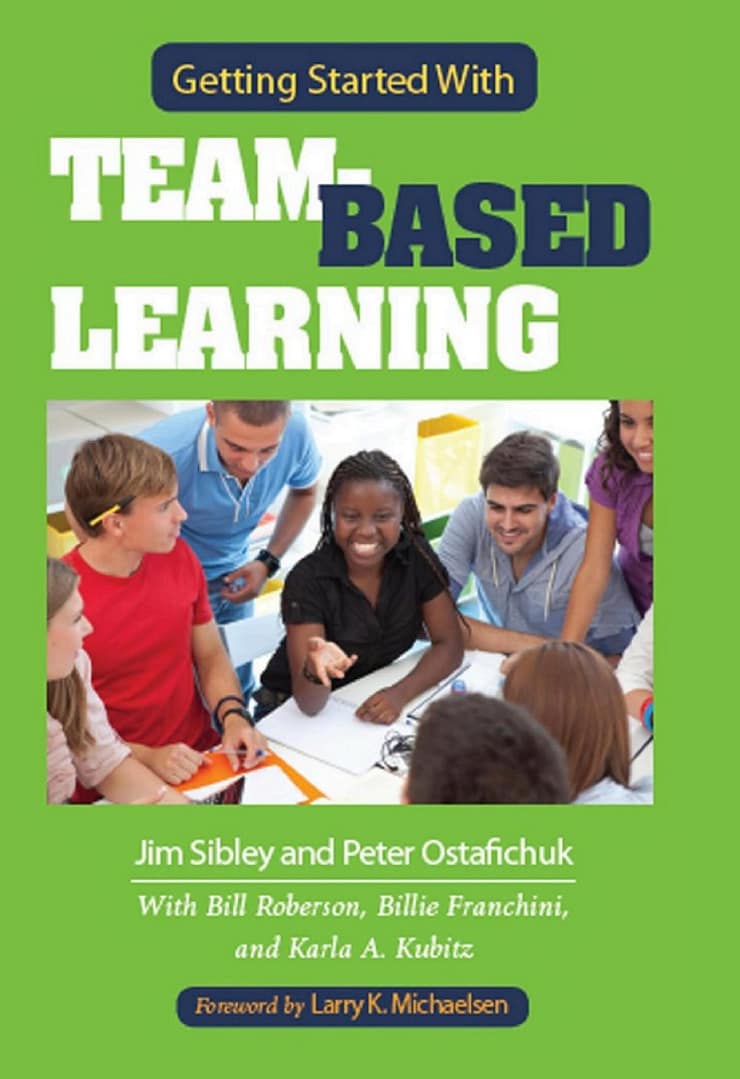
Anton: [00:32:20] Another is a book I mentioned this book a lot in my book and it’s simply an awesome feature. They wrote a book called Getting Started in Team Based Learning. And so I’m a real fan and proponent of collaborative learning team based learning and these approaches are can be enormously useful and powerful. But we often watch how we implement them.
Anton: [00:32:40] And so that book really kind of walks you through and does a good job of acknowledging the reality of resistance. He doesn’t talk much about what it is. So that’s my goal. But they do a good job at kind of talking about just accepting that resistance you’re going to have resistance to collaborative learning. So you just accept it and you just go with it. Then you say you design the class to work with it and when you do that you can get really good outcomes so it’s a really nice book. I’d recommend anybody thinking about using TBL or other forms of collaborative learning.
Anton: [00:33:12] And the last thing is my current passion I just got an mail the other day there’s a new board game. I’m a real boardgame fanatic. And it’s called Lisboa. It’s one of the most amazing board games I’ve ever seen. This is not monopoly This is like modern design or board games and it is about Lisbon in 1755. There was probably around a 9.0 earthquake that almost leveled the city and started raging fires and then there was a tsunami on top of that. And it almost totally destroyed the capital of Portugal. And so you are playing part of the noble class trying to rebuild the city and also kind of to gain more fame and in doing so. And it’s just it’s not as simple a game it’s a complex game but it’s just an incredible game. So it’s called Lisboa. And the designer is the tallest server. So it’s if you like war games and especially like complicated boardgames it is an amazing piece of art.
Bonni: [00:34:10] It sounds phenomenal it’s completely outside of my realm of experience but from the number of past guests that we’ve had on who talk about some of these more sophisticated kinds of games I just barely remember Dungeons and Dragons when I was growing up but I never got too much into it but I played that you know once or twice maybe maybe more than that growing up but I mean this is I know this is a whole nother world than what I would have ever seen before.
Anton: [00:34:33] Oh the types of games that are being created today are just there unbelievable just amazing games and this is Lisboa is a great example of the kind of the epitome of what’s possible.
Bonni: [00:34:46] Well thank you so much for those recommendations and for sharing such an important work for our practice as educators. And I’m so excited for people to get their hands on it. We’ll be linking to it in the show notes at teachinginhighered.com/171.
Bonni: [00:35:03] And of course linking all of your recommendations as well I think I’m going to be enjoying the process of filling out the show notes. I can go check them out as I go. I’m already checking out Lisboa and it just looks like a phenomenal game and lots of other things to check out as well.
Anton: [00:35:19] Very good. Well thank you. I appreciate the chance to talk about it.
Bonni: [00:35:23] Thanks so much.
Anton: [00:35:24] All right thanks Bonni.
Bonni: [00:35:26] Thanks again to Anton for being a guest on today’s Teaching in Higher Ed and we had so much we could have talked about it could have kept going and going. But I always try to think about your time and some of you listen in the car while you’re walking around that lake if you want a little bit more about metacognition. There is a wonderful episode from a little bit back in the catalog episode 147 with Todd Zakrajsek which would be a good lesson if you want to learn a little bit more about that idea and some practical approaches that you can use. And if you want other follow up you can do around this community.
Bonni: [00:35:58] I’m going to encourage you to subscribe to the weekly e-mail what happens there is that immediately upon subscribing you get a free guide which is 19 tools that I use both for personal productivity and also for using technology in the classroom to facilitate learning. So you can check that out but you also then will be subscribe to the weekly emails and all the show notes with Slim junior backpack laptop backpacks will come into your inbox and Lisboa board games and all that good stuff without you having to remember to go to the show knows to check it out. If you’d like to subscribe go to teachinginhighered.com/subscribe. And one last thing if you wanted to make a comment on this episode you’re welcome to go to teachinginhighered.com/171. Thanks so much for listening and I’ll see you next time.
Teaching in Higher Ed transcripts are created using a combination of an automated transcription service and human beings. This text likely will not represent the precise, word-for-word conversation that was had. The accuracy of the transcripts will vary. The authoritative record of the Teaching in Higher Ed podcasts is contained in the audio file.