Follow the Teaching in Higher Ed Podcast
About this Episode
Matt Reed shares about sneaky assignments and student speak outs on episode 358 of the Teaching in Higher Ed podcast.
I used the pseudonym Dean Dad because those were the two roles that I spent most of my waking hours doing.
Matt Reed
On episode 358 of Teaching in Higher Ed
Voices on this Episode


Show Notes + Resources
Recommendations from this Episode

Movie/TV
BoJack Horseman

Game
Song Pop Party

Game
Mahjong

Game
Spell Tower
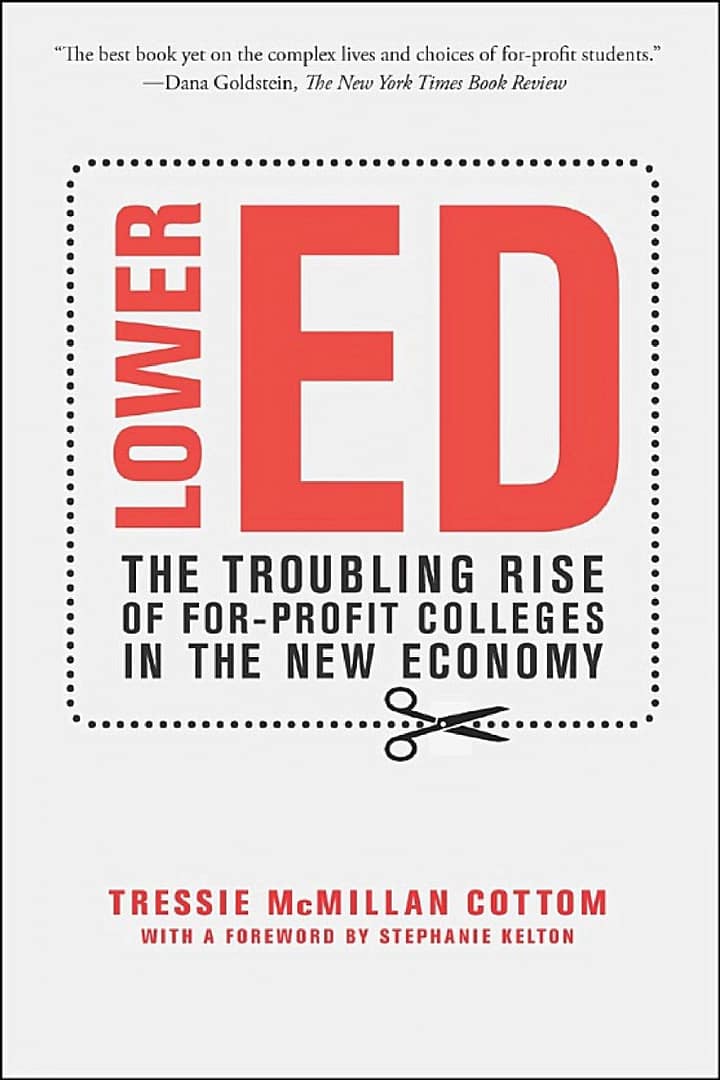
Book
Lower Ed by Tressie McMillan Cottom
Transcript
[00:00:00] Bonni: Today on episode number 358 of the Teaching In Higher Ed podcast, Sneaky Assignments with Matt Reed.
[00:00:10] Production Credit: Produced by Innovate Learning, maximizing human potential.
[music]
[00:00:19] Bonni Stachowiak: Welcome to this episode of Teaching In Higher Ed. I’m Bonni Stachowiak, and this is the space where we explore the art and science of being more effective at facilitating learning. We also share ways to improve our productivity approaches, so we can have more peace in our lives, and be even more present for our students.
[music]
You may well have already read columns by today’s guest, and you might know him by his pen name, Dean Dad.
Matt Reed has been the Vice President for Academic Affairs at Brookdale Community College in New Jersey since 2015. Prior to that, he’s held administrative positions at Holyoke Community College, and the County College of Morris as well as DeVry University. He’s also the author of Confessions of a Community College Dean, which can be found at InsideHigherEd.com. An accidental administrator, Matt’s doctorate is in political science from Rutgers, but the world had other plans. Matt Reed, welcome to Teaching In Higher Ed.
[00:01:37] Matt: Thank you.
[00:01:38] Bonni: Could you tell us how you first got into working in a higher education context?
[00:01:45] Matt: I know I was intended to be a professor, but my goal I wanted to teach poli-sci. I did poli-sci as an undergrad, I went to grad school, got the doctorate, and I was all set, and lo and behold, nobody was hiring. I had to improvise. This was the late ’90s. I had come out of Rutgers with a degree in political philosophy, which was not a hot seller. As it happened, there was a branch of what was then DeVry College of Technology, and it’s now DeVry University, about a mile from Rutgers. They were hiring a whole bunch of people very quickly, PhDs, in order to qualify for state licensure to offer bachelor’s degrees.
I got hired there. I remember at the interview, the department chair who interviewed me was an Amherst grad and the chair of English was a Williams grad. They were both like, “Oh, you’re Williams grad too, great. Welcome to the group.” I thought, “Really? DeVry? Okay.” Taught there for a few years, but at the time, this is the late ’90s, DeVry was expanding very quickly. It was that first big internet boom. They started opening campuses in other places and started pulling the local administrators away to those other places to get them started.
That created some openings. I remember looking around as the openings came up, and I looked around my department at some of my colleagues and thought, “Oh, god, no. Lovely people, great teachers, but not managers. They’re just not.” I went into administration out of self-defense. I just didn’t want to be managed by any of those people. I felt like I would be fair, and I would be sane, and that would be fine. Candidly, I thought of myself as a pretty good teacher, but there were a lot who were better than I was.
I felt like I was definitely replaceable in the classroom in that sense. I moved into administration and did that for a couple of years at DeVry. First as associate dean of Gen Ed and then dean of Gen Ed. As I moved up the hierarchy and got a little bit closer to where the decisions were made, I saw that the profit motive consistently defeated every other consideration.
Out of sheer disgust, I started sending out resumes. I found my way to a community college in northwest New Jersey, the County College of Morris, where I got hired as the Dean of Liberal Arts in 2003. I’ve been in the community college world ever since. That’s 18 years now.
[00:04:18] Bonni: What do you remember about an early surprise of the community college context?
[00:04:25] Matt: DeVry was a for-profit, publicly traded company. It thought of itself as a tech company, even though it was also a college, which created a weird culture clash. When I got to CCM, it was a public tenure-based unionized institution, where the median age of the full-time faculty when I got there was 60. I was 34 at the time and coming in as a dean. There was a real culture shock. The speed of everything seemed to have slowed way down. I felt like I had gone back in time.
In some ways, it was a lot better because you didn’t have the profit motive undermining all the academic concerns. I liked that part of it. It was certainly more affordable for students, I like that too, but just the the pace really surprised me. It was so much slower and nobody else there seemed to think that was weird. Like one story, I remember, I had a question for the finance VP one day. I caught him in the hallway and I said, “Can I grab you for a few minutes?” He said, “Yes, I’m free week from Thursday.”
[laughter]
I thought, “By a few minutes, I thought maybe now or maybe after lunch.” He was like, “Yes, we can make sometime a week from Thursday.” I thought, “All right.” I was really surprised by that. After about a year of experiencing culture shock on a daily basis, the way that I process ideas is by writing. It’s just how I think. I think better at a keyboard. I started writing about what I was seeing. This was when blogs at first become kind of a thing.
I started posting them online as these virtual messages in bottles under a pseudo name, it was Dean Dad. It caught on after a little while. That was 2004 when I started doing that, and then in 2005, I started doing it five days a week. Then in 2007, Inside Higher Ed came along and said, “We like what you’re doing, can we run it?” To which I said, “Yes.” That took off and I became the running commentator. Not that anyone asked, but it felt like nobody else was doing it.
At the time it felt risky, that’s why I used the pseudo name in the beginning. At this point, I think it’s really not. At the time, blogging was still considered de classe, vaguely disreputable. Higher Ed’s a very reputational business. I used the pseudo name Dean Dad because those were the two roles that I spent most of my waking hours doing. At the time, I had two small children. It was my tip of the cap to a lot of the the feminist theory that I’d read in the ’90s, where it was initially, Professor Mom, or whatever.
It was working women writing about the struggles of professional careers and motherhood. I admired what they were doing and remember thinking, “Okay, if we’re going to be thoughtful and serious about issues of work-life balance, then men have to own them too. That we can’t just treat that as a women’s issue, because that’s really the problem.” I would write about being a dad and having a night where, okay, one night you have to go to the college musical and the next night, there’s an award ceremony and then the next night, there’s some kind of emergency. Meanwhile, the kids are frantic.
That seemed to strike a chord with people. The boy and the girl, as I called them on the blog, have been characters since the very beginning.
[00:08:10] Bonni: I want to ask you two change questions, they’re both COVID-related. You mentioned to the girl, and you recently wrote about, it’s prom season now in the US, my kids are younger than your kids and so this is not something I’ve contemplated. How are proms likely to look different during COVID than they have in our past?
[00:08:29] Matt: I think the short answer is I can tell you in three weeks.
[laughter]
[00:08:33] Bonni: Yes. Because you’re not on the planning committee. [crosstalk]
[00:08:34] Matt: Because prom is late April, the 22nd I think. The piece that I know about it, there’s no dance floor, which to me raises the question, “Well, then what is it?” They have big roundtables that I guess you can sit 12 students at a table. The students who can attend can only be students from the school district. If your boyfriend, girlfriend is from another district, too bad. They all have to wear masks.
At the same time, the girls in her class have this social network thing going where when a girl gets a dress, she’ll post pictures of herself in the dress, and they’ll all post comments, “Oh, that’s beautiful, that looks great on you,” and so forth. They’re so excited about it. My prom was in the ’80s, it was a very different world. Looking at this one now, it’s like, I don’t quite recognize it as a prom, but she does and that’s what matters. She’s excited. She got her dress. We’ll see how it goes, but I can’t quite picture a prom without a dance floor.
[00:09:37] Bonni: My second change question has to do with you talking about the speed with which things happened when you first entered the Community College District. How has speed changed or not under COVID?
[00:09:50] Matt: Things have sped up over the years. Particularly since 2008, when the great recession hit and then sudden the money went away. COVID changed the whole experience of time and space. We’re off campus most of the time. Most of our meetings now are on zoom. That, in a way has been surprisingly positive. Let me clarify, when I say positive, I don’t mean worth it. It’s absolutely not worth it. Some meetings, especially large meetings, like college Senate meetings, college forum, work pretty well on zoom because you can have the chat function going parallel to whatever’s going on on the screen and only one person can speak at a time. Sometimes in large gatherings, that’s an issue.
There’s no back of the room where you can’t hear very well. That just doesn’t exist, and it’s easy to share screens, which is actually a very big deal for academic meetings. If you’re proposing a change in language to a college regulation or something, you can actually share your screen and everybody in the meeting can read it. That’s not true in a physical meeting, when they put it on a projector, no matter how hard they try. That part has changed quite a bit. The timepiece of it has been, I guess, a mixed bag.
The first few weeks of COVID felt like forever, it just felt like time stopped, and everything was just in suspended animation. As we’ve been in this mode longer, people have been getting better at it. I noticed this morning I was in a college forum meeting, and the chair of the college forum, that’s our college shared governance body opened with, “I can’t believe it’s already April.” I thought, “Okay, that’s the change.” Because last year in April, it was like, “I can’t believe it’s still April.” Now it’s I can’t believe it’s already April. I think folks that have made the adjustment and a lot of ways. It has been a learning experience so to that.
[00:11:53] Bonni: Even though you have spent your time in leadership roles, I know you also have continued to teach. Can you tell us about what a sneaky assignment is and how it came into being.
[00:12:06] Matt: I haven’t had a course in a few years, but sneaky assignments, one of my favorite tactics when I taught, giving an example, I taught American government a lot and the exams usually featured some kind of essay questions. I didn’t want to ambush the students with questions, that didn’t seem like a valid technique. I use the technique that I have learned in grad school where I’d give them a list. The week before the test, I give them a list of maybe five questions. I tell them, “Okay, three of these are going to be on the test, and you have to write on any two of them.” They do the math and figure out, “Okay, that means I can skip one.”
Then I will tell them, you can bring in one index card no larger than, I think it’s five by seven or four by six. Anything you can handwrite on an index card, you can use as a cheat sheet. They would look at me like, “What?” I say, “No. Anything, you can physically hand right on that one index card, you can use front and back, that’s fine. Anything you can write on that you can use.” They look at each other and cackled and they were like, “I can’t believe this guy’s so easy.”
Then they’d come in the following week with their index cards, and they do the test. I remember, as I returned the test the following week … a student said, “Hey, you tricked me. You tricked me into studying?” I said, “Yes, you got me.” [laughs] That was the entire point that in preparing the index card, there were so focused on making it as effective and as useful as they could, they accidentally studied. When they thought they were doing the brilliant criminal maneuver, they were actually doing exactly what I wanted them to do.
I call that a sneaky assignment. They didn’t realize they were doing an assignment. They thought they were getting away with something, but they were actually doing an assignment. It works really well when you can build it right, when you can construct it right. They got a big kick out of it when they figured out what it was. Some of them even had this grudging respect for it, kind of a tip of the cap like, “Okay, you got me. That was a good one.” The way you respond to a really good pun. I’m a fan of that technique when you can do it.
[00:14:22] Bonni: We’ve had so many good conversations on the podcast before about this tension. I think it’s an important tension between wanting to recognize the world that we live in today in the context and context in which we find ourselves as in how easy it is to look things up and yet the importance of having things memorized, such that they become more useful to you. I think such important discussions that we have, but when it comes to the, I think back to exams I gave early on in my teaching, I can tell you that going the all the way in the direction of having completely open book, open note tests, actually, in my case, statistic, they wound up harming the students because I didn’t help them study for the test. I helped them get an artificial sense of preparedness.
I didn’t do it intentionally. I would never do something like that intentionally but I just looked at the scores on the test, and they went down, because I think there was just that overreliance of thinking that that’s going to help you, but by having it shrunk down like that, I have to think about what I’m going to put on the index card and prepare it. I really do think that that’s a nice approach to help people be able to study in that way.
[00:15:32] Matt: It’s silly, but it worked.
[00:15:35] Bonni: What can you tell us about student speak-outs?
[00:15:38] Matt: The student government at Brookdale does a speak-out once a semester, where they invite any student from campus who wants to ask a question of the college’s leadership in a public forum show up. In pre-COVID times, it was usually in a large multipurpose room now, of course, it’s on zoom. The students would make questions and the President is there and all the vice presidents and most of the deans, and some of the folks who run the facilities. The students will ask whatever they want to.
It’s a little bit of a high wire act because when I’m answering your question, I’m very aware, not only am I answering it to the students, but the President is there hearing my answer. The Deans are there hearing my answer. You can’t really get too wild with it. It’s helpful, because you notice over time, if you go to enough of them, at Birkdale, I’ve been to 11, I think at this point, or 12, I forget. Some of the same questions come up every time. You start to realize, “Okay, this is a persistent concern. This is not one person had one issue once. This is something that comes up repeatedly.”
For example, every single time someone will ask, “How come some professors don’t have office hours?” The answer is because they’re adjuncts. A lot of the students don’t think that way and they don’t look at an adjunct professor, as an adjunct professor. It’s a professor is a professor. They want to know why some of them have office hours, and some don’t. From a student’s perspective, that’s a completely valid question. I can give them the organizational answer, and I do. From their perspective, that’s not necessarily very satisfying, and I get that.
Another one is how come when the schedule goes up for the fall and in March, some of the sections don’t have instructor names attached? Again, the answer is, some of them are adjuncts. The students don’t want to hear that, but it’s the truth. You get those evergreen questions. Then you get the more situational ones. At the last one, for example, there are a lot of questions about student clubs and athletics in the fall, what’s the plan for athletics in the fall? Which I thought was a totally fair question and it made sense in this context. It’s not one we got in pre-COVID times.
[00:18:04] Bonni: There’s a lot of questions about plans coming from all sorts of contexts these days. In fact, that transition, adjusts well to our next bit of conversation, and that is, there’s so much talk about plans for the Fall. I’m sure you’ve seen in inside higher ed and elsewhere, really good writing about. I’m thinking of Brian Alexander’s one who has reported out and Josh Kim, I think I’m getting his name wrong, maybe I’m not getting his name wrong but anyway, about different phases of COVID, trying to take the complexity, with witches navigating this pandemic and then now we’re going to do it again for the Fall of 2021.
I think what might be helpful for us to round out this part of our conversation is to talk a little bit about flexibility, adaptability. Any advice that you have for people thinking about teaching in the Fall, how we can think about our course design to not have unrealistic expectations for ourselves, but be able to meet that moment with students when it’s hard to plan for.
[00:19:11] Matt: Something the Birkdale faculty have done that I would love to take credit for but they did it. I really can’t take credit for it. They started their own, they call it a faculty share. It’s a site on canvas, which is our LMS, where faculty actually share tips for remote teaching that they’ve picked up. They share them with each other. It’s asynchronous in-house professional development and I love that idea. I just think that’s great because they’re all dealing with the same students. They’re all dealing with the same LMS and the same bureaucracy and all of that.
It’s very situated knowledge. Things that will work for Brookdale students may sometimes be different from things that work for Rutger students. The fact that it’s in-house I think is great, and the fact that it was actually invented by faculty, they saw a need, they stepped up and addressed it, and all I did was cheer from the sidelines. I think that’s great. My recommendation there is for faculty to reach out to their colleagues, and to collaborate to the extent that they can. For example, we have one history professor who decided to use the affordances of the new technology. Instead of having her students write all these short papers, she kept a couple of those, but then replaced a couple of them with little podcasts, the students have to produce little podcasts, where it’d be like, okay, you’re interviewing Napoleon right before the Battle of Waterloo go.
I love that. I thought that was brilliant. There are these wonderful affordances that technology gives, and I understand the impulse psychologically when we’re all back in the Fall, say, “Well, thank goodness that’s over, and try to go back to normal.” That’d be a waste. We’ve learned things in the last year, year plus, certain tasks, learned themselves really well to being done over Zoom, and some don’t. It would be a shame to forget everything we’ve learned in the last year.
Assuming that you can come back in person, assuming that the vaccinations are as widespread and as effective as we hope they are, by the Fall, what would you keep online? Assuming Zoom still exists, I assume it will, what would you carry forward? If you can mix and match your formats, what would you carry forward from Zoom? For example, a lot of faculty have said, they get more students in their Zoom office hours than they ever got in their in-person office hours, which makes sense because the Zoom office hours, you don’t have to drive to get there.
You can have your Zoom office hours like on a Tuesday night at 7:00, which is really hard to do with the regular office hour. A lot of the faculty have said, “Even when we come back, we would like to continue to have a lot of the office hours remotely, because we get more interaction. We’re not just sitting there.” I got to admit, they make a hell of a point. The whole point of office hours is faculty-student interaction. It’s not filling an office.
If Zoom enables that in a way that a physical office doesn’t, cool. To look for those silver linings, things we can carry forward, and to suggest them to administrators, because we’re making this up as we go along too. There was no playbook of this. If you have administrators who are willing to listen, to suggest these things. We have a professional development requirement for faculty, they have to do a certain number of days per year by contract. The folks that come up with the faculty share petition me, “Can we count this?” Yes, absolutely. It’s a great idea to do it. Do not be shy about suggesting those things, because all of the rule books prior to 2020 had to be amended on the fly. It’s entirely possible that your brilliant idea is something that your dean or your president or your provost literally has never thought of. That’s completely possible. Don’t be shy about bringing it up. The worst they can do is say no.
[00:23:22] Bonni: I’ve been really intrigued by all the conversations around preferences versus realities when it comes to these things. Specifically, Robert Talbert wrote a really good piece, it was like, I don’t know how to explain it. A conversational version of a piece from an academic journal where they had done a study about video assets in a course and their effectiveness. They looked at before and after to what degree did students rank them in terms of valuable? It wasn’t just video assets, this is what’s standing out to me, but everything from off things like office hours, and all these different assets, and of course, that might help you be able to deepen your learning.
What really struck me about his piece is looking at the before, what I thought was going to be valuable to me as a student, and then the after, what actually was. I think you’re absolutely right that the conversations we could be having now and the ways in which we could capture might better reflect reality than just some hypothetical because I think we can’t really identify those affordances very well until we’re actually in it. It’s not experiencing it and learning as we go.
[00:24:35] Matt: Absolutely.
[00:23:22] Bonni: Before we get to the recommendations segment, I wanted to share with you about today’s sponsor, and it’s a special kind of sponsor. No money is exchanging hands, just conference registrations, and other ways of sharing about each other’s work. I am pleased to announce that I am having as today’s sponsor the 37th Distance Teaching & Learning DT&L Conference is taking place virtually August 2nd through the 5th 2021. It is a super engaging, fun, and fully virtual event. It’s got the what’s coming up and the best of the best in distance education. Their goal is really to have us all feeling renewed and invigorated when we get to connect with world-renowned experts.
One of their keynotes, by the way is Maha Bali, who has been on the podcast many times in the past and is the creator of Equity Unbound. Also joining her as keynotes, Sian Bayne and Jeremy Knox, the authors of The Manifesto for Teaching Online, and so many more people will be presenting in and sharing. We’ll all have a chance to add new skills, tools, and techniques to our distance education toolbox, and we will get to connect with authors. I’ll actually be sharing about the productive online and offline professor there, that’s part of our exchange with each other.
You can earn a badge with conference certifications in distance education topics such as Fundamentals of Online Teaching, Online Education Administration, and Prepared for Teaching Online Boot Camp. Registration is $329 for 95 sessions, and the registration opens on April 14th. You can learn more at dtlconference.wisc.edu. There also will be a link in the show notes and on the weekly email. Thanks once again to the Distance Teaching & Learning DT&L Conference for sponsoring today’s episode.
Well, this is the time in the show where we each get to share our recommendations. I don’t think in all of the years since June of 2014, I don’t know that I’ve ever recommended a game before. I’m not much of a gamer. When people have come on to talk about gamifying and games and learning, I always feel like I got left out of that part of life schooling. Today, I’m going to recommend some games. The Apple Arcade, they recently launched a bunch of games that are either retro or old games rethought and there are three that I want to recommend from the new collection.
My favorite one is called SongPop Party. SongPop Party is like a name that tune, and it is so much fun. I’m completely having a ball. I started out, of course, it makes you start out, and then you have to level up and get better as you go. I started out in Classic Rock of the 1970s. I have actually found out I’m pretty good at Classic Rock from the 1970s, I think I have an advantage or my husband is six years younger than me. If I were ever to play this game with him, I think I might take him down on that particular decade, but he might catch up later on. Who knows?
Anyway, it’s really fun. A delight, you can pick your character. As you get a level up, you can pick different genres and different decades of music. It’s so much fun. You can play just against the computer, which I’ve been doing. You also can play on a network with other people who are on devices, and you also can play against strangers on the internet. It’s really fun.
Then the last two I wanted to recommend also new on Apple Arcade is one called SpellTower before. It reminds me a little bit of games where you’re trying to maybe like Bejeweled where you’re matching the token or the tiles together, and then they fall down the bricks on top of it fall down, and your goal is to get all of the bricks to fall down. I’ve never actually successfully built words all the way down to the bottom level. Each time you build a word and you trace it with your finger, you can go diagonal or backwards or up and down.
When you create a word, the rows of letters that are above it all fall down, and the goal is to get the whole thing to be empty, or get the highest score. Then the last one is again, many of you might have played way back when or maybe you’re still playing it, and it’s new just to me, but it’s called Mahjong. It is with those tiles where you match the tiles and sometimes they’re layered on top of each other and the goal is to match all of the tiles that are laid out.
When you do that, you earn a series of points as you go, so they’re really fun. Again, not much of a gamer myself. These were fun for me with SpellTower and Mahjong to revisit them and then for SongPop Party, of course, the classic idea of naming a tune. It’s got a really fun twist on it. Those are my recommendations for the day. Now, Matt, and I get to pass it over to you for yours.
[00:29:43] Matt: Wow, okay, not a gamer. I can think of two off top of my head. One is the book Lower Ed by Tressie McMillan Cottom. It’s about for-profit higher education, and it’s short and it’s funny and it’s brilliant and it’s readable and it’s just excellent. Came out a few years ago and she and I both worked in for-profit higher ed and in traditional higher ed. I can vouch that a lot of what she says is absolutely spot-on true. She’s also a laugh-out-loud funny, which is an uncommon trait in a writer on sociology of education. Definitely recommend that. This other one, I get a lot of flack for this, but it’s the truth. There’s a series on Netflix called BoJack Horseman, love it. You have to get past the premise. It’s a cartoon about a horse who’s a washed-up ’80s sitcom star and an alcoholic.
Many people can’t get past the premise and there’s a lot of slapstick and stupid animal puns, but underneath all of that, it’s this unbelievably gripping character study of this horribly flawed creature who’s trying to be better, but just can’t, and it unfolds over several seasons. It’s incredibly compelling but it’s a dark night of the soul mixed with animals’ slapstick. Somehow it works. It’s a little raw. I wouldn’t recommend it for kids, but it’s incredibly compelling and well done and unexpected. It sneaks up on you.
Whenever I recommend that to people, they give me a look like, “Seriously?” But it’s true. My brother is the only one I’ve been able to convince so far. It’s absolutely worth watching if you need to binge-watch something, definitely recommend it.
[00:31:44] Bonni: I was funny. I was about to say, well, you’ve given us two great recommendations, but I don’t actually know that. I’m going to assume when you talk about Lower Ed, I read Tressie’s book called Thick and absolutely loved it and have of course recommended it on the podcast before. I think I always stayed away from Lower Ed because I didn’t realize that it was funny. I realized it’s not a holler. There’s some very serious stuff in there. I loved her. She’s a brilliant writer. I think I need to check that out.
[00:32:14] Matt: It’s not a … It’s a sociological study, but her sense of humor comes throughout. There were several moments that I laughed out loud, which is not typical for sociology of higher education. It’s brilliant and it’s short and it’s really terrific.
[00:32:31] Bonni: Anyway, I have a feeling about the second one that I’ll end up hearing from someone or you will hear from someone who’s like, “Yes, I’ve seen it and I love it too,” but it’s always one of the sounds like one of those things that’s hard to explain to people if they’ve never seen it before.
[00:32:44] Matt: It really is. The first episode or two is all the slapstick and none of the angst. I can see where someone would try it for an episode and say, this is stupid, and walk away. All I can say is give it time. It’ll get there. It’s really remarkable towards the end. It’s stunning, but it does take a little bit of patience.
[00:33:05] Bonni: Well, Matt Reed, I am so glad that you answered my invitation to come on the podcast. I mentioned I’ve been reading your columns for quite some time and really appreciate the ways in which you’re very transparent about some of the challenges of leading the context you do, and also parenting. I’ve really enjoyed it. It’s just fun to get an opportunity to talk to you today. Thank you so much for your time.
[00:33:26] Matt: Thank you, Bonni. That was fun.
[music]
[00:33:32] Bonni: It was a pleasure to have an opportunity today to talk to Matt Reed and hear a little bit about Sneaky Assignments and other work that he has done as a leader in higher education. Thanks so much for joining me. If you are listening today and have yet to subscribe to my weekly Teaching in Higher Ed update, they just got redesigned in January. I’m getting lots of great feedback on the new format. Thanks to those of you have written them and told me that. You can subscribe by heading over to teachinginhighered.com/subscribe. I’d love to have you join us there and thanks so much for listening to this episode and we’ll see you next time on Teaching in Higher Ed.
[00:34:32] [END OF AUDIO]
The transcript of this episode has been made possible through a financial contribution by the Association of College and University Educators (ACUE). ACUE is on a mission to ensure student success through quality instruction. In partnership with institutions of higher education nationwide, ACUE supports and credentials faculty members in the use of evidence-based teaching practices that drive student engagement, retention, and learning.
Teaching in Higher Ed transcripts are created using a combination of an automated transcription service and human beings. This text likely will not represent the precise, word-for-word conversation that was had. The accuracy of the transcripts will vary. The authoritative record of the Teaching in Higher Ed podcasts is contained in the audio file.