Follow the Teaching in Higher Ed Podcast
About this Episode
Jaime Hannans shares about empathy and extended reality on episode 270 of the Teaching in Higher Ed podcast.
Knowing how to navigate your space is a hurdle when you’re going into a new semester.
Jaime Hannans
On episode 270 of Teaching in Higher Ed
Voices on this Episode


Show Notes + Resources
Extended Reality:
- Augmented Reality
- 360 degree camera
- Tripod
- ThingLink
- Mixed Reality
- Virtual Reality
- Embodied Labs
- Computer/headset/hand sensors
- INACSL Standards of Best Practice: SimulationSM Facilitation
- AHRQ Healthcare simulation dictionary
- openCI – Channel Islands Affordable Learning Solutions
- Episode 139: Effective Debriefing Approaches
Recommendations from this Episode
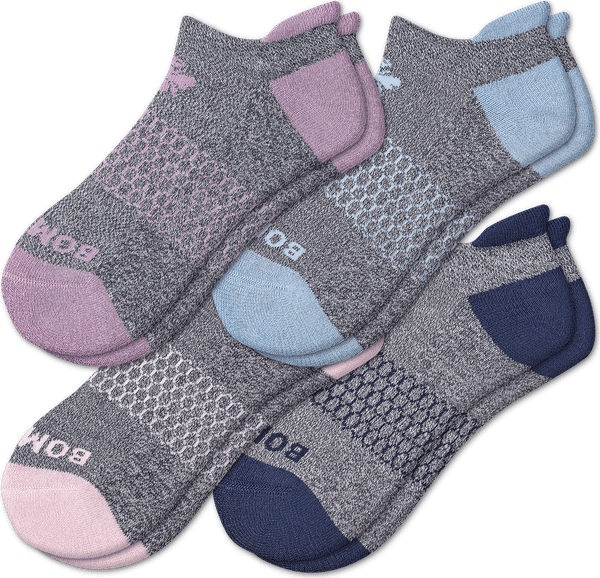
Product
Bombas socks

Resource
Bird Library
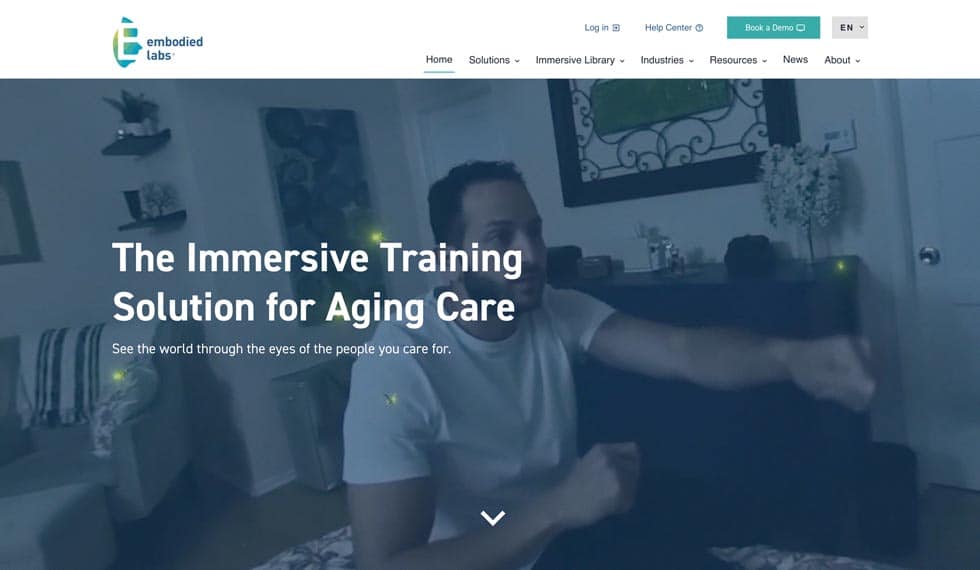
Resource
Embodied Labs
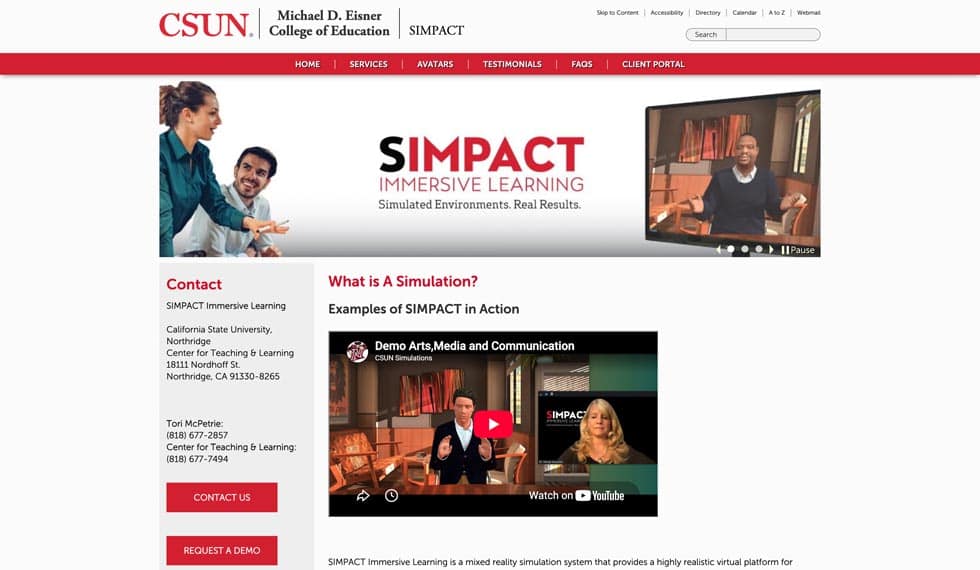
Resource
CSUN SimPACT
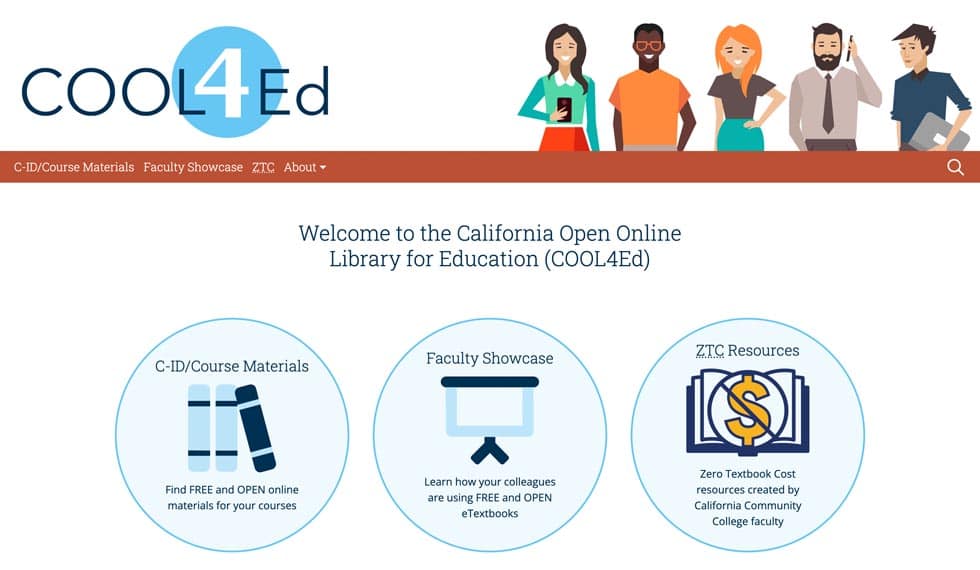
Resource
Cool4Ed.org
Transcript
[00: 00: 00] Bonni Stachowiak: Today on episode number 270 of the Teaching in Higher Ed Podcast, Jaime Hannans shares about empathy and extended reality.
[00: 00: 12] Advert: Produced by Innovate Learning, maximizing human potential.
[music]
[00: 00: 21] Bonni: Hello, and welcome to this episode of Teaching in Higher Ed. I am Bonni Stachowiak, and this is the space where we explore the art and science of being more effective at facilitating learning. We also share ways to improve our productivity approaches, so we can have more peace on our lives and be even more present for our students.
[music]
Today’s guest comes to me through my collaboration with the California State University, and in this special Teaching in Higher Ed podcast series, we highlight outstanding faculty that are transforming higher education and supporting student success throughout the California State University. These individuals have sought to address the equity gaps that previously existed in their courses through innovative course redesigns and creative teaching approaches.
Boy, do I ever have someone today that definitely fulfills that, Dr. Hannans was the first teaching and learning innovations faculty fellow working on digital badges, ePortfolios, and faculty workshops related to the use of digital mediums in nursing courses. Dr. Hannans has been instrumental in exploring and sharing innovative teaching and learning practices including open courses, digital storytelling, and online and blended best practices.
Her approaches have expanded beyond nursing with a focus on the importance of remaining student-centered. Digital badges, for example, now expanded into the California State University Channel Islands faculty trainings were originally piloted to allow students to be recognized for the soft skills in nursing, encouraging nursing students to move beyond their focus on grades, to demonstrate an understanding in patient safety, function as empathetic caregivers, and provide effective communication.
Her latest innovations which you’re going to hear about on today’s episode include integrating immersive, virtual and mixed reality simulation in nursing courses. Dr. Hannans looks to utilize virtual and mixed reality to prepare students for the nursing profession by practicing difficult conversations and understanding the patient perspective that could not otherwise be experienced through these technologies. Jaime, welcome to Teaching in Higher Ed.
[00: 02: 51] Jaime Hannans: Thanks for having me.
[00: 02: 53] Bonni: It was fun learning about you, and your work is so inspiring. I would love to talk to you for a few minutes about the origins of that. How did you start becoming interested in nursing education?
[00: 03: 06] Jaime: I worked as a nurse at bedside, of course, mostly in critical care, and often, I would precept students or new grads. I just really felt like as I worked patient to patient, I worked with the new graduate students that I really could make a bigger impact if I taught even if three or five students out of each graduating class had the same passion and drive for nursing and caring for patients that that would unfold every year after year after year make a bigger impact.
[00: 03: 38] Bonni: What were you noticing at the time that were some of the challenges that they weren’t getting out of their educational experiences?
[00: 03: 46] Jaime: I think it wasn’t necessarily what they weren’t getting out of their educational experiences, but maybe that ability to hang on to and sustain and think about really, why did you become a nurse? It’s really great to be able to know the labs and know the pathophysiology, but we’re caring for human beings. It’s really key to be able to put yourself in their shoes and try to be compassionate and kind. You need both pieces. I really wanted to make sure that we had nursing as a profession growing people that are capable of really doing both.
[00: 04: 22] Bonni: I just had a doctor’s visit a day ago. I shouldn’t say a doctor’s visit, it was a regular exam with nursing professionals. I kept thinking about, “This is–” It was a miserable experience. Not traumatic or anything, but I kept thinking, “Channel all of this, channel all of this and put it toward your teaching.”
What kept coming to my mind was that word of empathy and truly, the real root of that word of being able to put yourself in another person’s shoes, because this is something that some of us only do every few years or every year, or maybe for some people, it’s their first time, but for that person, it becomes just this rote thing of like, “I’ve said this a million times and I don’t– I’m feeling impatient with you for not getting it’s been a while for you or whatever.”
I kept thinking about, “Take this experience, how you’re feeling right now and just make it better for your students coming forward,” because there has to be areas where you, Bonni, do this in your own work. That feeling whenever we’re learning something new, or we’re uncomfortable, or we’re feeling like we’re in such a foreign environment is healthy for us to take as educators.
[00: 05: 27] Jaime: Yes, it’s hard though to be a patient. It’s really hard to put yourself in that very vulnerable position and to have to trust someone else to help you make decisions and not second-guess things. You really need to have a strong relationship with people and an ability to connect, especially with nursing in a quick way. You might see your healthcare provider or your physician, your nurse practitioner, whoever is leading your care and get to know them over time.
With a nurse in acute settings or in a clinic setting, you have to be able to build a relationship relatively quickly and make sure that they feel like you’re centered on them, and you can listen, and you can hear them out and be patient, and try to navigate and really critically think through how can you help them.
[00: 06: 13] Bonni: I had a chance to get some previews from you of what we’re going to speak about. [chuckles] I feel like I already have a little bit of a surprise twist coming because you’re going to tie this, what you just shared about with your own reason why you went into nursing education, all about empathy, all about putting yourself into this person’s shoes, to extended reality and augmented reality. [chuckles] I’m fascinated with how these are going to connect, but before we get there, we probably should just have you define some of these terms for us I know.
[00: 06: 49] Jaime: A lot of people have heard virtual reality as a common term, but really what’s happening now with the fast growth of technology and what can be done with gaming, I think gaming probably has the longest history, but it’s all being called extended reality as an umbrella statement. Under that, you have different types or components or ways that you can approach it, which augmented reality is really considered as space that you augment or use overlays of computer generated content so Pokemon, for example, is probably something people are familiar with.
That would be like an augmented reality where you can look for the virtual characters in space. Another approach to virtual reality is 360 imaging and doing tours, where you can look around a space and maybe click on something in a space, real estate uses 360 imaging to be able to do tours, but what if you could overlay content in there which is what we do and put information and things that people can click on to learn further about, for example, in a clinical room or a hospital space.
I can impose a YouTube video about that particular IV pump and how to use it, so the student can look around the 360 room in space before they go into clinical. They can find the type of IV pump that’s going to be used and click on it and watch the video. In comparison to that, mixed reality really merges some components of digital or virtual reality with real time, so imagine that you’re going to have a conversation with a computerized but humanistic avatar on a computer screen and that would be mixed reality.
You have this virtual human and then you have the real space that you’re interacting with and those are merged together. Then the last thing that we’re doing at Channel Islands is virtual reality and virtual reality is really that 3-dimensional environment, you usually wear a virtual reality headset like an Oculus Rift or another type of headset that you’re fully immersed. When you look around your space, you can see a completely different space from the space you’re in. We’re also doing that with nursing students. It’s really exciting.
[00: 09: 07] Bonni: I wish I had met you– I don’t know, three years ago, two years ago [chuckles] because it makes so much sense. It really does. Should we walk through each one of these and talk about or there’s more of one that you want to focus on?
[00: 09: 19] Jaime: Let me explain what we’re doing for each one because they are a little bit different, and they do have different purposes for learning, I think. I think they really can be done in all different disciplines, not just nursing. For example, the augmented reality, we went to one of the hospitals in the local area that we do some clinical time out where students go to the hospital and work with patients.
Usually, we do an orientation, but when we take a tour of the hospital, we really don’t know how much time we’ll be able to spend in any given space or room to help get the students oriented to that space. What we did was we went to the facility, we filmed the different types of rooms, so an intensive care room, an emergency trauma room and then a regular telemetry or cardiac unit room. We were able to superimpose some of the tools, like YouTube videos about the pumps or different equipment in the room, I can put little buttons so that they could take deeper dive.
In the ICU room, uniquely, I always think this is funny. There is a little half wall in the back corner of the room, and there’s a sink. Under the sink, if you open the cupboard there appears a toilet, [chuckles] which you wouldn’t know is there if you never looked for it. It always have a little button or an arrow for students to click on and then they can see the still image of the cupboards open with the toilet, so they know that that’s there.
Just knowing how to navigate your space is a hurdle when you’re going into a new semester at a new facility. The idea was that this would help them get oriented to that space. In other disciplines, I really think this could be valuable in spaces that you can’t always get to. If you wanted to share about an auditorium or theater for your Performing Arts students, or you wanted to share about a certain beach site cleanup, and maybe it’s only occurring in that time and space, you could really film it and still use it later.
[00: 11: 15] Bonni: How difficult is this on the technological front? I’m assuming you would have to be able to know how to film and edit video. This is something you’re going to do. What is the difficulty then of augmenting that video that you’ve filmed?
[00: 11: 29] Jaime: It’s very easy. We use the web-based tool. We use Thinglink. Is the name of the web-based tool used. It’s just a website and we have an account and we drop the 360 image in there, and then you’re able to add tools, images, videos, buttons on it. I didn’t do any training to do it. [chuckles] Even the 360 imaging is very easy. You just have to get one of those 360 cameras, and then it helps if you have a stand for it. To be honest, for a stability of image. That’s it. .
[00: 12: 01] Bonni: You’re in the augmented reality. You’re talking about pictures. I think I thought these were videos, but were–
[00: 12: 08] Jaime: It’s really 360 images and still shots, and then you can embed other types of content. You can embed YouTube videos, or tutorials, or you can even embed a quiz onto that 360 image where they can still click around the space. It is very interactive, but it’s not a complete video.
[00: 12: 28] Bonni: You’re using a 360-degree camera that is built to do still images and then Thinglink, we’ve talked about it on the show before. I can say from having used it a couple of times, that is not a difficult thing at all. That’s a very — It would be having the equipment to do it and then having access to Thinglink, but this seems like a very doable thing.
Like you said in a lot of different disciplines, one of the things as you were sharing about capturing these images of places that you’re not sure if you’re going to be able to get to on your tour, because there may be something going on at that time, is creating more consistency, at the same time as allowing more freedom and agency for the learner.
You’re doing both at the same time because, maybe I already know that the toilet’s there because, for whatever reason, I’m familiar with that context, but I didn’t know how to use this other mechanism over here. It really seems to add a lot of agency to your learners.
[00: 13: 20] Jaime: Yes. For us, when you go from one hospital to another, their IV pumps might look different, or their wall-suctioning equipment, or tubing, or whatever, might look different. Where their computers are for charting might be different. You can really help get them better prepared by having the ability for them to independently go into this. All they have to do is log into their computer. I have it embedded in our course. They just click around on own time.
As far as how much time they want to spend on it, and how far they want to go with looking at the resources, it’s up to them. It’s a place where it helps give them a space to reflect and learn on their own, even after we leave clinical, so that if they were nervous to ask questions, hopefully, they can go to the space and get support in another way.
[00: 14: 06] Bonni: The second one is mixed reality. Would you share about that one?
[00: 14: 10] Jaime: Yes. Mixed reality, I think is really interesting because what the students don’t know is that they come in, I think thinking that they’re going to talk to this computerized avatar and get very generic responses. Imagine being in a small classroom space, there’s a screen on the wall. There’s a computerized, or digital room with a person sitting there, or sometimes two, and they respond to your questions and talk.
The goal is to have a conversation based on whatever the scenario is. For us, we have had them talk to family members, for example, of a patient who has been in the intensive care for a week. She’s not doing well. She has multiple organ system failure. She’s not actively dying, but that’s the direction she’s going and she’s requiring a lot of support for breathing and otherwise.
They need to talk to the members as the nurse to say, “What would you like to do? What direction do you want to go? Did your mom want everything done, or did she want to be comfortable and not have all of this?” Because the next step would be to put a feeding tube in because she needs nutrition. They have to start negotiating that conversation. That’s a really hard conversation to have. As a nursing student, you cannot practice that in a hospital setting.
You can observe it, you can participate in it as far as being there when the family has a conference, but it’s not a space that we can allow students to lead that discussion or negotiate it. Really, this gives them a space to practice communication skills and practice that difficult conversation, and reflect on how they present their words, and how their physical behaviors are.
If they uncomfortably laughs, it’s noticed. Again, they think they’re going to get a really generic response I think walking into this. Just as you might if you thought you were playing an interactive game, but what they don’t know is that we’re using web conferencing, and there is an actor behind the scenes, so they get a very live response. When they do giggle uncomfortably, or if they do say something that doesn’t make sense to the person they’re talking to, they get called out on it, and they have to think about that.
The great news is that, although it might seem very stressful to the student, they can pause at any time. They have control of pausing the scenario and looking to the rest of their classmates or their team. That’s their brain, and they can say, “What do I do? How do I negotiate this now?” You might have a conversation saying, “Well, did your mom want all of this?”
Vivian, her daughter, says, “She didn’t want all this, but I’m not ready to lose her. If we take the breathing tube out, does that mean she just dies?” The student needs to think about what they can say in response to that. They can either look to their team, or they can answer, or if they answer, and say, “We don’t know,” it makes it very real. Those are the conversations we really want to help students prepare for because they are hard. We want them to be able to navigate those in a space that is supportive and comforting to the family, but is clear as far as what the medical picture looks like.
[00: 17: 40] Bonni: I’m surprised by the parallels between the work that I’ve done before involving role-plays, the way that it was commonly used in the industry I was in. It was so much of helping equip people to know that these nervous laughter things or a lot of excessive filler words– These behaviors that really detract from really being present for another human being during times of stress, to help them replace it with something else.
You often have to help them realize that the pauses are not so damaging as they think they are. They feel like they’re eight million years, but they’re actually just a few seconds. Sometimes those few seconds, as you’re gathering your thoughts, taking some deep breaths, allow that other person to process what you’re saying.
I’m hearing so much of what you’re talking about is helping them, in terms of, know that they can put it on pause, we can actually put a little bit of these real-world situations on pause, but we won’t need quite as much time because we will have been practiced up at gathering our thoughts and taking stock of the situation.
[00: 18: 43] Jaime: Well, I’m listening. It’s interesting because I went into this thinking, “This is so great. I’m so excited because we can finally build communication skills and have them think about what they’re saying and how they’re saying it.” Then, I realized while we’re in these sessions, and I’m there to help facilitate and guide, and I can pause the sessions as well, so they are supported all the way through so that they’re not on the spot.
What a great way to have them use noticing skills, which we really want nursing students to be able to be good at assessment. Notice the body language because the avatar does move and shift and softer tones or stronger tones, and really notice the body language. Notice the tone and the volume. Notice the response, and listen to what they’re saying or asking. They can do a better job at the bedside when they hear what the patient is saying.
[00: 19: 36] Bonni: Tell us a little bit about the technological aspect of this then. What’s required and how difficult is this for someone to learn how to do?
[00: 19: 44] Jaime: We partner with CSU Northridge to provide this. Nursing and education are doing this now. I think any field that has some space where you would interact with other human beings, I think it’s a great place for business. I think it’s a great place for dealing and navigating difficult situations, maybe employer-staff things. There’s a lot of spaces you could go to, to do this, but technologically, it does not take a lot.
Most campuses have the equipment that’s already needed, which is a computer and a screen. We use Zoom for our web conferencing in partnership with the CSUN. That’s very easy. They just give you the link. The difficult side is you need to have contracted hours with CSU Northridge with their SimPACT program because they provide the avatars and the space, so we’re not creating these avatars or space.
I have partnered with them to develop a couple of scenarios that have been best for nursing because I’ve had some background in simulation scenario publishing and design. Building this scenario, I worked with them because they had a lot of educational-focused scenarios, but not as many nursing, but they have the backgrounds for the different spaces that the avatars are in. They help with the equipment to facilitate having the actor respond as the avatar.
[00: 21: 11] Bonni: Are you telling me about two different things, Zoom in one context and an avatar or is the avatar in Zoom?
[00: 21: 17] Jaime: The Avatar is in Zoom, We use them-
[00: 21: 20] Bonni: Oh my gosh. [laughs] You are blowing my mind over here.
[00: 21: 22] Jaime: The actor who is acting as the avatar on-screen. We have our actor who is at CSU Northridge, conveniently near Burbank. There might be some actors in that area looking for work. [chuckles] We partner with them. The actual actor and person responding is in Northridge. We are using Zoom to pop up the avatar on the screen and interact with them.
[00: 21: 46] Bonni: SimPACT is the name of the program that contains these avatars and they get built and constructed and they’re fascinating.
[00: 21: 52] Jaime: Yes, anyone who’s interested can look up CSU Northridge SimPACT, S-I-M-P-A-C-T.
[00: 22: 00] Bonni: I was missing the T on the end S-I-M-P-A-C-T. Got it. I will link to that in the show notes too, so people don’t have to go do what I just did and spell it wrong the first time [laughs] I am going to try and find it. All right, our last one here is the virtual reality, would you share about this one?
[00: 22: 21] Jaime: Yes. Again, we really have taken a big jump when we found a product that we thought would work. We don’t have a computer science program that’s large enough to facilitate building these types of experiences at this point. We’ve partnered finding products that we can use to facilitate these types of really innovative experiences and Embodied Labs is an amazing startup company that’s been around for a couple of years now.
I love the background story because it fits right into my nursing background, where there is two sisters, whose mom was dealing with macular degeneration, which causes a big black blob in your vision and you can’t see, and hearing loss, and then subsequently later Alzheimer’s. They needed a tool to help caregivers for their mom really understand her frustration, and understand what it’s like to not be able to see, which is initially how they started.
They even showed us glasses that they started as a mock-up with a big piece of tape in the middle to block the vision and how that’s transitioned into this experience where you put on a virtual headset and suddenly you become a 74-year-old African American male who has macular degeneration and cannot see, there’s a big black blob of vision. He can see peripherally, but right in the center of your vision is a big black spot. He can’t hear very well.
As Alfred, who you’ve embodied you’re trying to navigate family conversations and a doctor’s office visit without being able to really see or hear very well. That’s powerful, because in seven minutes, in an immersive virtual reality experience with a headset on, my students have such a different understanding of vision and hearing loss than they do from reading about it and talking about it in class. In a very short timeframe, we have a really powerful impact.
Now, I had students just weeks after the first time that we had done this experience, going to the hospital setting and caring for patients. Even on the cardiac units. Now they were reporting to me not only about heart or lung disease, or what was going on with the patient, but that they were now mentioning they have vision loss, or they have hearing loss in their reports, which means that that was now a front of mind and from the patient experience if you know I have hearing or vision loss, and you’re attending to that, and you’re making sure I can see my tray or my glasses or my phone. It makes the patient experience that much better.
That’s why I get really excited about it because it then aligns to all the reasons I decided to do nursing education, to make the patient experience better.
[00: 25: 06] Bonni: I could see how all three of these examples you’ve given. These broad categories of types of technology fits so well with your desire when you first decided to do this. What a wonderful set of stories. Would you share with us about virtual reality and how difficult this one is to get into? I know you mentioned, building them from scratch would technologically have a lot of requirements. What about purchasing this? What do we need? How hard would that be to do?
[00: 25: 35] Jaime: For me, I would never be able to build these. Luckily, Embodied Labs has taken that on and so you can link to their website, it’s embodiedlabs.com. They currently have four labs that they run. Alfred, who I told you about who has vision and hearing loss. Beatrice, who has early to middle to late stages of Alzheimer’s disease. Klay, who is a veteran who gets the terminal diagnosis and decides to do hospice at home. Then their newest lab is Dima and she is a Muslim woman who has Parkinson’s and needs to transition from home to a long term care facility for safety.
They continue to build those labs. What’s great is you pay a one-time annual license, it’s a little bit pricey. Finding funding is helpful. It’s $6, 000 for the year. It’s not pricey in comparison to what you get, I don’t think, because a lot of products that I found do student-by-student licensing. Based on the number of students will be based on how much you end up having to pay for the product. This isn’t that way, they have a one time for the year licensing fee.
You can have as many students as you want, do the labs, which that’s where I think they’ve gotten a lot of power because we can integrate health science students, I can have faculty try it out, I can have a lot of different people try to experience it. I even think this would be a great learning tool for the community. You have family members dealing with someone with Alzheimer’s, let them experience it from Beatrice’s perspective.
How great is that for the community and for families trying to navigate these difficult, chronic diseases? You need the computer equipment to run the scenarios. There’s a laptop and a headset and then hand sensors, I don’t think I explained very well that you do have hand tracking, so you can reach and grab for things. It’s about $3, 000 for one setup, but those are one time costs, so currently, we have three setups, two, they’re mobile and one stationary, and we’re hoping to get two more mobile units and be able to facilitate more students through each semester.
[00: 27: 45] Bonni: I know we have so much more that we get to talk about today. I can’t resist just asking real quick about the debrief of something like this. Because if you fully immerse me in something like that, [chuckles] I can only imagine. You talked about Alzheimer’s, my family’s been touched through that. There’s all these things that might trigger us or just even if we’re just human beings with empathy-
[00: 28: 07] Jaime: It’s such a great question, because debriefing is something at least in nursing and in the realm, and really research and publications behind the idea of simulations. Nursing does a lot of simulations with mannequins. There’s always this background of the debriefing as the key area where you really can reflect on your learning and think about what impact it has and talk about all of the different components and things that you just experienced or saw or were immersed in, and what does that mean.
Debriefing is really important. I think because virtual reality and mixed reality is relatively new in the way that we’re using it at least, debriefing needs to be considered because we know from years of simulation, that that’s really critical. That’s a critical learning point. What we’ve done is we have some reflective questions, they really have a whole dynamic of a pre-briefing, where they get some information. This will be both for the mixed and virtual reality simulations.
They get pre-information and questions to think about, they do the experience. Then we can come back together and talk about it with some guided questions. Those are all based on the content in the actual scenario or simulation, but it’s really important that they do come back together and talk. This could be in either small groups, or it could be in a larger lecture-classroom group of maybe 40 or 50 students.
There’s always a debriefing portion because you’re right, you want to come back and say what does that mean? Students get emotional and they start to feel what it’s like. Not all students, but we’ve had a number of students that really, we check in with them right after and we do some, I guess, informal debriefing at that time if we need to. Then we come back together, usually within a week time frame of the experience and talk in more depth about it.
[00: 29: 57] Bonni: I’m going to put a link in the show notes to Episode 139 and that was with Stephanie Lancaster and the title of the episode is “Effective Debriefing Approaches” and that would be a good one for people who want to learn a little bit more about their research. It was a long time ago [chuckle] . Oh, gosh that was many many moons ago, but still all very relevant and she had some links to- for a little bit more if you want. She had the 3D model of debriefing, defusing, discovering, and deepening, so that’s a good episode if you want more about this process.
[00: 30: 27] Jaime: Yes, and there’s also the inapt school simulation guidelines. It’s the really the founding guidelines for simulation practices and they have a whole section of guided debriefing if you want to look at specifically nursing type debriefing, but we’re still, like I said, that idea of virtual and mixed reality is still new and they’re looking at redefining those terms to make sure that they’re current and the healthcare simulation dictionary by AHRQ has new definitions this year for those terms.
[00: 31: 01] Bonni: Before we get to the recommendations segment, you’ve given us so much to think about and reflect and go learn more about, but I can’t resist asking you a bit about your work in textbook affordability. You’ve done a lot there in Channel Islands and specifically because I know there’s so much you could tell us, but specifically, if you can be talking to us as individual faculty and challenging us that this is not that hard. This is doable for us and it can have such a payoff.
[00: 31: 28] Jaime: It is. I’ve been very fortunate to be a part of the Affordable Learning Solutions effort on our campus, we call it open CI. Really looking at textbook affordability, but also key components that we’ve reflected back on that this effort has to do with our equity and accessibility and really making sure that students can get the materials they need to be successful in college.
College is very expensive and if we can negate that a little bit by looking at the resources that we’re using, figuring out if there’s appropriate and still valid and quality resources online or through our library, there’s a number of really interesting ways that you can reduce costs for students for their course materials and that’s really what we’ve done.
We have some amazing faculty on this campus that have jumped in or actually we’re already- some of our faculty we’re already looking at no cost efforts before we even launched open CI. Dr. Jacob Jenkins is my co-collaborator on this project and we are the co-coordinators for the Affordable Learning Solution’s effort. We have saved students $2 million in three years just by getting faculty on board to look at their courses, whether it’s course by course, one at a time and explore what is possible.
I just worked with a faculty this morning actually on emails. She’s interested in changing her course. This is the textbook she used before and I was able to find two e-books in the library that we already have access to that students would have free access to that were comparable, as well as a number of other capabilities of looking at journal articles, videos, TED Talks.
Really now, I think a lot of faculty already supplement their courses with other resources, websites, journal articles, videos to really dig in deeper, maybe even Netflix to get the personal story. If we look at that as the course resources instead of being very tied to a textbook, there’s so much possibility of what you can do to help save students money.
It makes it more accessible and working families, working parents, students that are taking care of their parents, wherever they are they can get to their materials because most have smartphones and so it makes it even that much better to be able to get what they need at any time or place.
[00: 33: 58] Bonni: I mentioned to you that I teach at a really small school and I get to talk to incredible people like you that are part of big systems that will often have a lot more money than we do and I used to feel like, “Oh, this is something that’s just beyond the reach.” It is so not [chuckle] . In fact, there are advantages to being a part of a small community in that, sometimes we get to experiment a little bit more.
We don’t have a formal thing we have to apply or some people they have to formally ask the department if it’s okay to change the textbook. I get to pick whatever textbooks I want or don’t want. I just wanted people to really be encouraged by your work because I really see a lot of entrepreneurial spirit coming out of the Cal State University system and you’re just such an example of that.
[00: 34: 41] Jaime: Well, we were very lucky to be able to apply for grants to support faculty. A lot of it is faculty time, but it’s such a great way to invest in your students and usually just like finding a new textbook, you do it once, it becomes easier the next time and it’s just a matter of jumping in with both feet and trying it out and then fixing it on round two and getting student feedback.
Another great thing is to have students help let some of your resources. Maybe that’s an assignment is go find out what’s the latest greatest for my field, let’s say in cardiac health and they can help find some of those resources you can integrate and it gives some ownership. It’s a great way to support higher levels of thinking and teaching and learning.
[00: 35: 24] Bonni: That is so true. This is the point in the show where you each get to share recommendations and I have a couple of them today. They’re a little bit on the more playful side. One, it doesn’t cost a thing and the other one as a little price, but I think it’s worth it. [chuckles] The first one I came across on Twitter, somebody tweeting a picture from a website called birdlibrary.org and when you go to birdlibrary.org, which you’ll be able to do in the show notes.
This is what you’ll find out about them. “What happens when a librarian and a woodworker both with a love of birds get together? The Bird Library is born. We decided to bring our love of libraries, books, building, and birding together into a project that would feed our birds stomachs and brains. We were inspired by the Norwegians that created a bird feeder designed as a coffee bar for birds called The Peep Show maybe- P-I-I-P show, it gave us the idea that sure birds need caffeine, but what they really need are books. Our slogan is “Bird Library, feeding the bird brains of Virginia.”
This site is full of so many fun pictures of the building that they constructed, the birdhouse and wonderful tweets [chuckle] . The one that caught my eyes is because my kids are really getting into Star Wars which people who have been listening recently would know that my daughter came on and shared her recommendation for an episode [chuckle] . One of their most recent pictures is, “Are you, my mother?” “No, Luke I am your father.”
It’s the picture of actual birds in the Bird Library visiting that got sunflower seeds all over. It’s just such a fun place. I’m going to be linking you to that in the show notes. Please, go have a look at birdlibrary.org. The second one kind of relates to the episode, not really, but kind of. That is when I think about my own time spent in hospitals, I think about socks.
As funny as this is, I actually- some hospital experiences were joyous because it meant bringing our children home, but many of them weren’t, but you always get good socks when you’re in hospitals because they have the little- what do you call that stuff on the bottom of a sock? The tread, yes. The treads [chuckle] so you don’t slip and fall. I have some socks to recommend today and they’re called Bombas Socks.
[00: 37: 40] Jaime: I love Bombas.
[00: 37: 42] Bonni: Aren’t they amazing?
[00: 37: 43] Jaime: I was going to say Bombas if you didn’t say it. Not only that, but they donate.
[00: 37: 47] Bonni: Yes.
[00: 37: 48] Jaime: I have a friend who had a- she has a trailer and it’s a shower trailer and they go around and provide showers and clean clothes for homeless and she got donated socks from Bombas, so she has clean socks for all of these people as well.
[00: 38: 06] Bonni: Oh, it’s so great. The ones I wear most of the time at home if it’s just casual are the ankle-length and they never go down into your shoe, but they’re also not super high on your leg. They’re like the perfect amount of padding and cushion. They’re really high-quality socks and then I recently started doing some of their work socks and I discovered the joys of compression socks.
I never had any [chuckle] – all my socks were lower in my leg and now I’m like all the way up to the knee. My assistant and I were talking about how it’s just like a little hug for your legs [laughs]
[00: 38: 37] Jaime: Well, you’re so smart to recommend socks too because for nurses, they need good socks.
[00: 38: 42] Bonni: Well, these are good and Jamie can back me up and she’s a professional, so she would know. [laughs] Anyway, I’m going to pass it over to you Jamie for whatever you’d like to recommend.
[00: 38: 51] Jaime: I would love to recommend anybody who’s interested in digging in deeper about textbook affordability that they look at the website cool4ed.org and it’s C-O-O-L, Four, the number four, E-D dot org. This is a collaborative site that has a plethora of resources from collaborative between the California Community Colleges and the CSU chancellor’s office and the UC system to help you find ways to reduce textbook costs, there’s course examples, there’s all different disciplines and it’s a great place to start if you’re looking for textbook affordability efforts and resources. Then, as I said before the only other recommendations I would have, would be for the CSU Northridge SimPACT and embodied labs.
[00: 39: 38] Bonni: Thank you so much, Jamie for your time today. It has been such an honor to get to talk to you and also just you took us on these unexpected twists and turns. I love how you’ve connected your real mission and sense of purpose in life with experimenting playfully with these emerging technologies. Thank you so much for all you’ve given us to think about today and try out.
[00: 39: 57] Jaime: Thank you. Thanks for having me on the show.
[music]
[00: 40: 01] Bonni: Well, I definitely have a long list of things that I cannot wait to go explore. I was laughing because as soon as I stopped the interview, I went over to my email and there was an email advertisement from Bombas. It was like they were overhearing what we were saying. I’m kidding. No, I’m sure it was because I order quite a lot of socks from them.
Anyway, we’ve got lots to go think about and so do you. I hope you’ll go to the show notes at teachinginhighered.com/270 to have a look at all these resources that Jaime Hannans has provided to us. Thank you so much, Jaime, and thanks to all of you for listening.
If you haven’t subscribed yet to the newsletter, you should because then you don’t have to remember to go look at the show notes. You can subscribe at teachinginhighered.com/subscribe, we’d love to have you in community there. I’ll look forward to the next time on Teaching in Higher Ed.
[00: 40: 55] [END OF AUDIO]
Teaching in Higher Ed transcripts are created using a combination of an automated transcription service and human beings. This text likely will not represent the precise, word-for-word conversation that was had. The accuracy of the transcripts will vary. The authoritative record of the Teaching in Higher Ed podcasts is contained in the audio file.