Follow the Teaching in Higher Ed Podcast
About this Episode
Maha Bali exudes openness as a way of being on episode 493 of the Teaching in Higher Ed podcast.
If people don't have the vocabulary to express how they feel, they'll just say they are fine.
Maha Bali
On episode 493 of Teaching in Higher Ed
Voices on this Episode


Show Notes + Resources
- Winners of the 2023 Open Education Awards for Excellence
- adrienne maree brown
- Emotion Grid
- Nurturing Learner Empowerment with Intentional Equity, Care and Compassion, presented by Maha Bali for eCampus Ontario
- Maha’s Slide Deck from Her Presentation
- My Role Model for Open, Caring and Generous Mentoring Jon Nixon, by Maha Bali
- Interpretive Pedagogies for Higher Education: Arendt, Berger, Said, Nussbaum and Their Legacies, by Jon Nixon
Recommendations from this Episode

Transcript
Bonni Stachowiak [00:00:00]:
Today on episode number 493 of the Teaching in Higher Ed podcast, Openness as a Way of Being with Maha Bali. Welcome to this episode of Teaching in Higher Ed. I’m Bonni Stachowiak and this is the space where we explore the art and science of being more effective at facilitating learning. We also share ways to improve our productivity approaches so we can have more peace in our lives and be even more present for our students.
I’m excited today to be welcoming back to the show, Maha Bali. She’s a professor of practice at the Center For Learning and Teaching at the American University in Cairo. She has a PhD in education from the University of Sheffield in the United Kingdom. Maha is the cofounder of Virtually Connecting, a grassroots movement that challenges academic gatekeeping at conferences and cofacilitator of Equity Unbound, an equity focused, open, connected, intercultural learning curriculum, which has also branched into academic community activities, continuity with care, socially just academia, a collaboration with one h e, community building resources, and Myfest, an innovative 3 month professional learning journey. She writes and speaks frequently about social justice, critical pedagogy, and open and online education. Maha Bali, welcome back to Teaching in Higher Ed.
Maha Bali [00:01:49]:
Thanks so much for having me, Bonni. It’s good to be with you again.
Bonni Stachowiak [00:01:52]:
I feel like it hasn’t been that long since we Last communicated, but I don’t think I have officially had a chance and certainly not in a more public setting to congratulate you. You recently won an award from OE Global, and I’m gonna read a little bit about this award since it was new to me and might be to many of our listeners. This annual effort provides recognition to outstanding contributions in the open vacation community recognizing exemplar leaders, distinctive open educational resources, and open practices worldwide, and the award that you won was the Open Educator Award. And first, congratulations. And Thank you so much. Would love to have you to share. This might be a weird question, but just share what what do you think kinda came to mind for them. And I understand this is like an extensive nomination and selective process.
Bonni Stachowiak [00:02:51]:
I mean, people listening may not be familiar with your work. What kinds of things have you done to have people think about you for this very like I said, it looks like a selective nomination process, and what an honor for you to have been selected for
Maha Bali [00:03:04]:
It it was I’m so grateful for this award because a little bit before this award, I was named, like, one of the top 30 higher ed IT influencers or something like, I don’t work in IT. Like, what was your process? And I was like, the only person outside like, I was one of 2 people outside the US nominated for For this one, I was like, yes. I understand why you nominated me, and I love the reason I was nominated. So the the thing that was written Is what really touched me is that I realized that whoever nominated me focused on my emphasis on equity and social justice in openness and that that was appreciated and and that that was found to be, like, bringing in a global south voice to that area, and so I was really happy to to hear that. I think the things that I do in the open that maybe people notice the most, I would say the work I do with Miyazimora and others in Equity Unbound. So one of the ones that was mentioned for both of these recognitions was the one HE community building resources, which we had an episode about, and I think those were really important because they came at the right time when people needed them, and they They met a socially just care need. You know? So these resources were, for people who don’t know them, developed in August 2020. So this was during the pandemic at a time when people in the northern hemisphere were about to start a semester fully online everywhere in the world, every age group, People who had never taught online before.
Maha Bali [00:04:31]:
And anything we know about teaching online, for the most part before that, was when people chose to do that. A lot of them were graduate. A lot of it was Asynchronous. This was, like, synchronous every age group, every course, whether you wanted it or not. And a lot of people around us, both me and others in my circles, We’re like, yeah. We can do this. It’s just like the developing community thing. That’s the thing we’re not gonna be able to do, but we’ll be able to teach.
Maha Bali [00:04:52]:
And they’re like, no. We need community now more than ever, the socio emotional needs were more important than anything else. We’re like, we know how to do this. Maybe we should share this with other people. And so we created this resource where It’s just us in our living rooms with our kids coming in and out of this, and we’re demonstrating a certain technique or strategy or activity And how you can do it online. And if it’s never been done online before, we’re showing you how you might do it online. And what we did when we were doing this is we invited people from everywhere. So Mia Zamora, on, And we invited people from all over the world to contribute their ideas for things.
Maha Bali [00:05:27]:
And what what we did is not only just create those videos where people could watch us do it, and it was very relatable that it was just in our living room. You know, not very high-tech or anything. It was quick to do is that we added adaptations. So we wouldn’t just say, Here’s how to do it. We would say, if you don’t have Zoom, but you have some other, video conferencing software, here’s how you do it. If you don’t have breakout rooms, do this. If you have to be asynchronous, you can do it this way. If your students won’t turn on the camera, do it this way.
Maha Bali [00:05:53]:
And trying to identify kinds of inequalities that might arise and how to respond to them. So we were sort of, I think, modeling intentionally equitable hospitality throughout that process at a time when Educational developers like you and me were definitely burnt out from supporting entire institutions of people also, effective labor too. Right? We were helping each other as educational developers. We were also helping faculty members who didn’t have a c a center for learning and teaching in their own institution. Right? And so that was happening all over the world. And just trying to make sure that every resource, while then just open and free, but also aware of contextual differences And sometimes cultural differences and risks that you could take if you did that activity in a certain context and things like that. And more recently, Open work that I’ve done. And I think so openness, I to me is like a worldview.
Maha Bali [00:06:41]:
It’s a way of being. So it’s not about creating resources and giving them to others. Although there is, attitude that makes you the kind of person who does that rather than keep my own teaching ideas to myself. I don’t want anyone else to know how I teach. Or doing it just for your own institution because because these are the only people you see in whose context you fully understand. There’s there’s a stance of, but maybe other people could benefit from this, so why should I keep it in? Mhmm. And, oh my god, the world needs this, and I know how to do this. How can I not share that knowledge? So I have that attitude in general.
Maha Bali [00:07:10]:
It’s it’s a there’s a little bit of arrogance to it too. I think with logging or anything like that, you’re like, oh, I actually think people might wanna hear what I have to say. But there’s also of, like but people might learn, and I don’t really know everything I have to say, but I’m willing to share my unfinished thoughts with you and be willing to be criticized for it. And so another thing that recently was related to AI. Like, as I started experimenting with it and figuring out, oh, how what am I gonna do with my teaching? What are other people in my institution gonna need from me to help them with their teaching? You know, I blog about it. I tweet about it. So one of the things I remember is like, oh, so how do we cite AI when we use it? And at first, I was like, yeah, Bali and Chat People were like, no. That’s not a good idea.
Maha Bali [00:07:50]:
And we had these discussions on Twitter. But if I hadn’t tried, I wouldn’t have learned. And I think there’s that element of Being willing to make ourselves vulnerable in public. But when I do that, it allows me to have a more nuanced conversation inside my institution And say, we’ve talked about this. People all over the world have already discussed this, and this is what we’ve reached. And I’m bringing it to you, for you to discuss as well. But it won’t be like 1st time when I stayed in my institution and in my institution, I have a responsibility that if I say people will take it seriously, say, oh, yeah. My husband, this is what we’re doing at a UC.
Maha Bali [00:08:21]:
And I’m like, oh, I’m just, you know, opening the idea up. You know? So there’s an element to that. And, you know, early on, like, January, February, early this year, I invited Anna Mills to give workshops with me about AI. It actually started that she invited me to coauthor something with her. And then I’m like, I think people need a workshop. Let’s do a workshop because articles take time. You know? So so there was that everybody needs to know more about AI. Let’s bring them and do some hands on work about AI.
Maha Bali [00:08:47]:
There are a lot of webinars, But there wasn’t a lot of let’s experiment and try things. And if people don’t have access to it, here’s how you can learn how to use it. And So there there’s elements of that, and I should stop and, give you time to ask questions.
Bonni Stachowiak [00:09:03]:
I just I I keep thinking to the word that you use, there’s a certain element of arrogance to it, and not to not to parse words in the moment. I don’t I don’t experience you as arrogant. I do see you having a rather what’s the word I’m looking for? A rather Nontraditional form of confidence, I guess. A confidence that seems like You’re okay to play, and it doesn’t have to be perfect. And if it didn’t work, I I guess it’s very hard to describe until someone would get to experience it in person with you. But I’m thinking about I’ve had so many opportunities to come and join you in Myfest and other types of sessions in Equity Inbound, and just to see when someone says to the group. It’s not necessarily to you always, but just this isn’t working for me because of this reason. And sometimes people are very direct.
Bonni Stachowiak [00:09:59]:
Of course, it depends on the culture Sure that they come from, but just watching you in that moment, it doesn’t seem to throw you. It almost seems to excite you in a strange way in the in the sense of, like, okay. Yeah. That’s something new or in that’s new in this moment, in this context. That feels new to me. So Thank you I don’t I don’t know that I always hear you necessarily say the words thank you, but I hear you express them in how you address when people bring it up. So it’s kind of this as we are going, as we are moving together in this community and experimenting and playing, It’s gonna be okay that on a really regular basis, things aren’t gonna go like we planned, and that that almost seems to you come across to me as it as it ignites you in the sense of a challenge, because you don’t want that to remain the case. You want it to be equitably inclusive.
Bonni Stachowiak [00:10:52]:
And so how do we and inhospitable. So how do we then, in that moment, play, experiment, and and do it? But it it is it is rather, I will say, from some different cultures that I work in. And by that, I mean cultures of different universities. There’s they can be different. Like, the level of directness that both you communicate and also so many of the people that come to those sessions, it to me shows such high trust That it’s okay to say those things, to name it. This is happening, and, you know, like, we can do better than this, and then to just watch what happens next. It’s so fun.
Maha Bali [00:11:28]:
Yeah. Yeah. I love that you mentioned that. You’ve mentioned it to me personally and privately before, but I think to me, the term that encapsulates this the most is adrienne maree brown’s term intentional adaptation, we know what our goal is. Then when we’re in a moment, no matter what we’ve planned, It’s important to notice what’s happening around you and to adapt intentionally. And now when you’re face to face, you can see people’s expressions. You can See their body language, it’s a lot easier if you’re noticing to notice things even if they don’t verbalize it. But online people would have to verbalize it for you to realize something’s going on, or Maybe you realize something somebody’s quiet, for example, and and haven’t been speaking, but you can’t really tell what’s going on.
Maha Bali [00:12:07]:
You know? So when people do say it, and and it’s important to create a space where people would be comfortable saying it, of course, as well. And so then when someone does say something out loud, if you don’t in that moment, welcome that comment and and try to work with it, then you’re discouraging other people from commenting later. And so maybe the What you’re witnessing is is my openness to that and that that allows more people to do that. And so maybe it happens more often in sessions that I’m doing. But also a lot of times because the sessions I’m doing are about social justice an inclusion, and it’s not something that you ever achieve. It’s always something you aspire towards and you iterate towards. Just the other day, I was giving, an invited talk. And I was giving examples, and people loved seeing the examples.
Maha Bali [00:12:50]:
I know you’ve experienced this one before. They were example I was giving examples of doing ways of checking in And how you check-in in specific ways to address certain inequalities you have to redress inequalities you have in your classroom. So this was mostly Canadian audience who have a lot of non native speaker international students. And I was showing the emotion grid. Don’t know if people know what this is, but it has Lots of words to express emotions, and there are hot and cold and negative and positive emotions and high energy, low energy emotions, and lots of words for it. Because I said, if you If people don’t have the vocabulary to express how they feel, they’ll just say I’m fine. And this is both emotional literacy and linguistic. But when you give them the words in front of them, there’s some words that they won’t understand maybe, but a lot of words will will give them, you know, Difference between being cheerful and joyful and calm and peaceful and then angry and frustrated.
Maha Bali [00:13:43]:
All of these, you’re helping people express how they feel and letting them know you really want to know how they feel. And the other one, that I showed them and I also mentioned, you know, if you have a students who are visually impaired, you need to send those slides ahead of time or read out a few of the words help them because they won’t be able to see it, the the grid, obviously, and have the alternative text on. The other one was the blob tree, and you can Google that one. The blob tree is a tree that has different stick figures on them in different places in tree expressing different emotions. And if everybody is cited in a session, then people just say, oh, I’m like number 13, or I’m like number 12. But if you have someone who’s visually impaired in the session, then saying number 12 and 13 means nothing to them. Mhmm. And so you would have to say something like, I’m like number 5 who’s hugging the person next to them because I feel loved.
Maha Bali [00:14:30]:
Or I am like number 1 who’s at the top looking down. So you have to actually describe it. And this is something, again, first of all, To show how you need to be inclusive, but also to show not only does the facilitator need to be inclusive. This is a space where everyone in the room has to be collectively inclusive, and that’s kind of part of what, equity and inclusion in facilitation and in classrooms needs to be. It needs to be the facilitator’s stance, but then it needs to be something that becomes shared in the community. And this would also kind of Saying what you were just saying earlier also is that a lot of people who are in these spaces like Equity Unbound, who come often to what we do, They begin to develop that to the extent that you don’t worry when people are in breakout rooms because you’re comfortable there’ll be enough people Who understand this world view, who embody this kind of praxis, that you that that hopefully the breakout rooms are safe if you’re having a braver Type of conversation, for example, where you wanna make sure that people are comfortable and are able to voice their their views and things like that.
Bonni Stachowiak [00:15:31]:
Yeah. Yeah. Yesterday, our son had a cross country meet, and we were about to Go on our different ways. My mom had come up to watch him for the race, and our daughter was with us. So the 3 of us were gonna go off and have dinner, and our son and my husband were gonna go back home. And so it I used the word feminist in a sentence. We’re and we’re literally just about to leave and our daughter says, What’s a feminist? And so it’s like wanting to how do I how do I define that word? Do it justice and, you know but also not Everybody was hungry, tired, all the things and all that. So I’m gonna sort of ask you a similar question if you were having a conversation with someone who just doesn’t.
Bonni Stachowiak [00:16:18]:
You you mentioned openness as a way of being, which I think you may have just named the episode there, by the way. But But how would you how would you define that if you if you just have a couple minutes and you’re about to leave the cross country meet, to try to bring some nuance to it, but but also do so in a understandable, relatable, tangible way. Totally unfair question, I realize.
Maha Bali [00:16:41]:
No. It’s it’s it’s not as unfair as you think because I’ve had to find it so many times in so many different context. But I think the one that’s closest to what you want, is the one that Susan Kociog Kociogu and I I pulled self as OER, but I I would say the open self because OER is a risk and I think we’re more than resources as humans. So open self. And so we sort of defined elements of it, and I would say the most thing I would say is the willingness to share of what you know Even if what you know is not polished and complete yet, so you’re narrating, your process out loud to other people so that they can learn from it, but also so they can give you feedback. Yeah. So it’s it’s an openness to this collaboration as well. There’s another element that’s really beautiful.
Maha Bali [00:17:29]:
It’s it’s adrienne maree brown again. And she’s talking about interdependence, but when she describes it to me. That’s what openness is. And she says it’s not about the generosity of offers in real time, and that’s huge. That’s about willing Willingness to ask for help when you don’t know when you’re gonna give back to the people who are helping you, and also the willingness to help others that you never know if they’ll Ever help you back again. But to know that the universe will balance it out somehow in the end and this is I live by this. And When I was finishing off my PhD, I remember I was just getting into Twitter, and I started to go to, like, Facebook groups of PhD students in the UK who are about to finish and stuff, and I learned to ask questions. And I got so many generous responses from people who never knew me ever.
Maha Bali [00:18:18]:
And then there was a time after that that I could help other people, and they weren’t the same people who helped me, and that’s fine, you know.
Bonni Stachowiak [00:18:25]:
I remember the first time I was working at a Large public funded university and the generosity that I witnessed there, and this is many decades ago, Just it was so stunning to me. It was so surprising. And it was the kind of generosity I believe that you’re describing because What what I think I heard you say and also not say is it’s not a quid pro quo. Although, when we put out into the universe generosity. It’s kind of amazing the way it can change our minds and hearts and then prepare us to receive Radical acts of generosity that may have otherwise been hard to accept in the past. You know, he gets kinda stubborn about our fierce Desire to be independent sometimes, and then sometimes we just need to ask for help and it’s kind of amazing. But that orientation toward the The gift of what it does for us when we are generous with others without expecting, like you said, that real time, Or I suppose you said and you’re quoting adrienne maree brown that, real time immediate quid pro quo. You know, the math doesn’t add up, but somehow in the end, its abundance that is is present for us.
Maha Bali [00:19:36]:
Yeah. Definitely.
Bonni Stachowiak [00:19:38]:
So I know speaking of abundance and generosity, I know that recently the the world lost someone named Jon Nixon. What can you tell us about Jon?
Maha Bali [00:19:49]:
Oh, I miss him already. So Jon Nixon was my 1st PhD supervisor. So what happened is I started doing my PhD at the University of Sheffield, and Jon was my supervisor. And then a year and a half into that, he went to work at another So I had to get a new supervisor. And so he was my supervisor for a year and a half until I did what’s called an upgrade Viva, and then he handed me over to another supervisor. And then a few years later, like, couple years later, he got in touch to see how I’m doing with my PhD. And I was, at the Time, I think, just at the beginning of my maternity leave, and he helped me throughout my PhD until I finished it. Like, he was mentoring me through it, and he was there from he was retired at the time.
Maha Bali [00:20:35]:
So he was mentoring me and helping me through it up until I finished. And he never stopped mentoring me. Like, he was the 1st to encourage me to publish something later. He was the 1st to encourage me to write a book. That didn’t work out, but it’s okay. But he got me there. He taught me that I didn’t have to if I saw a deadline, like, there was a book one of my examiners Had a book about critical thinking that was an edited collection, and the deadline had passed to submit proposals. But he’s like, ask him anyway.
Maha Bali [00:21:05]:
And I asked anyway, and I got into that book. And and I realized, never, never be faced by deadline. Just because someone has deadline on their website or whatever, you can always ask. You there’s no harm in asking, and you’re still showing the person you’re interested. So even if it doesn’t work for that book, they’ll maybe consider you for another book. You know? And I also learned that mentoring doesn’t have to come from a position of I have, Official responsibility to mentor this person because I’m their boss or I’m their PhD supervisor or whatever. Mentoring is something again, it’s a way of being in the world. And Just the strange thing is that he passed away.
Maha Bali [00:21:42]:
It was so lovely of his wife to to email me and let me know because I had just Emailed him, like, a couple weeks earlier. She let me know that he’d been sick, and then she let me know when he passed. And the week he passed away, So many it was just very strange, but just so many different people came and told me how much they value my mentoring. It was I don’t know if I just noticed Said more because it was that week or if it happened, but I realized that I learned from him to mentor. And my boss always says, Mehmed mentors everybody. And everybody in my department knows if they need help with something like that. I’m I’m usually very busy, but they know if they need something like this, they’ll They’ll get me. I’ll I’ll make time for it because the way he mentored me was also an act of care.
Maha Bali [00:22:21]:
It wasn’t intellectual and cognitive mentor. He knew about my Family. He knew everyone. My family, he he knew what was going on with my fam you know, it wasn’t it wasn’t just about mentoring me, getting me Through the technical aspects of the PhD, but also giving me confidence in myself believing in me when I didn’t believe in myself. And he was one of the first people who told me he liked my writing style. When, you know, when you’re doing your PhD, they make you hate your writing style, don’t they? Like, they make you write in these awful ways That sound academic, and you’re supposed to, like, sound smarter when you speak in ways that people don’t understand? Yeah. And then he encouraged me not to Not to do that to myself, for example.
Bonni Stachowiak [00:23:02]:
I love the ways in which you sound as if you’ve been able to absorb Those lessons that he gave you and then be able to offer those with generosity to the world. I’ve you’ve certainly done that for me. And one thing I find intriguing about the way that you have mentored me is that it isn’t always In I mean, sometimes it has been. You and I have collaborated on things that were took took more literal time. But you also do what I could best describe as sprinkled mentoring. I mean, that that the quick check ins you will frequently On on social media, maybe just just, send something, and I suspect often you’re sending it to other people too. But just that you think of me, You you know that I’m a parent, so you’ll you’ll, you know, include me on your list of something related to parenting, or you consider me a friend and so you’ll include me on something related to the joy of friendships and all of that. So I I, I have to share quickly that that whenever I do speaking engagements, I will always ask The representatives, the the faculty from the university, what is considered a curse word at their institution? And by that, I mean, that you could inadvertently violate some cultural norm or,
Maha Bali [00:24:18]:
Oh, nice.
Bonni Stachowiak [00:24:18]:
just something that’s very, something that’s very offensive, but you don’t realize that it is, and so I asked that recently with the with the group I’ve been working with, and they said the word scale is something like, doing something at Scale, they consider to be offensive at their university, so so try to avoid that word. And I almost wanted to say, Maha, about you that you seem to be able to mentor at scale, but I don’t also don’t want to offend you. It’s like, I don’t know how you do it, but it’s rather marvelous, you know, But it does not because I think sometimes I I think it has to be so intense and so many hours and hours, and then and but it doesn’t always have to be that, and we can go through seasons. I don’t know if you have anything else to say about that sprinkling of mentoring versus the really.
Maha Bali [00:25:04]:
Yeah. I think that’s definitely the sprinkling of mentoring is definitely a lot of what I do because a lot of my mentoring is not out of responsibility that I have to, like, meet the person, like, once a week in in a way in ways that are formal and take up your time that way. I think part of it is when you do something with joy and and You’re you’re building relationships with people. So I it’s it’s always funny to me when you say, like, I mentor you or when someone that I look up to that I you know? But it’s a cool mentoring relationship. Like entering doesn’t have to be like an up down. A lot of people I mentor, of course, are early in their career or whatever. But and that’s also of my job as an educational developer anyway, especially with new faculty. But, the co mentoring also happens even with younger people and my daughter and faculty as well.
Maha Bali [00:25:48]:
But it’s when you when when it’s joy, it becomes just again, you breathe it. It’s just the way you are. It’s just someone asks a question and you’re willing to stop what you’re doing and just take some time to answer. And so, yeah, I guess I do do it scale in the sense that I think my capacity to do that kind of thing, I think, it’s a little bit bigger than than most people in the sense also that my capacity to actually know people individually that I’ve actually never met in person before is pretty high. Like, I I have very deep, meaningful relationships with people I’ve never met in person like you. Then then maybe I author something with them, but I may never have That kind of, consistent deep collaboration. And I also I guess, I am I have a willingness to go deep and fast and trust people pretty quickly unless they do something to to give me a signal that I shouldn’t.
Bonni Stachowiak [00:26:40]:
Yeah. I was thinking about the aspect of Trust as you were sharing that, Maha, because I think you and I are able to do that together because trust is something that we will generally offered to the world unless proven otherwise. And that is not the way that all people necessarily come to. So it is nice that we came with with that, maybe maybe allowing for that to to be embedded quicker in our relationship.
Maha Bali [00:27:05]:
Yeah. And there’s a lot of privilege in this, I think. It’s maybe I didn’t have a traumatic childhood, I’m keep you know, I’m able to trust a lot of people because I haven’t been harmed by a lot of people. But I will say that all the areas of my life Where I’ve been either oppressed or harmed or whatever have also helped me become a more empathetic person.
Bonni Stachowiak [00:27:24]:
Mhmm.
Maha Bali [00:27:25]:
So all of the Traumas I’ve experienced have also made me more willing to help others and more understanding of of certain things. But I do think there’s still privilege. Like, everything I’ve talked about actually requires a lot of privilege. To to be open and to be willing to make mistakes in front of people in the public, You really have to be in a space where that’s not a threat to you. So, I mean, my my provost, sometimes I see him in person, and he’ll comment on something I said on Twitter. And, of course, he’s not the audience I have mind when I write something on Twitter. So I think he’s always trying to remind me that he sees what I do on Twitter just in case I say something harmful about the institution. But he’s usually commenting on something very funny.
Maha Bali [00:28:02]:
Not not not a very serious thing, but it keeps reminding me that, oh, and so, you know, could I could I hurt myself By being open, and you need to feel secure to be able to do that to yourself. And that the vulnerability is not gonna harm you. Everybody has imposter syndrome, and so making yourself Open like that, and that can for a lot of people, that’s not a comfortable thing to be. And a lot of people generally aren’t just Easy. It’s not easy for them to share anyway, not even vulnerable things. Right? So
Bonni Stachowiak [00:28:30]:
Yep. So many aspects.
Maha Bali [00:28:32]:
Yeah. It’s just, You know, just fortunate that this that this works for me, you know.
Bonni Stachowiak [00:28:37]:
Well, I do have 1 last question about Jon before we get to the recommendations segment, And that is I know you enjoyed many of his books, but would you share a little bit about one of your favorites, and that is his book interpretive pedagogies in higher education?
Maha Bali [00:28:52]:
Yes. I love that book. So one of the things I like about Jon, and he used to write, he liked to write a lot. One one of the things he did a lot in his writing was to sort of provide commentary on the writing of known authors. And So that book has section on Edward Said, I think, and a section on Gadamer. And so I never read Gadamer, But I read Gadamer through him quoting Gadamer, and I got to understand what interpretivism is. And one of the really interesting Quotes that I use a lot is that all understanding is always already interpretation.
Bonni Stachowiak [00:29:29]:
Mhmm.
Maha Bali [00:29:30]:
So when anyone Comes into research from a positivist perspective or a postpositivist perspective that the world is an objective reality and That quantitative research is gonna be the way we understand the world, and other other ways are not really valid. Or even when we do qualitative research, we need to make it more objective. This perspective is like, oh, yeah. We were everything we do is interpretation. Even the numbers, we interpret them. Even the way we ask the question is interpretation. You know? So I I I really like that element and this element of, I I have an issue. So I’m very fluent in English, but I don’t know if it’s because I’m a non native speaker or what it is.
Maha Bali [00:30:08]:
But reading certain philosophers is really difficult for me to read like the original. And so Foucault was really difficult for me to I read I did read Eventually, I know that’s translated. And so I think reading translated French, philosophy is really hard. German, a little bit harder a little bit easier, but Still like hover mouse and stuff. So reading reading secondhand and having it interpreted for me by someone like Jon Into how to use this in education was really, really helpful for me. And that’s why I really like that book. And I and also, like, Edward Said, I’ve read a lot of the original Edward Said, and that’s It’s not very difficult for me to read, but reading Jon’s interpretation of Edward Said’s work also helped sort of signpost for me Where I might be able to use it in in my field, because it wasn’t written for me to use in the way that I want to use it, if that makes sense. If someone else has already done that, that gives me a layer to just help me through it.
Maha Bali [00:31:02]:
When you’re a PhD student, it’s it’s harder to to know what to do with what you have. And so, like, Just that seeing him do that and then recognizing that this is a way that helps me learn. That reading how people use Habermas in education Makes it then easy for me to go and read the original Habermas and get from it what I want. Reading how people use Foucault in education made it easier for me to then read Foucault Without getting lost and all the details are not relevant to me. That makes sense? I don’t know if that makes sense.
Bonni Stachowiak [00:31:29]:
It what you’re saying makes so much sense to me, and I’m also Cracking up over here because I have trouble pronouncing Foucault unless someone has just said it recently like you did in the last 60 seconds, so I can just echo the word that you Just pronounced, but I also cannot spell it. Like, it doesn’t matter how many times I’ve had to put it in show notes because that’s been a word that a name that’s shown up from very early episodes. So I just have to spell it as close to phonetically as I know how and then hope that I’ll be able to get it close enough every time. I’m, like, wondering what it would be like to actually learn how to spell that name with on the 1st try, but I’ve I’ve got it in the notes right now, abysmally spelled, and hopefully, we’ll be able to find.
Maha Bali [00:32:09]:
F o u c a u l t.
Bonni Stachowiak [00:32:11]:
Why is that so hard? I don’t know.
Maha Bali [00:32:14]:
You maybe you don’t speak French.
Bonni Stachowiak [00:32:16]:
No. I don’t speak French, but
Maha Bali [00:32:18]:
yeah. That would be why. That’s all.
Bonni Stachowiak [00:32:21]:
Well, speaking of speaking, somewhat new To me, our ever changing languages, I’m gonna start out with the recommendations and then pass it over to Maha as usual. So I’m gonna recommend today something called the Sentient Syllabus Project. And there are two reasons that I can that I wanna recommend this to the listeners. 1st off is that the Sentient Syllabus project is a really unique kind of website where it just it looks like a a mind map of Lots of deep thinking about artificial intelligence. The subtitle, by the way, is charting a course for the academy in an era of synthesized thought. And so when you first go to the website, what you see are a lot of Boxes, it looks a little bit like a flowchart, but with this really, swirling spiral kind of a thing. And so it’s asking questions like, Well, first, let’s start with what the Sentient Syllabus is. So that’s off on the right hand side, and I’m gonna read from their description of it here.
Bonni Stachowiak [00:33:31]:
So The Sentient Syllabus Project was founded in December of 2022 when first reports started circulating of an algorithm that was able able to write on any topic at a level that surpassed many of our students’ capabilities. A course submission at a level that would have received a fair passing grade on a midterm evaluation had become worthless by the end of the term. This challenges the very foundations of the university we have built over the last 200 years that is based on evaluating student Achievement by decomposing it into components of performance, quantifying them, and standardizing the measures. Though the consequences will take a year or 2 to be felt globally, we need the best collective intelligence now to begin to reorient ourselves. The Sentient Syllabus Project aims to provide a platform for such thought. So other things that you could explore if you come here are the principles Pools that they have come up with around the Sentient Syllabus project, and then I need a sample text for my Syllabus, what are some principles I might include in there? What might I include having to do with academic integrity or the rules for assessment? What are some of the values that undergird it around achievement, truth, and transparency? Should I review my course objectives? Can you suggest activities where we might use AI or collaborate with AI and they talk about for grammar, for search, for play? And so again, I wanted to recommend it for two reasons. Of course, we’re having lots of conversations about artificial intelligence these days. This is, to me, a great place to explore.
Bonni Stachowiak [00:35:22]:
There are, of course, so many places we could explore. But I also just think in terms of Making sense, Maha, you said earlier, synthesizing things. And so there is so much information out there to look at The people who created this and to get these glimpses in a visual way of their course of thinking was really, really fun. And then once you click on one of the boxes, I just am really impressed by a really clear versioning, and just this idea of iterating. They’re openly licensed under a creative commons license. Everything has footnotes and lots of references, and it’s just very Clear and consistent, but gives you plenty of opportunities to come back. You can see when something was last revised. It’s just Really, really good practices for continuous collaboration and synthesis as things are are changing so quickly, and we’re learning so much, and We’re getting discouraged so much and encouraged so much that I just anyway, I really really like this as a as a inspiration for just synthesizing anything.
Bonni Stachowiak [00:36:29]:
And of course, Very interest to those that are interested in learning more about artificial intelligence and its impact on higher education. So those are
Maha Bali [00:36:38]:
Sounds amazing.
Bonni Stachowiak [00:36:39]:
It’s really cool. It’s really cool. I think you’ll enjoy exploring. I sort of assumed you had already seen it, so how fun if you hadn’t.
Maha Bali [00:36:46]:
I haven’t. I haven’t. So thank you.
Bonni Stachowiak [00:36:48]:
That feels like a miracle.
Maha Bali [00:36:49]:
I look forward to sharing it.
Bonni Stachowiak [00:36:51]:
That’s great. So, Maha, what do you have to recommend for us today?
Maha Bali [00:36:54]:
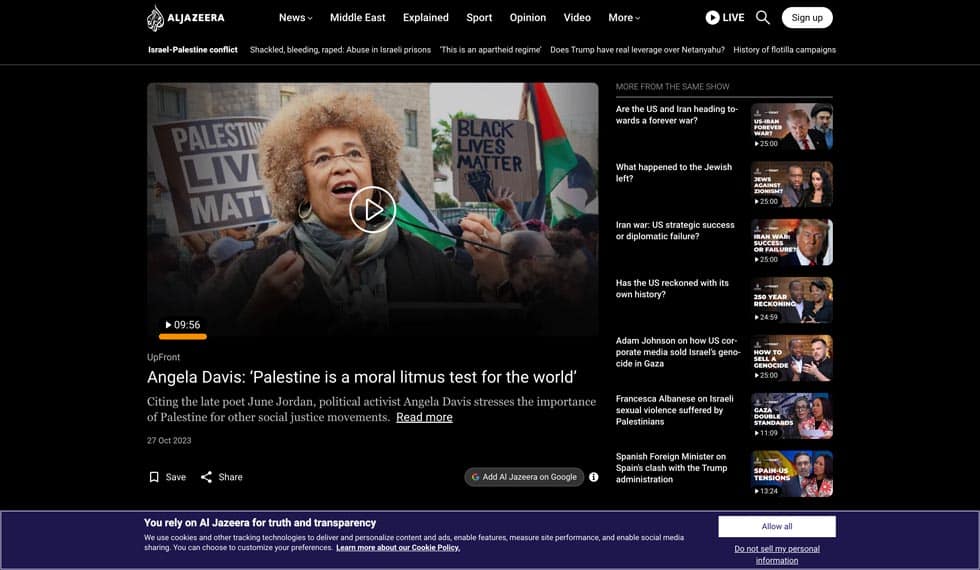
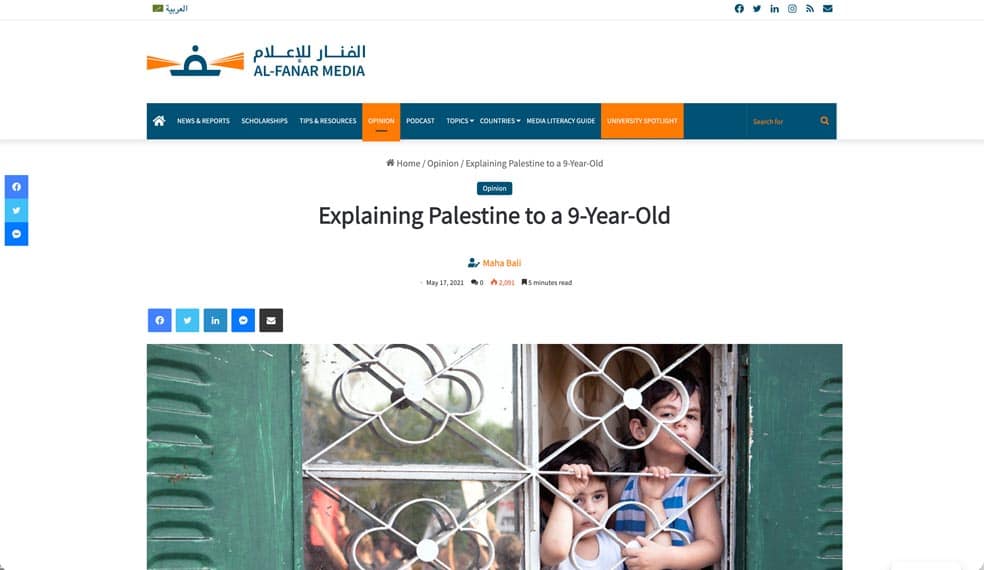
Alright. So I don’t know when this is gonna be published, but we’re we’re talking right now in the midst of a lot of horror going on in the world. Gonna be as quick as possible so I can get these out of the way. So one of them, I wrote 2 years ago when my daughter was 9, and there was conflict again happening in Palestine, Less controversial than what we have right now. And it was a it’s it was a post called explaining Palestine to a 9 year old. And it has, a metaphor version of the history of Palestine, but it also has a big chunk of what is between Muslims and Jews and the common prophets and the common beliefs that we have and trying to sort of bridge that gap and come together. There is also something I video I saw by Angela Davis, where she says Palestine is a moral litmus test for the world, and she draws connections between how Black activists in the US and scholar activists especially have often supported Palestine. And there is a Guardian article by a a holocaust scholar who is Israeli himself called Rasigal that I I think some people might find useful.
Maha Bali [00:38:01]:
And one last thing is a documentary film, if someone has an hour. It’s called The Stones Cry Out, the Voices of Palestinian Christians, because I think a lot of people Don’t recognize that element. I I know that Jerusalem is a holy, city for all of the monotheistic religions, but I think people tend to forget that there’s, A lot of Christian Palestinians, and I think there’s a church that was been bombed recently. And so I just wanted to share these because that’s a lot of what I’m reading and watching these days. Thank you for giving me space to share those.
Bonni Stachowiak [00:38:32]:
Yes. Thank you. And and thank you for your your thoughtfulness of that and and for starting it with your your role as a mother and wanting to share these things with your daughter. So yeah. Thank you so much. Well, we’ve done it. Right? We’ve had another episode. I’m so glad to have you back, and congratulations again, Maha, for this Winning this award, and I love how you described it.
Bonni Stachowiak [00:38:55]:
It was exactly what I was hoping for. I also, by the way, was named one of the top top 30 influencers, and we all sort of made fun of me because I that one didn’t feel anywhere near as meaningful as some of the other other ways that people have acknowledged my work. So I loved hearing you talk about it and some of the things that went into that.
Maha Bali [00:39:14]:
My institution blew that one up and there are posters of me on campus right now.
Bonni Stachowiak [00:39:19]:
Because you’re a top 30 influencer, that’s wonderful. Yeah. I mean, it’s cool too. Let’s not kid our I mean, it’s cool. I’m glad that you got that too. Well deserved there too. But, yeah, it was really fun to hear you talk about some of your work out in the open. Thank you so much for coming back on Teaching in Higher Ed,
Maha Bali [00:39:35]:
Thank you for having me, Bonni. It was lovely to be with you again.
Bonni Stachowiak [00:39:40]:
Thanks once again to Maha Bali for joining me on today’s episode of Teaching in Higher Ed and to each one of you for listening. Today’s episode was produced by me, Bonni Stachowiak. It was edited by the ever talented Andrew Kroeger. Podcast production support was provided by the amazing Sierra Priest. If you’ve yet to subscribe to the weekly Teaching in Higher Ed update, I encourage you to head on over to teachinginhighered.com/subscribe. You’ll receive the email from me With those updates, and they have the most recent show notes in them, and they also have some other resources that don’t show up on the regular episodes. Thanks so much for listening, and I’ll see you next time on Teaching in Higher Ed.
Teaching in Higher Ed transcripts are created using a combination of an automated transcription service and human beings. This text likely will not represent the precise, word-for-word conversation that was had. The accuracy of the transcripts will vary. The authoritative record of the Teaching in Higher Ed podcasts is contained in the audio file.