Follow the Teaching in Higher Ed Podcast
About this Episode
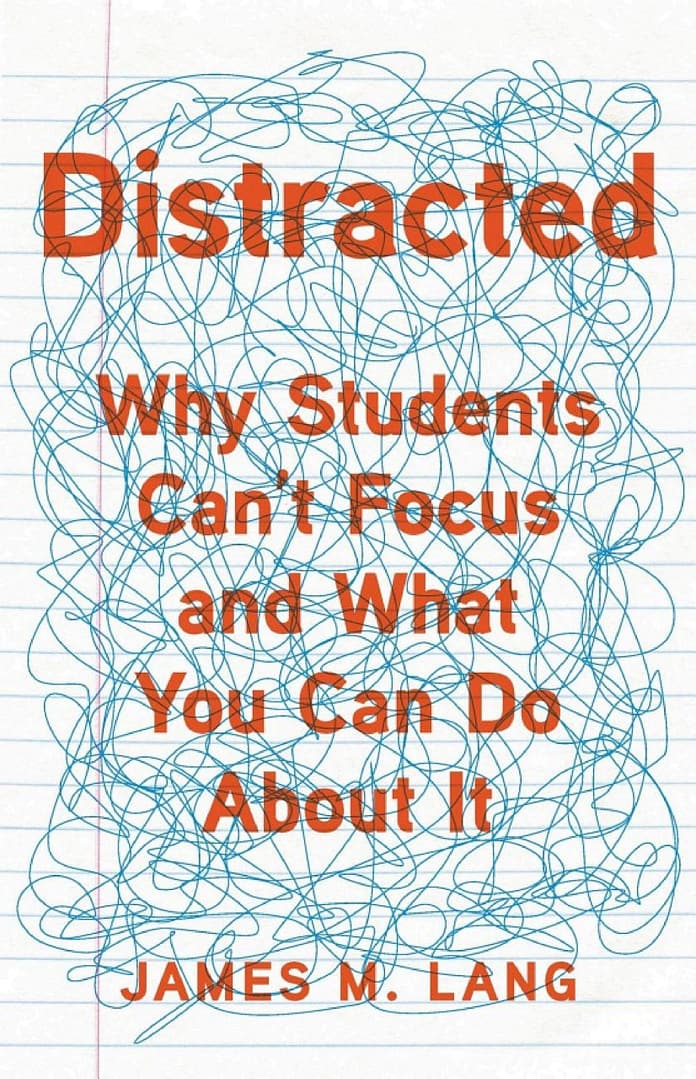
James Lang shares about his new book, Distracted, on episode 331 of the Teaching in Higher Ed podcast on episode 332 of Teaching in Higher Ed.
We are all experiencing lots of challenging issues right now in our lives.
James Lang
On episode 332 of Teaching in Higher Ed
Voices on this Episode


Show Notes + Resources
Instructions for living a life:
Pay attention.
Be astonished.
Tell about it.
Mary Oliver, Sometimes
Recommendations from this Episode
Transcript
[00:00:00] Bonni Stachowiak: Today on episode number 332, James M. Lang is back this time to talk about his book, Distracted: Why Students Can’t Focus and What You Can Do About It.
[00:00:14] Production Credit: Produced by Innovate Learning, maximizing human potential.
[00:00:23] Bonni: Hello, and welcome to this episode of Teaching in Higher Ed I’m Bonni Stachowiak, and this is the space where we explore the art and science of being more effective at facilitating learning. We also share ways to improve our productivity approaches so we can have more peace in our lives and be even more present for our students.
James Lang is a professor of English and the director of the Center for Teaching Excellence at Assumption College. He’s the author of five books, the most recent of which you’re hearing about today, Distracted: Why Students Can’t Focus and What You Can Do About It. He’s also the author of Small Teaching: Everyday Lessons from the Science of Learning and Cheating Lessons: Learning from Academic Dishonesty, and On Course: A Week-by-Week Guide to Your First Semester of College Teaching. I’m so glad to have James Lang back for today’s episode about a book I really treasure, Distracted. James Lang, welcome back to Teaching in Higher Ed.
[00:01:31] James Lang: Thank you, Bonni. I’m glad to be here again.
[00:01:34] Bonni: You quote someone in the very beginning of your book and that is the poet Mary Oliver. Do you want to read it or shall? Do you have it memorized?
[00:01:42] James: I don’t have it in front of me now.
[00:01:45] Bonni: All right. Well, good because I just love it every time. She writes instructions for living a life. Pay attention, be astonished, tell about it. Why did you start your book that way?
[00:02:01] James: One of the main ideas of the book is to just to try to convince people that attention is something that we should value in education and not take for granted. I think what we’ve been doing historically is we have identified attention as something that should be like a given in the classroom that students should pay attention. When they’re distracted, they’re sort of falling away from the norm. I’m trying to argue in the book that actually in the long history of distraction, the biology of research on attention and distraction, teach us that actually attention is a challenging achievement, especially when we’re trying to pay attention to something that’s difficult, the kind of hard cognitive work we ask students to do in the classroom and in their studying.
In order to convince teachers of that, I want to show that attention is a really important value in our lives, too. Like learning to pay attention to other human beings around us, learning to pay attention to the world, feeling a sense of wonder, like all of these sorts of amazing complexities of the world and all the things that we can learn and do. The more we are attentive to those things and feel astonished about them and want to share them with one another, I think that makes the world a better place and I think it can make our classrooms better learning experiences for our students.
I kind of argue that the three parts of that, and Mary Oliver’s quote, pay attention part one, like we need this sort of remember to give our attention to each other and the world be astonished as important because that promotes wonder and curiosity and we know those things are good for learning and then tell about it, like just in the same way that we ask students to tell us about what they’ve learned through our assessments and through our discussions. Share with us when you paid attention and you found something wonderful there tell me about it. I think that’s a pretty good encapsulation of the kind of learning we want to promote in higher education.
[00:03:52] Bonni: In one of your other books called Cheating lessons, you completely transformed the way that I perceive cheating and a lack of academic integrity. I still remember you came on the podcast and also reading in your book of how many of you sped on the way to work, the hands go up, and all of that. I used to really attribute cheating as something that was being done to me. I also think that that’s kind of the way that you’ve tried to break some of the fallacy around attention. I don’t know if you’ve seen these graphics before, but there’s a whole big graphic actually there’s a number of versions of them about faulty logic that we use. Logical fallacies, there’s the Strawman theory and the slippery slope fallacy and the anecdotal evidence fallacy. One that really comes up in your work so much is this attribution theory.
We explain the lack of attention as something that is, again like cheating, being done to us. With distractions, you question what we attribute our students, our learners, ourselves, and our lack of ability to focus on our classes. Talk a little bit about how you try to wrestle that apart, what we’re attributing to attention or lack thereof that probably doesn’t belong there.
[00:05:10] James: As soon as I started to think about like attention and distraction as issues that were important to understand and reflect upon in relationship to the classroom, I just started like paying attention to people around me and lots of different environments and situations in which people were expected to use their attention in service of learning or their relationships or whatever. What I just noticed over and over again was how difficult it was for people to sustain their attention to something over long periods of time, especially when it was something that maybe was like being asked of them rather than something that was being sort of internally driven by them. The more that I saw, the more it came to seem to me, as I said earlier, that there’s a way in my mind in which we should think about like we kind of swim in an ocean of distraction all the time.
Our minds are turning, there’s things happening all around us. These sort of moments of attention kind of rise like islands out of the ocean. Those are things that are valuable and important and they help us do all kinds of stuff. They help us love one another, they help us do our work and our studying and learning and accomplish things, but we shouldn’t take that for granted. We should recognize that attention is a challenge for any anyone and that therefore we have to be deliberate about structuring the situations, which are going to support attention. That is a very parallel argument to the one I make about academic integrity and they’re always arguing that we faculty can do a better job of structuring environments that support integrity and I’m really making a very parallel argument here that we can do a better job of structuring environments that support attention.
The other part of that to me too is that if we recognize what the research tells us about attention, then it’s challenging, but it’s an achievement that it’s easy, it’s fragile, it’s easily lost. We can also just be more empathetic and we can be more kind of aware of the fact that when a student attention wanders, maybe there’s something in the environment contributing to that, but it can also just be because something terrible is going on in that student’s life. Like we’re all having experiencing lots of sort of challenging issues right now in our lives and in our classes and all that stuff. There’s a lot of pull toward distraction right now. I think if we think about the structure, like what are we doing in our classes that support attention? Then we also just think about the sort of emotional empathetic side of it. How are we making sure that we’re being reasonable, we’re being accommodating, we’re recognizing that students are challenged and their attention? If we can do both those things, I think we will make a big difference to how much attention is happening in our classrooms or in our online courses.
[00:07:49] Bonni: Even if you hadn’t been paying attention, it would still come at you and that is the great tech ban debate. This comes up, what would you say every three months, every six months and we just rehash. We don’t want to spend that much time on it, but can you give us the great tech ban debate and say 15 seconds? What usually comes up on both sides? Either side.
[00:08:13] James: I think both sides have a reasonable argument that they want to make. On the one hand, people want to ban technology because they believe attention is important and they see the devices in the room stealing attention away from their students. The part of me that recognizes and understands the value in that argument is that I do believe we have an obligation in the classroom to attend to one another. It’s a community of learners. We all benefit when we’re thinking together, paying attention, if there are five students who are checked out on their devices, I’m not going to get the great contributions that those five students have the potential to make to my discussion. Like I recognize the value of– the people who are making that they have good intentions. The other side is that we can have it kind of no policy whatsoever about technology.
The students are adults and they should be able to do whatever they want to do. I recognize the truth of that as well. We should be able to trust you and says, adults. Many of them want to use their devices to learn and they can be really valuable in that process. At the same time, what we do know from the research is that a student distracted on a device can actually draw in the attention of other students. When students are using their devices to do other things, it’s not just affecting that student, it’s potentially affecting the other students around that student. If we try to stake out a position like what our policy is going to be in the classroom, I think we have to take into account both parts of this. We need to be aware of the fact that devices are helpful learning tools, they’re necessary learning tools for some students, but we also need to be aware of the fact that they do have the potential to draw students out of the room and to decrease the contributions that those students have the potential to make to the discussion. Fundamentally I kind of argue for a context-driven approach, and that there are times in the classroom when everyone should be free to use what they want. The devices are available to them that we might be using them, either like we’re all using them for a purpose, or people get to choose whether or not to use them. There may well be times when especially in a smaller class, I’m going to put us in a circle. There’s no need to take notes. We’re going to talk about what this means to our lives.
In those moments, I want us to be able to just pay attention to one another and not be looking at something else. I think every faculty has to make this decision for themselves. I don’t think there are clear answers one way or another. I’m against tech bands, and I’m against bands of tech bands. I really think we have to let the context determine what it is that we’re doing in terms of our policy. Just the last thing I’ll say about this we can make students our partners in that process.
One of the things I think we should do is be educating students about attention and distraction in the classroom, helping them to understand that their device use potentially affects others around them. Then once we’ve done that, then I think we can say, “Okay, now I want you to work with me to try and make sure that attention is a value here, that we pay attention to one another, and to the, of course, content that we’re working with on that day.”
[00:11:17] Bonni: I see two benefits to having a context-driven approach. One is very obvious in the way that you phrased it and that is, I can adapt what I’m attempting to shape as a norm in our class, based on a context and what might help facilitate learning better. The second one you also talk about in your book, and I can’t say it as sophisticated as you did, but I call it changing it up. Even the very act of shifting from one context to another can drive more attention.
[00:11:50] James: Absolutely. One of the major things I argue in the book is for thinking about the structure of the class. One of the things we know from the attention research is that change can renew attention. In the book, I talk about the importance of thinking like a playwright or teaching like a playwright. A playwright is someone who has to hold the attention of an audience over the course of a couple of hours. Well, how do they do that? They do it by making regular changes and renewals in what’s happening on the stage.
There are breaks. There are intermissions. There are acts and scenes. The act ends in a quiet moment and begins with a bang. We’ve got 2,000 years of experience of people thinking about how to sustain someone’s attention through the course of a couple of hours. I think teachers can learn from that. One of the things we learned from that is, we try to make sure that there’s a change in variety happening in the classroom.
I was talking about, well students sitting in a lecture for 15 minutes are going to get bored and check out. You can get equally bored and checked out of a discussion going on for two hours. It’s just, you need to be able to have opportunities to pause, to catch your cognitive breath, and then get started again. What you are initially saying is the context-driven policy gives you an opportunity to do that where you say, “Okay. I’m going to lecture for 15 minutes, and you can take notes however you want. Then I want us to everybody close up, and we’re going to talk about it for 15 minutes. Then we’ll finish with a writing activity and you can do that online or with your laptop. It’s a way of just being thoughtful about what’s happening in the classroom in general, but then also about the devices.
[00:13:26] Bonni: It’s so important for us to be self-aware in this process, too. You talked about in teaching lessons where you didn’t go into teaching to become a police officer, so why would you try to take on that role in that particular context. For me, it’s almost feels gimmicky, except that it really works. The approaches that I use, they work every time. If I’m teaching in-person, and I say, “Okay. I want you to go explore these three questions with someone else in the class and go just for a quick five-minute walk.” No one’s on their phones during that time.
I don’t have to say, “Put your phones away.” It’s just if I tell you to go stand up and go for a quick walk, or if you’ve got some a gallery walk set up or if it’s a thing– Sometimes you may want to take the phone, “Okay, I’ve got a gallery of things that have QR codes.” If you go and you put your phone up to the QR code, it’s going to play one of your responses to a flipgrid thing and you can see who won the best or what– I don’t know. I was like to do a lot of best things, but you can have the phone come out and the phone go away without you having to be the enforcer of that just by the very virtue of what you select as structuring. You talk about that structuring.
[00:14:40] James: Yes. I think for me, there’s something even more important about this issue, attention, than there is about academic integrity, which is in both cases, as you said, someone could say, “Well, you’re having to do a lot of dancing around with the structure and everything in order to make this work.” The truth is one of the things that I also came away from the research with is earning does not happen without attention. It’s the first thing that has to happen in order for someone to learn something.
If we’re not paying attention to attention, nothing else matters in a way. The process has to start with attention. I actually think it’s the first thing we should be thinking about as we’re trying to envision how a class period is going to unfold. The first thing you have to do is get their attention. Then, if 30 minutes go by, and you’ve got to plan for 30 minutes, but the last 20 minutes, you’re just going to wing it and nothing really comes up.
Again, the depths the point at which they might go to their distractions, and that time is just not going to be useful to them. I do think it’s worth being a little bit more deliberate than we often are about the structure. We’re going to do 20 minutes of this, 20 minutes of that and finish with 10 minutes of that. It has all kinds of virtues in terms of attention, but also making sure that students are getting exposed to a variety of different learning activities, forcing us to be deliberate about our pedagogical choices. I think there’s lots of reasons to think along these lines.
[00:16:06] Bonni: One of my favorite most intriguing ways to think about structuring attention has to do with curiosity. Would you share some of the examples that you discovered or just some of your own thoughts about how can we structure things to really grab people through curiosity?
[00:16:25] James: Yes. Quite a long time ago, when I was first reading the work of Ken Vane, and listening to him give some workshops, one of the things that he always said was, when you look at what great lecturers do, the way they often start a great lecture, not even just an education, but if you’re watching a lecture or a public lecture, or something like that, or a TED talk, they often start with the description of an intriguing problem or question. That’s the first thing they do they tell you a story and that story is designed to like, make you curious about a problem, or to throw out a question that people have been struggling with for a long time and that’s how they begin.
That, to me, is a nice sort of exemplar of what it looks like to try and lead with curiosity to try and begin by peeking the curiosity of students. There’s lots of different ways that we can do that. One of my favorites, simple everyday examples that I talk about in the book is one of my colleagues, who teaches microbiology. When she comes into the classroom, every day, there’s a new microbe up on the screen and the question of the day is always the same.
There’s six things that apply to all microbes and the students, the first thing they do is, “Okay, find out everything you can about this microbe and report on these six things.” I observed, you’re doing this in class, and the students jumped into it. They jumped on right to work. People weren’t doing other things. They were looking up the stuff about the microbe, and then she would solicit there what they found, and they put it all together on the board and that’s how every class began.
It began with this question. Tell me about this fascinating thing that I have here on the screen, and then let’s learn about it together. That was always the segue into whatever they’re going to be doing for that class period. Just thinking about how we can begin with questions, with problems, with things that are going to capture– stories, things that capture people’s attention I think that’s the way we try to get to this building of curiosity in students.
[00:18:21] Bonni: Another aspect of how we can structure attention that you have taught me so much about both yourself but also introducing me to other experts in this area, like Pooja Agarwal, that is assessed attention. How can we structure learning to happen to gain more attention through assessment?
[00:18:41] James: This is something that I wrestle with a little bit because there’s a large movement now to step away from too much assessment and grading. I think there’s a lot of value to that. In the book series that I added, we have a book coming out and on grading. I think there’s a lot of validity to the arguments that people are making and critique of grading and assessment.
At the same time, one of the first times I gave a lecture on attention and distraction while I was working on the book, I threw out to the audience. When I did this when I was first giving workshops and lectures on distraction, I would always say to the audience, “Okay. Let’s brainstorm a little bit together. When do your students pay the most attention in your class?” One of the first times I did this, a physicist raised his hand and said when they’re taking a test, and I thought, “That’s a really interesting point.”
We have to think carefully about how we use tests and quizzes but at the same time, it’s clear that the assessment process focuses the attention of students. If that focusing attention helps them learn and if the assessment is well designed, in my view, those things come together and can produce learning. The other way to think about this for me is that students are taking five different classes. They got all kinds of stuff going on in their lives. One of the things that we do when we put an assessment in front of them is to say, “Look, this activity here going to point you to what’s really important and if you complete it in good faith, this is going to really help you learn.” I should be able to use my assessments in order to promote attention in a way that promotes learning. For this reason, I argue in the book that– Well, most of us use higher stakes assessments like tests and quizzes.
I even suggest that there are times and places and reasons when students are doing everyday participatory work in class to reward students with like low stakes participation type grades, not just participation grades for raising your hand and saying something but if we’re doing a worksheet or they’re doing some solving problems, or they’re doing a connection notebook activity. Lets students know. This is valuable. I value you doing it. I want this to contribute to your grade and that can help orient the attention of students who have incredibly complex and busy lives. We’re helping them say, “If you put your attention here, it’s going to give you the most bang for your buck.”
[00:20:59] Bonni: This is an unfair example for me to give a little bit because I’ve only actually met with my students this term twice, because we had a holiday in there. We’re all still getting to know each other. They are remarkable in the sense of the quantity of them that are deciding not to turn their cameras on. I’ve always– I shouldn’t say I’ve always. I have changed my mind over time about that is their prerogative, that is not for me to control.
I used to with doctoral students require it and I just don’t even at that level anymore. It’s just that’s their prerogative. It is, as someone who gets so much information from facial expressions. It is a little bit of just like, “Okay, we’re all getting to know each other here and I’m not sure if I’m reaching you.” I just did something very simple, which is to pull up, there’s Quizlet, they have the flashcards app, and they have this fun game called Quizlet live. In fact, I was even getting there.
What happened was, I started out with just, “Oh, this is Quizlet in case you’ve never heard of it before. Let me send you a link to it. You could go see how you can look through the cards this way but you also could play these games.” I go and I start playing one of the games, that’s a matching game, a definition with a term and I start playing it. They’re already playing it and they’re beating my high score. I said, “I’m going to stop talking for a moment because you keep beating my high score.” It was just such a funny way to be– They’re there. I don’t feel like they’re there but they’re totally there.
When you do this assessed attention, there’s no points. Then we did the Quizlet live, there’s no points. Why would I want to grab a screenshot and have one more administrative task? They’re there, though. When you do those low stakes, or no stakes, especially in an online environment, if you’re electing and I would say this is another podcast episode, but don’t force your students to turn their camera on as a means of assessing their civil attention. That’s not going to get you in good places. It’s wild, how assessment can really do that, especially if you mix assessed attention with curious attention and you model that so well, through prediction too. I still feel like there’s so much further I could travel with prediction as a means for both assessing and getting me super curious. It doesn’t matter about the topic.
[00:23:24] James: If you think about the assessment and intention is no that should be layered over all the other good stuff you’re doing. Ideally, you’re doing lots of different stuff, and you’re making it as engaging as possible. The assessment provides that final layer that you can add on to the things that you’re already doing. The other place that it can really help, it might help those students who are more likely to check out.
Your great students are going to do everything that you’ve asked them no matter what. It’s the students who are a little bit, maybe uncertain about themselves, who would rather hang back and not participate. That’s actually probably the worst thing they can do for their learning that the assessment might just give them the little nudge they need to get over to cross the threshold into participation.
Again, I’m talking super low stakes here. You were here. You did it great. You’re going to get some credit for that. It can really help those students that I think actually most need help from us in terms of how to succeed in college. That’s why I argue that we can use assessment in support of attention. Now of course, we can do all the other things that we want to do as we’re thinking about how to assess ethically and empathetically, but I think we can do all that and still get the benefits of assessment for attention.
[00:24:41] Bonni: We’ve looked at things that we can do to structure our teaching and to help foster attention. I’m sure you’re talking to a lot of people and if you’re not you’re talking to one right now. My goodness, is attention just really hard as a person right now. What advice do you have just, how do we pay attention more during times when it is harder than I can ever remember it being in my life?
[00:25:11] James: Obviously, one of the things that the research on distraction tells us is it’s not just devices that distract us. Everything distracts us. Our worries and anxieties that can distract us or a global pandemic can distract us. A kid running around in the background distracts us. The distractions are endemic to the human condition, and they’re everywhere.
It’s especially intense right now, because we are going through such– We have larger global anxieties about everything, but also because so many people are adjusting to new forms of teaching and new ways of interacting with our students. It absolutely is very intense right now, in terms of thinking about the distractions that bedevil us. The only thing I can really recommend to people is twofold.
First of all, just be empathetic with yourself, to recognize that distractions are pulling us right now. I think people beat themselves up about it sometimes and about the fact that they can’t seem to pay attention in a time like this. I just think that’s perfectly normal, be empathetic with yourself about it and that’s going to help you be empathetic with your students about it.
The second thing is to just do– There’s no other way it says, pay attention to it. Start noticing, when are you attentive, and when are you distracted. The more you’re aware of it, and the more you observe it in other people, and what situations that happens in and what situations it doesn’t happen in, the more you will be able to craft your own solutions to the problem.
I’ve learned over the past six months, that I used to be able to be so focused on my writing. It didn’t matter if I had other tabs open on my computer and stuff. I would still stay pretty focused. I have found that over the last six months, I have to close everything out now. I have to close out all my browser tabs and my email and everything. I spend an hour writing and then I come back and I look for 15 minutes and all the stuff that I’ve been missing. Then I just keep doing that over and over again.
I learned that because I’ve been thinking a lot about attention and I paid attention to what other people were doing and things that I was seeing. If you just try to become as self-aware as possible about your attention patterns, and the things that you see other people doing, you’re most likely to get to solutions that are going to be effective for you. People talk about technology fast. They’re things that are going to work for some people, not for others, nothing is going to be a universal solution to this. You really have to think about becoming self-aware and finding out what works for you.
[00:27:43] Bonni: Earlier in the episode, Jim and I spoke about changing things up and I’m going to change things up just briefly to thank today’s sponsor, and that is SaneBox. If you head over to sanebox.com/tihe as in Teaching in Higher Ed, you can find out more about the service a free trial you could take advantage of, and a $25 credit toward a SaneBox subscription.
SanBbox is absolutely essential in the way that I manage my email. You can hook up a Google account, office 365, iCloud or any email address. What it does is scan the headers, the subject line of the emails, not the contents of it and it smartly sorts them so that you can focus on the most important emails that are sitting there and the rest of them get tucked away for such a time as you want to see the latest advertisement or newsletter or what have you.
It’s really easy to get started and just start right away being able to better manage your email but it has additional features too. There’s such a feature as Do Not Disturb, which banishes annoying senders. It reminds you to follow up and more. One of the things I like to do is I want to find out if someone’s replied to me within a reasonable amount of time of whatever it is I’m requesting.
You can specify the number of days that if they haven’t replied to you. It’ll ping you again to do some more follow-up with them. It’s a really easy to use service. It’s really smart. They say they’ve been keeping email sane since 2010 and I would have to agree with that. They are a sponsor, but I also pay to use the service and it is a great investment for helping me be more productive in managing my email. Thank you, SaneBox, for sponsoring today’s episode, and please head on over to sanebox.com/tihe.
This is the time in the show where we each get to share our recommendations and spoiler alert, my recommendation is your book. It’s called Distracted: Why Students Can’t Focus and What You Can Do About It. I wanted to tie back to something that you just said about it being normal. I have just been really unable to do any sustained reading since the pandemic hit and it’s something I do feel pretty guilty about. First of all, your book came to me during that time and was the first time I could just get completely enveloped in it. It was such a delight to read. I love how you structure all your books just that you just carry me through a play write. That’s really what you do. I can’t recommend it enough. First, if you’re having trouble focusing, reading, this will not be an issue for you, I suspect, if you were to pick this book up, and so many tangible practical ways that we could structure attention both for ourselves, you mentioned that and the final bit of it is also talking about attention as a community, which I really appreciate it too.
I really want to recommend it and want to thank you for writing the book that I could just devour. It’s so much fun to read and so rewarding too because it really felt like I could make so much of it tangible. That is my recommendation. A side note, by the way. I love what you’re saying about becoming more aware. Well, of course, I’m having trouble reading sustained periods of time, when I pick up my iPad, which happens to have the Kindle app, or in your case, it was a PDF so I was using a different app. I was just one tap away from the world of distraction, whether you want to Doom scroll, or whether you want a little humor to take you away from it all. Low and behold, Jim. If I actually read on my Kindle, which I can email documents to. Low and behold, I never get tempted to do anything else because all I can do on a Kindle a physical e-reader. All I can do is read there’s nothing and if there is anything else, please don’t tell me. That’s all I ever want to do.
[00:31:38] James: Yes. Well, and one thing that you know about that productivity time, there are of course, times when we’re doing something, it’s okay to be interrupted. When I’m just composing emails, responding to them, it’s fine. I can be interrupted and go to Twitter back and forth. There’s nothing wrong with that. It’s just but again, I just have to recognize, okay, when I’m doing those things, it’s fine. I Leave all my tabs open. When I’m doing something that I really want to focus on that’s when I close them out, and I try to be more focused.
[00:32:02] Bonni: Yes. I know you have something to recommend for us today, too.
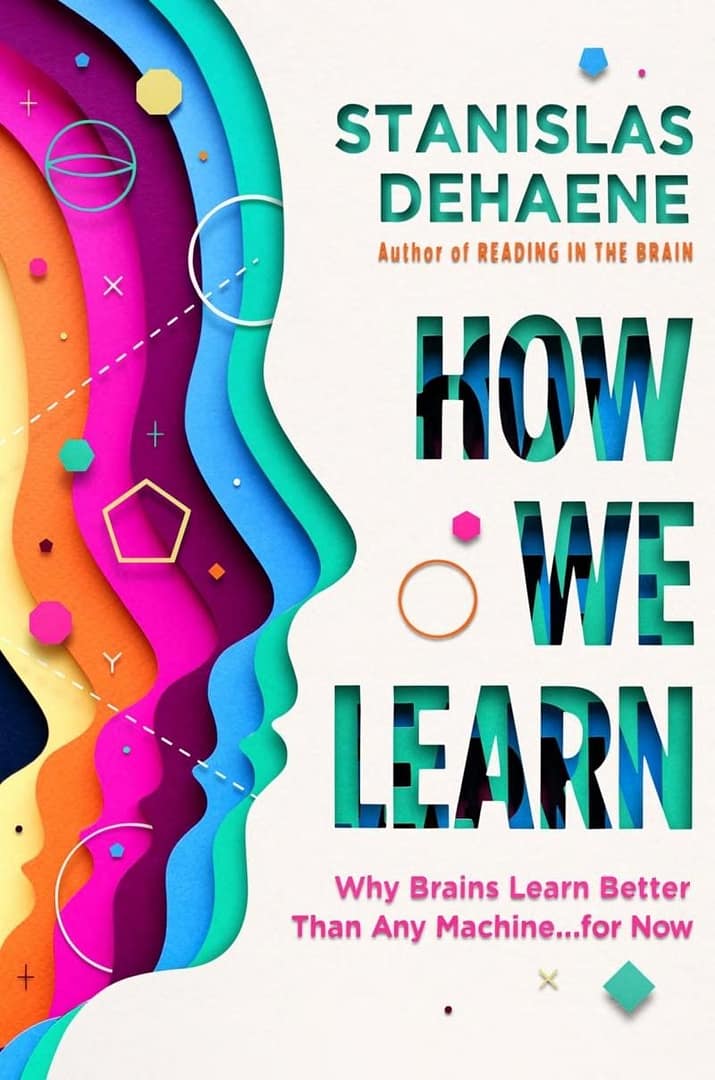
[00:32:04] James: Yes. I recently discovered, and this is a relatively recent book. I think the name is pronounced Stanislas Dehaene. The book is called How We Learn: Why Brains Learn Better Than Any Machine . . . for Now. It’s a really terrific introduction to the way in which people are trying to create machines which replicate what the human brain does. The author argues while that so far, that science is essentially in its infancy because of the complexity of the human brain and because of all the kind of things that we do that machines have not been able to replicate. As a part of that, he goes through a really accessible but extremely thoroughly researched account of the learning process. I love to read books about how people learn. I’ve read many dozens of them and this one is really introducing new ideas to me, including a whole chapter about attention and its importance to learning. I really recommend this one, How We Learn: Why Brains Learn Better Than Any Machine . . . for Now.
[00:33:09] Bonni: Jim, it’s always such a pleasure to get to talk to you. Thank you for this book. Thank you for your generosity as a teacher. You are a teacher to so many of us, and I’m just excited for the next time you come back and we get to have our next conversation.
[00:33:22] James: Thank you, Bonni. Enjoy it as always.
[00:33:27] Bonni: Thanks so much for James M. Lang for joining me on today’s episode to talk about your book, Distracted: Why Students Can’t Focus and What You Can Do About It. If you’d like to go access the show notes they’re over @teachinginhighered.com/332 as in 332.
Jim, I always enjoy our conversations. I learned so much from you and I just so appreciate your generosity as an educator. Thanks to all of you for listening. I love being part of this community with you and us all getting to learn and equip each other to become better teachers, and part of that is going to be the approaches that we can discover from this book in today’s conversation. Pay attention, be astonished, and tell about it. Thanks, Mary Oliver, and thanks to all of you. See you next time.
[music]
[00:34:26] [END OF AUDIO]
The transcript of this episode has been made possible through a financial contribution by the Association of College and University Educators (ACUE). ACUE is on a mission to ensure student success through quality instruction. In partnership with institutions of higher education nationwide, ACUE supports and credentials faculty members in the use of evidence-based teaching practices that drive student engagement, retention, and learning.
Teaching in Higher Ed transcripts are created using a combination of an automated transcription service and human beings. This text likely will not represent the precise, word-for-word conversation that was had. The accuracy of the transcripts will vary. The authoritative record of the Teaching in Higher Ed podcasts is contained in the audio file.