Follow the Teaching in Higher Ed Podcast
About this Episode
Martha Burtis shares about agency, learning, and purpose on episode 306 of the Teaching in Higher Ed podcast.
Make space for people to find their agency.
Martha Burtis
On episode 306 of Teaching in Higher Ed
Voices on this Episode


Show Notes + Resources
- Autonomy
- Mastery
- Purpose
- Video: Drive – The Surprising Truth Behind What Motivates Us
- Twitter thread by Rissa Sorensen-Unruh
- Domain of One’s Own
- A Brief History of Domain of One’s Own
- UMW Blogs
Reclaim Hosting - DS106
- Alan Levine
- Range: Why Generalists Triumph in a Specialized World, by David Epstein *
- Transitions: Making Sense of Life’s Changes, by William Bridges*
- CoLab Website
- Website for Martha’s Course
- Resources From an Ungrading Workshop
- University as a Wicked Problem
Recommendations from this Episode

Transcript
[00:00:00] Bonni Stachowiak: Today on episode number 306 of the Teaching in Higher Ed, Martha Burtis joins me to discuss Agency, Learning, and Purpose.
[00:00:12] Production Credit: Produced by Innovate Learning, maximizing human potential.
[00:00:24] Bonni: Hello and welcome to this episode of Teaching in Higher Ed. I’m Bonni Stachowiak and this is the space where we explore the art and science of facilitating learning. We also share ways to improve our personal productivity approaches so we can have more peace in our lives and be even more present for our students.
[music]
Since June 2019, Martha Burtis is the Learning and Teaching Developer at the Open CoLab at Plymouth State University. Prior to that, she was the founding director of the Digital Knowledge Center, a peer tutoring organization for students working on digital projects and assignments, at the University of Mary Washington. Previously at UMW, she worked in the Division of Teaching and Learning Technologies, helping administer various faculty and student development projects, including the Online Learning Initiative and Domain of One’s Own.
Martha has taught classes in interdisciplinary studies, computer science, American studies, and digital studies, and she helped originate the open digital storytelling community, DS106. She holds a BA in English from Mary Washington College and an MA in instructional technology and media from Teachers College, Columbia University. Martha, welcome to Teaching in Higher Ed.
[00:01:55] Martha Burtis: Thank you so much for having me.
[00:01:57] Bonni: It feels great to talk to you. I feel weirdly like I already know you, even though that’s– is that possible when you’ve only read someone’s things and it’s nice to actually match a voice with your words. It’s great to talk to you today.
[00:02:10] Martha: I think that’s a weird phenomenon that we live with in our times. I have that feeling a lot where I meet somebody who I’ve only ever encountered through Twitter through 280 character tweets and I feel like they’re a friend that I’ve known for years.
[00:02:25] Bonni: As I was thinking about all of the work that I’ve read of yours and just the way that you’ve inspired me, one word really comes up a lot and that is ‘agency’. Then as I started traveling down that theme, it really got me thinking about, it really does motivate me as a learner when I have that and whenever it’s stripped away from me, I can feel myself just either getting filled with rage towards, not really helpful in the learning process or that.
I started to think back to things I’ve learned about motivation and the name Daniel Pink came up in my mind. He wrote a lovely book which I’ll be sharing when we get to the recommendation segment called Drive: The Surprising Science Behind What Motivates Us. Again, as I thought through your work, I thought, well this is really embedded in so much of what you do. I’m just going to outline the three things and then I’m going to stop talking so much and then get to hear your stories and your experience.
It starts out for him with autonomy being something that the research shows really motivates us and autonomy would be our desire to be self-directed and it increases engagement over asking for people to be compliant. Again, I know that this really resonates in your work. The second thing that his research says motivates us is mastery. The idea that we want to get better, we want to learn, we want to attain these new skills.
Then the third thing is around purpose, the desire to do something that has meaning and is important and that’s it. I’m going to stop talking and just I’m teasing you, but let’s start out with when you hear me talk about agency or autonomy, I’m curious if you see agency and autonomy as the same thing or maybe they’re distinct in your mind. Then I love to hear your example of a part of your work where you really see agency or autonomy coming out.
[00:04:18] Martha: When I think about those two words, when I’m trying to think of what makes them different, what makes them distinct, my immediate reaction is, “Oh, I would use those more or less interchangeably.” One of the things that occurs to me though as I think about it more is that very often when we talk about agency, we talk about giving it to people and I don’t think we do that with autonomy. I think the word autonomy is used much more as a thing that you individually come into or create for yourself or find space for. I actually think that tension or that difference is interesting and it points to a really interesting tension and the whole idea of what giving agency is,.
I tend to use the word agency because it’s, I don’t know, it’s just the word I landed on, but I’m also really mindful and have become increasingly mindful of not talking about it in the terms of giving agency because I think it actually undermines the whole idea of agency and also autonomy when we think of it as a thing that is given to us by someone else. I think that some people might balk at that.
I think sometimes it’s almost like being given permission to exercise agency and I think it’s really true that there are people for whom, for whatever reason, in their own educational experiences, their own life experiences, they’ve never felt like they had that permission to take control of their own learning, to take control of their own livelihood in the ways that we find so empowering. I think it’s a tension. I don’t think it’s a clear thing whether it’s wholly bad to talk about giving agency, but the way I tend to talk it more as making space for people to find their agency as opposed to it being a thing that I have to give to students.
Even if they want me to give them that, they want the permission to become autonomous and become self-directed learners, I really try and challenge that a little bit that my permission is irrelevant. What I can do in the places where I teach, in the spaces where I teach is make space for them to come into that on their own. Does that makes sense?
[00:06:27] Bonni: It absolutely does. One of the ways, I know you in your career have done that, not just for your students but for students around the world is through what is called Domain of One’s Own. Would you speak about that for someone who’s not heard of it before?
[00:06:41] Martha: Sure, so Domain of One’s Own is a project that originated at my previous institution, the University of Mary Washington in Fredericksburg, Virginia. It’s a long and storied history. It grew out of a couple of different projects that we engaged in at UMW, dealing with open source web hosting, first for the members of our staff in the division of teaching and learning technologies, and then exploring how that spread out to the larger community via a WordPress multi site installation called UMW blogs.
Throughout that trajectory there were these key moments where my colleagues and I would have conversations saying, wouldn’t it be incredible though if we could give every student their own hosted web space, like what we had been given and what had really altered our trajectory, our professional trajectory, and helped us to rethink our work. Wouldn’t it be incredible if we could provide that to our students, to our faculty and to our staff? It took a long time to get to a place where we could actually do that.
I want to say the original conversations about it started at Mary Washington around 2006 and we actually launched the pilot of it in 2013. That’s seven years of stewing with the idea, talking about it. There were technical challenges, there were cultural challenges. There were lots of reasons why I don’t think we were ready for it until we actually did it, but in 2013 we launched the project and now what that means is that at UMW, any faculty, student or staff can claim their own domain name, so a url .com, .org, .net and then they’re given a piece of an open source web server where they can build basically whatever they want at that domain name within the bounds of what’s possible on a lamp server.
It’s been a hugely popular project at Mary Washington. It’s used in lots of different ways, which I’m happy to talk about there, but it’s also been adopted and absorbed and recreated at institutions all over the world now, including the institution where I work now, which is Plymouth State University in Plymouth, New Hampshire, where I started last year. What I’ve always really loved in talking to other institutions about their domains, projects is that at every institution there’s a slightly different inflection.
There’s reasons why it’s different. Sometime those are institutional reasons, budgetary reasons, but it’s also inflicted by the people. It’s inflicted with the people at the institution who are stewarding it and who are bringing it into the conversation and their particular lens that they see it through. It’s really wonderful to talk to people about their domains, projects at other schools and be like, “Oh, wow, this really isn’t just one thing. It’s lots of different imaginations of what it can be.”
At Mary Washington, which is where obviously I had the most experience witnessing this unfold is an interesting project because we knew what it was we wanted it to be when we started it. Every year, every like six to 12 months, I’d be like, “Oh, wow, it’s not what I thought at all. Oh, it’s something completely different.” So my thinking about it, even as somebody who’d been stewing with it for seven years before we launched it, my thinking about it evolved and emerged over time as we were doing it.
It really became a space where students could and was imagined as a space where students could fully explore their own digital identity outside of the confines of corporate or commercial web or app-based internet and web tools, social media tools, social media apps. It became an opportunity for them to do that but it also became a project that created space for conversations about why we shouldn’t only live in corporate and commercial spaces on the internet and on the web.
Then it became lots of other things. It became a publishing space that faculty have students work in publishing projects, students building their own online portfolios for self-directed reasons, or as part of a course project, graduating seniors pulling all of their work together because they now need to get a job and they’re thinking about how do I present myself to future employers or grad schools and lots of things in between. It’s a project that’s very near and dear to my heart obviously.
[00:10:47] Bonni: I appreciate you saying and even though I think I knew those dates, I recently– It hasn’t gotten published yet but I wrote a chapter for a book that will come out for instructional designers. I wrote a little bit about Domain of One’s Own. These dates didn’t surprise me but I guess just in the context, I get insecure often thinking that other people or other institutions, they were able to move so much faster than if it feels like I can.
Do you know what I mean? It feels like my institution does and so I love hearing that you wrestled with it for a while. Then another thing that I think of is Robin DeRosa last time she was on. I didn’t look up what the date was but I think it’s probably been at least a year by now. She was even mentioning her thinking continuing to evolve such that she really relishes in the public spaces and she’s taken the critical lens toward the LMS and how things are locked in there and not very open but yet has started to offer that opportunity that if you want to stay locked in the LMS.
It reminds me of why we started this conversation about giving agency to people. I think if we’re to take our own assumptions about the limitations of a learning management system and say, “Okay, everybody should play in this little background out here,” then we’re not really giving them agency, are we?
[00:12:05] Martha: Absolutely. The reality is that I’ve seen the same sins committed, so to speak, in open online spaces as I’ve seen committed in the LMS. Yes, the space to a certain degree provides a framework and a context that hopefully orients us in particular ways but ultimately, the will of whoever is working in that space is what’s realized. I’ve also seen some really radical things happen within the confines of an LMS.
I’m not an LMS person That’s not my shake. I have a lot of reasoning why I balk at learning management systems which we don’t need to go into, but I don’t feel like my fight in this world or in this field is smash the LMS. I feel like I’m much more interested in focusing on those spaces that I do find provide different orientation and giving people an opportunity to explore them and do what they need to with them, whatever that is.
When we first started exploring the possibility of Domain of One’s Own, it was before we had a formal project but we taught a couple of classes including our digital storytelling class where students would get their own webspace. Instead of purchasing a book, they’d purchase six months of web hosting. At the end, there was this tension about, “Well, okay now the class is over what happens to that space?”
I remember being in conversations with people about, “Well, we have to figure out how to get them migrated.” Like, “Well, let’s figure out how we migrate all of that content they made onto our free multi-site blog platform so that it doesn’t get lost.” Then I really had this realization at that point where I was like, “We can’t do that.” You can’t call something your space. A domain of one’s own, you have autonomy, you have agency but here are the ways in which we expect you to use it and the ways in which we expect you to keep it.
I always say if I teach a class and I swear there’s a requirement for a student to sign up for a domain and explore a domain and at the end of the class, they say, “I don’t want this anymore.” I don’t weep over that because I would weep over it if I said, “Hey, I can give you this domain.” They’re like, ” I don’t want that,” without even knowing what it was. If they’ve used it, and they’ve explored and they’ve decided this isn’t really my thing for whatever reason, that’s their choice to make.
Maybe that really isn’t they’re saying right then, but hopefully, through the experience of exploration and trying, they’ve learned something that that they take with them about what’s possible that maybe they use in the future in ways that I never see or I can’t predict. Which frankly, is the case with everything we teach. We get so focused on these outcomes and measuring these outcomes and assessing particular things we’ve decided need to be measured.
I do not think I’m alone when I say that the way my college education is realized in my current life was unimaginable to my college professors. Not through any failing of theirs, but because I’m Martha. I’m me and what I do with that is completely controlled by the trajectory I’ve taken in my life and the choices I’ve made and the things that have drawn me in those directions.
I worry sometimes that our focus in education is so much on measuring outcomes and proving that we have- moving on to this mastery topic- proving that we’ve reached mastery. In my classes, I’m not really interested in what my students have mastered. I’m interested in what my students have learned and their ability to talk to me about what they’ve learned.
[00:15:35] Bonni: Help me distinguish those things because I think of mastery as– I don’t even know what I think of mastery. The way that I maybe would first come into this is just that it’s you’re never done learning but that you are toward the end. A master might then be able to teach other people how to do something. I’m interested in your distinction between mastery and learning, that’s fascinating.
[00:15:55] Martha: It’s a great question. It’s not actually something I’ve really reflected on much until fairly lately because of the conversations I’ve been in about ungrading and alternative assessment. I actually really hate the word mastery to be perfectly honest because, to me, it suggests an endpoint.
[00:16:10] Bonni: Yes.
[00:16:12] Martha: It suggests a pinnacle. Are there things in my life that I’ve mastered? Sure. I’m sure there are things that you could say I’ve mastered because I was able to get a hundred on a test proving that I knew that knowledge or was able to synthesize that information in particular ways. Am I still a master of them? I’m really not. The things that I’ve mastered if I really was trying to describe what I would hope somebody think I’ve mastered, are much more about a way of thinking and a way of challenging myself, and thinking through ideas, and coming up with solutions that I don’t think is really measurable.
I feel like when we talk about mastery, we’re almost always talking about it in the context of a body of knowledge that we can demonstrate. As you said, we can demonstrate that we are now masters of it and could go teach it to somebody else. I mean, partly I’ll be perfectly honest, some of it has to do with the courses I’ve been lucky enough to teach which tend not to be content curriculum, content-based curriculum.
They tend to be much more developmental in helping students learn how to think and learn how to learn. In those courses, mastery is meaningless. I wouldn’t even know what was I was measuring if I was trying to label it with mastery. But when I have my students do self-evaluations in those courses, I ask them to tell me what they’ve learned. Where did you start and where did you get to, and where is this pointing to you in your future?
That, to me, is fascinating. Those are the stories I love to hear from students. If they came back to me and they said, “Well, I feel like I really mastered this topic, and here’s the evidence why.” I’d be like, “That’s great, but now what? How did you get there?” What’s the story of the in-between? I’m always more interested in that. It reminds me of when we’re teaching digital storytelling.
I sometimes say to students, so when we teach the digital storytelling the way we teach it and I’m talking about through the DS106 experience for those of your audience who don’t know, this is a digital storytelling community that grew out of a class at Mary Washington that I’ve taught a couple of times. When we teach this, we give students these media assignments. Sometimes they’re really challenging media assignments that the students choose to take on.
I always say the students this is a 100-level computer science class that fulfills a general educational requirement. These are not design students. These aren’t media students, these aren’t film students, they’re not programmers, photographers, they’re just students taking a Gen Ed.
They’ll take on these really big challenges. I’ll say to them, “I don’t care about your final product.” Which doesn’t mean I don’t care about your product. Of course, I care. I love it when they make great things. I love watching and seeing the great things they do but every week, they are asked to do a metacognitive reflection upon how they did the work of the week. That’s what I’m interested in.
I’ll even say to them, “If you have a vision in your head about how you would achieve this video assignment, if you had all the skills, if you had the time to master all the skills necessary, if you can describe that vision to me, and the things that you think you would need to learn in order to enact that vision, that’s what I want to know about.” Because if you know that, if you can begin to identify that and articulate that, you can learn the skills. You can do the rest. If you never actually succeed at that final product or final project, that’s not really the point to me.
[00:19:34] Bonni: As you said earlier, you very well might. It just might be 10, 20 years from now and you’ll never hear about it. I mean, of course, that vision could evolve as well, but yes. Who would decide that that should happen in 8 weeks, 12 weeks, 15 weeks however long year.
[00:19:50] Martha: That’s the part that makes me crazy about mastery is this notion that our learning has a calendar. That our learning has a calendar, that our learning has a calendar and is divvied up in credit chunks and seat time.
[00:20:10] Bonni: If we were going to buy into mastery, which I know that you don’t or maybe competency is the word that I might use in some cases, would you speak to grading not really being a way of fulfilling measuring mastery or competency anyway? Would you talk about the ways in which grading can or cannot achieve the goals we typically ascribed to it?
[00:20:34] Martha: Yes, as I had alluded to for the last– For the last five years in the classes that I’ve taught, I don’t do traditional assessment. I do what many refer to as ungrading or alternative assessment. I think that, again, part of the reason that that works for me is because I have the luxury of teaching classes that are just really, really a good fit for metacognition and reflection. That said, I balk at the notion that this can’t be done across disciplines. There’s fantastic examples of faculty who are doing this in STEM fields, in math, in humanities fields, in social sciences.
It can be done but I think what it requires is a shift in terms of what you think of as mastery or as competency. It reminds me a little bit of a conversation that I was in here at PSU. We have an event right before the January semester where faculty come together to work on various things, faculty and staff. This year we ran one day of it as an unconference and somebody wanted to do a session on ungrading and so I went in, I sat in on that session and we got into this whole conversation about mastery and about testing.
It was really being pushed in particular by faculty who teach in really content heavy classes, classes like kinesiology, classes with heavy expectations of what a student will know when they finish the course because they’re going to have to go on and take other courses that build upon it or because they have to take certification exams or because they’re going to go work in the field and they have to know these things in order to be successful.
One of the things that came out in talking about this notion that students get tested on bodies of knowledge throughout the semester and so a student comes in and they take that first test and they fail it. What’s their response to that? Well, for some students they’ll see that as a challenge and they’ll be like, “Oh, I need to rethink how I study, rethink how I’m preparing. I need to talk to my professor.” Obviously there’s a misfit. For other students, their reactions that is going to immediately be, “I’m not good enough. I can’t do this. I’m not capable.”
If you talk to students about these issues, you will quickly realize how many of them have absorbed that lesson because of the way that grades have been inflicted upon them for their entire education. There’s so much grade trauma out there among our students that we don’t really realize. We think we’re just grading an exam. That grade is a language we are now speaking with students and what we think we’re saying is not necessarily what they’re hearing.
We started talking about this notion of like, ‘Well, what if instead of seeing that exam as, okay, you have to master this number going to the next unit, you need to master that for the next unit.” What if the content is obviously building, but students, at any point, can come back and re demonstrate and retry and I think a lot of us balk at that. We’re like, ‘Well, no. We covered that. It’s done. We’ve moved on. I can’t just have students continue to be–”
I’m like, but why? If mastery is what matters, if competency is what matters and you want to get them to a certain place by the end of the semester, why wouldn’t you let them just continue to try until they get it right? There’s so many things in my life that I’ve had to try and try and try it until I finally figured it out. I don’t know it less because of all those tries. Actually there’s a really good chance I know it better because of all those failures and misstarts and having to go back and rethink.
It’s an aphorism, but we really do learn a whole lot more from our failures than from our successes. I wish we could just shift our mindset a little in those classes and rethink the opportunities we give students to demonstrate what they know and the way we talk to them about what it means when you can’t yet demonstrate that. That that is not a failure. That means that you’re somewhere else in this journey. You’re on a journey, you’re on a path, you’re not quite at this place yet, but that doesn’t mean you’re not going to get there. It means you need to spend a little bit more time here.
I think our courses don’t really make space for that and I want to say this with a complete acknowledgement of the pressure faculty are under right for lots of reasons, which we don’t need to go into all of those, but the pressure they’re under to cover content to do it all within a short amount of time of teaching more credits with more service hours, more research expectations that this is not a problem of an individual professor or an individual program. This is an institutional, this is a cultural problem within higher education that I think requires a cultural shift and a cultural mind shift in the way we think about the work we do and how we talk about it with students and what we tell students college is for and that’s a big job.
[00:25:29] Bonni: It’s easy to get overwhelmed– I think we should get overwhelmed. I think that what you’re describing both in terms of agency and also in terms of rethinking what grades do or do not do, it should unsettle us and it should make us feel overwhelmed. As you’ve said, it goes beyond us. It’s a much larger system and it’s been present in our students’ lives for much longer than we will probably ever know them. Most likely, that depends on how old we are, how long we stay in touch with our students, but so that’s a whole system’s mindset.
Sometimes when you have a problem so big it’s pretty easy and it is human nature to just go, “Okay then I can’t do anything.” Do you have ideas around, can we dip our toe into rethinking grading, well, we’re not really ready or perhaps we don’t feel safe enough that our institution is really ready. Can we get started without going whole force in an entire class, for example?
[00:26:29] Martha: Absolutely. That’s one of the things that I think is really important about ungrading. A lot of times when I talk to faculty about ungrading they feel really overwhelmed because they feel like they have to go from something– And I want to point out something else that you said. You were talking about how our students have been inculturated by this, but we have to and we haven’t just been inculturated by it, we’ve been so inculturated by it that we were like, “I don’t want to go become a teacher.”
Part of it is also unpacking our own relationship with this and more often than not, the people who end up teaching in higher education are people who actually got good grades. Grading worked for us in some way. That’s not the case for most people and research shows that. Doing that unpacking I think is really important. Having conversations about our own history with grades, why we feel like we have to grade the way that we do, assess the way that we do. I think that taking time to do that matters.
But when it comes to absorbing this practice into our own teaching, this doesn’t have to be, “I’m going to go from totally traditional assessment to radical ungrading in a semester in all 12 to 15 credits that I teach and it shouldn’t be. I would actually, if somebody came to me with that goal, I’d say, “Stop, take a breath and let’s think about how we iterate into this, how we ease into this.” I think that’s part of it. There’s lots of approaches. For example, just building self evaluation into a class as a way to just begin to play with what does it look like when I have students do self evaluation?
One really important point about that is our students probably have some kind of past relationship with self-evaluation that’s bad, because there’s lots of bad self evaluation practices out there where students are asked to do self-evaluation and it just goes nowhere. It means nothing. What I’m interested in is what I would call critical self-evaluation, where we really think about what questions do we need to ask? How do we need to ask them? What conversations do we need to be having with students up until when we ask them to do self evaluations so that they’re prepared to do that in a meaningful way?
How do we follow up with those afterwards so they know that what they’ve said has gone somewhere? That we’re reading it and we’re using it in our planning for the rest of the course and our planning for that student. Just playing with self-evaluation as an example. Another example that people do is what they’ll call grade free zones where they’ll just take a couple of weeks out of the class where they’ll do an ungraded project or assignment, maybe an assignment where the grade is entirely based on self-evaluation, for example. Those are all opportunities.
To get at the other point I think that you have, which is a really good one, which is that we are just small people. We’re just small people with good intentions sitting where we sit at big institutions with big problems. How do we affect any meaningful change? I don’t think we should ever underestimate the power that one faculty member, one teacher can have on one student. I think all of us probably can tell stories of that teacher we had who changed our life in some meaningful and important way.
One of the things that I like to remind people is that let’s say you do ungrading in your class and it works for you and you’re great and you’re comfortable with it, but you know your students are not going to encounter that anywhere else in their higher education experience. That doesn’t mean that they’re not getting something out of this. If you are doing ungrading while you’re also talking to them about what this all means about what grades are, what they’re not, what they show, what they don’t, why institutions have them. Why they should pay attention to them and not pay attention to them and how they can prepare themselves to develop intrinsic motivation and find intrinsic motivation and find purpose in classes where maybe that isn’t baked in to the pedagogy. It isn’t baked into the way somebody is teaching.
Then the thing I wanted to reference, it’s a tweet that I retweeted a few weeks ago by Rissa Sorensen-Unruh, where she was talking– I love this because she was talking about, I think it was a class where she wasn’t able to do alternative assessment, but how she still had conversations with students about all of these things in ways that could be transformative to her relationship with students and their relationships with the class.
For me ungrading is a way that I live with this. It’s one of the ways I choose to enact my philosophy of teaching. If that isn’t something you’re comfortable doing, you have the luxury of doing, it doesn’t mean you can’t embrace many of the same values that are a part of this. Even just destigmatizing grades for students can make a huge difference.
[00:31:01] Bonni: The last area is purpose, and you already started to bring that into the conversation. It’s almost like these things overlap.
[00:31:06] Martha: I know. It’s like they’re related. Somebody should write a book. Oh, wait.
[00:31:09] Bonni: Oh, wait, I would love to have you share a little bit about your work in interdisciplinary studies and what you’ve seen its capacity for embracing someone’s sense of purpose in their academic work.
[00:31:21] Martha: This is the magical, like when you start a new job, and you’re like, “I’m really–” I was so excited. I basically knew what I was going to be doing and I was going to be working with Robin and other amazing people here at PSU. There was also this piece that was like, “Oh, the office where I work in, the open learning and teaching collaborative that houses our Interdisciplinary Studies Program, which Robin was director of for years and which Matt Cheney is now director of.
I knew that I play a role in that and that I could teach in that program. I really didn’t know much more about it than that. This was like the hidden Easter egg of my job, discovering what a magical thing this is. Our Interdisciplinary Studies Program which Matt may have talked to you about I apologize. I haven’t listened to his episode yet.
[00:32:02] Bonni: You’re going to have to apologize to him.
[00:32:04] Martha: I will apologize to him.
[00:32:04] Bonni: He didn’t but Robin DeRosa did I think on both of our episodes.
[00:32:09] Martha: Students are basically able to create their own program and I’m teaching Intro to Interdisciplinary Studies this semester. These are students, who are just getting started in the program, and who are crafting a custom major out of courses at PSU, stuff they’ve transferred in other experiences that they can get credit for and it’s really pretty revelatory. We have students come into this program, I would say there’s two different types. Some students who are just super go-getters from day one, like first, second year students who just, they’re classic, interdisciplinarians.
They want to craft their own education. They’ve already embraced this idea of having autonomy over their education. Then we have students who come in who are juniors and seniors and have realized, “I don’t know if I’m going to graduate. Something hasn’t worked out in my first or second major or I’ve realized, I don’t actually want to do that. What can I do to salvage, to make something of this that I can take with me?”
It is so cool to see those students who are lost and struggling realize that the work that they’ve done has purpose, and that they’re the ones who get to decide what that purpose is, that it isn’t about the institution telling them, putting a stamp on it or handing them a certificate and telling them, “This is your purpose. This is why you did all of this work.” It’s about them looking at that collection of intellectual activity that they’ve engaged in for the last three to four years and mining from it, finding within it their purpose, and then being able to craft that into something that literally marks them. It is who they are, and it becomes their degree program. It’s really so cool.
[00:33:52] Bonni: As you’re describing it, it’s saddens me a little bit that we’re not asking all of our students to do that because, shouldn’t that be part of the learning process, but it’s really not.
[00:34:02] Martha: There are definitely times when I’m like, “We should just throw out majors and everybody should be in Interdisciplinary Studies,” which we shouldn’t do. It is really remarkable the difference it makes in so many students lives, and how they go from feeling like they were failing to realizing you weren’t failing. That just wasn’t your thing. What you were doing over there wasn’t the right fit. You’re going to make your fit.
[00:34:23] Bonni: The story that Robin told when she was on the show too was about a young woman who was studying to become a nurse, and then due to a medical challenge wasn’t able to proceed. I would imagine so much of the time, you’re also dealing with people who are grieving that loss of a sense of identity. This is who I thought that I was, and I don’t know who I am now.
[00:34:45] Martha: Yes, absolutely. We have students for whom they may have come to college thinking, “Not only is this what I’m going to major in, but because of this major, I know what the rest of my life is going to look like.” It’s how I’ve described myself to my family, to my friends. It’s baked into my identity, helping them to understand that this next step on that journey isn’t about erasing that past. It’s about rewriting that into something new. The other thing, which is very surprising, really, when you think about it is that typically the students who have ended up, perhaps in this place, have other stuff going on in their lives.
Like the young woman who Robin talked about, which means that we also get students who are vulnerable in particular ways, which for me just heightens the magic of being able to create a program for them where they can be safe. Do you know what I mean? Where we can help them succeed, even if there are these other things going on in their life, that are really challenging and hard and we can be a support system for them as they navigate that.
[00:35:52] Bonni: That in between space when we’re going through changes in life and it doesn’t even necessarily, it’s not always bad changes just any change is going to create a disruption even if it’s a wonderful change and helping them navigate that. I think he’s a sociologist. I think that’s how we could classify him. He studied career transitions a lot but other kinds of life transitions to his name is William Bridges. He wrote a wonderful book called Transitions and he described the neutral zone and that’s that in between space.
We think of change, well, it starts with the beginning but he says, No.” Changes start with endings. Then we go into this neutral zone, which all of us have been there. You just might not have known a name for it before but just that I’m like, “I don’t know who I am. I’m not to the new yet, but I’m also not in the old because that ended.” It also can be exhilarating, though. You can really tap into possibility. Maybe I don’t know who I am but then how fun to discover perhaps more of the core of who I was all along, but I had extra strapping that I thought I had to take on and freeness and a real just ideas coming all the time. It can be really exhilarating if you’re able to hang on for the ride.
[00:37:09] Martha: Sometimes all that– I don’t want to say all that it takes because that makes it sound like it’s not a big deal but really, it’s about a mind shift. It’s about a rethinking of a framework. If we in the IDS office can provide that for students, can help them make that transition, or help them get through that transition so they don’t get stuck there because that’s the real danger is that you just get stuck in that middle place. If we can help them realize that this is not about an ending of everything. This is about moving through that transition into the new thing. That’s going to be even better, because it’s going to be yours.
[00:37:47] Bonni: That’s wonderful. Well, this is the time in the show where we each get to share our recommendations and I have two. One is I would recommend that people pick up the book I was talking about throughout the episode, that’s Drive: The Surprising Science Behind What Motivates Us and that was Daniel Pink. I’ll of course be linking to that, as always in the show notes.
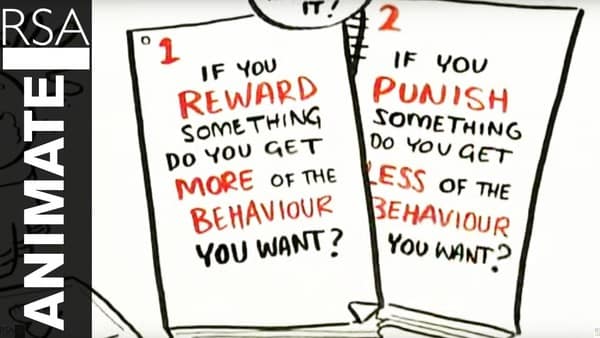
Then the company, RSA Animate, did a wonderful animated hand-drawn type drawing of his talk on that. I think it’s about 11 minutes and it’s wonderful for two reasons. One is it gives a great overview of drive without needing to read the entire book. If you’re not up for that quite yet, it gives a great overview. It’s also just so fun to see people so magnificent at visual expression and visual thinking. They’re just masters at it. RSA Animate, has done all kinds of animations for different talks, but Daniel Pink’s is one of my favorites. Those are my recommendations, and I’ll pass it over to you now.
[00:38:43] Martha: All right. I was going to do two but I actually thought of a third one.
[00:38:47] Bonni: You got it?
[00:38:47] Martha: That’s okay.
[00:38:48] Bonni: Mine was quick so I can pass you my extra time.
[00:38:52] Martha: The first two that I’m going to share are about– because it grows out of something that we’ve been talking about, particularly in terms of helping young people find purpose and autonomy. One of which is a project done by a former student of mine at the University of Mary Washington. She was in my digital storytelling class. She also worked as a tutor for me in the Digital Knowledge Center. The last year that I was there, she participated in a program that I oversaw called Domain Fellows. The idea of Domain Fellows was I had really started to feel like a lot of students just were thinking of Domain of One’s Own as a classroom tool.
I wanted them to realize that it wasn’t that it was bigger than that, and that they needed to be able to explore this for their own personal reasons to find intrinsic value in terms of working with their domains. I put out a call and had applications and I think I had like eight or nine students who were awarded small stipends and we’d meet every two weeks and then they would pick a project to work on. This student, Katie Hartraft, was one of my students, and she really loved digital storytelling.
She decided she was going to make her own website and do her own little digital stories and she was going to get ideas from her social networks, Instagram and Twitter. Have people give her ideas of stories she could tell. The last project that she did is probably maybe my favorite project I ever had a student do, partly because it speaks to me, but it is– if you know the podcast Welcome to Night Vale which is a long-running podcast. It’s a little bit obscure. Well, it’s pretty popular, but it’s weird. It’s a really weird podcast.
It has a particular style. It takes place in a small southwestern town I think in Arizona or New Mexico. There’s just bizarre stuff that’s always happening there, and it’s told through a radio broadcaster who’s reporting the news of Night Vale, but the stuff that’s happening is just completely crazy. Katie was a big fan of Night Vale, and she did a podcast episode Welcome to Night University that basically was taking all of that the Night Vale storytelling technique, but telling a story about a university.
I love it so much. It’s irreverent, and it’s funny, and it’s so spot on in terms of its tribute to Welcome to Night Vale. It was just so cool to see a student do this. She didn’t get any credit for this, she didn’t get a grade for this, she spent so much time on it, and it’s just a brilliant little piece that she did.
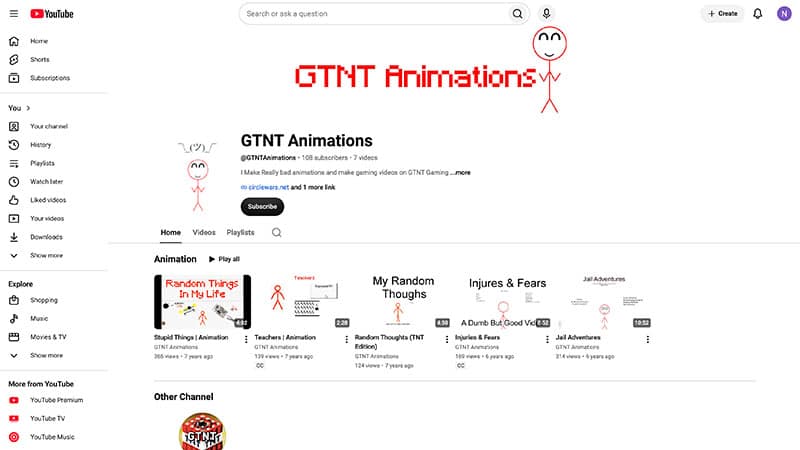
The other one, this is a little bit more near and dear to my heart, and I apologize because there’s nepotism in this. I have an 11 year old son. His name is Graham. He has developed a huge interest in video and animation, and has basically self-taught himself how to do basic animation, and video editing, and audio editing. I play no role in this other than I sometimes buy him licenses for software because he doesn’t let me teach him anything. He just gets frustrated if I try to teach him. It’s all completely self-motivated, self-taught.
Invariably every few weeks he throws his arms up and says, “This is impossible. I give up. I’m never going to make another animation.” Then three hours later, he comes back and he says, “I think I know how I’m going to solve that problem.” He goes off, and he thinks about it, he comes up with solutions. He has a YouTube channel where he releases these little animations that he makes, and selfishly I’m going to share now with your audience because I love it so much. I think they’re humorous and funny, but it’s also just such a wonderful example of what can happen when you give young people just space to play, and explore, and get out of their way.
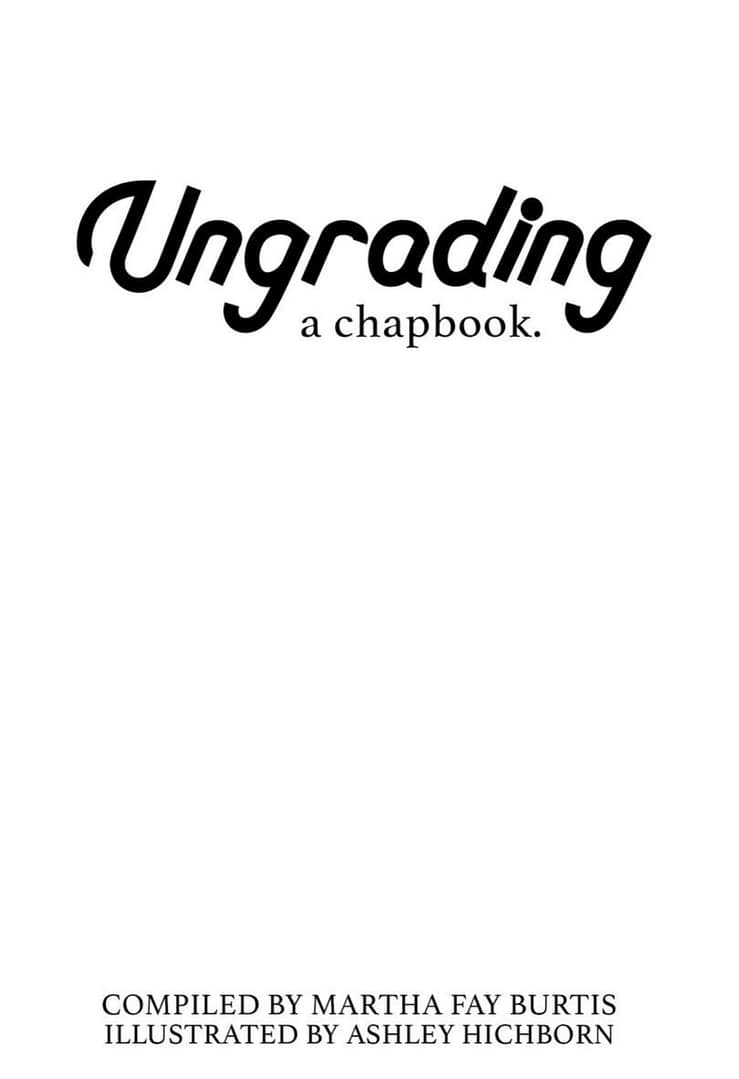
Then the last thing that I’m going to share, and I don’t quite have the link for this yet, but I will get it to you is in preparation for some ungrading stuff we’ve been doing in a CoLab, we did a workshop last fall, we did a webinar this February for the state system. Last fall, I put out a call on Twitter, asking people to share their own experiences with assessment, and alternative assessment, and grading and ungrading, and I got a ton of responses on Twitter, and I edited this into a collection of tweets. Then one of our student workers who’s a graphic design student illustrated the whole thing.
It’s called Ungrading: A Chapbook. It’s a small format, chapbook format, and we are almost ready to release it. We’re going to have a digital copy that anybody can look at, or download and print, and then we’re going to actually do a small run of printed copies of it. Jesse Stommel is the one who gave me the advice to do this project. I was talking to him about wanting to create a resource and he said, “Martha, there’s lots of places people can go online to find tools, and articles, and research. What people can’t find, what’s hard to find is community. It’s hard to find stories, and it’s hard to find a real voices and lived experiences of people grappling with this.”
He was so right. Huge thanks to him for that inspiration. It’s really come together into what I think is a lovely resource. At the end, we do actually have a link to a page with lots of practical resources which is also great, but this is really about forefronting peoples experiences, and realizing that that’s actually what matters here.
[00:44:05] Bonni: If you’re going to try to do it, that’s what will be the richest. Otherwise, you get lost in that. Well, this is how other people do it, but feeling that mindset shift where you think I can’t do this, to like, “Oh, maybe I could do this.”
[00:44:17] Martha: Exactly. We were very deliberate in the chapbook to include everybody’s Twitter handle. There’s lots of great people in there to just follow too.
[00:44:24] Bonni: Martha, it’s been such a lovely opportunity to get to talk to you in person, and I actually get to see you right now. It’s just been an absolute joy to follow your work. I know I’m going to keep learning from you. I’m so happy to be able to introduce you to the Teaching in Higher Ed community. Many of them already know you, so I shouldn’t say introduce you, to welcome you, I guess into the–
[00:44:41] Martha: I’m fine if I’m just being introduced. I’m just happy to be here. Thanks so much for having me.
[music]
[00:44:49] Bonni: Martha Burtis, thank you once again for coming and being a guest on Teaching in Higher Ed. You’ve been such an inspiration to me and so many other Teaching in Higher Ed listeners for many years now. Thank you for your time, your expertise for the benefits of us getting to hear what you have been reflecting on recently in your teaching and your leadership. Thanks to all of you for listening. It is hard to believe that this podcast started back in June of 2014, and all the amazing people like Martha who’ve come on and shared their experiences with us.
I really do find such meaning and significance in being in community with you. If you would like to get the show notes in your inbox without having to remember to check them, please head on over to teachinginhighered.com/subscribe and you’ll get the weekly, or weekly or so email that will give you those updates. Thanks so much for listening and we’ll see you next time.
[00:45:43] [END OF AUDIO]
The transcript of this episode has been made possible through a financial contribution by the Association of College and University Educators (ACUE). ACUE is on a mission to ensure student success through quality instruction. In partnership with institutions of higher education nationwide, ACUE supports and credentials faculty members in the use of evidence-based teaching practices that drive student engagement, retention, and learning.
Teaching in Higher Ed transcripts are created using a combination of an automated transcription service and human beings. This text likely will not represent the precise, word-for-word conversation that was had. The accuracy of the transcripts will vary. The authoritative record of the Teaching in Higher Ed podcasts is contained in the audio file.