Follow the Teaching in Higher Ed Podcast
About this Episode
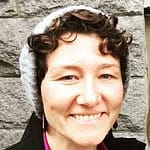
Amanda Coolidge talks about open education and growing up open on episode 299 of the Teaching in Higher Ed podcast.
What we are trying to do is create a more equitable society.
Amanda Coolidge
On episode 299 of Teaching in Higher Ed
Voices on this Episode

Show Notes + Resources
- I’ve Been Everywhere | Johnny Cash
- Transitions: Making Sense of Life’s Changes, by William Bridges
- Managing Transitions: Making the Most of Change, by William Bridges
- The Way Of Transition: Embracing Life’s Most Difficult Moments, by William Bridges*
- Blackbird | The Beatles
- Imagine | John Lennon
- Jesse Stommel
- Code Switch Podcast: Books for Your Mind, Belly, and Soul
- Sabia Prescott
- BCcampus OpenEd
Recommendations from this Episode

Article
2020 Musings by Amanda Coolidge

Resource
The Better Allies Newsletter

Idea
Show Up with intention. With purpose.
Transcript
[00:00:00] Bonni Stachowiak: Today on episode number 299, I have such a special guest, Amanda Coolidge joins me to talk about, Growing Up Open.
[00:00:11] Production Credit: Produced by Innovate Learning, maximizing human potential.
[music]
[00:00:22] Bonni Stachowiak: Hello and welcome to this episode of Teaching in Higher Ed. I’m Bonni Stachowiak and this is the space where we explore the art and science of being more effective at facilitating learning. We also share ways to improve our productivity approaches so we can have more peace in our lives and be more present for our students.
[music]
Amanda Coolidge is the director of Open Education at BC campus in British Columbia, Canada. She leads the province’s initiatives and open education from Open Textbooks to Open Pedagogy and with a team of eight people who work across British Columbia to enhance access for students. Amanda has a master’s in Educational Technology and has had many years of experience as an instructional designer at various universities across Canada. Amanda has worked in open education in Calgary, Alberta, Nairobi, Kenya and in British Columbia.
When Amanda is not at work, she can often be found on the beaches and in the woods of British Columbia traveling with her family and their 32 foot, fifth wheel RV. Amanda and her husband and her son live in the RV six months of the year and enjoy everything there is about the outdoors and the opportunity to explore across North America. In addition to Amanda’s love of the outdoors, she’s also quite passionate about jazzercise and in fact is going to be performing in the Disneyland parade next week in Anaheim with her jazzercise team. Amanda, welcome to Teaching in Higher Ed.
[00:02:04] Amanda Coolidge: Thank you. I’m so excited to get to talk to you today.
[00:02:07] Bonni Stachowiak: One of my favorite parts of your bio is your reference to being involved in jazzercise.
[00:02:13] Amanda Coolidge: Yes. I love jazzercise. I’ve only been doing it about three years now. It’s just become really a part of my weekly to do’s and it just brings me so much joy when I get to do it.
[00:02:25] Bonni Stachowiak: I am physically not able to do it right now, but I have a playlist of having done it for 15 or 20 years. I can still remember the choreography to so many of the songs. They really do bring us life and bring us energy and strength. It’s so much fun to be able to dance to songs that can do that. Today, we have a little bit of a musical theme going with us. We’re going to start out with a song. I’m not sure how many of our listeners will have heard of but it’s by Johnny Cash. It’s actually the only song of his that I could just rattle off. It’s called I’ve Been Everywhere. It sounded like you had heard that before, Amanda. That’s correct, you’ve heard that song of his?
[00:03:00] Amanda Coolidge: Oh, yes. Yes. I love Johnny Cash. I definitely have heard that one.
[00:03:05] Bonni Stachowiak: I wish I knew the lyrics because he’s like, “I’ve been to here and here and here and I’ve gone here,” and all these places [chuckles]
[00:03:10] Amanda Coolidge: Yes, I don’t know the exact locations he’s always been to, but I love that, the cadence of the way the song goes, like- [sings].
[00:03:19] Bonni Stachowiak: Yes. I’ll put a link in the show notes, so just in case someone hasn’t heard it, it’s definitely one of those songs that will stay stuck in your head in a beautiful way and also might get you to thinking about the places that you’ve been in your life. I’ve had the privilege of being able to hear Amanda speak at the Open Education conference in 2019. Amanda, one of the things that you shared, which is very unique to you, is all the places that you’ve been. You really have been everywhere. [chuckles] Would you tell us a little bit about where you’ve been in your life?
[00:03:49] Amanda Coolidge: Sure. I definitely have a unique upbringing. I was born in Washington, DC. My father is American and was a member of the United States Foreign Service for his career. My mother is Canadian. We grew up overseas. We started off, as I said, in Washington, DC, and then moved to England, followed that by Poland. Then we moved back to Washington, DC, then to Pakistan, back to Washington, DC and then Guatemala. I went to university up in Canada, in Nova Scotia and made my way then to Calgary and then to Kenya, where I started a lot of open education work and then have found myself in beautiful British Columbia.
[00:04:37] Bonni Stachowiak: So many times, one of the things that I have studied in my academic part of my life has to do with organizational change. You see so much, just the pain that people go through at trying to avoid change as if we could possibly do it, but just trying to keep that status quo. Do you find that your experiences in being in all those different places all new friends, a whole new culture to learn, does that contribute today to you being more open to those kinds of experiences or how’s that affected you?
[00:05:10] Amanda Coolidge: Yes, that’s a great question. I definitely I’m very welcome to change. I thrive in an environment that’s either quickly changing or has the opportunity to adapt. I think that’s where I really resonate with open education in the sense that, there’s nothing ever static. It’s always growing or building or changing. I think that’s also why I really resonate with education as well as this opportunity to change and to grow. Then in terms of an organization I definitely have– I’m much more comfortable when organizational change happens.
I’m also very keenly aware of the effect change can have on others. Because I am aware of that effect, I do my very best to make sure that we have transparent communication, that people are very aware of changes that are happening and most importantly, understanding why. I think that’s a lot of where my upbringing really helped. My parents were always very thoughtful when it came to, “This is where we’re moving to. This is why we’re moving to this area. Here’s what you need to know about the area. These are the things that will change in your life. These are the things that will remain consistent.”
[00:06:21] Bonni Stachowiak: There’s a wonderful author in the area of organizational change and personal change. His name is William Bridges. He wrote a pinnacle work called Transitions. Then he also followed it up with a book about leading transitions that’s called Managing Transitions and finally, wrote the most heartbreaking but beautiful book about his wife’s battle with cancer for seven years and then eventually passing away and he goes back and he looks at his whole decades and decades of work on change and puts it to the ultimate test and says, “Do all the things that I have believed to be true, still hold true as I grieve the loss of the love of my life,” and it’s called– You would really think I’d remember the name. [chuckles] I’ll look it up and I’ll definitely put it in the show notes.
If you looked up his name, you’d find the other two books, but it’s the way of how something– Yes, I’m not getting to it. I bet you as soon as we hang up, though, Amanda, it’s coming right back to me. The reason I bring it up is that he does this book, the book about personal change, but also for leaders. There’s some strategies that we can use. Because first of all, he starts out with thinking, we think change begins with beginnings, but change actually begins with endings. That’s a really poignant part of the book. The part I wanted to talk to you about is he refers to as the neutral zone.
I know as soon as I start start talking to you about it you’ll know exactly what I mean, where it’s like, “Oh, I have a new job,” or, “I moved to a new place,” or, “I started working with a nonprofit and now all these new names and ways of helping people and I’m still new to this.” He talks about that the new stuff’s not solidified yet. The system’s not there yet. Everyone’s not comfortable, everyone’s very uncomfortable. [chuckles] There also can be these incredible things where we get just so– We have so many ideas, because when you expose yourself to a really different environment then those ideas can really spark.
I’m curious for you as you reflect on that, what are the strategies that you think are helpful to us when we’re in that period of in between. We’re not to the new yet. We’re also the old is no longer there. Sometimes this can be for good reasons or really heartbreaking reasons but, how do you nurture that in between time when you’re just having to wrestle with it all the fear, the change? How do you encourage others as well?
[00:08:45] Amanda Coolidge: One of the things as you were talking about that, it really made me think about how change really builds resilience in people. I think that’s one of the great qualities that both my sister and I were able to really manifest through the change that we had growing up, and just to become more resilient individuals. I think one of the things is, is when you’re in that in between stage in particular at an organizational level, I think what the best thing to do is when you have all of these ideas and this energy and really a very interested, this persona that you just want to dig in and get in there.
I think it’s also really important to slow down and to listen. I think that was one of the thing, as we were growing up and I had the opportunity to experience different cultures, the transition period and that in between period was really about stepping back and really getting a better understanding of what is the culture that I’m entering? What do I need to listen for? What is the way that I need to be in this environment? I think, when we’re in that in between stages at an organization, if you’re moving to a new job, or you’re moving to a new organization, or you have brought new staff on, I think it’s really important to honor that slowing down a little bit where you have the opportunity to pay attention, to ask the questions, to really investigate and then to really hold on to those ideas either.
One thing I do a lot is journaling, writing the ideas out, because oftentimes, if you come in to a situation where you’re excited about the change, you don’t necessarily know what the reaction is of others. I think it’s also important to be respectful of that. Sometimes when you enter those situations and you have all these great ideas, it can sometimes feel like a bombardment on another person or onto other people. That’s why I always suggest journaling it out, thinking about it and then as you’re listening in and really getting to understand the culture of the institution or the organization or the environment you’re going into, then it’s the opportunity to engage others into the work as well.
[00:10:52] Bonni Stachowiak: There’s so much wisdom in that. Thank you for sharing that. I was thinking back to when I’ve had devastating change happen and that I can so easily fall into fear. Then there’s also the part of it where we lose part of our identity, we didn’t really lose part of our identity, I lost the part that I like to claim to because it’s a nice easy definition for who I am on the surface, “What do you do?” I didn’t have that anymore.
How rich when we can slow ourselves down and feel that pain and feel that loss because, you’re not really different. You still are you. I mean, sometimes you’re growing into a new you, you’re becoming something else but that little cocoon analogy might be a good one to use here because that journaling, that reflecting, because most of the time acting out of fear is not going to help us too much, sometimes it certainly can in life but for the most part, we haven’t evolved out of just that fear response. Most of the time what you’re going to get is not the most sophisticated of human behavior or thought. [laughs]
[00:11:58] Amanda Coolidge: Right.
[00:11:58] Bonni Stachowiak: I was mentioning to you that I still feel very new in the world of Open. Gone to a couple of conferences, read some books, had a number of people on the show who have taught me so much, but I still feel new. What I’m able to do now, Amanda, is see it so much more. Since we started out with the song, we talked about, Johnny Cash’s I’ve Been Everywhere. My daughter is now going through, at her school, a unit on the Beatles and it’s just so much fun. One of the songs that she’s fallen in love with is Blackbird. I know your son has a connection with that song too.
[00:12:34] Amanda Coolidge: Yes. My son is same thing. It must be their curriculum of music at this stage. Even up here in British Columbia, he’s great too. I could hear him in the bedroom all of a sudden start singing the words to Blackbird sings in the dead of night. I was ran in and was like, “Where did you hear that? How did you hear that?” And he says, “Well, it’s just the music class.” To me, those moments are so inspiring because you just think, “Oh my gosh, that’s just the sweetest song for you to listen to and to learn.”
[00:13:08] Bonni Stachowiak: Even though I’m so new and open now, I just see it everywhere. Our daughter, she started rewriting, so she’s remixing the Beatles lyrics and she’s saying, “Mommy’s going to get me some Cheerio.” [laughs]
[00:13:20] Amanda Coolidge: I love that.
[00:13:21] Bonni Stachowiak: That was great. I see it everywhere. I see Open. Yet, I also know that I can’t see it as holistically and as beautifully and magnificently as I want to that I’ll get stuck on the first part of it. I don’t have as beautiful as a vision as I know you have for Open. I wonder if we might together and mostly I need you to do this, rewrite the Beatles song Imagine. Would you share a little bit of your reflections on your imagination, what you would love to paint for us? What can education be? Imagine for us, paint that picture for us. What can education be?
[00:14:02] Amanda Coolidge: For me, in particular, when I think of the role that I would love for Open Education to play, well, in particular, just education in general is, education has always been a very strong part of my life. It’s where I felt very secure and safe. It’s where I always saw leaders build and grow. I want that for so many children. I’m a big advocate of the public school system. I really believe that if we can create a society whereby students who attend elementary school, middle school, high school, post-secondary education. If they have the opportunity to feel safe and to feel heard and seen, I feel like that is the environment that we can create.
I think you know, a lot of times I go back to Jesse Stommel’s work where he really speaks very beautifully and writes wonderfully about the way in which students need to be heard. In particular, it makes me often think, “At which point did we determine that students aren’t human beings?” I really want to be able to make sure it’s not just about the access to the resources and the resources are really where I come from in the world of Open Education. It’s also just the general access to knowledge.
When I think of the work I’ve done in Kenya or growing up in Pakistan and growing up in Poland, I was in environments that were extremely restrictive when it came to education. There was this understanding that there was a privileged cue that could attend schools. If you had the access to finances, you could then excel in your studies or you wouldn’t excel in your studies and how could you know, study back at home if you had to go work a full-time job and this also happens in North America as well. I think what we’re trying to do is create more of an equitable society.
For me, I want to see, when I think of my son, he’s in grade two. As I see him grow into himself and into the world he’s going into, while we live on Vancouver Island, I want him to be able to have the understanding and experience of cultural world-views and first Nation world-views and LGBTQ world-views all within the curriculum that he accesses. For me, when I think of that the Imagine song, and the lyrics wouldn’t really work with this.
The idea would be that, you know, I want to see content created that allows for diverse and inclusive content to be embedded in that work. And for me, that is where the power of Open begins. I think it can feel daunting to a lot of Instructors or a lot of teachers and students and staff as you get into the notion of Open because sometimes it feels like, there’s all these rules in place. You’ve got to have this kind of creative commons license and it needs to be this open.
Oftentimes, when I talk to faculty about it, I just think, “Let’s just step back and really evaluate, what is your end goal? What is it that you want your students to achieve? If you’re looking to have your students be successful? Well, let’s break that down a little bit. What does success look like to you?” And then hopefully, we get to the stage where it’s, “Well, I really want all of my students to be able to access my PowerPoints, I want all of my students to be able to take this particular book home so that they can study at home.”
I think while talking with open, there are some ways that we can just make that happen, and look at it step-by-step and then if we can start expanding our worldview a bit more about, “I have this case study in here that’s a marketing case study that is really very specific to a business that’s been in a family here in Victoria, British Columbia for generations. Will this resonate with the students who are coming in from international areas or potentially, from Alberta or from the US.
I think it’s about really examining our work, but making sure that what we’re doing is creating a safe and honorable and respectful, inclusive place for our students to grow.
[00:18:32] Bonni Stachowiak: This morning, I was listening to an episode of the Code Switch Podcast. It’s been talked about. It’s been a while more than a year too on the podcast, but it’s code-switching in reference to someone’s racial identity, and how they might code-switch into a different way of expressing themselves. I’m oversimplifying here, trying to be concise but also for listeners who may not be familiar with that concept or with the podcast.
I’m listening to them and they were talking about books that they recommend and it was all books that were written by people of color. I was very excited to hear the episode. It cracked me up because they mentioned a book that I read recently that I really didn’t like. I couldn’t have really put my finger on why I didn’t like it, it had been recommended by somebody, I can’t even say who it was. At some point, I had thought it was a good idea to read it. They mentioned that his entire way of being and every story that he told is very much from a white male perspective, that much I knew.
I hadn’t noticed that he mentioned one woman that he dated with, perhaps slept with, I think he got that graphic, but he mentioned her ethnicity as being Asian. Of course, he didn’t mention the ethnicity of any other women that– he talked a little bit in his book about sleeping with women repeatedly. I hadn’t noticed that and it reminds me so much as a white woman of how hard it is for us to notice. Then how hard I get on myself. I teach a class called personal leadership and productivity and the topic in fact, I’m gonna promote my book right now. I’ve written a book on productivity.
[00:20:03] Amanda Coolidge: Great.
[00:20:04] Bonni Stachowiak: The subject of productivity is so male and it’s so white. If you just like, the authors who have really been prolific in that area, I love your vision captivates me for our students to be able to see themselves in not just the course what they’re taking in, but also what they can then share out. I just want to encourage people that that doesn’t mean we get to give up. There are going to be topics that are harder to do this in than other topics where there’s a lot more work that’s already been done, people before us have laid the groundwork.
There’s work we have to do as individuals, but then there’s also the power of tapping in. This is not you Amanda. This is not me. There’s just a world wide effort going on. I wonder if you could share what comes to mind when you think about what’s happening there at your institution, what’s happening around the world? We’re not in this alone. Could you give whatever examples come to your mind when you think about we’re not alone in this?
[00:21:06] Amanda Coolidge: This is a great question because there are a number of examples and there are people out there that are doing the work much more eloquently and really in a very thoughtful way. One person in particular that I would highlight is Sabia Prescott from New America. I spoke about Sabia in my talk at the Open Education Summit, because what she is doing is really reaching out to our public school systems in elementary schools and talking to teachers about embedding inclusive content in particular, relation to LGBTQ students.
For example, we know that California and other states, there’s a couple of other states that are actually only a handful of them that are actually saying that we can now include LGBTQ and disabled examples and history within our history books or within the history books in the United States. I think that’s where the challenge comes in where it’s like, “Okay. Well, what do we know about the history and how do we research that?” In Canada, for example, in particular, in British Columbia, where we’re really seeing this happen is in some work, the term is indigenization.
What that does is indigenization is taking a very deliberate look at the current curriculum models and and really, in fact, not just in education, but much more broadly in terms of the general socioeconomic structure and the way our political organizations are formed and so much more about this. As related to education, when we talk about indigenization the curriculum, it’s taking a look at how do we break down that colonial structure of the curriculum content, and how do we bring more voices of the first nation communities into the curriculum, and we’ve been doing that slowly where we have created a BCcampus, a series of indigenization guides for librarians and educators and administrators, and those are all openly licensed available on the open.bccampus.ca website.
That’s been really impactful because it’s also sharing the ways of knowing and being that many of our indigenous communities hold. I think that’s something that’s really important to understand. We also know that across a lot of those schools, we’ve been seeing many more examples, very specific examples of case studies, in particular, this is coming to mind is some business case studies that are being developed where the case studies have a very international perspective. It’s not just about case studies of the past, but it’s looking in particular in economics.
It’s looking at case studies that are very relevant to today’s student and provide an international mix. For example, they took the openstax economics book, rewrote some case studies to involve topics such as Brexit. Things that are internationally in the news. Then lastly, currently there’s a group of trades instructors. When I say trades, I mean vocational instructors who are working on a open resource for BC, which is called math for trades. This is really an opportunity for students who haven’t necessarily excelled in math or trades to really get their level up so that they can do quite well.
One of the things that they’re doing within that is not only offering inclusive content, so what I mean by that is providing more examples of women in the trades as well as changing needs to be more culturally relevant to the population within British Columbia and the lower mainland the Vancouver region. They’re also including other types of resources so that students aren’t alone, just reading. For example, there’ll be interactive videos and we’ve got some interactive quiz questions, things like that so that it’s not just about creating the inclusive content in terms of cultural sensitivities and appropriateness, but also about taking a look at, what does inclusion mean from a technical standpoint and how can we broaden that for diversity? We allow for diverse modes of using the materials.
[00:25:17] Bonni Stachowiak: You’ve shared that it’s a powerful thing to be seen. Tell me about a time when you have felt seen?
[00:25:24] Amanda Coolidge: I really, I’ll tell you, this one just popped up to mind. I hadn’t talked about it because like many people, I don’t love to talk about myself. When I finished the Open Education talk, when I did that keynote, so for our listeners, that was the final keynote of the Open Education Conference that would be led by David Wiley. It was a time when the community was feeling very vulnerable, very uncertain. I really wanted my keynote to bring people together and really understand and understand collaboration and communication. At the end of that talk, the audience gave me a standing ovation and I felt completely heard and safe in that room. For me, I think that would be my most recent feeling of being seen, really feeling embraced by the community.
[00:26:17] Bonni Stachowiak: I love that I was there for that because I really felt that with you. I felt the authenticity coming from people getting to their feet. That was not a because we’re supposed to ovation, that was just you really resonated. You resonated with every person there and it was beautiful to get to witness both and then just your getting to hear from your heart and your head and your hands. That was great. That was wonderful. Before we get to the recommendations portion of today’s show, I wanted to take a moment to thank today’s sponsor, and that is long time sponsor TextExpander.
I’ve talked about it many times on the show before but never get tired of it. TextExpander saves me time. It helps me being more productive. It allows me to automate some of the laborious things like typing the same thing all the time so I can free up more of my time to be more present for my teaching, to be more present for my life. What does TextExpander do? Well, it’s pretty much almost anything that has to do with typing that your imagination could let you do. Something as extensive as a reference letter for a student or recommendation where you want to make sure that you format it to the way you want.
You want to make sure that it’s got the key components in and that some of that is repetitive, but you’re also able to have on the fly type in variable, so the date, you could have automatically entered. You could have it pop-up and say what’s the name of the person being recommended? What are some things that you wanted to say that they do particularly well, et cetera. It could be something also as simple as, I can never remember my work phone number. I just type in a few keystrokes on my keyboard, as soon as I press the spacebar, in pops my work phone number. TextExpander lets us save time by typing and boost our productivity.
They call these little keyboard things that you type in, they call them snippets. You also can share snippets with a team so you could have more consistency in the writing and spread that out a little bit. TextExpander is available for the Mac. It’s available on Windows and Chrome for the iPad and for the iPhone. If you visit textexpander.com/podcast, you can get 20% off your first year. Just let them know that you heard about it on teaching in higher ed. Again, that URL is textexpander.com/podcast. Thanks once again TextExpander for sponsoring today’s episode.
This is a time in the show where we eat to get to give recommendations. I would like to recommend that people read your blog post Amanda that you wrote, called 2020 musings. It’s interesting to me now, as you had shared about your practice of journaling when you’re going through what bridges calls the neutral zone. I’m sure your journal when you’re not through the neutral zone but one technique to use. It reminded me as I reflected back on it just have that work that we have to do. You asked three questions in the post, how am I going to show up in 2020, what am I going to do differently and how will I celebrate growth?
I’m not going to read the whole thing. I’m going to encourage people to go read it, but I’ll just focus on the answer to your question that you had about how am I going to show up in 2020. Your answer was, with intention, that is with purpose. I have two recommendations. The first recommendation is, come and read Amanda’s words, her 2020 musings, I think it’ll get you asking yourself some of these questions, whether it’s 2020 when you’re listening or 2021 or 2030. Hopefully, they’ll get you asking yourself those questions. Also I wanted to recommend just in general, that we show up.
Showing up is really hard. We can attend to meetings and go to class and teach and be on committees and work on our research and not actually show up for it and the different ways that we numb ourself or the unhealthy habits that we get in to avoid those hard conversations, to avoid being truthful within ourselves or with other people. My recommendation in general is that we all show up and I love how you’re going to show up in 2020 with intention. That is with purpose. What a wonderful thing for us to meditate on.
[00:30:24] Amanda Coolidge: Thank you.
[00:30:26] Bonni Stachowiak: Amanda, what do you have to recommend for us today?
[00:30:28] Amanda Coolidge: One of the things that I would love to recommend is, I realized this is going to be a subscription to an email, but it is called, the better allies website. What you can do is you can subscribe and get in your email every Friday an email that gives you five ally actions. What it says is that better ally allyship starts here. Each week we share five simple actions to create a more inclusive workspace. I really love it because I think we often hear this and is that inclusion and any work that you’re doing with diversity, equity and inclusion really starts with the self and it’s about self-examining your own power and privilege, but also where can we be allies for others. This particular email subscription just really resonates with me every Friday. It’s an opportunity for me to get new ideas and to be able to as it says, be a better ally.
[00:31:25] Bonni Stachowiak: That sounds wonderful, Amanda. Thank you for introducing us to that and thank you for gifting us with your time today and we got to hear a little bit about you growing up open and all the ways that you’re continuing to help others grow and open. It’s been such a pleasure to get to know you and be connected with you and get this opportunity to have this conversation.
[00:31:43] Amanda Coolidge: Oh, thank you. I love talking to you. I could do, I could just stay on all day. It’s so great.
[00:31:49] Bonni Stachowiak: I could too. I was telling you I felt a little nervous to talk to you, but nervous in the way of like, how am I going to take all these things? I wish I could ask her and have some a focus conversation. I’d say I managed to at least get some flow here. We had music, we had Jazzercise, so it was good.
[00:32:04] Amanda Coolidge: That’s right. You did really well there.
[00:32:06] Bonni Stachowiak: Thank you so much.
[00:32:06] Amanda Coolidge: Okay, thank you.
[00:32:12] Bonni Stachowiak: I want to thank Amanda Coolidge for coming on today’s episode of teaching in higher ed and a special thanks to Clint LaLanne for connecting me with her and having the ideas around today’s conversation. If you’d like to see the show notes for today’s episode, you can visit teachinginhighered.com/299. If you’re on a podcast player, the show notes are also there and your podcast player for you to access, and then if you’ve been listening to the show for a while and get a lot out of it, I’d love if you would give it a rating or a review on whatever podcast service you use to listen to the show. It really helps others discover it and just appreciate you being in community with us here on teaching in higher end. Thanks so much and I’ll see you next time.
[00:33:06] [END OF AUDIO]
The transcript of this episode has been made possible through a financial contribution by the Association of College and University Educators (ACUE). ACUE is on a mission to ensure student success through quality instruction. In partnership with institutions of higher education nationwide, ACUE supports and credentials faculty members in the use of evidence-based teaching practices that drive student engagement, retention, and learning.
Teaching in Higher Ed transcripts are created using a combination of an automated transcription service and human beings. This text likely will not represent the precise, word-for-word conversation that was had. The accuracy of the transcripts will vary. The authoritative record of the Teaching in Higher Ed podcasts is contained in the audio file.