Follow the Teaching in Higher Ed Podcast
About this Episode
John Warner shares about his new book, Why They Can’t Write: Killing the Five-Paragraph Essay and Other Necessities, on episode 233 of the Teaching in Higher Ed podcast.
Declaring students defective is a dead end.
John Warner
On episode 233 of Teaching in Higher Ed
Voices on this Episode


Show Notes + Resources
Recommendations from this Episode

Resource
Xpense Tracker

Music
White Denim

Resource
Droplr

Podcast
The Armchair Expert
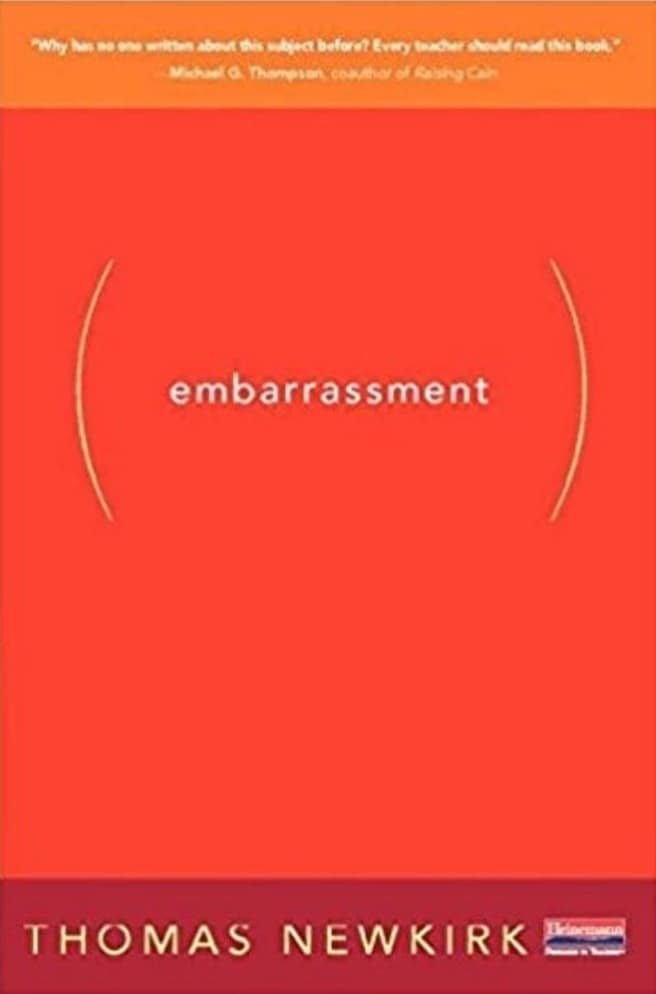
Book
Embarrassment: And the Emotional Underlife of Learning by Thomas Newkirk
Transcript
Bonni: [00:00:00] Today on episode number 233 of the Teaching in Higher Ed podcast, John Warner shares about his new book Why They Can’t Write: Killing the Five-Paragraph Essay and Other Necessities.
Production Credit: [00:00:17] Produced by Innovate Learning, maximizing human potential.
Bonni: [00:00:27] Hello and welcome to this episode of Teaching in Higher Ed. I’m Bonni Stachowiak and this is the space where we explore the art and science of being more effective at facilitating learning. We also share ways to improve our productivity approaches so we can have more peace in our lives and be even more present for our students.
Bonni: [00:00:54] On today’s episode of Teaching in Higher Ed, I am welcoming back to the show John Warner. John, welcome back to Teaching in Higher Ed.
John: [00:01:03] Thanks it is very nice to be back.
Bonni: [00:01:05] I figured since I was welcoming you back rather than read your bio without you on the air, I could do it with you right here. So you were a columnist for The Chicago Tribune, a contributing blogger for Inside Higher Education, and an editor at large for McSweeney’s Internet Tendency, and the Author or Co-Editor of seven books. The first half of the title of your new book is Why They Can’t Write and I know we won’t be talking about this for too long because neither you nor I are too interested in pontificating about all the things that are wrong with our students. But let’s just spend a little bit of time, what are the usual diagnoses that we give for why quote on quote “today’s students can’t write.”.
[00:01:52] Well a lot of what you hear, or what I hear and I deal with this and the introduction of the book particularly when I get out in the world and people hear that I’m a writer and I teach writing, people start to lament about today’s kids and their cell phones and the emojis. And everybody gets a trophy and they’re all coddled and entitled and this stuff. And one of the reasons why I wanted to write the book is because I started with a question why can’t they write? Because I saw my students struggling with writing and not being a problem of skill or ability or even training necessarily, what had happened before they got into class.
John: [00:02:31] But they had what I thought to be some very counterproductive attitudes towards writing and experiences with writing that seemed to really hinder what they’re going to be able to experience in my class. So my goal was to explore that question, why can’t they write?
John: [00:02:48] And pretty quickly I realized that declaring students defective is kind of a dead end. If today’s generation of students were defective, so is mine. So were previous ones. There’s been laments about students not being able to write forever. In the book a quote a Harvard dean from the 1890s complaining about how poorly the students are writing. So if this is a constant complaint, ut I still think there’s something going on, my question is what is going on? What is underneath this? Thaa is what I tried to score in the book.
John: [00:03:26] One of the arguments I make is we are in the midst of a shift in literacy brought about by digital technology. We are actually writing more than we ever have, that writing may take various forms like texting or people work somewhere where there’s slack which is a kind of constant internal combination of like water cooler talk with texting and Twitter all together. We need to help students learn how to navigate those things and that means changes for people who teach writing.
John: [00:03:59] I have become less and less secure in my belief that teaching students academic writing really does them much of any favors in terms of academic writing in the form of scholarly work, like a research paper at first you’re writing. That said, I want them to be able to think critically and write well in the ways we would think about academic writing at the core. So, I think a lot of the complaints, particularly generationally, we see things change and to kind of browbeat students into being something that is no longer relevant in today’s world strikes me as a sort of a fruitless and frustrating enterprise for both them and me as their instructor. So it becomes a process where we need to collaborate on what’s going on and what their goals are and how we can meet those.
Bonni: [00:04:59] One of the big shifts that you talk about needing to happen is rather than focusing on the students, and again what’s wrong with them in terms of not been able to adapt to our own standards which perhaps are not terribly relevant for them present or future, is really to look then back at ourselves. Could you talk a little bit about just the overall diagnosis that you have, if it’s not about our students I would turn it toward ourselves what is that diagnosis?
John: [00:05:28] Yeah. My belief is that we have a number of systemic problems when it comes to teaching writing. Some of them are rooted in the school reform process that I trace back and 1983s Nation at Risk where we’ve gotten through to a mania for standardized assessments which has given rise to using things like the five paragraph essay as a kind of shortcut or hack to help students pass these assessments.
John: [00:05:59] But it does little to help them develop as writers. One of the things I believe to my core is that writing involves thinking and where we take thinking off the table by say giving them a preset structure, we are preventing them from doing the kind of work that helps them develop as writers, develop what I call the writing practices.
John: [00:06:19] So we have a kind of system which privileges a curriculum which is not particularly well suited to developing as writers. We have also created a system where students fear failure and feel a lot of pressure to perform academically. Failure is a kind of necessary experience when it comes to to writing, a failure of falling short and being able to try again. We have a pressure on systems where we’re trying to do things like automate writing instruction through personalized learning or algorithmic grading. All of which are essentially alienating in the classroom and separate students and teachers.
John: [00:07:04] And big picture, for the most part, we don’t really resource teaching writing at the level of the human labor. The average highschool teacher has far too many students, they have spent 40 percent more time in the classroom than teachers in other developed countries. And people who have the kind of job that I used to have, a writing instructor off the tenure track, have student loads that are often double the recommended disciplinary maximums which is 60 students a semester split between 3 sections of 20 that’s the absolute maximum recommendation. And it is hard to find even a single nontenured instructor or many tenured instructors who have 60 or fewer, maybe at some of the very elite places but not where most of us work. So we say this thing is very important, students need to learn how to write and need to learn how to think critically, but we don’t really put the resources in place that will help us do that.
John: [00:08:07] And the values we bring to it seem disconnected from what we say is important. So we say we want to teach students to think but then we make them do standardized assessments. These things will create a situation that in my view makes students alienated from writing, discouraged by writing, and draws a distinction in their minds between schooling which is what they spend most of their time doing and learning which is what I think most of us want to happen.
John: [00:08:33] And so I wrote the book. And the first half is sort of what I think is the problem in the second half is an approach towards a solution but it’s not mysterious. We know a lot about how best to teach writing as I say often, it’s very straightforward but that doesn’t mean it’s simple. We kind of know what to do. We’re just not really doing it. It’s like a lot of things in our culture where the hard thing that is going to bring about a solution over time is overlooked in search of some sort of magic elixir that we hope will cure us. But magic doesn’t exist, at least not in this realm.
Bonni: [00:09:13] Let’s talk a little bit more then about the prescription. And I know that you draw from more current knowledge in what we’re learning, the scholarship of teaching and learning, and also some enduring philosophies in classical education. So could you talk a little bit about those two. I was going to say tensions but that’s not right. But those two.
John: [00:09:34] Yeah I think I’m deeply inspired by established scholarship and people like Maria Montessori and John Dewey there’s the essential part of their approach to education which puts the learner at the center. And I think, thankfully, we hear it on your show often, there’s a lot of momentum and enthusiasm for just that framing. Now we can often have debates about what that looks like and what we’re going to do in order to achieve that, but that’s at least I think progress.
John: [00:10:08] And the way I can see that in writing is to champion what I call the writers practice which is what we do as we are writing, the skills, attitudes, knowledge, and habits of mind of writers. And in the book I analogize it to any profession or even anything. We all have practices, a doctor has a practice, lawyers have a practice. The anaology I think is most effective with writing is something like being a chef where a chef has to both be able to take a dish somebody else has made and deconstruct it and understand the components that went into it. Something a writer must be able to do when they read the writing of others. But they also need to be able to look in the fridge in the pantry and make something that we want to eat. And that involves the skills, attitudes, habits of mind and knowledge of a chef. They need to know how to saute, and they need to know how flavors combine. They need to have attitudes in place in terms of flavors or cuisine that they like. And writers are the same way.
John: [00:11:14] And so when we write, we want to practice these things, the skill of writing but also the mentality we bring to writing, the attitudes, how we think about writing, the habits of mind, one of the chief one of which I think is the ability to embrace failure is an inevitable part of writing.
John: [00:11:32] And if we can get students practicing those practices from the beginning, I think we get to a place where writing becomes something that is transferable, something that even when a new occasion arises it may be difficult, they have something to fall back on and can make use of. I’ve tested it in my own courses and I believe it works. It’s not always easy. It doesn’t happen instantly, but it is a way I believe in thinking about writing that puts every student on a trajectory to getting better and particularly getting better even when the class is over which is one of my chief goals.
Bonni: [00:12:13] That’s fascinating that you ended with that point because one of the things that I reflect on a lot, both for learners our students but also for myself too is that it’s too easy to think about that there some and a destination we’re going to get to. Whether that’s becoming a better teacher, or becoming a better writer, or whatever it is we’re talking about- thinking that there’s a there there verses that it’s an ongoing process.
Bonni: [00:12:39] I just wrote a blog post on the plane, although I never know with these things if they’ll actually be shared. At some point I think it probably will but I was talking about listening to myself on the podcast and that whenever we have a chance to listen to ourselves or to observe ourselves, whether that’s through video feedback some kind of way of looking at our own practice that at first it’s just really I called it a dissonance of just oh my gosh it’s so hard to do that. It’s ridiculous that kind of feedback is so potent. But if you can get past that part where today I can listen to myself and I don’t love everything- it is still I have that real critical lens but I’ll start to be able to hear oh you just started having this filler word come into your conversations, why are you using that same phrase? It doesn’t need to be there, try to just get more comfortable with the silence or asking more concrete questions. And I get better through doing that but I don’t ever feel like there’s going to be some destination to which point I don’t need to listen to myself and get better at what I’m trying to do with this podcast. But I realized with my own writing I need to be better at doing that too. That it is also a process. It’s not like I’ll be there someday or I’ll never get there because that’s only for the great writers.
John: [00:13:56] That’s exactly right. One of the most important habits of mind in addition to sort of embracing failure is knowing that we’re never going to kind of arrive at a destination is that reflective process, is the ability to look at what we’ve done and take a good look at it and understand it and assess it and grow from it. I tweeted about this when the physical copies of the book arrived. It’s very exciting when the physical form of a book that’s taken in some cases years to come to life shows up. But then traditionally I can’t even bear to crack it open and read it because I’m worried it’s terrible and it sort of shames me forever.
John: [00:14:39] Now this book actually did start reading it and I was not shamed by it. I was pleased. I don’t know if that’s my ego has become stronger or the book is better than my others or what. But the ability to think through our own work and assess it honestly and to then take action based on that reflection, that’s what writers do. And that is what podcasters do, that’s what musicians do, that’s what chefs do, that’s what doctors do, it’s what everybody does. And I think that skill really should be the focus of writing courses.
John: [00:15:10] One of the things I struggled with over the years and involved in my teaching was abandoning the idea that my goal was to get students to produce the best possible written artifact at the end of the semester. Because if that was my goal, there were all kinds of things I could do to help them achieve that that would short circuit they’re wrestling with the problem in front of them. I can coach them on all kinds of things because I’ve seen all the problems that writers can fall into when they’re doing the stuff I was asking them to do.
John: [00:15:44] But I realized that I was cheating them in terms of having the experiences that they learn from. A lot of learning to write, in my view, is it’s really a reinvention of the wheel for each individual themselves. I can tell students things until I am blue in the face but they really have to just wrestle with it and then find out that you’ve maybe lost that match and then get into the ring again. And it happens over and over and over again. Then that’s what I want for what we do and students learn to write is to give them these experiences that allow them to wrestle and they may be defeated. And part of what I think as instructors we have to do is to make that feat a true victory of the kind because the wrestling has been so worth it. And that’s a very difficult balance to strike depending on what you’re teaching, depending on who’s looking over your shoulder in terms of what your students are doing, and depending a lot on what you value when you grade. And I wish I could say that I had all those tensions figured out myself, I certainly don’t. But that’s another process, how we are going to teach and how we’re going to relate to our students. I find that stuff fascinating and endlessly interesting but it is it does carry its own set of frustrations no doubt.
Bonni: [00:17:02] My husband Dave has a podcast called Coaching for Leaders and he recently had the honor of getting to talk to Seth Godin. And for people who may not be aware of who Seth Godin is, he’s very very popular in the world of marketing. He’s written some pinacle works and recently came out with a new book on marketing.
Bonni: [00:17:20] One of the things [Godin] talks about is that he uses the analogy of thinking about the minimally viable product, this was a big movement in business. Instead of waiting until the whole thing is done trying to get it out and in front of who your customers are. Well, he also then stresses then having an audience that you can target, I forgot the phrase that he uses I wish I could remember it. But that so many times we try to make a product or in this case write for a mass audience.
Bonni: [00:17:51] The most powerful movements – – whether you’re trying to influence change, if it’s politics, if it’s world problems, if it’s selling something, whatever it is that actually thinking about a real tight tight targeted audience, that’s the way today to really make something happen. And I wonder how much you think about that in terms of having us as writers think about our audience not as a big mass of people, but down to a really really tight tight audience.
John: [00:18:20] Yeah it’s interesting. I mean on the one hand, my ambitions are huge. Like I’d love the world to read my book and suddenly the light shined down from the heavens and we adopt my philosophy about teaching writing. But I can’t write for the world because I can’t communicate with the entire world simultaneously. There’s a different set of, as I’ve told my students, needs, attitudes, and knowledge for different sets of audiences. And so I think when I write I’m thinking about who am I trying to persuade, particularly this kind of writing, who am I trying to persuade or convince them of?
John: [00:19:00] And in this case, my audience is clearly people who have asked a question like why can’t they write? They might be employers of people or business leaders, but they’re also educators, and teachers, and parents and all those people. And in that sense, I’ve begun to draw a boundary about who I’m talking to and what I’m talking to them. But we can’t just sort of wave a wand and find a universal communication tool, it’s not Star Trek with the universal translator or anything like that.
John: [00:19:35] So for me in writing, and I think to sort of your point about a minimal audience it really is what am I trying to accomplish? What am I saying? Who am I going to say to that it matters to that it has an impact and has currency? And in a lot of ways, that focus at least I believe this to be the case, that focus is what then allows the message to resonate to audiences you may have never even intended.
John: [00:20:01] One thing the things that consistently surprises me, having written for Inside Higher Ed for so long is how often a postal escape the world of higher education and I’ll hear from somebody who is not a teacher, not a professor, not an administrator, not in higher education at all. But they’ve seen it and something has resonated even though I’m highly conscious of writing for a higher education audience there. So yeah you have to kind of target somebody, if you don’t target somebody, you’re not targeting anybody at least that’s how I have to think of it when I write.
Bonni: [00:20:39] And that’s part of to me what you were saying earlier is that we have been in higher head placing such an emphasis on very traditional academic writing standards, which for the vast majority of them the better that they get at it is not going to be the more broadly successful whatever success is supposed to mean in that statement. And I don’t know if we necessarily exercise writing for different kinds of audiences ourselves.
John: [00:21:10] That’s right. I mean I often say I devalue academic writing. I love the polls and values that underlie academic writing in terms of using sources and making arguments that appeal to the ethos, pathos, and logos and all those things. But then the forms we often ask students to perform in and I do see it often that way kind of performance and students see it that way to a kind of performance of knowledge or erudition as opposed to a kind of genuine creation and construction of ideas. They don’t perceive an audience for that often, the audience is a teacher or an abstraction. We are creating scholarship. And I think where we’re only asking students to write for abstractions and they are very used to this if they’ve been taking a lot of standardized assessments before they get to college, that this is fundamentally alienating from writing.
John: [00:22:03] Writing is a tool for thinking and writing is the tool I use to help me figure out what I have to say. And if it’s what I use writing for, why wouldn’t I encourage my students to do the same? Now it took me years to bridge that gap. I thought I should be training them to do well on academic essays because that’s what they were going to be writing college. But over time it just seemed less and less vital to help them do these things. In some cases, some of them are not going to be doing after they get out of my first year writing class. So doing well on that very limited kind of performance just didn’t seem worthy of our time.
John: [00:22:47] On the other hand, helping them practice their writing practices so they can communicate in other contexts, so they can take what they learned in my class into a totally different course and analyze what’s going on. That felt just something much more interesting and much more relevant and vital.
Bonni: [00:23:05] For the third time I’m working with a group of doctoral students and we’re writing a open textbook. And I want to point out what you said about when you were talking so much about audience and then yet so much we limit the audience to just the so, as you said, just the professor you will turn it into as soon as I have ever started to be able to somewhat successfully flip it to a different audience that isn’t just me. I mean it’s amazing. Talk about increasing people’s motivation. You talk about attitudes, I mean it’s such a big thing. I don’t have to try to motivate them. It’s literally not a thought in the world.
Bonni: [00:23:42] We had on a bullet somewhere that we should decide how to grade each other have some sort of peer group grading, but it’s just not even become- It’s an eight week class, as far as the time we’re going to spend deciding on something as arbitrary as that anyway, generally by the time you get to that level you’re generally probably doing fine on your grades anyway. But that conversation is much more interesting, much more motivational, much more shaping what they’re doing by thinking about who’s going to hold this book in their hands or read it digitally.
John: [00:24:14] That is right. If there’s a genuine audience and a genuine need and you can get students forgetting that they’re doing an assignment for school it will then turn into a better assignment all by itself. And the goal, for me, was always to get students to stop thinking about that they’re writing it and somebody is going to put a grade on it, that they’re writing for an audience they’re writing to express themselves and their ideas and have an impact.
John: [00:24:40] And when that happens, they’re learning. The artifact particularly when we’re talking about first year students may have issues, it will have issues because in a lot of cases they’re really trying that kind of knowledge creation intellectual process on for the first time in any significant way. But once you’ve gotten a taste of it, it really takes root. What you’re describing with your students is that same thing like oh I get to do something that is going to exist. It’s highly motivating and having just spent last year writing two books, I could never do that if I didn’t think it was they were for people, that they were meant to impact the audience and hopefully change minds or for those people who agree with me, they’re armed with something that helps them articulate their beliefs. And students should have access to the same kinds of things that help them work as academics. I even think of it in terms of the kind of academic freedom. We believe academics need academic freedom to do their best work and I don’t see why students shouldn’t have access to the same rights if our goal is for them to do their best work.
Bonni: [00:25:48] This is the point in the show where we each get to share our recommendations and I am just take us on a totally different direction. Mine don’t relate at all, although maybe they do. Who knows. So one of the things I mentioned I had been on a trip recently and I can get a little scatted I know sometimes that may not sound like it or maybe it does.
Bonni: [00:26:10] I get a little scattered with the whole receipts thing and expense reports. Oh gosh. I recently was able to hire an administrative assistant with my new role and I thought I do not want to dump my own dysfunctions onto this poor person and so I found an app before I went. And it is just a game changer app. And I suspect that there are many apps like this I didn’t do an extensive comparison but I see that it’s available on all the popular operating systems, so it’s on Android and on it even looks like windows and then also I got it on the iPhone.
Bonni: [00:26:45] And what I love about it is it’s just super easy to enter and expense and also to just take the picture of the receipt right there you can either scan it or you can just literally take a picture from within the app and then I can just throw it away because I have you know I have a record of that. I don’t have to worry about where am I going to keep this in my purse or whatever to keep track of it all.
Bonni: [00:27:05] And the thing I particularly liked about it is that I have a credit card now with the new job too, big fancy over here you had no idea what’s around since last time we talked. So those I can sort out differently because she just has to reconcile those. And then I could have the charges that wound up on my personal card somewhere else or all these different options for export. It’s just and it was really easy to learn how to use but I can tell already it’s going to be one of those apps that as I learned more about it, it’s gonna make my life easier and her life easier and I really recommend checking it out. Not necessarily this one like a said but just finding yourself a good expense tracking app makes all the difference in the world. And then just that habit of every single time before you even sit down to eat the food, take a quick picture of it so you can reduce the cognitive load of trying to keep track of that stuff. I think it’s going to be a big game changer for me, it already really was on the one trip but I can multiply that times all the times I’ll be traveling in the next year.
Bonni: [00:28:02] And then the second one is also technology related. One thing that I really have tried to reduce the friction on is when someone asked me a question, this could be a student asking me a question, it could be a faculty member, but wanting to spend the majority of my time in the actual helping and as little of my time on the actual technological aspect of replying. So if I, for example, were have to reply to an e-mail and type out a big long description versus just being able to have a screenshot and point an arrow that’s where you click to submit your assignment if that was the particular question. So this service is called Droplr.
Bonni: [00:28:42] And what it is is it just lives on my computer all the time up in my menubar. And if I want to answer a quick question I can just go up there and click and either record a screencast with my voice over it and explain something that way or do a quick screenshot of something and then draw an arrow or draw a circle put a stamp on it or whatever. But the best part, there’s lots of apps that do that kind of thing, but the best part about it is as soon as I say I’m done recording, it instantly copies a link to my clipboard that is that thing existing on the cloud.
John: [00:29:15] Wow.
Bonni: [00:29:16] So I mean I just don’t reply. Here you go, this is what you want to do. And then I’m done. And it says that link has been copied to the clipboard and I paste it in and they can watch the video on the cloud or they can look at the screenshot or whatever it is. It’s been absolutely amazing. There’s all these other things you can do with it too it’s not an expensive service at all, but you can put your own logo up there if you want to customize it so it’s for your institution. You can have little boards for things and sort them in. There’s something when I teach online classes or hybrid classes, I don’t like to have recorded messages about a given week where I say oh this week we’re looking at this and this, I like to re-record it even if it’s the same thing as last time. But I just think there’s something authentic about doing that. You know hey just keeping sort of everyone know I’m here and having more presence in the class.
Bonni: [00:30:00] And so this is going to make it that much easier for me, I just go up and click that little thing and show them what’s going on this week and then I’ve started to curate some of their own blog posts and share them with them and Droplr is just make that really easy. So that’s a service I recommend checking out, so I have got two technology related ones which I suppose really only have to do with having us write less, right.
John: [00:30:22] What is sort of fascinating about Droplr is it relates to what we were talking about earlier with the shifting in literacy. And one of the skills that people have to have today is to know what are my options in terms of communicating within the digital space? One of the things I try to help students determine when I teach my courses is I’ll have them write things that would be done much better in a different medium like I might have them write a set of instructions for a process early in the semester as a way to think about the writing process. And at the end of that column, they say man that was such a pain, so hard. And then my question is simply what would you do instead? And they’re like oh I would do a youtube video, it would take no time at all. Exactly, do that instead of when you need to.
John: [00:31:15] So I think that’s a great example of what we are talking about, that kind of teaching students to write a proper email to the professor is fine, but a better tool is teaching people how to negotiate the demands of the situation and find the best tool that fills the need. So I’m excited about Droplr too and I haven’t even have any kind of big important stuff that I have to manage like you but I’m checking that out the second we hang up with each other.
Bonni: [00:31:46] I’ve heard about it for many years but since I had other tools that did similar things I thought well… And as soon as that was installed it became a part of multiple times a day using it. What do you have to recommend for us today? I know you’ve been thinking about this since we talked about having you back on the show.
John: [00:32:02] I have three and one is going to hopefully be quick. One is a book it’s called Embarrassment and the Emotional Underlife of Learning by Thomas Newkirk. Read it recently and it’s one of those books we sort of get into it. And I just kept nodding and underlining and reading brackets in the margins saying yes yes yes yes. And it really is an exploration of the notion of how embarrassment plays a role in how we learn. And it’s not only about writing, but a lot of it is about writing. And how when we acknowledge embarrassment and even perhaps share our own embarrassment with our students that we can knock down some barriers to their learning. A lot of what I’ve discovered over the years is to share my own struggles with students with writing because they think that I’ve somehow reached this terminal competency that doesn’t exist and that I don’t have struggles anymore. It’s when I point out that I do gives them permission to struggle as well. So I recommend that Embarrassment by Thomas Newkirk.
John: [00:33:06] My second recommendation is a podcast and I actually think it’s highly related to educational learning but maybe not on the surface of the Armchair Expert and it’s hosted by Dax Shepard, the actor who’s maybe best known from the Parenthood TV show, probably even better known as Kristen Bell’s husband which he talks about often. And most of the episodes are really him talking to other famous people. But really what it is is an exploration of kind of what’s underneath how they became successful. Over and over again the lessons of what it took to become a successful actor, comedian, or performer applies so often to learning in general. I don’t always agree with him, he sometimes makes me cringe and infuriates me, but he’s very funny. He’s super quick. He’s quite smart. And the conversations, each episode is like over two hours which is hard to believe but they are really involving, they release on Monday and I’m always eager to sort of hear who he’s talking to.
John: [00:34:12] And I was shocked. Somebody else recommended it to me and I said that guy? And I’ve become a huge fan. And I think it’s a really great way to kind of reflect on the world because that’s kind of what he’s doing with his friends and colleagues from his work. It’s entertaining and often edifying. If it causes me to think about what am I pursuing in my own life? And why my pursuing those things? And how do we get there? Even if I’m not going to become a famous Hollywood actor.
John: [00:34:42] And my last recommendation is a band called White Denim and they’re from Austin, Texas. And it’s it’s rock music and it’s pretty loud rock music but it’s been called progressive pop rock, like progressive rock from the 70s only down to four minute songs. And my love for this band is maybe unexplicable. They are moderately popular, but I want the more popular so they keep making music so I can keep listening. So if somebody else checks them out and makes the most of them I feel like I’m helping myself. So consider that a purely selfish recommendation. And while they’ve grown cultishly popular, they haven’t gotten past that and I wouldn’t mind seeing the cult grow a little bit larger and love it.
Bonni: [00:35:30] Well I’m excited that I got to talk with you today. I know you’ve been a little under the weather so I’m glad that you felt well enough today to have the conversation and I don’t think anyone listening is going to be able to tell that you were feeling fabulous and I’m excited because you’re going to come back too. And so today you’re talking about your newest book but you want to just give us a preview of when you’re going to come back and share about your next book.
John: [00:35:51] Yes. Why they can’t write is kind of I see it as the manifesto for how I think we should examine what we’re doing when we’re teaching writing and do things differently. And then in February my next book comes out called The Writers Practice: Building Confidence in Your Nonfiction Writing. And that’s sort of me putting my pedagogy where my mouth is. It’s a book of writing experiences that I believe if utilized, helps writers build best practices the skills, attitudes, knowledge and habits of mind of writers. And I really think it’s a helpful way of introducing developing writers to the kinds of things that if done will make them more confident and allow them to transfer what they learned from one writing experience to the next so I’m excited about that. We’ve got some good advanced notice and good publisher behind it so I’ll come back in February and we’ll talk about that some more.
Bonni: [00:36:50] Sounds wonderful. Thanks for coming today. And as for I feel like this has now become an ongoing conversation. I really appreciate your contributions to my own pedagogy.
John: [00:37:00] I love coming and I love listening every week so I’m listening in on the conversation even when I’m not participating.
Bonni: [00:37:06] Thanks so much John.
John: [00:37:07] Thank you.
Bonni: [00:37:10] It was so great to get a chance to talk to John again after he got off the phone though he told me about two podcasts. He had already shared about the the one of the podcasts on. And then we started talking about more podcasts. John, what are you doing to me? I don’t have any more room for podcasts in my life. All right. I’m going in, as soon as I’m done recording this closing, I’m going in and downloading the two podcasts that he recommended.
Bonni: [00:37:34] He also did mention though that there is a promo code that you can get a discount by ordering his book from the publisher. So I’ll have that in the show notes at teachinginhighered.com/233. And you can get that 20% off if you want to use that link. So thanks so much for listening. And John, always a pleasure to talk with you. I’m looking forward to our next conversation about your other book. So thanks to all of you for listening. I’ll see you next time.
Teaching in Higher Ed transcripts are created using a combination of an automated transcription service and human beings. This text likely will not represent the precise, word-for-word conversation that was had. The accuracy of the transcripts will vary. The authoritative record of the Teaching in Higher Ed podcasts is contained in the audio file.