Follow the Teaching in Higher Ed Podcast
About this Episode
Laura Gogia shares about connected learning on this week’s Teaching in Higher Ed podcast on episode 116 of Teaching in Higher Ed.
The most important part of connected learning is helping others understand the connections between all the different aspects of their life.
Laura Gogia
On episode 116 of Teaching in Higher Ed
Voices on this Episode


Show Notes + Resources
- Connected Courses at Virginia Commonwealth University
- Journal for Prison re-entry
- Academic Transformation Lab at VCU
- http://lauragogia.com/connected-course-design/
- Julian Sefton-Green
- Connected learning coaching
- Laura’s dissertation on connected learning
Bonni mistakenly attributed this Twitter analysis tool to being introduced by Robert Talbert on the TIHE Slack channel, but it was actually Ken Bauer who shared it.
Recommendations from this Episode


Transcript
Bonni: [00:00:00] Laura Gogia shares about connected learning on today’s Teaching in Higher Ed.
Production Credit: [00:00:07] Produced by Innovate Learning, maximizing human potential.
Bonni: [00:00:19] Welcome to this episode of Teaching in Higher Ed. I am Bonni Stachowiak and this is the space where we explore the art and science of being more effective at facilitating learning. We also share ways to increase our productivity so we can have more peace in our lives and be even more present for our students.
Bonni: [00:00:47] I’m thrilled to be talking with today’s guest. She is a wealth of information about connected learning and has one of the most unique Twitter accounts I have ever heard of. It’s Google guacamole. And of course I had this wonderful opportunity to speak with her I’m recording this after our conversation has ended and completely forgot to ask. The origins of her Twitter but she’s just a tweet away so I can ask her and follow up that way.
Bonni: [00:01:14] Laura is a wonderful educator in the world of connected learning. She is a self-described designer collaborator and communicator. And that comes through and everything that she does. And one interesting note is that she earned her doctorate in Educational Research and Evaluation from Virginia Commonwealth University and her dissertation is on connected learning and well worth having a look at. Laura welcome to Teaching in Higher Ed.
Laura: [00:01:48] Thank you. Good to be here.
Bonni: [00:01:50] I did talk a little bit before we got on the line about what you currently do for a living but I’m no that is not what you’ve always done and you have perhaps the most unusual career path that I have ever discovered so I’d love to hear your share a little bit with people who are listening. What did you used to do before your current work.
Laura: [00:02:11] Well I started my professional life as a physician I graduated from medical school in 2002 and I did a residency in obstetrics and gynecology and then went to practice gynecologic surgeon in world surgery in world Virginia where I worked for five years. I was the only gynecologist or only full time gynecologist for a 40 mile radius in a very small town in Virginia. Like I said I did that for about five years and it was very isolating and I didn’t do a great job of setting up a personal learning network or a social support network.
Laura: [00:02:53] You know it wasn’t there I would have had to work at it. And I guess I just didn’t know how to do it. And so I suffered from some burnout and decided to quit practicing medicine and went to the nonprofit sector where I did a lot of volunteer thing and a lot of talking with people to try to figure out what there was in the world outside of medicine. And I kind of backed into a Ph.D. program from their first in adult education and then after I finished my course work in adult education I decided to go on and do more coursework and Educational Research and Evaluation.
Laura: [00:03:29] So I just completed my Ph.D. recently. And during that time period because we’re talking about a four year time period where I was working on my Ph.D. I helped establish a online open access journal called The Journal for Prison Education Reentry. So that was exciting. That was actually my first exposure to the world of online publishing. And that’s where I first about my personal learning network was to that process of figuring out how to start an open access journal. Then I worked as a graduate fellow at the academic learning transformation lab Virginia Commonwealth University and that’s where I met Gardner Campbell and John Becker and learned about connected learning. And from there that’s that’s how I got to do what I do which is design connected learning courses.
Bonni: [00:04:18] Do you ever now look back with the lens that you have now and think. I’d love to take this back into medicine in some way or is it that path is more done without war in a whole new path.
Laura: [00:04:32] No. In fact I would say that the reason why connected learning spoke to me was the fact that one of the primary themes of connected learning a society of creating a personal learning network. And so when I first heard about connected learning it was it was like wow this this is what I’ve been looking for. I’ve been looking for ways to establish connections with people across space and time. I’ve been looking for ways to talk about my past experience in ways that transcend disciplines or professions. This idea of learning we’re making connections and valuing connections.
Laura: [00:05:14] And like I said developing a personal learning network. This is the type of thing that would have helped me in my medical practice and it is what I was looking for. So that’s why out of all the things that I studied during my Ph.D. studies because like I said I went through a lot of course where I did a lot of projects all over campus doing all kinds of interesting different things but it wasn’t quite what I was looking for but connected learning really spoke to me because it’s what I needed during my medical practice.
Bonni: [00:05:44] We’re going to talk about connected course design today. And we decided actually we decided we slash you decided we’re going to look at four buckets. We’ve got the theory bucket design tools and outcomes. So let’s start with theory what is the theory behind connected course design.
Laura: [00:06:06] Right. So I back up even further and talk about the theory of connected learning because I think it makes the course design make a lot more sense. And a lot of my understanding of theory actually comes from Julian Sefton-Green. But Julian likes to talk a lot about the idea of the learner identity where when you found you making connections in your learning life across your personal hobbies your home life your social life and things that are going on in the classroom and you can start to see patterns and make connections.
Laura: [00:06:45] Cross all of those different life experiences you create a holistic learning life. And when you value that it can help you make decisions and moving forward. So what we’re trying to do is give students the ability to make these connections across people disciplines different contexts like home church social life to where they see that they’re learning and all of these different places and connected together.
Laura: [00:07:15] So that’s kind of the underlying theory we’re learning. We’re engaging students. We’re creating deeper learning through making connections. So that’s the underlying theory. And then you start getting into pedagogical design. So how do we create learning spaces where that sort of learning happens that’s connected course design. That’s what you’re trying to achieve.
Laura: [00:07:40] And so I like to break that down into three different types of things that happen in these spaces. So there is open learning spaces openly networked learning spaces is really what I call it. There’s networks participatory activities and then there’s multimodal composition. And so to back up a little bit on that when I say openly networked spaces what I’m suggesting is that all of the learning and even a lot of the learning products are openly visible our public are visible for other people to see.
Laura: [00:08:24] And you know open in public that’s that’s a spectrum. You know some would argue that you can do this in classrooms where Pete where the students are learning you know where it’s not technically public. To the larger open public you’re doing it in a closed community. Typically I tend to work on truly public spaces like openly public forums where you’re actually doing it in public where people from the outside world can interact with students. But you know we don’t we don’t have to get into that into that conversation today.
Laura: [00:08:57] But just the idea that students have their own workspace like a blog for example or you know some sort of portfolio or they have their own workspace where they’re doing their own work. But it’s easily accessible and juxtaposed with the work of other students so that students can be inspired by each other comment on each other’s work and collaborate in order to construct this overall course experience.
Laura: [00:09:28] So that’s the open way networks face networks participatory activities are those in which students are working together to collaborate and to create something in a constructive sort of way and engage one of the tricks in talking about design is that it’s easy to follow the tools so I give some examples of what I’m talking about in just a second.
Laura: [00:09:53] Third is multi-modal composition and that’s what I’m talking about learning about things through more than just text especially in higher education we tend to focus on writing a lot but there are other ways to think through problems. So bringing in art visual art performance arts music thinking about things and metaphor making things beyond the use of text so that those are the three design components. But like we were talking about Bonni it gets pretty easy to move straight into tools.
Bonni: [00:10:31] Before you go on to tools. When we first got on the phone I was admitting to you that our move to campus for this fall had really challenged me especially when I looked through the lens of a link that I’m going to post on the show notes for today which are we’ll be teachinginhighered.com/116. And it is Page 8 of your embedded PDF there and it’s a way of looking at the course and assessing it to the extent to which it embraces connected learning and just going through everyone for the course that I just redesign for the fall And I just went No no no no no. Not doing it there not doing it there.
Bonni: [00:11:15] So before you get on to start started talking about tools if anyone else is like me. And by the way it’s this particular course that I clearly still need to revamp I’m excited that I have been experimenting some with connected learning and other courses. But when you look at it through that lens that really can help you critically assess one’s class. So if someone is listening and it feels too overwhelming you go OK wait. This is all brand new to me. What would you say would just be the one thing we should know about theory that should challenge us to our core. Or the one thing about design like what what should be the kind of if this is brand new to you here’s what should start to bubble up in you.
Laura: [00:11:56] To me the most important part of that is helping students begin to understand the connections between all the different aspects of their life. So it’s that that point of relevance. So you’re helping students figure out and valuing how whatever it is they’re learning in your course also plays a role in whatever their personal hobbies are whatever their professional aspirations are. You’re triggering students to work to make those connections. So to me that’s the underlying point of all of this is that you’re helping the students personalize learning for themselves and you’re valuing it when you’re you’re asking students to bring in their personal experience and their previous experience and you value that.
Bonni: [00:12:55] And that could be so hard for us to do. Because for many of us that happened a long time ago the relevance for us is so ingrained in our discipline that it’s very hard to put new learners lenses on. Which is why you back to your comments about the inside of our personal learning network. If I’m not doing that then I’m not regularly being challenged to learn new things so I don’t have that discovery process as a new learner to help guide me when I’m bringing new people into a discipline so I can be really challenging.
Laura: [00:13:29] Yeah and maybe that’s why it’s so it’s so obvious to me because I’m very much a just a student like I literally just finished my Ph.D. earlier this year. And so I really look at the I look through the lens of what it’s like to be a student in the classrooms.
Bonni: [00:13:49] Yeah for sure. How about the tools?
Laura: [00:13:52] The tools. Yeah. So there’s so many different tools you know to sit here and list them. You know it doesn’t make a whole lot of sense but you know when you hear people talking about logging logging as a tool that can help promote these sorts of activities it’s a place where students can do reflection pieces. It’s easy for students to review each other’s blogs.
Laura: [00:14:19] It’s a space of one’s own where the student can create their own workspace. It kind of goes back to what I’m talking about as far as it allows the student to have and hold their own workspace that moves with them from class to class to class and then outside of class you know students can access their blogs and vacations and and when they’re working and and they can add on to it between semesters and things like that so it’s their own actual digital workspace that moves with them.
Laura: [00:14:50] But at the same time when you connect those student blog posts onto a course blog or them a lot of people call them mother blogs. Then it allows the students to see what each other are doing and they can comment on them. And it really creates like a huge overall picture of what’s going on and the course you can find themes across that.
Laura: [00:15:12] So blogs are one example of a tool that helped promote the sort of learning across different contexts across disciplines and where students can learn from each other microblogging. Same kind of thing you know we’re taught if microblogging is like tweeting for example so tweeting is a great place to start a personal learning network curation activities. So using Pinterest if you want students to learn how to curage from the web and put together a collection of things that other people have created that’s a great way to talk to students about how they look at their sources how they judge their sources or through curation activities.
Laura: [00:15:54] I think in previous podcasts you talked about hypothesis as a way of annotating. So that’s a way of hothouses collaboratively annotate. So all of these things that I’ve been talking about our network has participatory activities that can be promoted through these digital tools like hypothesis like Pinterest like WordPress and Twitter. So the idea here is that you don’t just add Twitter to your class or add hypothesis to your class. The idea is look I need to help students learn how to critically evaluate a piece.
Laura: [00:16:32] So let’s do it together let’s do a collaborative annotation project. I need hypothesis for that work or I need students to learn how to have a conversation with each other in very clear concise points. OK I’m going to use Twitter for that. So it’s not a tool first. It’s OK. What am I trying to get students to do. So which tool matches up with what I’m trying to achieve.
Bonni: [00:17:00] Tell me about a time when you were completely blown away by the power of any of these tools from yourself as a learner.
Laura: [00:17:09] Oh Twitter no doubt Twitter is my favorite personal tool and it all goes back to any time that I need to learn something. And in my life I have started fresh on learning so many times like right now right this very minute I’m trying to learn sequel the database language. And you know that’s I have no background in computer science. I have no background in that whatsoever. But the first place I go to is Twitter where I have a personal learning network that is dense enough or rich enough and deep enough that I can find people on there who can help me give me resources give me encouragement.
Laura: [00:17:50] I’ve actually been talking in sequel on Twitter and people will respond to me in sequel which is not only really fun and is great for moral support but it’s also a practice too. So for me Twitter has been the best way to find people who can support me and I can support them even though we don’t live in the same place. Our last bucket to talk about is outcome outcomes and you know one of the reasons why that’s my last bucket is because I feel like that’s where we need to do the most work because we know that assessment so so learning assessments for students need to align with our our design and our activities and our philosophy.
Laura: [00:18:36] So if our philosophy and this is one of the reasons why I start with theory and philosophy if my philosophy is that students are supposed to be making connections across the different aspects of their lives then that’s one of those things that I need to be assessing right not necessarily just content acquisition.
Laura: [00:18:56] So we need to go back and think about OK what are these courses really trying to do. We’re teaching students to become more comfortable with curation and judging their sources. OK well we need to assess that. We want students to be more creative in how they transfer knowledge across the different disciplines that we need to talk about how they how to look at that. You know the point is is that one of the reasons why I leave this to the end is because I don’t have any great answers for you but just from reading the literature I’m not sure that many people are even asking the question yet it seems like there is a lot of people who automatically assume that assessment is about a Ponta acquisition and we’re doing quizzes and doing tests to make sure that they understand the reading and that sort of thing.
Laura: [00:19:47] But I would challenge all of us to start asking the question is that really all we should be looking at particularly in these courses where we’ve shifted what’s important.
Bonni: [00:19:58] I know based on the guests that I’ve had I’d been so grateful for all the people who have been on the show holistically they have tended to challenge me to not want to quantify things as much because my background comes from a real measure. Wanting to have a measurability around learning and training that I know they want to push back against. But at the same time I do think that I love this that you’re bringing into the conversation because we’re not measuring then this less concentrated effort on knowledge acquisition than we do have to think and reflect and then try to find some way of measuring what it is we are hoping to achieve.
Laura: [00:20:44] Yeah and I’m not against measuring at all I mean I’m with you I’m a I’m a measure. There’s probably some of my friends who might unfriend me after hearing me say that but I love to measure things and quantify things and so actually my dissertation research was looking at things like hyperlinks and images and videos and in Twitter environments you know mentions and hashtags and those sorts of things that are very quantifiable. How can those relate to expressions of making connections. So the whole point is to make a connection.
Laura: [00:21:22] Are there quantifiable like real objects out there and I called them digital annotations. It’s a fancy name but basically I’m talking about like hyperlinks. For example we can count hyperlinks but how are students using hyperlinks and and what sort of connections are students making through hyperlinks.
Laura: [00:21:39] And what I found was like hyperlinks in particular are extreme and it makes sense of course because what is a hyperlink. It’s an actual physical connection. But I started talking to students about how they’re hyperlinking What are they hyperlinking to. And students started having a really fun time playing around with using hyperlinks for different things. You know. Of course you’re using it as a way of showing your source of information and that’s great. But in other places they were using it for descriptions or past experiences or to show links across their work over time. So you’re linking back to previous blog posts.
Laura: [00:22:15] What are you really doing by by doing that what you’re doing is you’re creating your own story of your learning. First I did this and I did this. Then I did this and it’s a very active way of piecing together your personal experience of this topic over time. You know we’re hyperlinking to the Course website.
Laura: [00:22:38] You know there’s there’s a lot of different ways to use hyperlinks in order to express connection. And just talking to students about that. You know they found that very engaging and it helped them kind of elevate their digital writing a little bit. So that’s just one example of where you know really looking at some of these solid things. You know I would never say let’s grade students on if they have 10 hyperlinks in a blog post and they get an A.
Laura: [00:23:02] You know I’m not saying that at all that’s a little ridiculous but there are very real very quantifiable things that you can talk about with students when it comes to talking about making connections that thin creative picture.
Laura: [00:23:18] So assessment becomes about documenting this process of learning and it creates pictures that you can show students and help students reflect back on. Like for example in Twitter you can make a map of this shuras talking to each other Raymie a social network analysis. Well those maps are very easy to throw up.
Laura: [00:23:39] They’re actually pretty intuitive to read and you can throw that up on onto a screen and show students say here’s you here’s you know here what’s going on with your communication patterns here is this really how you wanted to talk. So I see that you’re only talking with the instructor you’re not talking to the other students. Is that what you want to do. Is that the goal of the exercise. You know it gives you something concrete to talk about where as in a non-digital space that’s very hard to do I mean unless you’re recording all of your class conversations and then playing them back. I mean it would be hard to talk to students about the communication patterns versus in this digital world. You can.
Bonni: [00:24:22] I love what you said there is that we really get into a danger zone when we start relying on quantity as measures of learning particularly in the social media spaces and networked learning. I did want to mention that the social network analysis is fairly a new area for me and Robert Talbert who’s a former guest on the show posted a resource on the slack channel that Teaching in Higher Ed. Slack channel and so I’ll put that in the show notes if it’s new to anyone else who’s listening because as you were described as oh yeah that’s what’s on my list of things to go and check out in and discover a little bit more about because I think that that could be a really powerful lens for us to use and our teaching this is the time in the show where we each get to give a recommendation.
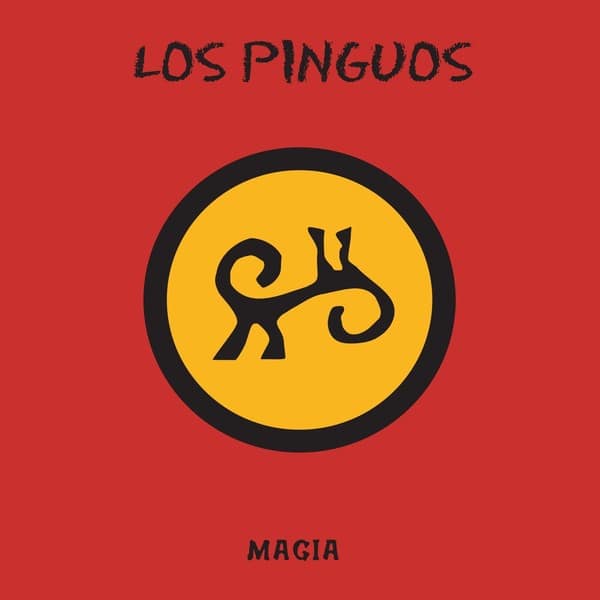
Bonni: [00:25:06] And I’ve talked about this group before on the show playing for change people who’ve been listening for a while might remember that this group is it’s so funny that it’s not a coincidence that I would bring it up on the show with you Laura. But they play music around the world and then they record and lay it all into one track and it’s just really a beautiful look at the diversity of music and this particular song that they posted is not quite that same idea. Most of their videos are multiple musicians playing all around the world. But this is a group of musicians that are playing on a boat and they’re playing on a boat in Marina Del Rey California.
Bonni: [00:25:46] But this group is originally the group is Los Pinguos. And they’re going to play a song I’ll play it for you in just a second called Fumaza, Fumaza and they are originally from Buenos Aires. And here is a little bit of Fumaza.
Bonni: [00:26:25] I really encourage you to go the show notes and check them out because they’re so much fun just sitting on this boat. All these musicians playing instruments as they float around along the waters there in Marina Del Rey. So check it out. You’ve got a violin guitar. And some set of drums I don’t recognize but really good stuff and made me feel like I was on a boat.
Laura: [00:26:47] All right. That sounds great.
Bonni: [00:26:49] I showed it and share screen with you or something so you can see it.
Laura: [00:26:52] I was dancing you just didn’t see me because it’s the podcast.
Bonni: [00:26:56] It’s good stuff. All right. I’m going to pass it over to you Laura for your recommendation.
Laura: [00:27:02] Well you know sometimes I think the best way to actually understand what’s going on is to see it. So the digital media learning research hub DML Research Hub has a amazing number of infographics. They’ve got case studies. They have short videos about connected learning in different contexts.
Laura: [00:27:25] So K through 12 all the way through higher ed informal learning environments as well and their Web site one at one of the Web sites connected DMLresearchhub.net is great but also connected learning dot tv is also a wonderful place to see a bunch of vignettes or case studies or or hear instructors talking about what it means to have a connected course or promote connected learning in their courses so I loved DML Research Hub.
Laura: [00:27:56] Another great way of learning about this is to go out and see some coarse Web sites that are available on the web. So DS 106 if you’re familiar with that course that’s the famous university of Mary Washington course on digital storytelling that kind of kickstarted a lot of this stuff off so I recommend that there there’s also a professor at Kansas State Mike Wesch w e s c h who does a lot of amazing work on using YouTube in his cultural anthro anthropology courses so I recommend looking looking him up as well. So those are those are probably my favorite resources for the day.
Bonni: [00:28:38] Oh those are fabulous. I have heard most of them and I follow Mike on Twitter but some of the time you don’t always go outside to Twitter as much as you could then to go follow up on all their other great resources so I know I’ll check out his YouTube channel.
Laura: [00:28:51] Yeah. I mean if you Google him what comes up is a whole array of his YouTube channels and just looking at some of the things that he’s talking about with his anthropology 101 course in particular it was pretty interesting stuff. So I recommend it.
Bonni: [00:29:07] Laura you came highly recommended and did not disappoint at all. So I enjoyed all of the things we got to talk about today and what is so fun about having you as a part of my personal learning network as I know it’s just the beginning. So I just appreciate your investment of time and contribution to my learning as well as everyone who listens to the podcast.
Laura: [00:29:25] Oh it was great fun Bonni. Nice to meet you.
Bonni: [00:29:29] I appreciate Laura’s time so much being on the show. And it was fun to get a chance to know her from a different perspective. I’ve been following her on Twitter and enjoy so much of the work that she does. I hope you’ll go to the show notes at teachinginhighered.com/116 to get a better view on some of the tools she talked about and some of her own blogging. She definitely practices what she preaches so thanks once again to Laura and thanks to all of you for listening.
Bonni: [00:29:59] If you are early in your teaching in higher ed listening experience you may not know that there is a free and tech essentials guidebook that you can receive by subscribing to the weekly update and the weekly update is just an email that comes in. You might have guessed already once a week when you get that show notes from whatever the most current episode is. Along with an article about teaching or productivity written by me you can subscribe at teachinginhighered.com/subscribe and I hope you’ll do so if you haven’t already. It’s just a nice way to stay connected. I’m also on Twitter @bonni208.
Bonni: [00:30:39] And as Laura mentioned that is just such a wonderful way to engage with each other and continue to cultivate our personal learning networks. And if you’d like to cultivate the learning network that is Teaching in Higher Ed one of the best ways to do that is to leave a rating or a review for the show on whatever service it is that you use to listen so if that’s iTunes you go to where you subscribed to the podcast. There’s a place where you can look at other ratings that people have given in that same spot that you go to. I hope some of you will consider that so you can continue to spread the word about the show and grow our community. Thanks so much for listening and I’ll see you next time.
Teaching in Higher Ed transcripts are created using a combination of an automated transcription service and human beings. This text likely will not represent the precise, word-for-word conversation that was had. The accuracy of the transcripts will vary. The authoritative record of the Teaching in Higher Ed podcasts is contained in the audio file.